I’m delighted to announce I have added a new talk, all about the Brontës, and tips for finding your family history connections to the famous literary family. I presented this talk for the Society of Genealogists in April 2026, and it will be available for other organisations to book from June 2026.
It is far more than a family history talk. It is also ideal for those wanting to know more about the Brontës, and those with an interest in Brontë-linked local history – in particular in West Yorkshire.
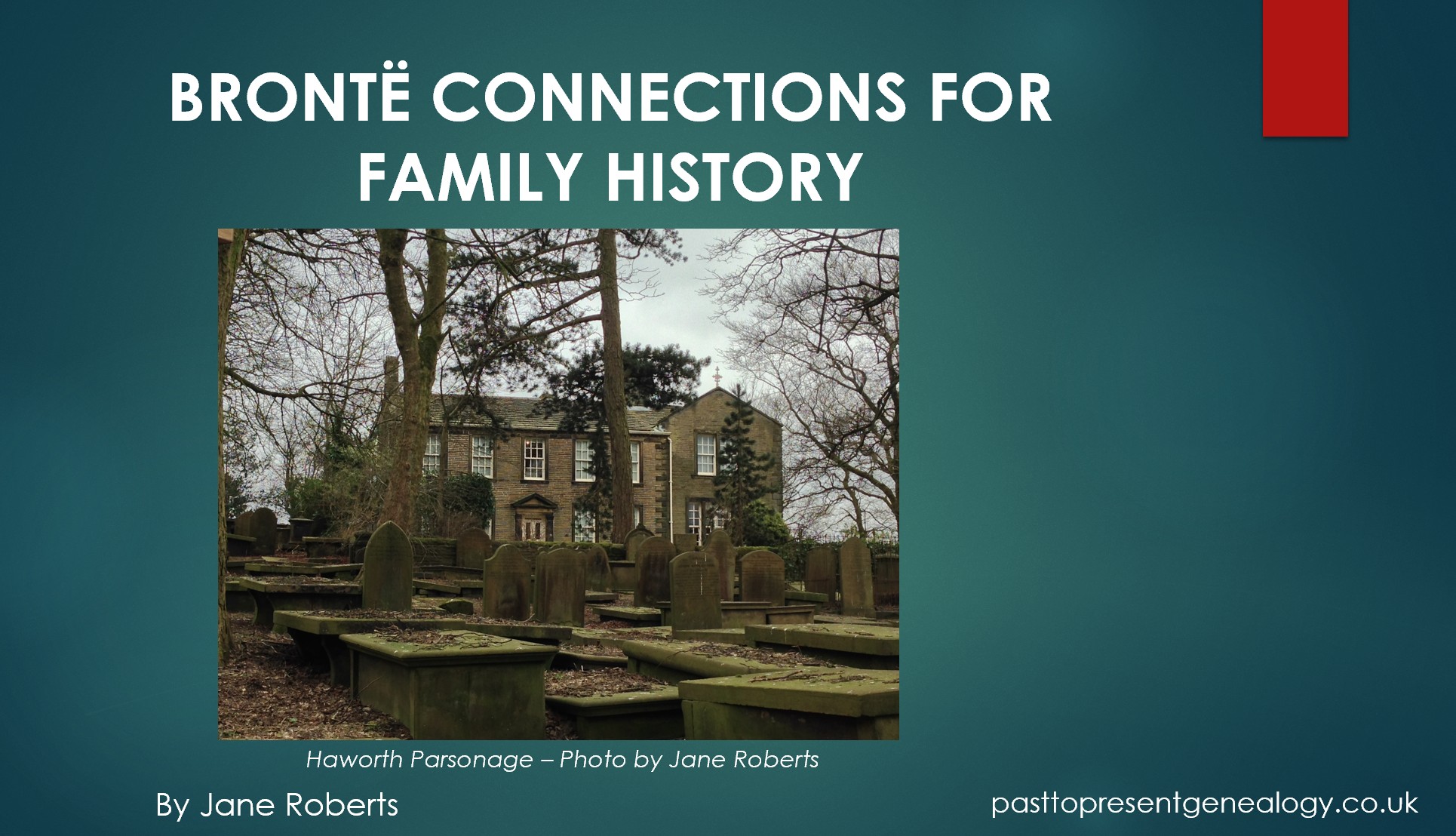
The talk was inspired by the hype around the 2026 film adaptation of Emily Brontë’s dark, Gothic literary classic, Wuthering Heights. This resulted in a new generation of tourists descending on the village of Haworth, keen to find out more about these world-famous sisters, and wanting to carve out their own slice of Brontë magic. But as this talk will demonstrate, family historians can also channel into the Brontë family’s lives and literature, seeking their own Brontë connections and research inspiration. Packed with Brontë family details, and local history links too, my talk will give you some ideas of how, and where to look.
I am immensely proud of where I come from, my area’s Brontë links, and all things Brontë, so l look forward to sharing this passion. I might even let you in on my quest to find my links to this amazing literary family. And you never know – as a result you may have ideas and inspiration to see how your family history might be connected too.
If you’ve followed my blog you will know I occasionally write about aspects of Brontë family history. Well, this post is about the very spot which marks the genesis of these literary geniuses.
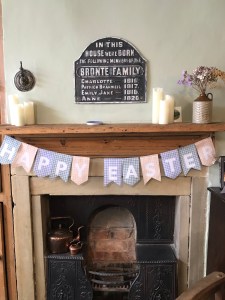
It is the exact house in which, between April 1816 and January 1820, Charlotte, Patrick Branwell, Emily Jane and Anne Brontë were born. Oral tradition is that their mother, Maria, gave birth to at least one of her children in front of the parlour fireplace, a fireplace which still exists today. This house is remarkable in being the only place which can literally call itself The Brontë Birthplace.
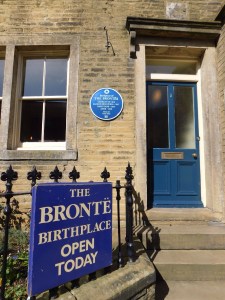
Welcome to the Brontë Birthplace – Photo by Jane Roberts
Their parents Patrick and Maria, along with their older siblings, Maria and Elizabeth, moved here in May 1815 when Patrick took up the position of curate in the West Riding village of Thornton. It remained their home until May 1820 and Patrick’s Haworth appointment. Later Patrick Brontë said of Thornton “My happiest days were spent there.”
The house is a must-visit for anyone with an interest in the Brontë sisters, the history of English literature or indeed every-day period buildings. David Sillito, the BBC’s Arts and Media correspondent, summed up its unrivalled historical significance as “The most important literary birthplace anywhere in the world, with three of the world’s most famous authors born there.”
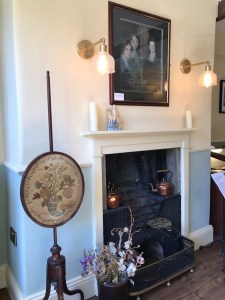
One of the Downstairs Rooms – Photo by Jane Roberts
Not only can you wander round the various furnished rooms and soak up the atmosphere, but you can sleep in the very bedrooms the Brontë family slept in over two centuries ago. For any Brontë aficionado that is an unmissable experience.
Located at 72-74 Market Street, Thornton, West Yorkshire, this Historic England Grade II* Listed Building’s pivotal position in Brontë history has long been recognised. It did at one point briefly become a museum, but it has also served as a butcher’s shop and restaurant over the years.
Ambitions around its long-term preservation were expressed as long ago as 1911. This ambition finally came to fruition on 15 May 2025 when Her Majesty Queen Camilla performed the official opening. But that does not do justice to the community aspects behind it, including crowdfunding efforts, and almost 800 people contributing to a share scheme to directly invest in preserving this piece of Brontë history for future generations. These fundraising methods, alongside traditional grants including from Bradford City of Culture 2025, enabled a Community Benefit Society to acquire the building in March 2024. The Brontë birthplace is the epitome of community activism perpetuating cultural heritage on behalf of the nation.
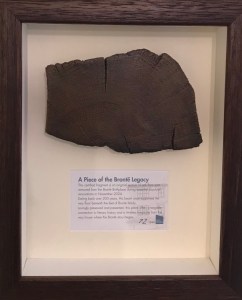
One of the Limited Edition Brontë Beam Artworks – Photo by Jane Roberts
Between acquisition and the opening, the building was lovingly, and sympathetically, restored, and is packed with period features and furnishings. As part of the process, one of the original beams which could not be used, was salvaged to create a limited edition series of framed artworks available to purchase, thus helping with running costs and giving Brontë enthusiasts the opportunity to own their own piece of Brontë history. 240 were created, and they have proved so popular only a few remain. For more details, including how to bag one of the last pieces, click here.
A Brontë Birthplace visit has been on my to-do list ever since I heard about plans to open it to the public. I finally ticked it off this February (2026), booking one of the guided tours. I highly recommend this option, especially for a first visit. It was information-packed, with plenty of time for questions along the way too. I enjoyed it so much that I revisited in March, on a self-guided wander round the house, immersing myself in the surroundings and absorbing the calm, peaceful atmosphere.
I definitely intend revisiting, including hopefully for an overnight stay.
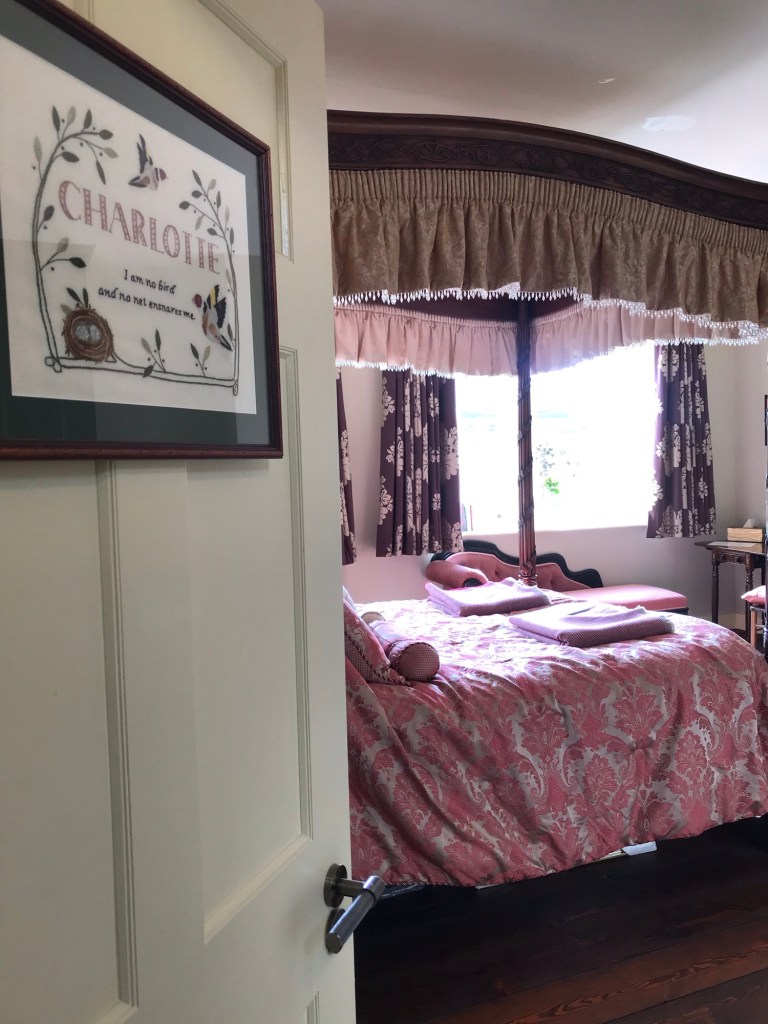
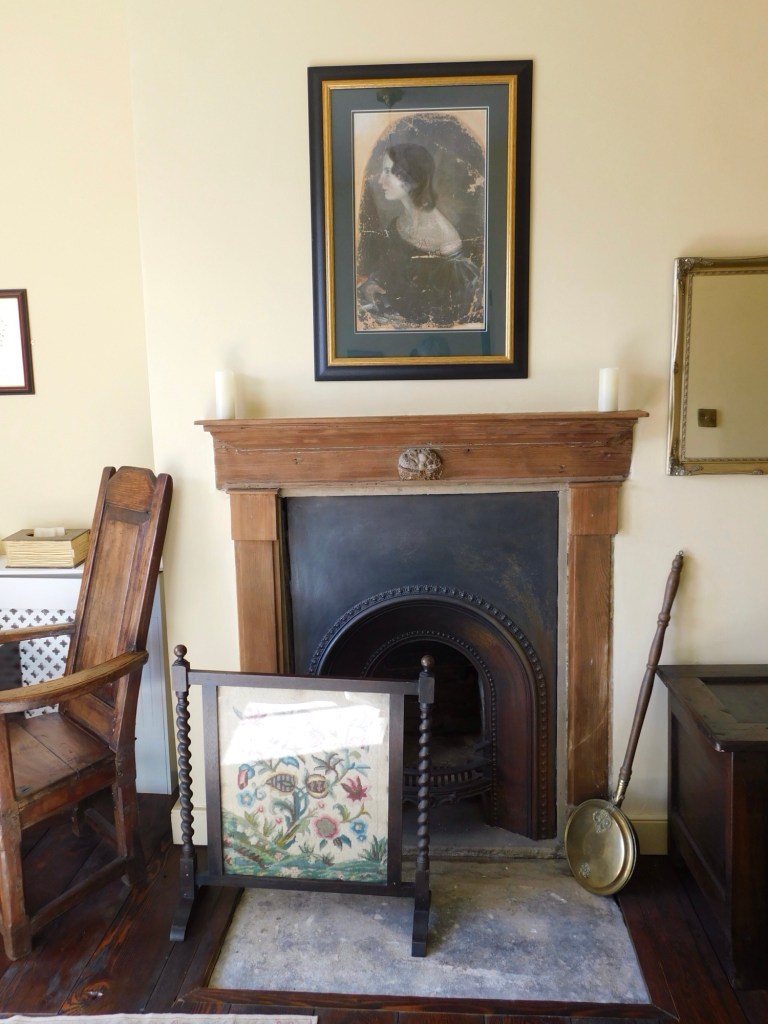
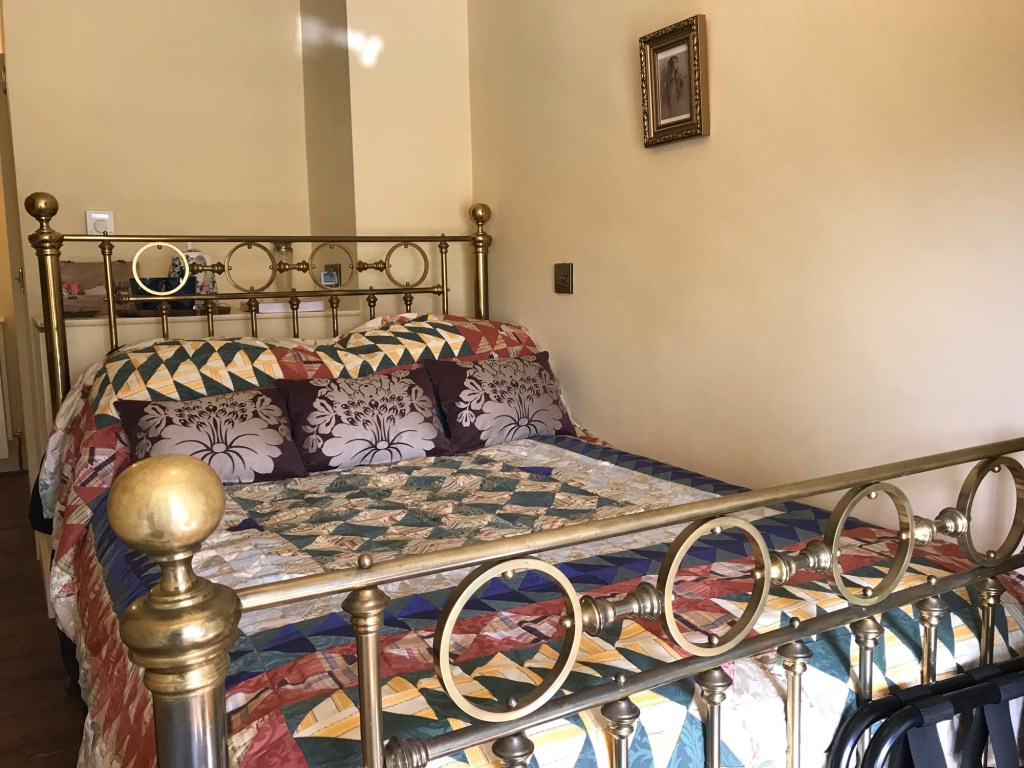
Brontë Birthplace Bedrooms – Photos by Jane Roberts
There are three rooms to choose from, appropriately named Charlotte, Emily and Anne, depicted above. Charlotte is the biggest room. When the Brontë family lived here this was divided into two rooms – Patrick’s dressing room, and the bedroom where the children slept. So yes, you can actually sleep in the same room as the famous sisters! The room named Emily was Patrick and Maria’s bedroom – as someone on our visit quipped, the room in which the sisters were conceived! The smallest room is Anne. All sleep up to two people, and are en suite.
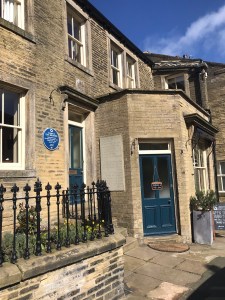
The Brontë Birthplace Entrance – Photo by Jane Roberts
The cultural space also contains an intimate cafe in which to relax, contemplate, chat, soak up the atmosphere and see that famous fireplace which witnessed the arrival into the world of babies who would take the literary world by storm.
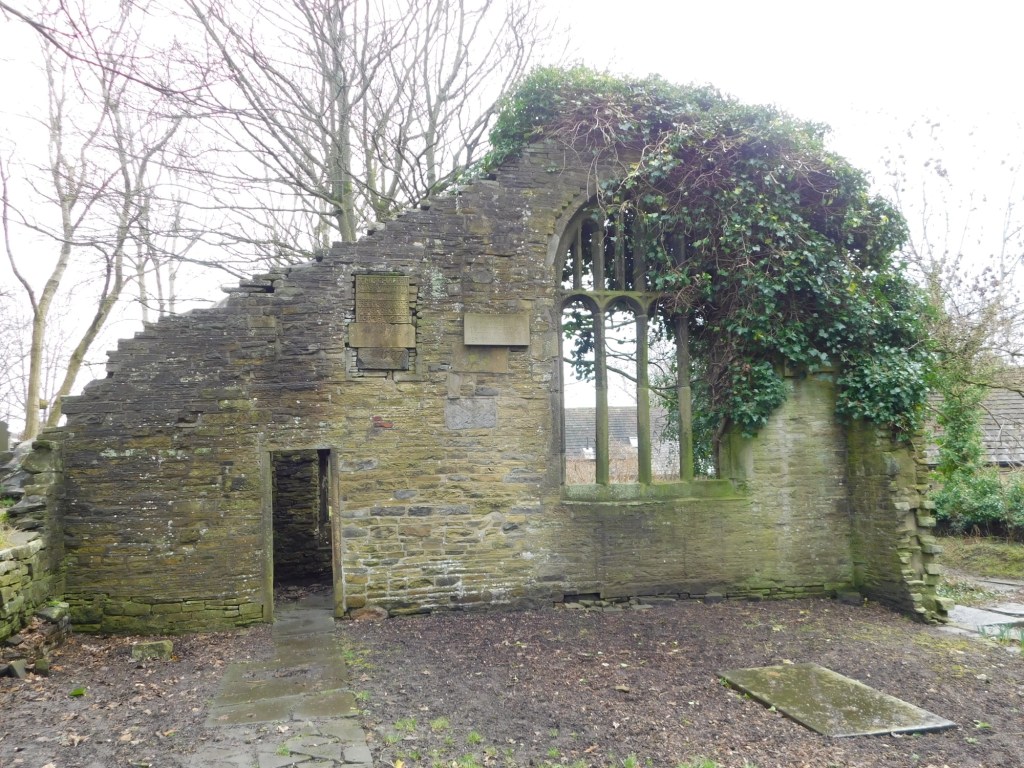
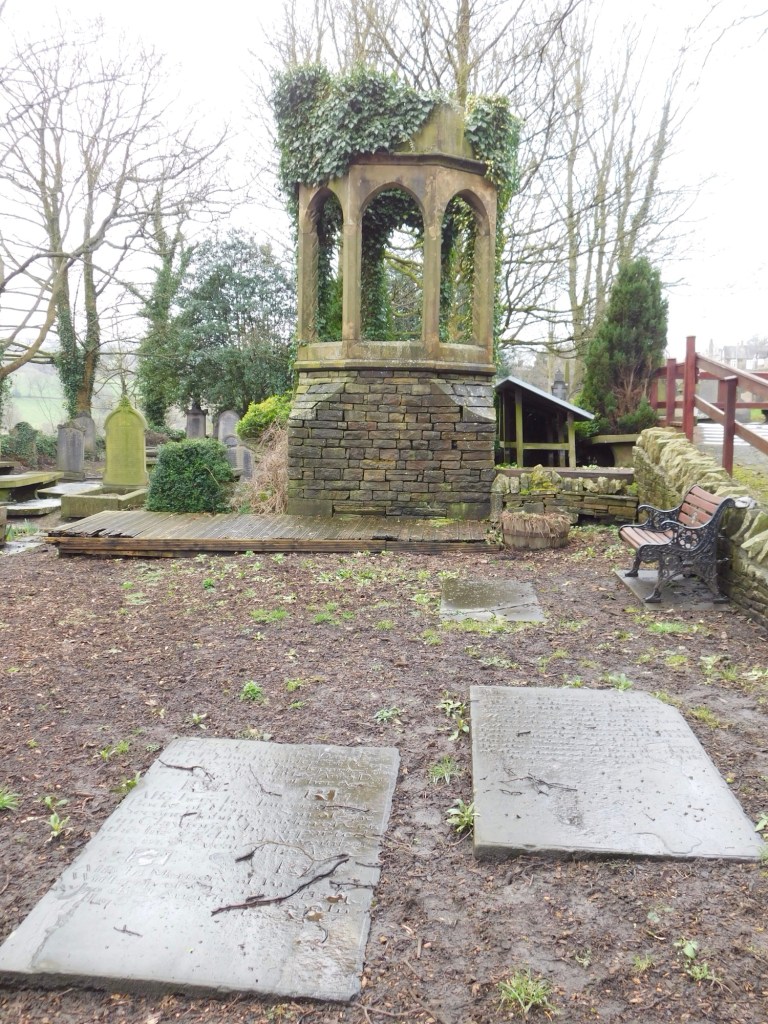
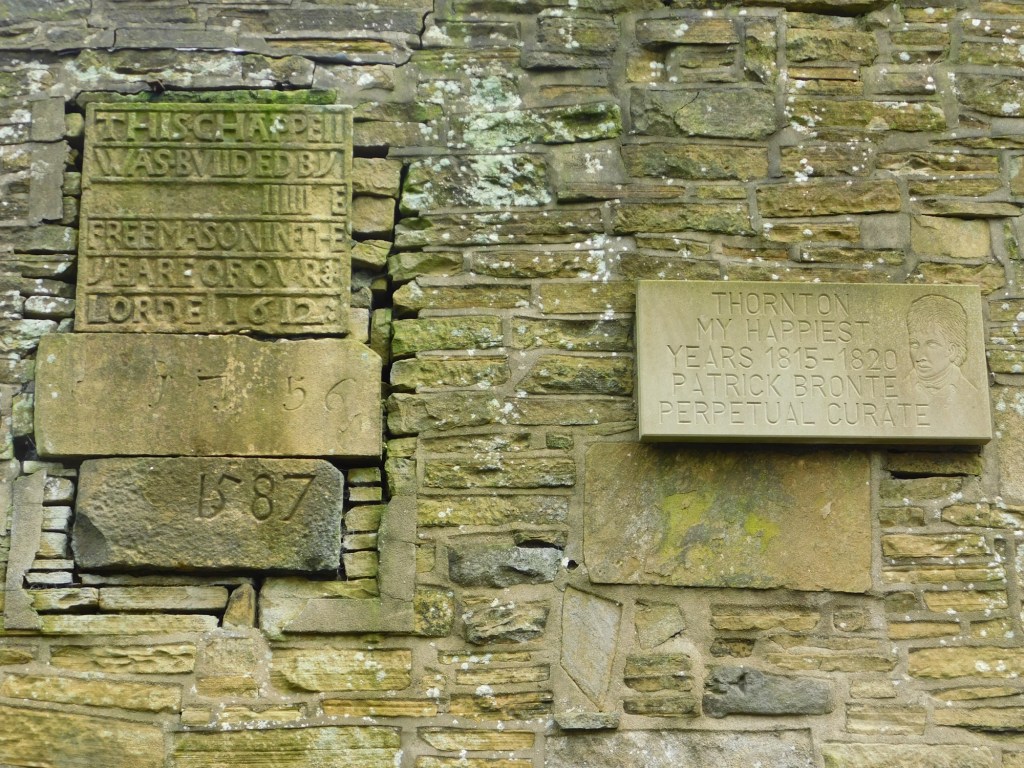
Step outside and there’s even more Brontë history to explore. There’s the ruins of the Chapel of St. James, better known as The Brontë Bell Chapel, a late medieval church rebuilt in 1612 and again in 1818 under Patrick Brontë’s curacy. This was where the five youngest Brontës were baptised. The baptismal font is one of the artefacts on view in a Brontë exhibition in the 1870 replacement church of St. James across the road.
The Bell Chapel Ruins – Photos by Jane Roberts
As Thornton is a little over six miles from Haworth, the iconic town typically associated with the Brontës, it is easy to combine a visit to both the Brontë Birthplace, the Bell Chapel, Haworth Parsonage and the Church of St. Michael and All Angels for a cradle-to-grave Brontë day out.
For more details about the Brontë Birthplace, including opening hours, booking and events information, click here.
If that has piqued your interest in Brontë family history, I will be giving an online talk on 25 April 2026 for the Society of Genealogists about Brontë Connections for Family History. More details can be found here, with the Society of Genealogists booking details here.
March has been an exciting month for the Batley St. Mary of the Angels One-Place Study, with the introduction of a new history topic. But before I get to that, here is the numbers update.
Three new posts were added during the month, bringing the total number of posts up to 430.
The first new post is the parish history snippets piece for March 2026. These snippets cover a variety of events and people from the parish from years gone by, and can be found in the Bulletin for Batley St Mary of the Angels and Birstall St Patrick section. Even if you have seen them on the Bulletin, it is worth checking them here as some have links to more detailed pieces I have written.
But – drum roll – the big news is I’ve added a new subject area.
Over the years the parish has been noted for its outstanding theatrical productions involving many parishioners, and providing entertainment for many more. This major area of parish life deserves to be covered in the parish’s history, so I’ve set up a new subject area called In the Spotlight: Am Dram, Opera and Concerts. The first two posts have been uploaded, covering events in 1901 and 1952. These pieces are packed with names of those involved. I’m hoping to include many more productions in the coming months. If you have any information about any you would like including in future please do get in touch. Photographs would be appreciated too – including of those involved as well as programmes. I can be contacted at pasttopresentgenealogy@btinternet.com
Below is the full list of all the one-place study pieces to date. Simply click on the link and it will take you straight to the relevant page. I have annotated the *NEW* and “UPDATED” posts, so you can easily pick them out.
If you want to know the background, and what is involved in a one-place study, click here. Otherwise read on, to discover a wealth of parish, parishioner and wider local Batley history.
Postscript: I may not be able to thank you personally because of your contact detail confidentiality, but I do want to say how much I appreciate the donations already received to keep this website going. They really and truly do help. Thank you.
The website has always been free to use, and I want to continue this policy in the future. However, it does cost me money to operate – from undertaking the research to website hosting costs. In the current difficult economic climate I do have to regularly consider if I can afford to continue running it as a free resource.
If you have enjoyed reading the various pieces, and would like to make a donation towards keeping the website up and running in its current open access format, it would be very much appreciated.
Please click 👉🏽here 👈🏽 be taken to the PayPal donation link. By making a donation you will be helping to keep the website online and freely available for all.
Thank you.
As a professionally qualified genealogist, if you would like me to undertake any family, local or house history research for you do please get in touch. More information can be found on my research services page.
Finally, if you do have any information about, or photos of, parishioners from the period of the First World War please do get in touch. It does not have to be War Memorial men. It could be those who served and survived, or indeed any other men, women and children from the parish.
I would also be interested in information about, and photos of, those parishioners who were killed in World War Two, or others from the parish who undertook any war service and survived. This can be as broad as serving in the military, or work in munitions factories, the Land Army, even taking in refugees. This is an area I’m looking to develop in the future.


 Past To Present Genealogy