This is the latest update of the pages relating to my Batley St Mary’s one-place study, the details of which I announced here.
Sam Sykes – One of the Newspaper additions this month
It has been a busy month. In total eight new pages were added. Eight others were updated.
I focused on occupations during February, with three new work descriptions added – those of confidential clerk, office boy/girl and willeyer.
I have added four weekly newspaper pages for February 1916. I have accordingly updated the surname index to these During This Week newspaper pieces, so you can easily identify newspaper snippets relevant to your family.
More men who served and survived have been identified. I have updated that page accordingly. No new biographies for these men have been added this month. They will follow in due course.
I have also written one biography for a War Memorial men: Dominick Brannan, also known as Dominic or George Brennan. I have updated five others (Michael Brannan, Michael Flynn, Thomas Foley, Patrick Naifsey, Austin Nolan). Also updated is Reginald Roberts, who was linked to the parish but not on the Memorial.
Below is the full list of pages to date. I have annotated the *NEW* ones, plus the *UPDATED* pages, so you can easily pick these out. Click on the link and it will take you straight to the relevant page.
This is the latest update of the pages relating to my Batley St Mary’s one-place study, the details of which I announced here.
St Mary of the Angels Church, Batley
In the past month I have added five weekly newspaper pages for January 1916. I have accordingly updated the surname index to these During This Week newspaper pieces, so you can easily identify newspaper snippets relevant to your family.
More men who served and survived have been identified. I have updated that page accordingly. No new biographies for these men have been added this month. They will follow in due course.
I have also written two new biographies for a War Memorial men: those of Peter Doherty and Thomas Gavaghan.
Below is the full list of pages to date. I have annotated the *NEW* ones, plus the *UPDATED* pages, so you can easily pick these out. Click on the link and it will take you straight to the relevant page.
The dust is beginning to settle on the 1921 Census release, and I’ve had chance to familiarise myself with Findmypast’s online search, Here are some tips to help you get the best out of it.
1. Draw up your wish list and set your budget. I’m not entering into the debate over the cost of viewing the 1921 Census online, or the tie-in with Findmypast as sole provider for the immediate future. Only to say it is standard for these major record releases, and company’s have to recoup the massive digitisation costs involved. Filming, transcribing and indexing something on this scale does not come cheap. And there is opportunity to access the 1921 Census for free – at The National Archives (Kew), Manchester Central Library, and The National Library of Wales (Aberystwyth). But then you need to factor in transport costs, and possibly an overnight stay. Family history, like many other hobbies and interests, does cost.
What I will say is before you even start searching is draw up a wish list of those people you are most interested in, prioritise them, set your maximum budget and stick to it. Otherwise it is all too easy to get carried away.
I compiled my immediate wish list, for direct line ancestors alive in 1921, and stuck to it. It amounted to eight images. Any other records, including ones relating to my one-name study (there are 527 people named Aveyard in this census), and my Batley St Mary’s one-place study will have to wait until I can get to Manchester Central Library for free access, or until it all becomes part of the Findmypast subscription.
2. Play around with searches to familiarise yourself with the system. The second piece of advice I would give is don’t dive straight in. Play around with searches to get used to how the system works. That way you are going to get the best, and most accurate, results – and crucially minimise the risk of purchasing the wrong record.
3. Be aware of transcription errors. This release appears to be littered with them across the entire range of possible searches, and this will affect results. Try to keep an open mind when searching. Be flexible with searches, and alert to possible transcriptions errors.
For example, for one of my ancestors the Christian name Martin was incorrectly transcribed as Morton, perhaps signalling the transcriber as a fan of the Morton Farrier Genetic Genealogist book series! I did not automatically discount the entry. Based on other information I was able to identify it as a likely error and took the plunge. But it could, depending on the error scale, result in a negative search. And the pay-per-view angle may rule out speculative purchases.
There is a transcription error reporting mechanism if you purchase the transcript – as I said I’ve not done this, preferring to spend my money on the original image. If you have not purchased the transcript you can still report the error, but the method is via email to Findmypast, at transcriptsupport@findmypast.com. The link giving more details about this is here.
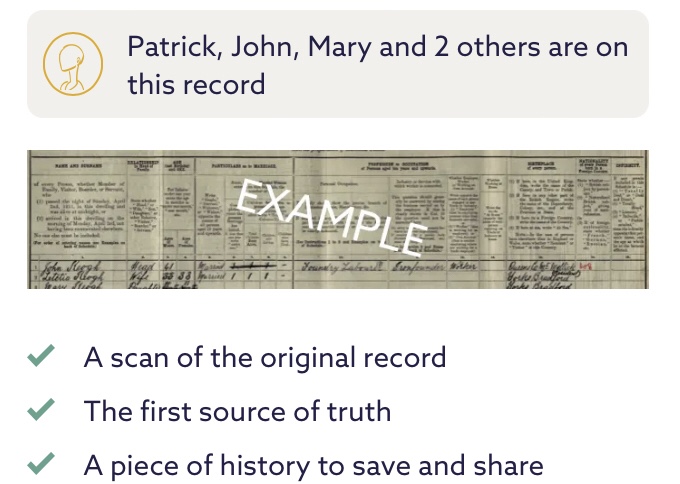
4. Make use of the Advance Search facilities. When you conduct a search you are given some basic information to enable you to determine if the result is the one for your family. For example, when searching for my great grandad Patrick Cassidy in Batley, the following clues are given.
Findmypast image
The hint says the record includes Patrick, John, Mary and two others. My problem with this was no John is linked to my great grandad’s family. And who are the two others? Can I confirm these names? Was this the correct family?
There is a simple way you can drill down this information to a more complete, granular level. Go to the Advanced Search. Leave the ‘Who’ boxes blank, and go down to the ‘Parish’ box and put in ‘Batley,’ and in other ‘Other Household Member” box type ‘Patrick Cassidy’. The results confirm the full names, birth year and birthplace of the other four members of the household, including Anne Cassidy, Mary Cassidy and Nelly Cassidy, plus Durham-born John Nixon. All this gave me confidence that I would be purchasing the correct record.
This is one example of an Advanced Search which worked well in this instance, though it may prove more challenging for common names. And some found Registration District worked better than Parish.
However, do not be put off. There are lots of other filters and options too. It is a case of playing with them to find the ones which help narrow the results suited to particular circumstances. And you can find lots of information simply through the free Advanced Search – and this may be sufficient to construct plans and spreadsheets for example for a one-place or one-name study.
One other thing to be aware of when searching on age is this census has a change. It gives it in years and months, with those under one month noted as such, rather than only years. This may affect searches, though it is always good practice to broaden age searches to give years +/- either side, as accuracy and ages in the census do not necessarily go hand-in-hand.
And, in a similar vein, do always keep at the back of your mind transcription errors and (in)accuracy of information provided by ancestors, which can skew results. Which leads onto Tip 5.
5. Be aware people may not be where expected, or tell the truth with the information they give. There’s always the possibility that people may not be with their family on census night. The timing of this census, 19 June, instead of early spring has added complications. People may have been on holiday.
There is also the issue of seasonal workers. My County Mayo-born grandpa, who by the mid-1920s was in Batley, looks to be over on a farm in Cheshire with two of his brothers in this census, working as a farm labourer. They are appropriately living in Irish Man’s Cottage! The men in this family did have a tendency to come over to England in the summer for seasonal farm labouring work, and this appears to be borne out in the 1921 Census. It may also be the case for others normally resident in Ireland but who came over to England seasonally to undertake work on farms. It is worth checking to see if they do feature.
And, as ever, be alert for those half-truths and downright misleading lies which always creep in and can affect your search.
Again it is a case of keeping an open mind – though the pay per view element of this release may curtail the ability to undertake speculative downloads. This is a luxury which may best be reserved for the free access locations at The National Archives (Kew), Manchester Central Library, and The National Library of Wales (Aberystwyth). But you can undertake the prepatory work from home using the free basic searches, short of any image purchase.
6. View the image, not the transcript. Linked to 3 (above), I would advise the image purchase option is always preferable to buying a transcript, even if it costs slightly more. The transcript may contain multiple errors which, unless you view the image, you will be oblivious to. Whereas if you view the image you can see exactly what the entry should say. And it may include details not referred to in the transcript. And there is always that added frisson of excitement of seeing the actual handwriting and signature of those completing the form.
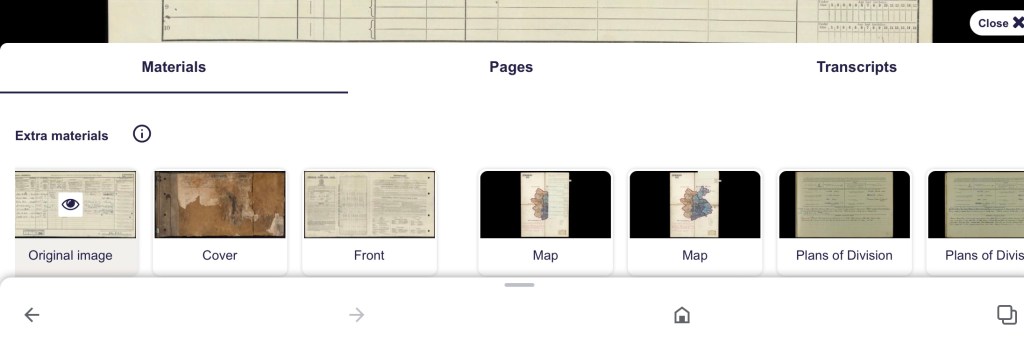
7. Make sure you click on the Extra Materials. Your purchase covers more documents than the original image. Don’t focus on this image at the expense of the ‘Extra Materials.’
‘Extra Materials’ available through purchasing the image – Findmypast
In these you will find the cover, which contains the RG15 Series Reference for the original household image, and Piece Number. Though I must admit my preferred method for obtaining the document reference is by downloading and saving the image (see 9, below), simply because the cover may be difficult to read and downloading/saving provides more accuracy by hopefully cutting out any enumerator error. Also be aware it is not a full reference number.
The ‘Front’ document contains that all-important address which is missing from the original household image. For more details about addresses see 8, below.
There are also maps which, besides pinpointing the area linked to the household, also have some useful background information – for example, population numbers, or details of any boundary changes.
The final files in these ‘Extra Materials’ are Plans of the Division. There may be more than one of these. The plans contain Enumeration District information, including boundaries and contents, basically the route the enumerator took. So, for example, for one set of my Hill ancestors, the Enumeration District where they lived comprised of:
Commencing at 1 Richmond Street taking all houses on left hand side to top odd nos. thence all houses in Vera Street, Crescent Street, Back Crescent Street all yards and Back Upton Street and down the left hand side of Upton Street to bottom even nos.
This is all vital information to pinpointing where the Hill family lived. This is particularly important if it is an area is unfamiliar to you, or if the streets have long-since gone. It will enable you to easily identify the area in old OS maps.
Note, once you have purchased an image it, along with the extra materials, are available to you each time you log on to Findmypast. So, if you missed them in your first eager foray into the census, you have not lost the opportunity.
8. The address is not missing when viewing the image. Whilst it may not be immediately obvious, contrary to what some on social media believe, the address is there. There are two ways of accessing it. The ‘Extra Materials’ document suite includes one entitled ‘Front.’ This has the schedule which includes the address.
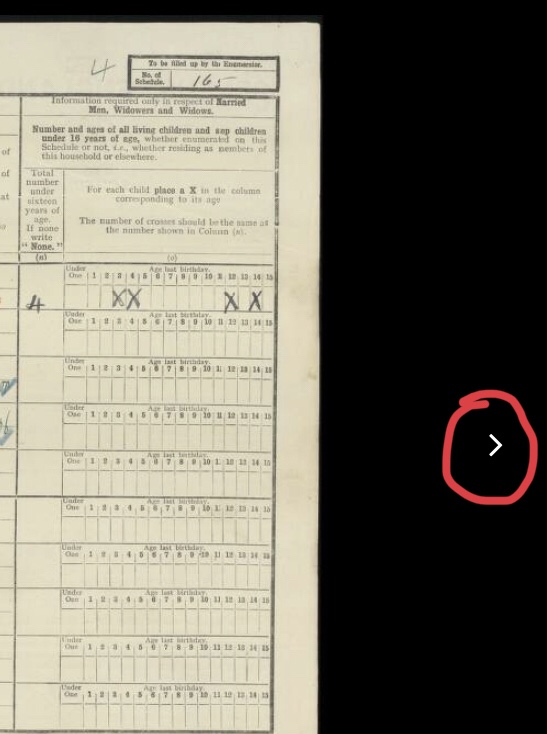
The same document can be accessed by clicking on the arrow to the right of the completed household schedule. Do be careful when using this method that you do not click too far as this will take you to the next household schedule and the option to buy it.
Clicking this arrow should take you to the address image – Findmypast
9. Download the images to save, including that all-important document reference. Always save the document images to ensure you always have access to them. The best way of doing this, and getting the clearest image, is by using the ‘download record’ facility. When saving this way the RG15 document reference and piece number is included in the file title. It is not the full reference number, but it is a start.
You can also get the document reference from the cover, which is in the extra materials.
It is good practice to note the document reference, and including it as part of the file title is ideal.
10. Take note of the employment information. The single most exciting information section in this census from my point of view is that on employment. Not only is there the occupation title, but for those working for an employer the name of that employer is provided, along with the place of work. This is fertile ground for further research to expand your knowledge of not only what your ancestor’s occupation was, but also where they worked, and investigation as to what business records survive – including any relating to employees.
For example, my husband’s 14-year-old grandma is described as a pottery paintress at Keeling and Co. Ltd, Dalehall, Staffs. I can now find out more about this pottery works.
My nana was a 16-year-old cloth weaver at J., T. & J. Taylor’s woollen manufacturers. West Yorkshire Archive Services has some company records which may be worth checking.
A whole series of my male ancestors worked in the coal mining industry. This census was taken during the coal miners’ strike. My ancestors do give their coal mining employment details, with the ominous words “Out of Work”. The names of their employers, and the specific coal mines, means I can now look at local papers to find out about the effect of industrial action generally locally, as well as how it affected specific coal mines. For me these include confirmation that my great grandfather did indeed work at Soothill Wood Colliery, Batley.
For my previous 1921 Census post, which looks at its background, includes some tips, has things to look out for, discusses why it is so important, & explains why I’m looking forward to it, click here.
Postscript: Finally a big thank you for the donations already received to keep this website going.
The website has always been free to use, but it does cost me money to operate. In the current difficult economic climate I am considering if I can continue to afford to keep running it as a free resource, especially as I have to balance the research time against work commitments.
If you have enjoyed reading the various pieces, and would like to make a donation towards keeping the website up and running in its current open access format, it would be very much appreciated.
Please click here to be taken to the PayPal donation link. By making a donation you will be helping to keep the website online and freely available for all.
This is the latest update of the pages relating to my Batley St Mary’s one-place study, the details of which I announced here.
St Mary of the Angels Church, Batley
In the past month I have added four weekly newspaper pages for December 1915. I have accordingly updated the surname index to these During This Week newspaper pieces, so you can easily identify newspaper snippets relevant to your family.
More men who served and survived have been identified. I have updated that page accordingly. No new biographies for these men have been added this month. They will follow in due course.
I have written one new biography for a War Memorial man, that of Thomas Finneran.
Finally for this month, I have added a new name to the page relating to biographies of men associated with St Mary’s who died but who are not remembered on the War Memorial.
Below is the full list of pages to date. I have annotated the *NEW* ones, plus the *UPDATED* pages, so you can easily pick these out. Click on the link and it will take you straight to the relevant page.
Forget the New Year countdown and the return of Big Ben’s bongs this year. Instead, like many other family historians, I’m counting the days down to 6 January 2022, the day which marks 1921 census release day. Its family clues and secrets have been hidden for over 100 years. But this is the day when they will finally be revealed.
But why are family and local historians so excited? What is its background? Why is it so important for family and local history? How can you access it?
I’ll try to answer those questions in this post.
Background: This was the census conducted in the immediate aftermath of the Great War, the Spanish flu pandemic and the introduction of voting rights for some women. It was a time of turmoil, upheaval and change.
The census was eventually taken on 19 June 1921, delayed for two months from its originally planned date of 24 April 1921, because of the state of emergency declared as a result of the coal miners’ strike.
Although care was taken to avoid holidays in the big industrial towns of the north, do be aware of the possibility the delay to the summer months may mean your family could be away from their expected residence.
What Information Will the Census Contain?
This census had the usual familiar mix of questions, but with some crucial omissions and additions from the 1911 Census. Questions included:
Name and Surname;
Relationship to the Head of Household;
Age – in years and (in a difference to previous censuses) completed months, with those under one month noted as such;
Sex;
Marriage or Orphanhood – For those 15 and over this means single, married, widowed or if the marriage has been dissolved. For children under under 15 this includes details about which parents are living/dead;
Birthplace and Nationality;
Personal Occupation (including attending school), Employment and Place of Work;
Married Men, Widowers and Widows also complete details about the number and ages of all living children and step children under 16 years of age, whether residing in the household or elsewhere.
The enumerator who collected the form was also responsible for recording the number of “living rooms” at the premises. And, for the first time, individuals in a household could also make separate confidential returns.
I’m disappointed that the so-called fertility question is missing from this census, with no information given about the number of completed years of marriage and the total number of children born within it, split between still living and dead. There question around blindness, deafness and dumbness has also gone.
But there are some big compensating questions. For example the changes to the questions around work will add a new family history component. This was introduced to find out about the travelling involved to get to a place of employment. The question around dissolved marriages is an interesting commentary about the recognition of increased availability of divorce. I am interested to see if any of my family is amongst the 16,682 people who declared themselves divorced on the returns. And, in light of the aftermath of the Great War and influenza pandemic, the recording of information for under 15s about whether both parents were alive or if either or both parents had died is a sad snapshot on the fragility of life.
If you want to familiarise yourself with the 1921 Census household form for England in advance of 6 January, you can download a copy here, courtesy of the ONS (Office for National Statistics) website.1
Why the Excitement with this Census Release? All new major record releases are exciting. But for many the 1921 Census will be particularly special. From the poignant moment of seeing family members in a census for the first or last time, to finding out the impact the War had on family and community structures; to discovering the employment and possibly employers of their ancestors in this period of industrial strife, to where they were – and who they were with – on census night. Then there’s societal changes at the start of the Roaring Twenties, like the increase of divorce, and changes in the work of women from previous censuses. And not forgetting the inevitable disentangling of truth from mistakes and pure fiction in the entries of our ancestors – no, they were not always honest on official documents!
On the more humorous side, will there be any quirky, or protest, entries this time? And what will be the most unusual or unexpected occupation or name?
All this information, even these errors, half-truths and lies, will shed new light on the lives and characters of our ancestors – the type of information we family historians are constantly seeking.
Crucially, it is an excitement not to be repeated for another 30 years, because the next census release will not be until 2051, with the 1951 Census.
For many, this will be the last chance to experience the anticipation and thrill surrounding a census release. The highs of finding that missing piece of the family history puzzle, to simply finding out a little more about the lives of your ancestors. To the lows of will the site crash with the volume of hits?
My Census Plans I have spent the Christmas period drawing up my family history census wish list.
I’m looking forward to the release on a personal family history level to find if my grandpa had made the move from Ireland to England at this point. If so, where was he living? And was he with family who had already made the move?
I also want to discover what various direct line ancestors and their families were doing. In particular, only three months before this census, my great grandfather died aged only 42. I want to see if there is any evidence of impact on his family. For example, were they still in the same home? Was the family still all together? Did my great grandmother have an occupation listed?
Also, being from a long line of coal mining ancestors, I want to see how many were still involved in the industry, especially given the census backdrop of a coal miners’ strike.
I have a wider interest in this census too, for my St Mary’s Batley One-Place Study. This focuses on the parish particularly in World War One, looking at not only those who served and died, but those who returned home, and the parish as a whole. I’m interested in seeing the impact both the war and the flu pandemic had on the parish population and family structures, with a particular interest in those families who had suffered war casualties. I’m also interested in any further Irish migration to the parish between 1911 and 1921. And I want to build up a bigger picture about employment in the parish. Batley was a significant textile town with the industry employing both men and women. The other major industry for the area was coal. Given this was the period of the coal miners’ strike, I want to see what impact this had on the census employment returns for the parishioners. Also, for returning military, was there a difference between their 1911 and 1921 employment? This, though, because of the scale, may be a longer-term plan based on a visit to one of the free access sites.
Note, the following section is now partially out-of date, with Findmypast’s wider release of the census for those with a relevant subscription.
How Can I View the 1921 Census? Now for the all-important administrative details about census access.
1. Who does this Census release cover? • This release covers 38 million people in England and Wales. Technically the full scope of it is England & Wales, the Channel Islands, the Isle of Man and the Armed Forces at sea or overseas (including in the nascent Irish Free State). 2. When can you access it? • The launch date is 00.01 GMT on 6 January 2022. 3. Where can you access it? • Online it will be available via commercial genealogy dataset provider Findmypast. They won the National Archives digitisation contract and have exclusivity for the 1921 census for up to three years. This will be the only online provider access during this period. • In-person access of the digital images is available at The National Archives, Kew. The census will also be available via Findmypast at the Manchester Central Library, and the National Library of Wales, Aberystwyth. • If you are still unsure, professional genealogists (including me) are undertaking census lookups. This may prove more efficient, accurate, cost-effective and ultimately less stressful. 4. How much does it cost? • You will be able to search the indexes on Findmypast for free. But a pay-per-view system will operate to actually view the transcripts and images. It costs £2.50 for every record transcript, and £3.50 for every original record image. • If you are a 12-month Pro subscriber there is a 10% discount. • Whether a transcription or image, purchasing the record of one individual will allow you to view the entire household’s census return in that purchased format. Unless that person was in an institution. 5. Can you access the 1921 Census for free? • Yes. It will be available to view digitally at The National Archives at Kew. It is also available to view free via Findmypast at Manchester Central Library and the National Library of Wales, Aberystwyth. 6. Which countries does the release cover? • The release applies to England and Wales. • Indexed images of the 1921 Scottish Census will be released on http://www.scotlandspeople.gov.uk and in the Scotlands People Centre, Edinburgh, in the latter half of 2022. • The 1921 Census was not taken in Ireland due to the Irish War of Independence. Censuses in Ireland and Northern Ireland were conducted in 1926.
Update: If you’re planning on going to Manchester Central Library to access the 1921 Census, the image below (posted on the Manchester and Lancashire Family History Society Facebook page) gives some important information. It’s essential pre-visit planning reading.
I’ll end this post with some snippets from Yorkshire to get you in the census mood.
The Sheffield Independent and Sheffield Daily Telegraph newspapers for 21 June 1921, reported on the case of three census wanderers. On census night, Sheffield police were tasked with searching highways and by-ways to round up those living outside. The three men, brought before the magistrates on 20 June and charged with lodging out, or wandering abroad without visible means of subsistence, included George H Jerram, of no fixed abode. He was found at 12.30am asleep in one of the Tinsley Park coke ovens with only 5d in his possession. He could not afford any lodgings.
Jerram remarked that “he was lodging out in France from August, 1914, to April, 1920,” and since coming out of the Army had only worked five weeks.”2
The Chairman discharged him, giving him the opportunity to fill out his census form.
I wonder if he will appear?
The Yorkshire Post of 21 June 1921 had a reporter going round an industrial quarter of Leeds with a census enumerator. Someone asked: “We have not put the dog on the paper. Will that be all right?”
I wonder if pets will feature though, something I wrote about in an earlier census piece. Please click here if you want to read this, and the other quirky entries which have appeared in previous censuses.
However, a dismal story of unemployment and overcrowding also emerged in this Yorkshire Post piece.
For example, an Irish woman and her brother (both single), their brother, sister-in-law, and seven children aged 3 to 19, living in four rooms, Three of the adults were out of work;
A coal-hawker and a son assisting him, both out of work, two errand boy sons out of work, and five children attending school, with only one son (aged 20) working;
An out-of-work boot riveter, his wife and six children, ranging from 23 years old downwards, living in three rooms.
Occupants were described as being terribly afraid they would be turned out of their squalid dwellings because of overcrowding. Authority could, and did, strike fear.
In Grimsby, forms revealed in one instance five families living in four rooms; in another seven families were in one house, with a further house consisting of eight families.
The Hull Daily Mail of 21 June 1921 reported on a census conundrum regarding a baby born after midnight but before 1am (British Summer Time), the equivalent of 11pm and midnight Greenwich mean time. Was the baby born too late for the census? No definite pronouncement was made, but the assumption was the system in operation at the time, British Summer Time, would govern such questions.
I wonder if anyone does have an example of a child recorded in this census who should technically not be?
And in an example of a potential missing entry, a correspondent’s letter appeared in the Halifax Daily Courier and Guardian of 25 June 1921. Essentially, a son completed the household form for his father (the head), himself, his sister, and his sister’s three children (two grandsons and a grand daughter of the household head). They all slept in the house on census night. However, when the enumerator collected the form, he said the grandchildren should not be recorded and crossed them out. The correspondent was concerned they would not now be counted.
Again, some of us may therefore have difficulty in finding people we know should be there. It may simply be down to a mis-transcription, or not adopting the correct research strategies. But it could also really be down to an omission, or deliberate dissembling to disguise identity. This is an example where a professional researcher may be able to help.
So get ready for 6 January, and the big day in the family history world. I hope you find what you’re looking for.
Postscript: Finally a big thank you for the donations already received to keep this website going.
The website has always been free to use, but it does cost me money to operate. In the current difficult economic climate I am considering if I can continue to afford to keep running it as a free resource, especially as I have to balance the research time against work commitments.
If you have enjoyed reading the various pieces, and would like to make a donation towards keeping the website up and running in its current open access format, it would be very much appreciated.
Please click here to be taken to the PayPal donation link. By making a donation you will be helping to keep the website online and freely available for all.
Thank you.
Footnotes: 1. For Wales and Monmouthshire, there was an extra question for each person (over three years) on whether they spoke English and Welsh, English only or Welsh only; and for Scotland (when that is released) watch out for the extra questions about whether each person (over three years) spoke Gaelic only and also whether they were entitled to benefits under the National Insurance (Health) Acts; 2. Sheffield Independent, 21 June 1921;
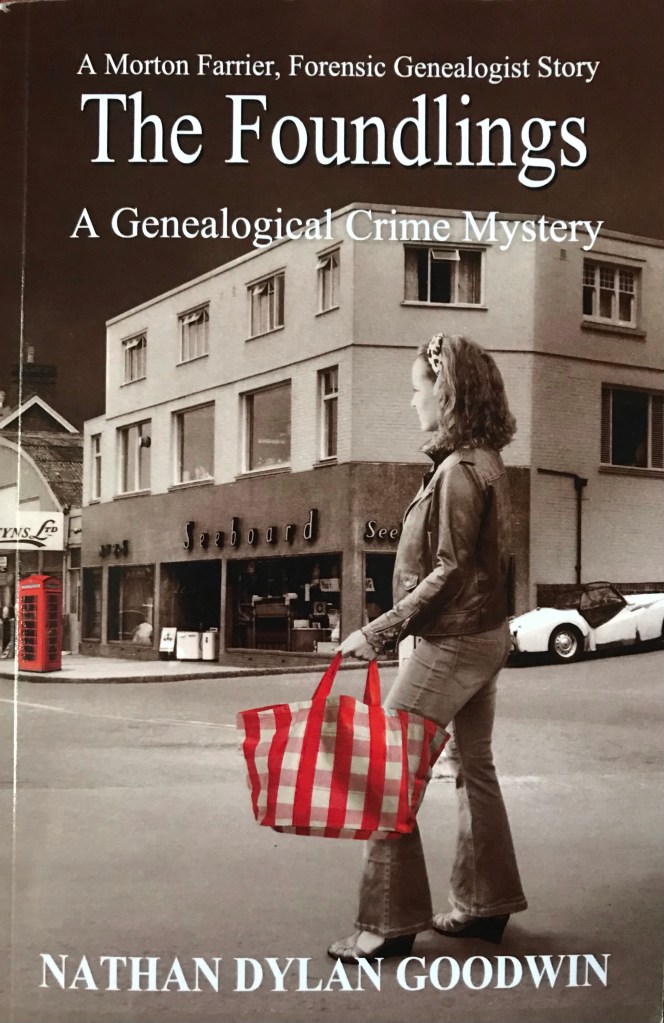
The Foundlings is the ninth novel in the Morton Farrier Forensic Genealogist series of books by Nathan Dylan Goodwin. And I promise no spoilers in this review. Suffice it to say if you read the book you’re in for a treat!
Once more genealogist Morton Farrier’s latest investigation is a fast-paced enjoyable read with plenty of plot twists and turns along the way, keeping you guessing right to the end. Farrier’s own family history is woven into the case, which proves all the more emotionally challenging for him because it is close to home.
It’s a case in which Farrier combines traditional family history research with DNA and genetic genealogy in order to find out the parentage of three women abandoned as babies. There’s real creative skill in how the author draws together all the various strands in this multi-layered story, with shades of darkness, to build to a credible ending. And for me it’s a sign of a good book when I’m compelled to flick back through the pages once I’ve finished, to re-read those “Aha” moments whose significance I’d not realised in my first run through.
As a family historian I really appreciate this series of books because I love following Farrier’s research processes. I can relate to the various records used, both online and in archives. And I do try to guess what steps he will take. This tale introduced an ethical dimension too. That being said, you certainly do not need to be a genealogist to become immersed in the story. If you like a satisfying mystery or crime novel, especially with some history thrown in too, The Foundlings – and the previous Forensic Genealogist books – will be right up your street.
I must confess I’m already an avid fan of the Morton Farrier Forensic Genealogist series of books, so his character was not new to me. I had just finished reading The Spyglass File. It meant The Foundlings was a few jumps ahead from where I’d got to in the series. And yes, I can confirm it can be read as a stand-alone novel, though I did quickly skip the few references to his previous case so as not to give away any clues to that story. I can also confirm it is up there with the previous books in the series, which goes from strength to strength.
In summary, if you’re in to family history, crime mysteries or historical thrillers I can highly recommend this book, along with all the others I’ve read in the series.
If you’ve not read any of the previous books in the Forensic Genealogist series and want to start at the beginning to sequentially see how the character’s back story evolves, here’s the full list:
The Asylum – A Morton Farrier short story;
Hiding the Past;
The Lost Ancestor;
The Orange Lilies – A Morton Farrier novella;
The America Ground;
The Spyglass File;
The Missing Man – A Morton Farrier novella;
The Suffragette’s Secret – A Morton Farrier short story;
The Wicked Trade;
The Sterling Affair;
The Foundlings.
Finally, here’s the all-important purchase information for The Foundlings. I read the paperback version, ISBN-13: 979-8481041421, price £8.99. There is also a kindle edition. Full purchase details forthis, and all the previous books in the series, can be found on Nathan Dylan Goodwin’s website.
Footnote: I was given a copy of this book by the author to preview. But if I hadn’t received a copy I would have certainly bought it – as I have all the earlier ones
This is the latest update of the pages relating to my Batley St Mary’s one-place study, the details of which I announced here.
St Mary of the Angels Church, Batley
In the past month I have added four weekly newspaper pages for November 1915. I have accordingly updated the surname index to these During This Week newspaper pieces, so you can easily identify newspaper snippets relevant to your family.
More men who served and survived have been identified. I have updated that page accordingly. No new biographies have been added this month. These will follow in due course.
Finally for this month the biography for Second World War man Michael Flatley had been updated to include a colour photograph.
Below is the full list of pages to date. I have annotated the *NEW* ones, plus the *UPDATED* pages, so you can easily pick these out. Click on the link and it will take you straight to the relevant page.
Postscript: Finally a big thank you for the donations already received to keep this website going.
The website has always been free to use, but it does cost me money to operate. In the current difficult economic climate I am considering if I can continue to afford to keep running it as a free resource, especially as I have to balance the research time against work commitments.
If you have enjoyed reading the various pieces, and would like to make a donation towards keeping the website up and running in its current open access format, it would be very much appreciated.
Please click here to be taken to the PayPal donation link. By making a donation you will be helping to keep the website online and freely available for all.
This is the latest update of the pages relating to my Batley St Mary’s one-place study, the details of which I announced here.
St Mary of the Angels Church, Batley
In the past month I have added seven new pages. These include five weekly newspaper summary pages for October 1915. I have accordingly updated the surname index to these During This Week newspaper pieces, so you can easily identify newspaper snippets relevant to your family.
There is one new War Memorial biography, that of James Rush.
More men who served and survived have been identified. I have updated that page accordingly. No new biographies have been added this month. These will follow in due course. However, the biography of Thomas Donlan (senior) has been updated, with additional information.
The final new page for this month is an occupational one, that of a limelight operator.
Below is the full list of pages to date. I have annotated the *NEW* ones, plus the *UPDATED* pages, so you can easily pick these out. Click on the link and it will take you straight to the relevant page.
Confession time. I have a terrible habit. One that I’m finding impossible to kick. One that regularly annoys my family, and drives them to distraction. I do try to break it. Honest. But every year I lapse back into this irresistible vice.
Wherever I go on holiday it ends up becoming something akin to a field trip. If the location is not linked to family history, I look for other avenues to explore. And this includes spending some time finding out a little about the local history.
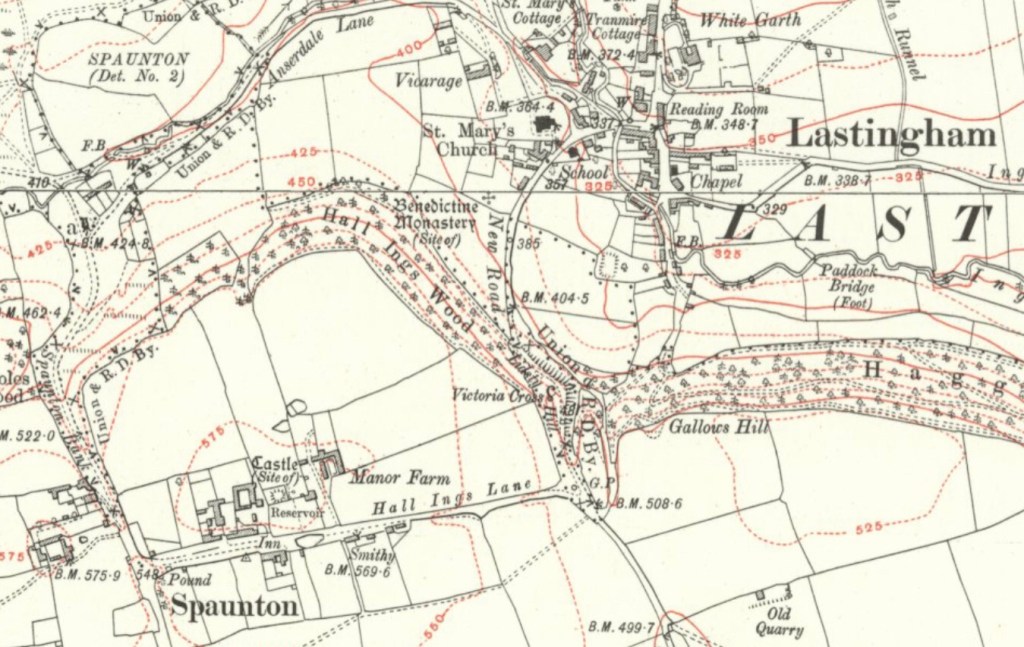
A holiday in October 2021, based in a cottage in the North Yorkshire hamlet of Spaunton, proved no different. Falling within the parish of Lastingham, a parish which is widely scattered across an expanse of moorland, in 2013 Spaunton had a population of 72.1 This is little changed from a century ago and its 1911 census population of 78. It is therefore tiny in terms of population, but big on history. The 1890 Bulmer’s Yorkshire, North Yorkshire, History, Topography & Directory described the Spaunton Township area as:
…comprising 1,540 acres, of which 1,287 are cultivated….Spaunton is the head of an extensive manor formerly held by a family which took its name from the place, and resided here in a castle, the foundations of which are still visible near Manor House….the hamlet consists of about half-a-dozen houses situated on the brow of a hill, half-a-mile from Lastingham.2
Ordnance Survey Map showing Spaunton and Lastingham – Six-inch England and Wales, 1842-1952, Yorkshire Sheets LXXIV NE and SE, Revised: 1910, Published: 1914 – National Library of Scotland, under the Creative Commons Attribution-NonCommercial-ShareAlike 4.0 International (CC-BY-NC-SA) licence
I had no family history connections to the area. But, as usual, I did not let that stop me. I’m so glad I pursued it. Because who could have thought such a quiet, rural backwater, and its environs, could contain so much history? From medieval crypts and a crashed Lancaster Bomber, to a manorial history with a Court Leet still operating today, dealing with petty transgressions. The area is chock full of history. Even my husband got involved in finding out more. Especially as there ended up being a food interest!
And it really does have a long history. Pre-Norman conquest a manor and 6½ carucates at Spaunton were held by Gamel.3 Documented in the Domesday Book, with nine households and an annual value to the Lord of 10 shillings,4 the overlordship in 1086 was held by Bernegar de Toni. He gave six carucates to the abbey which had been removed from Lastingham and refounded outside York.5 More of Lastingham, and the York connection, later.
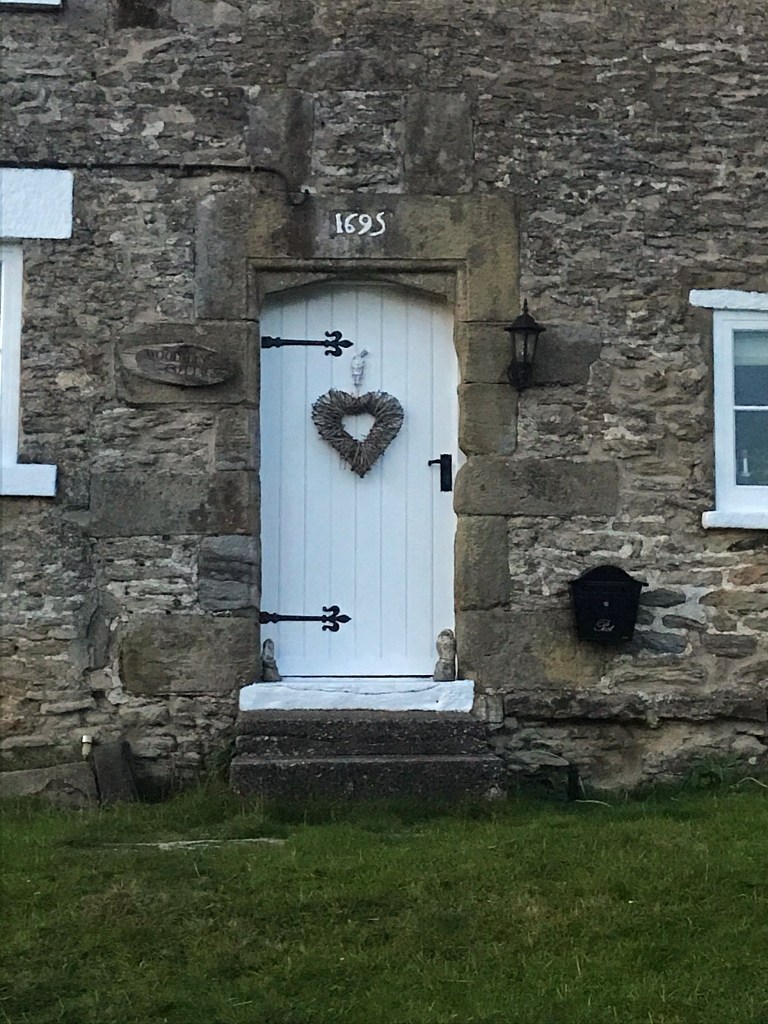
Taking a look around Spaunton, Woodman’s cottage, a Grade II Listed building, originally of Cruck Frame construction, has the year 1695 inscribed on its lintel, and is described as a “fine example of a 17th century yeoman’s house”.6
Woodman’s Cottage, with its date inscription
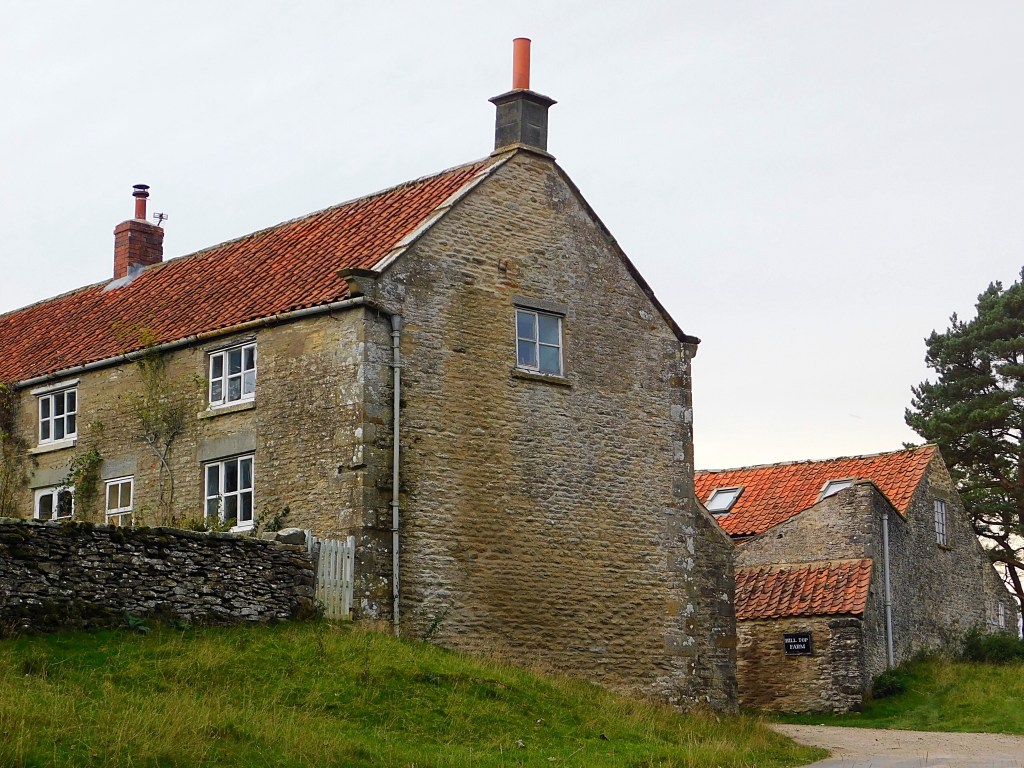
Another Listed building in the hamlet is the Grade II 18th century Hill Top Farmhouse. This was the farm neighbouring the one where our cottage was located, and is better known today as the home of Yorkshire Organic Millers.7
As an avid bread maker I brought home some of their milled bread flour for my next batch of loaves.
The Hill Top Farm product
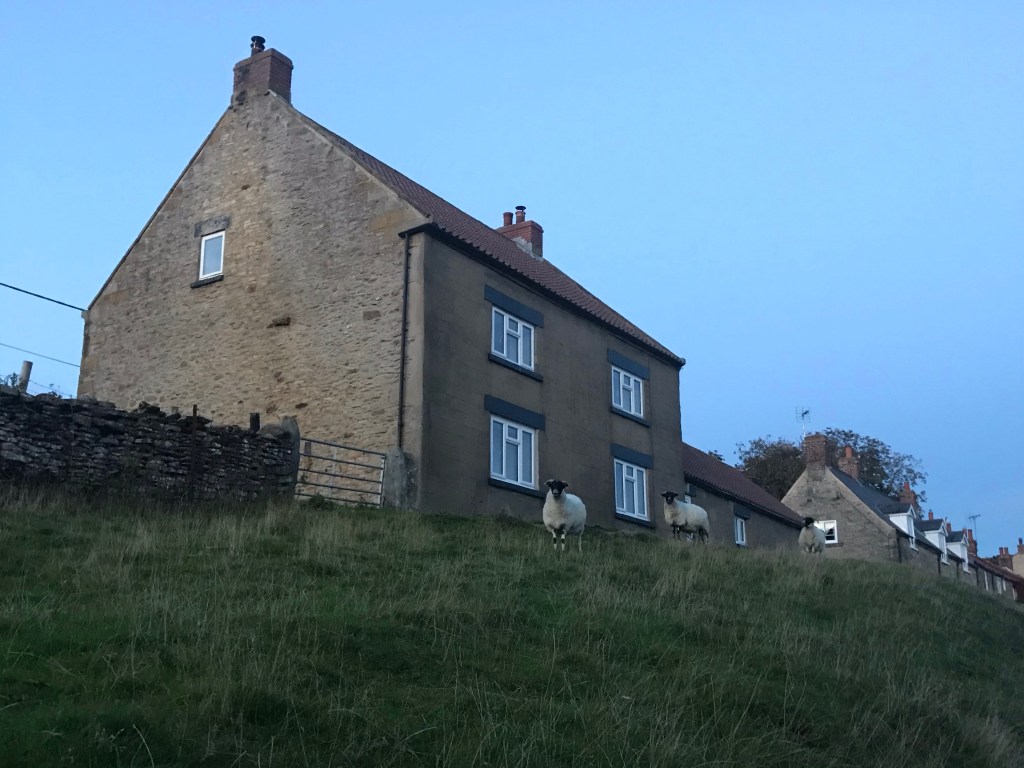
The land in front of many of the properties is common land, with grazing and common rights still in existence.
Sheep grazing on the common land in Spaunton
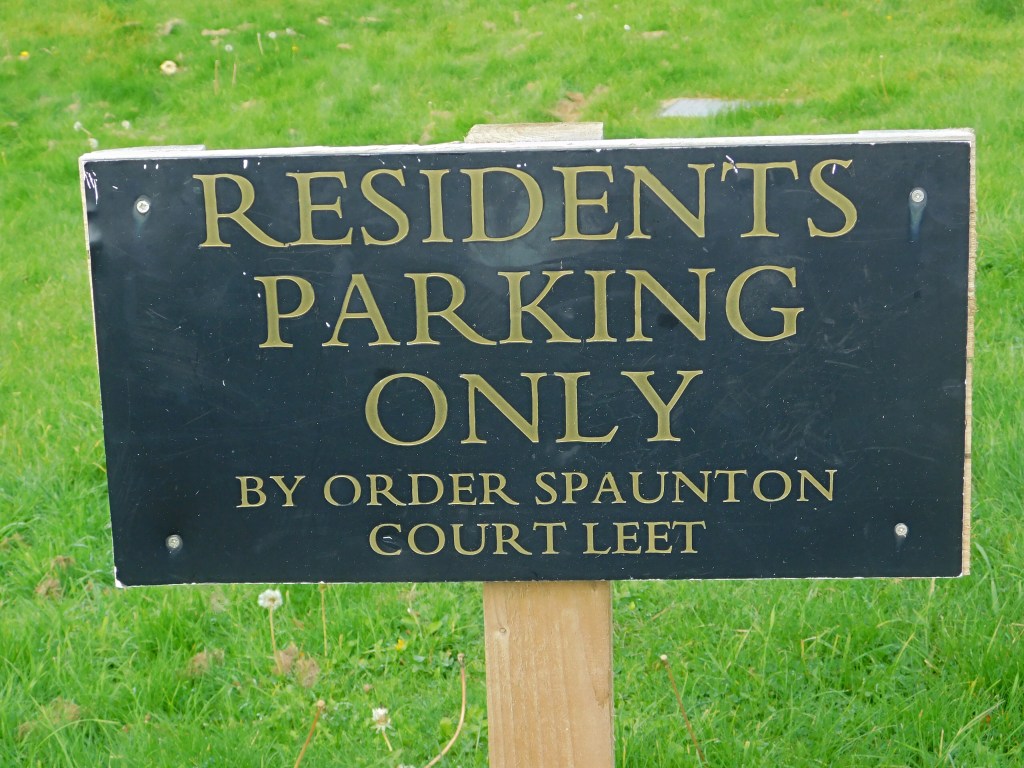
Remnants of the court system of the Manor of Spaunton still operate, with the Court Leet still meeting annually in October to levy fines for those who breech grazing and access rights. The current Lord of the Manor is George Winn Darnley, and the manorial jurisdiction covers land in five parishes.8
A sign in neigbouring Hutton le Hole, showing the wide extent of Spaunton’s Court Leet jurisdiction
There is a restored Grade II pinfold, dating from probably the 18th century. This enclosure, also known as pound, was where stray animals were confined, with a fine payable by the owners to the pinder, a manor official, to release them.
Spaunton’s restored pinfold
The next piece of history associated with Spaunton came as a real surprise.
The 1939 Register shows farmer William Strickland, his Special Constable nephew George, also a farmer, and his niece Elizabeth Ann (Annie), living at Manor House farm at Spaunton.9
The Stricklands were an old, established farming family, residing at the Manor House. In fact the Strickland’s home was the venue for the annual Court Leet, referred to earlier. Prior to her elderly grandmother’s death in 1915 Annie had assisted her in providing the excellent meal in the Manor House, traditionally served after the court proceedings.10 So it was a family embedded in the community and history of Spaunton and its manor.
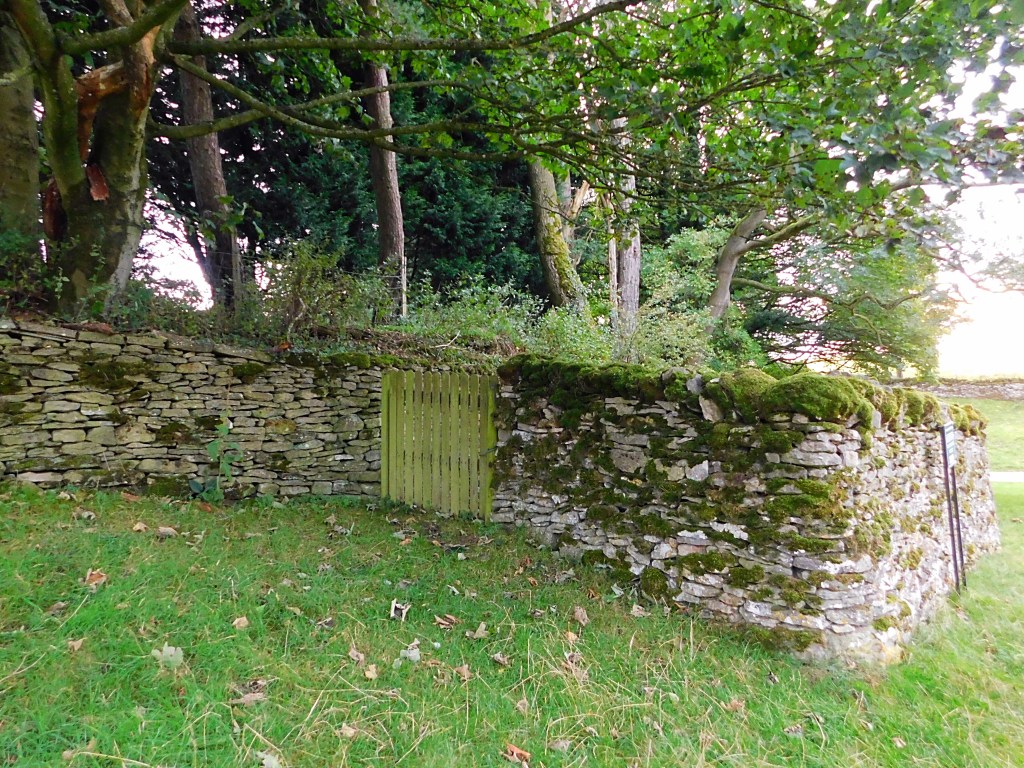
On 10 July 1940, less than a year after the Register entry, William Strickland died. This left George and his sister at Manor House farm. They were there, along with an evacuee girl, on the evening of 7 October 1943.
What was the Manor House farm as photographed on my visit in October 2021 – photo by Jane Roberts
That night Lancaster Bomber II D.S.724C took off from Linton-on-Ouse. It’s a RAF base with which I’m acquainted, having visited and flown from it (that’s another story). Part of Squadron 408 of the Royal Canadian Airforce it was bound for a bombing raid on Stuttgart. On board were Flight Sergeant John Douglas Harvey (Pilot), Sergeant Eric James Hurd (Navigator), Flying Officer Stephen William Dempsey (Bomb Aimer), Pilot Officer G.R. Butchart (Wireless Operator/Air Gunner), Sergeant Stanley Enos Campbell (Mid Upper Gunner), Sergeant K.L. Davison (Rear Gunner) and Sergeant H.J Branton (Flight Engineer).
This evening was the first of 408 Squadron’s operational flights since converting to Lancaster Bombers. The entry in 408 Squadron’s Air Operation Book on 7 October 1943 excitedly notes:
At last! the Squadron is back on Operations after almost two months at converting to Lancaster Mark II aircraft. Sixteen aircraft were prepared for Bombing Operations, but two were scrubbed. The remaining fourteen took off on time. Twelve aircraft were successful in reaching their objective…one aircraft made an early return due to the rear guns going u/s…11
That left one aircraft – the one piloted by R141147 Flight Sergeant J.D. Harvey. He had a total of 331 hours flying time at the time of the crash, but only 37 of his hours were on Lancasters. It was also his first operational flight in this aircraft type.12
The details of his aeroplane’s catastrophically short flight, as logged in the Squadron’s Air Operation Book, read as follows:
This aircraft took off from this base at 20.59 hours, but had to be abandoned at 21.08 hours due to controls jamming up. This aircraft crashed at Hutton Le Hall [sic], Yorks approximately 8 miles north of Thirsk. The crew of this aircraft managed a safe parachute descent. One member of the crew Sergeant Campbell, Stanley Enos (Mid Upper Gunner) dislocated his shoulder, fractured a few ribs and suffered pains and shocks, otherwise conditions was fair. The remainder of the crew were uninjured. One civilian Mr. George Strickland, (Farmer) from Manor Farm, Spraunton [sic], Yorkshire was killed by the explosion of a bomb. The inquest to this accident was held at 1600 hours on October 8th, 1943. This aircraft is now categorized E.2 (burnt).13
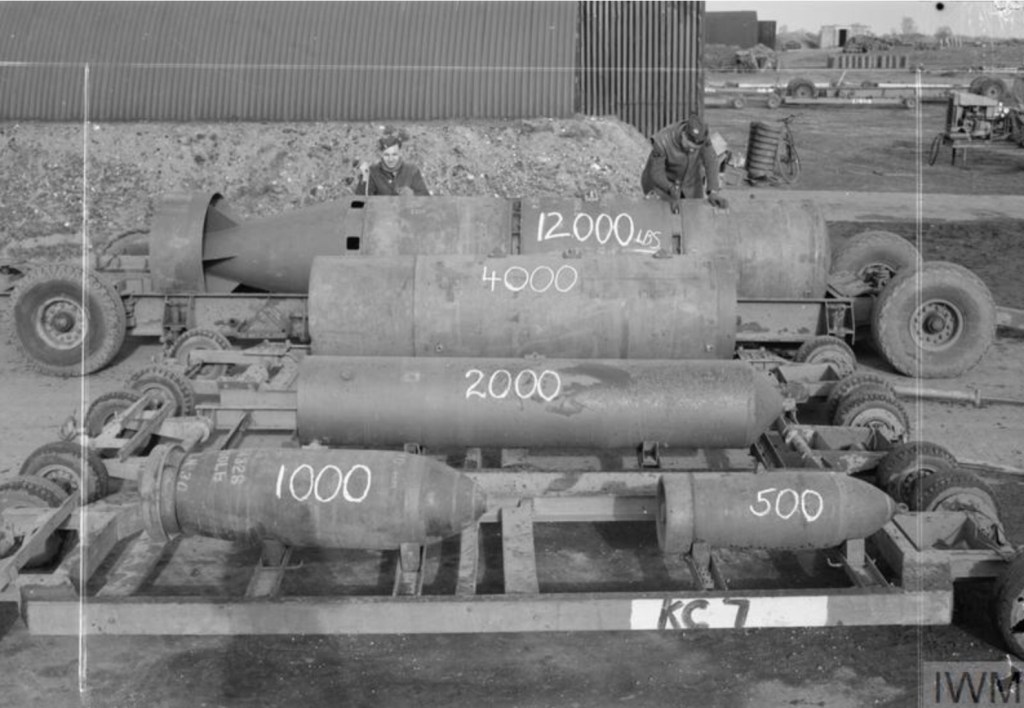
The aircraft, with its full load of bombs, is believed to have come down in the field adjoining the farm. The device which killed George Strickland was a 4,000lb High Capacity bomb,14 the blast from which apparently blew the heavy farmhouse door on top of him.15 It also did considerable damage to the house, and partly demolished the farm buildings.
The Malton Gazette and Malton Messenger of 15 October 1943 reported on the inquest, where a verdict of ‘death by misadventure’ was returned on 53-year-old George.16
As for the cause of the air accident, according to the wonderful Yorkshire Aircraft website, which covers air accidents in the county:
The post-crash investigation found that severe icing on the surfaces of the aircraft was considered to have been a factor in the control of the aircraft having been lost. However the main theory for control being lost almost immediately after take-off was suggested to have been down to the aircraft’s auto-pilot being accidently switched on prior to take-off and this went un-noticed.17
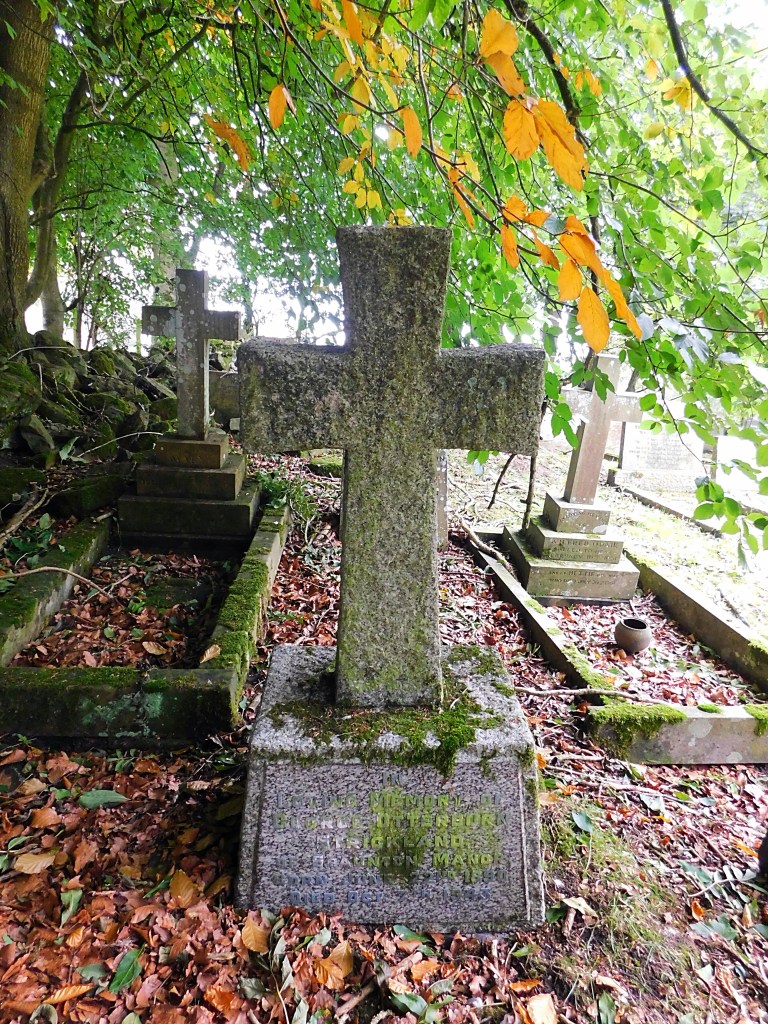
George Otterburn Strickland is buried in the churchyard of Lastingham St Mary’s.
George Otterburn Strickland’s headstone at Lastingham St Mary’s – photo by Jane Roberts
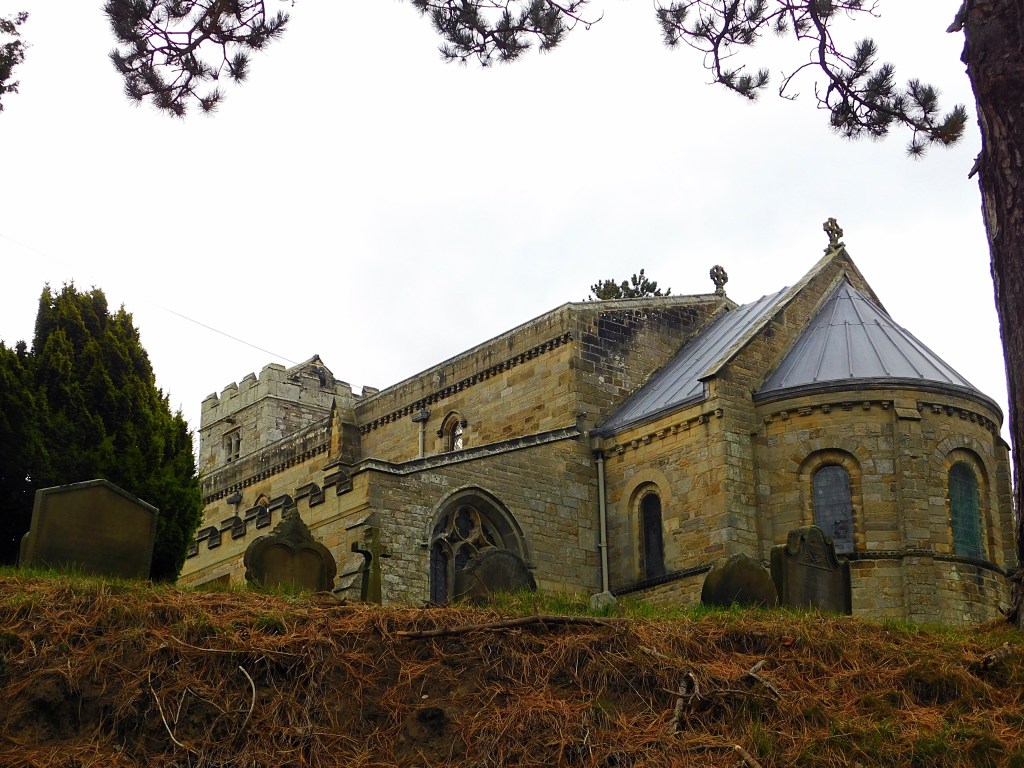
This leads nicely on to the next piece of history, at Lastingham St Mary the Virgin Parish Church, which is the location of a historically significant crypt.
St Mary’s Church, Lastingham – photo by Jane Roberts
As Kelly’s 1913 Directory describes:
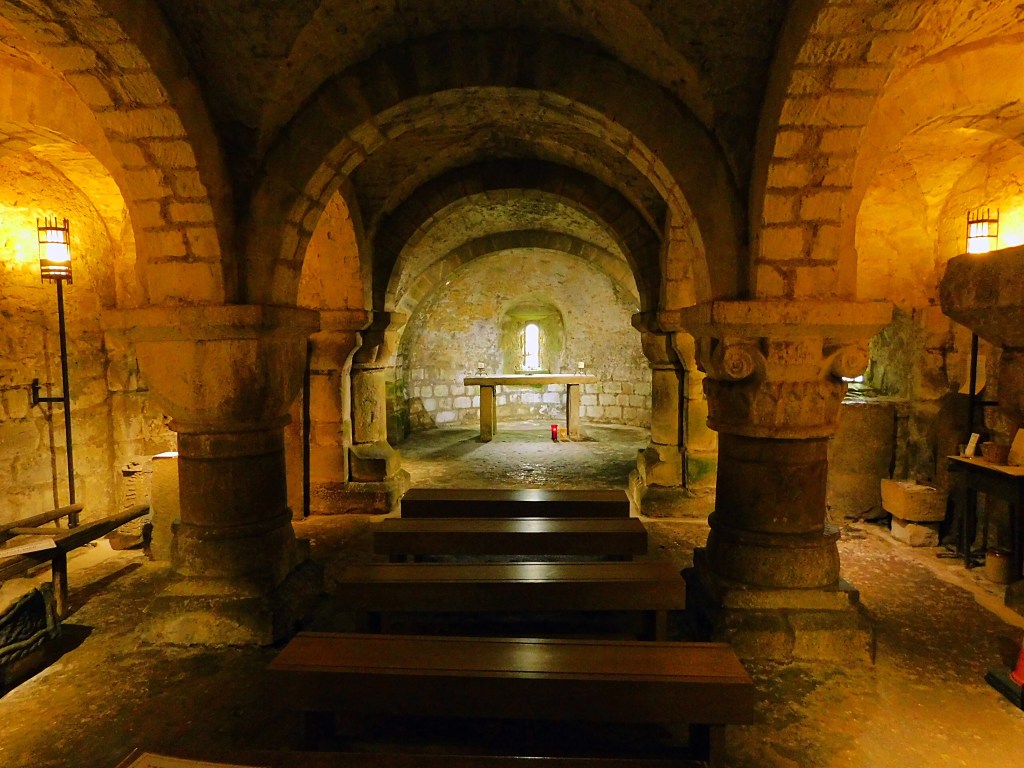
This place was the site of a monastery founded in 648 by St. Cedd, a Saxon bishop, and brother of St. Chad, bishop of Lichfield; St Cedd was eventually buried in the stone church of St. Mary, erected some time after his decease, and the present church, if it does not incorporates portions of the early structure, at least occupies its site, and the very interesting crypt below the church confirms this view….the crypt, which extends under the whole church, with the exception of the western bay, is in fact an underground church, possibly of Early Norman construction, c.1078, and consists of apsidal chancel of two bays, and a nave and aisle of three bays, with a vaulted roof carried on massive piers and capitals enriched with interlaced arches and rude volutes; in the crypt are preserved some stone crosses carved with interlaced work; an altar, possibly Roman, 17 inches high by 14 inches wide, and a pre-Reformation bier; the windows, small and circular-headed, are deeply splayed….18
The Crypt beneath Lastingham St Mary’s Church – photo by Jane Roberts
It is thought the crypt was built possibly on or near the vicinity of the earlier 7th century St Cedd founded structure, with the crypt being part of a huge Benedictine Abbey planned, but never completed, by Abbot Stephen of Whitby. The project was abandoned in 1088 when Stephen and his monks moved to York, and built St Mary’s Abbey.
It really is well worth seeking out. As you descend the stairs to it, you are enveloped in a sense of peace and calm. The early crosses and bier, described in the Kelly’s Directory, are still in situ. I found it a wonderfully contemplative space. And, for the less religious, there’s a highly recommended pub across the road (sadly shut for refurbishment on our visit).
Finally, just over two miles down the road from Spaunton is the village of Hutton-le-Hole, with land which forms part of the Manor of Spaunton. This is yet another location within the Ancient Parish of Lastingham. The village is home to the impressive Ryedale Folk Museum.
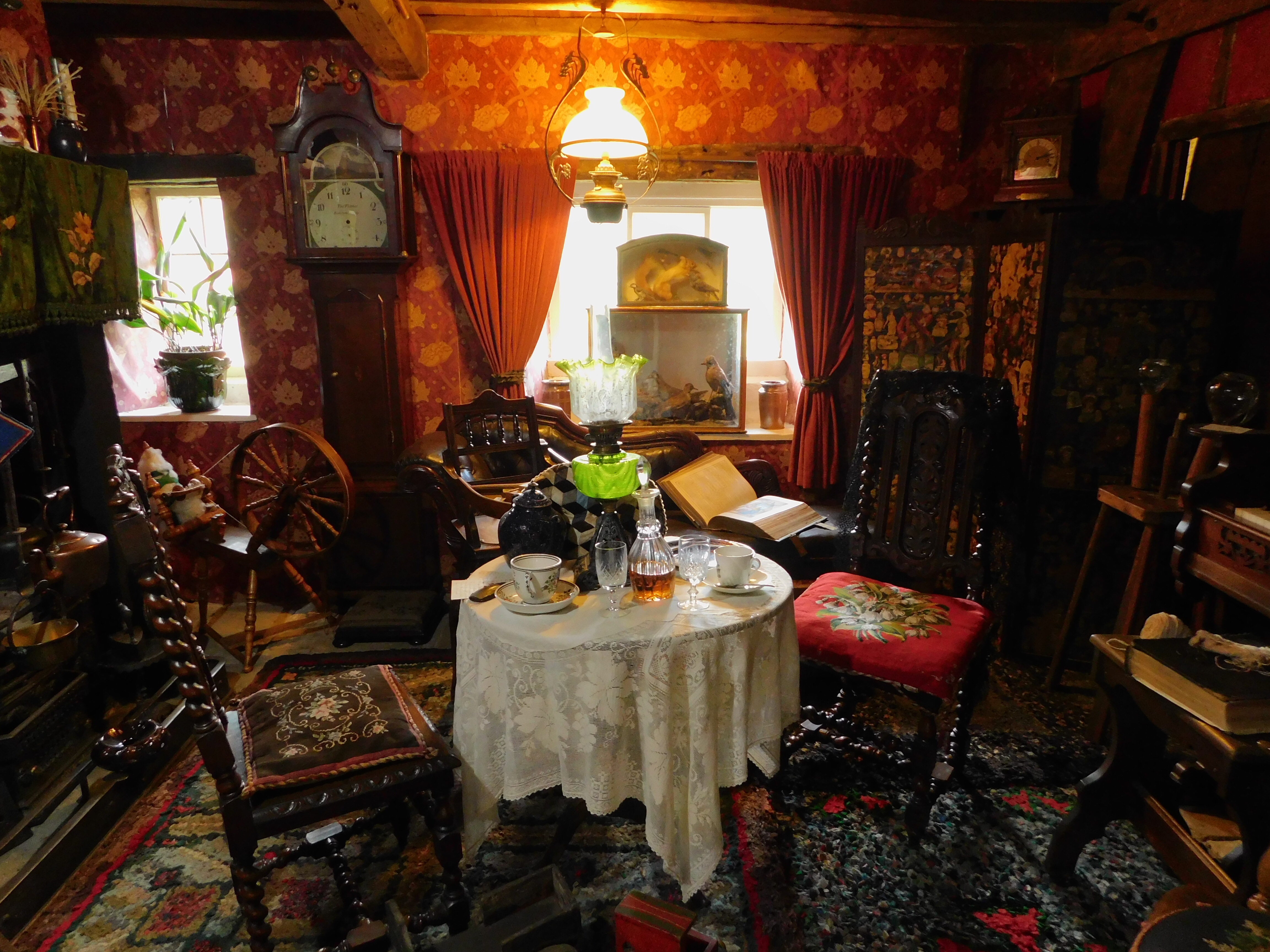
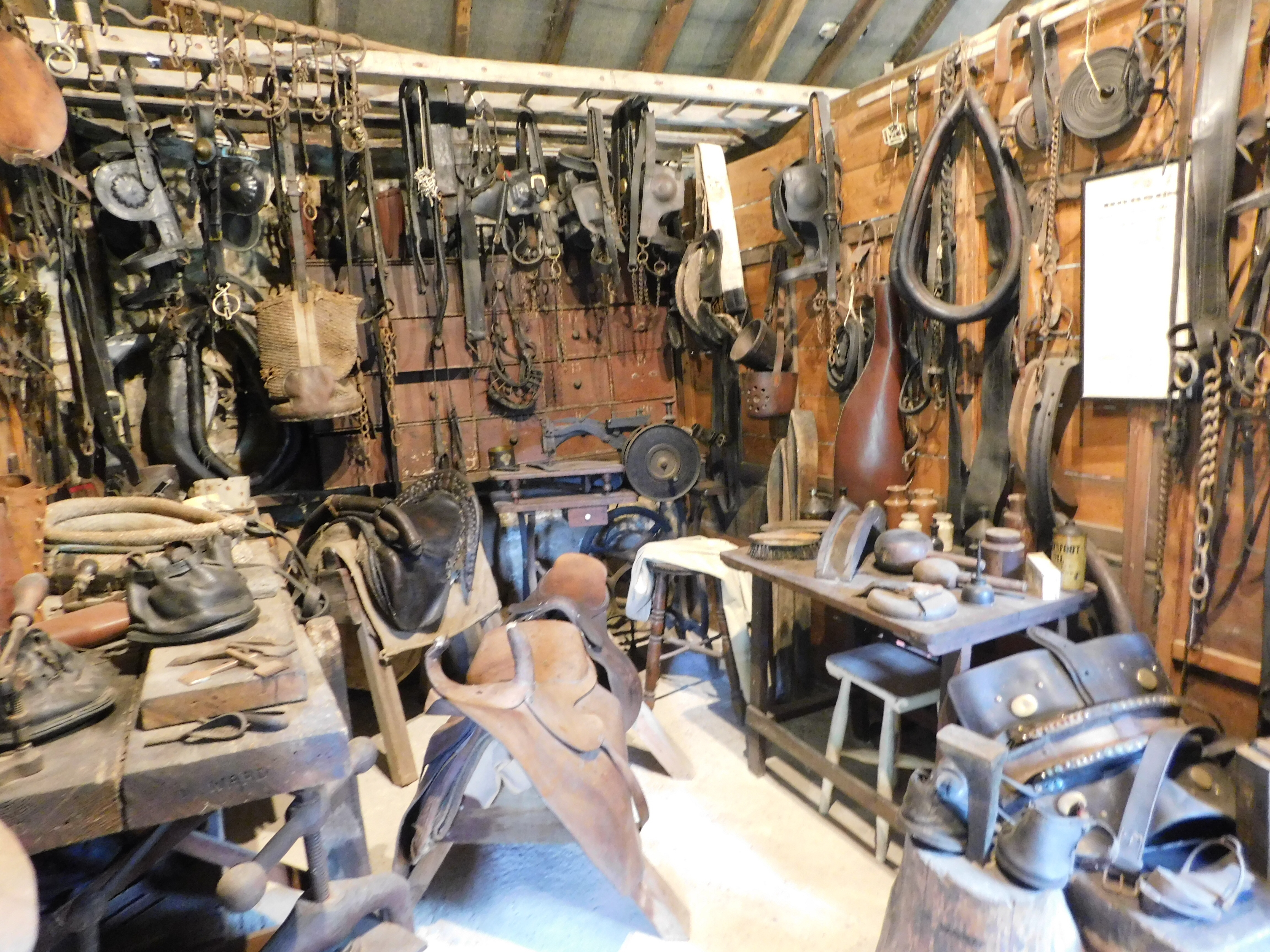
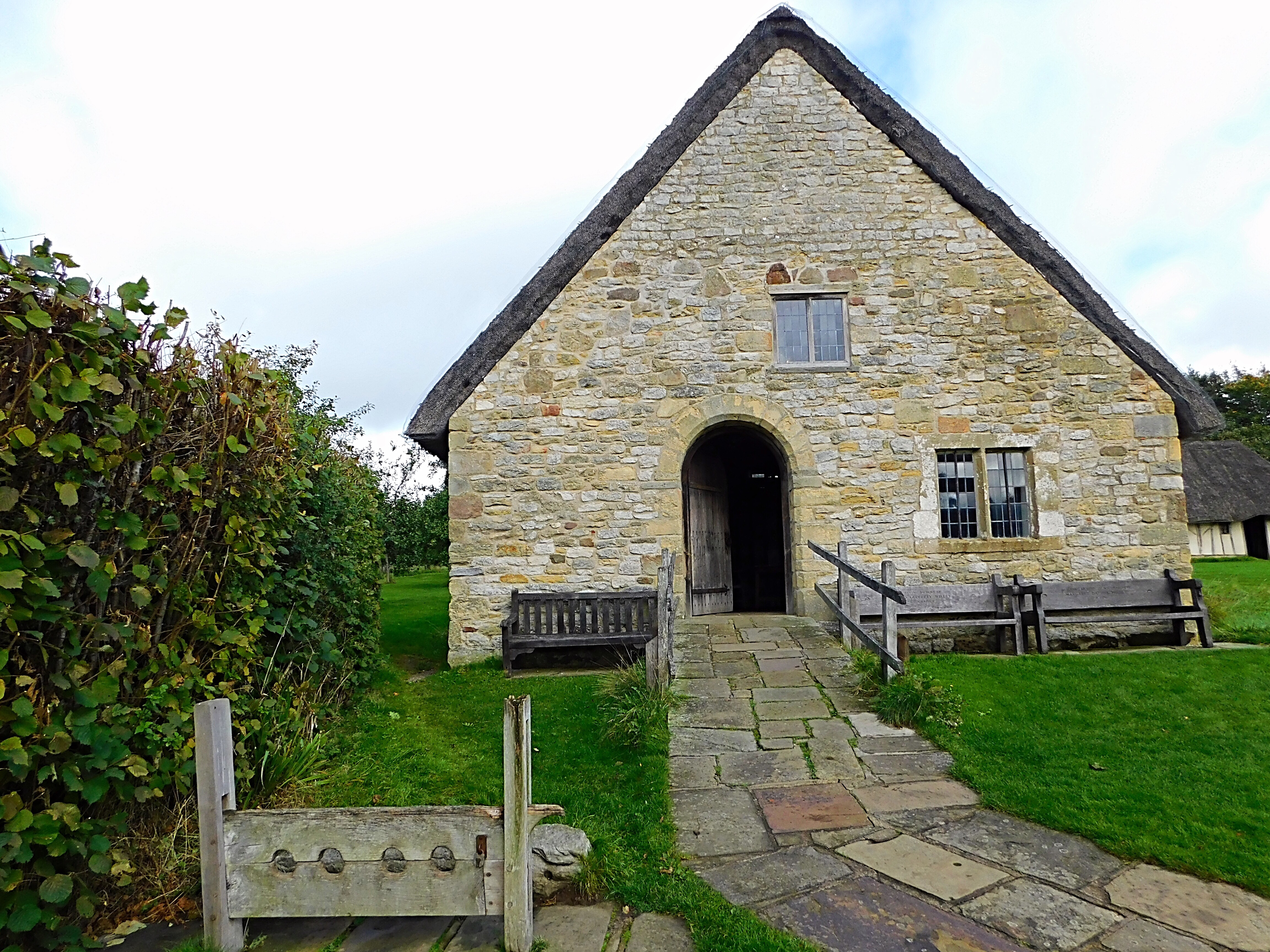
An open-air site set amongst 6½ acres, it has more than 20 heritage buildings. From the thatched Manor House from Harome, to an Edwardian daylight photographic studio, a Medieval crofter’s cottage, the almost 500-years-old thatched longhouse from Stang End, Danby, furnished in the style of the early 18th century, and a Victorian thatched cottage, washhouse and dairy. There are also various workshops including that of the saddler, tinsmith, blacksmith, cobbler and carpenter. Then there’s the vintage chemist and village store, plus the undertakers. And, going back 4,000 years, there is an interpretation of an Iron Age dwelling. Think a North York Moors mini version of Beamish, with buildings from across the National Park dismantled and reassembled on the site.
A selection of buildings and interiors from Ryedale Folk Museum, including a Victorian parlour, inside the saddlers, a Victorian schoolroom, the interior of the the Stang End Longhouse, and Harome Manor House
You can learn about the farming year, and view the range of historic farming implements and machinery. There is also a variety of livestock – including the greedy Tamworth pigs.
This is only a small fraction of what is on site. It is a great place for all the family to spend a good couple of hours. If you’re into house history or family history, and wanting to find out more about your ancestors’ living conditions or village occupations, I’d say the museum is a must.
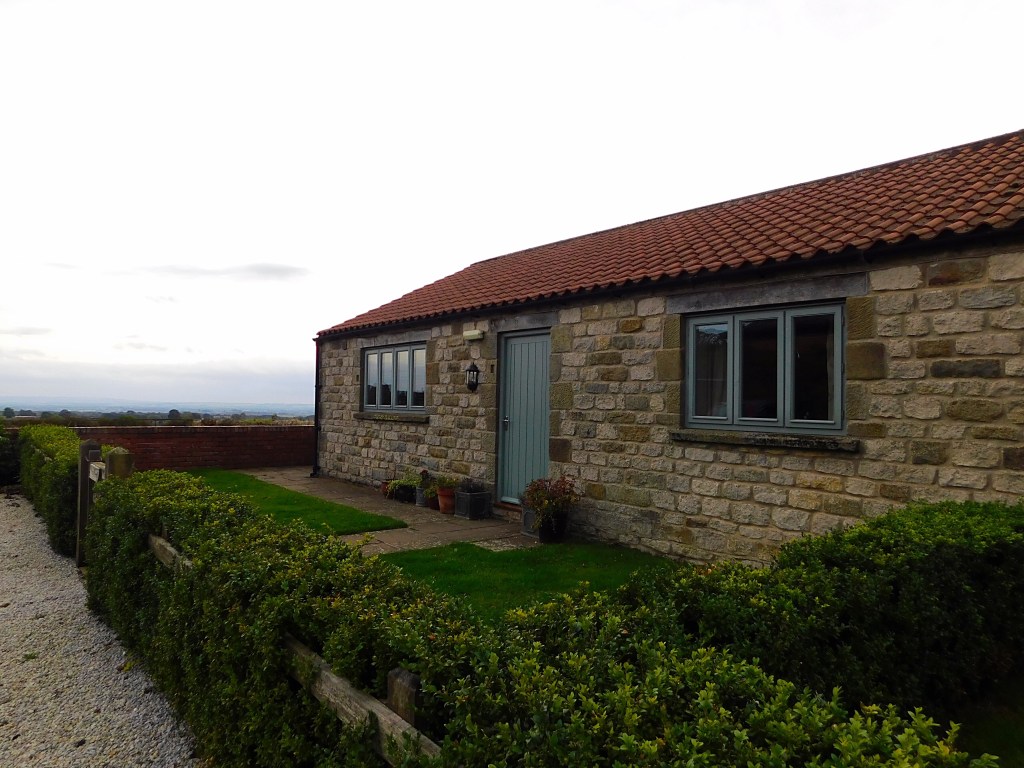
The Wests, the Spaunton cottage which was our home for a week
I stayed at The Wests, one of the cottages on Grange Farm. Whilst there, and finding out a little of the history of Spaunton, I must admit I did think it would make a fabulous one-place study. For a moment I felt really tempted. Really, really tempted. I even got as far as looking at the Manorial Documents Register…then reality kicked in. I’ve enough on already. But if someone else has any free time, and the inclination to embark on a fascinating piece of research, they wouldn’t go far wrong with Spaunton! And yes, there was a bread maker and bread mix in the cottage to bake a loaf!
Footnotes: 1. Appleton le Moors, Lastingham and Spaunton Parish Report, 2013: https://democracy.ryedale.gov.uk/documents/s17204/AppletonleMoorsLastinghamandSpauntonParishPlan.pdf. Accessed October 27, 2021; 2. History, Topography, and Directory of North Yorkshire: Comprising Its Ancient and Modern History ; a General View of Its Physical Features ; Its Agricultural, Mining & Manufacturing Industries ; Family History and Genealogical Descent ; Myths, Legends, Biographical Sketches, &c., &c. ; with a Map Prepared Expressly for the Work. Preston: T. Bulmer, 1890. 3. A carucate was an area of land used as a basis for tax assessment in the Domesday Book. It equated to the amount of land which could be ploughed in a year by one plough with an eight-ox team; 4. Powell-Smith, Anna. “Home: Domesday Book.” Home | Domesday Book. Accessed October 27, 2021. https://opendomesday.org/. 5. “Parishes: Lastingham.” British History Online. Accessed October 27, 2021. https://www.british-history.ac.uk/vch/yorks/north/vol1/pp524-529. 6. Appleton le Moors, Lastingham and Spaunton Parish Report, 2013: https://democracy.ryedale.gov.uk/documents/s17204/AppletonleMoorsLastinghamandSpauntonParishPlan.pdf 7. Yorkshire Organic Millers. Accessed October 27, 2021. https://yorkshireorganicmillers.com/. 8. “Court Leet.” Hutton le Hole, March 27, 2019. https://huttonlehole.ryedaleconnect.org.uk/about/court-leet/. 9. 1939 Register, The National Archives (TNA), Reference: RG101/3279D/007/4 Letter Code: JHIJ – Relationships are not show, but these were established from additional research 10. Whitby Gazette, 24 October 1913 11. Operations Record Books, 408 Squadron RCAF (Royal Canadian Air Force) Records of Events: Y, 1 September to 31 October 1943, TNA Reference AIR 27/1797/17 12. Lancaster DS724 at Spaunton village, Yorkshire Aircraft. Accessed October 27, 2021. http://www.yorkshire-aircraft.co.uk/aircraft/planes/43/ds724.html 13. Operations Record Books, 408 Squadron RCAF (Royal Canadian Air Force) Records of Events: Y, October 1943, TNA Reference AIR 27/1797/18 14. Operations Record Books, 408 Squadron RCAF (Royal Canadian Air Force) Records of Events: Y, 1 September to 31 October 1943, TNA Reference AIR 27/1797/17 15. Lancaster DS724 at Spaunton village, Yorkshire Aircraft. Accessed October 27, 2021. http://www.yorkshire-aircraft.co.uk/aircraft/planes/43/ds724.html 16. The Gazette and Herald Online, 10 October 2012. Accessed October 27, 2021. https://www.gazetteherald.co.uk/news/9977266.from-the-malton-gazette-and-malton-messenger-friday-october-15-1943/ 17. Lancaster DS724 at Spaunton village, Yorkshire Aircraft. Accessed October 27, 2021. http://www.yorkshire-aircraft.co.uk/aircraft/planes/43/ds724.html 18. Kelly’s Directory of the North and East Ridings of Yorkshire, with the Cities of York and Hull, 1913. London, etc: Kelly, 1913.
Margaret was born Margaret Ellen Haynes in Stoke on Trent on February 17, 1936, the only child of William and Ada Haynes.
Although Margaret recalls having a happy childhood in Hanley, her earliest memories were far from pleasant, with recollections of the Germans bombing the nearby Shelton steelworks in 1940 and Margaret hearing the monstrous exploding shells as she sheltered in the family’s air raid bunker never being erased from her mind.
But the end of the Second World War in 1945 also provided her with one of her most endearing moments when, just days after Germany’s surrender, she visited London with her father and took a trip to Downing Street. As the two of them gazed at the residence of the British prime minister, the door to No10 opened and out strode World War Two hero Winston Churchill, who caught the eye of the nine-year-old Margaret and gave her a triumphant wave.
‘Not many can say that!’ Margaret always proclaimed with a smile that was so full of pride.
Margaret on a post-war visit to London with her dad
Sadly, however, that trip to the capital was to be one of the last that Margaret was able to take with her father, who died of cancer just two years later when she had just turned 11.
In an instant, Margaret’s world had been turned upside down. Her father and mother had run a successful grocers business together, but now it was up to Ada to run it alone – no easy task with an 11-year-old to care for as well.
Margaret and her mum
But Ada was determined to do as much as she could on her own to keep the business going, enabling her daughter Margaret to fulfil her academic potential.
And Margaret certainly had potential – a potential that helped her dream of becoming a schoolteacher become reality.
The former Rose Queen at St Luke’s Church in Hanley excelled at junior school and excelled at Brownhills High School, achieving outstanding grades in her O Levels and A Levels and collecting several school subject prizes along the way.
Margaret being crowned Rose Queen
Those grades earned her a place at Nottingham County Training College, where she qualified as an English and Religious Education teacher.
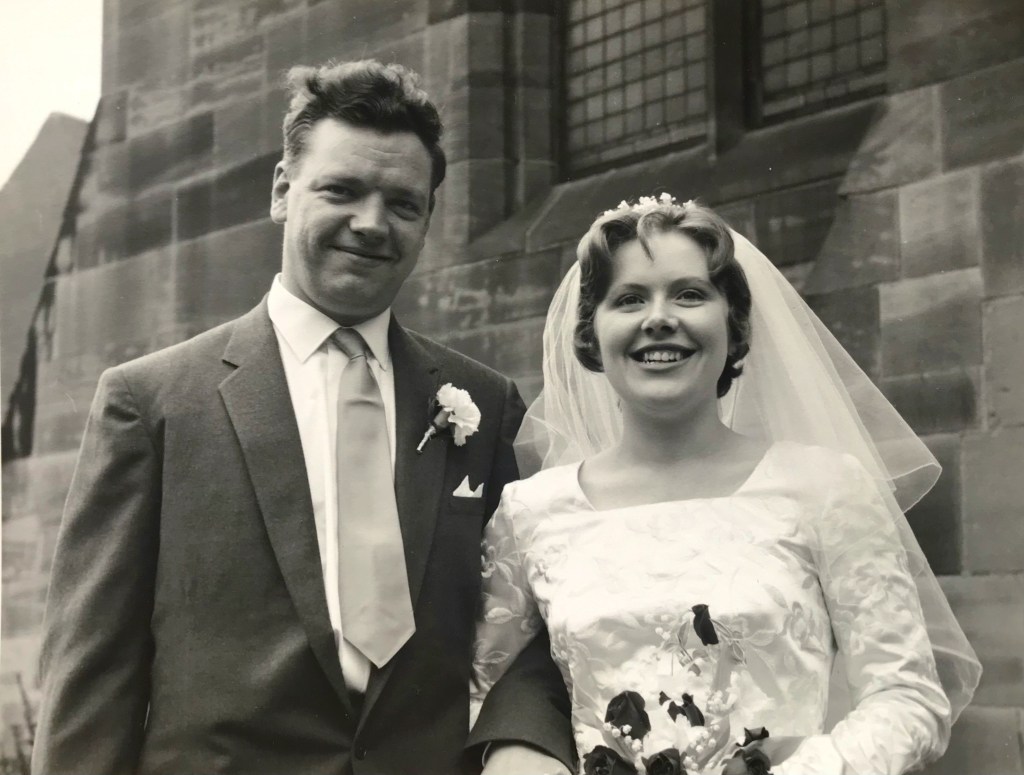
Her first teaching roles were at junior schools in Longton and Trentham, before she turned her attention to teaching older pupils. It was also at this time that Margaret become more involved in amateur dramatics and where she met and fell in love with her husband Ted. Within a year, they had married, on August 4, 1960.
Margaret and Ted’s wedding day at St Luke’s Church, Hanley
She was now Margaret Roberts – a name she adored, although that adoration was challenged a number of years later when another Margaret Roberts burst on to the political scene under her married name of Margaret Thatcher, who as education secretary had threatened to turn the whole schooling system on its head.
As someone who was so passionate about the British education system, that was something Margaret found hard to bear. Teaching meant so much to her, and it was a passion that never faded.
But Margaret was also passionate when it came to her family and she had always dreamed of having a number of children. Unfortunately, after a first health-challenging pregnancy, that hope faded, and so Margaret and Ted had to settle for the one child, Chris, who was born in October 1964.
In the early years following Chris’s arrival, Ted’s job meant the family lived in Hawarden and Buckley – where Margaret was still able to secure part-time teaching roles – before another promotion for Ted meant the family had to move to Batley.
Again, Margaret had little trouble finding employment and became a full-time English teacher at Princess Royal Girls High School in Carlinghow.
Then, a couple of years later, following a merger of girls high schools in the Batley area, a new school opened at Howden Clough, with Margaret among the first group of senior staff members.
Within a couple of years, she was deputy head of the lower school and head of pastoral care, underlying how much she cared for the welfare of her pupils.
Ada, Ted, Chris and Margaret
After retiring in the early 1990s, and particularly following the marriage of Chris to Jane in 1992, Margaret and Ted devoted more of their time to their love of travel, visiting such places as Australia, Canada and all across American, with San Diego their favourite location.
The arrival of their beloved only granddaughter, Amelia, in 1996 meant they spent less time travelling and more time baby sitting – although it was something they both adored.
Margaret at her Soothill Lane home with granddaughter Amelia
But it was also around this time that Ted’s health began to suffer, with a serious heart condition and cancer diagnosis hitting the couple incredibly hard.
Margaret, however, remained strong throughout and was never far from Ted’s side. They were a couple who no-one could ever imagine being apart.
That was, of course, until Ted’s ultimately sudden death from a heart attack in July, 2011.
Although Margaret appeared to cope with his death well, and had Chris there to provide strong support, it was soon clear just how hard it was hitting her.
She made every attempt to stay close to her friends and regularly attended church to find some extra inner strength, but it wasn’t enough.
She regularly told Chris how, since Ted’s death, she was unable to concentrate long enough to read and found it almost impossible to stay mentally stimulated. She soon feared she was beginning to fall apart mentally and decided to seek professional help. As a result, it was confirmed she was suffering from the early stages of Alzheimer’s.
Margaret, again, appeared to be handling that bombshell well, but there were times when it was clear things were proving far too much for her, and in December 2015 she was taken into care. Margaret’s new home was Ashworth Grange Care Home in Dewsbury, and she loved it there.
To be honest, it probably helped that she had taught some of her carers, which may have earned her a little extra attention here and there. Yet, as a place to spend her final years, it couldn’t have been better – although COVID restrictions meant she never got the chance to really get to know Amelia’s partner Jack, and missed out on giving her first great grandchild Ethan a great big cuddle and the chance to spoil him rotten, which she most certainly would!
Yes, it may have been as a result of a fall at the home that finally resulted in her death after 10 days in Pinderfields Hospital in Wakefield, but as someone who had been prone to many falls over a number of years, there was always a possible such an event may ultimately lead to her death.
But whatever the circumstances of her death, Margaret Ellen Roberts had a good life and we can all thank God for that.
Margaret’s ashes will be laid to rest at Woodkirk alongside her beloved mother and husband
The above were the words my husband Chris wrote for his mum’s funeral on 22 October 2021. She died in hospital on 15 September 2021.










 Past To Present Genealogy