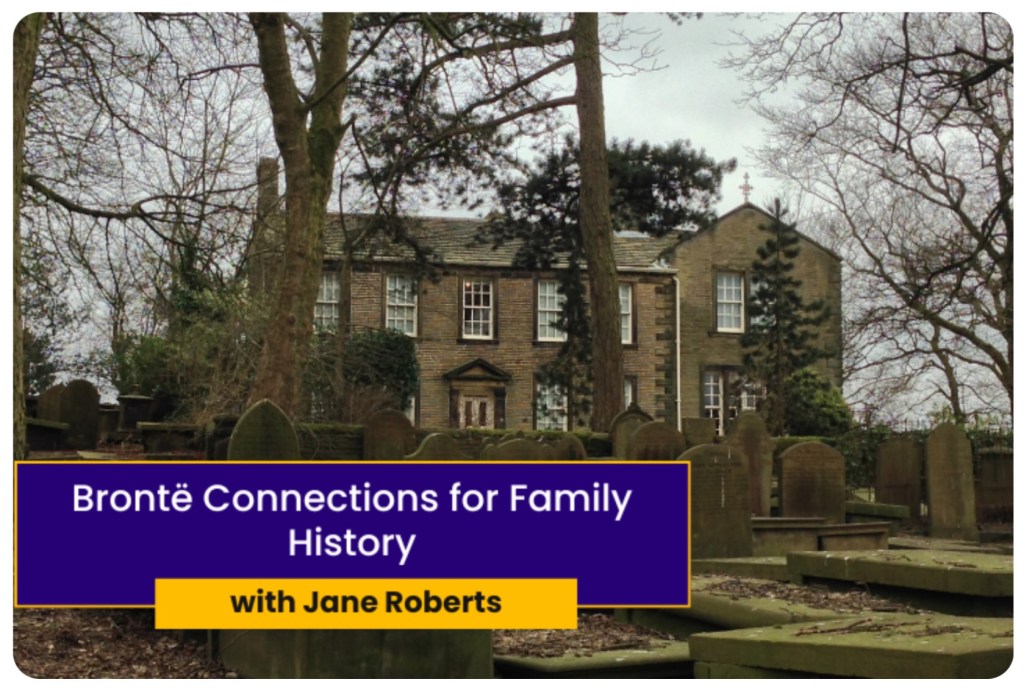
A quick heads up for an online talk I will be giving via the Society of Genealogists on 25 April 2026. Don’t switch off at this point if you’re not a member – it is open to anyone.
If you follow this blog, or any of my online social media accounts, you will know I live in an area packed with Brontë history, and I’m a frequent visitor to Haworth and other Brontë linked sites.
Well, I’m delighted that I’ve been asked to give an online talk all about exploring Brontë Connections for Family History.
Here’s the blurb about it, to give you some idea of what I’ll be covering:
The latest film adaptation of Emily Brontë’s dark, Gothic literary classic, Wuthering Heights, has triggered a fresh wave of Brontë-mania. A new generation of tourists are descending on the village of Haworth, keen to find out more about these world-famous sisters, and wanting to carve out their own slice of Brontë magic. But family historians can also channel into the Brontë family’s lives and literature, seeking their own Brontë connections and research inspiration. Jane’s talk will give you some ideas of how, and where to look.
I’d love to see you there, as I’m immensely proud of where I come from, my area’s Brontë links, all things Brontë, and I might even let you in on my quest to find my links to this amazing literary family!
You never know, as a result you may have ideas and inspiration to see how your family history might be connected.
February has been a particularly busy month for the Batley St. Mary of the Angels One-Place Study, with five new posts. This brings the total number of posts up to 427. Three more were updated.
Peter Gavaghan
This month’s additions and updates included one new War Memorial biography, that of the first Peter Gavaghan to be killed in the war (his cousin also named Peter died later on, and his biography was added some time ago). Both men’s biographies can now be found in The Biographies: War Memorial Men section.
Several more men who served and survived were identified, and this page has been updated. Their biographies will follow in due course.
Someone from the parish who died but is not on the church War Memorial has been identified, Michael Howley. I have added his biography to the section covering Men Associated with St. Mary’s Who Died but Who Are Not on the Memorial, and that overall page has been accordingly updated too. I have also updated the War Memorial Chronology of Deaths page, to include him.
There are two new posts in the Miscellany of Information section. One deals with the horrific, but all too common, circumstances surrounding the death of a child in the 19th century. The other concerns three pigs, a headstone and a long-lived parishioner.
There is also the parish history snippets piece for February 2026. These snippets cover a variety of events and people from the parish from years gone by, and can be found in the Bulletin for Batley St Mary of the Angels and Birstall St Patrick section. One is an amazing piece connected to The Beatles and a circus! Even if you have seen them on the Bulletin, it is worth checking them here as some have links to more detailed pieces I have written.
Below is the full list of pages to date. Simply click on the link and it will take you straight to the relevant page. I have annotated the *NEW* and “UPDATED” posts, so you can easily pick them out.
If you want to know the background, and what is involved in a one-place study, click here. Otherwise read on, to discover a wealth of parish, parishioner and wider local Batley history.
Postscript: I may not be able to thank you personally because of your contact detail confidentiality, but I do want to say how much I appreciate the donations already received to keep this website going. They really and truly do help. Thank you.
The website has always been free to use, and I want to continue this policy in the future. However, it does cost me money to operate – from undertaking the research to website hosting costs. In the current difficult economic climate I do have to regularly consider if I can afford to continue running it as a free resource.
If you have enjoyed reading the various pieces, and would like to make a donation towards keeping the website up and running in its current open access format, it would be very much appreciated.
Please click 👉🏽 here 👈🏽 be taken to the PayPal donation link. By making a donation you will be helping to keep the website online and freely available for all.
Thank you.
As a professionally qualified genealogist, if you would like me to undertake any family, local or house history research for you do please get in touch. More information can be found on my research services page.
Finally, if you do have any information about, or photos of, parishioners from the period of the First World War please do get in touch. It does not have to be War Memorial men. It could be those who served and survived, or indeed any other men, women and children from the parish.
I would also be interested in information about, and photos of, those parishioners who were killed in World War Two, or others from the parish who undertook any war service and survived. This can be as broad as serving in the military, or work in munitions factories, the Land Army, even taking in refugees. This is an area I’m looking to develop in the future.
November 2025 was a busy month for the Batley St. Mary of the Angels One-Place Study. Four new posts were added, bringing the total number to 419. I also gave two talks about the early history of the Irish in Batley and the parish – one via Zoom to the Society of One-Place Studies; the other in-person to Batley History Group. If you missed them, I will be repeating the Irish and St. Mary’s talk next year with bookings already made for it, along with my other talks.
To start off with, I wrote a light-hearted piece about Buffalo Bill and A Right Royal Celebration for Batley’s Schoolchildren, a celebration in which the children of St Mary of the Angels participated. I describe, and include a photograph, of the special commemorative medal presented to all the schoolchildren, so that if you have one in your family you can identify it and know more about its history.
In a change of tone, with November being the month of Remembrance, one of the new posts was about James Edwards, one of the parishioners commemorated on the parish’s World War One War Memorial.
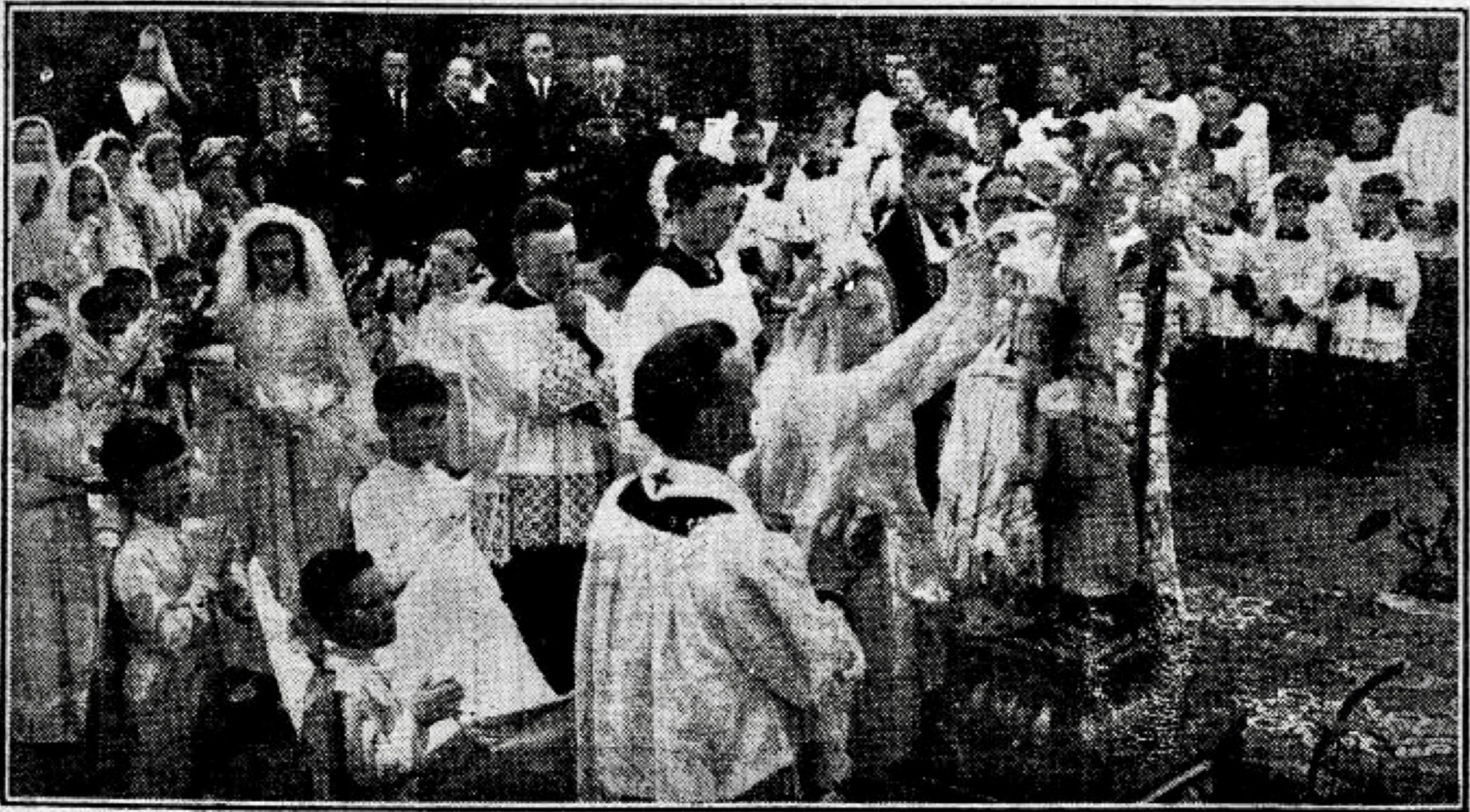
In the May Queen section I have added a piece about the 1952 ceremony when Patricia Anne Cain was the May Queen (as shown in the photograph to the left). It includes names of many others involved in the procession that day, which was a historic one in terms of its format that year.
The final post for the month was the parish history snippets piece for November 2025. These snippets cover a variety of events and people from the parish from years gone by, and can be found in the Bulletin for Batley St Mary of the Angels and Birstall St Patrick section. Even if you have seen them on the Bulletin, it is worth checking them here as some have links to more detailed pieces I have written.
Below is the full list of pages to date. I have annotated the *NEW* posts, so you can easily pick these out. Click on the link and it will take you straight to the relevant page.
If you want to know the background, and what is involved in a one-place study, click here. Otherwise read on, to discover a wealth of parish, parishioner and wider local Batley history.
Postscript: I may not be able to thank you personally because of your contact detail confidentiality, but I do want to say how much I appreciate the donations already received to keep this website going. They really and truly do help. Thank you.
The website has always been free to use, and I want to continue this policy in the future. However, it does cost me money to operate – from undertaking the research to website hosting costs. In the current difficult economic climate I do have to regularly consider if I can afford to continue running it as a free resource.
If you have enjoyed reading the various pieces, and would like to make a donation towards keeping the website up and running in its current open access format, it would be very much appreciated.
Please click 👉🏻here👈🏻 be taken to the PayPal donation link. By making a donation you will be helping to keep the website online and freely available for all.
Thank you.
As a professionally qualified genealogist, if you would like me to undertake any family, local or house history research for you do please get in touch. More information can be found on my research services page.
Finally, if you do have any information about, or photos of, parishioners from the period of the First World War please do get in touch. It does not have to be War Memorial men. It could be those who served and survived, or indeed any other men, women and children from the parish.
I would also be interested in information about, and photos of, those parishioners who were killed in World War Two, or others from the parish who undertook any war service and survived. This can be as broad as serving in the military, or work in munitions factories, the Land Army, even taking in refugees. This is an area I’m looking to develop in the future.
Because of work commitments, during October 2025 only one new post was added to the Batley St Mary of the Angels One-Place Study, bringing the total number of posts to 415.
This new post was the parish history snippets piece for October 2025. These snippets cover a variety of events and people from the parish from years gone by, and can be found in the Bulletin for Batley St Mary of the Angels and Birstall St Patrick section. Even if you have seen them on the Bulletin, it is worth checking them here as some have links to more detailed pieces I have written.
One of the reason for the lack of additions this month is because in November and December I’m giving a series of talks to various organisations. These include an online talk on 11 November 2025 to the Society of One-Place Studies about the early history of the Irish in Batley, and the parish of Batley St Mary of the Angels up until around the 1880s. This is restricted to members of the Society. However, on Monday 24 November I will be giving more or less the same talk at the Batley History Group meeting in Batley Town Hall. This starts with refreshments at 7pm, with the talk commencing at 7.30pm. It is open to both members (£2) and non-members (£4). So, perhaps I will see some of you there. More details about this, and Batley History Group’s other meetings in 2025/26 can be found here.
James Harkin, Batley’s 1st Catholic Mayor
I also have a special thank you this month for someone who has sent me a lovely letter and some photos of James Harkin, Batley’s first Catholic mayor – one of which is included in this piece. I don’t have her contact details to thank her personally, so hopefully she will read my thank you here.
Below is the full list of pages to date. I have annotated the *NEW* posts, so you can easily pick these out. Click on the link and it will take you straight to the relevant page.
If you want to know the background, and what is involved in a one-place study, click here. Otherwise read on, to discover a wealth of parish, parishioner and wider local Batley history.
Postscript: I may not be able to thank you personally because of your contact detail confidentiality, but I do want to say how much I appreciate the donations already received to keep this website going. They really and truly do help. Thank you.
The website has always been free to use, and I want to continue this policy in the future. However, it does cost me money to operate – from undertaking the research to website hosting costs. In the current difficult economic climate I do have to regularly consider if I can afford to continue running it as a free resource.
If you have enjoyed reading the various pieces, and would like to make a donation towards keeping the website up and running in its current open access format, it would be very much appreciated.
Please click 👉🏻here👈🏻 be taken to the PayPal donation link. By making a donation you will be helping to keep the website online and freely available for all.
Thank you.
As a professionally qualified genealogist, if you would like me to undertake any family, local or house history research for you do please get in touch. More information can be found on my research services page.
Finally, if you do have any information about, or photos of, parishioners from the period of the First World War please do get in touch. It does not have to be War Memorial men. It could be those who served and survived, or indeed any other men, women and children from the parish.
I would also be interested in information about, and photos of, those parishioners who were killed in World War Two, or others from the parish who undertook any war service and survived. This can be as broad as serving in the military, or work in munitions factories, the Land Army, even taking in refugees. This is an area I’m looking to develop in the future.
Written by professional genealogist Cheri Hudson Passey, and drawing on her experience in carrying out work for the U.S. Army Past Conflict Repatriations Branch (for UK researchers this equates to the MOD’s War Detectives from the Joint Casualty and Compassionate Centre Commemorations team), the stated aim of this book is to help genealogists of all levels to trace and connect with descendants of ancestors. These connections might lead to more information, documents, family memorabilia, photographs and photo identification, to enrich research and add colour to your family history.
The slimness of the book, running to 56 pages, is indicative that it is a basic overview. After the preface and methodology, the chapters are as follows:
Building a Solid Foundation.
Looking for Clues in Records.
Researching Online.
Researching on Location.
People Finders and Social Media.
Reaching Out to Family.
A Word About DNA.
Working Through a Soldier Repatriation Case: Steps for Finding Living Family.
There is also a concluding section and, to round off, a couple of pages listing tools and resources – although there are some website address errors here.
Together they provide a step-by-step guide to finding relatives down both ancestral and collateral lines, using modern tools to track them down.
Some of the steps are obvious, like ensuring your family tree is accurate and complete. The value of research plans to keep on track is discussed, as well as the need to follow the Genealogical Proof Standard (GPS), concepts which may be new to non-professionals.
Building mini trees is suggested as a research tool, and the book includes several screenshots on how to export GEDCOM files with which to work from. These, along with other images, are greyscale rather than colour.
Various sources are highlighted as useful for providing clues, building a body of evidence and resolving conflicting information. Search tips are given for finding living family members, including through using online trees. Tools such as reverse image searches are covered. I was pleased to see recognition that everything is not online. And I particularly enjoyed the chapter which pulled everything together in working through a soldier repatriation case.
From my UK and Ireland research perspective, the fact that it is written by a U.S. researcher means it is naturally geared towards research in that country. This is particularly obvious in the sections dealing with locating newspapers, and people finding sources. It is explicitly acknowledged in the section about national public records. That being said, there are general tips to be gleaned from those researching beyond the U.S., especially for the less experienced researcher.
Arguably the most crucial chapter is the one about reaching out to family. It was good to see advice given about handling these tricky initial contacts. This includes being aware of the fear factor behind unsolicited contacts in this world of scammers, along with the need to respect privacy and reach out with respect and sensitivity to living connections, upholding the ethics of handling information about living, and obtaining informed consent around any information shared.
However, one important topic I would have liked to have seen covered in a little more detail was the potential ethical dilemmas posed by this aspect of family history research, very much like DNA tests, the risks of which are dealt with in the book.
Contacting distant living relatives can potentially lead to unforeseen and unintended consequences, especially if that family history is challenging and sensitive, and it might have been useful to have consideration of this aspect. This is a particular issue when the person being contacted has no obvious family history interest, and is not on a family history platform, so is unaware to the possibility of such contacts.
As I have mentioned, the book is only a brief introduction to the subject of identifying and tracking down living relatives, and ethical dilemmas are a meaty subject. But a cautionary, if not a deeper exploration of this angle, would have been helpful.
That aside, when these contacts work out the mutual benefits can be huge, and this book is a useful addition to my genealogy library as a handy and concise aide-mémoire to this type of research.
The book was published in 2025, ISBN 9780806321516. For ease I’ve attached the purchase links for both Amazon and Genealogical.com
Full disclosure: I received a free copy of the book from Genealogical.com. I was not asked for a review in return, but I thought it would be useful to post one to introduce this book to others who may not be aware of it. In doing so I have expressed my honest opinion.
April was a particularly busy month for the Batley St Mary of the Angels One-Place Study. It included the addition of a new subject heading, along with eight new posts, bringing the total number of posts to 399. One other post was updated.
Below is the complete list of all the St Mary’s posts published up to the end of April 2025, including links to them, with those new and updated posts signposted so you can easily locate them.
The May Queens of 1931 and 1932
If you want to know the background, and what is involved in a one-place study, click here. Otherwise read on, to discover a wealth of parish, parishioner and wider local Batley history.
The new section added in April was one about the May Queens of the parish. I am trying to identify as many of them as possible, with a piece dedicated to each year. To date seven years have been added to this section, 1922, 1931-1933, 1939-1941.
The final addition this month is in the Bulletin for Batley St Mary of the Angels and Birstall St Patrick section. It is the piece covering the parish history snippets included in the parish bulletins during April 2025.
I have also added a further update to the World War Two introduction page.
Below is the full list of pages to date. I have annotated the *NEW* and *UPDATED* ones, so you can easily pick these out. Click on the link and it will take you straight to the relevant page.
Postscript: I may not be able to thank you personally because of your contact detail confidentiality, but I do want to say how much I appreciate the donations already received to keep this website going. They really and truly do help. Thank you.
The website has always been free to use, and I want to continue this policy in the future. However, it does cost me money to operate – from undertaking the research to website hosting costs. In the current difficult economic climate I do have to regularly consider if I can afford to continue running it as a free resource.
If you have enjoyed reading the various pieces, and would like to make a donation towards keeping the website up and running in its current open access format, it would be very much appreciated.
Please click 👉🏻here👈🏻 to be taken to the PayPal donation link. By making a donation you will be helping to keep the website online and freely available for all.
Thank you.
As a professionally qualified genealogist, if you would like me to undertake any family, local or house history research for you do please get in touch. More information can be found on my research services page.
Finally, if you do have any information about, or photos of, parishioners from the period of the First World War please do get in touch. It does not have to be War Memorial men. It could be those who served and survived, or indeed any other men, women and children from the parish.
I would also be interested in information about, and photos of, those parishioners who were killed in World War Two, or others from the parish who undertook any war service and survived. This can be as broad as serving in the military, or work in munitions factories, the Land Army, even taking in refugees. This is an area I’m looking to develop in the future.
2025 got off to a great start for the Batley St Mary of the Angels One-Place Study, with the addition of five posts which cover a varied mix of the history of the parish and its people. It brings the total number of posts to 383. One other post was updated.
Below is the complete list of all the St Mary’s posts published up to the end of January 2025, including links to them, with those new and updated posts signposted so you can easily locate them.
If you want to know the background, and what is involved in a one-place study, click here. Otherwise read on, to discover a wealth of parish, parishioner and wider local Batley history.
Batley St Mary of the Angels
Two new War Memorial biographies were added, those of Harold Gaunt and Thomas Dolan. The former covers a lesser known aspect of military service. The latter includes some cherished photos, used with the family’s permission. I also identified more parishioners who served in, and survived, the First World War. That list has been updated.
The Bulletin for Batley St Mary of the Angels and Birstall St Patrick section, has one addition. This is the piece covering the parish history snippets which were included in the parish bulletins during January 2025 – one of which may be rather surprising but reflects commonly held initial world attitudes to someone who turned out to be a monster.
It also links to the one of the two new posts in the Miscellany of Information section. One is about a former parishioner who played an unexpected and significant role, bringing him into contact with people across the world. The other post is a topic I never thought would be covered in the St Mary’s One-Place Study. Given this month, on the 27 January, we commemorated World Holocaust Day and the 80th anniversary of the liberation of Auschwitz-Birkenau, the largest Nazi concentration camp complex, it serves as a timely and important reminder.
Below is the full list of pages to date. I have annotated the *NEW* and *UPDATED* ones, so you can easily pick these out. Click on the link and it will take you straight to the relevant page.
Postscript: I may not be able to thank you personally because of your contact detail confidentiality, but I do want to say how much I appreciate the donations already received to keep this website going. They really and truly do help. Thank you.
The website has always been free to use, and I want to continue this policy in the future. However, it does cost me money to operate – from undertaking the research to website hosting costs. In the current difficult economic climate I do have to regularly consider if I can afford to continue running it as a free resource.
If you have enjoyed reading the various pieces, and would like to make a donation towards keeping the website up and running in its current open access format, it would be very much appreciated.
Please click 👉🏻here👈🏻 to be taken to the PayPal donation link. By making a donation you will be helping to keep the website online and freely available for all.
Thank you.
As a professionally qualified genealogist, if you would like me to undertake any family, local or house history research for you do please get in touch. More information can be found on my research services page.
Finally, if you do have any information about, or photos of, parishioners from the period of the First World War please do get in touch. It does not have to be War Memorial men. It could be those who served and survived, or indeed any other men, women and children from the parish.
I would also be interested in information about, and photos of, those parishioners who were killed in World War Two, or others from the parish who undertook any war service and survived. This can be as broad as serving in the military, or work in munitions factories, the Land Army, even taking in refugees. This is an area I’m looking to develop in the future.
This November has brought eight new posts to the Batley St Mary of the Angels One-Place Study, bringing the total number to 371 posts. In addition to the eight new posts, two more were updated.
This update contains the list of all the St Mary’s posts published up to the end of November 2024, including links to them, with last month’s new and updated posts signposted so you can easily locate them.
If you want to know the background, and what is involved in a one-place study, click here. Otherwise read on, to discover a wealth of parish, parishioner and wider local Batley history.
Batley St Mary of the Angels
One new War Memorial biography has been added, that of Clement Manning. More parishioners to the list of those who served in, and survived, the First World War section, so this list has been updated.
The Miscellany of Information section has a new post this month, about a huge talent whose promise was never fulfilled. That talent though is memorialised on William Berry’s headstone.
The Bulletin for Batley St Mary of the Angels and Birstall St Patrick section, has an addition. This is the piece covering the parish history snippets which were included in the parish bulletins during November 2024.
And the other November additions are in the During This Week newspaper section, with five new pages covering the editions of the Batley News published during the month of November 1918. I have accordingly updated the surname index to these During This Week newspaper pieces, so you can easily identify newspaper snippets relevant to your family.
Below is the full list of pages to date. I have annotated the *NEW* and *UPDATED* ones, so you can easily pick these out. Click on the link and it will take you straight to the relevant page.
Postscript: I may not be able to thank you personally because of your contact detail confidentiality, but I do want to say how much I appreciate the donations already received to keep this website going. They really and truly do help. Thank you.
The website has always been free to use, and I want to continue this policy in the future. However, it does cost me money to operate – from undertaking the research to website hosting costs. In the current difficult economic climate I do have to regularly consider if I can afford to continue running it as a free resource.
If you have enjoyed reading the various pieces, and would like to make a donation towards keeping the website up and running in its current open access format, it would be very much appreciated.
Please click 👉🏻here👈🏻 to be taken to the PayPal donation link. By making a donation you will be helping to keep the website online and freely available for all.
Thank you.
Finally, if you do have any information about, or photos of, parishioners from the period of the First World War please do get in touch. It does not have to be War Memorial men. It could be those who served and survived, or indeed any other men, women and children from the parish.
I would also be interested in information about, and photos of, those parishioners who were killed in World War Two, or others from the parish who undertook any war service and survived. This can be as broad as serving in the military, or work in munitions factories, the Land Army, even taking in refugees. This is an area I’m looking to develop in the future.
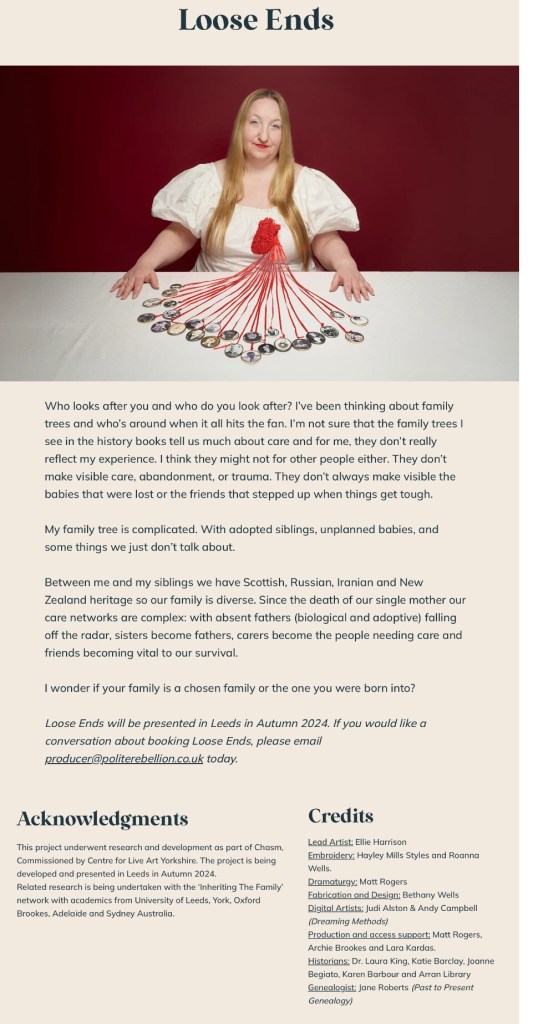
No two days are ever the same for a professional genealogist, as demonstrated by a research commission I undertook this summer for Leeds-based artist Ellie Harrison, and Polite Rebellion – the company with which she works.
Polite Rebellion Artist Ellie Harrison and me at the Loose Ends Exhibition
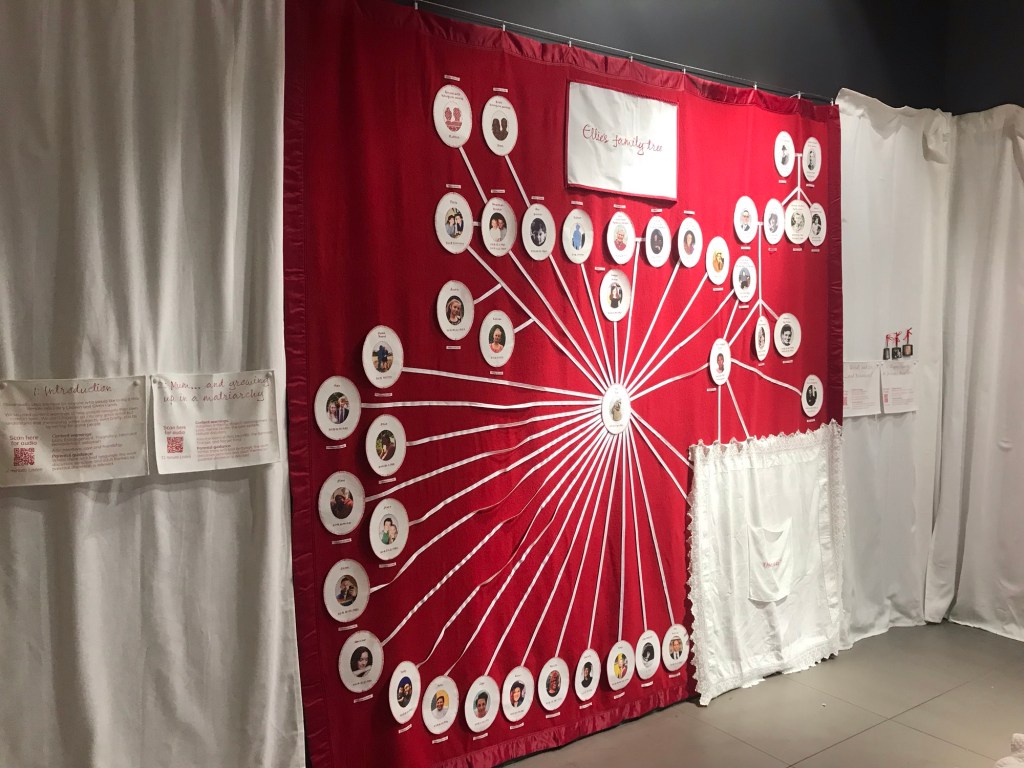
Working to a tight deadline, my research drew together some threads of Ellie’s family history, and was a small part of the background detail to her much broader overall artistic display concept.
Loose Ends Credits
Ellie’s thought-provoking interactive exhibition, Loose Ends, is now currently showing in Leeds as part of November’s Compass Art Festival. This Festival brings a variety of interactive art projects into the city.
The Loose Ends exhibition space, Leeds Trinity Shopping Centre Albion Street entrance (near Boots).
I dropped by for the opening day of Loose Ends (22 November 2024).
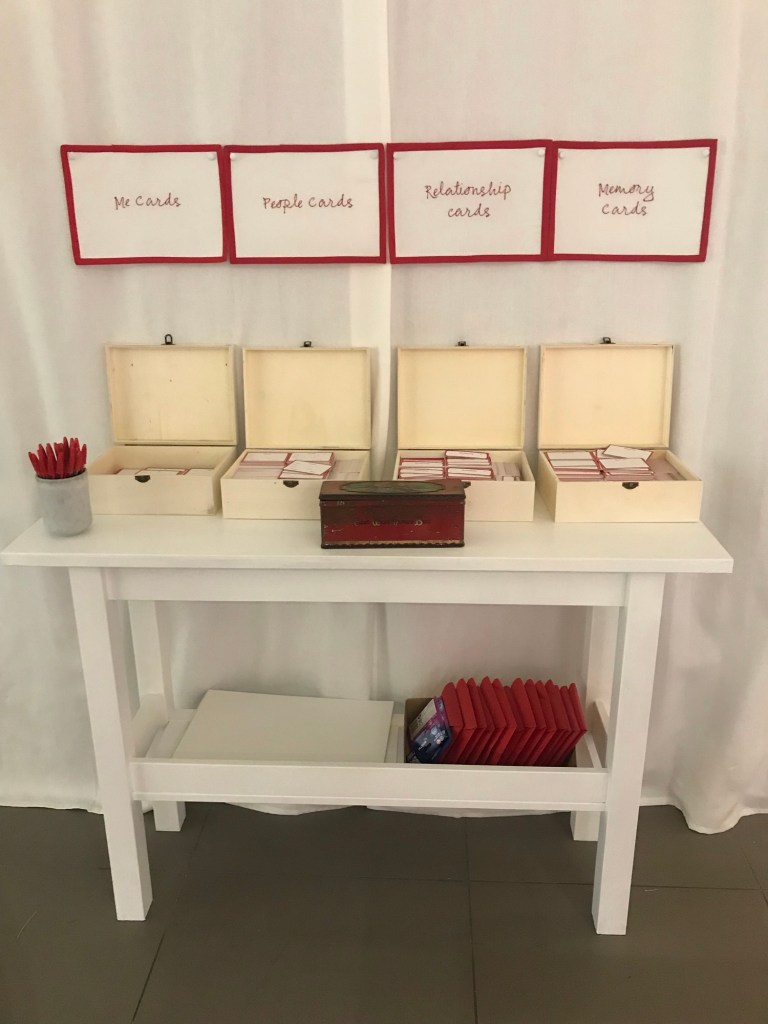
The Loose Ends component of the Festival is based in a pop-up shop in the Leeds Trinity Shopping Centre. Visually striking, this interactive and immersive experience invites you to think about your family tree in its broadest sense. It goes beyond the traditional historical concept of mother, father, siblings, grandparents, great grandparents, which in reality – as every family historian knows – is rarely so neatly packaged. It also highlights there are often unspoken topics and secrets within families.
Ellie’s family tree
It challenges you to consider what makes your family, inviting you to explore its complexities, the transient nature of some relationships weighed against more enduring ones, with this weighting not necessarily measured by blood links. You are asked to even consider the importance of wider friendship circles – a take on your FAN Club (Friends/Families, Associates and Neighbours).
A chance to explore what makes your family tree
More details about the Loose Ends exhibition, including where to find it, can be found here.
But you need to be quick as it only runs from 22 – 24 November, and 28 – 30 November 2024.
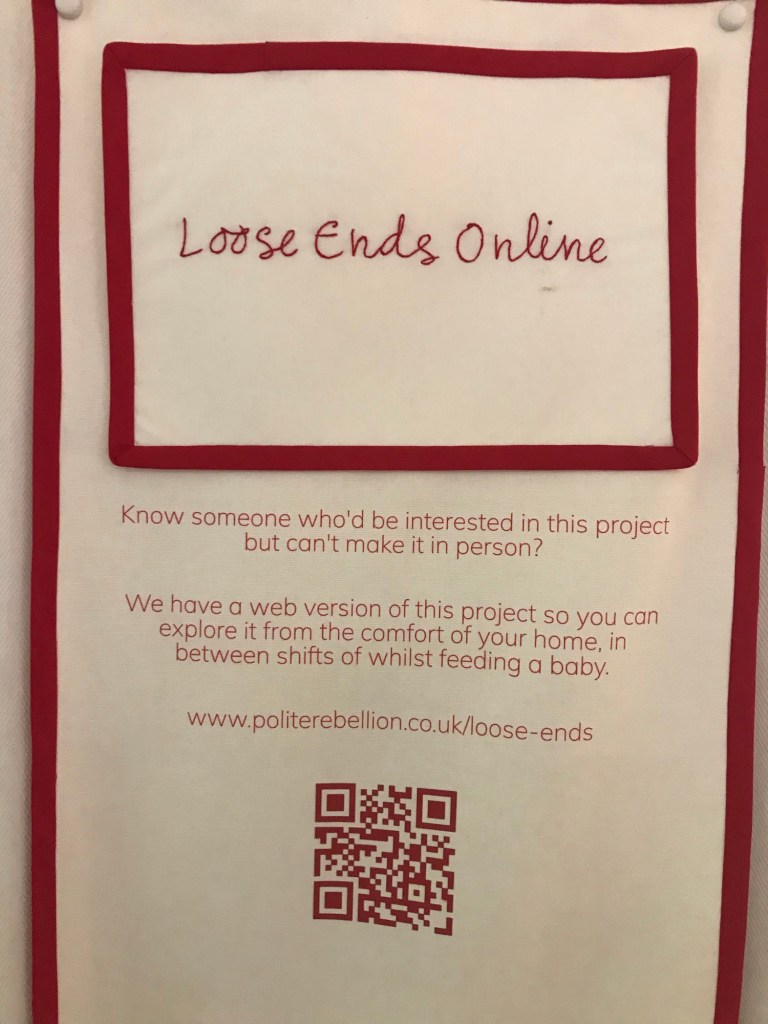
If you can’t make it, here’s the QR Code to scan and enter virtually.
Loose Ends QR Code
A huge thank you to Ellie for commissioning me to undertake her research. I loved doing it, because no two family trees are ever the same – as is demonstrated by the exhibition.
For more details about commissioning me for your research, please click here.
If you are looking for a family or local history speaker during 2025 and 2026, here are the details of my current talks:
Charles the Pigeon and a Yorkshire Spy.
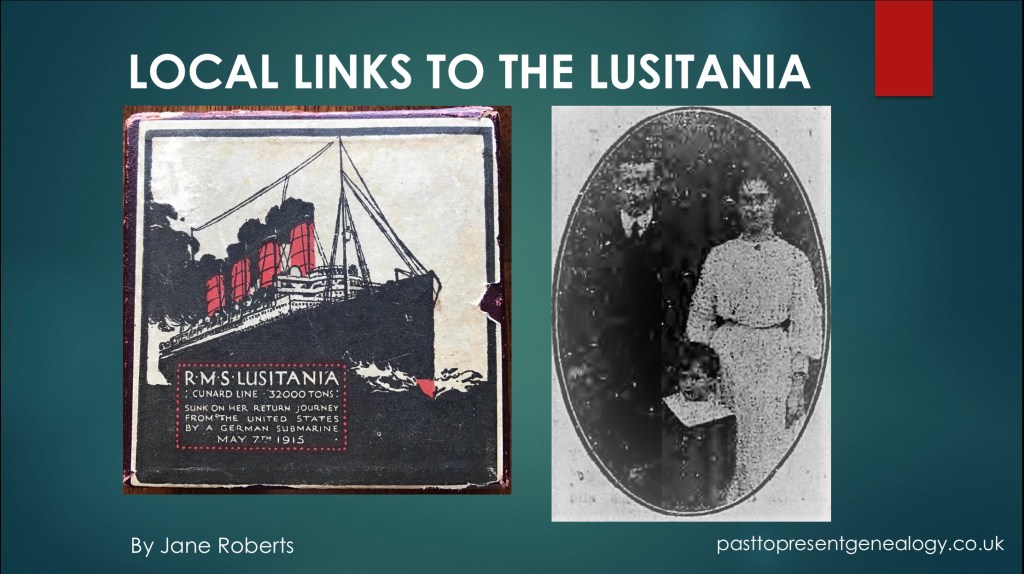
Local Links to the Lusitania.
My Batley St Mary’s One-Place Study. (Covers the history of the Irish in Batley and the Catholic parish of Batley St Mary of the Angels until turn of the 20th century).
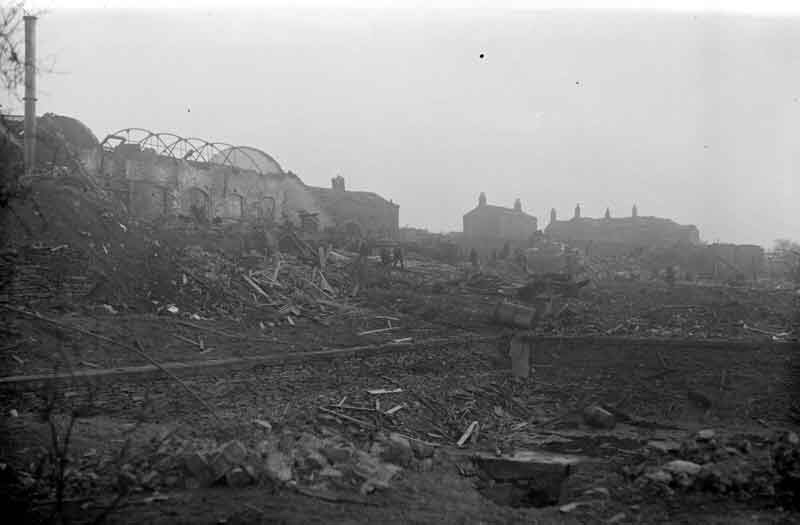
The Home Front: the White Lee Explosion of 1914 and the Unlucky History of the Site (available from September 2026).
Tips for Researching your Great War Ancestors. This is based around my book about Northern Union – rugby league – players killed in the First World War. For local history groups, I can drop the research tips aspect, and base the talk solely about the players.
How to Research your Family Tree. This talk will help those embarking on their family history journey, but it will also provide useful reminders and advice for those who have already started out on their ancestral adventure.
The first four have a distinctly Yorkshire flavour. The fifth will be tailored around rugby league players from your locality. The family tree research talk can be geared around research tips for Yorkshire ancestors.
Charles the Pigeon and a Yorkshire Spy is the story of an unsung Yorkshire hero, living behind enemy lines and carrying out works of espionage and sabotage during World War One. His adopted pigeon Charles played an important part in these wartime exploits. Their daring deeds are more like a boy’s adventure story than real life. But this is a true tale of wartime courage, and one which deserves wider telling.
Local Links to the Lusitania focuses on people with Yorkshire connections on board the Cunard liner, torpedoed and sunk off the Irish coast on 7 May 1915. The sinking did not affect only the rich and famous. Many Yorkshire people were involved. This talk explores some of their stories.
There is a possibility this talk can be tailored to your local area.
My Batley St Mary’s talk is based around my one-place study into the Catholic parish of St Mary of the Angels, with a focus on its early history and period up to the 1880s. It investigates what a one-place study is, why I embarked on one, why I chose this particular study, as well as my findings – including the Irish migration angle, how they were received locally, the building of the church, all with a focus on ordinary parishioners.
The Home Front: the White Lee Explosion of 1914 is a talk based around the events of December 1914 when a devastating explosion, caused during the manufacture of picric acid for the war effort, took place at White Lee. It resulted in deaths and injuries, as well as damage across a vast area of Batley, Heckmondwike and the Spen Valley. It is an event often overlooked because of later explosions in Yorkshire at Low Moor and Barnbow. This talk aims to provide more information about this Heavy Woollen District incident, the forerunner to the later explosions. The talk will explore the unlucky history of the site, as well as the events on the day and the aftermath.
Based on my groundbreaking book The Greatest Sacrifice: Fallen Heroes of the Northern Union about rugby league players who died in World War One, the talk investigates the stories behind some of the men. It is also packed with tips for researching your own Great War Army ancestors.
In this talk I will guide you through building your family tree. I will cover the basics to help you start your research on the right track, give you lots of tips, help you avoid those all-important pitfalls, and provide ideas for taking your research further. If required, I can slant this talk towards Yorkshire ancestral research.








 Past To Present Genealogy