A quick heads up for an online talk I will be giving via the Society of Genealogists on 25 April 2026. Don’t switch off at this point if you’re not a member – it is open to anyone.
If you follow this blog, or any of my online social media accounts, you will know I live in an area packed with Brontë history, and I’m a frequent visitor to Haworth and other Brontë linked sites.
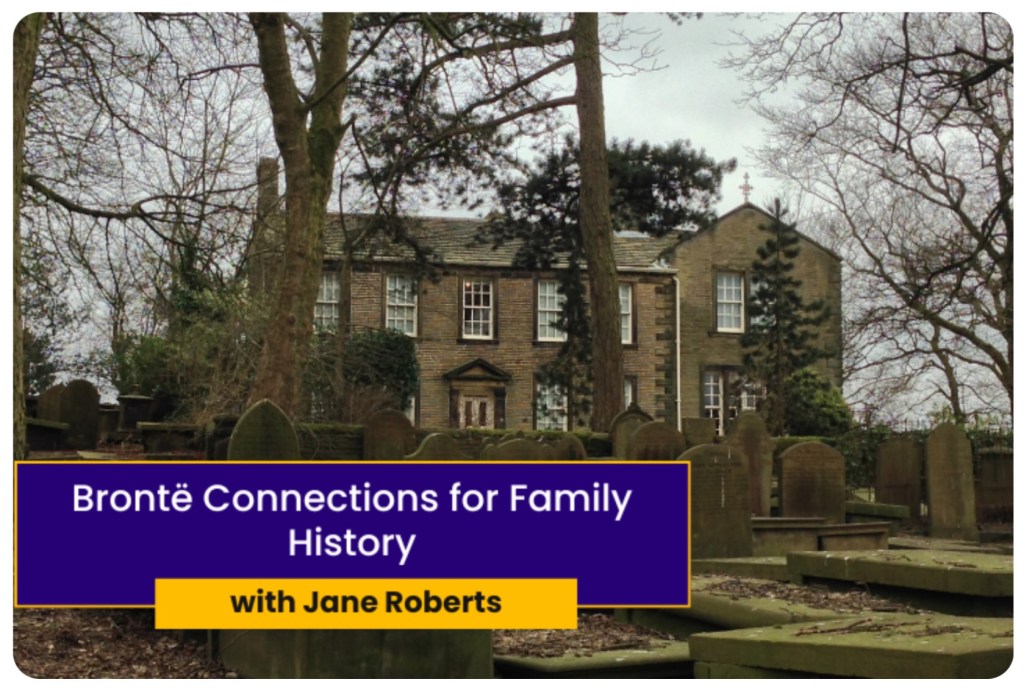
Well, I’m delighted that I’ve been asked to give an online talk all about exploring Brontë Connections for Family History.
Here’s the blurb about it, to give you some idea of what I’ll be covering:
The latest film adaptation of Emily Brontë’s dark, Gothic literary classic, Wuthering Heights, has triggered a fresh wave of Brontë-mania. A new generation of tourists are descending on the village of Haworth, keen to find out more about these world-famous sisters, and wanting to carve out their own slice of Brontë magic. But family historians can also channel into the Brontë family’s lives and literature, seeking their own Brontë connections and research inspiration. Jane’s talk will give you some ideas of how, and where to look.
I’d love to see you there, as I’m immensely proud of where I come from, my area’s Brontë links, all things Brontë, and I might even let you in on my quest to find my links to this amazing literary family!
You never know, as a result you may have ideas and inspiration to see how your family history might be connected.
If you are looking for a family or local history speaker during 2026 and 2027, here are the details of my current and upcoming talks:
Charles the Pigeon and a Yorkshire Spy.
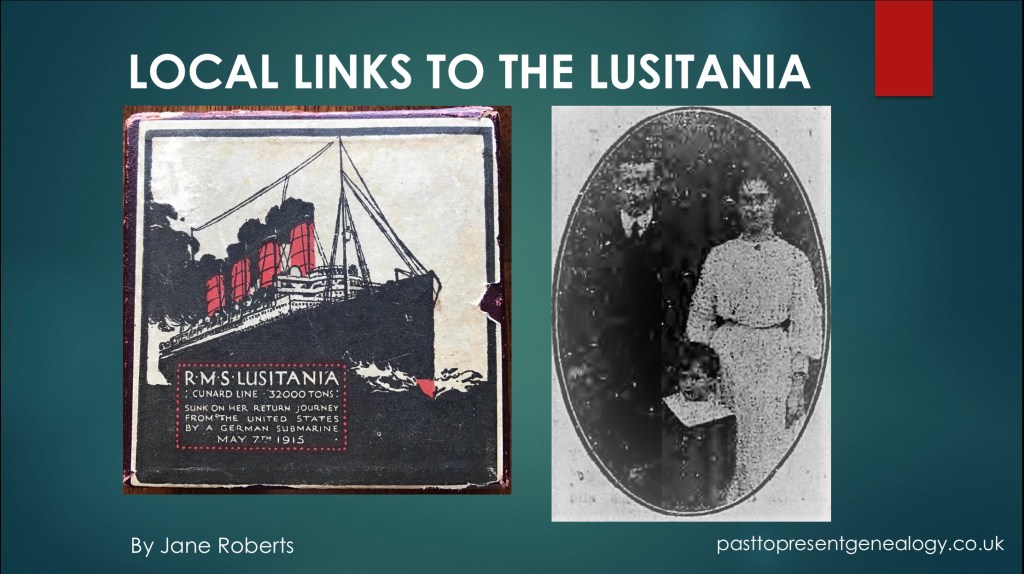
Local Links to the Lusitania.
A Site with a Deadly History – The White Lee Explosion of 1914. UPDATED FOR 2026 – available from September 2026.
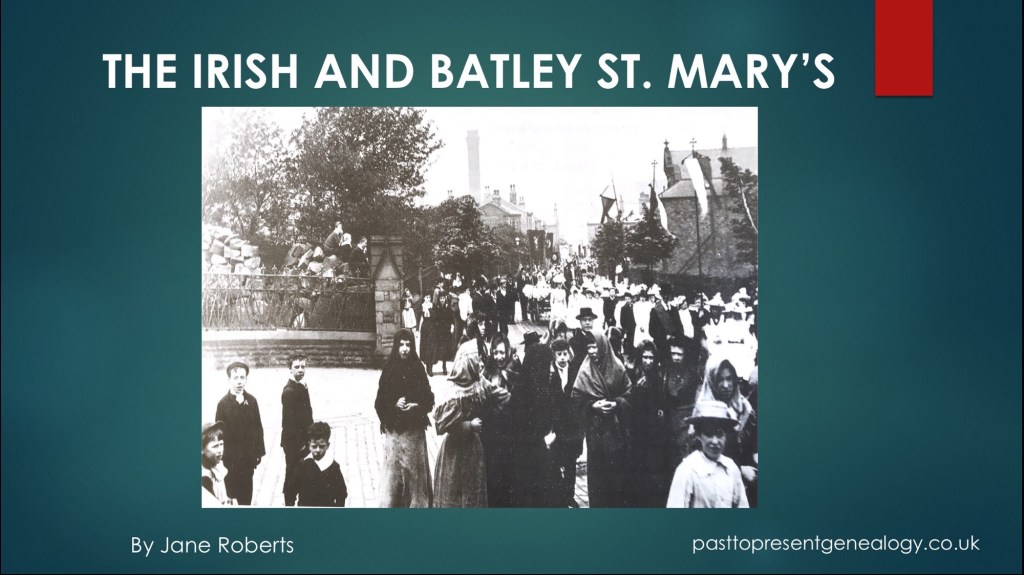
The Early History of the Irish and Batley St. Mary of the Angels. This is the first of three talks about my one-place study.
The Batley St. Mary of the Angels War Memorial – the Sacrifice of a Yorkshire Catholic Parish in the First World War. NEW FOR 2026 – available from October 2026, this is my second one-place study talk.
The People of the Parish – Parishioner’s Tales from my Batley St. Mary of the Angels One-Place Study. NEW FOR 2026 – available from August 2026, this is my third one-place study themed talk.
Tips for Researching Your Great War Ancestors/First World War Rugby League Players.
How to Research Your Family Tree.
Census Sense and Census Oddities. NEW FOR 2026 – available from November 2026.
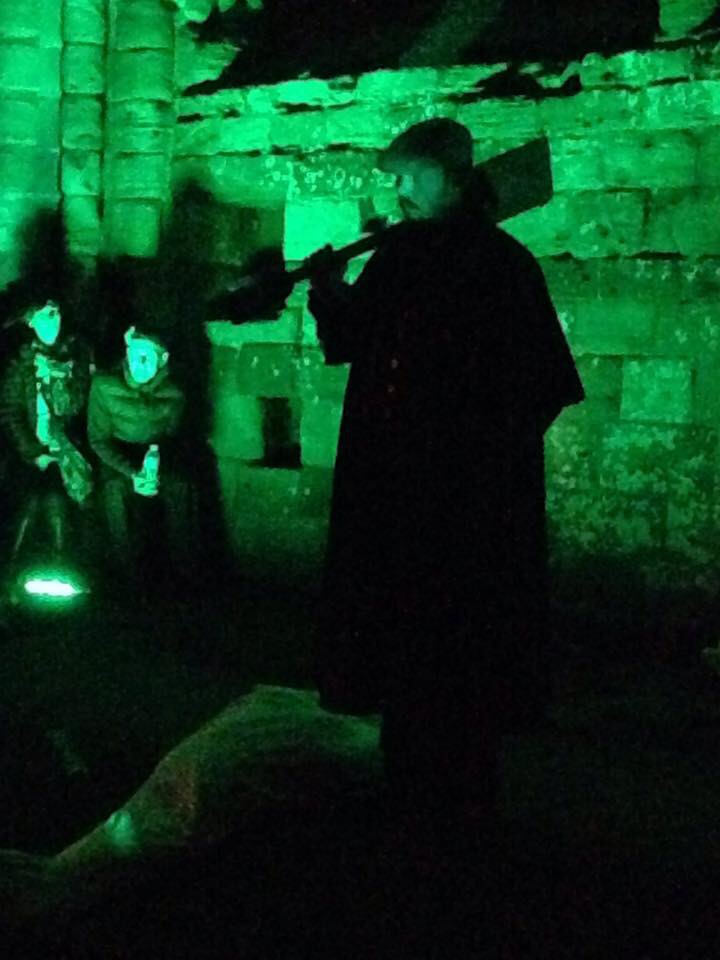
From Body Snatched to Brush-Makers and Child-Stealing Chimney Sweeps. Tales from my Family History. NEW FOR 2027 – available from March 2027.
In terms of regions covered, the first three talks have a distinctly Yorkshire flavour. My three St. Mary’s one-place study based talks look at various aspects of my Batley study, intertwining the Irish and Yorkshire character of the parish. The seventh talk is tailored around rugby league players killed in the First World War from your locality. The eighth talk is about family tree research in England and Wales generally, and can be geared around research tips for Yorkshire ancestors. The ninth talk focuses in detail on one specific family history record set, the census of England and Wales. The tenth talk will be predominantly Yorkshire-based, but covers other areas in the north of England too.
All the talks run to 45 minutes, with time for questions afterwards. However if you require a shorter or longer talk, these generally can be accommodated depending on topic.
More details about each talk are below. But if you need more information, including around costs and to enquire about making a booking, please contact me at: pasttopresentgenealogy@btinternet.com
Charles the Pigeon and a Yorkshire Spy.
Charles the Pigeon and a Yorkshire Spy is the story of an unsung Yorkshire hero, living behind enemy lines and carrying out works of espionage and sabotage during World War One. His adopted pigeon Charles played an important part in these wartime exploits. Their daring deeds are more like a boy’s adventure story than real life. But this is a true tale of wartime courage, and one which deserves wider telling.
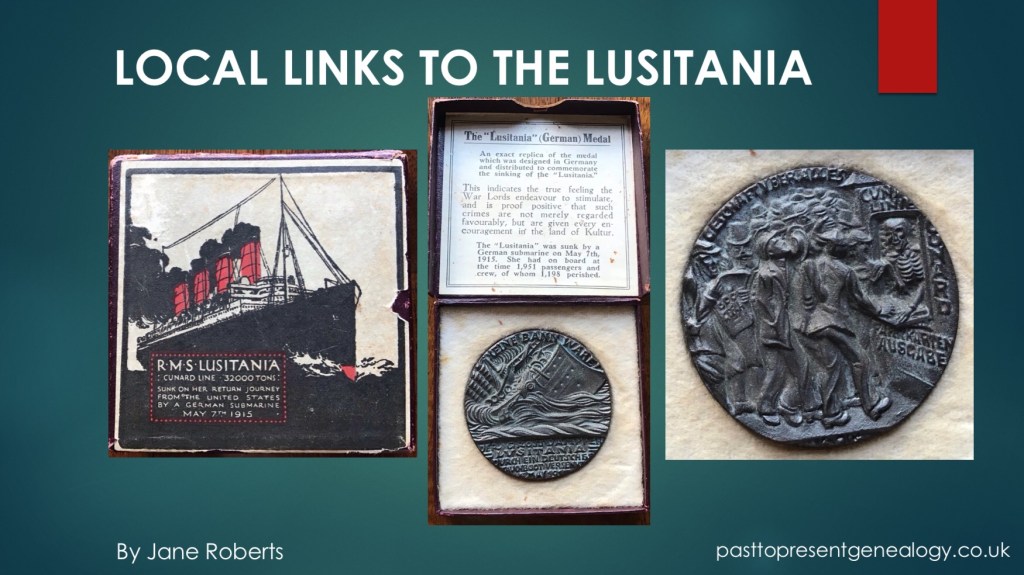
Local Links to the Lusitania focuses on people with Yorkshire connections on board the Cunard liner, torpedoed and sunk off the Irish coast on 7 May 1915. The sinking did not affect only the rich and famous. Many ordinary Yorkshire people, including from the Heavy Woollen District and areas more generally around the former West Riding, were involved. This talk provides context to the sinking and explores some of their stories.
There is a possibility this talk can be tailored to your local area.
A Site with a Deadly History – The White Lee Explosion of 1914.
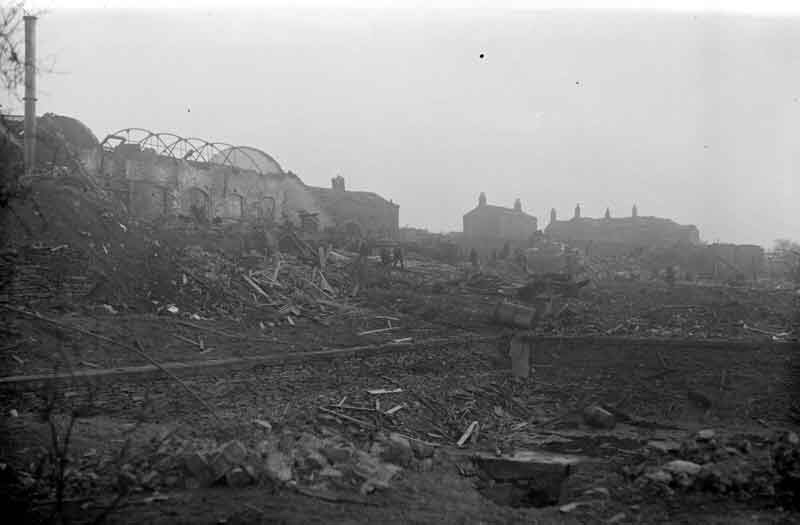
The Home Front: the White Lee Explosion of 1914 is a talk based around the events of December 1914 when a devastating explosion, caused during the manufacture of picric acid for the war effort, took place at White Lee. It resulted in deaths and injuries, as well as damage across a vast area of Batley, Heckmondwike and the Spen Valley. It is an event often overlooked because of later explosions in Yorkshire at Low Moor and Barnbow. This talk aims to provide more information about this Heavy Woollen District incident, the forerunner to the later explosions. The talk will explore the unlucky history of the site, as well as the events on the day and the aftermath.
The Early History of the Irish and Batley St. Mary of the Angels.
This is the first of my one-place study talks, and it covers the history of the Irish in Batley and the Catholic parish of Batley St. Mary of the Angels until circa the 1880s. It investigates what a one-place study is, why I embarked on one, why I chose this particular study, as well as my findings – including the Irish migration angle, how they were received locally, the building of the church, all with a focus on ordinary parishioners.
The Batley St. Mary of the Angels War Memorial – the Sacrifice of a Yorkshire Catholic Parish in the First World War.
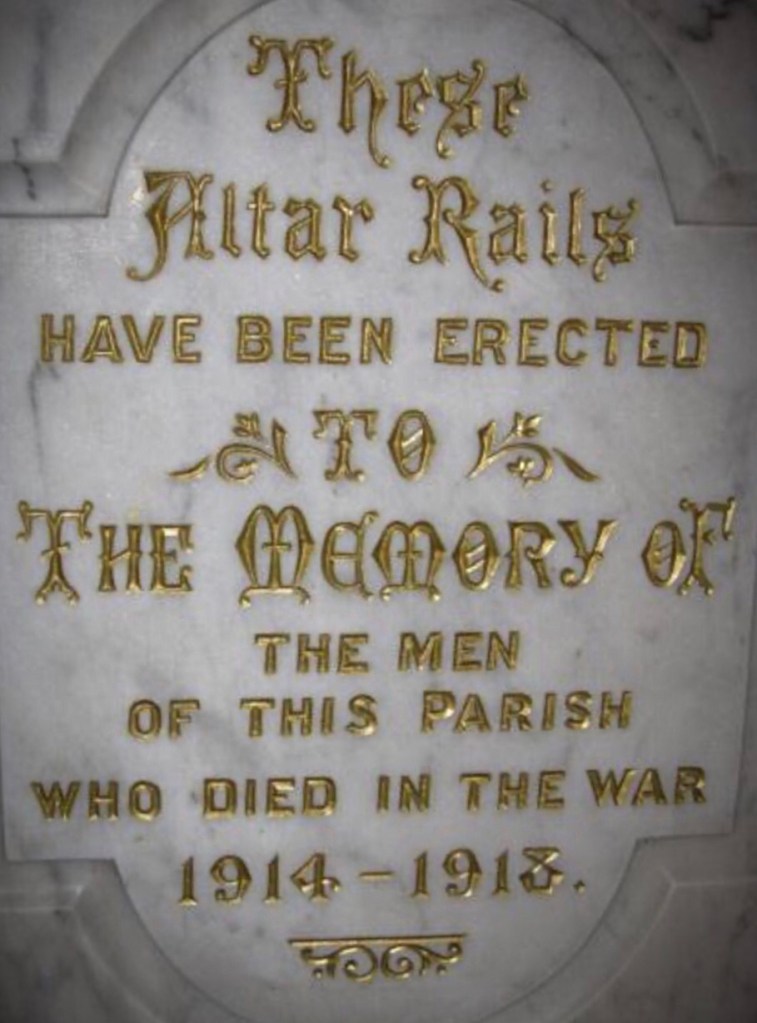
The second of my Batley St. Mary of the Angels talks is about the War Memorial which provided the catalyst for my one-place study. The Memorial commemorates 72 parishioners who paid the ultimate sacrifice in the First World War, and my talk will give some overall context to their backgrounds, the branches of the military and the regiments in which they served, as well as picking out some of the individual stories.
The People of the Parish – Parishioner’s Tales from my Batley St. Mary of the Angels One-Place Study.
My third Batley St. Mary of the Angels one-place study talk looks at some of the ordinary people from the parish across the decades who have some surprising, if not extraordinary, life tales. They illustrate the amazing richness of working-class local history which a one-place study can unearth – stories which often undeservedly get overlooked, with the focus history inevitably tends to place on the more illustrious middle-class townsfolk.
Tips for Researching Your Great War Ancestors/First World War Rugby League Players.
Based on my groundbreaking book The Greatest Sacrifice: Fallen Heroes of the Northern Union about rugby league players who died in World War One, the talk investigates the stories behind some of the men. It is also packed with tips for researching your own Great War Army ancestors. For local history groups, I can drop the family history research tips aspect, and base the talk solely about the players.
This talk will help those embarking on their family history journey, but it will also provide useful reminders and advice for those who have already started out on their ancestral adventure. In this talk I will guide you through building your family tree. I will cover the basics to help you start your research on the right track, give you lots of tips, help you avoid those all-important pitfalls, and provide ideas for taking your research further. If required, I can slant this talk towards Yorkshire ancestral research.
The census talk focuses in detail on this one specific family history record set. It covers background details about this essential building block for family history research in England and Wales, includes some all important search tips, and has some hidden (and sometimes humorous) gems from the entries.
November 2025 was a busy month for the Batley St. Mary of the Angels One-Place Study. Four new posts were added, bringing the total number to 419. I also gave two talks about the early history of the Irish in Batley and the parish – one via Zoom to the Society of One-Place Studies; the other in-person to Batley History Group. If you missed them, I will be repeating the Irish and St. Mary’s talk next year with bookings already made for it, along with my other talks.
To start off with, I wrote a light-hearted piece about Buffalo Bill and A Right Royal Celebration for Batley’s Schoolchildren, a celebration in which the children of St Mary of the Angels participated. I describe, and include a photograph, of the special commemorative medal presented to all the schoolchildren, so that if you have one in your family you can identify it and know more about its history.
In a change of tone, with November being the month of Remembrance, one of the new posts was about James Edwards, one of the parishioners commemorated on the parish’s World War One War Memorial.
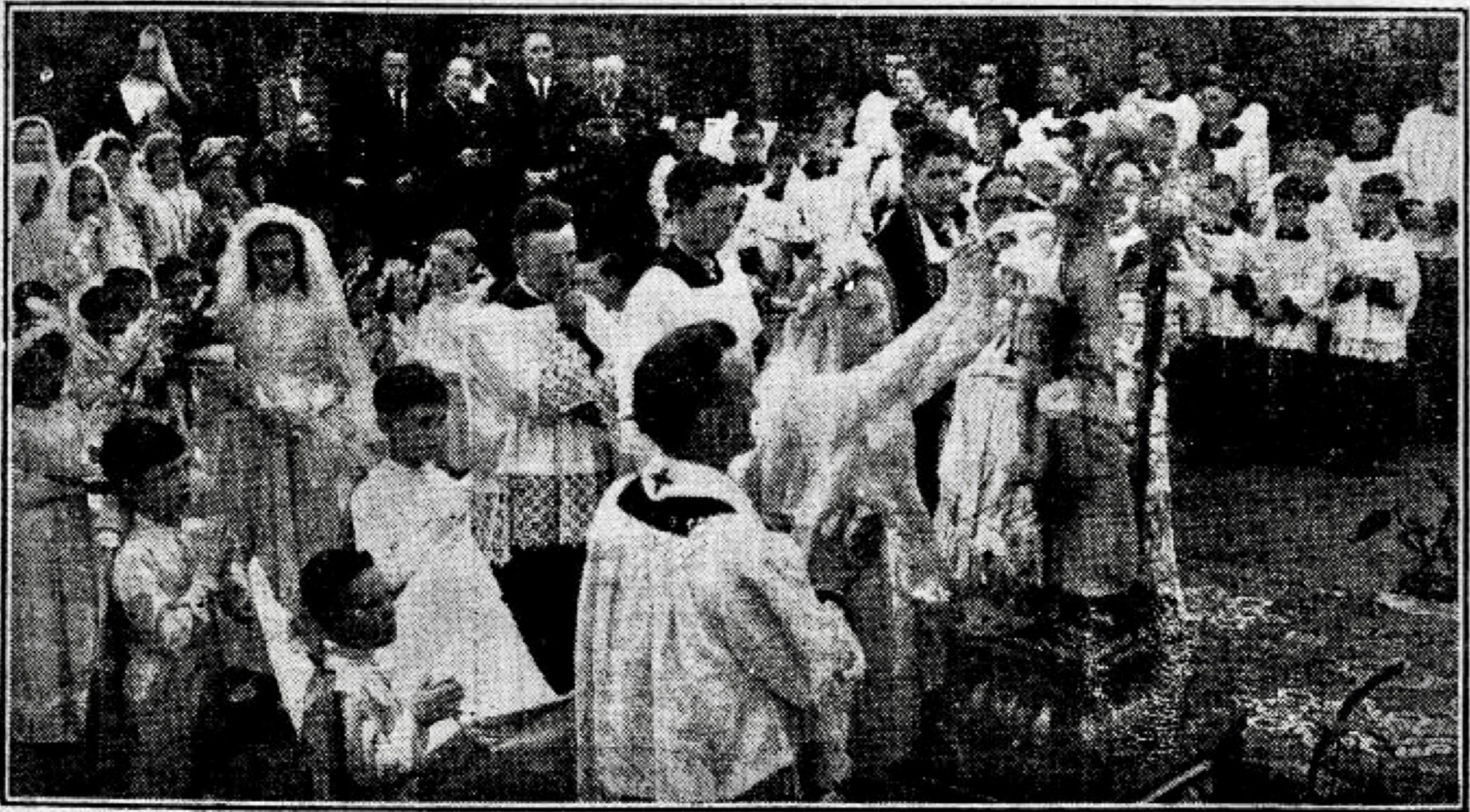
In the May Queen section I have added a piece about the 1952 ceremony when Patricia Anne Cain was the May Queen (as shown in the photograph to the left). It includes names of many others involved in the procession that day, which was a historic one in terms of its format that year.
The final post for the month was the parish history snippets piece for November 2025. These snippets cover a variety of events and people from the parish from years gone by, and can be found in the Bulletin for Batley St Mary of the Angels and Birstall St Patrick section. Even if you have seen them on the Bulletin, it is worth checking them here as some have links to more detailed pieces I have written.
Below is the full list of pages to date. I have annotated the *NEW* posts, so you can easily pick these out. Click on the link and it will take you straight to the relevant page.
If you want to know the background, and what is involved in a one-place study, click here. Otherwise read on, to discover a wealth of parish, parishioner and wider local Batley history.
Postscript: I may not be able to thank you personally because of your contact detail confidentiality, but I do want to say how much I appreciate the donations already received to keep this website going. They really and truly do help. Thank you.
The website has always been free to use, and I want to continue this policy in the future. However, it does cost me money to operate – from undertaking the research to website hosting costs. In the current difficult economic climate I do have to regularly consider if I can afford to continue running it as a free resource.
If you have enjoyed reading the various pieces, and would like to make a donation towards keeping the website up and running in its current open access format, it would be very much appreciated.
Please click 👉🏻here👈🏻 be taken to the PayPal donation link. By making a donation you will be helping to keep the website online and freely available for all.
Thank you.
As a professionally qualified genealogist, if you would like me to undertake any family, local or house history research for you do please get in touch. More information can be found on my research services page.
Finally, if you do have any information about, or photos of, parishioners from the period of the First World War please do get in touch. It does not have to be War Memorial men. It could be those who served and survived, or indeed any other men, women and children from the parish.
I would also be interested in information about, and photos of, those parishioners who were killed in World War Two, or others from the parish who undertook any war service and survived. This can be as broad as serving in the military, or work in munitions factories, the Land Army, even taking in refugees. This is an area I’m looking to develop in the future.
After a break of a couple of years I’m now back with a new series of family and local history talks.
These are:
Local Links to the Lusitania;
Tips for Researching your Great War Ancestors;
My Batley St Mary’s in World War One One-Place Study;
The Home Front: the White Lee Explosion of 1914.
Local Links to the Lusitania focuses on people with Yorkshire connections on board the Cunard liner, torpedoed and sunk off the Irish coast on 7 May 1915. The sinking did not affect only the rich and famous. Many Yorkshire people were involved. This talk explores some of their stories.
There is a possibility this talk can be tailored to your local area.
Based on my groundbreaking book The Greatest Sacrifice: Fallen Heroes of the Northern Union about rugby league players who died in World War One, the talk investigates the stories behind some of the men. It is also packed with tips for researching your own Great War Army ancestors.
My Batley St Mary’s in World War One One-Place Study is based on my ongoing study of the Catholic parish of St Mary of the Angels, particularly during the First World War. It investigates what a one-place study is, why I embarked on one, why I chose this particular focus, as well as my findings.
The Home Front: the White Lee Explosion of 1914 is a talk based around the events of December 1914 when a devastating explosion, caused during the manufacture of picric acid for the war effort, took place at White Lee. It resulted in deaths and injuries, as well as damage across a vast area of Batley, Heckmondwike and the Spen Valley. It is an event often overlooked because of later explosions in Yorkshire at Low Moor and Barnbow. This talk aims to provide more information about this Heavy Woollen District incident, the forerunner to the later explosions. The talk will explore the unlucky history of the site as well as the events on the day and the aftermath.








 Past To Present Genealogy