Tag Archives: DNA

St. Mary of the Angels, Batley: One-Place Study Update – 1 to 28 February 2026 Additions

February has been a particularly busy month for the Batley St. Mary of the Angels One-Place Study, with five new posts. This brings the total number of posts up to 427. Three more were updated.
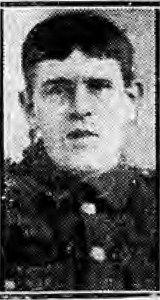
Peter Gavaghan

This month’s additions and updates included one new War Memorial biography, that of the first Peter Gavaghan to be killed in the war (his cousin also named Peter died later on, and his biography was added some time ago). Both men’s biographies can now be found in The Biographies: War Memorial Men section.

Several more men who served and survived were identified, and this page has been updated. Their biographies will follow in due course.

Someone from the parish who died but is not on the church War Memorial has been identified, Michael Howley. I have added his biography to the section covering Men Associated with St. Mary’s Who Died but Who Are Not on the Memorial, and that overall page has been accordingly updated too. I have also updated the War Memorial Chronology of Deaths page, to include him.

There are two new posts in the Miscellany of Information section. One deals with the horrific, but all too common, circumstances surrounding the death of a child in the 19th century. The other concerns three pigs, a headstone and a long-lived parishioner.

There is also the parish history snippets piece for February 2026. These snippets cover a variety of events and people from the parish from years gone by, and can be found in the Bulletin for Batley St Mary of the Angels and Birstall St Patrick section. One is an amazing piece connected to The Beatles and a circus! Even if you have seen them on the Bulletin, it is worth checking them here as some have links to more detailed pieces I have written.

Below is the full list of pages to date. Simply click on the link and it will take you straight to the relevant page. I have annotated the *NEW* and “UPDATED” posts, so you can easily pick them out.

If you want to know the background, and what is involved in a one-place study, click here. Otherwise read on, to discover a wealth of parish, parishioner and wider local Batley history. 


Postscript:
I may not be able to thank you personally because of your contact detail confidentiality, but I do want to say how much I appreciate the donations already received to keep this website going. They really and truly do help. Thank you.

The website has always been free to use, and I want to continue this policy in the future. However, it does cost me money to operate – from undertaking the research to website hosting costs. In the current difficult economic climate I do have to regularly consider if I can afford to continue running it as a free resource. 

If you have enjoyed reading the various pieces, and would like to make a donation towards keeping the website up and running in its current open access format, it would be very much appreciated. 

Please click 👉🏽 here 👈🏽 be taken to the PayPal donation link. By making a donation you will be helping to keep the website online and freely available for all. 

Thank you.

As a professionally qualified genealogist, if you would like me to undertake any family, local or house history research for you do please get in touch. More information can be found on my research services page.


Finally, if you do have any information about, or photos of, parishioners from the period of the First World War please do get in touch. It does not have to be War Memorial men. It could be those who served and survived, or indeed any other men, women and children from the parish. 

I would also be interested in information about, and photos of, those parishioners who were killed in World War Two, or others from the parish who undertook any war service and survived. This can be as broad as serving in the military, or work in munitions factories, the Land Army, even taking in refugees. This is an area I’m looking to develop in the future.

I can be contacted at: pasttopresentgenealogy@btinternet.com


1. About my St Mary of the Angels Catholic Church War Memorial One-Place Study;

Batley’s Public Buildings and Institutions
2. Batley Hospital: The First 50 Years – 1878 to 1928 
3. The Early History of Batley’s Public Baths 

Batley St Mary’s Population, Health, Mortality and Fertility Information and Comparisons
4.  1914: The Health of Batley School Children Generally, with a Particular Focus on St Mary’s School Children

Batley Statistics and Descriptions – Population, Health, Mortality, Fertility etc.
5. 1914: Borough of Batley – Town Information from the Annual Report of the Medical Officer of Health.
6. Batley and the 1921 Census 
7. Batley Population Statistics 1801-1939

Biographies: Men Associated with St Mary’s Who Died but Who Are Not on the Memorial *UPDATED*
8. Thomas Gannon 

9. Michael Howley *NEW*
10. Reginald Roberts 
11. William Frederick Townsend

Biographies: The War Memorial Men
12. Edward Barber 
13. William Barber (Memorial name spelling) 
14. Herbert Booth 
15. Edmund Battye
16. Dominick (aka George) Brannan 
17. Michael Brannan 
18. John Brooks 
19. Michael Cafferty 
20. Patrick Cafferty 
21. John William Callaghan 
22. Lawrence Carney 
23. Martin Carney 
24. Thomas William Chappell 
25. William Colbeck
26.  Michael Cunningham 
27. Thomas Curley
28. Peter Doherty 
29. Thomas Dolan 
30. Thomas Donlan 
31. James Edwards 
32. John W. Enright 
33. Mathew Farrer 
34. Thomas Finneran 
35. Michael Flynn 
36. Thomas Foley D.C.M. 
37. Martin Gallagher 
38. James Garner
39. Harold Gaunt 
40. James Gavaghan 
41. Peter Gavaghan (1) *NEW*
42. Peter Gavaghan (2)
43. Thomas Gavaghan 
44. Henry Groark 
45. James Groark 
46. Michael Groark (also known as Rourke) 
47. James Griffin 
48. William Hargreaves 
49. Michael Hopkins 
50. Patrick Hopkins
51. Michael Horan
52. James Hughes 
53. Lawrence Judge 
54. John Leech 
55. Michael Lydon
56. John Thomas Lynch 
57. Patrick Lyons 
William McManus – See William Townsend below
58. Thomas McNamara 
59. Clement Manning 
60. Patrick Naifsey 
61. Austin Nolan 
62. Robert Randerson 
63. James Rush 
64. Moses Stubley 
65. William Townsend, also known as McManus
66. James Trainor 
67. Richard Carroll Walsh
68. Arthur William Bayldon Woodhead

Biographies: Those who Served and Survived (this includes a list of those identified to date and who will later have dedicated biographical pages) *UPDATED*
69. Patrick Cassidy 
70. James Delaney
71. Thomas Donlan (senior) 
72. Thomas Gannon 
73. Michael Rush 

Burials, Cemeteries, Headstones and MIs
74. Cemetery and Memorial Details 
75. War Memorial Chronology of Deaths  *UPDATED*

During This Week
76. During This Week Newspaper Index 
77. 1914, 8 August – Batley News 
78. 1914, 15 August – Batley News 
79. 1914, 22 August – Batley News 
80. 1914, 29 August – Batley News 
81. 1914, 5 September – Batley News 
82. 1914, 12 September – Batley News 
83. 1914, 19 September – Batley News 
84. 1914, 26 September – Batley News 
85. 1914, 3 October – Batley News 
86. 1914, 10 October – Batley News 
87. 1914, 17 October – Batley News 
88. 1914, 24 October – Batley News 
89. 1914, 31 October – Batley News 
90. 1914, 7 November – Batley News 
91. 1914, 14 November – Batley News 
92. 1914, 21 November – Batley News 
93. 1914, 28 November – Batley News
94. 1914, 5 December – Batley News 
95. 1914, 12 December – Batley News 
96. 1914, 19 December – Batley News 
97. 1914, 24 December – Batley News 
98. 1915, 2 January – Batley News 
99. 1915, 9 January – Batley News 
100. 1915, 16 January – Batley News 
101. 1915, 23 January – Batley News 
102. 1915, 30 January – Batley News 
103. 1915, 6 February – Batley News 
104. 1915, 13 February – Batley News 
105. 1915, 20 February – Batley News 
106. 1915, 27 February – Batley News 
107. 1915, 6 March – Batley News 
108. 1915, 13 March – Batley News 
109. 1915, 20 March – Batley News 
110. 1915, 27 March – Batley News 
111. 1915, 3 April – Batley News 
112. 1915, 10 April – Batley News 
113. 1915, 17 April – Batley News 
114. 1915, 24 April – Batley News 
115. 1915, 1 May – Batley News 
116. 1915, 8 May – Batley News 
117. 1915, 15 May – Batley News 
118. 1915, 22 May – Batley News 
119. 1915, 29 May – Batley News 
120. 1915, 5 June – Batley News 
121. 1915, 12 June – Batley News 
122. 1915, 19 June – Batley News 
123. 1915, 26 June – Batley News 
124. 1915, 3 July – Batley News 
125. 1915, 10 July – Batley News 
126. 1915, 17 July – Batley News 
127. 1915, 24 July – Batley News 
128. 1915, 31 July – Batley News 
129. 1915, 7 August – Batley News 
130. 1915, 14 August – Batley News 
131. 1915, 21 August – Batley News 
132. 1915, 28 August – Batley News 
133. 1915, 4 September – Batley News 
134. 1915, 11 September – Batley News 
135. 1915, 18 September – Batley News 
136. 1915, 25 September – Batley News 
137. 1915, 2 October – Batley News 
138. 1915, 9 October – Batley News 
139. 1915, 16 October – Batley News 
140. 1915, 23 October – Batley News 
141. 1915, 30 October – Batley News 
142. 1915, 6 November – Batley News 
142. 1915, 13 November – Batley News 
144. 1915, 20 November – Batley News 
145. 1915, 27 November – Batley News 
146. 1915, 4 December – Batley News 
147. 1915, 11 December – Batley News
148. 1915, 18 December – Batley News 
149. 1915, 23 December – Batley News 
150. 1916, 1 January – Batley News 
151. 1916, 8 January – Batley News 
152. 1916, 15 January – Batley News 
153. 1916, 22 January – Batley News 
154. 1916, 29 January – Batley News 
155. 1916, 5 February – Batley News 
156. 1916, 12 February – Batley News 
157. 1916, 19 February – Batley News 
158. 1916, 26 February – Batley News 
159. 1916, 4 March – Batley News 
160. 1916, 11 March – Batley News 
161. 1916, 18 March – Batley News 
162. 1916, 25 March – Batley News 
163. 1916, 1 April – Batley News 
164. 1916, 8 April – Batley News 
165. 1916, 15 April – Batley News 
166. 1916, 22 April – Batley News 
167. 1916, 29 April – Batley News 
168. 1916, 6 May – Batley News 
169. 1916, 13 May – Batley News
170. 1916, 20 May – Batley News 
171. 1916, 27 May – Batley News
172. 1916, 3 June – Batley News 
173. 1916, 10 June – Batley News 
174. 1916, 17 June – Batley News 
175. 1916, 24 June – Batley News 
176. 1916, 1 July – Batley News 
177. 1916, 8 July – Batley News 
178. 1916, 15 July – Batley News 
179. 1916, 22 July – Batley News 
180. 1916, 29 July – Batley News 
181. 1916, 5 August – Batley News
182. 1916, 12 August – Batley News
183. 1916, 19 August – Batley News 
184. 1916, 26 August – Batley News
185. 1916, 2 September – Batley News 
186. 1916, 9 September – Batley News
187. 1916, 16 September – Batley News 
188. 1916, 23 September – Batley News 
189. 1916, 30 September – Batley News 
190. 1916, 7 October – Batley News
191. 1916, 14 October – Batley News 
192. 1916, 21 October – Batley News
193. 1916, 28 October – Batley News 
194. 1916, 4 November – Batley News
195. 1916, 11 November – Batley News
196. 1916, 18 November – Batley News
197. 1916, 25 November – Batley News 
198. 1916, 2 December – Batley News 
199. 1916, 9 December – Batley News 
200. 1916, 16 December – Batley News 
201. 1916, 23 December – Batley News 
202. 1916, 30 December – Batley News 
203. 1917, 6 January – Batley News 
204. 1917, 13 January – Batley News 
205. 1917, 20 January – Batley News 
206. 1917, 27 January – Batley News
207. 1917, 3 February – Batley News 
208. 1917, 10 February – Batley News 
209. 1917, 17 February – Batley News 
210. 1917, 24 February – Batley News 
211. 1917, 3 March – Batley News
212. 1917, 10 March – Batley News 
213. 1917, 17 March – Batley News 
214. 1917, 24 March – Batley News 
215. 1917, 31 March – Batley News
216. 1917, 7 April – Batley News 
217. 1917, 14 April – Batley News 
218. 1917, 21 April – Batley News 
219. 1917, 28 April – Batley News 
220. 1917, 5 May – Batley News 
221. 1917, 12 May – Batley News 
222. 1917, 19 May – Batley News 
223. 1917, 26 May – Batley News 
224. 1917, 2 June – Batley New
225. 1917, 9 June – Batley News
226. 1917, 16 June – Batley News
227. 1917, 23 June – Batley News
228. 1917, 30 June – Batley News
229. 1917, 7 July – Batley News
230. 1917, 14 July – Batley News 
231. 1917, 21 July – Batley News 
232. 1917, 28 July – Batley News 
233. 1917, 4 August – Batley News 
234. 1917, 11 August – Batley News 
235. 1917, 18 August – Batley News 
236. 1917, 25 August – Batley News 
237. 1917, 1 September – Batley News 
238. 1917, 8 September – Batley News 
239. 1917, 15 September – Batley News 
240. 1917, 22 September – Batley News 
241. 1917, 29 September– Batley News 
242.  1917, 6 October – Batley News 
243. 1917, 13 October – Batley News
244. 1917, 20 October – Batley News
245. 1917, 27 October – Batley News 
246. 1917, 3 November – Batley News
247. 1917, 10 November – Batley News
248. 1917, 17 November – Batley News 
249. 1917, 24 November – Batley News 
250. 1917, 1 December – Batley News 
251. 1917, 8 December – Batley News 
252. 1917, 15 December – Batley News 
253. 1917, 22 December – Batley News 
254. 1917, 29 December – Batley News 
255. 1918, 5 January – Dewsbury District News 
256. 1918, 12 January – Dewsbury District News 
257. 1918, 19 January – Batley News 
258. 1918, 26 January – Batley News
259. 1918, 2 February – Batley News 
260. 1918, 9 February – Batley News 
261. 1918, 16 February – Batley News 
262. 1918, 23 February – Batley News 
263. 1918, 2 March – Batley News 
264 1918, 9 March – Batley News 
265. 1918, 16 March – Batley News 
266. 1918, 23 March – Batley News 
267. 1918, 30 March – Batley News 
268. 1918, 6 April – Batley News 
269. 1918, 13 April – Batley News 
270. 1918, 20 April – Batley News 
271. 1918, 27 April – Batley News 
272. 1918, 4 May – Batley News
273. 1918, 11 May – Batley News 
274. 1918, 18 May – Batley News 
275. 1918, 25 May – Batley News 
276. 1918, 1 June – Batley News 
277. 1918, 8 June – Batley News 
278. 1918, 15 June – Batley News 
279. 1918, 22 June – Batley News
280. 1918, 29 June – Batley News 
281. 1918, 6 July – Batley News 
282. 1918, 13 July – Batley News 
283. 1918, 20 July – Batley News
284. 1918, 27 July – Batley News
285. 1918, 3 August – Batley News 
286. 1918, 10 August – Batley News 
287. 1918, 17 August – Batley News 
288. 1918, 24 August – Batley News 
289. 1918, 31 August – Batley News 
290. 1918, 7 September – Batley News 
291. 1918, 14 September – Batley News 
292. 1918, 21 September – Batley News 
293. 1918, 28 September – Batley News 
294. 1918, 5 October – Batley News 
295. 1918, 12 October – Batley News 
296. 1918, 19 October – Batley News 
297. 1918, 26 October – Batley News 
298. 1918, 2 November – Batley News 
299. 1918, 9 November – Batley News 
300. 1918, 16 November – Batley News 
301. 1918, 23 November – Batley News 
302. 1918, 30 November – Batley News 
303. 1918, 7 December – Batley News 
304. 1918, 14 December – Batley News 
305. 1918, 21 December – Batley News 
306. 1918, 28 December – Batley News 

Electoral Registers 1918-1921 
307. 1918 Batley Electoral Register, North Ward, Polling Districts A and B – Naval and Military Voters

Guest Contributions
308. Memories of Skelsey Row – by Brian Foley 

Maps and Photographs
309. A Description of the Parish Boundaries 
310. Aerial View of St Mary’s Church and the Surrounding Streets 
311. Batley St Mary’s – Map Published in 1894 
312. Batley St Mary’s – Map Published in 1907 
313. Batley St Mary’s – Map Published in 1922 
314. Batley St Mary’s – Map Published in 1933 

Miscellany of Information
315. A Tale of Three Pigs, a Headstone and The Longest-Lived Parishioner *NEW*
316. A Bitter-Sweet Remarriage 
317. A Colliery Accident with Tragic Consequences
318. A Description of the Parish of St Mary of the Angels in 1950 
319. A Grave Disturbance in Batley 
320. A Part of St Mary of the Angels in Batley Cemetery 
321. A “Peace” of Batley History
322. An Appeal to Ireland to Build a Catholic Church in Batley 
323. A Potted Early History of the Irish in Batley, the Building of St Mary of the Angels Church, and the Parish Priest’s Fatal Accident 
324. A St Mary’s Parishioner in the Holy Land 
325. A St Mary’s School Sensation
326. A St Mary’s School Trip Souvenir 
327. Batley’s Secret Irish Society and the Ammunition Seizure 
328. Batley St Mary’s First Torchlight Procession 
329. Batley St Mary’s Second Torchlight Procession 
330. Buffalo Bill and A Right Royal Celebration for Batley’s Schoolchildren
331. “Daddy’s Death and then Triplets” 
332. Heritage Impact Assessment: St Mary’s Catholic Primary School and Convent, Batley 
333. Hot-Cross Buns and the Yorkshire Tea-Cake Dilemma. Plus A Suggested Meal Planner for Batley Families in 1917 
334. Into the Valley of Death – One of the Six Hundred
335. “I’ve Done it for Love” – A Batley Murder 
336. St Mary of the Angels Catholic Church – 1929 Consecration Service
337. The Consequences of a Refusal to Work in 1918
338. The Controversial Role Played by St Mary’s Schoolchildren in the 1907 Batley Pageant
339. The Deaths of the Smallpox Hospital Caretakers 
340. The Debate Over Grave-Diggers’ Holidays 
341. The Earliest Published Account of Batley St Mary’s Church and Schools 
342. The Great War: A Brief Overview of What Led Britain into the War 
343. The Horrific Death of Little Mary Leach *NEW*
344. The Unholy row between St Mary’s Church and the Batley and Birstall Irish Clubs 
345. Thomas Ate My Rat 
346. William Berry – A Beautiful Voice Stilled 
347. Willie and Edward Barber – Poems

Occupations and Employment Information
348. Occupations: Colliery Byeworker/Byeworkman/Byworker/Bye-Worker/By-Worker 
349. Occupations: Confidential Clerk 
350. Occupations: Lamp Cleaner 
351. Occupations: Limelight Operator 
352. Occupations: Mason’s Labourer 
353. Occupations: Office Boy/Girl 
354. Occupations: Piecer/Piecener 
355. Occupations: Rag Grinder 
356. Occupations: Willeyer

School Log Books 
357. Boys’ School – Log Book, 1913 
358. Boys’ School – Log Book, 1914 
359. Boys’ School – Log Book, 1915 
360. Boys’ School – Log Book, 1916 
361. Boys’ School – Log Book, 1917 
362. Boys’ School – Log Book, 1918 
363. Boys’ School – Log Book, 1919 
364. Boys’ School – Log Book, 1920 
365. Infant School – Log Book, 1913 
366. Infant School – Log Book, 1914
367. Infant School – Log Book, 1915
368. Infant School – Log Book, 1916 
369. Infant School – Log Book, 1917
370. Infant School – Log Book, 1918 
371. Infant School – Log Book, 1919 
372. Infant School – Log Book, 1920 
373. Mixed Department – Log Book, 1913 
374. Mixed Department – Log Book, 1914 
375. Mixed Department – Log Book, 1915 
376. Mixed Department – Log Book, 1916 
377. Mixed Department – Log Book, 1917
378. Mixed Department – Log Book, 1918 
379. Mixed Department – Log Book, 1919
380. Mixed Department- Log Book 1920

The Bulletin of St Mary of the Angels and Birstall St Patrick – Parish History Section 
381. March 2024 Bulletin History Pieces 
382. April 2024 Bulletin History Pieces
383. May 2024 Bulletin History Pieces 
384. June 2024 Bulletin History Pieces 
385. July 2024 Bulletin History Pieces
386. August 2024 Bulletin History Pieces 
387. September 2024 Bulletin History Pieces 
388. October 2024 Bulletin History Pieces 
389. November 2024 Bulletin History Pieces 
390. December 2024 Bulletin History Pieces 
391. January 2024 Bulletin History Pieces 
392. February 2025 Bulletin History Pieces 
393. March 2025 Bulletin History Pieces 
394. April 2025 Bulletin History Pieces 
395. May 2025 Bulletin History Pieces 
396. June 2025 Bulletin History Pieces 
397. July 2025 Bulletin History Pieces 
398. August 2025 Bulletin History Pieces 
399. September 2025 Bulletin History Pieces 
400. October 2025 Bulletin History Pieces 
401. November 2025 Bulletin History Pieces 
402. December 2025 Bulletin History Pieces 
403. January 2026 Bulletin History Pieces 
404. February 2026 Bulletin History Pieces *NEW*

The Families
405. A Death in the Church
406. St Mary’s Schoolboys Wreak Havoc in a Batley Graveyard

The May Queens of Batley St Mary of the Angels 
407. 1922 May Queen: Phyllis Doyle 
408 1923 May Queen: Katherine Phillips 
409. 1925 May Queen: Agnes Judge 
410. 1929 May Queen: Mary Collins 
411. 1931 May Queen Ceremony: Theresa Judge 
412. 1932 May Queen Ceremony: Agnes Kilgallon 
413. 1933 May Queen Ceremony: Winnie Colleran 
414. 1939 May Queen Ceremony: Kathleen Gooder 
415. 1940 May Queen Ceremony: Sheila Rowan 
416. 1941 May Queen Ceremony 
417. 1950 May Queen Ceremony: Catherine Heaps
418. 1951 May Queen Ceremony: Mary Harkin 
419. 1952 May Queen Ceremony: Patricia Anne Cain 
420. 1953 May Queen Ceremony: Mary O’Connor 

World War Two 
421. World War Two Chronology of Deaths 
422. Thomas Egan
423. Michael Flatley
424. Frank Higgins 
425. Edward Lynch 
426. William Smith
427. Bernard Stenchion

The Complete Guide to FamilyTreeDNA

This is the book I wish I’d had nine years ago when dad and I tested with FamilyTreeDNA. It is now proving invaluable in helping me finally navigate our tests in an informed way. I’ve also been reminded about biobanking which means, even though dad died a few years ago, I can upgrade and expand his tests – and crucially know how to understand and make best use of the results.

Written by DNA expert Roberta Estes, who you may know as the author of the DNAeXplained blog, it is 247 pages packed with information to help you choose which FamilyTreeDNA test is right for you, and to ensure you get the most out of your test results. Those pages run to 11 chapters, walking you through the types of tests, who they are relevant for, along with their various associated tools.

Whenever I see a book review, I always want a run-through of the contents to see if what’s covered is of interest to me. After all, I need to make sure I’m spending my money wisely. So I’ve listed the chapters, and included the page numbers, to give an idea about what is covered, and the depth devoted to each broad topic.

  • Chapter 1: Types of Testing – Y-DNA, Mitochondrial DNA, Autosomal DNA, and X-DNA. Pages 6-10.
  • Chapter 2: Setting Yourself Up For Success. Set-up preparations to help get the most from your test. Pages 11-23.
  • Chapter 3: Y-DNA – Your Father’s Story. A detailed explanation of test options and goals, which shows how to use your results. Pages 24-96.
  • Chapter 4: Mitochondrial DNA – Your Mother’s Story. It explains the goals of this test, covers matches, what they mean and how to take those further. Pages 97-131.
  • Chapter 5: Autosomal DNA – The Family Finder Test. Probably the best-known test type, with matches to all family lines. Pages 132-172.
  • Chapter 6: X Chromosome – Described as your secret tool that’s included with Family Finder, it shows how this can be used. Pages 173-186.
  • Chapter 7: Ethnicity – My Origins. How this is calculated, the caveats around it, plus ethnicity chromosome painting. Pages 187-206.
  • Chapter 8: Advanced Matching. A useful, and often-overlooked, filtering tool. Pages 207-208.
  • Chapter 9: Finding, Joining and Utilizing Projects. An overview of various DNA projects, what to expect when joining one, and the benefits of getting involved. Pages 209-217.
  • Chapter 10: Third Party Tools. Covers Genetic Affairs and DNA Painter. Plus creating a powerful DNA Pedigree Chart to weave the various tools together. Pages 218-224.
  • Chapter 11: Creating Your Step-By-Step Roadmap. A useful bullet-point roadmap summary of all the various FamilyTreeDNA tests and third-party tools. Pages 225-230.
  • Glossary. This explains in straightforward terms the sometimes daunting vocabulary associated with DNA testing. Pages 231-247.

As you might have spotted from the above, there’s no index. This is a potential drawback, because it is less easy to home in on a specific issue. The chapters though are divided into bite-sized chunks, which are outlined in the chapter sub-headings and these sub-headings might, in some instances, act as a proxy index.

Throughout the book, there are plenty of graphics to help illustrate and explain, and there are also handy associated tip boxes.

Understanding DNA testing can be bewildering, and there is no doubt that this is a book which requires concentration. But it does help explain a complex subject, and makes it more accessible to those of us with less grounding in science.

The Complete Guide to FamilyTreeDNA is published by Genealogical Publishing Company, and is available in eBook, non-colour paperback and colour paperback formats – so there are a choice of reading options and price points.

Be aware, there are pros and cons with each.

I have the full colour paperback version of the book – something I welcome, given the number of charts and diagrams, the meaning of which might get lost in the black/white/grayscale paperback. But the colour paperback version does cost more, and price is an important consideration. Checking the Genealogical.com website, there is a free colour supplement download available for selected pages, so this could provide a workaround for the non-colour paperback. And the eBook is in full colour.

I personally prefer a physical book, as best suited to my reading and learning style. The drawback of the paperback format is the absence of footnote hyperlinks to take you directly to the DNAeXplained website references. I imagine you’d get that with the eBook version.

My edition was published in August 2024, ISBN 9780806321400. I’ve attached the Amazon link, and also the Genealogical.com link for all versions.

My conclusion. If you have invested in testing with FamilyTreeDNA, I’d say it is worth the extra outlay on this book, to make sure you’re getting the most from your results.

Full disclosure: I received a free copy of the colour printed paperback book from Genealogical.com in return for a honest review. I have expressed my truthful opinion in the above review.

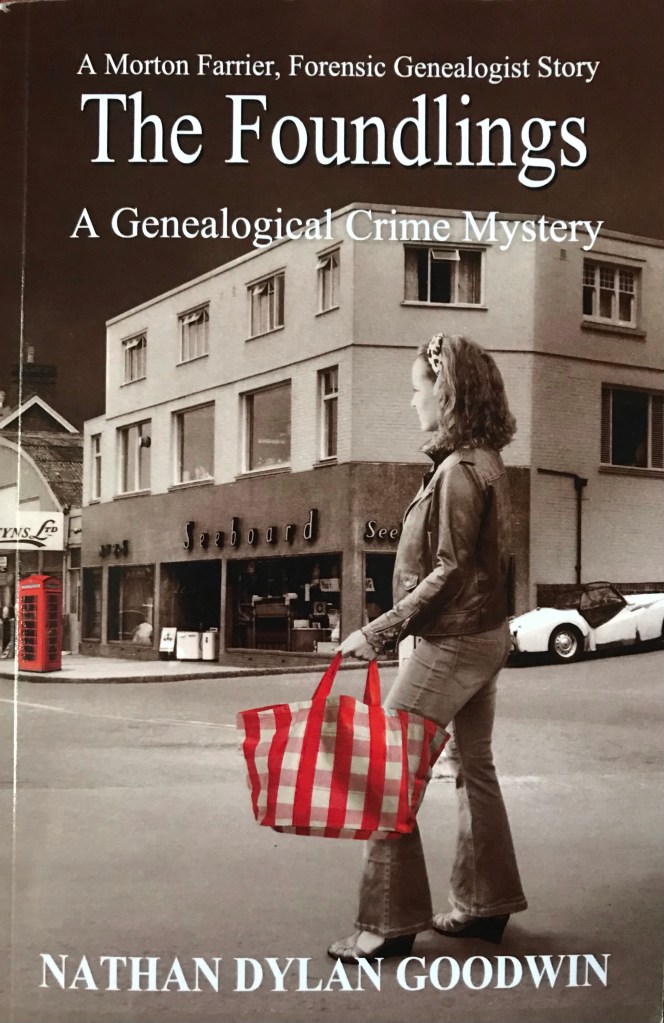
Book Review: The Foundlings by Nathan Dylan Goodwin

The Foundlings is the ninth novel in the Morton Farrier Forensic Genealogist series of books by Nathan Dylan Goodwin. And I promise no spoilers in this review. Suffice it to say if you read the book you’re in for a treat!

Once more genealogist Morton Farrier’s latest investigation is a fast-paced enjoyable read with plenty of plot twists and turns along the way, keeping you guessing right to the end. Farrier’s own family history is woven into the case, which proves all the more emotionally challenging for him because it is close to home.

It’s a case in which Farrier combines traditional family history research with DNA and genetic genealogy in order to find out the parentage of three women abandoned as babies. There’s real creative skill in how the author draws together all the various strands in this multi-layered story, with shades of darkness, to build to a credible ending. And for me it’s a sign of a good book when I’m compelled to flick back through the pages once I’ve finished, to re-read those “Aha” moments whose significance I’d not realised in my first run through.

As a family historian I really appreciate this series of books because I love following Farrier’s research processes. I can relate to the various records used, both online and in archives. And I do try to guess what steps he will take. This tale introduced an ethical dimension too. That being said, you certainly do not need to be a genealogist to become immersed in the story. If you like a satisfying mystery or crime novel, especially with some history thrown in too, The Foundlings – and the previous Forensic Genealogist books – will be right up your street.

I must confess I’m already an avid fan of the Morton Farrier Forensic Genealogist series of books, so his character was not new to me. I had just finished reading The Spyglass File. It meant The Foundlings was a few jumps ahead from where I’d got to in the series. And yes, I can confirm it can be read as a stand-alone novel, though I did quickly skip the few references to his previous case so as not to give away any clues to that story. I can also confirm it is up there with the previous books in the series, which goes from strength to strength.

In summary, if you’re in to family history, crime mysteries or historical thrillers I can highly recommend this book, along with all the others I’ve read in the series.

If you’ve not read any of the previous books in the Forensic Genealogist series and want to start at the beginning to sequentially see how the character’s back story evolves, here’s the full list:

  • The Asylum – A Morton Farrier short story;
  • Hiding the Past;
  • The Lost Ancestor;
  • The Orange Lilies – A Morton Farrier novella;
  • The America Ground;
  • The Spyglass File;
  • The Missing Man – A Morton Farrier novella;
  • The Suffragette’s Secret – A Morton Farrier short story;
  • The Wicked Trade;
  • The Sterling Affair;
  • The Foundlings.

Finally, here’s the all-important purchase information for The Foundlings. I read the paperback version, ISBN-13: ‎979-8481041421, price £8.99. There is also a kindle edition. Full purchase details for this, and all the previous books in the series, can be found on Nathan Dylan Goodwin’s website.

Footnote: I was given a copy of this book by the author to preview. But if I hadn’t received a copy I would have certainly bought it – as I have all the earlier ones

Public or Private Family Tree?

This is a perennial question for many people researching their family history. Whether or not to have a public family tree available online. And it is a dilemma which can arise fairly early on in the research path. Sometimes though it is not even considered, and for some the consequences of a decision to go public emerge too late.

Image by Peggy und Marco Lachmann-Anke from Pixabay

Before I go any further I want to make it clear there’s no right or wrong answer. It really is a purely personal decision, one with which you need to be comfortable.

However, here are some considerations which I’m sharing to provoke a deeper examination of, and debate about, the implications. It’s not intended to be an exhaustive list, more a thought trigger. I’ve split them into pros and cons.

First the advantages of a public online tree.

  1. Connecting. It goes without saying, but a public online tree allows other researchers with the same family history interests to easily find and contact you. This enables you to connect with distant cousins, compare research, potentially plug gaps and share photos.
  2. Collaborating. Following on from this, once connections have been made this can lead to collaborative working on trees, pooling research, and the possibility to discuss findings and theories with someone who has a mutual family history connection.
  3. Learning. Linked to the above two, connecting and collaborating can lead to improving your family history research skills.
  4. Expanding. By having an online presence you may be able to expand your tree, pushing back lines and breaking down brick walls. All at a far quicker pace than solo research offers. Though a word of caution. Do not accept the research of others at face value. Always do your own work to check and verify.
  5. DNA. If you have undertaken a DNA test in order to further your family history research, a linked public tree is an important corollary to that test. I realise this may not always be possible. But if it is an option, there are clear advantages. A tree is one of the first things your DNA matches will look at to identify potential links. And it does encourage contacts. Ask yourself if, amongst a plethora of DNA matches, are you more likely to initially investigate and contact the treeless or those with trees? Personally, I find one of the most frustrating things about DNA testing is to see a possible match, but for that match to have no tree.
  6. Tree Purpose. Is your tree family history, pure and simple? Or is it something along the lines of a one-name or one-place study? The latter two may have a lesser emotional/personal attachment, and also a need for a far broader range of collaboration/connection networks than your own family tree.
  7. Family History Community Spirit. Having an online tree may fosters for you a feeling of really contributing and sharing to further the research of others.
  8. Legacy. You may be the only one in your family interested in family history. There may be no-one to bequeath the family history baton to, no subsequent generations willing to take on your work. You may be wondering how to ensure your research is preserved for the long-term. Putting it online is one option.
  9. Unexpected heirlooms. Recently a story made the news about the love letters written by a soldier, killed during the First World War Battle of the Somme, to his wife. They turned up in a sewing box donated to a charity shop. An appeal was put out, and within hours searches by members of the public on an ancestry site resulted in the tracing of family descendants, which will result in the letters being reunited. More details here. This is a rare, potential unexpected bonus of having a public tree.

Turning to the disadvantages of having your tree publicly available.

  1. Information control. Obvious really, but once your tree is out there publicly available to all, you have no control who can access it and how it is used. Be prepared for it being copied wholesale by multiple people without them even contacting you, and without them even referencing the person behind the original research. Is this something which would bother you? If it is, think of other options.
  2. Reduced Contacts. Linked to this, your tree’s proliferation may even reduce the chances of you being contacted. Unless yours is stand-out, it may be lost amongst a forest of other similar trees. Of course though this does not reduce your opportunities to contact others.
  3. Photos. This is a particularly sensitive subject. You may have ancestral photos linked to your tree. You may also have document images, such as civil registration certificates or probate records. Whilst you might be happy to have the basic tree information copied, you may find the copying of photographs in particular, and them popping up on scores of trees, a bridge too far. Several bridges if the photo is misattributed – great aunt Jane labelled as someone entirely different.
  4. Copyright. This is a topic in its own right, so I’m only putting some initial thoughts out there. Your own private tree for your personal use only is one thing. But where do you stand if you link photos, copyright document images etc to a public tree for all to see, copy and share? What about your own linked notes and analysis? And is that going to create a whole new set of potential issues?
  5. Errors. What if you include something in a public tree which you later wish to correct or amend? You may find the horse has already bolted, with your early research replicated across many other online trees.
  6. Privacy Concerns. Whilst living relatives should not be on a public tree, something to bear in mind is how traceable ultimately you (or your family’s) details potentially may be even if the living are unnamed. It might not be the first thing you think of when constructing a public online tree, and it may only be a very minimal risk, but you should be aware of the possibilities for abuse. As an aside, while online trees hosted by genealogy providers do anonymise the living, I’ve come across trees on personal websites where details of the living have been included.
  7. Etiquette. Essentially by openly sharing your tree you are entrusting your work to others. Do not assume all online will have the same courtesy standards regarding information sharing, use and acknowledging.

And finally, in the interest of openness, here’s how I handle the dilemma.

Well over a decade ago I did have a bad experience regarding someone copying my once online tree, including notes and other elements, and it didn’t sit right with me. However, I can see the benefits of information sharing to mutually further research. I now have a threefold tree strategy. This is:

  • A full tree which is on Family Historian and it is entirely private;
  • A private tree on a commercial website shared with a couple of trusted people – a very much pared down version of the Family Historian tree, minus any images or photographs. Only very basic information, with no source links or citations. I’ve not updated it for quite a while, but it is useful to consult when I’m out and about (family history events, archives visits etc.); and
  • An online publicly available skeleton tree, with basic direct line information only, linked to my DNA research. No photos. No documents. No comments. No analysis. It is there primarily for DNA purposes. That way I have a way of connecting with other DNA researchers. And I can then share selected relevant information, rather than my full tree.

I realise it does limit my opportunities for connection and collaboration because of its reduced public visibility. However, that hybrid approach is a decision I am most comfortable with. But it may not necessarily be the right one for you.

The bottom line is make sure you define your reasons for putting your tree online in advance of doing so. Ensure you know the full range of privacy settings on whatever online medium you decide to use for a family tree (if indeed you decide to go down that route). Think about what would work best for you and what you would be comfortable with. And go into it with your eyes wide open.


Postscript:
Finally a big thank you for the donations already received to keep this website going.

The website has always been free to use, but it does cost me money to operate. In the current difficult economic climate I am considering if I can continue to afford to keep running it as a free resource, especially as I have to balance the research time against work commitments.

If you have enjoyed reading the various pieces, and would like to make a donation towards keeping the website up and running in its current open access format, it would be very much appreciated.

Please click here to be taken to the PayPal donation link. By making a donation you will be helping to keep the website online and freely available for all.

Thank you.

The Confessions of a Blogger: Review of 2018

I’ll start with an admission: My 2018 blogging year was not as prolific as usual. In fact it was nowhere near the efforts of previous years. But I’m far from downhearted. In fact I’ve thoroughly enjoyed it and I hope you have too.

Here are the details.

The Statistics. My blog saw a noticeable decline in output, with 25 posts during the year, down from 33 in 2017 and in excess of 60 in 2016. This was entirely due to other commitments such as completing my genealogy studies and publishing a book. Neither was it unexpected – I did forecast this in my 2017 blogging review post. And it is pretty much in line with what I promised: two posts a month.

However onto the positives. Despite the downturn in posts, my blog has grown from strength to strength numerically. Views increased from 20,649 in 2017 to well in excess of 21,000 in 2018. Thank you to all those who have taken the trouble to read my random family and local history outpourings.

My blog has now well and truly developed its character with core themes of my family history, interspersed with local history tales from Yorkshire, alongside news from – and my musings on – the genealogy world’s latest developments.

Most Popular Times? Monday proved my most popular blogging day, with 21% of views. And my golden hour shifted to the slightly earlier time of 6 pm. I suspect this shift is as much a result my blog posting times as anything more profound.

How Did They Find You? Search Engines took over as the key engagement route accounting for around 7,000 views.

Where Did They Come From? The global reach of WordPress never fails to amaze me. Going on for 100 countries are represented in my list of views. The UK accounted for well over 10,000 of these which was almost double the number of my next most popular country, the United States. Australia came third with over 1,000. But all corners of the globe feature with readers extending to Cambodia, Tonga, Peru and Tunisia. A huge thank you to you all! You’re what makes it worthwhile researching and writing these posts.

And it’s fantastic to receive so many comments either indirectly via Facebook and Twitter, or directly on my blog site. They’ve added new information, context and connections. Thank you for getting in touch.

Top Five Posts of 2018: Other than general home pages, archives and my ‘about’ page, these were:

General Register Office (GRO) Index – New & Free. This was actually posted in 2016 but, as in 2017, it continued to perform well in 2018 . This post was about a new free source for searching the GRO birth and death indexes (note not marriages) for certain years, one which gives additional search options. It also covered the initial £6 PDF trial, an alternative and cheaper source than buying a birth or death certificate. Note the PDF option, a copy of the register entry rather than a certificate, still continues. However the cost will rise to £7 on 16 February 2019. The cost of a certificate increases from £9.25 to £11.

Living DNA: I’m Not Who I Thought I Was. This was another 2017 post which continued to prove popular. It is testimony to the importance with which genetic genealogy is now seen. lt dealt with my shocking DNA results. I’m 100% from Great Britain and Ireland. No drama there. But it indicated that I’m not entirely the Yorkshire lass I thought – the ethnicity pointed to some genetic material from the dark side of the Pennines. I reckon this could be linked to a potential 5x great grandmother from Colne. I really do need to push on with my Abraham Marshall New Year’s Resolution.

Cold Case: The Huddersfield Tub Murder. Yet another 2017 offering, and in last year’s “one that got away” category as being one of my favourite posts which failed to reach the Top 5 that year. Well it proved immensely popular in 2018. It dealt with the unsolved murder in Huddersfield of a Dewsbury woman of ‘ill-repute’ whose tragic life and abusive relationships ultimately resulted in her death.

“Historical Vandalism” as more Archive Services Come Under Threat. Published in December 2018 its appearance in the Top 5 for the year shows the importance with which any threat to these vital services are seen. It covered some recent swingeing funding cuts to archives and corresponding proposed (and actual) major reductions to these services across the country. Some of the consultations, Surrey (4 January 2019) and Kent (29 January 2019), close imminently. So I would urge you to have your say.

Tripe Tales – Food Nostalgia. My childhood memories of food led me to focus on this particular northern ‘delicacy’, which was very popular when I was growing up. It covered some early 20th century local tripe stories including theft, death and prodigious eating feats, as well as recipes to try. I was also inundated via social media with suggestions of where I could still buy it. I’ve yet to confront once more this culinary challenge.

So yet again this was a mixed bag of popular posts, ranging from topical family history issues, to DNA and general history and local history tales – which sums up my blog perfectly.

The Ones that Got Away: These are a few of my favourite posts which didn’t make the top five:

Fur Coats Can Prevent Flu – The 1918/19 Pandemic looked at how to use various information sources to build up a picture of the impact of the Spanish Flu “plague” on local communities. In my example I focused on Batley.

How the Western Front Association WW1 Pension Ledgers May Have Solved another Family History Mystery. I used this newly available online record source to prove a family tale and discover more about my great uncle.

Irish DNA Breakthrough and Don’t it Make My Brown Eyes Blue covered how DNA led to the demolition of one of my family history brick walls and helped me find out more about two of my Irish grandpa’s sisters who emigrated to the United States.

A Family Historian on Holiday: A Whitby Cemetery and WW1 Shipwreck was about the sinking of the Hospital Ship Rohilla off the Whitby coast in 1914. With links to the Titanic, heroic rescue attempts and a disputed will it illustrates how a family and local historian is never off duty, even on holiday!

Finally there was Published: The Greatest Sacrifice – Fallen Heroes of The Northern Union. This marked my greatest achievement of 2018 and the culmination of around two years’ work, the publication of my book co-authored with husband Chris. It has been described as the definitive book about those Rugby League players who fell in the Great War.

What Does 2019 Promise? Well, as in 2018, I aim to do two posts a month. These will be on the same type of themes as usual – family and local history tales, plus topical genealogy offerings when anything big hits the headlines. I will also be including some Aveyard One-Name Study stories.

I anticipate my major challenge this coming year, as ever, will be time. I also have the added concern of keeping things fresh and relevant. I now have two other writing roles to add to my blog. At the end of 2018 I took on the role of editor as the Huddersfield and District Family History Society quarterly Journal, the first edition of which came out in January. And I now write a regular family history column in Yorkshire nostalgia magazine “Down Your Way.” So clearly I want to ensure my blog posts are separate and distinct from my other writing commitments. However, my head is buzzing with ideas so I don’t think that will be too much of a creative dilemma.

But whatever direction my blogging year takes, thank you for reading, engaging and supporting.

Wishing you a happy, peaceful 2019 filled with family history fun!

Irish DNA Breakthrough

Over two years ago I wrote about one of my main DNA aims: to find what became of my grandpa’s three sisters who left County Mayo for the USA in the early 20th century. The mystery of what became of the Callaghan sisters was one which nagged away at me. I knew one of them ended up in Canada via Boston, mum thinks it was Quebec Province, and married a French Canadian. Mum did not know which sister this was, but I suspected the eldest; the two younger sisters I traced to Boston, Massachusetts in the early 1920s via ships’ passenger lists.

gene-tree-1490270_1280

Image courtesy of Pixabay.com

Mum was also desperate to find out about her aunties – Bridget, Mary and Catherine/Kate, so she joined me in doing an Ancestry DNA test. We were aware the Quebec line would draw a blank DNA-wise, as mum knew this sister had no biological children and adopted a boy who at one time was in correspondence with mum’s brother who was tragically killed aged 19. Contact was lost with the Canadian branch at around this time, or so mum thinks, and she cannot ever remember hearing about the sisters in the USA.

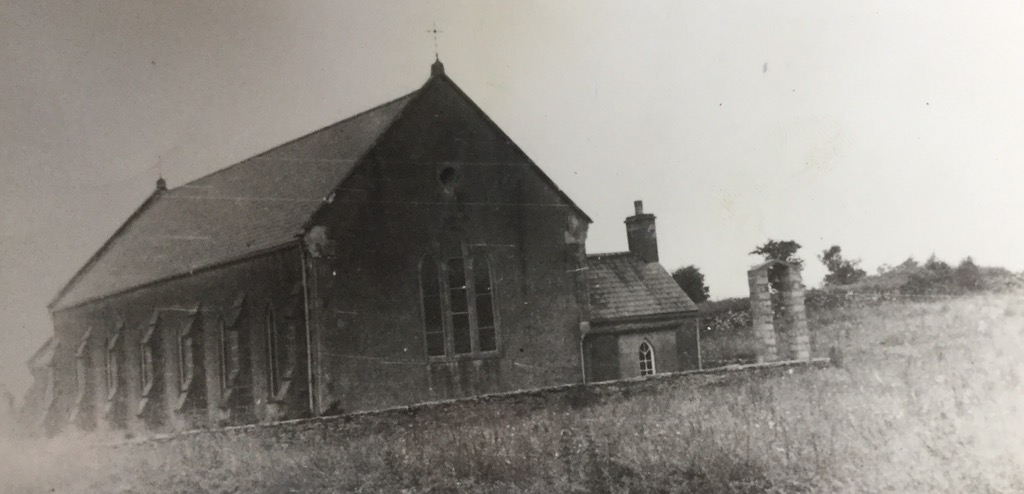
There must have been some contact though between the USA sisters and my grandpa. I have a mysterious, unsent and undated postcard written by him and addressed to “Mrs Lovell, 20 Magguire St, West Villa, Maserchusatt [sic].”  The image is the church in which the family were baptised – Glan Chapel near Kilkelly. It seemed a logical assumption this was intended for one of his sisters, now married. Proving it was unfortunately not straightforward, in part due to my lack of experience with USA records.

Several months after submitting the DNA tests I finally had what appeared a very promising match – an extremely high confidence second/third cousin match with mum and a third/fourth with me. No tree but, correlating with other DNA matches with other testers who had trees, it seemed to be down the Callaghan line mum and I were so keen to find out about.

An initial contact with the tester confirmed the DNA match was with a descendant of grandpa’s youngest sister, Catherine. Then nothing more. After two years I had given up. Then out of the blue the other month I received another message followed by a photo of grandpa’s sister which made my mum’s day. I am not including the photo in this post – it is not mine to share. I was also given Catherine’s married name which was all I needed to find out basic details about her and introduce me to some US records in the process.

Catherine became an American citizen in 1937. Her naturalization papers confirm her birthplace as Carrabeg [Carrowbeg], County Mayo and the details correspond with those on the passenger list detailing her arrival in Boston back in 1922. In her naturalization petition she gives a date of birth of 4 September 1903. Later, her social security records amend this to 7 September 1900, which matches with the date of birth given when she was baptised on 9 September 1900 at Glan Chapel, Kilmovee Parish. Interestingly going back to Ireland for her official birth registration in Swinford, County Mayo on 27 October 1900, her officially recorded date of birth there is 7 October 1900.

Like my grandpa, the official date given is a judicious tweak to avoid a late birth registration. This is not unusual for the family, along with many others in rural Ireland. They would have found it a trek to get from their isolated Carrowbeg farm to Swinford to register the births of their children. They did it as and when they could, and amended the birth dates accordingly to avoid any penalties for failing to comply with the legal requirements of registration within 42 days of birth. I therefore take the birth date given at time of baptism for my rural Irish ancestors as the most reliable one – God before state. Their baptisms invariably take place within days of birth. Therefore I find the Callaghan family often have their baptisms pre-dating their births when comparing to officially registered birth dates!

By 1937 Catherine was living at Wellington Street, East Braintree, MA. Her naturalization papers give a brief physical description – a diminutive 5ft 3in, 122lbs with blue eyes, brown hair and a medium complexion – so no change from her 1922 passenger list description. They also state she married James E Rudolph in Boston on 29 August 1925 with a child was born around three years later. By 1937 though, she is a widow. Her husband’s birthplace is recorded as Middleborough, MA., and a date of birth is given as 23 June 1904.

A quick look at the 1930 census sees James E Rudolph, Catherine and their child living at 6 Belmont, Braintree, MA with James working as a pipe fitter. Lothrop’s Braintree Directory of 1931 lists James as Ernest, still living at 6 Belmont with wife Catherine, with the occupation of electrician. There certainly appears to be a little confusion over his name because Clarence is another variation middle name which appears in records, including census and Middleborough town records.

What is clear is Catherine’s husband died by the time of the publication of the 1935 edition of Lothrop’s Braintree Directory, with her now Wellington Street address listing her as the widow of Ja[me]s E Rudolph. The Massachusetts Death Indexes confirm a death registration year of 1935 at Weymouth, under the name of James E Rudolph. Other sources appear to indicate he died in March that year.

The 1940 census shows Catherine and her child at Wellington Street, Braintree. Life must have been a real struggle. It shows her seeking work, having been employed for only 8 weeks the previous year and earning only $20. She did have an income of $50 or more from sources other than money, wages or salary. But the fact she was seeking work is indication that this was insufficient.

By the time of her death on 1 October 1970, Catherine was residing at Hanover, MA. She is buried with her husband at Saint Francis Xavier Cemetery, Weymouth, MA. I wonder if my grandpa ever knew? He was still alive in 1970. Mum certainly cannot recall him mentioning anything.

I feel content that at least I now have some details about what became of Catherine. And mum is thrilled to have seen a photograph of her auntie. So DNA has provided the hoped for breakthrough. But that result has also led to the cracking of the postcard mystery. More to come on that in my next blog post.

Sources:

  • Ancestry.com. Massachusetts, Birth Records 1840-1915, Original data: Massachusetts Vital Records, 1840–1911. New England Historic Genealogical Society, Boston, Massachusetts.
  • GRO Records, Ireland: Births registered at Swinford for the District of Kilkelly
  • 1910 to 1940 US Censuses
  • Lothrop’s Braintree Directory 1931 and 1935
  • Ancestry.com. Massachusetts, State and Federal Naturalization Records, 1798-1950
  • Ancestry.com. Massachusetts, Death Index, 1901-1980 [database on-line]. Provo, UT, USA: Ancestry.com Operations, Inc., 2013. Original data: Department of Public Health, Registry of Vital Records and Statistics. Massachusetts Vital Records Index to Deaths [1916–1970].
  • Ancestry.com US Social Security Death Indexes 1935-2014
  • US Billion Graves via FindMyPast
  • United States Obituary Notices via FindMyPast (source Tributes.com)

The Accidental Blogger – My 2017 Review

My 2017 blogging year didn’t go quite as planned. Two posts a month was what I promised. And with 33 for the year I ever so slightly overachieved. So unplanned in a positive way. This number was down significantly on my 2016 total of 60+ posts, but deliberately so. I continue to enjoy researching and writing. I also find the process helps me to focus on, and review, my personal family history research. But keeping volume up, alongside quality and interest, is a tricky balance. Hopefully I achieved that balance in 2017.

I accidentally stumbled into this blogging lark. My blog started in April 2015. In those first nine months it had a tad over 2,900 views. In 2016 it grew to 12,163. So how does 2017 compare?

The Headlines: Despite the reduced output my blog did not suffer. It had 20,649 views. I feel slightly giddy and ever so grateful that folk actually looked at my random stories and thoughts about family and local history. In 2015 I averaged roughly about 322 views per month. In 2016 this grew to over 1,000 per month. Roll forward to 2017, and it achieved over 1,700 per month.

My Best Day: 28 July 2017 had an amazing 662 views. For hard-core bloggers that’s not many, but I feel hugely privileged so many people took the time out to engage. Sunday is now my most popular day, with 22% of views. And, once more, the golden hour is 8pm.

How Did They Find You? Facebook was the primary referrer with over 5,000 clicks leading to my site. Search Engines accounted for almost 4,000.

Where Did They Come From? The global reach of WordPress continues to astonish, with views from around 80 countries. Unsurprisingly, as I’m based in England, over 13,000 were from the UK. Almost 4,000 reached me from the USA. But I had views as far afield as Rwanda, Fiji, Venezuela, Albania and Lebanon (one from each of those countries). So if you’re reading this a huge thank you!

I also loved reading the comments I’ve received indirectly via Facebook and Twitter, or directly on my blog site. Some of these have resulted in new direct family history connections with distant cousins. Others have been from descendants of those named in my research. Again, thank you for getting in touch.

Top Five Posts of 2017: Other than general home page/archives and my ‘about‘ page, these were:

  • Access to Archives – What Price and at What Cost? This was my reaction to the news that Northamptonshire Archives proposed introducing charges to visit, alongside a reduced number of free access hours. The fact this post received over 1,500 views is testimony to the concern felt throughout the academic and family history communities about this development. The proposal was thankfully shelved. But it shows the ongoing issues we face with access to archives at a time when Councils are facing difficult choices about their priorities in a climate of tight funding.
  • Buried Alive: A Yorkshire Cemetery Sensation had almost 1,000 views, with its multiple stories of people ‘rising from the dead’. It included a particularly macabre tale from Leeds, with a gravedigger seemingly ignoring knocking from a coffin. It goes to show that the Victorian fear and obsession with premature internment still holds a fascination today.
  • General Register Office (GRO) Index – New & Free was actually posted in 2016. But in 2017 it had a resurgence, with its close to 800 views more than doubling its 2016 tally. This post was about a new free source for searching the GRO birth and death indexes (note not marriages) for certain years, one which gives additional search options. It also covered the initial £6 PDF certificate trials. There is currently an extended pilot running for these £6 PDFs, which I blogged about here.
  • Living DNA: I’m Not Who I Thought I Was dealt with my latest shocking DNA results. I’m 100% from Great Britain and Ireland. No drama there. But imagine the horror this Yorkshire lass felt to discover she has genetic material from the dark side of the Pennines. I did try to kid myself that it couldn’t possibly be Lancashire blood. But a discovery last month via traditional family history research seems to confirm the accuracy of LivingDNA’s results. It points to a 5x great grandmother from Colne. How could my mum inflict this on me?
  • A Dirty Tale from a Yorkshire Town had just shy of 600 views. The 1852 inquiry into sanitation in Batley proved to be a fascinating peek into the lives of our ancestors, their struggles to obtain drinking water, the issues of sanitation in an increasingly urbanised area, the problems with disposing of the dead and the knock on health effects, with frequent epidemics. All illustrated with examples from the town. Despite the grim and dry(?) subject, the post clearly whet the appetite for this type of local context to family history.

So a real mix of posts ranging from topical family history issues, to DNA and general history and local history tales. This snapshot really sums up what my blog is about. A bit of my family history, interspersed with general genealogical topical updates, and a smattering of local history posts about the lives and times of my ancestors and the communities in which they lived.

The Ones that Got Away: These are a few of my favourite posts which didn’t make the top five:

  • Death by Dentition looked at teething as a cause of infant death in the 19th century. This research was promoted by the discovery of my 3x great grandmother’s youngest daughter’s death in 1870.
  • Batman – My Family History Super Hero uncovered the extraordinary persistence of my aged Irish great grandad in trying, and lying, to enlist to serve in the Great War not once, not twice but three times. I discovered his final attempt in 1918 was to join the newly formed RAF. So he, not his grandson (my dad) was the first to serve in that branch of the military.
  • In my commitment to the role of libraries in the community, I shared my thoughts on their importance in A Library is Not a Luxury but One of the Necessities of Life.
  • I also wrote about a couple of murders with local connections. One remains unsolved. Cold Case: The Huddersfield Tub Murder involved a woman of ‘ill-repute‘ whose tragic life and abusive relationships ultimately resulted in her death. The other, Mother-in-Law Murderer, was a tale of poisoning which resulted in the hanging of a Batley woman in 1794.
  • Finally, if you want to discover a claim to Brontë fame, check out Finding Your Brontë links.

What Does 2018 Promise? Well, as in 2017, I aim to do two posts a month. I’ve lots of ideas for these, including some in-depth research pieces. In this centenary year of the Armistice, some will definitely have a Great War theme. Others will have a more general family or local history context. And, of course, there will be the occasional topical offering when something big hits the genealogy news. Hopefully these topics remain relevant and interesting, but any other suggestions would be welcome.

The big question, as ever for me, is time. 2018 promises to be a busy year personally and professionally. This may impact on my blogging output, as I do need to focus on my family history client research work, the final year of my assessed genealogy course and my book. I’ll have to see how it pans out.

But whatever my blogging year holds, thank you for reading, engaging and supporting.

Wishing you a happy, peaceful 2018 filled with family history fun!

My Top 12 Family History Suggestions for the New Year

As the year closes, here are 12 Family History suggestions for you to consider in 2018. 12 as in one per month. Or maybe because I simply couldn’t whittle them down to 10. You can judge!img_4905

  1. Review your research. Often research is ‘completed‘ and then shelved for years or possibly for ever, even if there are gaps. It does pay though to periodically revisit your research. What might have seemed a dead-end 12 months ago, may no longer be the case. A new record set, an additional piece of information gleaned through researching another family member, or even your own improved research techniques – all these can mean a brick wall is ready to come crashing down.
  2. Join a Family History Society. These organisations are the bedrock of family history up and down the country. They offer a wealth of help, advice and local knowledge. They also provide opportunities to meet with others sharing the same passion for, what can be, a solitary pursuit.
  3. Visit an archive. Contrary to what may appear to be the case, not everything is online. Far from it. And even what is there is not perfect. The indexing may leave something to be desired. Or the source citation may be so unclear as to mislead. One of the simple pleasures of family history research for me is physically connecting with original source material. To hold a document from a bygone era, possibly centuries old, and realise you’re touching something created by people long since gone. All the more special if, within that document you discover your ancestor’s name.
  4. On the same lines, check out your local library. They may have lots of free resources to help you with your family history research. From local newspapers on microfilm, to electoral registers, donated research, council minutes, medical officer of health annual reports, school yearbooks and magazines. The may have censuses, and microfilm or microfiche copies of parish registers. Many have free computer access to Ancestry or FindMyPast. So get down to your local library. You may be pleasantly surprised what’s there.
  5. Talk to relatives. They are living connections with the past, often too easily ignored whilst you pursue your paper trail. My dad died this year. Even though I did quiz him about the past, it’s only now he’s gone that I realise there’s so much more I wished I’d asked him. A few years ago I gave dad a book to fill in about his life. He never did it. So talk to your relatives whilst you have the chance.
  6. Do a family history course or webinar. Anything really to improve your skills. It doesn’t need to cost much. There are lots of free tutorials. Check out The National Archives events – they do some really good free online webinars. FindMyPast also do them. Your local Family History Society may run courses too. But ultimately your research techniques, and results, will benefit from it.
  7. If you do a DNA test, and if you are able to, please Please PLEASE include a tree. Even if it’s only a skeleton tree with a few direct line ancestors. There are so many treeless DNA testers, and it’s so frustrating trying to work out what the connection is between you and them. Yes there are ways and techniques to try to work round this. But it’s so long-winded and speculative. It’s far easier if at the outset there are some family names to work with. So if you received a DNA test this Christmas, besides the initial excitement of spitting or swabbing, do take a bit of time to upload a tree. By doing so you may get more potential DNA matches contacting you too.
  8. Check out #AncestryHour on Twitter. Tuesday’s at 7pm-8pm (GMT). Lots of fast-paced, fun, friendly family history chat, tips and plenty of opportunity to ask questions. More details are here. Starts again on 9 January 2018.
  9. If you do have a public tree on Ancestry, review it to make sure it’s accurate. And if you’re new to family history and looking at these public trees don’t take them as gospel. Do your own research and checking. So many of these things are blindly copied perpetuating the myth that 95 year old 3x great auntie Ann gave birth to twins!
  10. A bit long term, and on a less cheery note: what will happen to all your painstakingly researched family history once you’re gone? Will it end up in the bin? Start thinking now about how it will be preserved. Is there someone in the family to pass the baton on to? If not, is there another option?
  11. Photographs. A dying art in this digital age. I can’t remember the last time I put a family photo in an album, never mind label the names. They’re all on my phone, FaceBook, or when I get round to it, on my computer. So perhaps devote some time to putting a few key family photos (with names) in an album for future generations. Perhaps I’m showing my age and technophobe side here?
  12. Make 2018 the year when you better organise your family history research. Note sources in full. Note negative searches. Note dates searches were conducted. Write up research, and file it, at the time you do the work – not six months later when you’ve not a clue what paper is where, let alone what your scribbled note says and anyway it’s now all too overwhelming to sort out.montage

Whatever you do with your family history quest in 2018, enjoy it! I’ll publish my own New Year’s Resolutions tomorrow.

Living DNA: I’m Not Who I Thought I Was

My Living DNA results have proved a bit of a curate’s egg. Good in parts, but leaving me with major question marks in others.

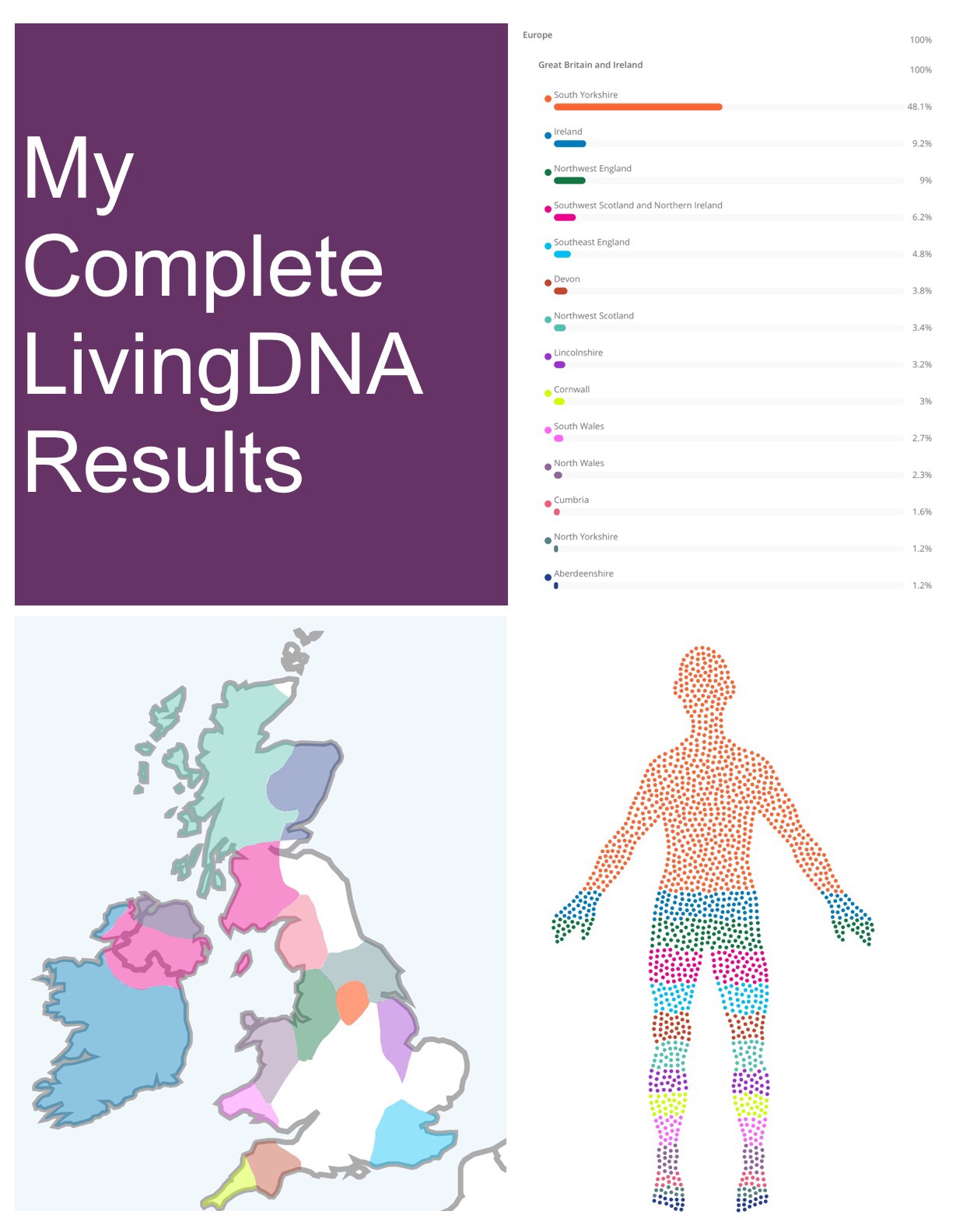
I’m 100 per cent from Great Britain and Ireland, which correlates with my research so far. I’m also predominantly of Yorkshire ancestry; more precisely South Yorkshire which, as defined by Living DNA, roughly comprises the South and West Yorkshire counties. Park that piece of information. 

Given what I know, my next largest component is unsurprisingly Ireland at 9.2 per cent – but I also know this is a massive underestimate and should be nearer 50%. My research so far shows this is all County Mayo, so my 4th ethnicity component of 6.2 per cent southwest Scotland and Northern Ireland is not a shocker either, with its proximity to Mayo. But that’s where it ends.

My family history research does not match my LivingDNA results in some fairly significant areas. My ancestral origins research doesn’t go back the estimated 10 generations the LivingDNA results capture. But my research shows North East England ancestry,  from the Durham and Northumberland areas: one set of 4x great grandparents were born in those counties (Ann Jackson in Northumberland and Robert Burnett in Durham). The evidence is backed up in several record sources, most crucially a documented, bitter, removal order dispute.

Yet my LivingDNA standard result, the one which links to the test’s best-guess reference population ancestry sources, does not show any ancestry in their designated Northumbria area. This roughly equates to the Northumberland/Tyne and Wear/Durham/Scottish Borders/Fife areas. Neither does Northumbria feature in my complete result, the one where the test attempts to allocate the unassigned 7.7 per cent of my genetic make-up to regions where it look most similar.

Perhaps Ann and Robert’s parents (my 5x great grandparents, John Jackson/Elizabeth Hayes and Stephen Burnett & his one-handed gypsy mistress Charlotte) all migrated and settled in that area from elsewhere – possibly Cumbria or Scotland. Despite me not yet having any ancestors from north of the border, my standard result has identified percentages from three of the Scottish areas (albeit one of those is the aforementioned Scotland/Northern Ireland region).

The other conundrum is the absence of any North Yorkshire trace in the standard test, basically the North and East Ridings. The explanation may simply lie in proximity to county boundaries and 1974 boundary changes. I have relatively recent (if you call 18th century recent) ancestry around the Sherburn-in-Elmet, Saxton-in-Elmet, Brayton and Hemingbrough areas. These all fall within what is now North Yorkshire. However, prior to 1974 the first three were in the West Riding. Hemingbrough was in the East Riding, but it is only five miles, as the crow flies, to Brayton. So they could conceivably fall within the LivingDNA South Yorkshire zone. My complete results do pick up a trace 1.2 per cent North Yorkshire ancestry. 

Other surprises? Well the shock for this white rose Yorkshire lass is she has genetic components from the dark side of the Pennines, possibly (whisper it) the red rose county. Though, in the absence so far of any North West roots, I’m claiming that any such ancestors must be from the Cheshire/Merseyside/Staffordshire and not Lancashire parts. We’ll see what further family history research down the line turns up.

I also have Welsh DNA – 5 per cent in total from North and South Wales. And then there’s the 3.8 per cent Devon and 3 per cent Cornwall. So THAT’s why I’m addicted to Poldark!  And I’ve a remarkable absence of southern-ness.

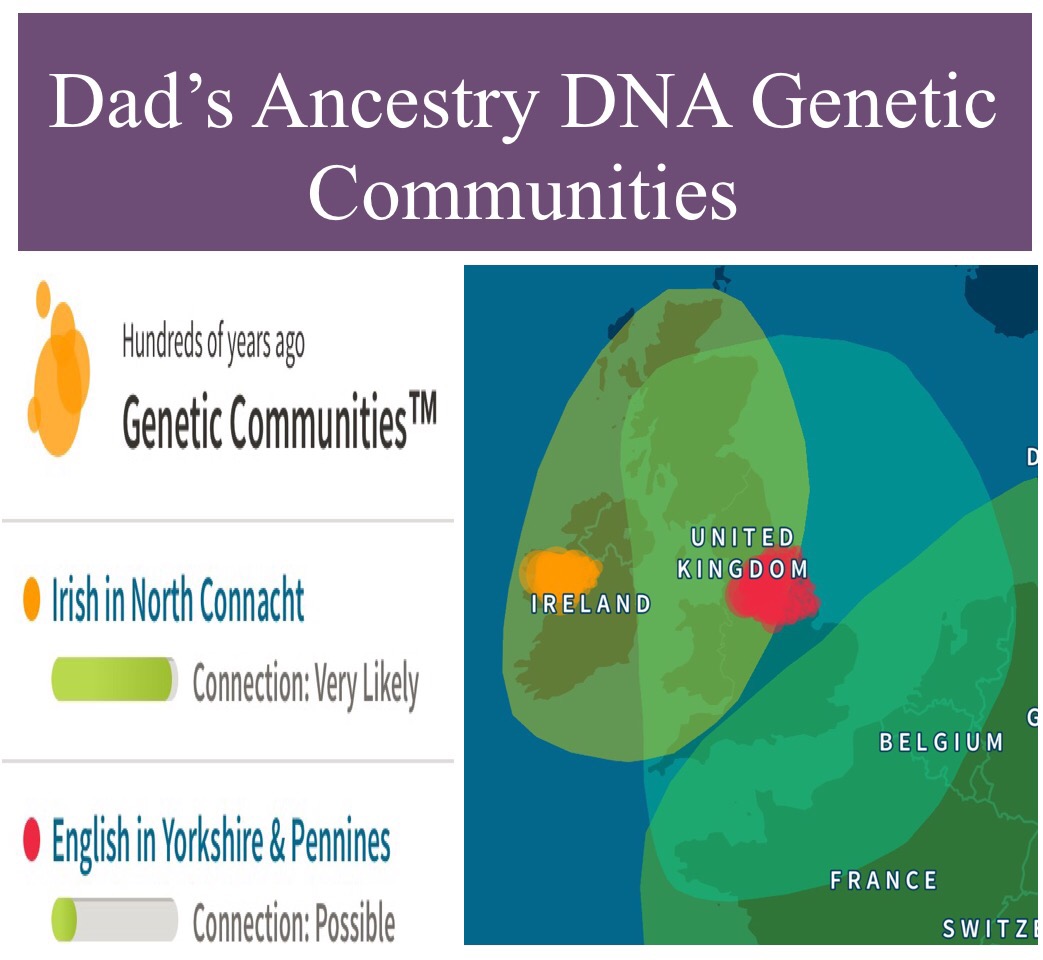
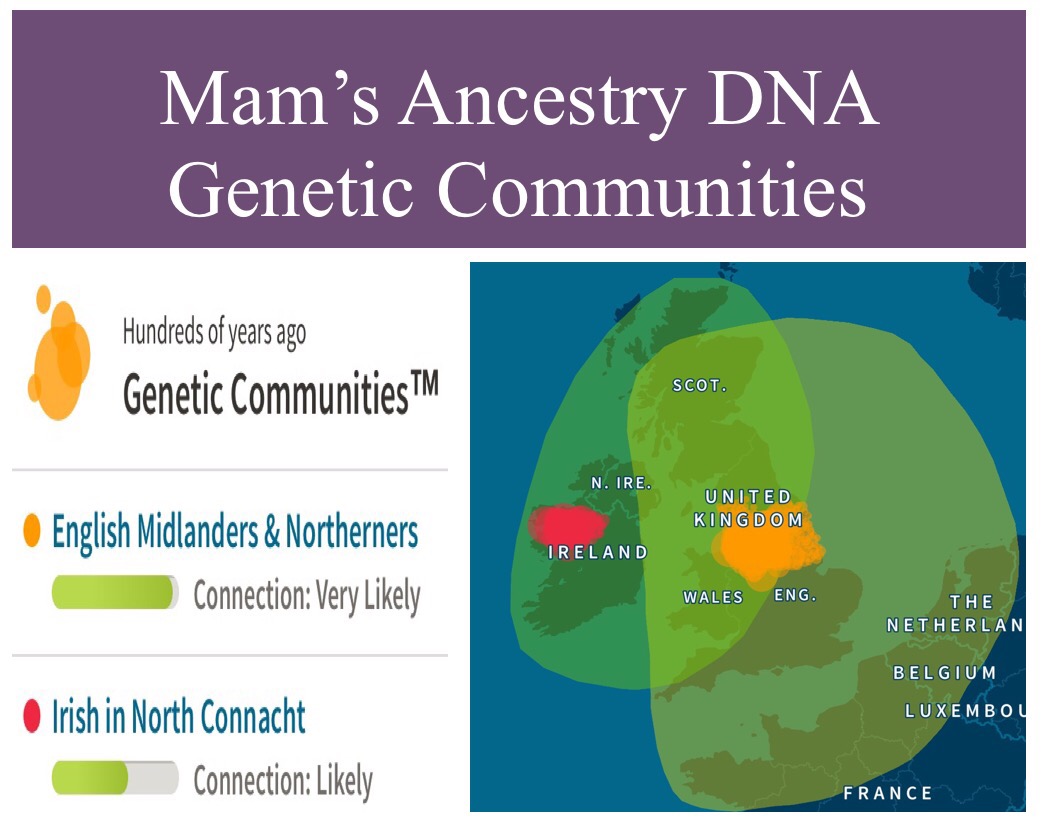
How does my LivingDNA ethnicity result compare with my Ancestry and Family Tree DNA ones?  Family Tree DNA places me as 97 per cent European, of which 71 per cent is British Isles.My Ancestry test is 100 per cent European. Of this 52 per cent is Great Britain and 44 per cent Ireland. In terms of their Genetic Communities, I fall within two of the nine regions assigned to the UK and Ireland as follows:

  • the Irish North Connacht category (very likely) which ties in neatly with my County Mayo ancestry; and
  • English in Yorkshire and Pennines (very likely) which again fits with my research.


The confusion here is the Genetic Communities of my parents are slightly at odds with me, as shown below.

And mum, given her dad is from County Mayo, may be disappointed with her “likely” Irish North Connacht outcome.At a simplistic level, it’s easy to ask should not all the results be the same? After all, there’s only one genetic me (hurray!) But delving deeper, the difference is not unexpected. The companies have different reference groups, time measures and, possibly, a different emphasis on the ethnicity element of their tests as opposed to the DNA matching side. LivingDNA is much more of a deep dive into 21 British/Irish genetic groupings (80 worldwide ones), rather than the broad-brush overview given by Family Tree DNA and, to a lesser extent, Ancestry’s nine UK/Ireland regions.

Finally, for those DNA experts, my LivingDNA Mitochondrial DNA (mtDNA) has me in Haplogroup U4, Subclade: U4b1b1. U4 is found in low frequencies across much of Europe and Asia, more commonly in populations near the Ural Mountains and Volga River in Siberia. According to LivingDNA U4 is “an old group, which helps to explain the relatively low frequencies in populations today. It is now thought that haplogroup U4 was involved in migrations into Europe from the Middle East that occurred before the end of the last ice age”.

So, to sum up, my test leaves me with much more work to do to build my tree to try to prove these new elements to my ethnic make-up. But it also gives me some new migration theories to work with.

Sources:

My Bizarre Christmas-Associated Family Name: AKA There’s more to Family History than DNA

In “Shrapnel and Shelletta[1] I wrote about war-associated baby names. This is a more seasonal post about a particular Christmas-associated family name.

When naming a baby at Christmas-time, which names conjure up this magical time of year? Which can be considered as festive and beautiful as this special period? Holly, Ivy, Joy, Noel/le, Merry, Nick or Rudolph might spring to mind. Perhaps Caspar, Gabriel, Emmanuel, Balthasar and Gloria? Or maybe the Holy Family names of Jesus, Mary and Joseph?

In contrast, which name would make you recoil with shock and horror? Which name would you think “No way! How inappropriate! What on earth are they thinking of?”

Probably near the top of the list would be the one associated with my family tree.  For on 24 December 1826 at Kirkheaton’s St John the Baptist Parish Church (oh, the irony of date and church name)[2] the baptism of Herod Jennings took place.

Saint-Sulpice-de-Favières_vitrail1_837 Herod

Magi before Herod the Great, Wikimedia Creative Commons License, G Freihalter

Herod was born on 3 November 1826, one of five children of coal miner George Jennings and his wife Sarah Ellis. They married in October 1818 at St Mary’s, Mirfield and by the time of Herod’s baptism had settled in Hopton, a hamlet in that township, midway between Mirfield and Kirkheaton.

Herod’s siblings included the equally wonderfully named Israel (baptised 20 June 1824) and Lot (born 8 March 1830), so some fabulous biblical associations there too. The other family names of James (baptised 24 September 1820) and Ann (baptised 20 October 1822, buried 7 July 1823) seem disappointingly ordinary in comparison.

Sarah died in 1832, age 36 leaving George to bring up his four surviving children. James married Sarah Pickles on 25 December 1839, another example of Christmastime events in this branch of the Jennings family![3]So, by the time of the 1841 census, it was just George and his two sons, Israel and Herod, along with a female servant Jemima Gibson living in the Upper Moor, Hopton household. Youngest child Lot was along the road at Jack Royd, with the Peace family. This may have been a permanent arrangement given the family situation.

By the time of this census young Herod already worked down the mine, a job which ultimately would possibly contribute to his death.

On 7 October 1850 he married Ann Hallas at St Mary’s, Mirfield. Both Herod and Ann lived at Woods Row, Hopton. Ann was slightly older than Herod, being born in 1824. By the time of their wedding, she was already the unmarried mother of two. Her son, Henry, was born in 1843; and my 2x great grandmother Elizabeth’s birth occurred in November 1850, 11 months prior to Ann’s marriage to Herod.

This then is my family connection to Herod: His marriage to my 3x great grandmother. And it is one of the mysteries I still hope the DNA testing of mum and me will solve. Was Herod the father of Elizabeth? She was certainly brought up to think so, with all the censuses prior to her marriage recording her surname as Jennings, whereas her brother Henry went under his correct Hallas surname. And when registering the birth of her son Jonathan, there is a slip when Elizabeth starts entering her maiden name as “Jen”. This is subsequently scored through and correctly written as “Hallas”.

It appears Henry too was minded to look upon Herod as his father-figure. At his baptism at St Peter’s, Hartshead in June 1857 he appears in the register as Henry Jennings, not Hallas. When he married Hannah Hainsworth at Leeds All Saints on 24 December 1866, his marriage certificate records his father’s name as “Herod Hallas”. And in 1870 he named his eldest son Herod. Although by no means a common name, a glance at the GRO indexes shows it did appear occasionally, along with its alternative forms of Herodius and the feminine Herodia. The fact Henry gave his son this unusual name seems to indicate a measure of affection for the man who brought him up. Finally, at the time of the 1871 census Herod, son William and nephew Charles were boarding in the Leeds home of Henry.

So, whether or not there is a DNA link, he is still a major figure in my family tree. And for me this brings home the fact that there is more to family, and family history research, than DNA links alone!

Herod and Ann had nine other children: Ellen (born April 1851), Louisa (born January 1853), Harriet (born November 1854), Mary (born May 1858), William (born 1860), Eliza (born April 1862), Rose (born 1864), Violet (born 1866) and James (born 1871).

The family moved frequently, presumably due to Herod’s work as a coal miner. They are recorded at various locations in the area, many within walking distance of where I live. These included Mirfield, Battyeford, Hopton, Hartshead, Roberttown, White Lee and Batley.

Outside of work Herod had a keen interest in quoits, arranging and taking part in park challenge games especially around local Feast times. This game was particularly popular with miners and mining communities in Victorian times, with the metal rings being made of waste metal from mine forges. Challenge matches were also a way to raise funds, for example for sick and injured miners.

Herod died age 52, at Cross Bank, Batley as a result of asthma and bronchitis, which presumably owed something to his mining occupation. Working in cramped, filthy, air-polluted, damp, sometimes wet conditions from an early age, this was a hazardous and unhealthy occupation. The conditions and physical exertion led to chronic muscular-skeletal problems and back pain as well as rheumatism and joint inflammation. Most colliers had lung associated problems, with many becoming asthmatic whilst still relatively young. So Herod’s cause of death, from a lung-related illness, is unsurprising.

Ironically Herod’s date of death occurred on 5 January 1878, a day we associate with the Christmas period, falling before 12th night. And in the Western Christian tradition the 6 January is the Epiphany, marking the visit of the Magi to the infant Jesus in Bethlehem. This brings us once more to the King Herod connection, at Herod Jennings’ death as well as his baptism.

This is what Matthew’s gospel says about those events at the first Christmas:

Then Herod summoned the wise men to see him privately. He asked them the exact date on which the star had appeared, and sent them to Bethlehem. ‘Go find out all about the child,’ he said ‘and when you have found him, let me know, so that I too may go and do him homage.’  Having listened to what the king had to say, they set out. And there in front of them was the star they had seen rising; it went forward and halted over the place where the child was. The sight of the star filled them with delight, and going into the house they saw the child with his mother Mary, and falling to their knees they did him homage. Then, opening their treasures, they offered him gifts of gold and frankincense and myrrh. But they were warned in a dream not to go back to Herod, and returned to their own country by a different way. 

After they had left, the Angel of the Lord appeared to Joseph in a dream and said, ‘Get up, take the child and his mother with you, and escape into Egypt, and stay there until I tell you, because Herod intends to search for the child and do away with him.’ So Joseph got up and, taking the child and his mother with him, left that night for Egypt, where he stayed until the death of Herod……Herod was furious when he realised he had been outwitted by the wise men, and in Bethlehem and its surrounding district he had all the male children killed who were two years old or under, reckoning by the date he had been careful to ask the wise men”.[4]

Herod was buried in Batley Cemetery on 7 January 1878.

I have a great deal of affection for Herod, whether or not there is a direct family blood-tie. The fact he took on one, possibly two children when he married Ann; and they in turn acknowledged him as a father, which speaks volumes for him. I can relate to the location links. And I can totally sympathise with his asthma suffering.

This is my final family history blog post of 2015, and an apt one given the time of year. Thanks ever so much for reading them. As someone new to blogging your support, encouragement and feedback has meant so much over the past eight months.

Merry Christmas everyone – wishing you all peace, health and happiness for 2016!

Sources:

[1] Shrapnel and Shelletta: Baby Names and their Links to War, Remembrance and Commemoration | PastToPresentGenealogy https://pasttopresentgenealogy.wordpress.com/2015/11/04/shrapnel-and-shelletta-baby-names-and-their-links-to-war-remembrance-and-commemoration/
[2] Herod the Great was responsible for trying to elicit the three wise men to reveal the  whereabouts of Jesus and, when this failed, subsequently ordering the killing of all infant boys under the age two and under, the so-called “Massacre of the Innocents”. His son, Herod Antipas, had John the Baptist killed.
[3] It was not uncommon for working-class people to have wedding ceremonies on Christmas Day. It was, after all, a holiday so they had time off work.
[4] The Jerusalem Bible, Popular Edition 1974 – Matthew 2: 7-17