Category Archives: Yorkshire

St Mary of the Angels, Batley: One-Place Study Update – 1 to 30 November 2024 Additions

This November has brought eight new posts to the Batley St Mary of the Angels One-Place Study, bringing the total number to 371 posts. In addition to the eight new posts, two more were updated.

This update contains the list of all the St Mary’s posts published up to the end of November 2024, including links to them, with last month’s new and updated posts signposted so you can easily locate them.

If you want to know the background, and what is involved in a one-place study, click here. Otherwise read on, to discover a wealth of parish, parishioner and wider local Batley history. 

Batley St Mary of the Angels

One new War Memorial biography has been added, that of Clement Manning. More parishioners to the list of those who served in, and survived, the First World War section, so this list has been updated.

The Miscellany of Information section has a new post this month, about a huge talent whose promise was never fulfilled. That talent though is memorialised on William Berry’s headstone.

The Bulletin for Batley St Mary of the Angels and Birstall St Patrick section, has an addition. This is the piece covering the parish history snippets which were included in the parish bulletins during November 2024.

And the other November additions are in the During This Week newspaper section, with five new pages covering the editions of the Batley News published during the month of November 1918. I have accordingly updated the surname index to these During This Week newspaper pieces, so you can easily identify newspaper snippets relevant to your family.

Below is the full list of pages to date. I have annotated the *NEW* and *UPDATED* ones, so you can easily pick these out. Click on the link and it will take you straight to the relevant page.


Postscript:
I may not be able to thank you personally because of your contact detail confidentiality, but I do want to say how much I appreciate the donations already received to keep this website going. They really and truly do help. Thank you.

The website has always been free to use, and I want to continue this policy in the future. However, it does cost me money to operate – from undertaking the research to website hosting costs. In the current difficult economic climate I do have to regularly consider if I can afford to continue running it as a free resource. 

If you have enjoyed reading the various pieces, and would like to make a donation towards keeping the website up and running in its current open access format, it would be very much appreciated. 

Please click 👉🏻here👈🏻 to be taken to the PayPal donation link. By making a donation you will be helping to keep the website online and freely available for all. 

Thank you.


Finally, if you do have any information about, or photos of, parishioners from the period of the First World War please do get in touch. It does not have to be War Memorial men. It could be those who served and survived, or indeed any other men, women and children from the parish. 

I would also be interested in information about, and photos of, those parishioners who were killed in World War Two, or others from the parish who undertook any war service and survived. This can be as broad as serving in the military, or work in munitions factories, the Land Army, even taking in refugees. This is an area I’m looking to develop in the future.

I can be contacted at: pasttopresentgenealogy@btinternet.com


1. About my St Mary of the Angels Catholic Church War Memorial One-Place Study;

Batley’s Public Buildings and Institutions
2. Batley Hospital: The First 50 Years – 1878 to 1928 
3. The Early History of Batley’s Public Baths 

Batley St Mary’s Population, Health, Mortality and Fertility Information and Comparisons
4.  1914: The Health of Batley School Children Generally, with a Particular Focus on St Mary’s School Children

Batley Statistics and Descriptions – Population, Health, Mortality, Fertility etc.
5. 1914: Borough of Batley – Town Information from the Annual Report of the Medical Officer of Health.
6. Batley and the 1921 Census 
7. Batley Population Statistics 1801-1939

Biographies: Men Associated with St Mary’s Who Died but Who Are Not on the Memorial 
8. Thomas Gannon 
9. Reginald Roberts 
10. William Frederick Townsend

Biographies: The War Memorial Men
11. Edward Barber 
12. William Barber (Memorial name spelling) 
13. Herbert Booth 
14. Edmund Battye
15. Dominick (aka George) Brannan 
16. Michael Brannan 
17. John Brooks 
18. Michael Cafferty 
19. Patrick Cafferty 
20. John William Callaghan 
21. Lawrence Carney 
22. Martin Carney 
23. Thomas William Chappell 
24. William Colbeck
25.  Michael Cunningham 
26. Thomas Curley
27. Peter Doherty 
28. Thomas Donlan 
29. John W. Enright 
30. Mathew Farrer 
31. Thomas Finneran 
32. Michael Flynn 
33. Thomas Foley D.C.M. 
34. Martin Gallagher 
35. James Garner
36. Thomas Gavaghan 
37. Henry Groark 
38. James Groark 
39. Michael Groark (also known as Rourke) 
40. James Griffin 
41. William Hargreaves 
42. Patrick Hopkins
43. Michael Horan
44. James Hughes 
45. Lawrence Judge 
46. John Leech 
47. Michael Lydon 
48. Patrick Lyons 
William McManus – See William Townsend below
49. Thomas McNamara 
50. Clement Manning *NEW*
51. Patrick Naifsey 
52. Austin Nolan 
53. Robert Randerson 
54. James Rush 
55. Moses Stubley 
56. William Townsend, also known as McManus
57. James Trainor 
58. Richard Carroll Walsh
59. Arthur William Bayldon Woodhead

Biographies: Those who Served and Survived (this includes a list of those identified to date and who will later have dedicated biographical pages) *UPDATED*
60. Patrick Cassidy 
61. James Delaney
62. Thomas Donlan (senior) 
63. Thomas Gannon 
64. Michael Rush 

Burials, Cemeteries, Headstones and MIs
65. Cemetery and Memorial Details 
66. War Memorial Chronology of Deaths .

During This Week
67. During This Week Newspaper Index *UPDATED*
68. 1914, 8 August – Batley News 
69. 1914, 15 August – Batley News 
70. 1914, 22 August – Batley News 
71. 1914, 29 August – Batley News 
72. 1914, 5 September – Batley News 
73. 1914, 12 September – Batley News 
74. 1914, 19 September – Batley News 
75. 1914, 26 September – Batley News 
76. 1914, 3 October – Batley News 
77. 1914, 10 October – Batley News 
78. 1914, 17 October – Batley News 
79. 1914, 24 October – Batley News 
80. 1914, 31 October – Batley News 
81. 1914, 7 November – Batley News 
82. 1914, 14 November – Batley News 
83. 1914, 21 November – Batley News 
84. 1914, 28 November – Batley News
85. 1914, 5 December – Batley News 
86. 1914, 12 December – Batley News 
87. 1914, 19 December – Batley News 
88. 1914, 24 December – Batley News 
89. 1915, 2 January – Batley News 
90. 1915, 9 January – Batley News 
91. 1915, 16 January – Batley News 
92. 1915, 23 January – Batley News 
93. 1915, 30 January – Batley News 
94. 1915, 6 February – Batley News 
95. 1915, 13 February – Batley News 
96. 1915, 20 February – Batley News 
97. 1915, 27 February – Batley News 
98. 1915, 6 March – Batley News 
99. 1915, 13 March – Batley News 
100. 1915, 20 March – Batley News 
101. 1915, 27 March – Batley News 
102. 1915, 3 April – Batley News 
103. 1915, 10 April – Batley News 
104. 1915, 17 April – Batley News 
105. 1915, 24 April – Batley News 
106. 1915, 1 May – Batley News 
107. 1915, 8 May – Batley News 
108. 1915, 15 May – Batley News 
109. 1915, 22 May – Batley News 
110. 1915, 29 May – Batley News 
111. 1915, 5 June – Batley News 
112. 1915, 12 June – Batley News 
113. 1915, 19 June – Batley News 
114. 1915, 26 June – Batley News 
115. 1915, 3 July – Batley News 
116. 1915, 10 July – Batley News 
117. 1915, 17 July – Batley News 
118. 1915, 24 July – Batley News 
119. 1915, 31 July – Batley News 
120. 1915, 7 August – Batley News 
121. 1915, 14 August – Batley News 
122. 1915, 21 August – Batley News 
123. 1915, 28 August – Batley News 
124. 1915, 4 September – Batley News 
125. 1915, 11 September – Batley News 
126. 1915, 18 September – Batley News 
127. 1915, 25 September – Batley News 
128. 1915, 2 October – Batley News 
129. 1915, 9 October – Batley News 
130. 1915, 16 October – Batley News 
131. 1915, 23 October – Batley News 
132. 1915, 30 October – Batley News 
133. 1915, 6 November – Batley News 
134. 1915, 13 November – Batley News 
135. 1915, 20 November – Batley News 
136. 1915, 27 November – Batley News 
137. 1915, 4 December – Batley News 
138. 1915, 11 December – Batley News
139. 1915, 18 December – Batley News 
140. 1915, 23 December – Batley News 
141. 1916, 1 January – Batley News 
142. 1916, 8 January – Batley News 
143. 1916, 15 January – Batley News 
144. 1916, 22 January – Batley News 
145. 1916, 29 January – Batley News 
146. 1916, 5 February – Batley News 
147. 1916, 12 February – Batley News 
148. 1916, 19 February – Batley News 
149. 1916, 26 February – Batley News 
150. 1916, 4 March – Batley News 
151. 1916, 11 March – Batley News 
152. 1916, 18 March – Batley News 
153. 1916, 25 March – Batley News 
154. 1916, 1 April – Batley News 
155. 1916, 8 April – Batley News 
156. 1916, 15 April – Batley News 
157. 1916, 22 April – Batley News 
158. 1916, 29 April – Batley News 
159. 1916, 6 May – Batley News 
169. 1916, 13 May – Batley News
161. 1916, 20 May – Batley News 
162. 1916, 27 May – Batley News
163. 1916, 3 June – Batley News 
164. 1916, 10 June – Batley News 
165. 1916, 17 June – Batley News 
166. 1916, 24 June – Batley News 
167. 1916, 1 July – Batley News 
168. 1916, 8 July – Batley News 
169. 1916, 15 July – Batley News 
170. 1916, 22 July – Batley News 
171. 1916, 29 July – Batley News 
172. 1916, 5 August – Batley News
173. 1916, 12 August – Batley News
174. 1916, 19 August – Batley News 
175. 1916, 26 August – Batley News
176. 1916, 2 September – Batley News 
177. 1916, 9 September – Batley News
178. 1916, 16 September – Batley News 
179. 1916, 23 September – Batley News 
180. 1916, 30 September – Batley News 
181. 1916, 7 October – Batley News
182. 1916, 14 October – Batley News 
183. 1916, 21 October – Batley News
184. 1916, 28 October – Batley News 
185. 1916, 4 November – Batley News
186. 1916, 11 November – Batley News
187. 1916, 18 November – Batley News
188. 1916, 25 November – Batley News 
189. 1916, 2 December – Batley News 
190. 1916, 9 December – Batley News 
191. 1916, 16 December – Batley News 
192. 1916, 23 December – Batley News 
193. 1916, 30 December – Batley News 
194. 1917, 6 January – Batley News 
195. 1917, 13 January – Batley News 
196. 1917, 20 January – Batley News 
197. 1917, 27 January – Batley News
198. 1917, 3 February – Batley News 
199. 1917, 10 February – Batley News 
200. 1917, 17 February – Batley News 
201. 1917, 24 February – Batley News 
202. 1917, 3 March – Batley News
203. 1917, 10 March – Batley News 
204. 1917, 17 March – Batley News 
205. 1917, 24 March – Batley News 
206. 1917, 31 March – Batley News
207. 1917, 7 April – Batley News 
208. 1917, 14 April – Batley News 
209. 1917, 21 April – Batley News 
210. 1917, 28 April – Batley News 
211. 1917, 5 May – Batley News 
212. 1917, 12 May – Batley News 
213. 1917, 19 May – Batley News 
214. 1917, 26 May – Batley News 
215. 1917, 2 June – Batley New
216. 1917, 9 June – Batley News
217. 1917, 16 June – Batley News
218. 1917, 23 June – Batley News
219. 1917, 30 June – Batley News
220. 1917, 7 July – Batley News
221. 1917, 14 July – Batley News 
222. 1917, 21 July – Batley News 
223. 1917, 28 July – Batley News 
224. 1917, 4 August – Batley News 
225. 1917, 11 August – Batley News 
226. 1917, 18 August – Batley News 
227. 1917, 25 August – Batley News 
228. 1917, 1 September – Batley News 
229. 1917, 8 September – Batley News 
230. 1917, 15 September – Batley News 
231. 1917, 22 September – Batley News 
232. 1917, 29 September– Batley News 
233.  1917, 6 October – Batley News 
234. 1917, 13 October – Batley News
235. 1917, 20 October – Batley News
236. 1917, 27 October – Batley News 
237. 1917, 3 November – Batley News
238. 1917, 10 November – Batley News
239. 1917, 17 November – Batley News 
240. 1917, 24 November – Batley News 
241. 1917, 1 December – Batley News 
242. 1917, 8 December – Batley News 
243. 1917, 15 December – Batley News 
244. 1917, 22 December – Batley News 
245. 1917, 29 December – Batley News 
246. 1918, 5 January – Dewsbury District News 
247. 1918, 12 January – Dewsbury District News 
248. 1918, 19 January – Batley News 
249. 1918, 26 January – Batley News
250. 1918, 2 February – Batley News 
251. 1918, 9 February – Batley News 
252. 1918, 16 February – Batley News 
253. 1918, 23 February – Batley News 
254. 1918, 2 March – Batley News 
255. 1918, 9 March – Batley News 
256. 1918, 16 March – Batley News 
257. 1918, 23 March – Batley News 
258. 1918, 30 March – Batley News 
259. 1918, 6 April – Batley News 
260. 1918, 13 April – Batley News 
261. 1918, 20 April – Batley News 
262. 1918, 27 April – Batley News 
263. 1918, 4 May – Batley News
264. 1918, 11 May – Batley News 
265. 1918, 18 May – Batley News 
266. 1918, 25 May – Batley News 
267. 1918, 1 June – Batley News 
268. 1918, 8 June – Batley News 
269. 1918, 15 June – Batley News 
270. 1918, 22 June – Batley News
271. 1918, 29 June – Batley News 
272. 1918, 6 July – Batley News 
273. 1918, 13 July – Batley News 
274. 1918, 20 July – Batley News
275. 1918, 27 July – Batley News
276. 1918, 3 August – Batley News 
277. 1918, 10 August – Batley News 
278. 1918, 17 August – Batley News 
279. 1918, 24 August – Batley News 
280. 1918, 31 August – Batley News 
281. 1918, 7 September – Batley News 
282. 1918, 14 September – Batley News 
283. 1918, 21 September – Batley News 
284. 1918, 28 September – Batley News 
285. 1918, 5 October – Batley News 
286. 1918, 12 October – Batley News 
287. 1918, 19 October – Batley News 
288. 1918, 26 October – Batley News 
289. 1918, 2 November – Batley News *NEW*
290. 1918, 9 November – Batley News *NEW*
291. 1918, 16 November – Batley News *NEW*
292. 1918, 23 November – Batley News *NEW*
293. 1918, 30 November – Batley News *NEW*

Electoral Registers 1918-1921 
294. 1918 Batley Electoral Register, North Ward, Polling Districts A and B – Naval and Military Voters

Guest Contributions
295. Memories of Skelsey Row – by Brian Foley 

Maps and Photographs
296. Aerial View of St Mary’s Church and the Surrounding Streets 
297. Batley St Mary’s – Map Published in 1894 
298. Batley St Mary’s – Map Published in 1907 
299. Batley St Mary’s – Map Published in 1922 
300. Batley St Mary’s – Map Published in 1933 

Miscellany of Information
301. A Colliery Accident with Tragic Consequences 
302. A Grave Disturbance in Batley 
303. A Part of St Mary of the Angels in Batley Cemetery 
304. A “Peace” of Batley History
305. An Appeal to Ireland to Build a Catholic Church in Batley 
306. A Potted Early History of the Irish in Batley, the Building of St Mary of the Angels Church, and the Parish Priest’s Fatal Accident 
307. A St Mary’s School Sensation
308. A St Mary’s School Trip Souvenir 
309. Batley’s Secret Irish Society and the Ammunition Seizure 
310. Batley St Mary’s First Torchlight Procession 
311. “Daddy’s Death and then Triplets” 
312. Heritage Impact Assessment: St Mary’s Catholic Primary School and Convent, Batley 
313. Hot-Cross Buns and the Yorkshire Tea-Cake Dilemma. Plus A Suggested Meal Planner for Batley Families in 1917 
314. Into the Valley of Death – One of the Six Hundred 
315. St Mary of the Angels Catholic Church – 1929 Consecration Service
316. The Consequences of a Refusal to Work in 1918
317. The Controversial Role Played by St Mary’s Schoolchildren in the 1907 Batley Pageant
318. The Earliest Published Account of Batley St Mary’s Church and Schools 
319. The Great War: A Brief Overview of What Led Britain into the War 
320. The Unholy row between St Mary’s Church and the Batley and Birstall Irish Clubs 
321. Thomas Ate My Rat 
322. William Berry – A Beautiful Voice Stilled *NEW*
323. Willie and Edward Barber – Poems

Occupations and Employment Information
324. Occupations: Colliery Byeworker/Byeworkman/Byworker/Bye-Worker/By-Worker 
325. Occupations: Confidential Clerk 
326. Occupations: Lamp Cleaner 
327. Occupations: Limelight Operator 
328. Occupations: Mason’s Labourer 
329. Occupations: Office Boy/Girl 
330. Occupations: Piecer/Piecener 
331. Occupations: Rag Grinder 
332. Occupations: Willeyer

School Log Books 
333. Boys’ School – Log Book, 1913 
334. Boys’ School – Log Book, 1914 
335. Boys’ School – Log Book, 1915 
336. Boys’ School – Log Book, 1916 
337. Boys’ School – Log Book, 1917 
338. Boys’ School – Log Book, 1918 
339. Boys’ School – Log Book, 1919 
340. Boys’ School – Log Book, 1920 
341. Infant School – Log Book, 1913 
342. Infant School – Log Book, 1914
343 Infant School – Log Book, 1915
344. Infant School – Log Book, 1916 
345. Infant School – Log Book, 1917
346. Infant School – Log Book, 1918 
347. Infant School – Log Book, 1919 
348. Infant School – Log Book, 1920 
349. Mixed Department – Log Book, 1913 
350. Mixed Department – Log Book, 1914 
351. Mixed Department – Log Book, 1915 
352. Mixed Department – Log Book, 1916 
353. Mixed Department – Log Book, 1917
354 Mixed Department – Log Book, 1918 
355. Mixed Department – Log Book, 1919
356. Mixed Department- Log Book 1920

The Bulletin of St Mary of the Angels and Birstall St Patrick – Parish History Section 
357. March 2024 Bulletin History Pieces 
358. April 2024 Bulletin History Pieces
359. May 2024 Bulletin History Pieces 
360. June 2024 Bulletin History Pieces 
361. July 2024 Bulletin History Pieces
362. August 2024 Bulletin History Pieces 
363. September 2024 Bulletin History Pieces 
364. October 2024 Bulletin History Pieces 
365. November 2024 Bulletin History Pieces *NEW*

The Families
366. A Death in the Church
367. St Mary’s Schoolboys Wreak Havoc in a Batley Graveyard

World War Two
368. World War Two Chronology of Deaths
369. Thomas Egan
370. Michael Flatley
371. William Smith

A Backstage Tour of West Yorkshire Archives

This morning I attended a behind-the-scenes guided tour of the Leeds branch of the West Yorkshire Archive Service (WYAS), part of a series of free events organised by Libraries in Leeds.

Guided by archivist Vicky Grindrod, it was an informative, fascinating and entertaining peek at what goes on beyond those search room doors. As a frequent archives visitor, it was really useful to get some idea of what is involved in getting documents to that search room desk. Equally, for those with only a minimal knowledge about an archive – like my husband – it was a demystifying introduction to what for some might appear to be an offputting environment only for academics.

Located in Morley, the West Yorkshire Joint Services building accommodates not only the archive, but cross-county organisations including archaeology and trading standards services. Hence the many bags full of archaeological dig soil, and various weights and hoists in evidence in certain areas.

The shared nature of the building is part of the reason why documents need pre-ordering in advance of visits, along with the need to juggle search room space each day depending on what type of materials visitors want to see, and the fact documents may not necessarily always be held on site.

We learned about the work which goes on to get new material archive-ready, from vans bringing it to the unloading area, to assessing documents for mould and bugs, decontaminating them, and undertaking the conservation work to get them strong-room fit. It’s all very technical, down to ensuring air flow systems don’t spread any air-borne pollutants from new material to the rest of the archive, regular bug monitoring, down to maintaining optimum storage temperatures (15-18 degrees) and humidity levels (55 per cent).

We also found how small the archive team is, the variety of jobs they undertake, and how this is evolving to take account of the new digital document mediums and the challenges that brings – from the risk of cyber attacks, to mitigating technology changes which can make earlier digital documents unreadable.

There’s also the ongoing cataloguing work, including of holdings already at the archives which require more detailed descriptions. This is an area in which volunteers can get involved, especially those with skills and knowledge linked to the collections. The Tetley’s brewery collection might be one which will appeal to many!

A Selection of Material from the Waddington Collection

We were also introduced to the range of archive holdings. From the John Waddington collection with monopoly boards and prototype Cluedo designs (“Shall we play Murder? I think it was Colonel Yellow with a bomb in the Conservatory.”); to the World War One material including diaries, letters, Fattorini Leeds Bantam Battalion badge designs, and poor relief book entries (indoor and outdoor) for ex-soldiers, including one suffering from shell shock, and a boy who enlisted age 15½, was discharged in July 1916 as underage and now had phthisis.

Then there was the array of waterways documents, which included a hot-spot map of deaths along the Leeds canal, along with an anonomysed list of children fished out of it in the 1940s…all boys.

More surprising was the maritime-related material, given the land-locked nature of the Leeds area. Intriguingly, the archive has a range of material relating to naval impressment, with details of names, ages and parishes of those who were forced into the navy and escaped. There was also table of rates of wages on HMS Jolly from 1711. Plus lots of photographs of those serving in the navy. All a legacy of family estate papers, and our seafaring and British Empire history.

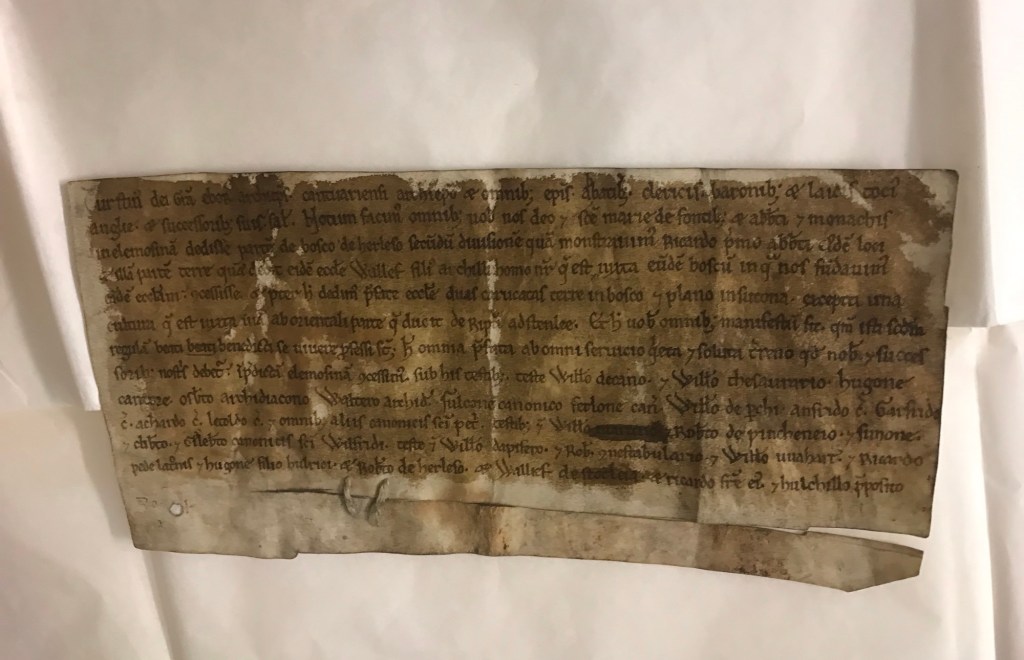
But if you think a 1711 document is old, it was a mere infant compared to the oldest document held by WYAS, and housed at Leeds. That document is pictured below, and it is one we were allowed to hold.

Document Reference: WYL150/925. Feoffment, Thurstan Archbishop of York to the monks of Fountains Abbey.

Dating from circa 1138 – almost 900 years old – this document is from the Fountains Abbey Collection – because the Leeds branch of WYAS has collections from outside the Leeds area, and even beyond the current West Yorkshire boundaries. It details the grant of land made to the monks at Fountains Abbey as long as they continued to live according to the rules of St Benedict. For more details about it click here.

And to listen to the translation of the oldest document in the Fountains Abbey collection, click here.

Those on today’s tour really did touch history.

If you do get the chance to do a backstage visit to an archive, go for it. It is well worth it, and you may be surprised what your local archive does hold!

St Mary of the Angels, Batley: One-Place Study Update – 1 to 31 October 2024 Additions

Despite it being an extremely busy work month during October, I did add five new posts to the Batley St Mary of the Angels One-Place Study, bringing the total number to 363 posts. In addition to the five new posts, a further three were updated.

This update contains the list of all the St Mary’s posts published up to the end of October 2024, including links to them, with last month’s new and updated posts signposted so you can easily locate them.

If you want to know the background, and what is involved in a one-place study, click here. Otherwise read on, to discover a wealth of parish, parishioner and wider local Batley history. 

Batley St Mary of the Angels

Yet again no new War Memorial biographies have been added this month. I know I keep saying it, but I really do hope to write some for next month, work permitting. One though, Robert Randerson, was updated. And I have added more parishioners to the list of those who served in, and survived, the First World War section, so this list has been updated too.

The Bulletin for Batley St Mary of the Angels and Birstall St Patrick section, has an addition. This is the piece covering the parish history snippets which were included in the parish bulletins during October 2024.

And the other October additions are in the During This Week newspaper section, with four new pages covering the editions of the Batley News published during the month of October 1918. I have accordingly updated the surname index to these During This Week newspaper pieces, so you can easily identify newspaper snippets relevant to your family.

And this month I have a question about the newspaper round-up pieces. I will continue to add the Batley News ones for the First World War period beyond the Armistice date of 11 November 1918. I plan to continue to the end of 1918. My question is, what should I do after that?

  • Should I continue with the Batley News to June 1919 and the official ending of the war, or should I end at 31 December 1918?
  • If I end at 31 December 1918, should I then start with the Batley Reporter from August 1914 to December 1918? Whilst there is some overlap between the two newspapers, there are some significant differences too.
  • Or should I start with the Batley News for the Second World War (September 1939 to September 1945). If that is the preferred option, I may have to edit it down as there will be so much relevant to St Mary’s.

Please do let me know. Either email me at the contact details towards the end of this piece. Or send a comment via the WordPress comments option. Or if you are reading this on Facebook or X (formerly Twitter), just leave a comment there.

Below is the full list of pages to date. I have annotated the *NEW* and *UPDATED* ones, so you can easily pick these out. Click on the link and it will take you straight to the relevant page.


Finally, if you do have any information about, or photos of, parishioners from the period of the First World War please do get in touch. It does not have to be War Memorial men. It could be those who served and survived, or indeed any other men, women and children from the parish. 

I would also be interested in information about, and photos of, those parishioners who were killed in World War Two, or others from the parish who undertook any war service and survived. This can be as broad as serving in the military, or work in munitions factories, the Land Army, even taking in refugees. This is an area I’m looking to develop in the future.

I can be contacted at: pasttopresentgenealogy@btinternet.com


Postscript:
I want to say a big thank you for the donations already received to keep this website going. They really do help.

The website has always been free to use, and I want to continue this policy in the future. However, it does cost me money to operate – from undertaking the research to website hosting costs. In the current difficult economic climate I do have to regularly consider if I can afford to continue running it as a free resource. 

If you have enjoyed reading the various pieces, and would like to make a donation towards keeping the website up and running in its current open access format, it would be very much appreciated. 

Please click 👉🏻here👈🏻 to be taken to the PayPal donation link. By making a donation you will be helping to keep the website online and freely available for all. 

Thank you.


1. About my St Mary of the Angels Catholic Church War Memorial One-Place Study;

Batley’s Public Buildings and Institutions
2. Batley Hospital: The First 50 Years – 1878 to 1928 
3. The Early History of Batley’s Public Baths 

Batley St Mary’s Population, Health, Mortality and Fertility Information and Comparisons
4.  1914: The Health of Batley School Children Generally, with a Particular Focus on St Mary’s School Children

Batley Statistics and Descriptions – Population, Health, Mortality, Fertility etc.
5. 1914: Borough of Batley – Town Information from the Annual Report of the Medical Officer of Health.
6. Batley and the 1921 Census 
7. Batley Population Statistics 1801-1939

Biographies: Men Associated with St Mary’s Who Died but Who Are Not on the Memorial 
8. Thomas Gannon 
9. Reginald Roberts 
10. William Frederick Townsend

Biographies: The War Memorial Men
11. Edward Barber 
12. William Barber (Memorial name spelling) 
13. Herbert Booth 
14. Edmund Battye
15. Dominick (aka George) Brannan 
16. Michael Brannan 
17. John Brooks 
18. Michael Cafferty 
19. Patrick Cafferty 
20. John William Callaghan 
21. Lawrence Carney 
22. Martin Carney 
23. Thomas William Chappell 
24. William Colbeck
25.  Michael Cunningham 
26. Thomas Curley
27. Peter Doherty 
28. Thomas Donlan 
29. John W. Enright 
30. Mathew Farrer 
31. Thomas Finneran 
32. Michael Flynn 
33. Thomas Foley D.C.M. 
34. Martin Gallagher 
35. James Garner
36. Thomas Gavaghan 
37. Henry Groark 
38. James Groark 
39. Michael Groark (also known as Rourke) 
40. James Griffin 
41. William Hargreaves 
42. Patrick Hopkins
43. Michael Horan
44. James Hughes 
45. Lawrence Judge 
46. John Leech 
47. Michael Lydon 
48. Patrick Lyons 
William McManus – See William Townsend below
49. Thomas McNamara 
50. Patrick Naifsey 
51. Austin Nolan 
52. Robert Randerson *UPDATED*
53. James Rush 
54. Moses Stubley 
55. William Townsend, also known as McManus
56. James Trainor 
57. Richard Carroll Walsh
58. Arthur William Bayldon Woodhead

Biographies: Those who Served and Survived (this includes a list of those identified to date and who will later have dedicated biographical pages) *UPDATED*
59. Patrick Cassidy 
60. James Delaney
61. Thomas Donlan (senior) 
62. Thomas Gannon 
63. Michael Rush 

Burials, Cemeteries, Headstones and MIs
64. Cemetery and Memorial Details 
65. War Memorial Chronology of Deaths .

During This Week
66. During This Week Newspaper Index *UPDATED*
67. 1914, 8 August – Batley News 
68. 1914, 15 August – Batley News 
69. 1914, 22 August – Batley News 
70. 1914, 29 August – Batley News 
71. 1914, 5 September – Batley News 
72. 1914, 12 September – Batley News 
73. 1914, 19 September – Batley News 
74. 1914, 26 September – Batley News 
75. 1914, 3 October – Batley News 
76. 1914, 10 October – Batley News 
77. 1914, 17 October – Batley News 
78. 1914, 24 October – Batley News 
79. 1914, 31 October – Batley News 
80. 1914, 7 November – Batley News 
81. 1914, 14 November – Batley News 
82. 1914, 21 November – Batley News 
83. 1914, 28 November – Batley News
84. 1914, 5 December – Batley News 
85. 1914, 12 December – Batley News 
86. 1914, 19 December – Batley News 
87. 1914, 24 December – Batley News 
88. 1915, 2 January – Batley News 
89. 1915, 9 January – Batley News 
90. 1915, 16 January – Batley News 
91. 1915, 23 January – Batley News 
92. 1915, 30 January – Batley News 
93. 1915, 6 February – Batley News 
94. 1915, 13 February – Batley News 
95. 1915, 20 February – Batley News 
96. 1915, 27 February – Batley News 
97. 1915, 6 March – Batley News 
98. 1915, 13 March – Batley News 
99. 1915, 20 March – Batley News 
100. 1915, 27 March – Batley News 
101. 1915, 3 April – Batley News 
102. 1915, 10 April – Batley News 
103. 1915, 17 April – Batley News 
104. 1915, 24 April – Batley News 
105. 1915, 1 May – Batley News 
106. 1915, 8 May – Batley News 
107. 1915, 15 May – Batley News 
108. 1915, 22 May – Batley News 
109. 1915, 29 May – Batley News 
110. 1915, 5 June – Batley News 
111. 1915, 12 June – Batley News 
112. 1915, 19 June – Batley News 
113. 1915, 26 June – Batley News 
114. 1915, 3 July – Batley News 
115. 1915, 10 July – Batley News 
116. 1915, 17 July – Batley News 
117. 1915, 24 July – Batley News 
118. 1915, 31 July – Batley News 
119. 1915, 7 August – Batley News 
120. 1915, 14 August – Batley News 
121. 1915, 21 August – Batley News 
122. 1915, 28 August – Batley News 
123. 1915, 4 September – Batley News 
124. 1915, 11 September – Batley News 
125. 1915, 18 September – Batley News 
126. 1915, 25 September – Batley News 
127. 1915, 2 October – Batley News 
128. 1915, 9 October – Batley News 
129. 1915, 16 October – Batley News 
130. 1915, 23 October – Batley News 
131. 1915, 30 October – Batley News 
132. 1915, 6 November – Batley News 
133. 1915, 13 November – Batley News 
134. 1915, 20 November – Batley News 
135. 1915, 27 November – Batley News 
136. 1915, 4 December – Batley News 
137. 1915, 11 December – Batley News
138. 1915, 18 December – Batley News 
139. 1915, 23 December – Batley News 
140. 1916, 1 January – Batley News 
141. 1916, 8 January – Batley News 
142. 1916, 15 January – Batley News 
143. 1916, 22 January – Batley News 
144. 1916, 29 January – Batley News 
145. 1916, 5 February – Batley News 
146. 1916, 12 February – Batley News 
147. 1916, 19 February – Batley News 
148. 1916, 26 February – Batley News 
149. 1916, 4 March – Batley News 
150. 1916, 11 March – Batley News 
151. 1916, 18 March – Batley News 
152. 1916, 25 March – Batley News 
153. 1916, 1 April – Batley News 
154. 1916, 8 April – Batley News 
155. 1916, 15 April – Batley News 
156. 1916, 22 April – Batley News 
157. 1916, 29 April – Batley News 
158. 1916, 6 May – Batley News 
159. 1916, 13 May – Batley News
160. 1916, 20 May – Batley News 
161. 1916, 27 May – Batley News
162. 1916, 3 June – Batley News 
163. 1916, 10 June – Batley News 
164. 1916, 17 June – Batley News 
165. 1916, 24 June – Batley News 
166. 1916, 1 July – Batley News 
167. 1916, 8 July – Batley News 
168. 1916, 15 July – Batley News 
169. 1916, 22 July – Batley News 
170. 1916, 29 July – Batley News 
171. 1916, 5 August – Batley News
172. 1916, 12 August – Batley News
173. 1916, 19 August – Batley News 
174. 1916, 26 August – Batley News
175. 1916, 2 September – Batley News 
176. 1916, 9 September – Batley News
177. 1916, 16 September – Batley News 
178. 1916, 23 September – Batley News 
179. 1916, 30 September – Batley News 
180. 1916, 7 October – Batley News
181. 1916, 14 October – Batley News 
182. 1916, 21 October – Batley News
183. 1916, 28 October – Batley News 
184. 1916, 4 November – Batley News
185. 1916, 11 November – Batley News
186. 1916, 18 November – Batley News
187. 1916, 25 November – Batley News 
188. 1916, 2 December – Batley News 
189. 1916, 9 December – Batley News 
190. 1916, 16 December – Batley News 
191. 1916, 23 December – Batley News 
192. 1916, 30 December – Batley News 
193. 1917, 6 January – Batley News 
194. 1917, 13 January – Batley News 
195. 1917, 20 January – Batley News 
196. 1917, 27 January – Batley News
197. 1917, 3 February – Batley News 
198. 1917, 10 February – Batley News 
199. 1917, 17 February – Batley News 
200. 1917, 24 February – Batley News 
201. 1917, 3 March – Batley News
202. 1917, 10 March – Batley News 
203. 1917, 17 March – Batley News 
204. 1917, 24 March – Batley News 
205. 1917, 31 March – Batley News
206. 1917, 7 April – Batley News 
207. 1917, 14 April – Batley News 
208. 1917, 21 April – Batley News 
209. 1917, 28 April – Batley News 
210. 1917, 5 May – Batley News 
211. 1917, 12 May – Batley News 
212. 1917, 19 May – Batley News 
213. 1917, 26 May – Batley News 
214. 1917, 2 June – Batley New
215. 1917, 9 June – Batley News
216. 1917, 16 June – Batley News
217. 1917, 23 June – Batley News
218. 1917, 30 June – Batley News
219. 1917, 7 July – Batley News
220. 1917, 14 July – Batley News 
221. 1917, 21 July – Batley News 
222. 1917, 28 July – Batley News 
223. 1917, 4 August – Batley News 
224. 1917, 11 August – Batley News 
225. 1917, 18 August – Batley News 
226. 1917, 25 August – Batley News 
227. 1917, 1 September – Batley News 
228. 1917, 8 September – Batley News 
229. 1917, 15 September – Batley News 
230. 1917, 22 September – Batley News 
231. 1917, 29 September– Batley News 
232.  1917, 6 October – Batley News 
233. 1917, 13 October – Batley News
234. 1917, 20 October – Batley News
235. 1917, 27 October – Batley News 
236. 1917, 3 November – Batley News
237. 1917, 10 November – Batley News
238. 1917, 17 November – Batley News 
239. 1917, 24 November – Batley News 
240. 1917, 1 December – Batley News 
241. 1917, 8 December – Batley News 
242. 1917, 15 December – Batley News 
243. 1917, 22 December – Batley News 
244. 1917, 29 December – Batley News 
245. 1918, 5 January – Dewsbury District News 
246. 1918, 12 January – Dewsbury District News 
247. 1918, 19 January – Batley News 
248. 1918, 26 January – Batley News
249. 1918, 2 February – Batley News 
250. 1918, 9 February – Batley News 
251. 1918, 16 February – Batley News 
252. 1918, 23 February – Batley News 
253. 1918, 2 March – Batley News 
254. 1918, 9 March – Batley News 
255. 1918, 16 March – Batley News 
256. 1918, 23 March – Batley News 
257. 1918, 30 March – Batley News 
258. 1918, 6 April – Batley News 
259. 1918, 13 April – Batley News 
260. 1918, 20 April – Batley News 
261. 1918, 27 April – Batley News 
262. 1918, 4 May – Batley News
263. 1918, 11 May – Batley News 
264. 1918, 18 May – Batley News 
265. 1918, 25 May – Batley News 
266. 1918, 1 June – Batley News 
267. 1918, 8 June – Batley News 
268. 1918, 15 June – Batley News 
269. 1918, 22 June – Batley News
270. 1918, 29 June – Batley News 
271. 1918, 6 July – Batley News 
272. 1918, 13 July – Batley News 
273. 1918, 20 July – Batley News
274. 1918, 27 July – Batley News
275. 1918, 3 August – Batley News 
276. 1918, 10 August – Batley News 
277. 1918, 17 August – Batley News 
278. 1918, 24 August – Batley News 
279. 1918, 31 August – Batley News 
280. 1918, 7 September – Batley News 
281. 1918, 14 September – Batley News 
282. 1918, 21 September – Batley News 
283. 1918, 28 September – Batley News 
284. 1918, 5 October – Batley News *NEW*
285. 1918, 12 October – Batley News *NEW*
286. 1918, 19 October – Batley News *NEW*
287. 1918, 26 October – Batley News *NEW*

Electoral Registers 1918-1921 
288. 1918 Batley Electoral Register, North Ward, Polling Districts A and B – Naval and Military Voters

Guest Contributions
289. Memories of Skelsey Row – by Brian Foley 

Maps and Photographs
290. Aerial View of St Mary’s Church and the Surrounding Streets 
291. Batley St Mary’s – Map Published in 1894 
292. Batley St Mary’s – Map Published in 1907 
293. Batley St Mary’s – Map Published in 1922 
294. Batley St Mary’s – Map Published in 1933 

Miscellany of Information
295. A Colliery Accident with Tragic Consequences 
296. A Grave Disturbance in Batley 
297. A Part of St Mary of the Angels in Batley Cemetery 
298. A “Peace” of Batley History
299. An Appeal to Ireland to Build a Catholic Church in Batley 
300. A Potted Early History of the Irish in Batley, the Building of St Mary of the Angels Church, and the Parish Priest’s Fatal Accident 
301. A St Mary’s School Sensation
302. A St Mary’s School Trip Souvenir 
303. Batley’s Secret Irish Society and the Ammunition Seizure 
304. Batley St Mary’s First Torchlight Procession 
305. “Daddy’s Death and then Triplets” 
306. Heritage Impact Assessment: St Mary’s Catholic Primary School and Convent, Batley 
307. Hot-Cross Buns and the Yorkshire Tea-Cake Dilemma. Plus A Suggested Meal Planner for Batley Families in 1917 
308. Into the Valley of Death – One of the Six Hundred *NEW*
309. St Mary of the Angels Catholic Church – 1929 Consecration Service
310. The Consequences of a Refusal to Work in 1918
311. The Controversial Role Played by St Mary’s Schoolchildren in the 1907 Batley Pageant
312. The Earliest Published Account of Batley St Mary’s Church and Schools 
313. The Great War: A Brief Overview of What Led Britain into the War 
314. The Unholy row between St Mary’s Church and the Batley and Birstall Irish Clubs 
315. Thomas Ate My Rat 
316. Willie and Edward Barber – Poems

Occupations and Employment Information
317. Occupations: Colliery Byeworker/Byeworkman/Byworker/Bye-Worker/By-Worker 
318. Occupations: Confidential Clerk 
319. Occupations: Lamp Cleaner 
320. Occupations: Limelight Operator 
321. Occupations: Mason’s Labourer 
322. Occupations: Office Boy/Girl 
323. Occupations: Piecer/Piecener 
324. Occupations: Rag Grinder 
325. Occupations: Willeyer

School Log Books 
326. Boys’ School – Log Book, 1913 
327. Boys’ School – Log Book, 1914 
328. Boys’ School – Log Book, 1915 
329. Boys’ School – Log Book, 1916 
330. Boys’ School – Log Book, 1917 
331. Boys’ School – Log Book, 1918 
332. Boys’ School – Log Book, 1919 
333. Boys’ School – Log Book, 1920 
334. Infant School – Log Book, 1913 
335. Infant School – Log Book, 1914
336 Infant School – Log Book, 1915
337. Infant School – Log Book, 1916 
338. 9nfant School – Log Book, 1917
339. Infant School – Log Book, 1918 
340. Infant School – Log Book, 1919 
341. Infant School – Log Book, 1920 
342. Mixed Department – Log Book, 1913 
343. Mixed Department – Log Book, 1914 
344. Mixed Department – Log Book, 1915 
345. Mixed Department – Log Book, 1916 
346. Mixed Department – Log Book, 1917
347 Mixed Department – Log Book, 1918 
348. Mixed Department – Log Book, 1919
349. Mixed Department- Log Book 1920

The Bulletin of St Mary of the Angels and Birstall St Patrick – Parish History Section 
350. March 2024 Bulletin History Pieces 
351. April 2024 Bulletin History Pieces
352. May 2024 Bulletin History Pieces 
353. June 2024 Bulletin History Pieces 
354. July 2024 Bulletin History Pieces
355. August 2024 Bulletin History Pieces 
356. September 2024 Bulletin History Pieces 
357. October 2024 Bulletin History Pieces *NEW*

The Families
358. A Death in the Church
359. St Mary’s Schoolboys Wreak Havoc in a Batley Graveyard

World War Two
360. World War Two Chronology of Deaths
361. Thomas Egan
362. Michael Flatley
363. William Smith

St Mary of the Angels, Batley: One-Place Study Update – 1 to 30 September 2024 Additions

Last month I added a Batley St Mary’s One-Place Study post about a parishioner who was one of only around 600 nationwide to participate in an event in British history which is still famous – and taught in schools – today. This includes at St Mary’s. But, until my post, the parishioner’s role had been long-forgotten. More of that later.

In all six new posts were added during September 2024, bringing the total number to 358 posts. This update contains the list of all the St Mary’s posts published up to the end of September 2024, including links to them, with last month’s new and updated posts signposted so you can easily locate them.

Batley St Mary of the Angels

If you want to know the background, and what is involved in a one-place study, click here. Otherwise read on, to discover a wealth of parish, parishioner and wider local Batley history. 

In addition to the six new posts, a further two were updated.

These additions and updates included four new weekly newspaper pages for September 1918. I have accordingly updated the surname index to these During This Week newspaper pieces, so you can easily identify newspaper snippets relevant to your family.

Yet again no new War Memorial biographies have been added this month. I really do hope to write some for next month, work permitting. I have, however, updated the names of parishioners who served in, and survived, the First World War section, as more men were identified during September.

As I have mentioned, there is one major new post which can be found in the Miscellany of Information section. It is about a parishioner who took part in the famous Charge of the Light Brigade on 25 October 1854. It really is well worth reading.

The final post added this month is in the Bulletin for Batley St Mary of the Angels and Birstall St Patrick section, containing the parish history snippets which were included in the bulletins during September 2024.

Below is the full list of pages to date. I have annotated the *NEW* and *UPDATED* ones, so you can easily pick these out. Click on the link and it will take you straight to the relevant page.


Finally, if you do have any information about, or photos of, parishioners from the period of the First World War please do get in touch. It does not have to be War Memorial men. It could be those who served and survived, or indeed any other men, women and children from the parish. 

I would also be interested in information about, and photos of, those parishioners who were killed in World War Two, or others from the parish who undertook any war service and survived. This can be as broad as serving in the military, or work in munitions factories, the Land Army, even taking in refugees. This is an area I’m looking to develop in the future.

I can be contacted at: pasttopresentgenealogy@btinternet.com


Postscript:
I want to say a big thank you for the donations already received to keep this website going. They really do help.

The website has always been free to use, and I want to continue this policy in the future. However, it does cost me money to operate – from undertaking the research to website hosting costs. In the current difficult economic climate I do have to regularly consider if I can afford to continue running it as a free resource. 

If you have enjoyed reading the various pieces, and would like to make a donation towards keeping the website up and running in its current open access format, it would be very much appreciated. 

Please click 👉🏻here👈🏻 to be taken to the PayPal donation link. By making a donation you will be helping to keep the website online and freely available for all. 

Thank you.


1. About my St Mary of the Angels Catholic Church War Memorial One-Place Study;

Batley’s Public Buildings and Institutions
2. Batley Hospital: The First 50 Years – 1878 to 1928 
3. The Early History of Batley’s Public Baths 

Batley St Mary’s Population, Health, Mortality and Fertility Information and Comparisons
4.  1914: The Health of Batley School Children Generally, with a Particular Focus on St Mary’s School Children

Batley Statistics and Descriptions – Population, Health, Mortality, Fertility etc.
5. 1914: Borough of Batley – Town Information from the Annual Report of the Medical Officer of Health.
6. Batley and the 1921 Census 
7. Batley Population Statistics 1801-1939

Biographies: Men Associated with St Mary’s Who Died but Who Are Not on the Memorial 
8. Thomas Gannon 
9. Reginald Roberts 
10. William Frederick Townsend

Biographies: The War Memorial Men
11. Edward Barber 
12. William Barber (Memorial name spelling) 
13. Herbert Booth 
14. Edmund Battye
15. Dominick (aka George) Brannan 
16. Michael Brannan 
17. John Brooks 
18. Michael Cafferty 
19. Patrick Cafferty 
20. John William Callaghan 
21. Lawrence Carney 
22. Martin Carney 
23. Thomas William Chappell 
24. William Colbeck
25.  Michael Cunningham 
26. Thomas Curley
27. Peter Doherty 
28. Thomas Donlan 
29. John W. Enright 
30. Mathew Farrer 
31. Thomas Finneran 
32. Michael Flynn 
33. Thomas Foley D.C.M. 
34. Martin Gallagher 
35. James Garner
36. Thomas Gavaghan 
37. Henry Groark 
38. James Groark 
39. Michael Groark (also known as Rourke) 
40. James Griffin 
41. William Hargreaves 
42. Patrick Hopkins
43. Michael Horan
44. James Hughes 
45. Lawrence Judge 
46. John Leech 
47. Michael Lydon 
48. Patrick Lyons 
William McManus – See William Townsend below
49. Thomas McNamara 
50. Patrick Naifsey 
51. Austin Nolan 
52. Robert Randerson 
53. James Rush 
54. Moses Stubley 
55. William Townsend, also known as McManus
56. James Trainor 
57. Richard Carroll Walsh
58. Arthur William Bayldon Woodhead

Biographies: Those who Served and Survived (this includes a list of those identified to date and who will later have dedicated biographical pages) *UPDATED*
59. Patrick Cassidy 
60. James Delaney
61. Thomas Donlan (senior) 
62. Thomas Gannon 
63. Michael Rush 

Burials, Cemeteries, Headstones and MIs
64. Cemetery and Memorial Details 
65. War Memorial Chronology of Deaths 

During This Week
66. During This Week Newspaper Index *UPDATED*
67. 1914, 8 August – Batley News 
68. 1914, 15 August – Batley News 
69. 1914, 22 August – Batley News 
70. 1914, 29 August – Batley News 
71. 1914, 5 September – Batley News 
72. 1914, 12 September – Batley News 
73. 1914, 19 September – Batley News 
74. 1914, 26 September – Batley News 
75. 1914, 3 October – Batley News 
76. 1914, 10 October – Batley News 
77. 1914, 17 October – Batley News 
78. 1914, 24 October – Batley News 
79. 1914, 31 October – Batley News 
80. 1914, 7 November – Batley News 
81. 1914, 14 November – Batley News 
82. 1914, 21 November – Batley News 
83. 1914, 28 November – Batley News
84. 1914, 5 December – Batley News 
85. 1914, 12 December – Batley News 
86. 1914, 19 December – Batley News 
87. 1914, 24 December – Batley News 
88. 1915, 2 January – Batley News 
89. 1915, 9 January – Batley News 
90. 1915, 16 January – Batley News 
91. 1915, 23 January – Batley News 
92. 1915, 30 January – Batley News 
93. 1915, 6 February – Batley News 
94. 1915, 13 February – Batley News 
95. 1915, 20 February – Batley News 
96. 1915, 27 February – Batley News 
97. 1915, 6 March – Batley News 
98. 1915, 13 March – Batley News 
99. 1915, 20 March – Batley News 
100. 1915, 27 March – Batley News 
101. 1915, 3 April – Batley News 
102. 1915, 10 April – Batley News 
103. 1915, 17 April – Batley News 
104. 1915, 24 April – Batley News 
105. 1915, 1 May – Batley News 
106. 1915, 8 May – Batley News 
107. 1915, 15 May – Batley News 
108. 1915, 22 May – Batley News 
109. 1915, 29 May – Batley News 
110. 1915, 5 June – Batley News 
111. 1915, 12 June – Batley News 
112. 1915, 19 June – Batley News 
113. 1915, 26 June – Batley News 
114. 1915, 3 July – Batley News 
115. 1915, 10 July – Batley News 
116. 1915, 17 July – Batley News 
117. 1915, 24 July – Batley News 
118. 1915, 31 July – Batley News 
119. 1915, 7 August – Batley News 
120. 1915, 14 August – Batley News 
121. 1915, 21 August – Batley News 
122. 1915, 28 August – Batley News 
123. 1915, 4 September – Batley News 
124. 1915, 11 September – Batley News 
125. 1915, 18 September – Batley News 
126. 1915, 25 September – Batley News 
127. 1915, 2 October – Batley News 
128. 1915, 9 October – Batley News 
129. 1915, 16 October – Batley News 
130. 1915, 23 October – Batley News 
131. 1915, 30 October – Batley News 
132. 1915, 6 November – Batley News 
133. 1915, 13 November – Batley News 
134. 1915, 20 November – Batley News 
135. 1915, 27 November – Batley News 
136. 1915, 4 December – Batley News 
137. 1915, 11 December – Batley News
138. 1915, 18 December – Batley News 
139. 1915, 23 December – Batley News 
140. 1916, 1 January – Batley News 
141. 1916, 8 January – Batley News 
142. 1916, 15 January – Batley News 
143. 1916, 22 January – Batley News 
144. 1916, 29 January – Batley News 
145. 1916, 5 February – Batley News 
146. 1916, 12 February – Batley News 
147. 1916, 19 February – Batley News 
148. 1916, 26 February – Batley News 
149. 1916, 4 March – Batley News 
150. 1916, 11 March – Batley News 
151. 1916, 18 March – Batley News 
152. 1916, 25 March – Batley News 
153. 1916, 1 April – Batley News 
154. 1916, 8 April – Batley News 
155. 1916, 15 April – Batley News 
156. 1916, 22 April – Batley News 
157. 1916, 29 April – Batley News 
158. 1916, 6 May – Batley News 
159. 1916, 13 May – Batley News
160. 1916, 20 May – Batley News 
161. 1916, 27 May – Batley News
162. 1916, 3 June – Batley News 
163. 1916, 10 June – Batley News 
164. 1916, 17 June – Batley News 
165. 1916, 24 June – Batley News 
166. 1916, 1 July – Batley News 
167. 1916, 8 July – Batley News 
168. 1916, 15 July – Batley News 
169. 1916, 22 July – Batley News 
170. 1916, 29 July – Batley News 
171. 1916, 5 August – Batley News
172. 1916, 12 August – Batley News
173. 1916, 19 August – Batley News 
174. 1916, 26 August – Batley News
175. 1916, 2 September – Batley News 
176. 1916, 9 September – Batley News
177. 1916, 16 September – Batley News 
178. 1916, 23 September – Batley News 
179. 1916, 30 September – Batley News 
180. 1916, 7 October – Batley News
181. 1916, 14 October – Batley News 
182. 1916, 21 October – Batley News
183. 1916, 28 October – Batley News 
184. 1916, 4 November – Batley News
185. 1916, 11 November – Batley News
186. 1916, 18 November – Batley News
187. 1916, 25 November – Batley News 
188. 1916, 2 December – Batley News 
189. 1916, 9 December – Batley News 
190. 1916, 16 December – Batley News 
191. 1916, 23 December – Batley News 
192. 1916, 30 December – Batley News 
193. 1917, 6 January – Batley News 
194. 1917, 13 January – Batley News 
195. 1917, 20 January – Batley News 
196. 1917, 27 January – Batley News
197. 1917, 3 February – Batley News 
198. 1917, 10 February – Batley News 
199. 1917, 17 February – Batley News 
200. 1917, 24 February – Batley News 
201. 1917, 3 March – Batley News
202. 1917, 10 March – Batley News 
203. 1917, 17 March – Batley News 
204. 1917, 24 March – Batley News 
205. 1917, 31 March – Batley News
206. 1917, 7 April – Batley News 
207. 1917, 14 April – Batley News 
208. 1917, 21 April – Batley News 
209. 1917, 28 April – Batley News 
210. 1917, 5 May – Batley News 
211. 1917, 12 May – Batley News 
212. 1917, 19 May – Batley News 
213. 1917, 26 May – Batley News 
214. 1917, 2 June – Batley New
215. 1917, 9 June – Batley News
216. 1917, 16 June – Batley News
217. 1917, 23 June – Batley News
218. 1917, 30 June – Batley News
219. 1917, 7 July – Batley News
220. 1917, 14 July – Batley News 
221. 1917, 21 July – Batley News 
222. 1917, 28 July – Batley News 
223. 1917, 4 August – Batley News 
224. 1917, 11 August – Batley News 
225. 1917, 18 August – Batley News 
226. 1917, 25 August – Batley News 
227. 1917, 1 September – Batley News 
228. 1917, 8 September – Batley News 
229. 1917, 15 September – Batley News 
230. 1917, 22 September – Batley News 
231. 1917, 29 September– Batley News 
232.  1917, 6 October – Batley News 
233. 1917, 13 October – Batley News
234. 1917, 20 October – Batley News
235. 1917, 27 October – Batley News 
236. 1917, 3 November – Batley News
237. 1917, 10 November – Batley News
238. 1917, 17 November – Batley News 
239. 1917, 24 November – Batley News 
240. 1917, 1 December – Batley News 
241. 1917, 8 December – Batley News 
242. 1917, 15 December – Batley News 
243. 1917, 22 December – Batley News 
244. 1917, 29 December – Batley News 
245. 1918, 5 January – Dewsbury District News 
246. 1918, 12 January – Dewsbury District News 
247. 1918, 19 January – Batley News 
248. 1918, 26 January – Batley News
249. 1918, 2 February – Batley News 
250. 1918, 9 February – Batley News 
251. 1918, 16 February – Batley News 
252. 1918, 23 February – Batley News 
253. 1918, 2 March – Batley News 
254. 1918, 9 March – Batley News 
255. 1918, 16 March – Batley News 
256. 1918, 23 March – Batley News 
257. 1918, 30 March – Batley News 
258. 1918, 6 April – Batley News 
259. 1918, 13 April – Batley News 
260. 1918, 20 April – Batley News 
261. 1918, 27 April – Batley News 
262. 1918, 4 May – Batley News
263. 1918, 11 May – Batley News 
264. 1918, 18 May – Batley News 
265. 1918, 25 May – Batley News 
266. 1918, 1 June – Batley News 
267. 1918, 8 June – Batley News 
268. 1918, 15 June – Batley News 
269. 1918, 22 June – Batley News
270. 1918, 29 June – Batley News 
271. 1918, 6 July – Batley News 
272. 1918, 13 July – Batley News 
273. 1918, 20 July – Batley News
274. 1918, 27 July – Batley News
275. 1918, 3 August – Batley News 
276. 1918, 10 August – Batley News 
277. 1918, 17 August – Batley News 
278. 1918, 24 August – Batley News 
279. 1918, 31 August – Batley News 
280. 1918, 7 September – Batley News *NEW*
281. 1918, 14 September – Batley News *NEW*
282. 1918, 21 September – Batley News *NEW*
283. 1918, 28 September – Batley News *NEW*

Electoral Registers 1918-1921 
284. 1918 Batley Electoral Register, North Ward, Polling Districts A and B – Naval and Military Voters

Guest Contributions
285. Memories of Skelsey Row – by Brian Foley 

Maps and Photographs
286. Aerial View of St Mary’s Church and the Surrounding Streets 
287. Batley St Mary’s – Map Published in 1894 
288. Batley St Mary’s – Map Published in 1907 
289. Batley St Mary’s – Map Published in 1922 
290. Batley St Mary’s – Map Published in 1933 

Miscellany of Information
291. A Colliery Accident with Tragic Consequences 
292. A Grave Disturbance in Batley 
293. A Part of St Mary of the Angels in Batley Cemetery 
294. A “Peace” of Batley History
295. An Appeal to Ireland to Build a Catholic Church in Batley 
296. A Potted Early History of the Irish in Batley, the Building of St Mary of the Angels Church, and the Parish Priest’s Fatal Accident 
297. A St Mary’s School Sensation
297. A St Mary’s School Trip Souvenir 
299. Batley’s Secret Irish Society and the Ammunition Seizure 
300. Batley St Mary’s First Torchlight Procession 
301. “Daddy’s Death and then Triplets” 
302. Heritage Impact Assessment: St Mary’s Catholic Primary School and Convent, Batley 
303. Hot-Cross Buns and the Yorkshire Tea-Cake Dilemma. Plus A Suggested Meal Planner for Batley Families in 1917 
304. Into the Valley of Death – One of the Six Hundred *NEW*
305. St Mary of the Angels Catholic Church – 1929 Consecration Service
306. The Consequences of a Refusal to Work in 1918
307. The Controversial Role Played by St Mary’s Schoolchildren in the 1907 Batley Pageant
308. The Earliest Published Account of Batley St Mary’s Church and Schools 
309. The Great War: A Brief Overview of What Led Britain into the War 
310. The Unholy row between St Mary’s Church and the Batley and Birstall Irish Clubs 
311. Thomas Ate My Rat 
312. Willie and Edward Barber – Poems

Occupations and Employment Information
313. Occupations: Colliery Byeworker/Byeworkman/Byworker/Bye-Worker/By-Worker 
314. Occupations: Confidential Clerk 
315. Occupations: Lamp Cleaner 
316. Occupations: Limelight Operator 
317. Occupations: Mason’s Labourer 
318. Occupations: Office Boy/Girl 
319. Occupations: Piecer/Piecener 
320. Occupations: Rag Grinder 
321. Occupations: Willeyer

School Log Books 
322. Boys’ School – Log Book, 1913 
323. Boys’ School – Log Book, 1914 
324. Boys’ School – Log Book, 1915 
325. Boys’ School – Log Book, 1916 
326. Boys’ School – Log Book, 1917 
327. Boys’ School – Log Book, 1918 
328. Boys’ School – Log Book, 1919 
329. Boys’ School – Log Book, 1920 
330. Infant School – Log Book, 1913 
331. Infant School – Log Book, 1914
332. Infant School – Log Book, 1915
333. Infant School – Log Book, 1916 
334. Infant School – Log Book, 1917
335. Infant School – Log Book, 1918 
336. Infant School – Log Book, 1919 
337. Infant School – Log Book, 1920 
338. Mixed Department – Log Book, 1913 
339. Mixed Department – Log Book, 1914 
340. Mixed Department – Log Book, 1915 
341. Mixed Department – Log Book, 1916 
342. Mixed Department – Log Book, 1917
343. Mixed Department – Log Book, 1918 
344. Mixed Department – Log Book, 1919
345. Mixed Department- Log Book 1920

The Bulletin of St Mary of the Angels and Birstall St Patrick – Parish History Section 
346. March 2024 Bulletin History Pieces 
347. April 2024 Bulletin History Pieces
348. May 2024 Bulletin History Pieces 
349. June 2024 Bulletin History Pieces 
350. July 2024 Bulletin History Pieces
351. August 2024 Bulletin History Pieces 
352. September 2024 Bulletin History Pieces *NEW*

The Families
353. A Death in the Church
354. St Mary’s Schoolboys Wreak Havoc in a Batley Graveyard

World War Two
355. World War Two Chronology of Deaths
356. Thomas Egan
357. Michael Flatley
358. William Smith

What Connects Robin Hood, Patrick Brontë, the Luddites, a Murdered Teacher and a Risqué Carving?

That’s it for another year. The annual Heritage Open Days festival is over. It has been another wonderful celebration of England’s history, culture and heritage, providing a unique opportunity to explore and experience hundreds of local gems for free. It’s a great way to find out about history on your doorstep.

As ever, there was something for everyone – from walks, talks and building tours, to hands-on sessions including having a go at bell-ringing, railway signal-box changing, and stone-carving, including ones specially designed for children. Some events had to be pre-booked and, as I found out, they are really popular. The Oakwell Hall and Shibden Hall tours had gone way before the events days. But many more, for the less organised (like me!!) were drop-in. There are even some online options too.

A Selection of Heritage Open Days Material – photo by Jane Roberts

2024’s event marked the 30th anniversary of this community-led celebration, and ran from 6-15 September. I went to six events all very local to me, including one in my own home!


The first was an event organised by Spen Valley’s Civic Society, who have restored three heritage waymakers, a perfect fit for this year’s theme of routes, networks and connections. These were unveiled by local MP Kim Leadbeater. I went to the first unveiling, an historic fingerpost sign on an ancient route crossing through Hightown, Liversedge. A Roman road, then a packhorse way, in 1740 the route became a turnpike (toll) road from Wakefield to Halifax. The blustery weather perfectly illustrated why the finger pointing towards Huddersfield is along a road now named Windybank Lane – with that ‘veil’ being whisked off by the wind rather than by the MP.

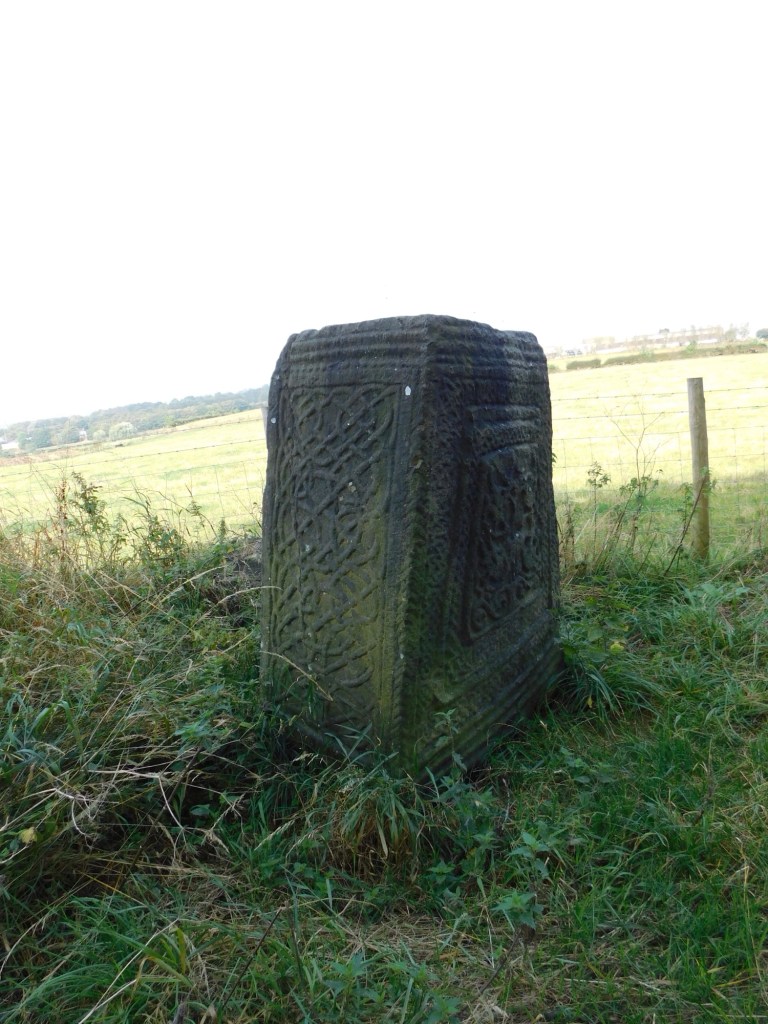
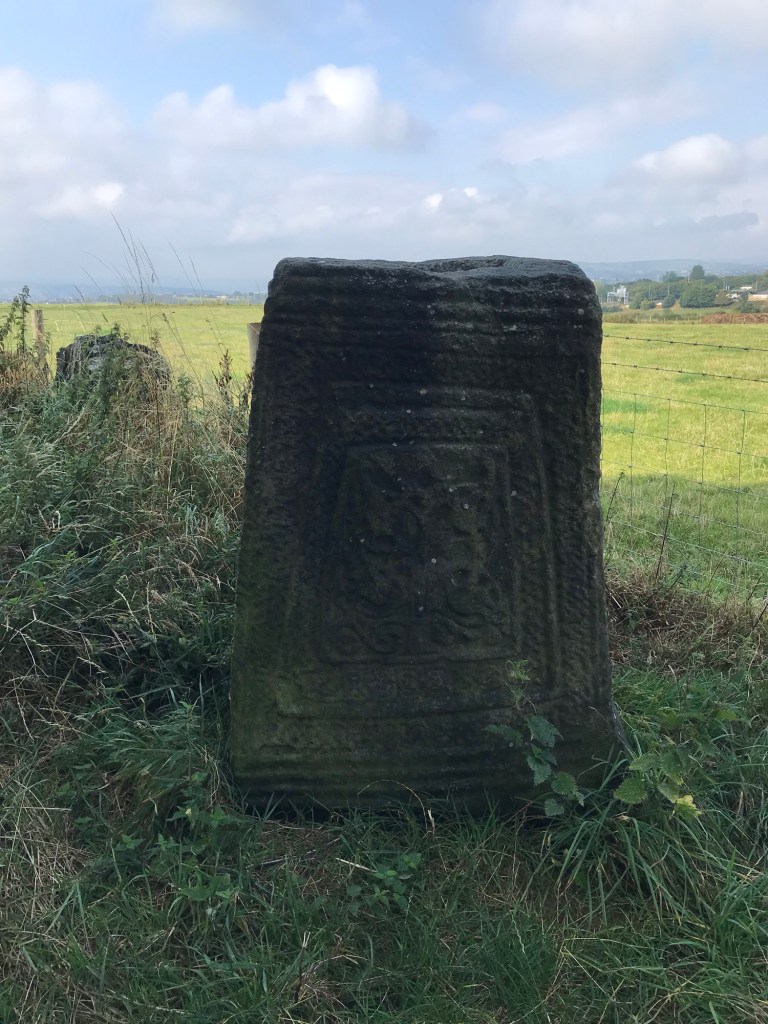
Rather than drive for the unveiling of the two milestones, I walked back home via Spen Valley’s oldest Scheduled Monument, the stone base of Walton Cross, probably a Saxon waymarker and preaching cross.


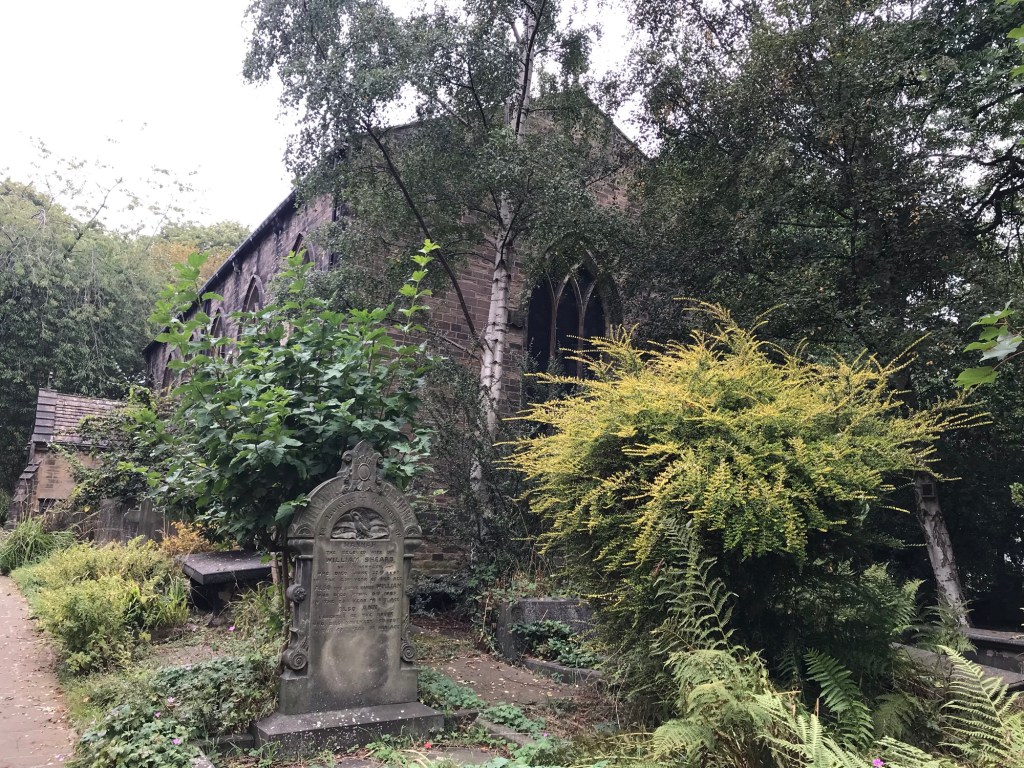
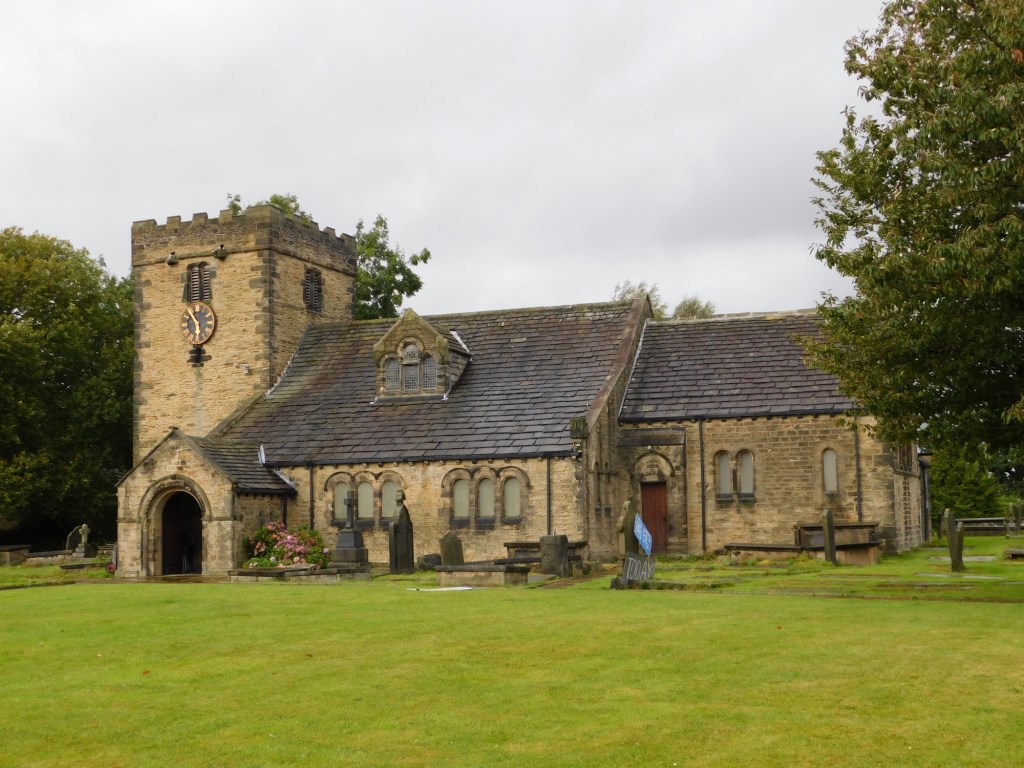
My next visit was to Whitechapel, Cleckheaton, whose history reaches back to the 12th century. It remains a thriving parish community today, cherishing its past and caring for its amazing building and contents. I was blown away by the history here.

The present day church building was erected in 1820, but there has been a place of worship here since Norman times. And that long history is very much in evidence. Every corner held a fascinating story, and I’ve described only a small selection of the points of interest here.

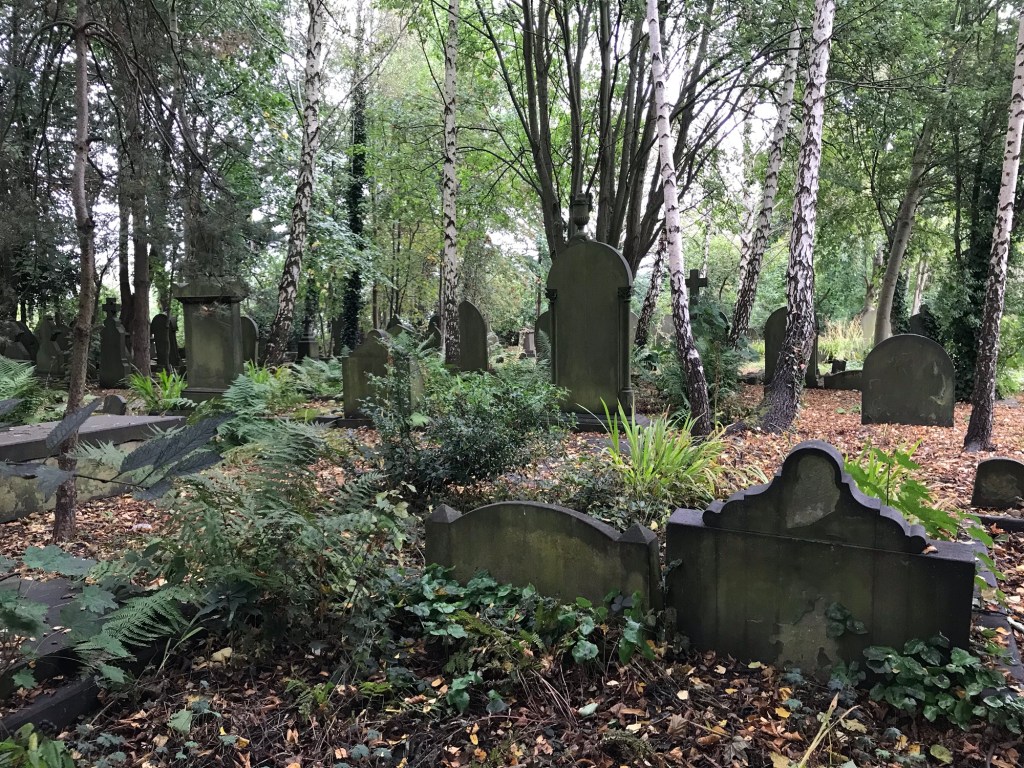
Tended to by volunteers, the graveyard is exactly how you imagine one to be: Cool, dappled green shade beneath tangled trees, a wildlife haven crammed full of higgledy-piggledy grey, weathered headstones which need concentration to tentatively pick your way around. And deep within, it contains a Brontë connection. the gravestone of 93-year-old Rose Ann Heslip, niece of Patrick Brontë. The cousin of Charlotte, Emily and Anne, she died in 1915.

In the doorway, its etched design almost worn away with time, is an early 12th century grave slab of a Knight Hospitaller.

Knight Hospitaller grave slab – photo by Jane Roberts

Inside, I climbed the stairs up to the bell-ringing chamber. Here was another surprise, because I was not confronted by the expected several dangling ropes/bell pulls. Instead there was a weird contraption of numbered pulleys fixed in a frame. This is the ‘Ellacombe’ system, and allows one person to play all eight bells from a single panel. It was devised in 1821 by Reverend Henry Thomas Ellacombe of Bitton, Gloucestershire, to remove the need to use his unruly local ringers of whom he later said ‘a more drunken set of fellows could not be found’. Needless to say, I had a go – and I found it far more difficult than I anticipated. I did get a sound or two, but that was it.

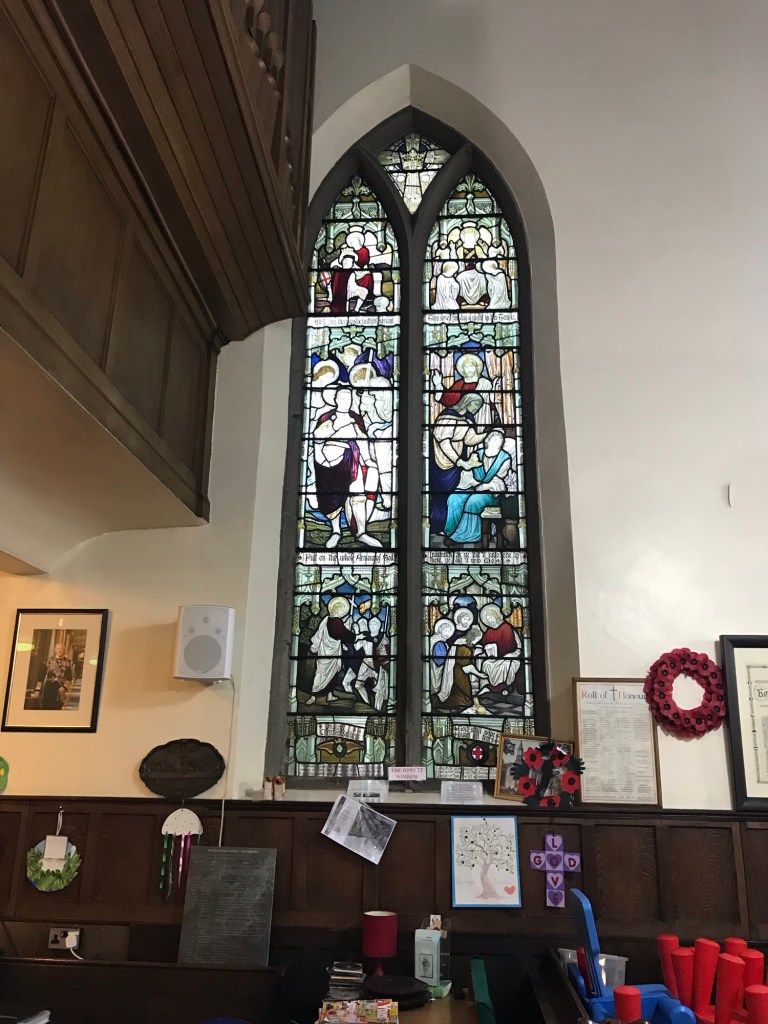
The parish’s war dead are commemorated throughout the church. This includes the porch which was built as a memorial to all who had lost their lives, with some having stained glass memorial windows dedicated to them. Below are photographs of the Tetlow window, and the one dedicated to 2nd Lieutenant Tom Jowett. If you look carefully you can see the figures on which their faces are depicted.

Beneath the window dedicated to Lieutenant Luke Mallinson Tetlow is his original grave marker.

The wooden altar, dating from 1924, was carved by the William Morris-influenced Jackson’s of Coley. Harry Percy Jackson used only traditional tools to produce his intricately carved pieces, and admired Morris so much he named his house Morriscot.

The altar at Whitechapel – photo by Jane Roberts

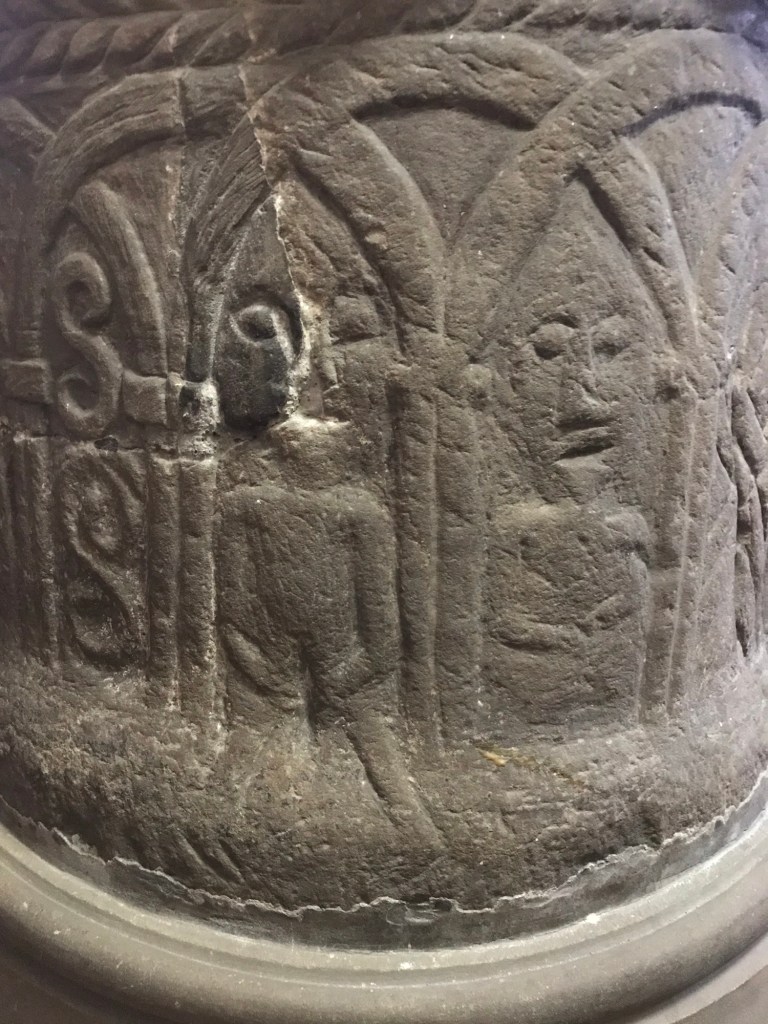
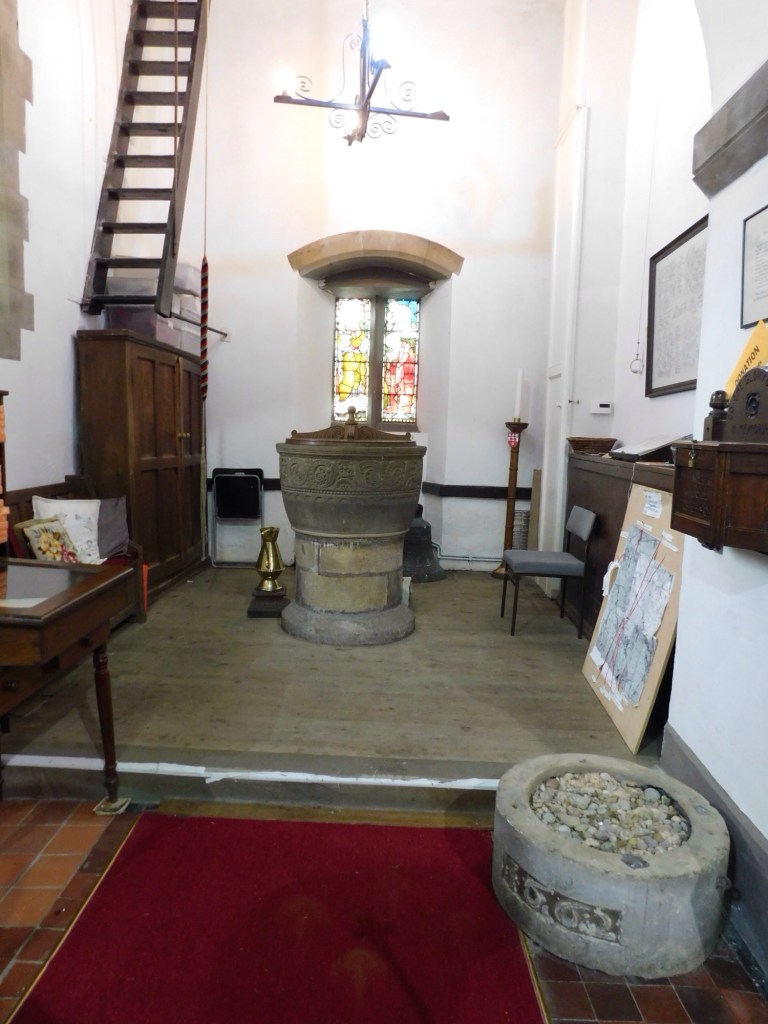
I’ve left the most astonishing feature till last. The font. And it is a very special one. Still used for baptisms, it dates from no later than 1120 and is encircled with carved chevrons, foliate scrolls, and human figures. One of these figures is unique. Grotesque and overtly sexual, some would say lewd, it is a figure of a woman with a deeply carved cleft between her legs and both her hands gesturing towards it.

This style of exhibitionist figure is known as a Sheela Na Gig. They are typically found carved on Norman churches, often over doors or windows. They are seen across Britain, Ireland, France and Spain and Ireland.

Whitechapel’s Sheela Na Gig

Their origin and meaning is debated. They may have Celtic Pagan roots; or they might have fertility connections; they may serve as a warning against lust; they could even be protective symbols to ward off death and evil. But whatever their origin and meaning, Whitechapel’s Sheela Na Gig is unique in Britain, being the only one on a font. Perhaps its symbolism in this instance was to ward off the dangers surrounding childbirth.

Cromwell’s Puritans, who destroyed all traditional forms of worship like stained glass window, fonts, wooden screens, altar furnishing, even decoration on church walls, would presumably have been apoplectic with this font. It is thought that they dumped it in the churchyard. Thankfully, it was later rescued, brought inside and eventually restored as Whitechapel’s baptismal font.

If you want to know more about them, there is a project solely dedicated to Sheela Na Gigs, which includes the Whitechapel font. It can be found here.


My next stop was the Parish Church of All Saints, Batley. The Domesday book of 1086 records the existence of a church and priest here. The present building was erected in around 1485, incorporating parts of the 13th century church. It was restored in 1872-3 by Walter Hanstock of the Batley architect firm, responsible for many of the Victorian public buildings in the town.

Batley parish church – photo by Jane Roberts

Taking a look inside, the font at Batley All Saints did not survive the rule of Oliver Cromwell’s Puritan zealots of the Commonwealth period, who cast it out. The replacement 8-sided, ribbed font bears the date 1662, indicating this was installed following the restoration of the monarchy.

The font at Batley Parish Church – photo by Jane Roberts

The church also has an impressive example of recycling. When a 14th century stained glass window was broken, rather than throwing away the shattered pieces, some were arranged to form a crucifixion scene in a new window, which is shown in the photograph below.

The window with an image composed from 14th century stained glass photo by Jane Roberts

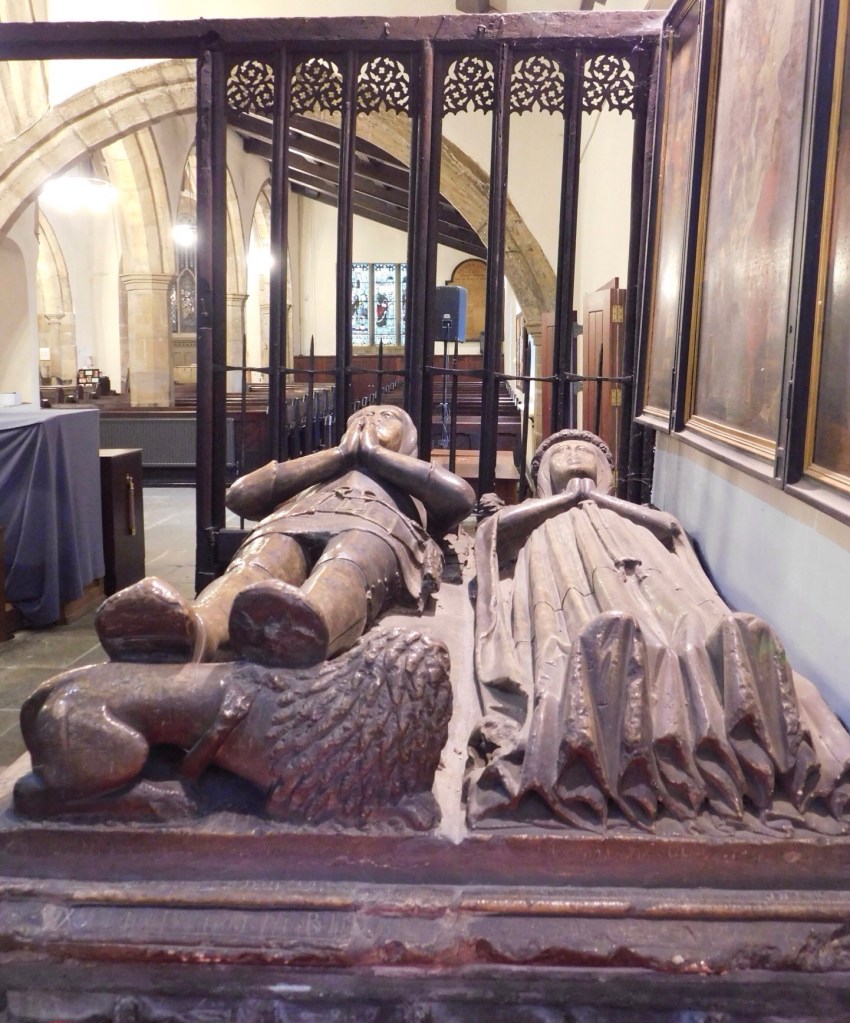
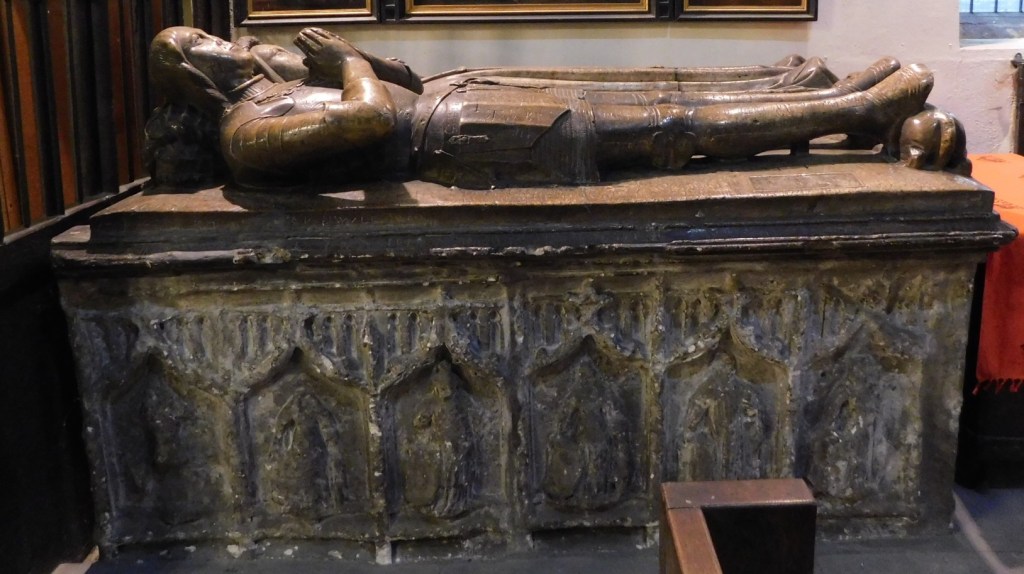
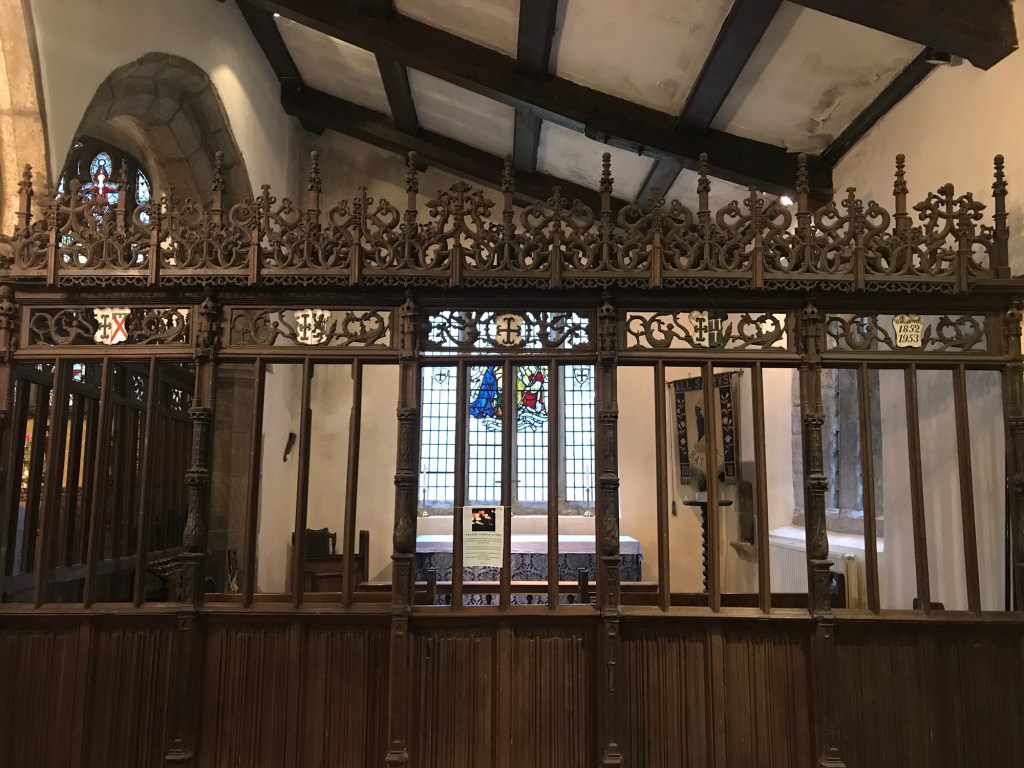
The east bay Mirfield Chapel, dedicated to St Anne, dates to circa 1485. This side chapel is separated from the church by a completely preserved 15th century wooden parclose screen. The side chapel contains a monumental tomb, which is topped with two alabaster effigies, circa 1496, of a knight and his Lady. The knight’s feet are resting on a recumbent lion. These figures depict Sir William and Lady Anne Mirfield.

The stone tomb chest itself has around it a series of severely age-worn low relief carvings of ladies holding shields. The shields related to four generations of the Mirfield family at Howley Hall. Fortunately, an early 19th century engraving has survived which shows what this carving looked like before the erosion damage.


‘TOMB OF MIRFIELD AT BATLEY. T. Taylor, delt. W. Woolnoth, sculpt. Published by Robinson Son & Holdsworth Leeds, & J. Hurst Wakefield March 1. 1816.’ University of Leicester Centre for Regional and Local History. http://creativecommons.org/publicdomain/zero/1.0/

The Copley chapel, dedicated to the Blessed Virgin Mary, was founded by the Lord of Batley Manor, Adam de Copley, in 1334. Generations of the Copley family are buried beneath the floor. This parclose screen, adorned with Copley family shields, mermen and dragons, dates from the second half of the 16th century, a replacement for an earlier one. There is also some 1852 restoration to it, using cast iron to replace missing and damaged carvings.

Given my family history fascination, I was drawn to two wooden plaques. These record charitable donations and benefactions left in wills for Batley’s poor, church and school. I love that James Shepley’s yearly-for-ever £10 donation to the vicar of Batley came with strings attached. It would only be paid if he preached a sermon every Sunday morning and afternoon throughout the year!

Batley charity information – photo by Jane Roberts

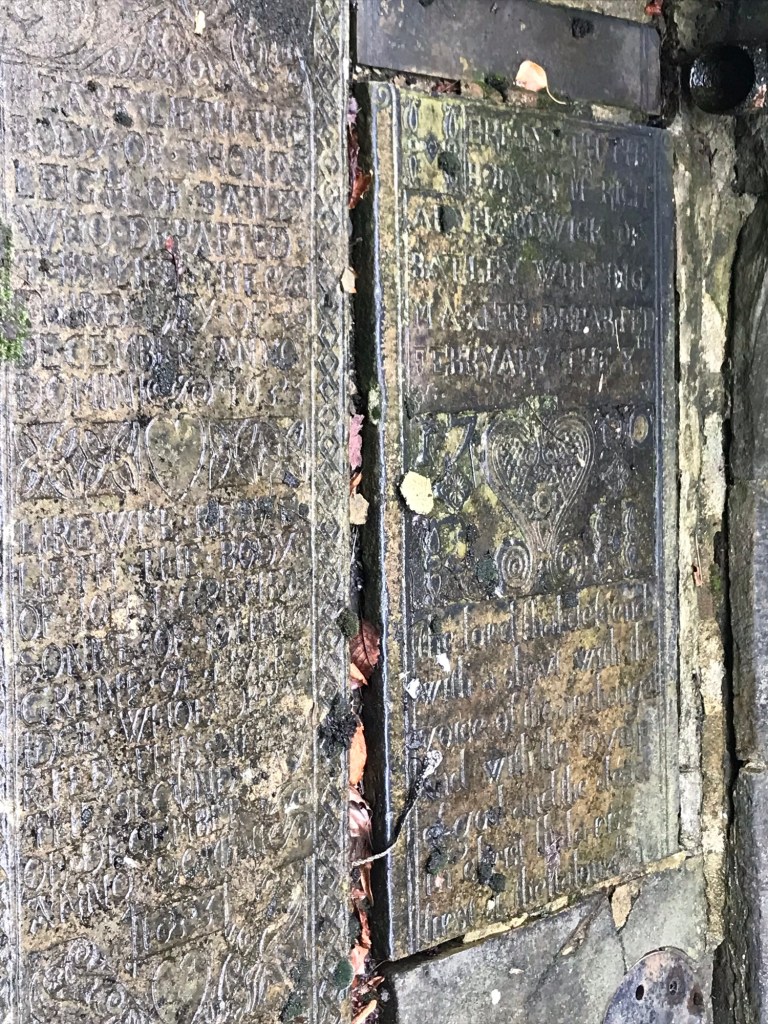
Back outside, I had a final look at some of the grave slabs inlaid into the path, some with intricate etched hearts dating from the mid-17th century. These heart carvings are quite rare, apparently only being found within the Calder Valley area.

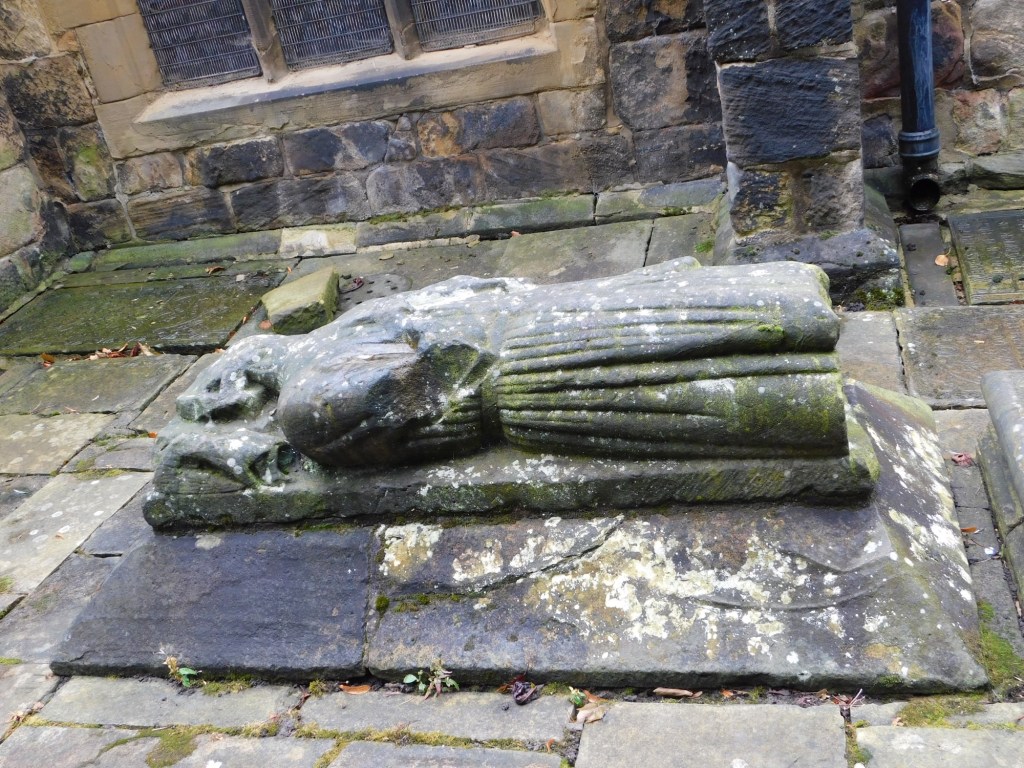
One particularly intriguing feature lies to the east of the porch. Believed to date from the 13th century, and described by Michael Sheard in his 1894 History of Batley as ‘a mutilated stone effigy’, its history is unclear, the figure bearing no date, inscription or other identifying feature. Morley historian Norrisson Scatcherd recounted the tale that it was the grave of a particularly severe schoolmaster, slain with his own sword by his pupils. Sheard disputes this, but his alternative theory is vague. He says it is likely that the figure represents someone from one of the notable Batley families, a Copley, Mirfield, Eland or Dighton. He suggests the effigy was originally inside the church, but removed when the organ was installed in 1830, and placed on a monumental tomb. It is Grade II listed.


On 14 September, I went to one of the Leeds Civic Trust events. Leeds Libraries, Morley Community Archives, Morley and District Family History Society combined to put on event in Morley library. It included old maps, displays about people who played a role in the history of Morley, and information about the town’s old mills. Lots of lovely volunteers were on hand to answer local and family history questions. There was also a virtual tour of Morley Town Hall.

This imposing Grade I Listed building was opened on 16 October 1895 by Morley-born Rt. Hon. H. H. Asquith MP, who went on to be Prime Minister from 1908-1916.

It was fascinating being guided virtually around the exterior and interior of the building, including the old police cells and former magistrates courtroom.


My final in-person Heritage Open Day visit of 2024 was the parish church of St Peter’s, Hartshead. It is yet another local church with a rich history, entwined with folklore. It also has a family history connection for me, being the church in which my 3x great grandparents married in 1842.

St Peter’s Parish Church, Hartshead – photo by Jane Roberts

Thought to be of Saxon origin, there is a Norman tower, south doorway and chancel arch. The rest of the church is an 1881 restoration in the Neo-Norman style. But despite these early origins, Hartshead did not become an Ecclesiastical Parish until 1742, created from Dewsbury [All Saints] Ancient Parish.

The interior of Hartshead parish church – photo by Jane Roberts

Hartshead church is another which bears the scars of Puritan destruction during Cromwell’s Commonwealth period. The original font has gone. The replacement, only the bowl being present which is no longer in use, like Batley bears the date 1662. The font in use is more modern, but has a base formed from an old Norman pillar.

The 1662 font bowl, and the font currently in use, at Hartshead parish church – photo by Jane Roberts

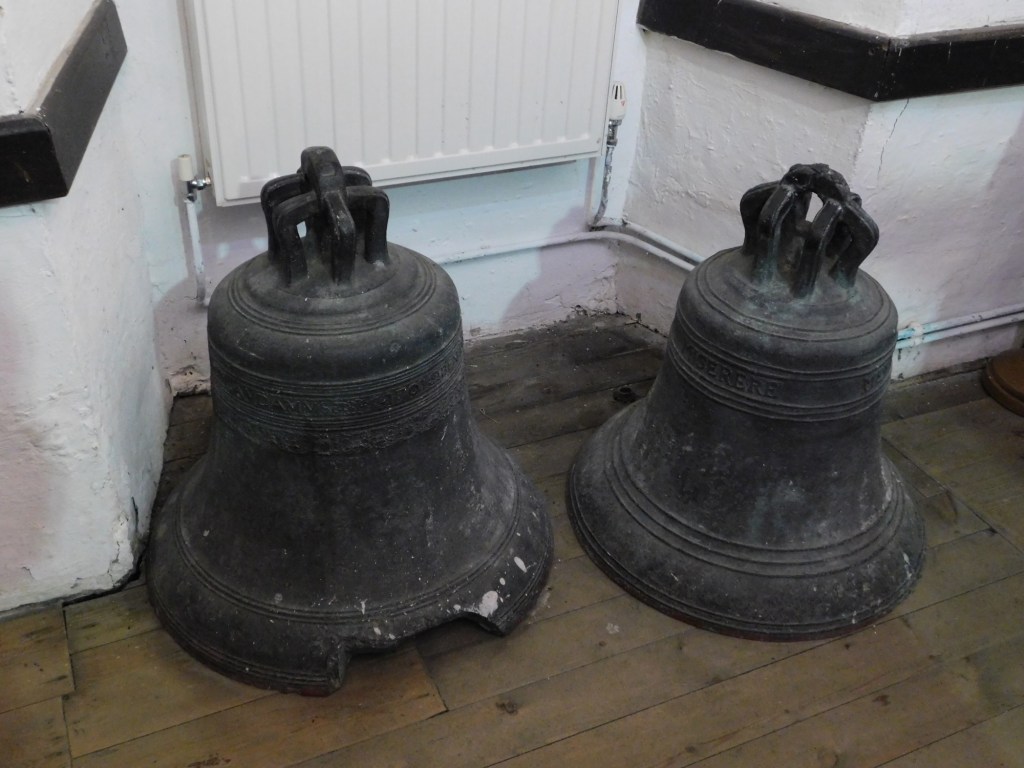
In the above photo, in addition to the fonts you can see the bell tower, in which one bell hangs. Two more, dated 1627 and 1701, are no longer in use. My husband was invited to test the weight and, trust me, they are immovable. He did have a go at ringing the electronic bell with more success. There is an associated rhyme about the Hartshead church bells:

Hartchit-cum-Clifton,

Two cracked bells, an’ a chipped ‘un

Hartchit-cum-Clifton

Two cracked bells, an’ a snipt ‘un

Old bells of St Peter’s – photos by Jane Roberts

Now for that Brontë connection, so much in evidence across the area. Patrick Brontë was appointed vicar at Hartshead in 1810, moving to this parish from Dewsbury where he served as curate. Although the official date of his Hartshead appointment was 1810, it is not until the following year that he appears to have formally taken up the role. He remained at the parish until 1815, when he moved to Thornton.

It was whilst at Hartshead that he courted and married Maria Branwell (on 29 December 1812, though the marriage took place in Guisley); and where their first two daughters – Maria and Elizabeth – were born. In fact, eldest daughter Maria was baptised at Hartshead.

And writing of baptisms, a Hartshead parish register – normally held at West Yorkshire Archives – was on display, there to be handled. The condition of it was superb, no doubt helped by its thick, high quality pages, clearly made to survive. If you look at the photograph, you will see the signature of the officiating minister of the 1813 baptisms – P. Brontë. It really was a case of touching Brontë history! Leaving aside my family history obsession, If you read my previous post about another amazing piece of Brontë history at Haworth I came across only two days before, you’ll know how big a deal this register was to me.

Hartshead Parish Register (Baptisms) with signature of Patrick Brontë – photo by Jane Roberts

The parish register was the tip of the information iceberg. From displays of school records, to memorabilia about parish events and shows, there was so much loaned-for-the-day material to look at.

Back to Patrick Brontë though. It was before his marriage, whilst lodging at Lousy Thorn Farm, that under cover of darkness on the night of 11 April 1812 a large force of men (numbering anything between 150-300), armed with hammers and axes, passed by Hartshead church and Patrick’s lodgings.

The desperate gang worked as croppers. It was a highly skilled job which demanded strength too. As a result, it commanded a good wage. The work was slow and laborious, with the men closely cropping rolls of fine cloth with heavy shears, weighing in excess of 40lbs. Cropping away the nap on the cloth left a fine, smooth surface. And the finer and smoother the surface, the more valuable the cloth was.

But their livelihoods were now being destroyed by the advent of water-powered machines which could be operated manually by an unskilled worker, with one unskilled person now able to do the work of four skilled croppers. It meant large numbers of croppers were being made redundant, and their families facing starvation as a result. The croppers therefore became part of the Luddite movement, whose aim was to destroy the machinery threatening their jobs.

Their destination that night was William Cartwright’s mill at Rawfolds. Cartwright had installed new cropping machinery, and their objective was to destroy it, in an attack planned for the early hours of 12 April 1812.

But Cartwright was ready for them, with the mill heavily fortified and defended by a body of employees, and five militia soldiers especially drafted in.

In the ensuing 20-minute battle, shots were fired (an estimated 140 by the defenders). The attack failed and the Luddites were driven away. Two Luddites were killed, their bodies left in the mill vicinity. Many more were injured. Daylight revealed pools of blood outside, along with flesh and even a finger. 17 Luddites were later hanged at York, some for their part in the attack.

So, how is this Luddite attack at Rawfolds connected with Hartshead church? It is thought some of the injured men did in fact die, and were buried in secret that night in the south east corner of the churchyard at Hartshead. Harold Norman Pobjoy, a former Hartshead incumbent, says it is believed Patrick Brontë knew about the burials, seeing the freshly disturbed earth and footprints, but resolved, compassionately, to say nothing.

Beyond the supposed Luddite burials, the area outside the church has several other points of interest. The day’s rain and grey skies meant the usually glorious views were not amongst them! However, there were plenty others to investigate.

In the churchyard stands the gnarled remains of an ancient yew tree, with mesmerisingly intricate whorls.

A close-up of the yew tree – photo by Jane Roberts

Local folklore links this tree to Robin Hood, with his final arrow being cut from it. He was reputed to be the nephew of the Prioress at nearby Kirklees Priory, where he sought refuge in his final days. Here, she bled him, a cure-all for multiple ailments in medieval times. But for whatever reason, it went wrong, she cut one of his veins, and he slowly bled to death. Some versions say it was a deliberate act as she resented Robin’s criticism of the church hierarchy, and the fact he was not averse to relieving Abbots of their wealth to give to the poor. Another attributed motive is that she was the secret mistress of one of Robin Hood’s sworn enemies, Roger of Doncaster.

The Robin Hood yew tree at Hartshead – photo by Jane Roberts

Robin Hood’s supposed burial place, which now lies in Kirklees Park estate, is where his final arrow shot landed – the arrow cut from the Hartshead yew tree.

The Hartshead stocks survive, as does a mounting block for those arriving at the church on horseback. Neither are in much demand today. Both are Grade II Listed, and date from the 18th or 19th centuries according to their Listing entries

Mounting block and stocks at Hartshead – photo by Jane Roberts

Lastly, there is a small building forming part of the boundary wall. This too is Grade II Listed. I’ve often wondered what purpose it served, and today I found out. Dating from around 1828, it was formerly a school room, and the old coat pegs remain affixed against one of the inside walls – though with the bricked-up door and windows, plus piles of junk, it was difficult to see in any detail.

Before being a school though, the building was originally a bier house. It would have contained a bier (moveable stand) on which a corpse – often in a coffin – would be placed prior to burial. We were also told corpses travelling distances for burial, for example Liverpool to Hull, would use this building as an overnight stop-off point on the journey. It’s to be hoped, for the sake of the school children, there was no overlap between the building’s two uses!


Finally, for those not able to get out and about, online events were available. I rounded off this year’s Heritage Open Day festival with a YouTube talk by Professor Joyce Hill called Time Travel through Place Names, exploring the place names in Leeds, their origins, and how they reveal the city’s history.

It was fascinating to learn how the place names in and around Leeds are rooted in past history, with a combination of Celtic, Anglo-Saxon, Scandinavian influences – and some melding and overlapping of language over time. For instance, Burley in Wharfedale’s name draws on Celtic, Anglo-Saxon and Scandinavian periods of our history.

Professor Hill also demonstrated how these names can give an indication of the type of landscape, activities undertaken, or people who lived there – even though these may no longer be in evidence. For example, Seacroft means a croft by a lake. Morley has its origins in the Old English leah (clearing/open place in a wood), and mor meaning marsh. Farsley means a woodland clearing used for heifers.

Roads, too, can give clues to the past. Briggate was one example cited, with gate being from the Scandinavian word gata, meaning path or way, and bryggr being bridge. So Briggate’s Scandinavian translation to English is Bridge Street.

There was also the cautionary note to go back to the earliest recorded forms of the name and not make assumptions based on more recent meanings. For example, Boar Lane has nothing to do with the animal. It was originally Borough Lane, the lane linking the Borough to the King’s Mills, and the word evolved to Boar.

Whitkirk is similarly misleading. Although it does mean white church, the white is a reference not to the colour, but to the Knights Templar who were associated with the area. They were known as the White Knights. Furthermore, even though the Vikings had long gone when Whitkirk was named, their influence on the language remained, with the kirk in this instance being from the Scandinavian word for church.


A huge debt of gratitude is owed to the many volunteers up and down the country who have invested their time over many months to put on these events and open up buildings. Many work tirelessly year after year keeping our history alive – often in the face of swingeing council cutbacks to all things history and heritage locally.

Caring for history and heritage is a year-round process, not something that happens for a few days a year. And, as I learned, many of the church sites are cared for not only by the congregations but by others who don’t attend church, but are simply interested in their local history and heritage.

Hopefully, the events this year will inspire others to get involved and champion local history, whilst at the same time sending a signal to councils that our local history and heritage is valued, plays a pivotal part in the way people regard an area, and enriches the lives of those who live there.

A Slice of Brontë History With My Coffee

I’ve been immersed in Brontë history since my many childhood family visits to Haworth – mum, dad, my brother and I all crammed into my auntie and uncle’s little orange mini. These visits created so many happy family memories, and continue to do so as I’ve regularly visited the village ever since. I’ve explored the surrounding moors, with the highlight being my walks to Top Withens, with its association with Emily Brontë’s dark and tortured novel, Wuthering Heights. If you’d to ask me my all-time favourite novel, without hesitation I would say it was this one.

The parsonage holds such a special significance that not only do I feel compelled to take a photograph of it each visit, I’ve even stitched it.

My cross stitch picture of the Haworth parsonage – photo by Jane Roberts

I thought I’d seen everything Brontë-linked in my Haworth visits. But today, totally unexpectedly, I came across an absolute gem.

After my usual visit to the church of St Michael and All Angels, where Patrick Brontë (father of Charlotte, Emily and Anne) was vicar from 1820-1861, back on Main Street I spied a new café, Haworth Old Post Office. Nestled next to the church it seemed the perfect place for a sit down in the – all to rare this summer – sun with a coffee, watching the world go by.

St Michael and All Angels Church, Haworth – photo by Jane Roberts

There was a real sense of being surrounded by Haworth history. Fronting onto Main Street, the old stocks were adjacent to our table.

The old stocks were moved from the side of the Black Bull to their current position in 1909 – photo by Jane Roberts

Just the other side of the church steps was the Black Bull pub. This millstone grit inn at the top of the steeply-cobbled hill of Main Street is a place intrinsically linked to (Patrick) Branwell Brontë, the wayward brother of Charlotte, Emily and Anne.

The Black Bull, Haworth – photo by Jane Roberts

But, as I discovered, Haworth Old Post Office has its own unique place in Brontë literary history. It was the Post Office during the time the famous literary sisters lived in Haworth, and from then up until its sale in 2022 it was owned by generations of the Hartley family.

As I discovered, the building has close associations with the Brontë family too. Branwell Brontë was reputed to have used the upstairs back room as a refuge to sleep off the excesses of his sessions of over-indulgence, waiting for Emily to light a candle in a parsonage window to signal the coast was clear for him to avoid his father and sneak back home.

Haworth Parsonage, 13 September 2024 – photo by Jane Roberts

But even more significantly, it was from this Post Office that the sisters posted their manuscripts to their London publishers, writing under their Currer, Ellis and Acton Bell writing pseudonyms. It was to here that their literary correspondence – and any related payments – were sent for them to pick up. And, amazingly, the old mellowed wooden counter in the café, stripped back and lovingly returned to its original state, is the very same Post Office counter at which the Brontë sisters stood almost 180 years ago.

It even has the original drawer where those precious manuscripts would have been placed prior to collection and onward transportation to their publishing house destinations: manuscripts which would ultimately contribute towards transforming the literary world, and eventually the place of female writers in it. What’s more, the café owners have an immense appreciation for the history of the building and are only too willing to share it, as I found out when I asked if I could have a look and take a photo.

The original counter coin drawer in The Old Haworth Post Office – photo by Jane Roberts

Earlier this year, whilst on an Association of Genealogists and Researchers in Archives (AGRA) visit to the Leeds Library, I had the immense privilege of handling a 1st edition of Charlotte Brontë’s posthumously-published novel, The Professor. Completed in 1846 it was her first novel. Rejected by many publishing houses in her lifetime, I now wonder was this a manuscript sent from Haworth Old Post Office?

Me touching history. And yes, I’ve even got a Brontë-inspired handbag!

You really can picture the trailblazing sisters standing before the counter, clutching their precious manuscripts, entrusting them to the postmaster and hoping against hope that the tales they had weaved, and poetry they had crafted, would be recognised as worthy of publication.

The place is a must for those on the Brontë heritage trail. And even if you’ve absolutely zero interest in the Brontë sisters (a rarity), the café serves a superb cappuccino and mocha coffee along with some fantastic food.

My coffee is on its way – photo by Chris Roberts

For more about the Haworth Old Post Office, their website is here.

I’ll leave you with a final couple of images from the café’s specially designed bookmark with the words from their Blue Plaque, and some of the building’s history as a Post Office.

St Mary of the Angels, Batley: One-Place Study Update – 1 to 31 August 2024 Additions

August 2024 has seen the addition of a key history post to the Batley St Mary of the Angels One-Place Study, alongside the usual eclectic mix of topics. It was also the month that the study topped 350 posts. This update contains the list of all the St Mary’s posts published up to the end of August 2024, including links to them, with last month’s new and updated posts signposted so you can easily locate them.

Batley St Mary of the Angels

If you want to know the background, and what is involved in a one-place study, click here. Otherwise read on, to discover a wealth of parish, parishioner and wider local Batley history. 

Seven new posts were added during August 2024, bringing the total number of study posts to 352. Two other posts were updated.

These additions and updates included five new weekly newspaper pages for August 1918. I have accordingly updated the surname index to these During This Week newspaper pieces, so you can easily identify newspaper snippets relevant to your family.

No new War Memorial biographies have been added this month. I hope to write some for next month. I have, however, updated the names of parishioners who served in, and survived, the First World War section, as more men were identified during August.

There is one major new post in the Miscellany of Information section. It is the earliest written account of the history of the parish and school of St Mary of the Angels I have found, dating from 1898.

The final post added this month is in the Bulletin for Batley St Mary of the Angels and Birstall St Patrick section, containing the parish history snippets which were included in the bulletins during August 2024.

Below is the full list of pages to date. I have annotated the *NEW* and *UPDATED* ones, so you can easily pick these out. Click on the link and it will take you straight to the relevant page.


Finally, if you do have any information about, or photos of, parishioners from the period of the First World War please do get in touch. It does not have to be War Memorial men. It could be those who served and survived, or indeed any other men, women and children from the parish. 

I would also be interested in information about, and photos of, those parishioners who were killed in World War Two, or others from the parish who undertook any war service and survived. This can be as broad as serving in the military, or work in munitions factories, the Land Army, even taking in refugees. This is an area I’m looking to develop in the future.

I can be contacted at: pasttopresentgenealogy@btinternet.com


Postscript:
I want to say a big thank you for the donations already received to keep this website going. They really do help.

The website has always been free to use, and I want to continue this policy in the future. However, it does cost me money to operate – from undertaking the research to website hosting costs. In the current difficult economic climate I do have to regularly consider if I can afford to continue running it as a free resource. 

If you have enjoyed reading the various pieces, and would like to make a donation towards keeping the website up and running in its current open access format, it would be very much appreciated. 

Please click 👉🏻here👈🏻 to be taken to the PayPal donation link. By making a donation you will be helping to keep the website online and freely available for all. 

Thank you.


1. About my St Mary of the Angels Catholic Church War Memorial One-Place Study;

Batley’s Public Buildings and Institutions
2. Batley Hospital: The First 50 Years – 1878 to 1928 
3. The Early History of Batley’s Public Baths 

Batley St Mary’s Population, Health, Mortality and Fertility Information and Comparisons
4.  1914: The Health of Batley School Children Generally, with a Particular Focus on St Mary’s School Children

Batley Statistics and Descriptions – Population, Health, Mortality, Fertility etc.
5. 1914: Borough of Batley – Town Information from the Annual Report of the Medical Officer of Health.
6. Batley and the 1921 Census 
7. Batley Population Statistics 1801-1939

Biographies: Men Associated with St Mary’s Who Died but Who Are Not on the Memorial 
8. Thomas Gannon 
9. Reginald Roberts 
10. William Frederick Townsend

Biographies: The War Memorial Men
11. Edward Barber 
12. William Barber (Memorial name spelling) 
13. Herbert Booth 
14. Edmund Battye
15. Dominick (aka George) Brannan 
16. Michael Brannan 
17. John Brooks 
18. Michael Cafferty 
19. Patrick Cafferty 
20. John William Callaghan 
21. Lawrence Carney 
22. Martin Carney 
23. Thomas William Chappell 
24. William Colbeck
25.  Michael Cunningham 
26. Thomas Curley
27. Peter Doherty 
28. Thomas Donlan 
29. John W. Enright 
30. Mathew Farrer 
31. Thomas Finneran 
32. Michael Flynn 
33. Thomas Foley D.C.M. 
34. Martin Gallagher 
35. James Garner
36. Thomas Gavaghan 
37. Henry Groark 
38. James Groark 
39. Michael Groark (also known as Rourke) 
40. James Griffin 
41. William Hargreaves 
42. Patrick Hopkins
43. Michael Horan
44. James Hughes 
45. Lawrence Judge 
46. John Leech 
47. Michael Lydon 
48. Patrick Lyons 
William McManus – See William Townsend below
49. Thomas McNamara 
50. Patrick Naifsey 
51. Austin Nolan 
52. Robert Randerson 
53. James Rush 
54. Moses Stubley 
55. William Townsend, also known as McManus
56. James Trainor 
57. Richard Carroll Walsh
58. Arthur William Bayldon Woodhead

Biographies: Those who Served and Survived (this includes a list of those identified to date and who will later have dedicated biographical pages) *UPDATED*
59. Patrick Cassidy 
60. James Delaney
61. Thomas Donlan (senior) 
62. Thomas Gannon 
63. Michael Rush 

Burials, Cemeteries, Headstones and MIs
64. Cemetery and Memorial Details 
65. War Memorial Chronology of Deaths 

During This Week
66. During This Week Newspaper Index *UPDATED*
67. 1914, 8 August – Batley News 
68. 1914, 15 August – Batley News 
69. 1914, 22 August – Batley News 
70. 1914, 29 August – Batley News 
71. 1914, 5 September – Batley News 
72. 1914, 12 September – Batley News 
73. 1914, 19 September – Batley News 
74. 1914, 26 September – Batley News 
75. 1914, 3 October – Batley News 
76. 1914, 10 October – Batley News 
77. 1914, 17 October – Batley News 
78. 1914, 24 October – Batley News 
79. 1914, 31 October – Batley News 
80. 1914, 7 November – Batley News 
81. 1914, 14 November – Batley News 
82. 1914, 21 November – Batley News 
83. 1914, 28 November – Batley News
84. 1914, 5 December – Batley News 
85. 1914, 12 December – Batley News 
86. 1914, 19 December – Batley News 
87. 1914, 24 December – Batley News 
88. 1915, 2 January – Batley News 
89. 1915, 9 January – Batley News 
90. 1915, 16 January – Batley News 
91. 1915, 23 January – Batley News 
92. 1915, 30 January – Batley News 
93. 1915, 6 February – Batley News 
94. 1915, 13 February – Batley News 
95. 1915, 20 February – Batley News 
96. 1915, 27 February – Batley News 
97. 1915, 6 March – Batley News 
98. 1915, 13 March – Batley News 
99. 1915, 20 March – Batley News 
100. 1915, 27 March – Batley News 
101. 1915, 3 April – Batley News 
102. 1915, 10 April – Batley News 
103. 1915, 17 April – Batley News 
104. 1915, 24 April – Batley News 
105. 1915, 1 May – Batley News 
106. 1915, 8 May – Batley News 
107. 1915, 15 May – Batley News 
108. 1915, 22 May – Batley News 
109. 1915, 29 May – Batley News 
110. 1915, 5 June – Batley News 
111. 1915, 12 June – Batley News 
112. 1915, 19 June – Batley News 
113. 1915, 26 June – Batley News 
114. 1915, 3 July – Batley News 
115. 1915, 10 July – Batley News 
116. 1915, 17 July – Batley News 
117. 1915, 24 July – Batley News 
118. 1915, 31 July – Batley News 
119. 1915, 7 August – Batley News 
120. 1915, 14 August – Batley News 
121. 1915, 21 August – Batley News 
122. 1915, 28 August – Batley News 
123. 1915, 4 September – Batley News 
124. 1915, 11 September – Batley News 
125. 1915, 18 September – Batley News 
126. 1915, 25 September – Batley News 
127. 1915, 2 October – Batley News 
128. 1915, 9 October – Batley News 
129. 1915, 16 October – Batley News 
130. 1915, 23 October – Batley News 
131. 1915, 30 October – Batley News 
132. 1915, 6 November – Batley News 
133. 1915, 13 November – Batley News 
134. 1915, 20 November – Batley News 
135. 1915, 27 November – Batley News 
136. 1915, 4 December – Batley News 
137. 1915, 11 December – Batley News
138. 1915, 18 December – Batley News 
139. 1915, 23 December – Batley News 
140. 1916, 1 January – Batley News 
141. 1916, 8 January – Batley News 
142. 1916, 15 January – Batley News 
143. 1916, 22 January – Batley News 
144. 1916, 29 January – Batley News 
145. 1916, 5 February – Batley News 
146. 1916, 12 February – Batley News 
147. 1916, 19 February – Batley News 
148. 1916, 26 February – Batley News 
149. 1916, 4 March – Batley News 
150. 1916, 11 March – Batley News 
151. 1916, 18 March – Batley News 
152. 1916, 25 March – Batley News 
153. 1916, 1 April – Batley News 
154. 1916, 8 April – Batley News 
155. 1916, 15 April – Batley News 
156. 1916, 22 April – Batley News 
157. 1916, 29 April – Batley News 
158. 1916, 6 May – Batley News 
159. 1916, 13 May – Batley News
160. 1916, 20 May – Batley News 
161. 1916, 27 May – Batley News
162. 1916, 3 June – Batley News 
163. 1916, 10 June – Batley News 
164. 1916, 17 June – Batley News 
165. 1916, 24 June – Batley News 
166. 1916, 1 July – Batley News 
167. 1916, 8 July – Batley News 
168. 1916, 15 July – Batley News 
169. 1916, 22 July – Batley News 
170. 1916, 29 July – Batley News 
171. 1916, 5 August – Batley News
172. 1916, 12 August – Batley News
173. 1916, 19 August – Batley News 
174. 1916, 26 August – Batley News
175. 1916, 2 September – Batley News 
176. 1916, 9 September – Batley News
177. 1916, 16 September – Batley News 
178. 1916, 23 September – Batley News 
179. 1916, 30 September – Batley News 
180. 1916, 7 October – Batley News
181. 1916, 14 October – Batley News 
182. 1916, 21 October – Batley News
183. 1916, 28 October – Batley News 
184. 1916, 4 November – Batley News
185. 1916, 11 November – Batley News
186. 1916, 18 November – Batley News
187. 1916, 25 November – Batley News 
188. 1916, 2 December – Batley News 
189. 1916, 9 December – Batley News 
190. 1916, 16 December – Batley News 
191. 1916, 23 December – Batley News 
192. 1916, 30 December – Batley News 
193. 1917, 6 January – Batley News 
194. 1917, 13 January – Batley News 
195. 1917, 20 January – Batley News 
196. 1917, 27 January – Batley News
197. 1917, 3 February – Batley News 
198. 1917, 10 February – Batley News 
199. 1917, 17 February – Batley News 
200. 1917, 24 February – Batley News 
201. 1917, 3 March – Batley News
202. 1917, 10 March – Batley News 
203. 1917, 17 March – Batley News 
204. 1917, 24 March – Batley News 
205. 1917, 31 March – Batley News
206. 1917, 7 April – Batley News 
207. 1917, 14 April – Batley News 
208. 1917, 21 April – Batley News 
209. 1917, 28 April – Batley News 
210. 1917, 5 May – Batley News 
211. 1917, 12 May – Batley News 
212. 1917, 19 May – Batley News 
213. 1917, 26 May – Batley News 
214. 1917, 2 June – Batley New
215. 1917, 9 June – Batley News
216. 1917, 16 June – Batley News
217. 1917, 23 June – Batley News
218. 1917, 30 June – Batley News
219. 1917, 7 July – Batley News
220. 1917, 14 July – Batley News 
221. 1917, 21 July – Batley News 
222. 1917, 28 July – Batley News 
223. 1917, 4 August – Batley News 
224. 1917, 11 August – Batley News 
225. 1917, 18 August – Batley News 
226. 1917, 25 August – Batley News 
227. 1917, 1 September – Batley News 
228. 1917, 8 September – Batley News 
229. 1917, 15 September – Batley News 
230. 1917, 22 September – Batley News 
231. 1917, 29 September– Batley News 
232.  1917, 6 October – Batley News 
233. 1917, 13 October – Batley News
234. 1917, 20 October – Batley News
235. 1917, 27 October – Batley News 
236. 1917, 3 November – Batley News
237. 1917, 10 November – Batley News
238. 1917, 17 November – Batley News 
239. 1917, 24 November – Batley News 
240. 1917, 1 December – Batley News 
241. 1917, 8 December – Batley News 
242. 1917, 15 December – Batley News 
243. 1917, 22 December – Batley News 
244. 1917, 29 December – Batley News 
245. 1918, 5 January – Dewsbury District News 
246. 1918, 12 January – Dewsbury District News 
247. 1918, 19 January – Batley News 
248. 1918, 26 January – Batley News
249. 1918, 2 February – Batley News 
250. 1918, 9 February – Batley News 
251. 1918, 16 February – Batley News 
252. 1918, 23 February – Batley News 
253. 1918, 2 March – Batley News 
254. 1918, 9 March – Batley News 
255. 1918, 16 March – Batley News 
256. 1918, 23 March – Batley News 
257. 1918, 30 March – Batley News 
258. 1918, 6 April – Batley News 
259. 1918, 13 April – Batley News 
260. 1918, 20 April – Batley News 
261. 1918, 27 April – Batley News 
262. 1918, 4 May – Batley News
263. 1918, 11 May – Batley News 
264. 1918, 18 May – Batley News 
265. 1918, 25 May – Batley News 
266. 1918, 1 June – Batley News 
267. 1918, 8 June – Batley News 
268. 1918, 15 June – Batley News 
269. 1918, 22 June – Batley News
270. 1918, 29 June – Batley News 
271. 1918, 6 July – Batley News 
272. 1918, 13 July – Batley News 
273. 1918, 20 July – Batley News
274. 1918, 27 July – Batley News
275. 1918, 3 August – Batley News *NEW*
276. 1918, 10 August – Batley News *NEW*
277. 1918, 17 August – Batley News *NEW*
278. 1918, 24 August – Batley News *NEW*
279. 1918, 31 August – Batley News *NEW*

Electoral Registers 1918-1921 
280. 1918 Batley Electoral Register, North Ward, Polling Districts A and B – Naval and Military Voters

Guest Contributions
281. Memories of Skelsey Row – by Brian Foley 

Maps and Photographs
282. Aerial View of St Mary’s Church and the Surrounding Streets 
283. Batley St Mary’s – Map Published in 1894 
284. Batley St Mary’s – Map Published in 1907 
285. Batley St Mary’s – Map Published in 1922 
286. Batley St Mary’s – Map Published in 1933 

Miscellany of Information
287. A Colliery Accident with Tragic Consequences 
288. A Grave Disturbance in Batley 
289. A Part of St Mary of the Angels in Batley Cemetery 
290. A “Peace” of Batley History
291. An Appeal to Ireland to Build a Catholic Church in Batley 
292. A Potted Early History of the Irish in Batley, the Building of St Mary of the Angels Church, and the Parish Priest’s Fatal Accident 
293. A St Mary’s School Sensation
294. A St Mary’s School Trip Souvenir 
295. Batley’s Secret Irish Society and the Ammunition Seizure 
296. Batley St Mary’s First Torchlight Procession 
297. “Daddy’s Death and then Triplets” 
298. Heritage Impact Assessment: St Mary’s Catholic Primary School and Convent, Batley 
299. Hot-Cross Buns and the Yorkshire Tea-Cake Dilemma. Plus A Suggested Meal Planner for Batley Families in 1917 
300. St Mary of the Angels Catholic Church – 1929 Consecration Service
301. The Consequences of a Refusal to Work in 1918
302. The Controversial Role Played by St Mary’s Schoolchildren in the 1907 Batley Pageant
303. The Earliest Published Account of Batley St Mary’s Church and Schools *NEW*
304. The Great War: A Brief Overview of What Led Britain into the War 
305. The Unholy row between St Mary’s Church and the Batley and Birstall Irish Clubs 
306. Thomas Ate My Rat 
307. Willie and Edward Barber – Poems

Occupations and Employment Information
308. Occupations: Colliery Byeworker/Byeworkman/Byworker/Bye-Worker/By-Worker 
309. Occupations: Confidential Clerk 
310. Occupations: Lamp Cleaner 
311. Occupations: Limelight Operator 
312. Occupations: Mason’s Labourer 
313. Occupations: Office Boy/Girl 
314. Occupations: Piecer/Piecener 
315. Occupations: Rag Grinder 
316. Occupations: Willeyer

School Log Books 
317. Boys’ School – Log Book, 1913 
318. Boys’ School – Log Book, 1914 
319. Boys’ School – Log Book, 1915 
320. Boys’ School – Log Book, 1916 
321. Boys’ School – Log Book, 1917 
322. Boys’ School – Log Book, 1918 
323. Boys’ School – Log Book, 1919 
324. Boys’ School – Log Book, 1920 
325. Infant School – Log Book, 1913 
326. Infant School – Log Book, 1914
327. Infant School – Log Book, 1915
328. Infant School – Log Book, 1916 
329. Infant School – Log Book, 1917
330. Infant School – Log Book, 1918 
331. Infant School – Log Book, 1919 
332. Infant School – Log Book, 1920 
333. Mixed Department – Log Book, 1913 
334. Mixed Department – Log Book, 1914 
335. Mixed Department – Log Book, 1915 
336. Mixed Department – Log Book, 1916 
337. Mixed Department – Log Book, 1917
338. Mixed Department – Log Book, 1918 
339. Mixed Department – Log Book, 1919
340. Mixed Department- Log Book 1920

The Bulletin of St Mary of the Angels and Birstall St Patrick – Parish History Section 
341. March 2024 Bulletin History Pieces 
342. April 2024 Bulletin History Pieces
343. May 2024 Bulletin History Pieces 
344. June 2024 Bulletin History Pieces 
345. July 2024 Bulletin History Pieces
346. August 2024 Bulletin History Pieces *NEW*

The Families
347. A Death in the Church
348. St Mary’s Schoolboys Wreak Havoc in a Batley Graveyard

World War Two
349. World War Two Chronology of Deaths
350. Thomas Egan
351. Michael Flatley
352. William Smith

Oakwell Hall Tales

Grade I Listed Oakwell Hall is a glorious Elizabethan-built former Manor House in the heart of West Yorkshire. Located in a 110-acre country park in Birstall, the building stands relatively unchanged since the 17th century. For this reason it is often used as a setting for period dramas ranging from Gunpowder and Gentleman Jack to Anne Boleyn and Wuthering Heights.

It has a fascinating, and sometimes quite macabre history, too. It includes outrageously scheming owners, an eccentric huntsman, English Civil War and Brontë links, capped off by the sudden deaths of the two men responsible for preventing its removal to America. And of course no self-respecting Elizabethan hall would be complete without a resident ghost.

In this blog post I’ll introduce you to some of these characters and tales.

Oakwell Hall

In medieval times Oakwell was a small farming community, with its own fields grouped around the settlement. It is unimaginatively named Oakwell, because the surrounding oak woodland contained a well. Sources indicate a timber framed house stood there in 1310, with this then being replaced by a larger timber framed building. There is also evidence of a moat.

The Batt family is the one most associated with Oakwell Hall, with the manor being purchased from the Piggott family in the mid-1560s by Halifax-born Henry Batt. He was a well-connected and ruthlessly ambitious Elizabethan business man. Linked to the Waterhouse family of Shibden Hall through his marriage to Margaret Waterhouse, he also acted as a receiver of rents for another powerful local landowning family, the Saviles of Thornhill.

Through this network of connections, Henry amassed enough wealth to purchase not only Oakwell, but Heaton and Heckmondwike Manors too.1 But in clawing his way to the gentry classes, he was not averse to the occasional dastardly deeds to boost his income and influence.

Variously described as ‘unprincipled and avaracious’, ‘a sacrilegious vagabond’, and nicknamed ‘the dilapidator’, he stands charged with many underhand activities.

One particularly sordid, and complicated, crime he stands accused of is the Machiavellian role he played in a plot to seize the infant heiress of a Liversedge landholding family, the Rayners, following the sudden death of her father William in August 1550. He was puppet-master in the plot, playing off the two-month-old’s great-uncle Marmaduke Rayner against Sir John Neville of Liversedge Hall, in their respective schemes to make her their ward, and to gain control of the Rayner lands and wealth. He took bribes from both parties, and directed their actions. In the midst of it all, William Rayner’s widow lost her husband, child and home.

He is also reputed to have taken advantage of the religious turmoil of the time to steal the great bell from Birstall parish church, melting it down to benefit his coffers.

Another accusation levelled against him was tearing down the vicarage in Birstall churchyard, and making off with the stones.

He is also supposed to have appropriated for his own purposes a sum of money designated to provide schooling for poor children of Birstall. Perhaps the £5 annual support his great grandson John Batt was listed as giving in the 1640s for a free school in Birstall was partial reparation for this. It is a strong possibility for, after Henry’s death, an inquisition at Elland found him guilty of the crime and his heirs ordered to make amends by way of a fine and an annual endowment.

Henry’s son John Batt had an equally sordid reputation, described as a ‘base fellow’ because of his scurrilous deeds. In a tale of ‘like father, like son’ he stands accused of the destruction of a cottage in order to use the stones. Or was it more a case of the father and son tales being conflated? Because other sources claim it was John who continued where his father left off, blackening his name for ever, by shamelessly taking the hauled-down vicarage stones to build a house on his own land. Perhaps it was these stones which were partly used in the building of Oakwell Hall, erected for John Batt in 1583. That year is etched on the date stone, along with the initials JB. The building is said to incorporate some of the earlier wooden structure.

I will not describe Oakwell Hall as this is well-documented elsewhere, including by Historic England here, and the West Yorkshire Archive Service here. Substantial remodelling did take place even in the early years, but by the late 17th century this work petered out.


Oakwell Hall, main door by Stephen Craven with the initials and date inscribed. Perhaps a latter addition, as a much-eroded date appears to be originally inscribed in the stone beneath
Creative Commons Attribution-Share Alike 2.0 Generic

Following the death of John Batt in July 1607, the hall passed to his son Robert.2 A rector at Newton Tony in Wiltshire, he was an absentee Lord of the Manor, leasing out the hall to his Waterhouse relatives. He died in February 1617, leaving a young family. His eldest son and heir John was still a minor, being baptised at Newton Tony in 1606. He only took up his inheritance in 1631, age 25.

Arguably, under his tenure the hall reached its zenith. More remodelling of the hall took place, with the star of the show being an elaborate new ceiling in the Great Hall – a masterpiece sadly destroyed when a chimney came down in a storm in 1883.

The flamboyant new Lord of the Manor mingled easily with the gentry, the Batts now their equals rather than the new kids on the upper-class block.

But these were tumultuous times and, with the country descending into Civil War, John Batt tied his flag firmly to the Royalist mast, serving as a Captain in the regiment of his friend Sir William Savile of Thornhill Hall. The latest Batt Lord of the Manor was also accused of unprincipled behaviour. In 1642, he presented King Charles I with £100, which was said to be part of the wealth stolen by his great-grandfather Henry. John Batt’s allegiance to the cause of Charles I would ultimately come at a bigger price.

On 30 June 1643, the Civil War literally crossed the threshold of Oakwell Hall. That day, a mile away at Adwalton Moor, 4,000 Parliamentarians headed by Lord Fairfax and his son Sir Thomas Fairfax, clashed in a three-hour battle with a 10,000-strong Royalist force headed by the Earl of Newcastle. Suffering 500 casualties, the bloodied and defeated Parliamentarians fled the battlefield, passing down Warrens Lane (now Warren Lane), adjacent to Oakwell Hall, earning it the gruesome nickname ‘Bloody Lane’.

Knowing it to be a Royalist household, some Parliamentarian soldiers burst through the doors seeking revenge on Captain John Batt. Some reports of this event say an unnamed royalist soldier in the house evaded capture by secreting himself in a hidden cupboard in the gallery. Others claim John Batt was there, but escaped up a chimney. Others say he was absent. Whatever the circumstances, he was not caught. However, his terrified wife was at home. Having recently given birth, she was confined in the Hall with her nurse. The nurse’s fear was so great she fled to Pontefract with the baby, remaining there until safety was assured. For a while it was, with the victory at the Battle of Adwalton Moor securing the north for the Royalists for the remainder of 1643.

But the Royalists’ luck did not hold. In August 1644, John Batt had no choice but to render allegiance to Lord Fairfax, the Parliamentarian General of the North. With the Parliamentarians victorious, he was forced to pay a heavy financial penalty for his support of King Charles I. The gloriously named Committee for the Compounding With Delinquents imposed on him a fine of £364, a tenth of the value of his estate. The family never financially recovered.

John Batt, along with three of his sons, set sail for America in an attempt to recoup some of the family losses. It proved a failure. According to Dugdale’s Visitation to Yorkshire, John’s eldest son died whilst sailing home from Virginia. From the same source it appears John Batt perished in 1652.

His son William succeeded him at Oakwell Hall, but died in 1673, reportedly heavily in debt.

We now come to arguably the longest-known resident of Oakwell Hall, William’s son Captain William Batt. Baptised at Birstall St Peter’s on 11 January 1659, he is the famous Oakwell Hall ghost. No lesser person than Elizabeth Gaskell wrote about him in The Life of Charlotte Brontë, describing him as the ‘reprobate proprietor’. She said:

Captain Batt was believed to be far away; his family was at Oakwell; when in the dusk, one winter evening, he came stalking along the lane, and through the hall, and up the stairs, into his own room, where he vanished. He had been killed in a duel in London that very same afternoon of December 9th, 1684.3

The lane Elizabeth Gaskell refers to is Battle of Adwalton Moor’s ‘Bloody Lane’, or Warrens Lane, and she asserted the walk was haunted by the ghost of Captain Batt. Note though that the route of this lane is not the same today, as the building of the railway line in 1900 resulted in it being diverted, as is illustrated in the two Ordnance Survey (OS) maps, below.

On the evening of 9 December 1684, his family, including widowed mother Elizabeth, were sitting by the fireside when William made his dramatic entrance. He never uttered a word to them as he walked through the Great Hall, past them, up the staircase, along the gallery, and to a chamber at the far end where he vanished. But they all recognised him. The only evidence he left of his presence was a bloody footprint in the bed chamber from where he vanished. The room in question is now known as the Painted Chamber. The macabre twist came when they realised what had happened to him that very day.

Snippets of the events were recorded by a local roving nonconformist minister and gossipy diarist, the Rev. Oliver Heywood. In his famous vellum book, which contained a register of various baptism, marriage and burial events, he noted in the burials section:

398 Mr Bat: in sport. 16844

Another publication of the Rev. Heywood’s varied documents has a further notation of the burial containing more details. No year is indicated but the entry is clearly referring to the death of William Batt:

Mr. Bat of Okewell a young man slain by Mr. Gream at Barne near London buried at Burstall Dec. 305

Other sources indicate the duel was the result of a debt, possibly related to gambling. Some say he had been in the Black Swan Inn, Holborn, that day, where he had borrowed money.

His body was brought home from London and his burial is recorded in the parish register of Birstall St Peter’s, taking place on 30 December 1684 – matching what was indicated in the Rev. Heywood’s notes.

In Victorian times, antiquarians, Brontë aficionados, and newspaper journalists seeking headline-making copy, visited the Hall and were regaled with the tale of the ghost of William Batt and his bloody footprint. It is said for decades after his death it was impossible to remove the stain, until a concoction of Hudson’s Soap or Brooke’s Monkey Brand did the trick.

Or did it? For even in the late 19th century the housekeeper was telling visitors it could still be seen…though she wouldn’t show it to them saying it was hidden underneath the carpet! And 20th century reports continued to circulate attesting to its existence, explaining it appeared and disappeared. One wag in the 1880s did say the footprint had nothing to do with Captain Batt and was more likely to be as a result of soldiers entering the Hall in the aftermath of the Battle of Adwalton Moor. Most Haunted filmed there in 2015 and said evidence of ghostly activity was present.

The last man to own the Hall with the Batt surname was John Batt, son of the William Batt who died in 1673. John died childless in 1707. The Hall was divided and went to distant relatives. In 1747 the bulk of the estate, including the Hall, was sold to solicitor Benjamin Fearnley.

Keen on blood sports, he perhaps is best remembered for the gravestone and epitaph he prepared for his huntsman Amos Street, well before the man’s death on 3 August 1777. Amos was buried in Birstall churchyard and the inscription, with its sting in the tale for the reader, went:

This is to the memory of Old Amos,
Who was when alive for hunting famous,
But now his chases are all o’er,
And here he’s earth’s of years four score,
Upon this stone he’s often sat,
And tryed to read his epitaph,
And thou who does so at this moment,
Shall ere long somewhere ly dormant.6

Birstall St Peter’s Churchyard – Photo by Jane Roberts

Fearnley borrowed heavily to purchase Oakwell Hall, and when he died his family were forced to sell it in 1789. From then on it was owned by a series of absentee landlords who rented it out. This, plus the financial difficulties of the last Batt owners, meant no substantial changes were made to Oakwell Hall from the mid-17th century, which is why it is such a wonderfully preserved example of a manor house from that period.

And it is in this absentee landlord phase that the event occurred which triggered the reason why the building is internationally famous today.

In the 19th century a series of tenants ran boarding schools for boys and girls. In the 1841 census, Hannah Cockhill and her daughters ran a girls’ school from the Hall. The Nussey family and the Cockhills were related, and Charlotte Brontë visited the school with her great friend Ellen. It clearly made a huge impression on her. In 1849 her second novel ‘Shirley’ was published. The novel’s Fieldhead, ancestral home of the eponymous orphaned heiress Shirley Keeldar, was based on Oakwell Hall. Charlotte described it in detail in the novel. One passage read:

If Fieldhead had few other merits as a building, it might at least be termed picturesque. Its regular architecture, and gray and mossy colouring communicated by time, gave it a just claim to this epithet. The old latticed windows, the stone porch, the walls, the roof, the chimney-stacks, were rich in crayon touches and sepia lights and shades. The trees behind were fine, bold, and spreading; the cedar on the lawn in front was grand; and the granite urns on the garden wall, the fretted arch of the gateway, were, for an artist, as the very desire of the eye.7

And elsewhere:

This was neither a grand nor a comfortable house; within as without it was antique, rambling, and incommodious.8

Elizabeth Gaskell in The Life of Charlotte Brontë, said of the Hall:

It stands in a rough-looking pasture-field, about a quarter of a mile from the high road. It is but that distance from the busy whirr of the steam-engines employed in the woollen mills of Birstall; and if you walk to it from Birstall Station about meal-time, you encounter strings of mill-hands, blue with woollen dye and cranching in hungry haste over the cinder-paths bordering the high road. Turning off from this to the right, you ascend through an old pasture-field, and enter a short by-road, called the “Bloody Lane” ….From the “Bloody Lane,” overshadowed by trees, you come into the rough-looking field in which Oakwell Hall is situated. It is known in the neighbourhood to be the place described as “Field Head,” Shirley’s residence. The enclosure in front, half court, half garden; the panelled hall, with the gallery opening into the bed-chambers running round; the barbarous peach-coloured drawing-room; the bright look-out through the garden-door upon the grassy lawns and terraces behind, where the soft-hued pigeons still love to coo and strut in the sun, — are all described in “Shirley.”9

Oakwell Hall, with the original Warrens (or Bloody) Lane to the left as you look. The lane was re-routed with the building of a railway line, in 1900. It was also re-named Warren Lane – Photo by Jane Roberts

The appearance of Oakwell Hall in a Brontë novel has subsequently acted as a magnet for Brontë aficionados worldwide.

Skip forward to the mid-1920’s for my final tale in my quick canter through the history of Oakwell Hall. Owned at this stage by absentee landlords Ray and Fitzroy Estates, rumours abounded that at best the interiors were about to be stripped by antiques dealers; or at worst the entire hall was on the verge of being dismantled, bricks, wooden interior panels the lot, and sold to covetous Americans, who would transport to the United States to be rebuilt there.

This resulted in a huge outcry and the launch of a public appeal to raise the money necessary to purchase Oakwell Hall to ensure it was saved for the nation. By September 1927, donations – much contributed from admirers of the Brontë sisters – amounted to around £800.10 But this well short of the £3,000 required to purchase it, even given the owners’ intimation that they would contribute £500 to the public subscription fund if the Hall was bought.

But £3,000 was the tip of the financial iceberg. Additional money would be required to put the building into a good state of repair, and then maintain it going forward. The campaign organisers were beginning to despair the money would be raised, especially given the difficult economic conditions.

But in September 1927, two Harrogate resident philanthropists, both leading figures in the wool trade, came to the rescue. Batley-born Sir Henry Norman Rae (better known as Sir Norman Rae), who was a former pupil at Batley Grammar School, and at one time Liberal MP for Shipley, joined forces with his friend, Halifax-born John Earl Sharman. They would be prepared to buy the Hall and save this important historical building with its famous literary links for the nation. Over the next few months a deal was thrashed out.

The deal saving the Hall from American relic seekers was announced on 3 January 1928, with the contract to be signed the following day. In an offer estimated to be worth between £4,000 to £5,000, Sir Norman Rae and John Sharman would purchase the Hall, put it into a proper state of repair, lay out the grounds, and provide suitable period furnishings for the interior, then hand it over to Birstall Urban District Council. In return, Birstall Urban District Council would act as custodians for the Hall which was to be maintained as a typical Yorkshire Manor House with domestic furniture illustrative of the 17th, 18th and 19th centuries; allow reasonable public access; and see that the buildings and grounds were kept in good order going forward. The donations received to save the Hall was diverted to form part of the ongoing maintenance fund.

Some of the more unusual conditions attached to the deal included the forbidding of the sale or consumption of alcohol on the premises. Neither was private occupation of the Hall to be allowed, except by a caretaker. And, very wisely, the terms included a clause which stated the property could not be sold or mortgaged without permission from the Court.

But before 1928 ended, John Sharman and Sir Norman Rae would both be dead, in a matter of weeks of each other. In a strange coincidence, both had embarked on new romantic relationships.

On 8 November, at Marylebone Register Office, John Sharman married for a second time. His new bride was Miss Ada Burrows. Less than three weeks later, on 26 November 1928, he died honeymooning in Bournemouth.

Although not in the best of health and suffering from angina, Sir Norman Rae died suddenly on 31 December 1928. His death occurred whilst having tea at Westfield House (many older residents of Batley will remember it as the PDSA building on Healey Lane), the Batley home of his fiancée Elsie Taylor. The couple had only recently become engaged, his first wife having died in 1927. Elsie Taylor was a Batley Councillor, and the daughter of Joshua Taylor, one of the founding brothers of the renowned Batley textile firm of J., T., and J. Taylor. In 1932 she went on to become Batley’s first female Mayor.

Batley Council subsequently took over the running of Oakwell Hall. Now it is under the stewardship of Kirklees Council, who have the responsibility for preserving this unique piece of Yorkshire history for future generations.

I’ll conclude with the reason Sir Norman Rae put forward for stepping in to save the Hall. He asserted that the West Riding had not many such assets, and unless those that remained were cared for, the time would soon come when there was little or nothing worth preserving. Oh, that Kirklees Council, today’s custodians of many local Listed buildings, would take heed in respect not only Oakwell Hall but also their other Listed buildings in and around the Batley and Birstall area.


Postscript:
I want to say a big thank you for the donations already received to keep this website going. They really do help.

The website has always been free to use, and I want to continue this policy in the future. However, it does cost me money to operate – from undertaking the research to website hosting costs. In the current difficult economic climate I do have to regularly consider if I can afford to continue running it as a free resource. 

If you have enjoyed reading the various pieces, and would like to make a donation towards keeping the website up and running in its current open access format, it would be very much appreciated. 

Please click 👉🏻here👈🏻 to be taken to the PayPal donation link. By making a donation you will be helping to keep the website online and freely available for all. 

Thank you.


Footnotes:
1. Some sources say Heckmondwike and Gomersal Manors.
2. I have based the Batt family tree on a number of sources including parish registers, probate records and Clay, J. W., Dugdale’s Visitation of Yorkshire, With Additions, Exeter: William Pollard & Co., 1893.
3. Gaskell, Elizabeth Cleghorn. The life of charlotte bronte:: … by E. C. Gaskell. Appleton, 1857. 
4. Heywood, Oliver, and J. Horsfall Turner. The Rev. Oliver Heywood, B.A., 1630-1702, His AUTOBIOGRAPHY, Diaries, Anecdote and Event Books: Illustrating the General and Family History of Yorkshire and Lancashire. 2. Vol. 2. Brighouse England: A.B. Bayes, 1882.
5. Heywood, Oliver, Thomas Dickenson, and J. Horsfall Turner. The Nonconformist REGISTER, Of Baptisms, Marriages, and Deaths: 1644-1702, 1702-1752, Generally Known as the Northowram Or Coley Register, but Comprehending Numerous Notices of Puritans And Anti-Puritans in Yorkshire, Lancashire, Cheshire, London, &c., with Lists OF Popish RECUSANTS, QUAKERS, & C. Brighouse: J.S. Jowett, printer ‘News Office’, 1881.
5. Batley Reporter and Guardian, 08 July 1876.
7. Brontë, Charlotte. Shirley (Penguin Classics). Penguin, 2011. 
8. Ibid.
9. Gaskell, Elizabeth Cleghorn. The life of charlotte bronte:: … by E. C. Gaskell. Appleton, 1857. 
10. Amounts vary from £600 to £1,000 depending on source. £800 is the figure quoted The Batley News, 5 January 1929, when Sir Norman Rae died. However the same paper on 7 January 1928 said the fund stood at £704 0s 4d. when the Hall was saved on 3 January 1928


Other Sources:
I have used a raft of sources in compiling this blog post. Some of the information in these multiple sources is conflicting, with hard evidence lost in the mists of time. I’ve tried to make sense of the information and weave it into a coherent narrative, but in doing so I have had to rely heavily on the validity of the stories told about the dastardly deeds of the Batts. In addition to the sources in the Footnotes, I have listed the some of the others used below. 

• Batley Reporter and Guardian, 01 May 1890, 10 October 1890, 30 July 1897, 21 February 1902, 21 June 1907 
• Censuses, Various.
• Clay, John William. Yorkshire Royalist Composition Papers of the Proceedings of the Committee for the Compounding With Delinquents During the Commonwealth Volume II. Yorkshire Archaeological Society, 1895
Country Life, 18 January 1990
• English Heritage Battlefield Report: Adwalton Moor 1643 https://historicengland.org.uk/content/docs/listing/battlefields/adwalton-moor/
Haigh, Malcolm H. The History of Batley 1800-1974, 1978.
•  Haigh, Malcolm. Batley Pride: More town tales. Batley: Malcolm H. Haigh, 2005. 
•  Halifax Evening Courier, 27 November 1928.
•  Huddersfield Daily Examiner, 4 January 1928.
• Kirklees Council. “Oakwell Hall.” Oakwell Hall | Kirklees Council. Accessed August 11, 2024. https://www.kirklees.gov.uk/beta/museums-and-galleries/oakwell-hall.aspx
•  Leeds Mercury, 28 September 1927, 15 October 1927, 04 January 1928.
•  Oakwell’s Colourful Past Revealed https://www.bbc.co.uk/bradford/content/articles/2009/04/06/oakwell_hall_2009_feature.shtml
• Parish Registers, Various.
•  Peel, Frank. Spen valley: Its past and present. Heckmondwike West Yorkshire: Senior and Co, 1893. 
•  Scatcherd, Norrison, The history of Morley, in the West Riding of Yorkshire; including a particular account of its old chapel. Morley: 1874.
The Brighouse News, 27 July 1895
The Battlefields Trust https://www.battlefieldstrust.com/resource-centre/civil-war/battleview.asp?BattleFieldId=4.
Yorkshire Post, 04 January 1928, 9 November 1928.

St Mary of the Angels, Batley: One-Place Study Update – 1 to 31 July 2024 Additions

July 2024 has been another busy month for the Batley St Mary of the Angels One-Place Study, with some wider parish history pieces added. This update contains the list of all the St Mary’s posts published up to the end of July 2024, including links to them, with last month’s new and updated posts signposted so you can easily locate them.

Batley St Mary of the Angels

If you want to know the background, and what is involved in a one-place study, click here. Otherwise read on, to discover a wealth of parish, parishioner and wider local Batley history. 

Seven new posts were added during July 2024, bringing the total number of study posts to 345. Three other posts were updated.

These additions and updates included four new weekly newspaper pages for July 1918. I have accordingly updated the surname index to these During This Week newspaper pieces, so you can easily identify newspaper snippets relevant to your family.

No new War Memorial biographies have been added this month. I hope to write some for next month. I have updated the names of parishioners who served in, and survived, the First World War section, as more men were identified during July. I have also updated the biography of one of those men who served and survived, Michael Rush.

There are two new posts in the Miscellany of Information section. One is about a public dispute between the church and Batley and Birstall Irish Clubs, which ran throughout the summer of 1903. The other is the story behind a memento plate given to the school children of St Mary’s in 1907. It explains what the plate commemorated, and why it was such an important part of the school’s history.

The final post added this month is in the Bulletin for Batley St Mary of the Angels and Birstall St Patrick section, containing the parish history snippets which were included in the bulletins during July 2024.

Below is the full list of pages to date. I have annotated the *NEW* and *UPDATED* ones, so you can easily pick these out. Click on the link and it will take you straight to the relevant page.


Finally, if you do have any information about, or photos of, parishioners from the period of the First World War please do get in touch. It does not have to be War Memorial men. It could be those who served and survived, or indeed any other men, women and children from the parish. 

I would also be interested in information about, and photos of, those parishioners who were killed in World War Two, or others from the parish who undertook any war service and survived. This can be as broad as serving in the military, or work in munitions factories, the Land Army, even taking in refugees. This is an area I’m looking to develop in the future.

I can be contacted at: pasttopresentgenealogy@btinternet.com


Postscript:
I want to say a big thank you for the donations already received to keep this website going. They really do help.

The website has always been free to use, and I want to continue this policy in the future. However, it does cost me money to operate – from undertaking the research to website hosting costs. In the current difficult economic climate I do have to regularly consider if I can afford to continue running it as a free resource. 

If you have enjoyed reading the various pieces, and would like to make a donation towards keeping the website up and running in its current open access format, it would be very much appreciated. 

Please click 👉🏻here👈🏻 to be taken to the PayPal donation link. By making a donation you will be helping to keep the website online and freely available for all. 

Thank you.


1. About my St Mary of the Angels Catholic Church War Memorial One-Place Study;

Batley’s Public Buildings and Institutions
2. Batley Hospital: The First 50 Years – 1878 to 1928 
3. The Early History of Batley’s Public Baths 

Batley St Mary’s Population, Health, Mortality and Fertility Information and Comparisons
4.  1914: The Health of Batley School Children Generally, with a Particular Focus on St Mary’s School Children

Batley Statistics and Descriptions – Population, Health, Mortality, Fertility etc.
5. 1914: Borough of Batley – Town Information from the Annual Report of the Medical Officer of Health.
6. Batley and the 1921 Census 
7. Batley Population Statistics 1801-1939

Biographies: Men Associated with St Mary’s Who Died but Who Are Not on the Memorial 
8. Thomas Gannon 
9. Reginald Roberts 
10. William Frederick Townsend

Biographies: The War Memorial Men
11. Edward Barber 
12. William Barber (Memorial name spelling) 
13. Herbert Booth 
14. Edmund Battye
15. Dominick (aka George) Brannan 
16. Michael Brannan 
17. John Brooks 
18. Michael Cafferty 
19. Patrick Cafferty 
20. John William Callaghan 
21. Lawrence Carney 
22. Martin Carney 
23. Thomas William Chappell 
24. William Colbeck
25.  Michael Cunningham 
26. Thomas Curley
27. Peter Doherty 
28. Thomas Donlan 
29. John W. Enright 
30. Mathew Farrer 
31. Thomas Finneran 
32. Michael Flynn 
33. Thomas Foley D.C.M. 
34. Martin Gallagher 
35. James Garner
36. Thomas Gavaghan 
37. Henry Groark 
38. James Groark 
39. Michael Groark (also known as Rourke) 
40. James Griffin 
41. William Hargreaves 
42. Patrick Hopkins
43. Michael Horan
44. James Hughes 
45. Lawrence Judge 
46. John Leech 
47. Michael Lydon 
48. Patrick Lyons 
William McManus – See William Townsend below
49. Thomas McNamara 
50. Patrick Naifsey 
51. Austin Nolan 
52. Robert Randerson 
53. James Rush 
54. Moses Stubley 
55. William Townsend, also known as McManus
56. James Trainor 
57. Richard Carroll Walsh
58. Arthur William Bayldon Woodhead

Biographies: Those who Served and Survived (this includes a list of those identified to date and who will later have dedicated biographical pages) *UPDATED*
59. Patrick Cassidy 
60. James Delaney
61. Thomas Donlan (senior) 
62. Thomas Gannon 
63. Michael Rush *UPDATED*

Burials, Cemeteries, Headstones and MIs
64. Cemetery and Memorial Details 
65. War Memorial Chronology of Deaths 

During This Week
66. During This Week Newspaper Index *UPDATED*
67. 1914, 8 August – Batley News 
68. 1914, 15 August – Batley News 
69. 1914, 22 August – Batley News 
70. 1914, 29 August – Batley News 
71. 1914, 5 September – Batley News 
72. 1914, 12 September – Batley News 
73. 1914, 19 September – Batley News 
74. 1914, 26 September – Batley News 
75. 1914, 3 October – Batley News 
76. 1914, 10 October – Batley News 
77. 1914, 17 October – Batley News 
78. 1914, 24 October – Batley News 
79. 1914, 31 October – Batley News 
80. 1914, 7 November – Batley News 
81. 1914, 14 November – Batley News 
82. 1914, 21 November – Batley News 
83. 1914, 28 November – Batley News
84. 1914, 5 December – Batley News 
85. 1914, 12 December – Batley News 
86. 1914, 19 December – Batley News 
87. 1914, 24 December – Batley News 
88. 1915, 2 January – Batley News 
89. 1915, 9 January – Batley News 
90. 1915, 16 January – Batley News 
91. 1915, 23 January – Batley News 
92. 1915, 30 January – Batley News 
93. 1915, 6 February – Batley News 
94. 1915, 13 February – Batley News 
95. 1915, 20 February – Batley News 
96. 1915, 27 February – Batley News 
97. 1915, 6 March – Batley News 
98. 1915, 13 March – Batley News 
99. 1915, 20 March – Batley News 
100. 1915, 27 March – Batley News 
101. 1915, 3 April – Batley News 
102. 1915, 10 April – Batley News 
103. 1915, 17 April – Batley News 
104. 1915, 24 April – Batley News 
105. 1915, 1 May – Batley News 
106. 1915, 8 May – Batley News 
107. 1915, 15 May – Batley News 
108. 1915, 22 May – Batley News 
109. 1915, 29 May – Batley News 
110. 1915, 5 June – Batley News 
111. 1915, 12 June – Batley News 
112. 1915, 19 June – Batley News 
113. 1915, 26 June – Batley News 
114. 1915, 3 July – Batley News 
115. 1915, 10 July – Batley News 
116. 1915, 17 July – Batley News 
117. 1915, 24 July – Batley News 
118. 1915, 31 July – Batley News 
119. 1915, 7 August – Batley News 
120. 1915, 14 August – Batley News 
121. 1915, 21 August – Batley News 
122. 1915, 28 August – Batley News 
123. 1915, 4 September – Batley News 
124. 1915, 11 September – Batley News 
125. 1915, 18 September – Batley News 
126. 1915, 25 September – Batley News 
127. 1915, 2 October – Batley News 
128. 1915, 9 October – Batley News 
129. 1915, 16 October – Batley News 
130. 1915, 23 October – Batley News 
131. 1915, 30 October – Batley News 
132. 1915, 6 November – Batley News 
133. 1915, 13 November – Batley News 
134. 1915, 20 November – Batley News 
135. 1915, 27 November – Batley News 
136. 1915, 4 December – Batley News 
137. 1915, 11 December – Batley News
138. 1915, 18 December – Batley News 
139. 1915, 23 December – Batley News 
140. 1916, 1 January – Batley News 
141. 1916, 8 January – Batley News 
142. 1916, 15 January – Batley News 
143. 1916, 22 January – Batley News 
144. 1916, 29 January – Batley News 
145. 1916, 5 February – Batley News 
146. 1916, 12 February – Batley News 
147. 1916, 19 February – Batley News 
148. 1916, 26 February – Batley News 
149. 1916, 4 March – Batley News 
150. 1916, 11 March – Batley News 
151. 1916, 18 March – Batley News 
152. 1916, 25 March – Batley News 
153. 1916, 1 April – Batley News 
154. 1916, 8 April – Batley News 
155. 1916, 15 April – Batley News 
156. 1916, 22 April – Batley News 
157. 1916, 29 April – Batley News 
158. 1916, 6 May – Batley News 
159. 1916, 13 May – Batley News
160. 1916, 20 May – Batley News 
161. 1916, 27 May – Batley News
162. 1916, 3 June – Batley News 
163. 1916, 10 June – Batley News 
164. 1916, 17 June – Batley News 
165. 1916, 24 June – Batley News 
166. 1916, 1 July – Batley News 
167. 1916, 8 July – Batley News 
168. 1916, 15 July – Batley News 
169. 1916, 22 July – Batley News 
170. 1916, 29 July – Batley News 
171. 1916, 5 August – Batley News
172. 1916, 12 August – Batley News
173. 1916, 19 August – Batley News 
174. 1916, 26 August – Batley News
175. 1916, 2 September – Batley News 
176. 1916, 9 September – Batley News
177. 1916, 16 September – Batley News 
178. 1916, 23 September – Batley News 
179. 1916, 30 September – Batley News 
180. 1916, 7 October – Batley News
181. 1916, 14 October – Batley News 
182. 1916, 21 October – Batley News
183. 1916, 28 October – Batley News 
184. 1916, 4 November – Batley News
185. 1916, 11 November – Batley News
186. 1916, 18 November – Batley News
187. 1916, 25 November – Batley News 
188. 1916, 2 December – Batley News 
189. 1916, 9 December – Batley News 
190. 1916, 16 December – Batley News 
191. 1916, 23 December – Batley News 
192. 1916, 30 December – Batley News 
193. 1917, 6 January – Batley News 
194. 1917, 13 January – Batley News 
195. 1917, 20 January – Batley News 
196. 1917, 27 January – Batley News
197. 1917, 3 February – Batley News 
198. 1917, 10 February – Batley News 
199. 1917, 17 February – Batley News 
200. 1917, 24 February – Batley News 
201. 1917, 3 March – Batley News
202. 1917, 10 March – Batley News 
203. 1917, 17 March – Batley News 
204. 1917, 24 March – Batley News 
205. 1917, 31 March – Batley News
206. 1917, 7 April – Batley News 
207. 1917, 14 April – Batley News 
208. 1917, 21 April – Batley News 
209. 1917, 28 April – Batley News 
210. 1917, 5 May – Batley News 
211. 1917, 12 May – Batley News 
212. 1917, 19 May – Batley News 
213. 1917, 26 May – Batley News 
214. 1917, 2 June – Batley New
215. 1917, 9 June – Batley News
216. 1917, 16 June – Batley News
217. 1917, 23 June – Batley News
218. 1917, 30 June – Batley News
219. 1917, 7 July – Batley News
220. 1917, 14 July – Batley News 
221. 1917, 21 July – Batley News 
222. 1917, 28 July – Batley News 
223. 1917, 4 August – Batley News 
224. 1917, 11 August – Batley News 
225. 1917, 18 August – Batley News 
226. 1917, 25 August – Batley News 
227. 1917, 1 September – Batley News 
228. 1917, 8 September – Batley News 
229. 1917, 15 September – Batley News 
230. 1917, 22 September – Batley News 
231. 1917, 29 September– Batley News 
232.  1917, 6 October – Batley News 
233. 1917, 13 October – Batley News
234. 1917, 20 October – Batley News
235. 1917, 27 October – Batley News 
236. 1917, 3 November – Batley News
237. 1917, 10 November – Batley News
238. 1917, 17 November – Batley News 
239. 1917, 24 November – Batley News 
240. 1917, 1 December – Batley News 
241. 1917, 8 December – Batley News 
242. 1917, 15 December – Batley News 
243. 1917, 22 December – Batley News 
244. 1917, 29 December – Batley News 
245. 1918, 5 January – Dewsbury District News 
246. 1918, 12 January – Dewsbury District News 
247. 1918, 19 January – Batley News 
248. 1918, 26 January – Batley News
249. 1918, 2 February – Batley News 
250. 1918, 9 February – Batley News 
251. 1918, 16 February – Batley News 
252. 1918, 23 February – Batley News 
253. 1918, 2 March – Batley News 
254. 1918, 9 March – Batley News 
255. 1918, 16 March – Batley News 
256. 1918, 23 March – Batley News 
257. 1918, 30 March – Batley News 
258. 1918, 6 April – Batley News 
259. 1918, 13 April – Batley News 
260. 1918, 20 April – Batley News 
261. 1918, 27 April – Batley News 
262. 1918, 4 May – Batley News
263. 1918, 11 May – Batley News 
264. 1918, 18 May – Batley News 
265. 1918, 25 May – Batley News 
266. 1918, 1 June – Batley News 
267. 1918, 8 June – Batley News 
268. 1918, 15 June – Batley News 
269. 1918, 22 June – Batley News
270. 1918, 29 June – Batley News 
271. 1918, 6 July – Batley News *NEW*
272. 1918, 13 July – Batley News *NEW*
273. 1918, 20 July – Batley News *NEW*
274. 1918, 27 July – Batley News *NEW*

Electoral Registers 1918-1921 
275. 1918 Batley Electoral Register, North Ward, Polling Districts A and B – Naval and Military Voters

Guest Contributions
276. Memories of Skelsey Row – by Brian Foley 

Maps and Photographs
277. Aerial View of St Mary’s Church and the Surrounding Streets 
278. Batley St Mary’s – Map Published in 1894 
279. Batley St Mary’s – Map Published in 1907 
280. Batley St Mary’s – Map Published in 1922 
281. Batley St Mary’s – Map Published in 1933 

Miscellany of Information
282. A Colliery Accident with Tragic Consequences 
283. A Grave Disturbance in Batley 
284. A Part of St Mary of the Angels in Batley Cemetery 
285. A “Peace” of Batley History
286. An Appeal to Ireland to Build a Catholic Church in Batley 
287. A Potted Early History of the Irish in Batley, the Building of St Mary of the Angels Church, and the Parish Priest’s Fatal Accident 
288. A St Mary’s School Sensation
289. A St Mary’s School Trip Souvenir *NEW*
290. Batley’s Secret Irish Society and the Ammunition Seizure 
291. Batley St Mary’s First Torchlight Procession 
292. “Daddy’s Death and then Triplets” 
293. Heritage Impact Assessment: St Mary’s Catholic Primary School and Convent, Batley 
294. Hot-Cross Buns and the Yorkshire Tea-Cake Dilemma. Plus A Suggested Meal Planner for Batley Families in 1917 
295. St Mary of the Angels Catholic Church – 1929 Consecration Service
296. The Consequences of a Refusal to Work in 1918
297. The Controversial Role Played by St Mary’s Schoolchildren in the 1907 Batley Pageant
298. The Great War: A Brief Overview of What Led Britain into the War 
299. The Unholy row between St Mary’s Church and the Batley and Birstall Irish Clubs *NEW*
300. Thomas Ate My Rat 
301. Willie and Edward Barber – Poems

Occupations and Employment Information
302. Occupations: Colliery Byeworker/Byeworkman/Byworker/Bye-Worker/By-Worker 
303. Occupations: Confidential Clerk 
304. Occupations: Lamp Cleaner 
305. Occupations: Limelight Operator 
306. Occupations: Mason’s Labourer 
307. Occupations: Office Boy/Girl 
308. Occupations: Piecer/Piecener 
309. Occupations: Rag Grinder 
310. Occupations: Willeyer

School Log Books 
311. Boys’ School – Log Book, 1913 
312. Boys’ School – Log Book, 1914 
313. Boys’ School – Log Book, 1915 
314. Boys’ School – Log Book, 1916 
315. Boys’ School – Log Book, 1917 
316. Boys’ School – Log Book, 1918 
317. Boys’ School – Log Book, 1919 
318. Boys’ School – Log Book, 1920 
319. Infant School – Log Book, 1913 
320. Infant School – Log Book, 1914
321. Infant School – Log Book, 1915
322. Infant School – Log Book, 1916 
323. Infant School – Log Book, 1917
324. Infant School – Log Book, 1918 
325. Infant School – Log Book, 1919 
326. Infant School – Log Book, 1920 
327. Mixed Department – Log Book, 1913 
328. Mixed Department – Log Book, 1914 
329. Mixed Department – Log Book, 1915 
330. Mixed Department – Log Book, 1916 
331. Mixed Department – Log Book, 1917
332. Mixed Department – Log Book, 1918 
333. Mixed Department – Log Book, 1919
334. Mixed Department- Log Book 1920

The Bulletin of St Mary of the Angels and Birstall St Patrick – Parish History Section 
335. March 2024 Bulletin History Pieces 
336. April 2024 Bulletin History Pieces
337. May 2024 Bulletin History Pieces 
338. June 2024 Bulletin History Pieces 
339. July 2024 Bulletin History Pieces

The Families
340. A Death in the Church
341. St Mary’s Schoolboys Wreak Havoc in a Batley Graveyard

World War Two
342. World War Two Chronology of Deaths
343. Thomas Egan
344. Michael Flatley
345. William Smith
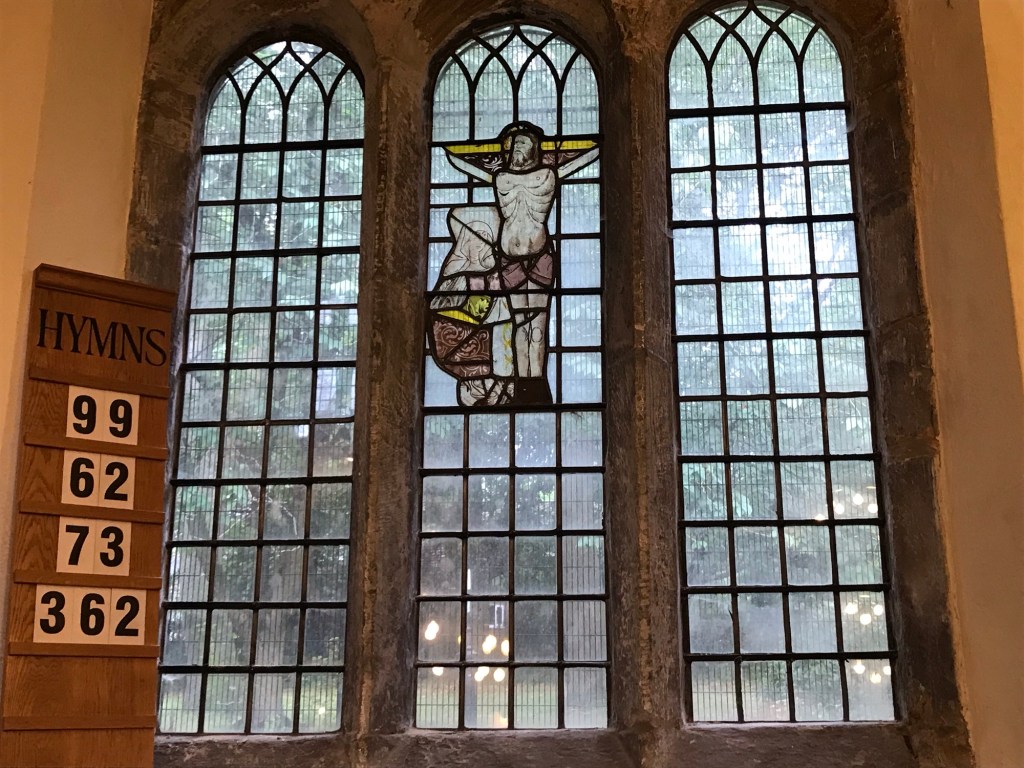
St Mary of the Angels, Batley: One-Place Study Update – 1 to 30 June 2024 Additions

June 2024 has been my busiest month ever for new posts in Batley St Mary of the Angels One-Place Study. This update contains the list of all the St Mary’s posts published up to the end of last month , including links to them, with June’s new and updated posts signposted.
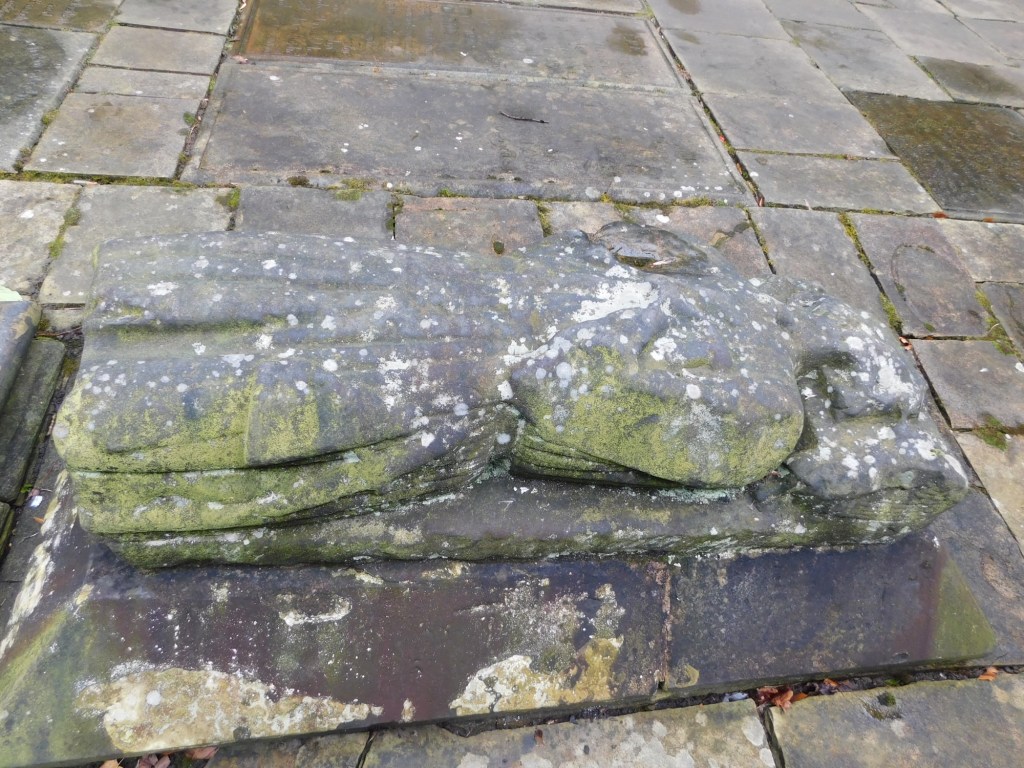
Batley St Mary of the Angels

If you want to know the background, and what is involved in a one-place study, click here. Otherwise read on, to discover a wealth of parish, parishioner and wider local Batley history. 

16 new posts were added during June 2024, bringing the total number of study posts to 338. Two other posts were updated. There’s also a new one-place study section, where I will write about the history of some of Batley’s public buildings and institutions which would have been familiar to the St Mary’s parishioners.
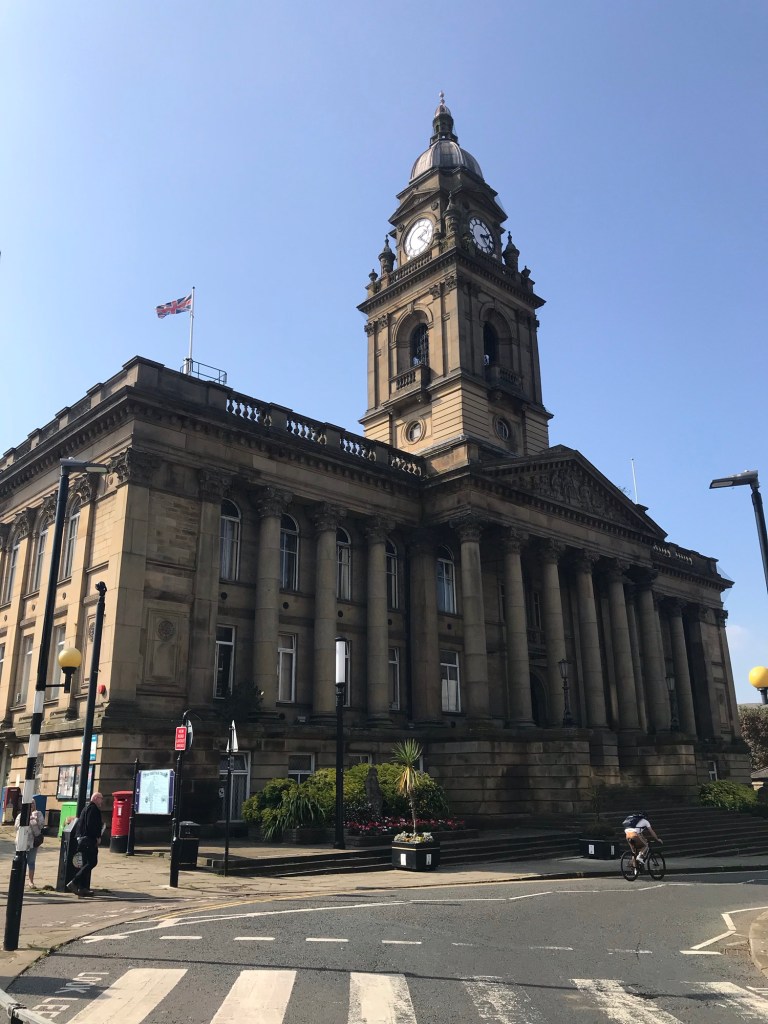
These additions and updates included five new weekly newspaper pages for June 1918. I have accordingly updated the surname index to these During This Week newspaper pieces, so you can easily identify newspaper snippets relevant to your family.

One new War Memorial biography has been added this month, James Hughes. I have also updated the names of parishioners who served in, and survived, the First World War section, as more men were identified during June.

There are two new posts in the Miscellany of Information section, about the first Torchlight Procession. So if you want to know about why this annual parish event started, and read about that inaugural procession, head over to that post. The other is about a famous parishioner, Thomas Cassidy, who was a record-breaking rat catcher. And with the General Election on 4 July, his polling booth exploits are something well worth reading about!

The first posts have been added to the Maps and Photographs section. These include four new maps depicting the area around St Mary’s church and schools from the 1890s to the 1930s. There is also an aerial photo from the 1960s.

There is a new post in the Bulletin for Batley St Mary of the Angels and Birstall St Patrick section – it is the parish history snippets which were included in the bulletins during June 2024.

The final two posts can be found in the public buildings and institutions section. One is about the first 50 years of Batley’s hospital – particularly relevant as the first ever patient treated in the initial cottage hospital was a St Mary’s parishioner. The other is the scene of much success for St Mary’s school children – the public baths. Sadly neither of these buildings function today. The hospital has for years stood derelict, crumbling and in 2017 the scene of a fire. There are plans – apparently – to turn it into apartments. The Grade II Listed public baths stand empty, victims of Kirklees Council cuts.

Below is the full list of pages to date. I have annotated the *NEW* and *UPDATED* ones, so you can easily pick these out. Click on the link and it will take you straight to the relevant page.


Finally, if you do have any information about, or photos of, parishioners from the period of the First World War please do get in touch. It does not have to be War Memorial men. It could be those who served and survived, or indeed any other men, women and children from the parish. 

I would also be interested in information about, and photos of, those parishioners who were killed in World War Two, or others from the parish who undertook any war service and survived. This can be as broad as serving in the military, or work in munitions factories, the Land Army, even taking in refugees. This is an area I’m looking to develop in the future.

I can be contacted at: pasttopresentgenealogy@btinternet.com


Postscript:
I want to say a big thank you for the donations already received to keep this website going. They really do help.

The website has always been free to use, and I want to continue this policy in the future. However, it does cost me money to operate – from undertaking the research to website hosting costs. In the current difficult economic climate I do have to regularly consider if I can afford to continue running it as a free resource. 

If you have enjoyed reading the various pieces, and would like to make a donation towards keeping the website up and running in its current open access format, it would be very much appreciated. 

Please click 👉🏻here👈🏻 to be taken to the PayPal donation link. By making a donation you will be helping to keep the website online and freely available for all. 

Thank you.


1. About my St Mary of the Angels Catholic Church War Memorial One-Place Study;

Batley’s Public Buildings and Institutions
2. Batley Hospital: The First 50 Years – 1878 to 1928 *NEW*
3. The Early History of Batley’s Public Baths *NEW*

Batley St Mary’s Population, Health, Mortality and Fertility Information and Comparisons
4.  1914: The Health of Batley School Children Generally, with a Particular Focus on St Mary’s School Children

Batley Statistics and Descriptions – Population, Health, Mortality, Fertility etc.
5. 1914: Borough of Batley – Town Information from the Annual Report of the Medical Officer of Health.
6. Batley and the 1921 Census 
7. Batley Population Statistics 1801-1939

Biographies: Men Associated with St Mary’s Who Died but Who Are Not on the Memorial 
8. Thomas Gannon 
9. Reginald Roberts 
10. William Frederick Townsend

Biographies: The War Memorial Men
11. Edward Barber 
12. William Barber (Memorial name spelling) 
13. Herbert Booth 
14. Edmund Battye
15. Dominick (aka George) Brannan 
16. Michael Brannan 
17. John Brooks 
18. Michael Cafferty 
19. Patrick Cafferty 
20. John William Callaghan 
21. Lawrence Carney 
22. Martin Carney 
23. Thomas William Chappell 
24. William Colbeck
25.  Michael Cunningham 
26. Thomas Curley
27. Peter Doherty 
28. Thomas Donlan 
29. John W. Enright 
30. Mathew Farrer 
31. Thomas Finneran 
32. Michael Flynn 
33. Thomas Foley D.C.M. 
34. Martin Gallagher 
35. James Garner
36. Thomas Gavaghan 
37. Henry Groark 
38. James Groark 
39. Michael Groark (also known as Rourke) 
40. James Griffin 
41. William Hargreaves 
42. Patrick Hopkins
43. Michael Horan
44. James Hughes *NEW*
45. Lawrence Judge 
46. John Leech 
47. Michael Lydon 
48. Patrick Lyons 
William McManus – See William Townsend below
49. Thomas McNamara 
50. Patrick Naifsey 
51. Austin Nolan 
52. Robert Randerson 
53. James Rush 
54. Moses Stubley 
55. William Townsend, also known as McManus
56. James Trainor 
57. Richard Carroll Walsh
58. Arthur William Bayldon Woodhead

Biographies: Those who Served and Survived (this includes a list of those identified to date and who will later have dedicated biographical pages) *UPDATED*
59. Patrick Cassidy 
60. James Delaney
61. Thomas Donlan (senior) 
62. Thomas Gannon 
63. Michael Rush

Burials, Cemeteries, Headstones and MIs
64. Cemetery and Memorial Details 
65. War Memorial Chronology of Deaths 

During This Week
66. During This Week Newspaper Index *UPDATED*
67. 1914, 8 August – Batley News 
68. 1914, 15 August – Batley News 
69. 1914, 22 August – Batley News 
70. 1914, 29 August – Batley News 
71. 1914, 5 September – Batley News 
72. 1914, 12 September – Batley News 
73. 1914, 19 September – Batley News 
74. 1914, 26 September – Batley News 
75. 1914, 3 October – Batley News 
76. 1914, 10 October – Batley News 
77. 1914, 17 October – Batley News 
78. 1914, 24 October – Batley News 
79. 1914, 31 October – Batley News 
80. 1914, 7 November – Batley News 
81. 1914, 14 November – Batley News 
82. 1914, 21 November – Batley News 
83. 1914, 28 November – Batley News
84. 1914, 5 December – Batley News 
85. 1914, 12 December – Batley News 
86. 1914, 19 December – Batley News 
87. 1914, 24 December – Batley News 
88. 1915, 2 January – Batley News 
89. 1915, 9 January – Batley News 
90. 1915, 16 January – Batley News 
91. 1915, 23 January – Batley News 
92. 1915, 30 January – Batley News 
93. 1915, 6 February – Batley News 
94. 1915, 13 February – Batley News 
95. 1915, 20 February – Batley News 
96. 1915, 27 February – Batley News 
97. 1915, 6 March – Batley News 
98. 1915, 13 March – Batley News 
99. 1915, 20 March – Batley News 
100. 1915, 27 March – Batley News 
101. 1915, 3 April – Batley News 
102. 1915, 10 April – Batley News 
103. 1915, 17 April – Batley News 
104. 1915, 24 April – Batley News 
105. 1915, 1 May – Batley News 
106. 1915, 8 May – Batley News 
107. 1915, 15 May – Batley News 
108. 1915, 22 May – Batley News 
109. 1915, 29 May – Batley News 
110. 1915, 5 June – Batley News 
111. 1915, 12 June – Batley News 
112. 1915, 19 June – Batley News 
113. 1915, 26 June – Batley News 
114. 1915, 3 July – Batley News 
115. 1915, 10 July – Batley News 
116. 1915, 17 July – Batley News 
117. 1915, 24 July – Batley News 
118. 1915, 31 July – Batley News 
119. 1915, 7 August – Batley News 
120. 1915, 14 August – Batley News 
121. 1915, 21 August – Batley News 
122. 1915, 28 August – Batley News 
123. 1915, 4 September – Batley News 
124. 1915, 11 September – Batley News 
125. 1915, 18 September – Batley News 
126. 1915, 25 September – Batley News 
127. 1915, 2 October – Batley News 
128. 1915, 9 October – Batley News 
129. 1915, 16 October – Batley News 
130. 1915, 23 October – Batley News 
131. 1915, 30 October – Batley News 
132. 1915, 6 November – Batley News 
133. 1915, 13 November – Batley News 
134. 1915, 20 November – Batley News 
135. 1915, 27 November – Batley News 
136. 1915, 4 December – Batley News 
137. 1915, 11 December – Batley News
138. 1915, 18 December – Batley News 
139. 1915, 23 December – Batley News 
140. 1916, 1 January – Batley News 
141. 1916, 8 January – Batley News 
142. 1916, 15 January – Batley News 
143. 1916, 22 January – Batley News 
144. 1916, 29 January – Batley News 
145. 1916, 5 February – Batley News 
146. 1916, 12 February – Batley News 
147. 1916, 19 February – Batley News 
148. 1916, 26 February – Batley News 
149. 1916, 4 March – Batley News 
150. 1916, 11 March – Batley News 
151. 1916, 18 March – Batley News 
152. 1916, 25 March – Batley News 
153. 1916, 1 April – Batley News 
154. 1916, 8 April – Batley News 
155. 1916, 15 April – Batley News 
156. 1916, 22 April – Batley News 
157. 1916, 29 April – Batley News 
158. 1916, 6 May – Batley News 
159. 1916, 13 May – Batley News
160. 1916, 20 May – Batley News 
161. 1916, 27 May – Batley News
162. 1916, 3 June – Batley News 
163. 1916, 10 June – Batley News 
164. 1916, 17 June – Batley News 
165. 1916, 24 June – Batley News 
166. 1916, 1 July – Batley News 
167. 1916, 8 July – Batley News 
168. 1916, 15 July – Batley News 
169. 1916, 22 July – Batley News 
170. 1916, 29 July – Batley News 
171. 1916, 5 August – Batley News
172. 1916, 12 August – Batley News
173. 1916, 19 August – Batley News 
174. 1916, 26 August – Batley News
175. 1916, 2 September – Batley News 
176. 1916, 9 September – Batley News
177. 1916, 16 September – Batley News 
178. 1916, 23 September – Batley News 
179. 1916, 30 September – Batley News 
180. 1916, 7 October – Batley News
181. 1916, 14 October – Batley News 
182. 1916, 21 October – Batley News
183. 1916, 28 October – Batley News 
184. 1916, 4 November – Batley News
185. 1916, 11 November – Batley News
186. 1916, 18 November – Batley News
187. 1916, 25 November – Batley News 
188. 1916, 2 December – Batley News 
189. 1916, 9 December – Batley News 
190. 1916, 16 December – Batley News 
191. 1916, 23 December – Batley News 
192. 1916, 30 December – Batley News 
193. 1917, 6 January – Batley News 
194. 1917, 13 January – Batley News 
195. 1917, 20 January – Batley News 
196. 1917, 27 January – Batley News
197. 1917, 3 February – Batley News 
198. 1917, 10 February – Batley News 
199. 1917, 17 February – Batley News 
200. 1917, 24 February – Batley News 
201. 1917, 3 March – Batley News
202. 1917, 10 March – Batley News 
203. 1917, 17 March – Batley News 
204. 1917, 24 March – Batley News 
205. 1917, 31 March – Batley News
206. 1917, 7 April – Batley News 
207. 1917, 14 April – Batley News 
208. 1917, 21 April – Batley News 
209. 1917, 28 April – Batley News 
210. 1917, 5 May – Batley News 
211. 1917, 12 May – Batley News 
212. 1917, 19 May – Batley News 
213. 1917, 26 May – Batley News 
214. 1917, 2 June – Batley New
215. 1917, 9 June – Batley News
216. 1917, 16 June – Batley News
217. 1917, 23 June – Batley News
218. 1917, 30 June – Batley News
219. 1917, 7 July – Batley News
220. 1917, 14 July – Batley News 
221. 1917, 21 July – Batley News 
222. 1917, 28 July – Batley News 
223. 1917, 4 August – Batley News 
224. 1917, 11 August – Batley News 
225. 1917, 18 August – Batley News 
226. 1917, 25 August – Batley News 
227. 1917, 1 September – Batley News 
228. 1917, 8 September – Batley News 
229. 1917, 15 September – Batley News 
230. 1917, 22 September – Batley News 
231. 1917, 29 September– Batley News 
232.  1917, 6 October – Batley News 
233. 1917, 13 October – Batley News
234. 1917, 20 October – Batley News
235. 1917, 27 October – Batley News 
236. 1917, 3 November – Batley News
237. 1917, 10 November – Batley News
238. 1917, 17 November – Batley News 
239. 1917, 24 November – Batley News 
240. 1917, 1 December – Batley News 
241. 1917, 8 December – Batley News 
242. 1917, 15 December – Batley News 
243. 1917, 22 December – Batley News 
244. 1917, 29 December – Batley News 
245. 1918, 5 January – Dewsbury District News 
246. 1918, 12 January – Dewsbury District News 
247. 1918, 19 January – Batley News 
248. 1918, 26 January – Batley News
249. 1918, 2 February – Batley News 
250. 1918, 9 February – Batley News 
251. 1918, 16 February – Batley News 
252. 1918, 23 February – Batley News 
253. 1918, 2 March – Batley News 
254. 1918, 9 March – Batley News 
255. 1918, 16 March – Batley News 
256. 1918, 23 March – Batley News 
257. 1918, 30 March – Batley News 
258. 1918, 6 April – Batley News 
259. 1918, 13 April – Batley News 
260. 1918, 20 April – Batley News 
261. 1918, 27 April – Batley News 
262. 1918, 4 May – Batley News
263. 1918, 11 May – Batley News 
264. 1918, 18 May – Batley News 
265. 1918, 25 May – Batley News 
266. 1918, 1 June – Batley News *NEW*
267. 1918, 8 June – Batley News *NEW*
268. 1918, 15 June – Batley News *NEW*
269. 1918, 22 June – Batley News *NEW*
270. 1918, 29 June – Batley News *NEW*

Electoral Registers 1918-1921 
271. 1918 Batley Electoral Register, North Ward, Polling Districts A and B – Naval and Military Voters

Guest Contributions
272. Memories of Skelsey Row – by Brian Foley 

Maps and Photographs
273. Aerial View of St Mary’s Church and the Surrounding Streets *NEW*
274. Batley St Mary’s – Map Published in 1894 *NEW*
275. Batley St Mary’s – Map Published in 1907 *NEW*
276. Batley St Mary’s – Map Published in 1922 *NEW*
277. Batley St Mary’s – Map Published in 1933 *NEW*

Miscellany of Information
278. A Colliery Accident with Tragic Consequences 
279. A Grave Disturbance in Batley 
280. A Part of St Mary of the Angels in Batley Cemetery 
281. A “Peace” of Batley History
282. An Appeal to Ireland to Build a Catholic Church in Batley 
283. A Potted Early History of the Irish in Batley, the Building of St Mary of the Angels Church, and the Parish Priest’s Fatal Accident 
284. A St Mary’s School Sensation
285. Batley’s Secret Irish Society and the Ammunition Seizure 
286. Batley St Mary’s First Torchlight Procession *NEW*
287. “Daddy’s Death and then Triplets” 
288. Heritage Impact Assessment: St Mary’s Catholic Primary School and Convent, Batley 
289. Hot-Cross Buns and the Yorkshire Tea-Cake Dilemma. Plus A Suggested Meal Planner for Batley Families in 1917 
290. St Mary of the Angels Catholic Church – 1929 Consecration Service
291. The Consequences of a Refusal to Work in 1918
292. The Controversial Role Played by St Mary’s Schoolchildren in the 1907 Batley Pageant
293. The Great War: A Brief Overview of What Led Britain into the War 
294. Thomas Ate My Rat *NEW*
295. Willie and Edward Barber – Poems

Occupations and Employment Information
296. Occupations: Colliery Byeworker/Byeworkman/Byworker/Bye-Worker/By-Worker 
297. Occupations: Confidential Clerk 
298. Occupations: Lamp Cleaner 
299. Occupations: Limelight Operator 
300. Occupations: Mason’s Labourer 
301. Occupations: Office Boy/Girl 
302. Occupations: Piecer/Piecener 
303. Occupations: Rag Grinder 
304. Occupations: Willeyer

School Log Books 
305. Boys’ School – Log Book, 1913 
306. Boys’ School – Log Book, 1914 
307. Boys’ School – Log Book, 1915 
308. Boys’ School – Log Book, 1916 
309. Boys’ School – Log Book, 1917 
310. Boys’ School – Log Book, 1918 
311. Boys’ School – Log Book, 1919 
312. Boys’ School – Log Book, 1920 
313. Infant School – Log Book, 1913 
314. Infant School – Log Book, 1914
315. Infant School – Log Book, 1915
316. Infant School – Log Book, 1916 
317. Infant School – Log Book, 1917
318. Infant School – Log Book, 1918 
319. Infant School – Log Book, 1919 
320. Infant School – Log Book, 1920 
321. Mixed Department – Log Book, 1913 
322. Mixed Department – Log Book, 1914 
323. Mixed Department – Log Book, 1915 
324. Mixed Department – Log Book, 1916 
325. Mixed Department – Log Book, 1917
326. Mixed Department – Log Book, 1918 
327. Mixed Department – Log Book, 1919
328. Mixed Department- Log Book 1920

The Bulletin of St Mary of the Angels and Birstall St Patrick – Parish History Section 
329. March 2024 Bulletin History Pieces 
330. April 2024 Bulletin History Pieces
331. May 2024 Bulletin History Pieces 
332. June 2024 Bulletin History Pieces *NEW*

The Families
333. A Death in the Church
334. St Mary’s Schoolboys Wreak Havoc in a Batley Graveyard

World War Two
335. World War Two Chronology of Deaths
336. Thomas Egan
337. Michael Flatley
338. William Smith