This is the latest update of the pages relating to my Batley St Mary’s one-place study, the details of which I announced here.
St Mary of the Angels Church, Batley
In the past month I have added four weekly newspaper pages for November 1915. I have accordingly updated the surname index to these During This Week newspaper pieces, so you can easily identify newspaper snippets relevant to your family.
More men who served and survived have been identified. I have updated that page accordingly. No new biographies have been added this month. These will follow in due course.
Finally for this month the biography for Second World War man Michael Flatley had been updated to include a colour photograph.
Below is the full list of pages to date. I have annotated the *NEW* ones, plus the *UPDATED* pages, so you can easily pick these out. Click on the link and it will take you straight to the relevant page.
Postscript: Finally a big thank you for the donations already received to keep this website going.
The website has always been free to use, but it does cost me money to operate. In the current difficult economic climate I am considering if I can continue to afford to keep running it as a free resource, especially as I have to balance the research time against work commitments.
If you have enjoyed reading the various pieces, and would like to make a donation towards keeping the website up and running in its current open access format, it would be very much appreciated.
Please click here to be taken to the PayPal donation link. By making a donation you will be helping to keep the website online and freely available for all.
This is the latest update of the pages relating to my Batley St Mary’s one-place study, the details of which I announced here.
St Mary of the Angels Church, Batley
In the past month I have added seven new pages. These include five weekly newspaper summary pages for October 1915. I have accordingly updated the surname index to these During This Week newspaper pieces, so you can easily identify newspaper snippets relevant to your family.
There is one new War Memorial biography, that of James Rush.
More men who served and survived have been identified. I have updated that page accordingly. No new biographies have been added this month. These will follow in due course. However, the biography of Thomas Donlan (senior) has been updated, with additional information.
The final new page for this month is an occupational one, that of a limelight operator.
Below is the full list of pages to date. I have annotated the *NEW* ones, plus the *UPDATED* pages, so you can easily pick these out. Click on the link and it will take you straight to the relevant page.
Confession time. I have a terrible habit. One that I’m finding impossible to kick. One that regularly annoys my family, and drives them to distraction. I do try to break it. Honest. But every year I lapse back into this irresistible vice.
Wherever I go on holiday it ends up becoming something akin to a field trip. If the location is not linked to family history, I look for other avenues to explore. And this includes spending some time finding out a little about the local history.
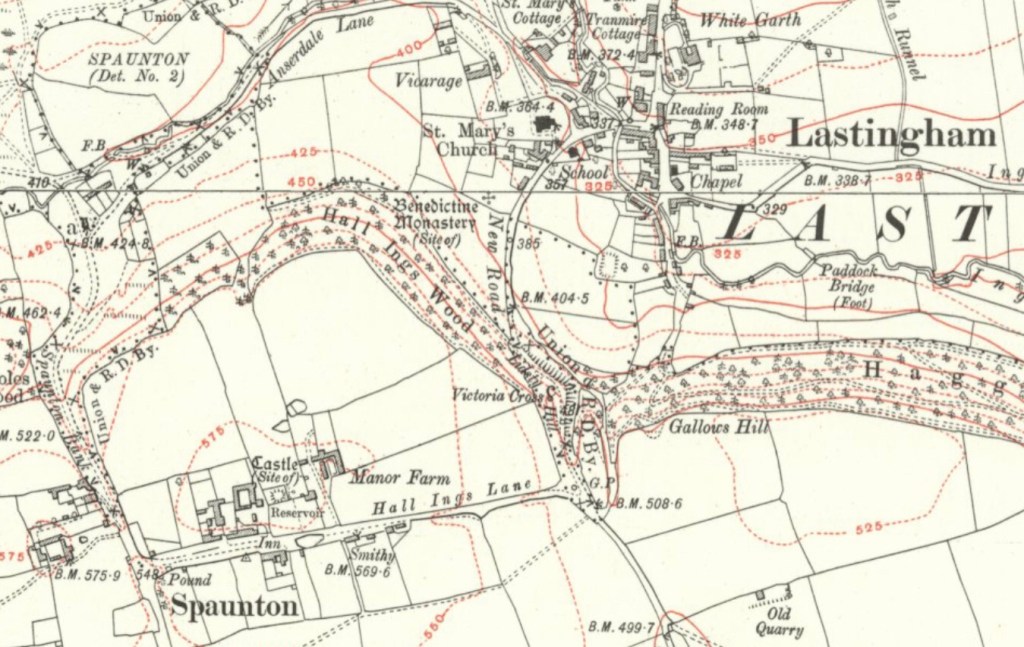
A holiday in October 2021, based in a cottage in the North Yorkshire hamlet of Spaunton, proved no different. Falling within the parish of Lastingham, a parish which is widely scattered across an expanse of moorland, in 2013 Spaunton had a population of 72.1 This is little changed from a century ago and its 1911 census population of 78. It is therefore tiny in terms of population, but big on history. The 1890 Bulmer’s Yorkshire, North Yorkshire, History, Topography & Directory described the Spaunton Township area as:
…comprising 1,540 acres, of which 1,287 are cultivated….Spaunton is the head of an extensive manor formerly held by a family which took its name from the place, and resided here in a castle, the foundations of which are still visible near Manor House….the hamlet consists of about half-a-dozen houses situated on the brow of a hill, half-a-mile from Lastingham.2
Ordnance Survey Map showing Spaunton and Lastingham – Six-inch England and Wales, 1842-1952, Yorkshire Sheets LXXIV NE and SE, Revised: 1910, Published: 1914 – National Library of Scotland, under the Creative Commons Attribution-NonCommercial-ShareAlike 4.0 International (CC-BY-NC-SA) licence
I had no family history connections to the area. But, as usual, I did not let that stop me. I’m so glad I pursued it. Because who could have thought such a quiet, rural backwater, and its environs, could contain so much history? From medieval crypts and a crashed Lancaster Bomber, to a manorial history with a Court Leet still operating today, dealing with petty transgressions. The area is chock full of history. Even my husband got involved in finding out more. Especially as there ended up being a food interest!
And it really does have a long history. Pre-Norman conquest a manor and 6½ carucates at Spaunton were held by Gamel.3 Documented in the Domesday Book, with nine households and an annual value to the Lord of 10 shillings,4 the overlordship in 1086 was held by Bernegar de Toni. He gave six carucates to the abbey which had been removed from Lastingham and refounded outside York.5 More of Lastingham, and the York connection, later.
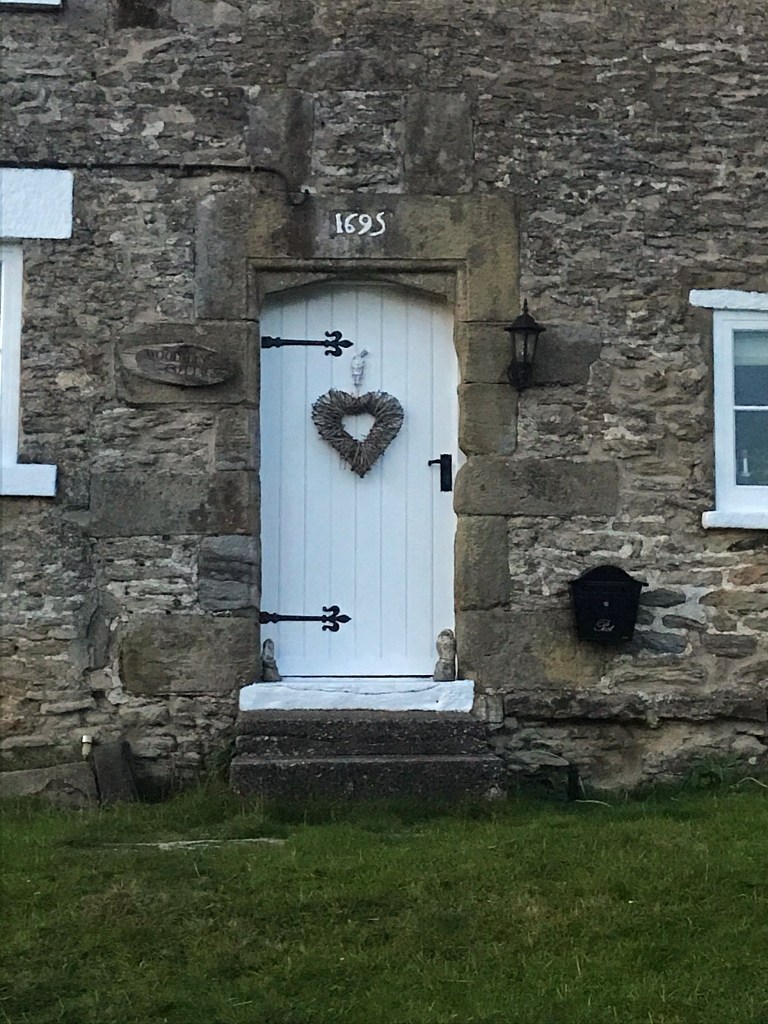
Taking a look around Spaunton, Woodman’s cottage, a Grade II Listed building, originally of Cruck Frame construction, has the year 1695 inscribed on its lintel, and is described as a “fine example of a 17th century yeoman’s house”.6
Woodman’s Cottage, with its date inscription
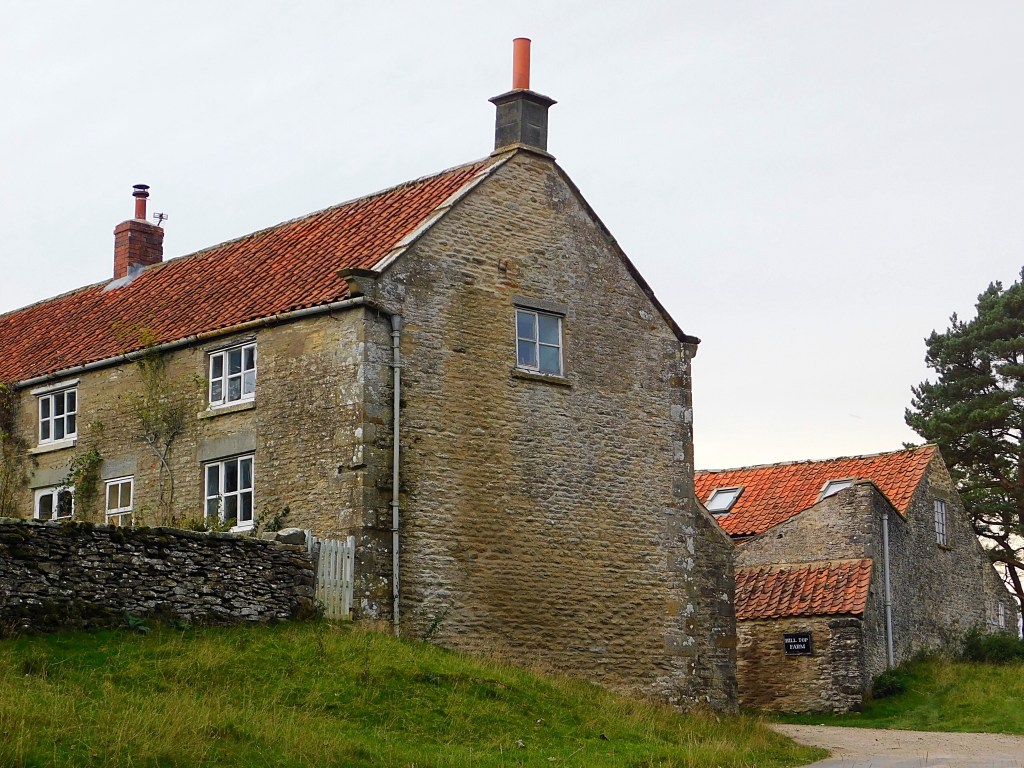
Another Listed building in the hamlet is the Grade II 18th century Hill Top Farmhouse. This was the farm neighbouring the one where our cottage was located, and is better known today as the home of Yorkshire Organic Millers.7
As an avid bread maker I brought home some of their milled bread flour for my next batch of loaves.
The Hill Top Farm product
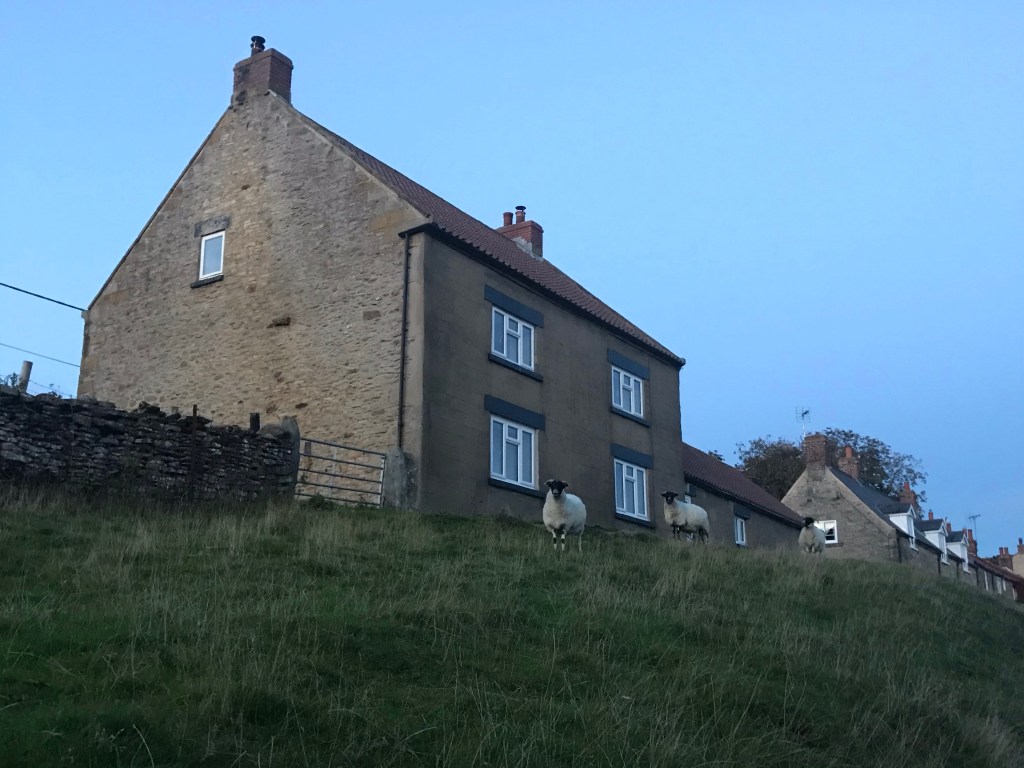
The land in front of many of the properties is common land, with grazing and common rights still in existence.
Sheep grazing on the common land in Spaunton
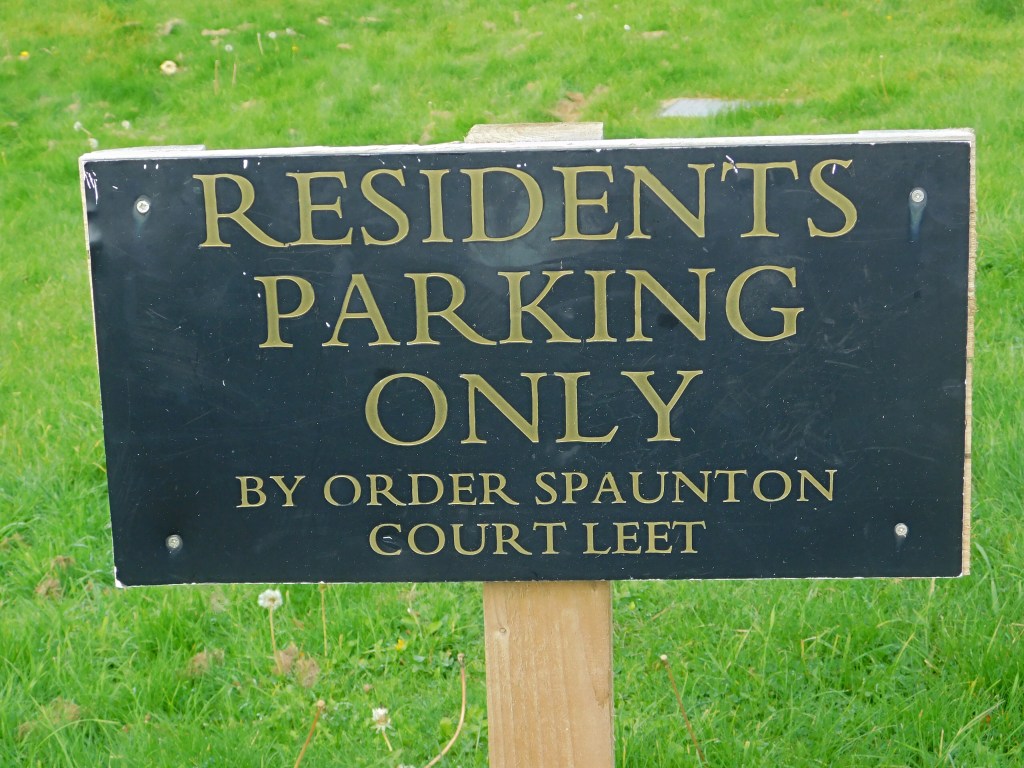
Remnants of the court system of the Manor of Spaunton still operate, with the Court Leet still meeting annually in October to levy fines for those who breech grazing and access rights. The current Lord of the Manor is George Winn Darnley, and the manorial jurisdiction covers land in five parishes.8
A sign in neigbouring Hutton le Hole, showing the wide extent of Spaunton’s Court Leet jurisdiction
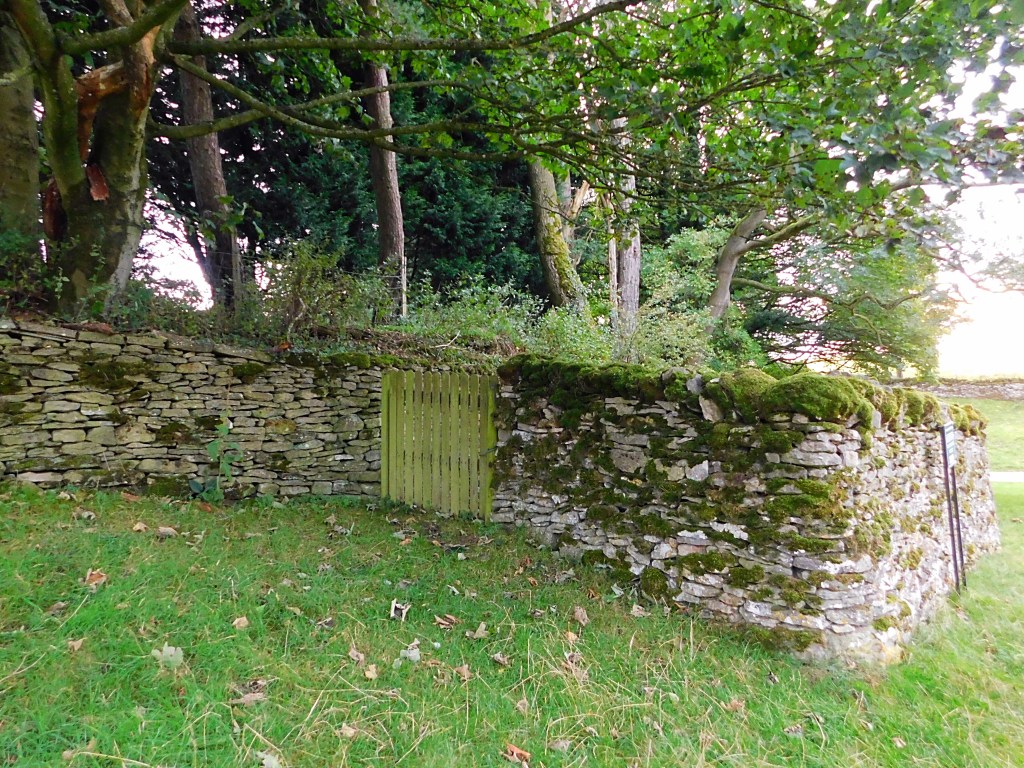
There is a restored Grade II pinfold, dating from probably the 18th century. This enclosure, also known as pound, was where stray animals were confined, with a fine payable by the owners to the pinder, a manor official, to release them.
Spaunton’s restored pinfold
The next piece of history associated with Spaunton came as a real surprise.
The 1939 Register shows farmer William Strickland, his Special Constable nephew George, also a farmer, and his niece Elizabeth Ann (Annie), living at Manor House farm at Spaunton.9
The Stricklands were an old, established farming family, residing at the Manor House. In fact the Strickland’s home was the venue for the annual Court Leet, referred to earlier. Prior to her elderly grandmother’s death in 1915 Annie had assisted her in providing the excellent meal in the Manor House, traditionally served after the court proceedings.10 So it was a family embedded in the community and history of Spaunton and its manor.
On 10 July 1940, less than a year after the Register entry, William Strickland died. This left George and his sister at Manor House farm. They were there, along with an evacuee girl, on the evening of 7 October 1943.
What was the Manor House farm as photographed on my visit in October 2021 – photo by Jane Roberts
That night Lancaster Bomber II D.S.724C took off from Linton-on-Ouse. It’s a RAF base with which I’m acquainted, having visited and flown from it (that’s another story). Part of Squadron 408 of the Royal Canadian Airforce it was bound for a bombing raid on Stuttgart. On board were Flight Sergeant John Douglas Harvey (Pilot), Sergeant Eric James Hurd (Navigator), Flying Officer Stephen William Dempsey (Bomb Aimer), Pilot Officer G.R. Butchart (Wireless Operator/Air Gunner), Sergeant Stanley Enos Campbell (Mid Upper Gunner), Sergeant K.L. Davison (Rear Gunner) and Sergeant H.J Branton (Flight Engineer).
This evening was the first of 408 Squadron’s operational flights since converting to Lancaster Bombers. The entry in 408 Squadron’s Air Operation Book on 7 October 1943 excitedly notes:
At last! the Squadron is back on Operations after almost two months at converting to Lancaster Mark II aircraft. Sixteen aircraft were prepared for Bombing Operations, but two were scrubbed. The remaining fourteen took off on time. Twelve aircraft were successful in reaching their objective…one aircraft made an early return due to the rear guns going u/s…11
That left one aircraft – the one piloted by R141147 Flight Sergeant J.D. Harvey. He had a total of 331 hours flying time at the time of the crash, but only 37 of his hours were on Lancasters. It was also his first operational flight in this aircraft type.12
The details of his aeroplane’s catastrophically short flight, as logged in the Squadron’s Air Operation Book, read as follows:
This aircraft took off from this base at 20.59 hours, but had to be abandoned at 21.08 hours due to controls jamming up. This aircraft crashed at Hutton Le Hall [sic], Yorks approximately 8 miles north of Thirsk. The crew of this aircraft managed a safe parachute descent. One member of the crew Sergeant Campbell, Stanley Enos (Mid Upper Gunner) dislocated his shoulder, fractured a few ribs and suffered pains and shocks, otherwise conditions was fair. The remainder of the crew were uninjured. One civilian Mr. George Strickland, (Farmer) from Manor Farm, Spraunton [sic], Yorkshire was killed by the explosion of a bomb. The inquest to this accident was held at 1600 hours on October 8th, 1943. This aircraft is now categorized E.2 (burnt).13
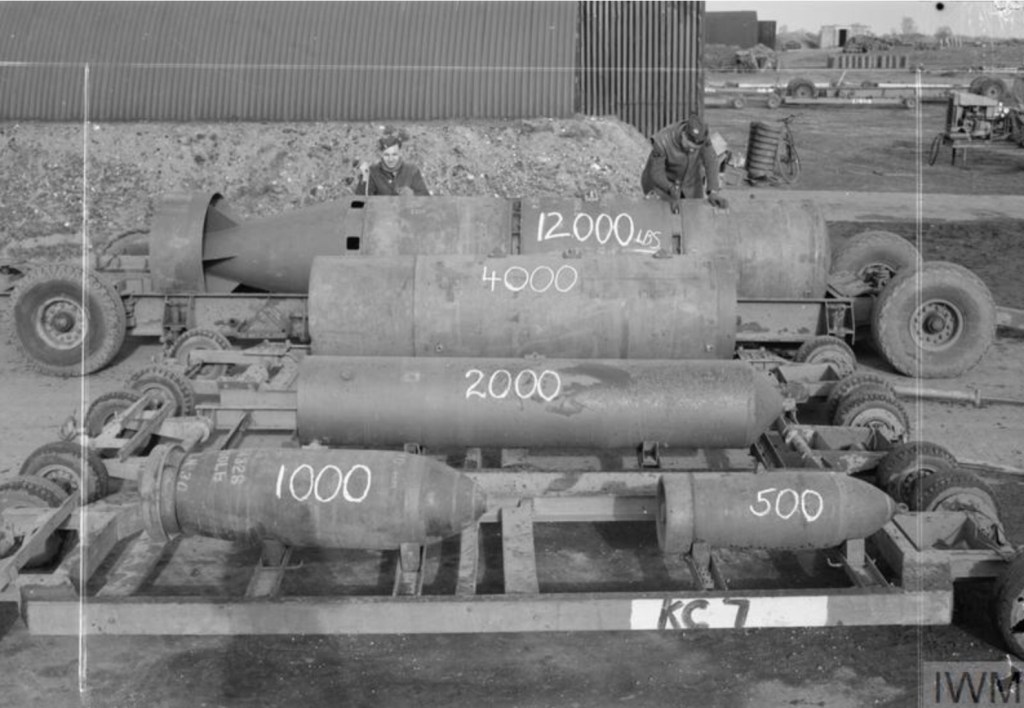
The aircraft, with its full load of bombs, is believed to have come down in the field adjoining the farm. The device which killed George Strickland was a 4,000lb High Capacity bomb,14 the blast from which apparently blew the heavy farmhouse door on top of him.15 It also did considerable damage to the house, and partly demolished the farm buildings.
The Malton Gazette and Malton Messenger of 15 October 1943 reported on the inquest, where a verdict of ‘death by misadventure’ was returned on 53-year-old George.16
As for the cause of the air accident, according to the wonderful Yorkshire Aircraft website, which covers air accidents in the county:
The post-crash investigation found that severe icing on the surfaces of the aircraft was considered to have been a factor in the control of the aircraft having been lost. However the main theory for control being lost almost immediately after take-off was suggested to have been down to the aircraft’s auto-pilot being accidently switched on prior to take-off and this went un-noticed.17
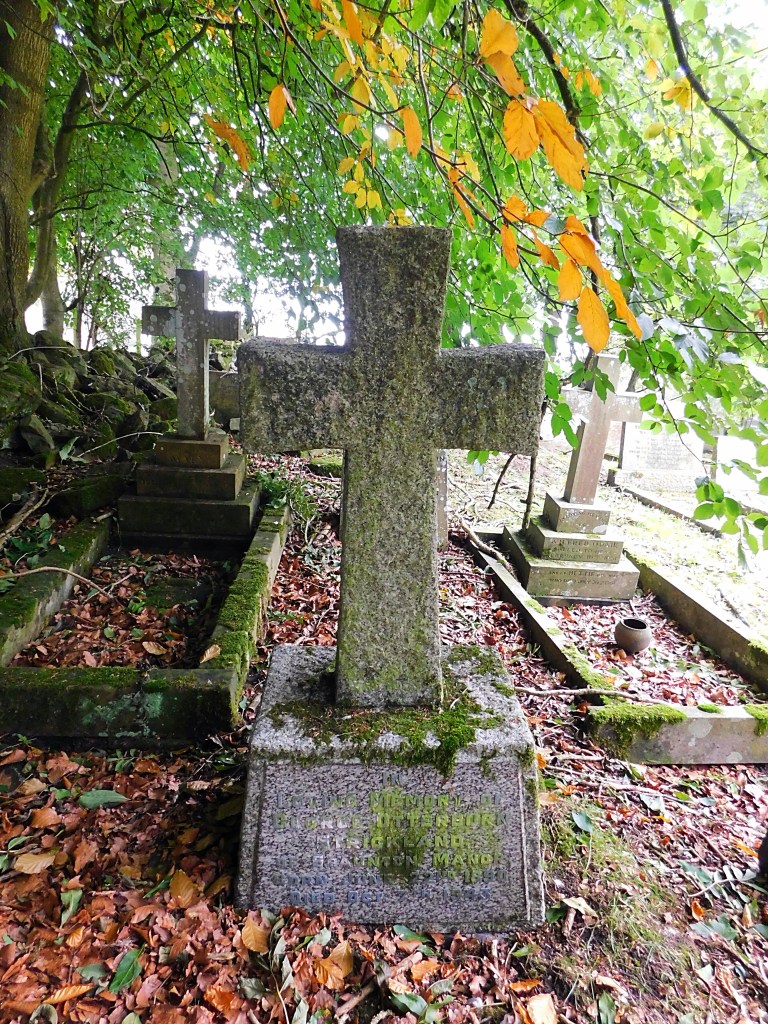
George Otterburn Strickland is buried in the churchyard of Lastingham St Mary’s.
George Otterburn Strickland’s headstone at Lastingham St Mary’s – photo by Jane Roberts
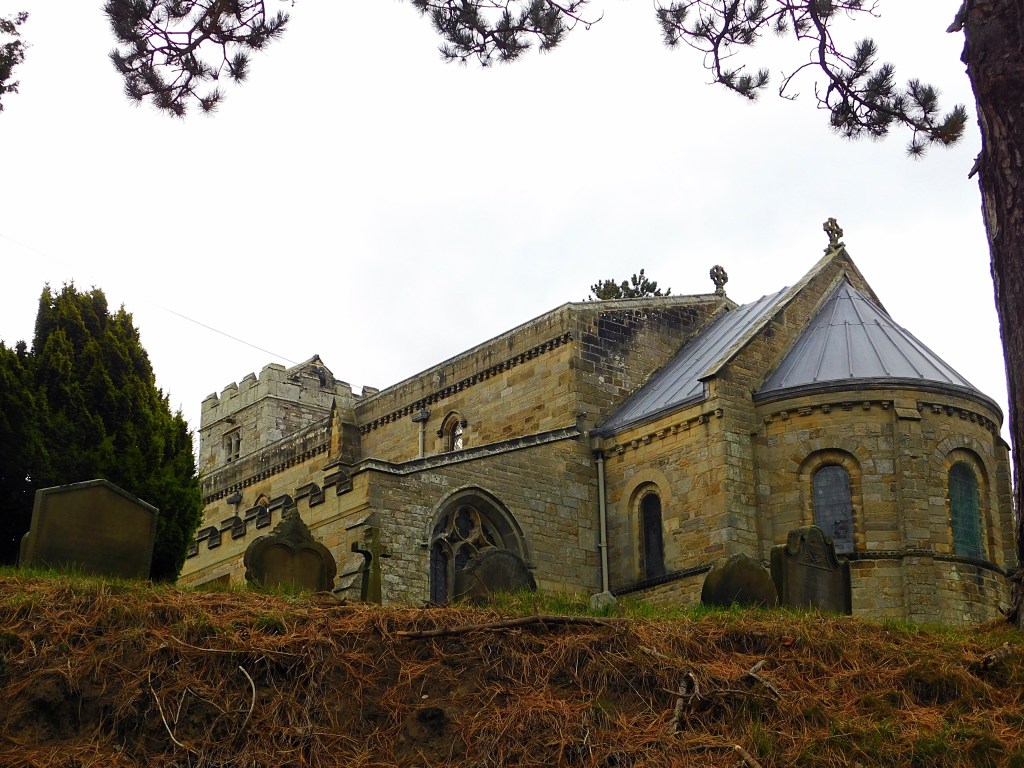
This leads nicely on to the next piece of history, at Lastingham St Mary the Virgin Parish Church, which is the location of a historically significant crypt.
St Mary’s Church, Lastingham – photo by Jane Roberts
As Kelly’s 1913 Directory describes:
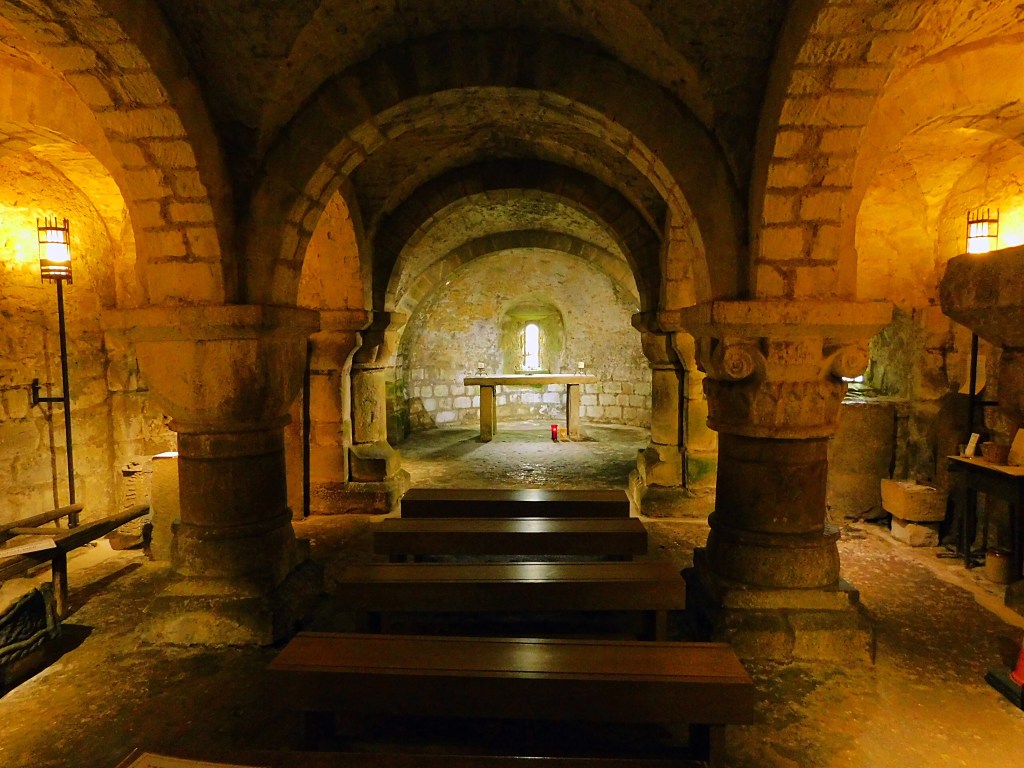
This place was the site of a monastery founded in 648 by St. Cedd, a Saxon bishop, and brother of St. Chad, bishop of Lichfield; St Cedd was eventually buried in the stone church of St. Mary, erected some time after his decease, and the present church, if it does not incorporates portions of the early structure, at least occupies its site, and the very interesting crypt below the church confirms this view….the crypt, which extends under the whole church, with the exception of the western bay, is in fact an underground church, possibly of Early Norman construction, c.1078, and consists of apsidal chancel of two bays, and a nave and aisle of three bays, with a vaulted roof carried on massive piers and capitals enriched with interlaced arches and rude volutes; in the crypt are preserved some stone crosses carved with interlaced work; an altar, possibly Roman, 17 inches high by 14 inches wide, and a pre-Reformation bier; the windows, small and circular-headed, are deeply splayed….18
The Crypt beneath Lastingham St Mary’s Church – photo by Jane Roberts
It is thought the crypt was built possibly on or near the vicinity of the earlier 7th century St Cedd founded structure, with the crypt being part of a huge Benedictine Abbey planned, but never completed, by Abbot Stephen of Whitby. The project was abandoned in 1088 when Stephen and his monks moved to York, and built St Mary’s Abbey.
It really is well worth seeking out. As you descend the stairs to it, you are enveloped in a sense of peace and calm. The early crosses and bier, described in the Kelly’s Directory, are still in situ. I found it a wonderfully contemplative space. And, for the less religious, there’s a highly recommended pub across the road (sadly shut for refurbishment on our visit).
Finally, just over two miles down the road from Spaunton is the village of Hutton-le-Hole, with land which forms part of the Manor of Spaunton. This is yet another location within the Ancient Parish of Lastingham. The village is home to the impressive Ryedale Folk Museum.
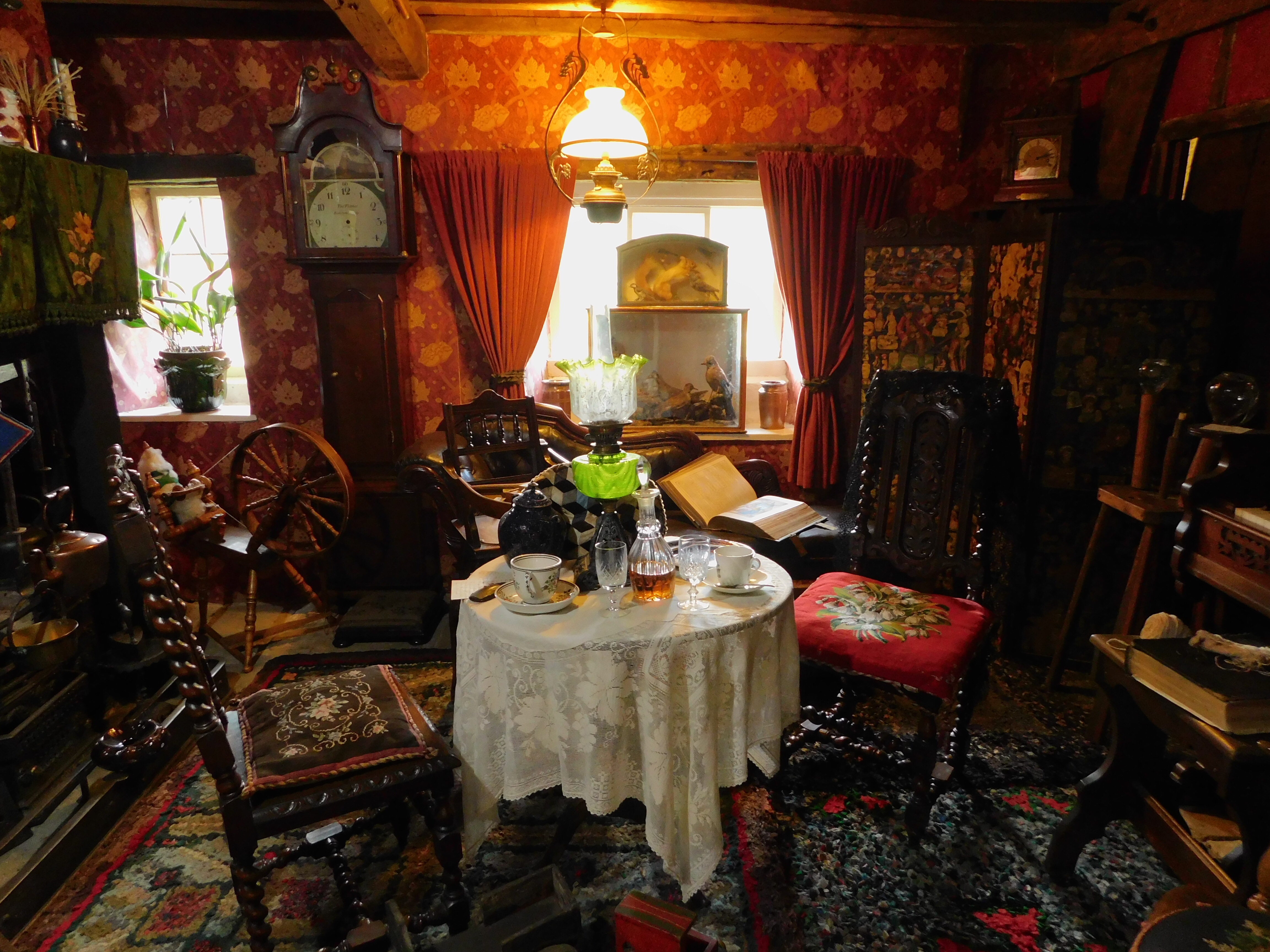
An open-air site set amongst 6½ acres, it has more than 20 heritage buildings. From the thatched Manor House from Harome, to an Edwardian daylight photographic studio, a Medieval crofter’s cottage, the almost 500-years-old thatched longhouse from Stang End, Danby, furnished in the style of the early 18th century, and a Victorian thatched cottage, washhouse and dairy. There are also various workshops including that of the saddler, tinsmith, blacksmith, cobbler and carpenter. Then there’s the vintage chemist and village store, plus the undertakers. And, going back 4,000 years, there is an interpretation of an Iron Age dwelling. Think a North York Moors mini version of Beamish, with buildings from across the National Park dismantled and reassembled on the site.
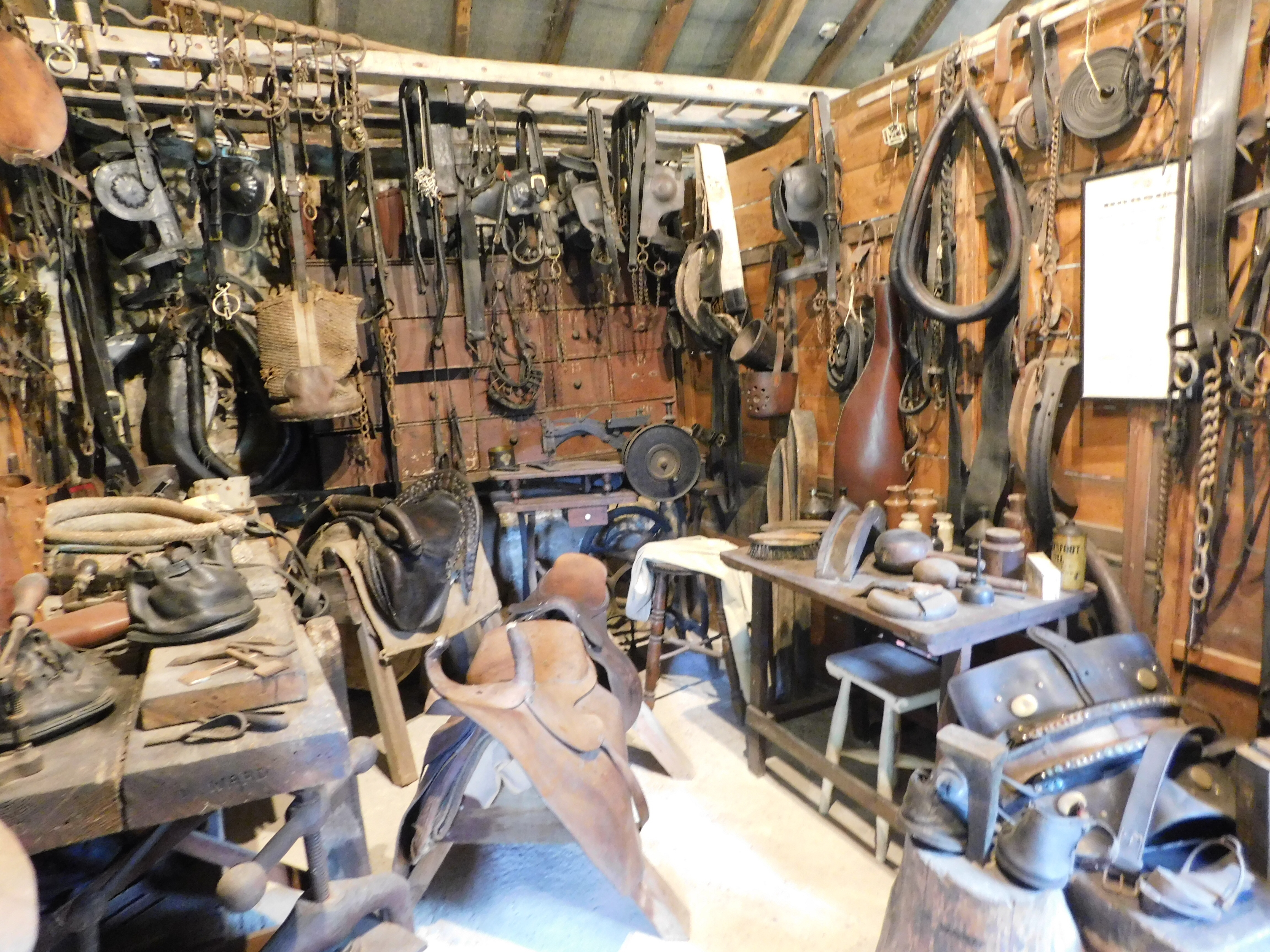
A selection of buildings and interiors from Ryedale Folk Museum, including a Victorian parlour, inside the saddlers, a Victorian schoolroom, the interior of the the Stang End Longhouse, and Harome Manor House
You can learn about the farming year, and view the range of historic farming implements and machinery. There is also a variety of livestock – including the greedy Tamworth pigs.
This is only a small fraction of what is on site. It is a great place for all the family to spend a good couple of hours. If you’re into house history or family history, and wanting to find out more about your ancestors’ living conditions or village occupations, I’d say the museum is a must.
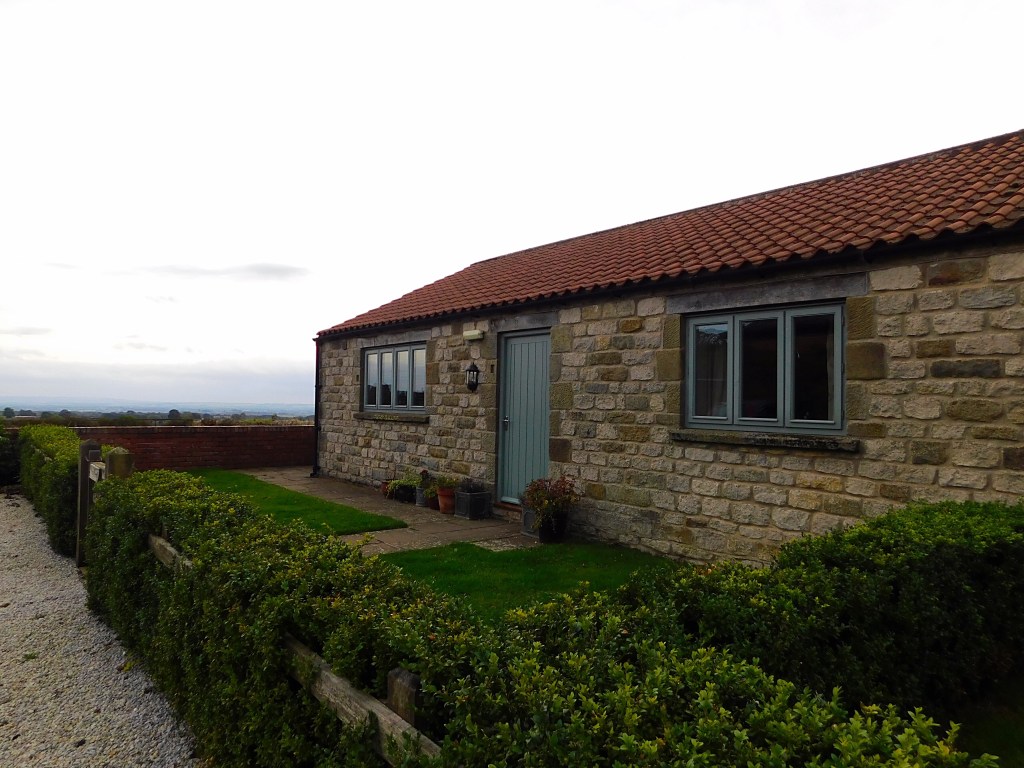
The Wests, the Spaunton cottage which was our home for a week
I stayed at The Wests, one of the cottages on Grange Farm. Whilst there, and finding out a little of the history of Spaunton, I must admit I did think it would make a fabulous one-place study. For a moment I felt really tempted. Really, really tempted. I even got as far as looking at the Manorial Documents Register…then reality kicked in. I’ve enough on already. But if someone else has any free time, and the inclination to embark on a fascinating piece of research, they wouldn’t go far wrong with Spaunton! And yes, there was a bread maker and bread mix in the cottage to bake a loaf!
Footnotes: 1. Appleton le Moors, Lastingham and Spaunton Parish Report, 2013: https://democracy.ryedale.gov.uk/documents/s17204/AppletonleMoorsLastinghamandSpauntonParishPlan.pdf. Accessed October 27, 2021; 2. History, Topography, and Directory of North Yorkshire: Comprising Its Ancient and Modern History ; a General View of Its Physical Features ; Its Agricultural, Mining & Manufacturing Industries ; Family History and Genealogical Descent ; Myths, Legends, Biographical Sketches, &c., &c. ; with a Map Prepared Expressly for the Work. Preston: T. Bulmer, 1890. 3. A carucate was an area of land used as a basis for tax assessment in the Domesday Book. It equated to the amount of land which could be ploughed in a year by one plough with an eight-ox team; 4. Powell-Smith, Anna. “Home: Domesday Book.” Home | Domesday Book. Accessed October 27, 2021. https://opendomesday.org/. 5. “Parishes: Lastingham.” British History Online. Accessed October 27, 2021. https://www.british-history.ac.uk/vch/yorks/north/vol1/pp524-529. 6. Appleton le Moors, Lastingham and Spaunton Parish Report, 2013: https://democracy.ryedale.gov.uk/documents/s17204/AppletonleMoorsLastinghamandSpauntonParishPlan.pdf 7. Yorkshire Organic Millers. Accessed October 27, 2021. https://yorkshireorganicmillers.com/. 8. “Court Leet.” Hutton le Hole, March 27, 2019. https://huttonlehole.ryedaleconnect.org.uk/about/court-leet/. 9. 1939 Register, The National Archives (TNA), Reference: RG101/3279D/007/4 Letter Code: JHIJ – Relationships are not show, but these were established from additional research 10. Whitby Gazette, 24 October 1913 11. Operations Record Books, 408 Squadron RCAF (Royal Canadian Air Force) Records of Events: Y, 1 September to 31 October 1943, TNA Reference AIR 27/1797/17 12. Lancaster DS724 at Spaunton village, Yorkshire Aircraft. Accessed October 27, 2021. http://www.yorkshire-aircraft.co.uk/aircraft/planes/43/ds724.html 13. Operations Record Books, 408 Squadron RCAF (Royal Canadian Air Force) Records of Events: Y, October 1943, TNA Reference AIR 27/1797/18 14. Operations Record Books, 408 Squadron RCAF (Royal Canadian Air Force) Records of Events: Y, 1 September to 31 October 1943, TNA Reference AIR 27/1797/17 15. Lancaster DS724 at Spaunton village, Yorkshire Aircraft. Accessed October 27, 2021. http://www.yorkshire-aircraft.co.uk/aircraft/planes/43/ds724.html 16. The Gazette and Herald Online, 10 October 2012. Accessed October 27, 2021. https://www.gazetteherald.co.uk/news/9977266.from-the-malton-gazette-and-malton-messenger-friday-october-15-1943/ 17. Lancaster DS724 at Spaunton village, Yorkshire Aircraft. Accessed October 27, 2021. http://www.yorkshire-aircraft.co.uk/aircraft/planes/43/ds724.html 18. Kelly’s Directory of the North and East Ridings of Yorkshire, with the Cities of York and Hull, 1913. London, etc: Kelly, 1913.
As the nights draw in, and Halloween approaches, there are some intriguing folklore tales – indeed some very reminiscent of traditional childhood fairy tales – from the Batley and Dewsbury areas. Some are well-known; others less so. Here are a selection.
A well-known local legend is that of the ghost of Captain Batt at Oakwell Hall. No lesser person than Elizabeth Gaskell wrote about it in The Life of Charlotte Brontë.
She said of the Hall:
It stands in a rough-looking pasture-field, about a quarter of a mile from the high road. It is but that distance from the busy whirr of the steam-engines employed in the woollen mills of Birstall; and if you walk to it from Birstall Station about meal-time, you encounter strings of mill-hands, blue with woollen dye and cranching in hungry haste over the cinder-paths bordering the high road. Turning off from this to the right, you ascend through an old pasture-field, and enter a short by-road, called the “Bloody Lane” – a walk haunted by the ghost of a certain Captain Batt, the reprobate proprietor of an old hall close by, in the days of the Stuarts. From the “Bloody Lane,” overshadowed by trees, you come into the rough-looking field in which Oakwell Hall is situated. It is known in the neighbourhood to be the place described as “Field Head,” Shirley’s residence. The enclosure in front, half court, half garden; the panelled hall, with the gallery opening into the bed-chambers running round; the barbarous peach-coloured drawing-room; the bright look-out through the garden-door upon the grassy lawns and terraces behind, where the soft-hued pigeons still love to coo and strut in the sun, — are all described in “Shirley.”
Gaskell’s book goes on to describe the appearance of a bloody footprint in a bedchamber of Oakwell Hall. She reveals the story behind it, and its connection with the lane by which the Hall is approached.
Captain Batt was believed to be far away; his family was at Oakwell; when in the dusk, one winter evening, he came stalking along the lane, and through the hall, and up the stairs, into his own room, where he vanished. He had been killed in a duel in London that very same afternoon of December 9th, 1684.1
Oakwell Hall, with the original Warrens (or Bloody) Lane to the left as you look. The lane was re-routed with the building of a railway line, in 1900. It was also re-named Warren Lane – Photo by Jane Roberts
William Batt’s burial is recorded in the parish register of Birstall St Peter’s on 30 December 1684.2
Birstall St Peter’s Churchyard – Photo by Jane Roberts
A local roving non-conformist minister and gossipy diarist, the Rev. Oliver Heywood, gives more snippets of information about William Batt’s death. In his vellum book, which contained a register of various baptism, marriage and burial events, he noted in the burials section:
398 Mr Bat: in sport. 16843
Another publication of the Rev. Heywood’s varied documents has a further notation of the burial containing more details. No year is indicated but the entry is clearly referring to the death of William Batt:
Mr. Bat of Okewell a young man slain by Mr. Gream at Barne(t) near London buried at Burstall Dec. 304
Other sources indicate the duel was the result of a debt, possibly related to gambling.
And, although William Batt’s ghost has associations with ‘Bloody Lane,’ this footpath does not owe its name to him. ‘Bloody Lane,’ or Warrens Lane (now Warren Lane) to give it its proper name, earned its gruesome nickname as a result of the English Civil War Battle of Adwalton Moor of 30 June 1643. This was the likely route the defeated, fleeing Parliamentarian troops took to leave the battlefield.
Who knows whether the tale of William Batt’s spirit returning home is true? But it is as tale which has been passed down through the generations, and it is one still told today to Oakwell Hall visitors.
The 1662 publication Mirabilis Annus Secondus; or, the Second Year of Prodigies describes signs and apparitions seen in the Heavens (sky), Earth (land) and Waters in the months from April 1661 to June 1662. The section dealing with strange land-based sensations includes the following phenomenon from Batley from May 1662:
…at a Town called Batley in Yorkshire, about four miles from Wakefield, in the Ground of one Michael Dawson, about the Carr belonging to that Town, a man climbing up into an Oak-tree to cut boughs, perceived his clothes to be very much stained with Blood; and upon search, he found the under-side of the Oak-leaves to be all bloody, not only in that Tree, but in another also not far from it. Several of the Leaves of the said Trees were afterwards sent abroad to divers persons in the Country, who had a desire to see them, and the Blood was dried upon them, and they seemed as if they had been coloured and dyed therewith. This is a very certain truth, and attested by many eye-witnesses.5
The blood-like substance was possibly to be the result of a disease to the tree. But it caused a sensation back in 1662.
The next peculiar mythology centres around Batley Parish Church. It is described as follows:
On the eastern end of the outside of Batley Church, under the shade of the great eastern window, there is a not common tombstone; insomuch as on its centre there is a small brass plate, in size about eight inches by six, which once had upon it an inscription but can now only boast of a few unintelligible letters. The centre of this brass plate is worn hollow by a strange process. A tradition is current that any one who will put his hands upon this plate, and at the same time look up at the great coloured window – dedicated people say to the memory of a drunken woman – for five minutes he will not be able to take his hands off again. The appearance of the plate testifies to the popularity as well as the untruthfulness of this popular fit.6
Batley Parish Church – Photo by Jane Roberts
Unfortunately these old tombstones were cleared from the churchyard, and it is therefore no longer possible to identify the one attracting the attention of adventurous 19th century Batley townsfolk. I wonder if anyone knows who it belonged to?
Mystical stories would not be complete without a haunted house. And, according to turn of the twentieth century accounts, one existed at Dewsbury. Located on Wakefield Road, some of the building dated to the time of Cromwell. It was part of the estate of a Manor House, the gardens and grounds of which stretched towards the Old Bank. It was an area thick with vegetation, with beauty spots in the Hollin[g]royd and Caulms Woods areas. A subterranean passage connected the two houses. Sections of this tunnel were in existence as late as the latter part of the nineteenth century.
The Haunted House, Thornhill
According to legend, after the death of one particularly wicked (and unnamed) Lord of the Manor, he was unable to rest in peace. His midnight rambles terrified the local inhabitants, who were driven in fear to consult a local priest. This brave priest managed to communicate with the Lord’s troubled and troublesome spirit. The spirit agreed to retire and never return while Hollin[g]royd Wood grew green.7 I wonder if he is back now the wood is no more?
Ordnance Survey Map showing Hollin[g]royd Wood and Wakefield Road – Six-inch England and Wales, 1842-1952, Yorkshire Sheet 247, Surveyed: 1850 to 1851, Published: 1855 – National Library of Scotland, under the Creative Commons Attribution-NonCommercial-ShareAlike 4.0 International (CC-BY-NC-SA) licence
Purlwell Hall, which stood in the Mount Pleasant area of Batley, was also the subject of a romantic legend. The events, which are vaguely referred to as taking part in the mid-eighteenth century, centred around a young lady. Some versions say she was an orphan noted for her beauty, goodness and intellect, who lived with her aunt and uncle at the Hall.8 Others say she was the fairest and sweetest of three daughters of the household.9
Purlwell Hall in Olden Times
Two men vied for her hand in marriage. One was honest but poor. The other a rich, handsome Captain. Unsurprisingly for those who follow fairy tales, the young lady fell in love with the poor suitor. But, as happens in these stories, her family rejected her choice. As a result they kept her locked away in the library – a small, square room in the hall. Here she was to stay until she changed her mind. But her love for the poor, honest man did not waver. He was ever in her thoughts as she gazed longingly out of the window, towards the hills to the south, clearly visible in the smokeless sky – this was obviously before Batley became famous as a mill town, full of chimneys belching out smoke!
The heart-broken girl whiled away the time in her prison etching a verse in the pane of one of the windows, with the diamond from a ring. Some say the ring belonged to her mother. Other more romantic accounts say it was from a ring given to her by her forbidden love. If so, he was not quite as poor as the tale makes out.
There are a number versions of this verse, one of which read:
Come, gentle Muse, wont to divert Corroding cares from anxious heart; Adjust me now to bear the smart Of a relenting angry heart. What though no being I have on earth, Though near the place that gave me birth, And kindred less regard to pay Than thy acquaintance of to-day; Know what the best of men declare, That they on earth but strangers are, No matter it a few years hence How fortunate did to thee dispense, If – in a palace though hast dwelt Or – in a cell of penury felt – Ruled as a Prince – served as a slave, Six feet of earth is all thou’lt have. Hence give my thoughts a nobler theme Since all the world is but a dream Of short endurance.10
Although there are no clues as to the period of time this lovesick damsel was incarcerated, given the length of the verse she etched it was clearly not a mere matter of days.
But, as in all good fairy tales, there was a happy ending. The captain tired of his hopeless pursuit of a fair lady who would never love him. Her parents (or adopted parents depending on the version), realising how much in love she was with the humble and honest suitor, relented; and Miss Taylor (as one version calls her) finally became the wife of her true love.
Is this based on true events? Who knows. However, what does seem beyond doubt, is the engraving on the window pane. This is as testified to by independent witnesses in the latter part of the 19th century when the Hall underwent renovations.
The next legend concerns Dewsbury Minster’s famous Christmas Eve Devil’s Knell. The tenor bell rings out in funereal manner once for every year since the birth of Christ to the present year, with the last toll falling on the stroke of midnight. The tolling is said to keep the parish safe from devilish pranks for the coming year.
Dewsbury Minster Church of All Saints – Photo by Jane Roberts
There are various dates given for the commencement of this custom. Some say the 13th century, others the 14th or 16th. It appears, if these earlier dates were the case, the custom did lapse, for the ringing is recorded as definitely taking place from 1828.
One folk-lore journal, published in 1888, mentions this Christmas Eve bell-ringing at Dewsbury.11 It outlines the custom to toll the bells that night, stating this was an acknowledgment that the devil died when Jesus was born.
Elsewhere in the journal a curious tradition from Soothill is mentioned. It says that an unnamed master of an iron-foundry, in a fit of passion, threw a boy into one of his furnaces. The sentence passed on him was that he should build a yard all round an unspecified local church, and provide a bell for the steeple. The writer, who asks for more information about this incident, does not connect it, or bell, with Dewsbury Minster’s Devil’s Knell. Perhaps the omission is deliberate, in an attempt to tease out the truth. Because questions were being raised by some of the origins attributed to the Christmas Eve bell ringing.
These other stories linked with the origins of Dewsbury’s Devil’s Knell stated the tenor bell at Dewsbury Minster, Black Tom, was an expiatory gift from Sir Thomas de Soothill for the murder of a boy, whom he threw into the forge dam.Thomas de Soothill, who died in 1535, was a member of the Saville family and known locally as Black Tom, hence the name of the bell.12 There is therefore a clear similarity with the Soothill iron-foundry incident mentioned in the 1888 journal.
Christmas 1986 Folklore Stamp
Yet another version states the tradition began in 1434. A local knight, or Lord of the Manor depending on this version, flew into a rage after hearing a servant boy had failed to attend Church and threw him into a pond, where he drowned. As his deathbed penance, the knight donated the bell to Dewsbury Minster Church of All Saints, requesting it be tolled every Christmas Eve.13
An 1880 edition of the Dewsbury Reporter cast doubt on the Black Tom origins story.14 Essentially, they say there were no mention of any bells currently in the church, which were recast in 1875, existing in the Minster prior to 1725. They also asked for evidence of this murder incident, along with the timeline for Thomas de Soothill’s life, and the location of the supposed forge.
Whatever its beginnings, the Christmas Eve Devil’s Knell is tolled to this day. Here’s a link to a video by the bell-ringers at the Minster tolling the Christmas Eve Devil’s Knell, with their version of its origins
The final fantastical tale also involves a branch of the Savile family. This time the ones whose residences included Howley Hall. It is supposedly (though not conclusively) centred around Anne Villiers, daughter of the Earl of Anglesey, or Anne Sussex as she was subsequently known. She became the second wife of Sir Thomas Savile (1590-1659), whose titles, at this stage, included Viscount of Castlebar and Baron Savile of Pomfret. Anne and Thomas married at St Mary’s, Sunbury on Thames on 20 January 1641[2].15 He was made the 1st Earl of Sussex (in the third creation of this title) on 25 May 1644.
Howley Hall, as it was in its heyday, and the 19th century ruins
Lady Anne’s Well, which is reputedly named after the aforementioned Countess of Sussex, lay on the south-east side of Howley ruins, near to Soothill Wood where several springs flowed to furnish the well.
Ordnance Survey Map showing Howley Hall and Lady Ann[e]’s Well – Six-inch England and Wales, 1842-1952, Yorkshire Sheet 232, Surveyed: 1847 to 1851, Published: 1854 – National Library of Scotland, under the Creative Commons Attribution-NonCommercial-ShareAlike 4.0 International (CC-BY-NC-SA) licence
Lady Anne, so rumour has it, liked to bathe in the waters of the well. The legend is that one day, whilst in the process of immersing herself in these cleansing waters, she was caught and devoured by a wild animal or animals – some go as far as to say it was a lion.16
The spot where her mangled remains were discovered became holy ground. The pure waters of the well were subsequently said to possess supernatural properties, and changed colours, with this miracle occurring annually at 6 o’clock on Palm Sunday morning. Hundreds of people converged on this site at the specified day and hour, brandishing twigs and switches to represent palms. By the mid-19th century the well bore an obliterated inscription, and had an iron basin, or ladle, attached to the stonework with a chain.
Even Elizabeth Gaskell in The Life of Charlotte Brontë covered the legend, but in her version it was another type of wild creature responsible for the killing. In her book, published in 1857, writing about Howley Hall, which now belonged to Lord Cardigan, she said:
Near to it is Lady Anne’s well; “Lady Anne,” according to tradition, having been worried and eaten by wolves as she sat at the well, to which the indigo-dyed factory people from Birstall and Batley woollen mills yet repair on Palm Sunday, when the waters possess remarkable medicinal efficacy; and it is still believed that they assume a strange variety of colours at six o’clock in the morning on that day.17
The supposed incident was even the subject of verses in later years, including:
‘Twas such a place, sequestered glade, Where Lady Anne was lifeless laid; While bathing there, as people say, A lion seized her for his prey: Her cor[p]se was made the wild beast’s food, He ate her flesh, and drank her blood; And now the spot is holy ground, Where Lady Anne’s remains were found, Hard by a well which bears her name, A lasting tribute to her fame; There youths and maidens often go Their sympathetic love to show, And mourn her fate, unhappy maid, Who perished in the Sylvan shade. Palm Sunday is the annual day When lads and lasses wend their way To this sad spot, there gather palms, As employs of the fair one’s charms; Homeward again they do return, And water take in can or urn, Which they suppose contains a charm That will preserve them from all harm.18
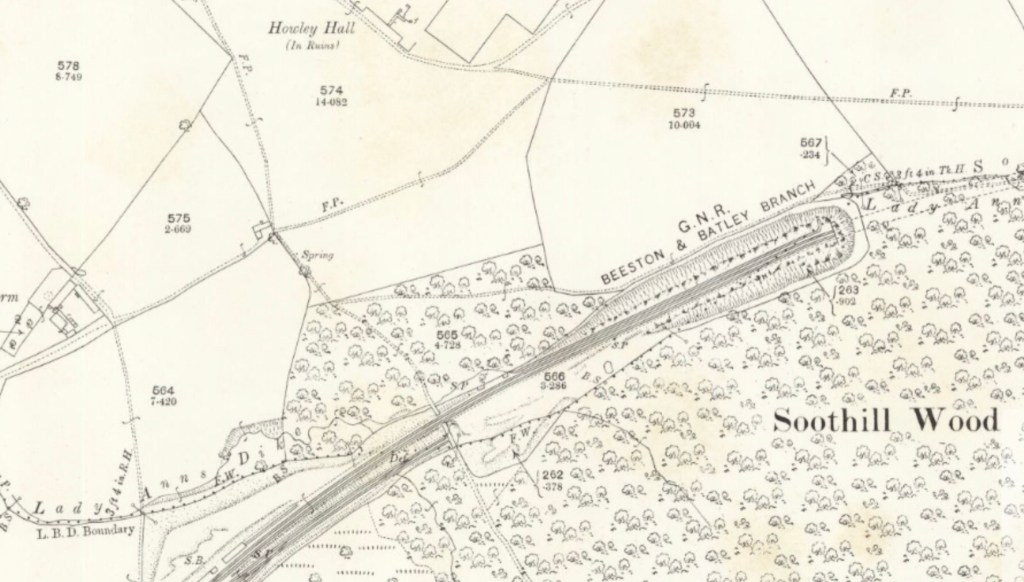
In the late 1880s the area around the well was destroyed when the wood was bisected by the Great Northern Railway Line covering Dewsbury, Batley and onto Leeds via Beeston. This Beeston and Batley branch of the line opened in August 1890, and included a 732-yard long tunnel located near to the well, though the spring still existed for the use of residents living in nearby cottages. Yet the legend lived on.
Ordnance Survey Map showing Howley Hall Ruins and the Beeston/Batley Branch of the Great Northern Railway now running through Soothill Wood destroying Lady Anne’s Well – 25-inch England and Wales, 1841-1952, Yorkshire CCXXXII.12, Surveyed: 1889 to 1892, Published: 1894 – National Library of Scotland, under the Creative Commons Attribution-NonCommercial-ShareAlike 4.0 International (CC-BY-NC-SA) licence
If true, you would expect this extraordinary event to be widely publicised, especially given it involved a member of the aristocracy. It is not. And, as with many other of these tales, it is decidedly vague with facts.
More than that, there are other fatal flaws to this lion-eating (or should that be a pack of wolves) tale. Not least is the one concerning the reputed victim of these voracious beasts. According to Cockayne’s Complete Peerage, Anne Villiers outlived her husband, Sir Thomas Savile. He died in circa 1659 (his will was proved on 8 October 1659). By the time Anne died in around 1670, she was the wife of Richard Pelson. Their daughter, Anne, went on to become the wife of James Tuchet, 5th Earl of Castlehaven. Furthermore, according to Cockayne, the former Anne Villiers died at St Giles’ in the Fields, London – some 200 miles away from any wild animals at the well.19 He certainly makes no reference to her being killed in a tragic accident involving wild animals.
There is also the issue around the type of creature responsible for the supposed mauling. Although there were reports of wolves living wild in Scotland up until the 18th century, it is generally accepted that wolves were extinct in England by the 15th century. As for wild lions, well the wealthy were known to keep them as part of menageries, including at nearby Nostell Priory. But as for an escaped killer lion prowling Soothill Woods in the 17th century, that seems the stuff of fantasy.
Nostell Priory 18th Century Menagerie Keeper’s House and the entrance to the Menagerie Garden, which now only contains a Stone Lion – Photos by Jane Roberts
However, suppose it is not the 1st Earl of Sussex’s wife being referred to? The reports I’ve read either refer to Lady Anne or Lady Anne Sussex. Could it possibly therefore be the subsequent Countess of Sussex? James Savile, the son of Thomas Savile by Anne Villiers (the 1st Countess Sussex), who succeeded his father to the earldom, married Anne Wake. According to Cockayne’s Complete Peerage, after his death in 1671, when the earldom became extinct, she went on to marry Fairfax Overton. Looking at Marriage Bonds and Allegations, this marriage took place in around April 1674.20 According to Cockayne she died in 1680 – and again there is no mention of a dramatic death associated with her. There is also the same issue with the existence of wild animals.
There are other theories too about the well’s miraculous powers. These include rumours that the waters of the well had reputed holy properties even before this supposed incident, with inhabitants of the area visiting it from possibly as far back as pre-Norman times. Some sources point out that it was quite common for wells of pure water in solitary locations throughout the country in the early years of Christianity to be attributed with these holy and healing properties. As a result they became places of pilgrimage, visited and decorated on Holy Days like Ascension Day or, in this instance, Palm Sunday.
Due to the holy nature of the area, it is theorised that in the immediate neighbourhood a small chapel (Fieldkirk) existed in pre-Norman times, before the church in Batley was erected. There is even speculation about an annual Fair, Fieldkirk Fair, taking place either in the churchyard of this small chapel, or adjoining it. Norrison Scatcherd in his 1870s history of Morley mentions villagers returning from the annual Palm Sunday assemblage as saying they had been to Fieldcock Fair – which he quite reasonably suggests is a corruption of this old Fieldkirk Fair.21
This early Christian link, then, may have been the origins of the miraculous colour-changing well, not any killer animals devouring a bathing countess – the latter probably being invented to add spice to attract the Victorian generation. Nevertheless it is an interesting local legend.
As I said in the introduction, this is only a selection of folklore tales and mysterious happenings associated with the area. Many have a common thread: unspecified, or uncertain, dates; discrepancies about the names of central characters, most of whom are local gentry or aristocracy; there is even confused information, for example lions or wolves, orphan or daughter, iron foundry master or knight, ponds or forge furnaces.
But all these tales are part of the area’s history and would have been familiar to our ancestors living here, which is why they are worth preserving.
If you have any similar strange local anecdotes and legends associated with the Batley and Dewsbury areas do let me know.
With thanks to fellow AGRA Associate Joe Saunders who tipped me off about the mystery of the bloody oak leaves tale.
Postscript: Finally a big thank you for the donations already received to keep this website going.
The website has always been free to use, but it does cost me money to operate. In the current difficult economic climate I am considering if I can continue to afford to keep running it as a free resource, especially as I have to balance the research time against work commitments.
If you have enjoyed reading the various pieces, and would like to make a donation towards keeping the website up and running in its current open access format, it would be very much appreciated.
Please click here to be taken to the PayPal donation link. By making a donation you will be helping to keep the website online and freely available for all.
Thank you.
Footnotes: 1. Gaskell, Elizabeth Cleghorn. The Life of CHARLOTTE Bronte, Author Of “Jane Eyre”, “Shirley”, “Villette”, Etc. Smith, Elder & Co, 1857; 2. Birstall St Peter’s parish Register, West Yorkshire Archive Service, Reference: WDP5/1/1/1; 3. Heywood, Oliver, and J. Horsfall Turner. The Rev. Oliver Heywood, B.A., 1630-1702, His AUTOBIOGRAPHY, Diaries, Anecdote and Event Books: Illustrating the General and Family History of Yorkshire and Lancashire. 2. Vol. 2. Brighouse England: A.B. Bayes, 1882; 4. Heywood, Oliver, Thomas Dickenson, and J. Horsfall Turner. The Nonconformist REGISTER, Of Baptisms, Marriages, and Deaths: 1644-1702, 1702-1752, Generally Known as the Northowram Or Coley Register, but Comprehending Numerous Notices of Puritans And Anti-Puritans in Yorkshire, Lancashire, Cheshire, London, &c., with Lists OF Popish RECUSANTS, QUAKERS, & C. Brighouse: J.S. Jowett, printer ‘News Office’, 1881; 5. Mirabilis Annus SECUNDUS, Or, the Second Year of Prodigies: Being a True and Impartial Collection of Many Strange Signes AND Apparitions, Which Have This Last Year Been Seen in the Heavens, and in the Earth, and in the Waters: Together with Many Remarkable Accidents and Judgements BEFALLING Divers Persons, According to the Most Exact Information That Could Be Procured from the Best Hands, and Now Published as a Warning to All MEN Speedily to Repent, and to Prepare to Meet the Lord, Who Gives Us These Signs of His Coming, 1662; 6.Yorkshire Folk-Lore Journal: With Notes Comical and Dialetic .. Bingley: Printed for the editor by T. Harrison, 1888; 7. Batley News, 24 May 1902; 8. Yorkshire Folk-Lore Journal: With Notes Comical and Dialetic .. Bingley: Printed for the editor by T. Harrison, 1888; 9. Batley Reporter and Guardian, 29 March 1901; 10. Ibid; 11. Yorkshire Folk-Lore Journal: With Notes Comical and Dialetic .. Bingley: Printed for the editor by T. Harrison, 1888; 12. Greenwood’s History, as quoted in the Dewsbury Reporter, 31 January 1880; 13. Yorkshire Post, 23 December 2015; 14. Dewsbury Reporter, 31 January 1880; 15. Parish Register, St Mary’s, Sunbury on Thames, London Metropolitan Archives, Ref: DRO/007/A/01/001; 16. Batley Reporter and Guardian, 3 July 1880; 17. Gaskell, Elizabeth Cleghorn. The Life of CHARLOTTE Bronte, Author Of “Jane Eyre”, “Shirley”, “Villette”, Etc. Smith, Elder & Co, 1857; 18. Dewsbury Chronicle and West Riding Advertiser, 9 July 1887 19. Cokayne, George E., ed. The Complete Peerage of England, Scotland, Ireland, Great Britain and the United Kingdom: EXTANT, Extinct or Dormant. By G.E.C. 7. Vol. 7. London: George Bell & Sons, 1896; 20. Fairfax Overton and Ann Conntesse Marriage Allegation, Parish – St Giles in the Field, London Metropolitan Archives, Ref: Ms 10091/28 21. Scatcherd, Norrison Cavendish. The History OF MORLEY, in the West Riding Of Yorkshire: Including a Particular Account of Its Old Chapel. Morley: S. Stead, 1874.
Other Sources: • Baker, Margaret. Discovering Christmas Customs and Folklore: A Guide to Seasonal Rites. Princes Risborough, Bucks, UK: Shire Publications, 1992; • The Batley News and Birstall Guardian, 22 August 1885; • Batley Reporter and Guardian, 2 August 1890; • Dewsbury Chronicle and West Riding Advertiser, 10 July 1886; • Green, Martin, and Martin Green. Curious Customs And Festivals: A Guide to Local Customs and Festivals throughout England and Wales. Newbury: Countryside Books, 2001; • The History of Wolves in the UK, https://wolves.live/the-history-of-wolves-in-the-uk/;
This is the latest update of the pages relating to my Batley St Mary’s one-place study, the details of which I announced here.
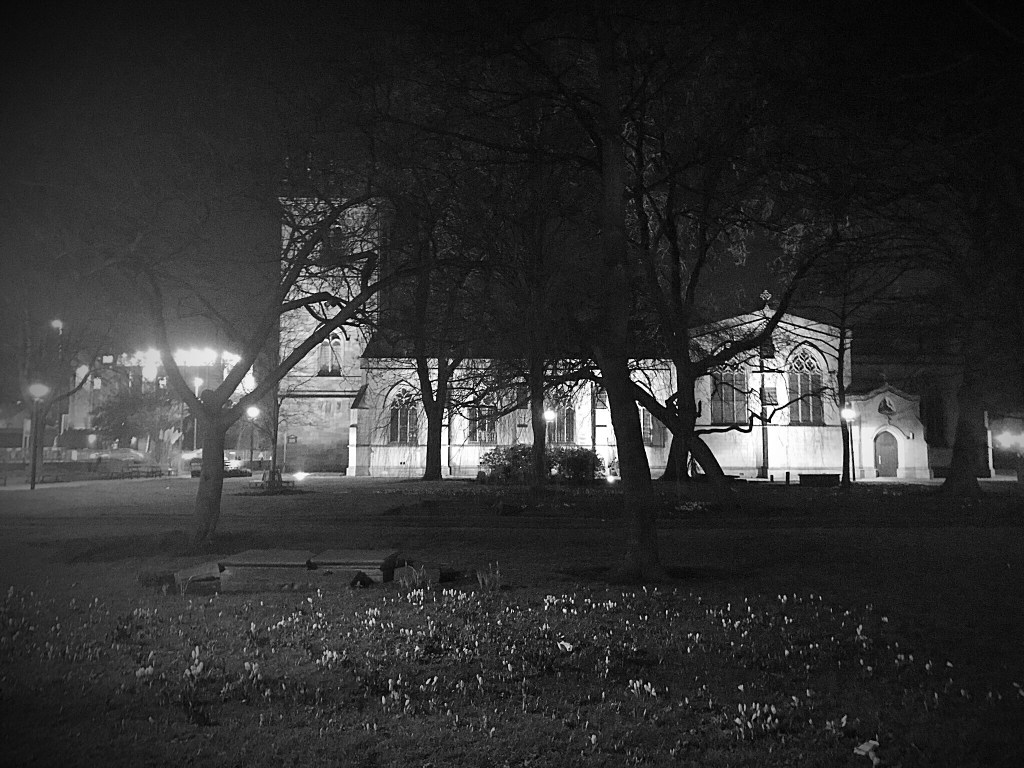
St Mary of the Angels Church, Batley
In the past month I have added eight new pages, including a major news announcement for September. This is the extension of the study to include those from the parish who died in the Second World War.
Although the church has no War Memorial commemorating parishioners who died in World War Two, with the help of Batley’s Roll of Honour I am seeking to identify them and publish mini-biographies as part of this one-place study. These new pages include the background to the Second World War element of the study; a list of those identified to date; and the first of these biographies, Michael Flatley.
Turning to World War One, there are four weekly newspaper summary pages for September 1915. I have accordingly updated the surname index to these During This Week newspaper pieces, so you can easily identify newspaper snippets relevant to your family.
The biography of Thomas McNamara has been updated, with additional information.
More men who served and survived have been identified. I have updated that page accordingly. This month I have published a biography for one of these men, Michael Rush. He survived both the 2nd Boer War and the First World War. The biographies of other men in this section will follow in due course.
Below is the full list of pages to date. I have annotated the *NEW* ones, plus the *UPDATED* pages, so you can easily pick these out. Click on the link and it will take you straight to the relevant page.
A cemetery can tell you so much about a town’s past. It is a physical representation of the lives of many of its inhabitants – years, decades and even centuries after they departed its soil. Headstones provide a snapshot of their lives. The uniform layout of burial registers record the passing of the rich, the less well-off and the impoverished. And combined, their lives and deaths chart the history and development of a town over time.
Batley cemetery, and its register, is no exception. The first burial recorded in the register’s consecrated (Church of England) portion of the cemetery is on 19 January 1867 for nine-week-old William Henry Stockwell; in the unconsecrated section it is 25-year-old Mary Fox, on 10 November 1866. She, therefore, is the first registered burial in the cemetery. In this post I will focus on one grave in the consecrated section.
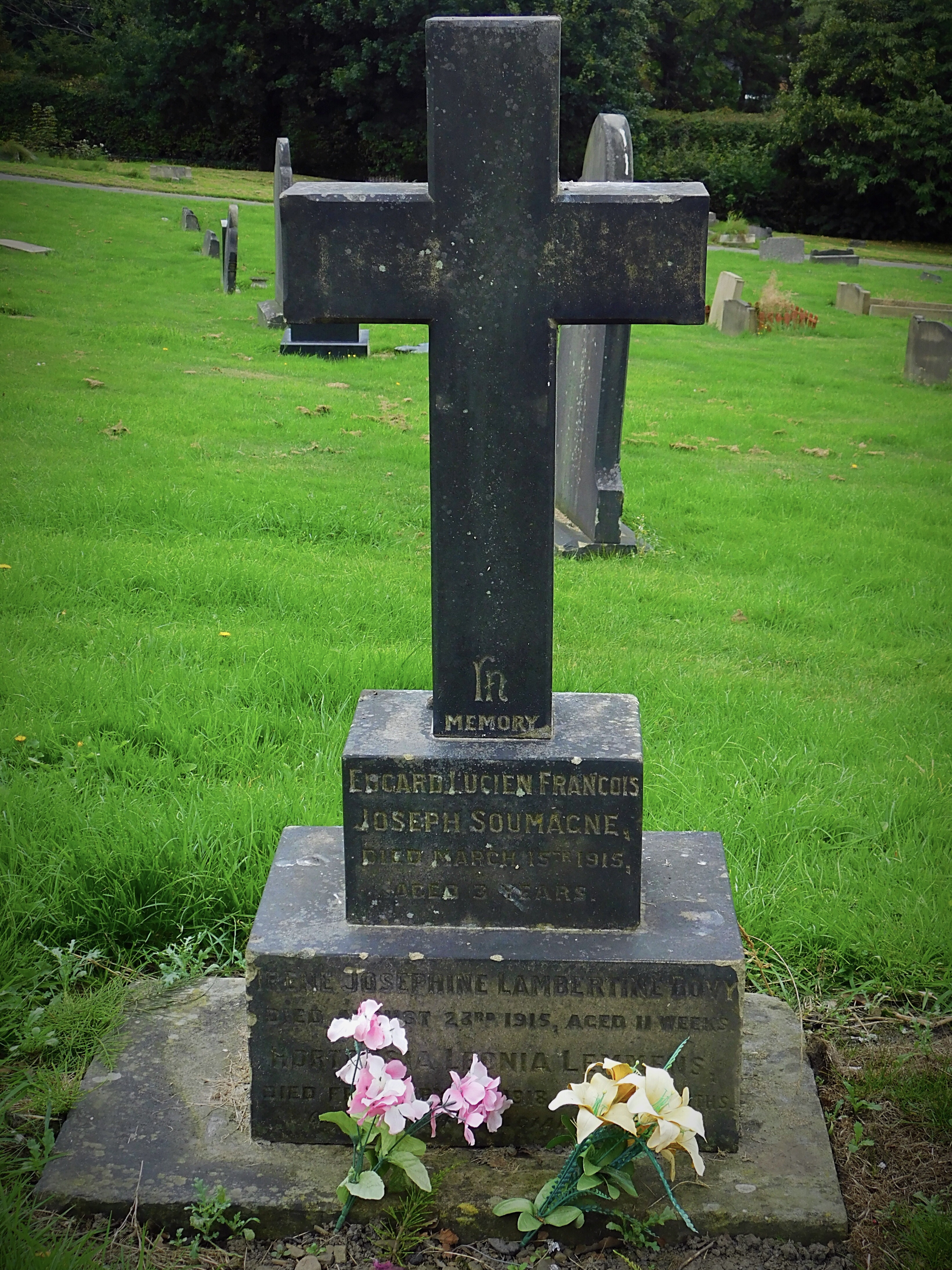
This grave has a headstone. It marks the loss of three young lives. The children are all from different families. One was buried in accordance with the rites of the Church of England. The other two were Catholic burials. All have unusual names for the area. Particularly striking is how, over a century after the occupants of the grave were buried, artificial flowers are still being placed at the foot of the cross.
So how did these three children come to be buried in Batley cemetery?
Flowers at the foot of children’s grave – one photo taken in August 2019, the other in August 2021 – Photos by Jane Roberts
Their story starts in August 1914, the outbreak of the Great War and the German invasion of Belgium. These children were refugees, either driven directly from their home by war, or born in this country subsequently to parents forced to flee Belgium. Many came to Great Britain, and towns countrywide welcomed them. By the end of 1914 an estimated 110,000 Belgian refugees were in the country.1
The first Belgium refugees officially arrived in Batley on 17 October. A mixture of single people and family groups, they numbered 25 in total.2 They were accommodated at Shaftesbury House, Upper Batley. This was the residence of the late Alderman J. J. Parker, an ex-Mayor of the Borough. It was fitted out and furnished free of charge by Batley residents. The refugees were also provided with free medical care, and Batley Corporation waived any rates on the property.
In those first months Batley people showed an intense interest in the new arrivals, and the newspapers contained regular updates about the town’s Belgian guests. There were even set visiting days, so locals could turn up to show sympathy and solidarity with them. The generosity of the Batley public continued, with monetary donations and increasing offers of accommodation resulting in the ability to house even more Belgian refugees.
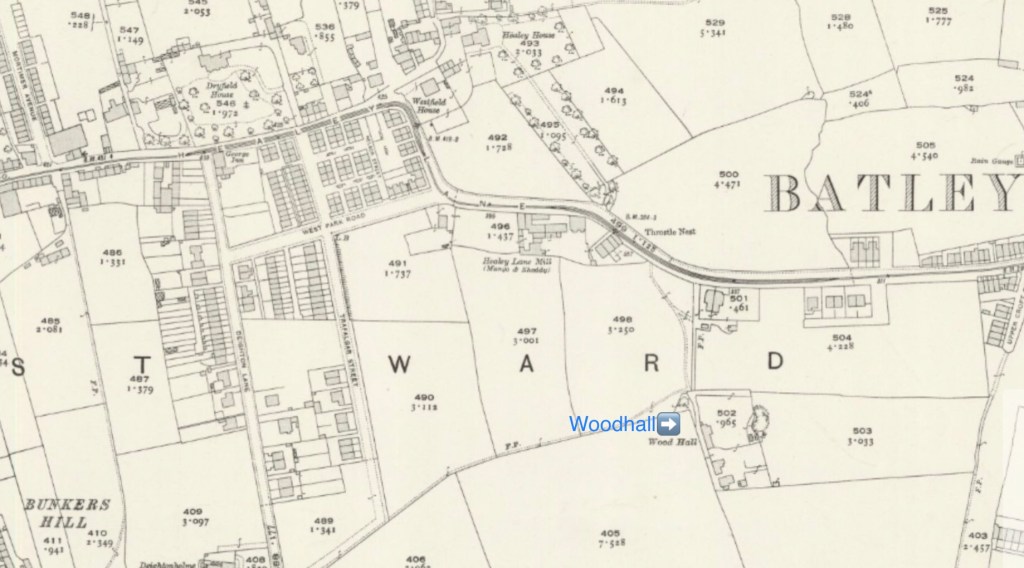
Eighteen more arrived on 21 November. Nine went to Woodhall, in a house provided by Henry Jessop. The others were housed in properties on Byron Street, Kelvin Grove and Primrose Hill. The continuing swell of housing offers meant that by February 1915 almost 70 Belgian refugees were based in Batley.3
Their new homes were supplied by a variety of locals. These included Staff Nurse Alice Musto, who offered up her home on the Warwick Road corner of Taylor Street whilst she was away serving with the Territorial Nursing Force.4 As experience built up, it was found that these separate family houses were best for homing the refugees. Though the larger multi-occupancy group houses still had an important role in that they helped the newly-arrived, providing company and support for them until they became familiar with the area, people and language.
Support facilities for the displaced foreigners grew. A special class for Belgian children was established at St Paulinus RC School in Dewsbury. Attended by 15 scholars, their Belgian teacher was Miss Callens, who herself had arrived in the country only recently. The Tramway Company provided free travel for those children living a distance from school. Meals were provided free by members of the St Paulinus congregation.5
English language classes were provided for adults. Entertainment was also laid on. Christmas parties and gifts were supplied. The area even had Catholic priests who themselves were refugees from Belgium. They were attached to the local churches to minister to the refugee flock. These included Father Julien Kestelyn at Birstall St Patrick’s, subsequently posted to St Mary’s; and Father Paul van de Pitte, initially at St Joseph’s, Batley Carr.
In regards to religious observance, one amusing incident occurred soon after the refugees’ arrival. An offer from a Batley resident to take a family group to church was enthusiastically accepted. The lady, not a Catholic, ascertained the times of Sunday mass at St Mary’s, based on the assumption that all from Belgium were Catholic. She even accompanied them to church, neglecting her own religious observances that day. Except it transpired after mass that the Belgian family were actually Protestants! It turned out the initial batch of Woodhall refugees were non-Catholics. So a girl living there had provision made for her to attend Staincliffe Church school.
Batley townsfolk continued to make regular contributions to the Belgian Relief Fund. For example, by June 1915 St Mary’s RC Church had made 17 separate donations to the fund following church collections.6
Tensions did exist though, for instance around the cost of maintaining these refugees. In January 1915, whilst dismissing public murmurings about them being treated too well, it was agreed that care was needed not to spoil them. By the beginning of October 1915, when the mutual decision was made that the refugees were to feed and clothe themselves wherever the man’s work permitted it, the town’s Belgian Refugees Fund donations stood at £914 5s.7 In simple purchasing power terms that equates to £74,900 at today’s values.8 Support remained though. For example, housing, coal and lighting would continue to be provided free of charge.
On 14 December 1914 a particularly unsavoury incident occurred. At 6.15am 19-year-old Woodhall resident Jean Joseph Soumagne was attacked going to work at J Blackburn and Co’s mill. Whilst making his way down the footpath to Healey Lane, a man sprang from behind a wall, stabbed him in the cheek and right thigh, then threw him down in the mud, before making his escape under cover of darkness. There is no mention of Joseph being targeted because of his nationality, but the implication is there, especially because nothing was taken.9 Jean Joseph subsequently applied to join the Belgian Army.10
And it was the youngest Soumagne child who was the first young refugee to be buried in the grave in Batley cemetery, in a plot purchased by the local Belgian Relief Committee. Forty-year-old Antwerp nickel-plater Lucien Soumagne, his 43-year-old wife Marie, and children Jean Joseph (19), Lucien (16) and Edgard Lucien (3) were amongst the original nine Woodhall residents who arrived at the house in November 1914.11 Mr and Mrs Soumagne had prominent roles within the Batley Belgian community, liaising with authorities and seemingly acting as spokespersons in particular for the Woodhall refugees. The family were non-Catholics, which may partly explain why this burial plot was purchased in the Consecrated Church of England portion of Batley cemetery.
Edgard died on 15 March 1915 as a result of diphtheria. Thankfully rare in this country now due to childhood vaccination, this highly-infectious, primarily respiratory-spread disease was a killer back in 1915. The sore throat, high temperature, headache and nausea rapidly led to difficulty in breathing and swallowing. It could also damage the heart, kidneys and liver, and affect the skin. The disease reached epidemic proportions in Batley in 1915. Ninety six cases were notified that year, the highest proportion since 1893. A particularly bad outbreak occurred in the last quarter of 1915, centred around youngsters over 14 who had left school. Almost all of these were in the Cobden Street area of town, and connected with Irish Roman Catholics. Because of its infectious nature, 87 of the year’s 96 sufferers were admitted to hospital.12 It was here, at the Oakwell Isolation Hospital, that Edgard died – just one of 18 diphtheria deaths in Batley that year.
He was interred in Batley cemetery on 18 March, in a service conducted amidst fleeting snow, by the Batley Parish Church curate, Rev. J. S. Walker. In addition to his parents, brothers, and local people closely involved with the refugees, his paternal aunt – herself a refugee – travelled up from Bedfordshire.
The next child to be laid to rest in this plot was an 11-week-old baby girl, Irene Josephine Lambertine Bovy. Her birth was registered in the Kings Norton district of Birmingham, the daughter of Mr and Mrs Phillipe D. J. Bovy. The family only arrived in Batley the month prior to Irene’s death, to live with relatives at Woodhall, which now included Catholics amongst its residents. She passed away on the morning of 23 September 1915. Like Edgard, she too died in hospital as a result of another childhood killer disease, whooping cough. All 16 deaths recorded in 1915 in Batley Borough for this disease related to children under the age of five.13 Again this is another disease today successfully combatted by childhood vaccination. Irene’s burial took place on 25 September, conducted by Catholic priest Paul van de Pitte.
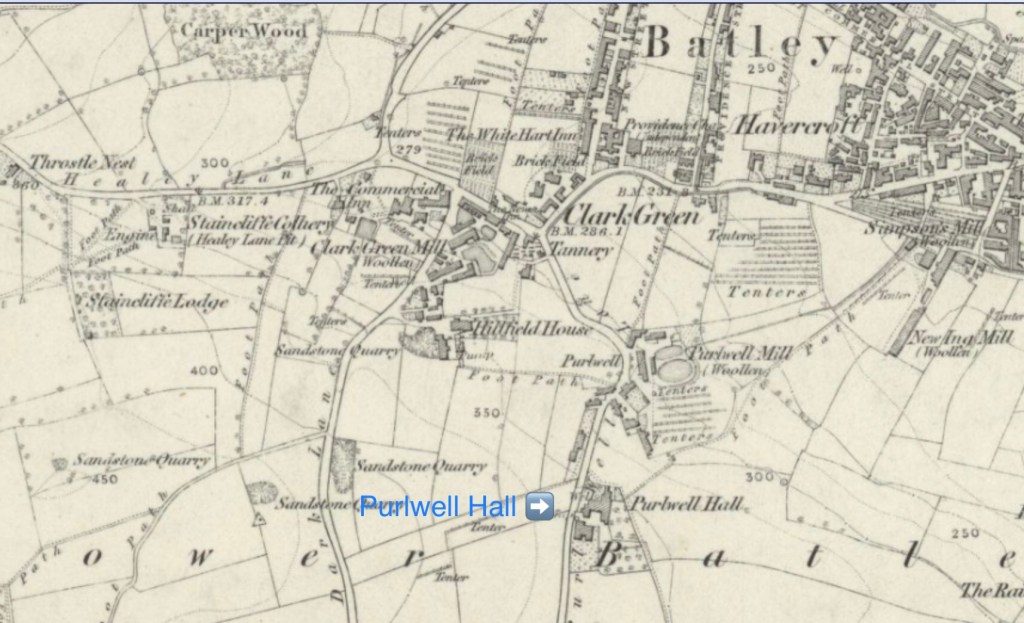
The final child buried here is the six-month old daughter of Belgian soldier Leon Lemmens. Hortensia Leoni Lemmens’ birth was registered in Dewsbury in 1917. Latterly she and her mother had been staying at Rock Farm, Upper Batley, with another family of Belgian refugees. Prior to that they had been supported at Osborne Terrace (see first map) by members of Batley Conservative Club, who continued this support in paying for the child’s burial expenses. Hortensia died on the 2 February 1918, and her funeral – conducted by Batley St Mary’s Catholic priest Father Shea – took place on the 5 February.
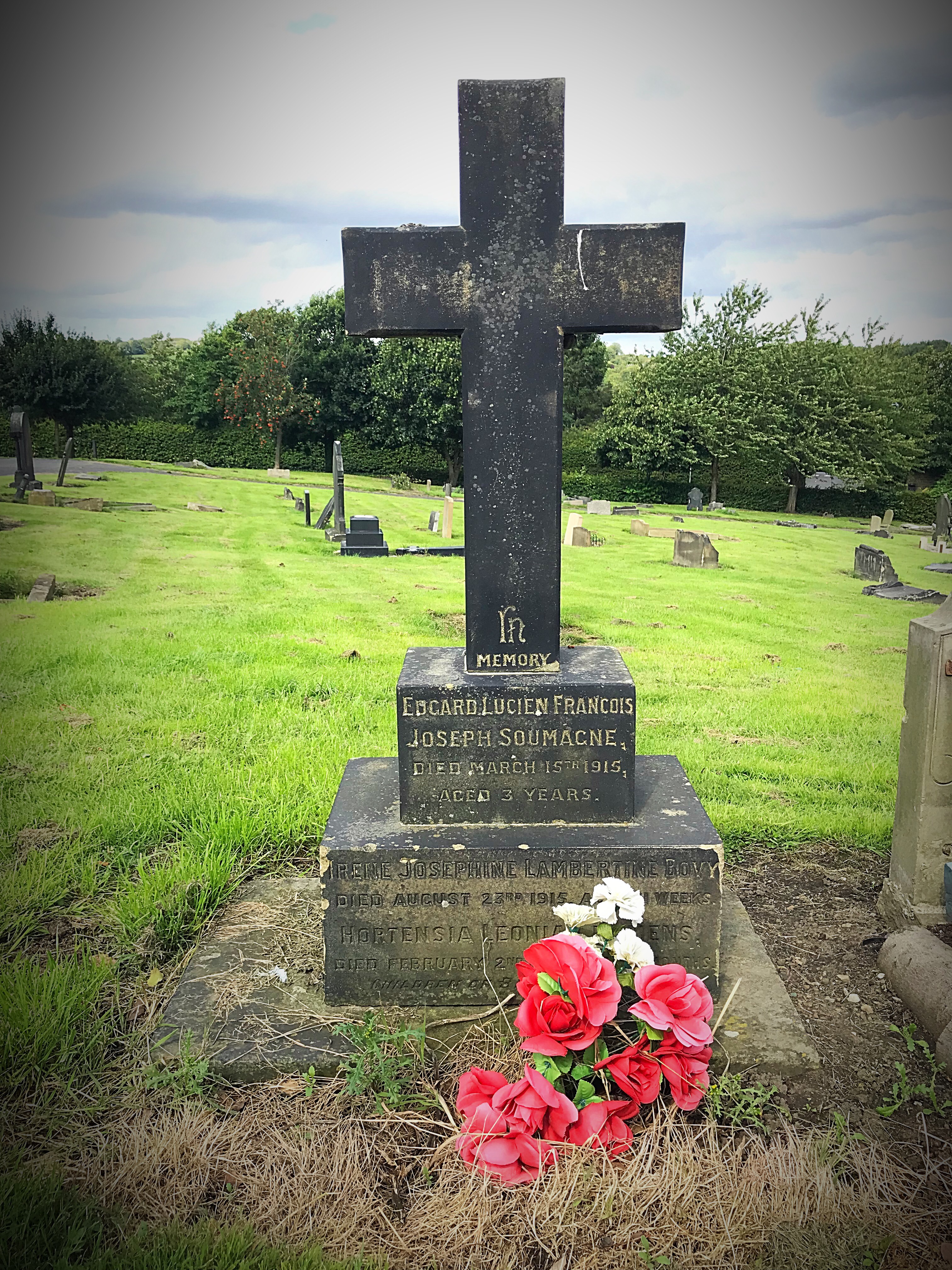
The headstone which marks the grave notes they are the children of Belgian refugees. It reads:
IN MEMORY EDGARD LUCIEN FRANCOIS JOSEPH SOUMAGNE, DIED MARCH 15TH 1915, AGED 3 YEARS. IRENE JOSEPHINE LAMBERTINE BOVY, DIED AUGUST 23RD 1915, AGED 11 WEEKS. HORTENSIA LEONI LEMMENS DIED FEBRUARY 2ND 1918, AGED 6 MONTHS. CHILDREN OF BELGIAN REFUGEES
Close-up of the inscription – Photo by Jane Roberts
And, curiously, even a century after their deaths, someone is remembering their loss by regularly placing the artificial flowers on their grave.
Footnotes: 1. Batley News, 2 January 1915; 2. Batley News, 24 October 1914; 3. Batley News, 6 February 1915; 4. Batley News, 30 January 1915; 5. Batley News, 28 November 1915; 6. Batley News, 12 June 1915; 7. Batley News, 2 October 1915; 8. Measuring Worth website, https://www.measuringworth.com/index.php; 9. Batley News, 19 December 1915; 10. Batley News, 16 January 1915; 11. Batley News, 28 November 1915; 12. Pearce, G H. Borough of Batley Annual Report of the Medical Officer of Health For the Year 1915. JS Newsome, Batley, 1916; and 13. Ibid.
Other Sources: • Batley Cemetery Burial Registers; • Batley News, 5 December 1914, 9 January 1915, 20 March 1915, 25 September 1915, 9 October 1915, and 9 February 1918; • GRO Indexes; and • National Library of Scotland website
This is the latest update of the pages relating to my Batley St Mary’s one-place study, the details of which I announced here.
In the past month I have added seven new pages. These include four weekly newspaper summary pages. I have accordingly updated the surname index to these During This Week newspaper pieces, so you can easily identify newspaper snippets relevant to your family.
There is one new War Memorial biography – that of John Brooks. I have also updated the biography of Herbert Booth to include a new photograph of a Batley street, dating from around 1910.
I’ve also written the first post in the occupations and employment category, describing the job of a rag grinder.
Patent Rag Grinding Machine, The History and Antiquities of Morley, in the West Riding of the County of York, 1876 – out of copyright
And there is the first post in the families section, entitled A Death in the Church.
Finally for this month, more men who served and survived have been identified. I have also updated that page. The biographies of these men will follow in due course.
Below is the full list of pages to date. I have annotated the *NEW* ones, plus the *UPDATED* pages, so you can easily pick these out. Click on the link and it will take you straight to the relevant page.
This is the latest update of the pages relating to my Batley St Mary’s one-place study, the details of which I announced here.
St Mary of the Angels Church – Photo by Jane Roberts
In the past month I have added six new pages. These include five weekly newspaper summary pages. I have accordingly updated the surname index to these During This Week newspaper pieces, so you can easily identify newspaper snippets relevant to your family.
There is one new War Memorial biography – that of Herbert Booth.
Finally for this month, more men who served and survived have been identified. I have also updated that page. The biographies of these men will follow in due course.
Below is the full list of pages to date. I have annotated the *NEW* ones, plus the *UPDATED* page, so you can easily pick these out. Click on the link and it will take you straight to the relevant page.
This is the latest update of the pages relating to my Batley St Mary’s one-place study, the details of which I announced here.
St Mary of the Angels Church – Photo by Jane Roberts
In the past month I have added seven new pages. These include four weekly newspaper summary pages. I have accordingly updated the surname index to these During This Week newspaper pieces, so you can easily identify newspaper snippets relevant to your family.
There are also two new War Memorial biographies – those of Martin Carney and Michael Groark (also known as Rourke).
In addition, more men who served and survived have been identified. I have also updated that page. The biographies of these men will follow in due course.
Finally, for June’s additions, there is a brand new post about the health of Batley school children in 1914, with a focus on those at St Mary’s. This will be the first in a series looking a population, health, fertility and mortality.
Below is the full list of pages to date. I have annotated the *NEW* ones, plus the *UPDATED* page, so you can easily pick these out. Click on the link and it will take you straight to the relevant page.
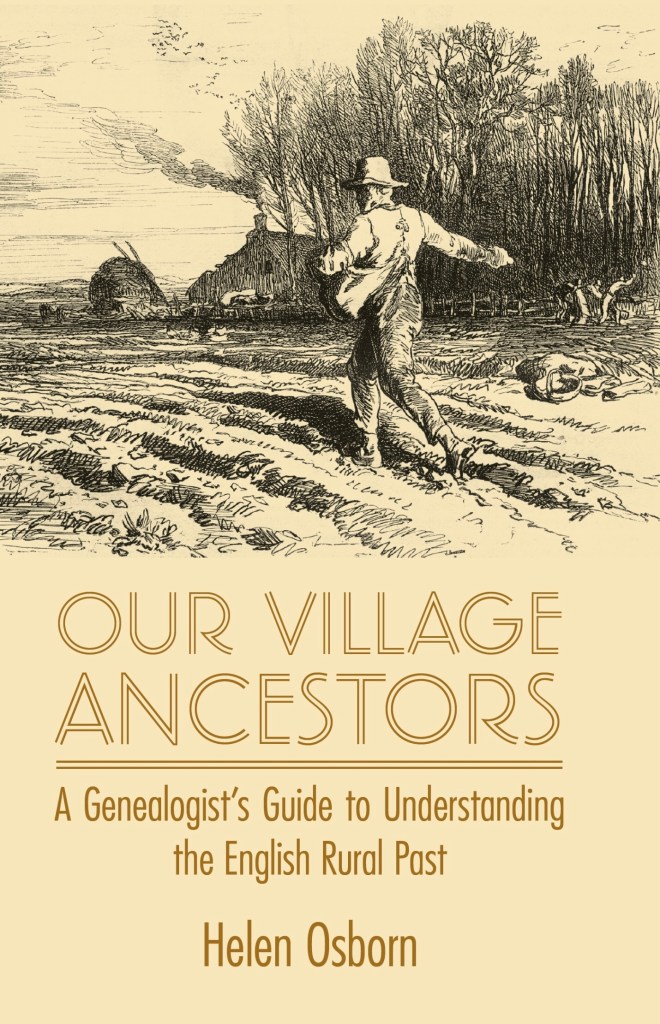
Helen Osborn’s Genealogy: Essential Research Methods is a key book for many family historians. Her latest book, Our Village Ancestors: A Genealogist’s Guide to Understanding England’s Rural Past, is certain to form another important element in the family history researcher’s toolkit.
Focussing on village life from the mid-sixteenth to the turn of the twentieth century, the book is aimed at those who want to fill in the details of the lives of their ancestors, and want to open up – and make best use of – the wealth of records out there to achieve this. Even those at an early stage of their family history journey will benefit from the information it contains.
Placing these records in their geographic and historic context is a theme which runs throughout the book, because as the book explains:
…in order to gather truly the evidence that we need to reconstruct families into genealogical trees, we should understand both the historical and local context as well as have a good understanding of the documents used.
Farming communities and countryside life is integral to the research of most family historians, with up until the nineteenth century the majority of people living a rural existence. As the book says:
Almost everybody with English roots will have an ancestor who lived in a village…
The book covers records applicable to a full range of village ancestors from the humble agricultural labourer to farmer ancestors, those in supporting village industries and crafts, right through to the more affluent landowners.
It contains eight chapters covering a multiplicity of these genealogical records, all of which combine to help build a picture of our village ancestors’ lives. The chapters are:
The Rural Past;
Parish and Family;
The Land and the Farmer;
The Church and the Tithe;
Supporting the Poor;
Work and School in the Countryside;
The Whole Community: Lists of Villagers and the Victorian Census; and
Leaving the Village.
There is also an appendix containing a handy list of dates of interest.
Each chapter introduces a series of key records, explaining the background to their creation, the information they contain, any particular issues or pitfalls associated with them, and how to interpret and locate them. This information is interspersed with examples of these records from across the country. Accompanying this information are fascinating facts, and tips, which aid family historians and provide food for thought in applying to research. There are also pointers as to how indirect evidence can be extracted from records, even when ancestors are not specifically mentioned. The individual chapters conclude with a Starting Points for the Researcher section which neatly summarises the records discussed in the preceding pages.
Through combining information from these sources, pictures of the lives of even quite ordinary ancestors can be built up. The book includes examples of such record-combining to reconstruct a person’s life, including a 19th century agricultural labourer and the harrowing story of the Eaves family.
The book is packed with information, and there are far too many records and information sources for me to mention. But they include parish registers and how to unpick information from them; manorial records; enclosure details; probate inventories; tithe maps and apportionments; glebe terriers; churchwardens’ accounts; vestry minutes; Quarter Sessions; various records relating to the old and new Poor Law; hearth tax; rate books; newspapers; and early censuses. Note, if you are looking for information about records created by Victorian national administrations, such as civil registration from 1837, these are not covered.
In addition to the records, I found the individual topics covered fascinating. From the social status of the farmer, the farm and its work, alongside wages and conditions, to tips on matching tithe maps with older records and using the early census to discover whole communities. And how many of us have ancestors who appear and disappear? The Leaving the Village chapter is full of strategies and tips for filling these gaps.
It is an immensely readable book (I completed it over a weekend). It is also one which will act as a reference, and refresher, to a series of genealogically valuable records for anyone researching their family history, running a one-place or one-name study, or with an interest in local history generally. And, although the focus is on village life, there is a cross-over in terms of many records to our more urban ancestors.
In conclusion, this is a worthy addition to any family historian’s bookshelf.
Our Village Ancestors: A Genealogist’s Guide to Understanding England’s Rural Past – Helen Osborn Publication date: 28 June 2021 Publisher: Robert Hale ISBN 9780719814167 Hardback £15.99


















 Past To Present Genealogy