A quick heads up for an online talk I will be giving via the Society of Genealogists on 25 April 2026. Don’t switch off at this point if you’re not a member – it is open to anyone.
If you follow this blog, or any of my online social media accounts, you will know I live in an area packed with Brontë history, and I’m a frequent visitor to Haworth and other Brontë linked sites.
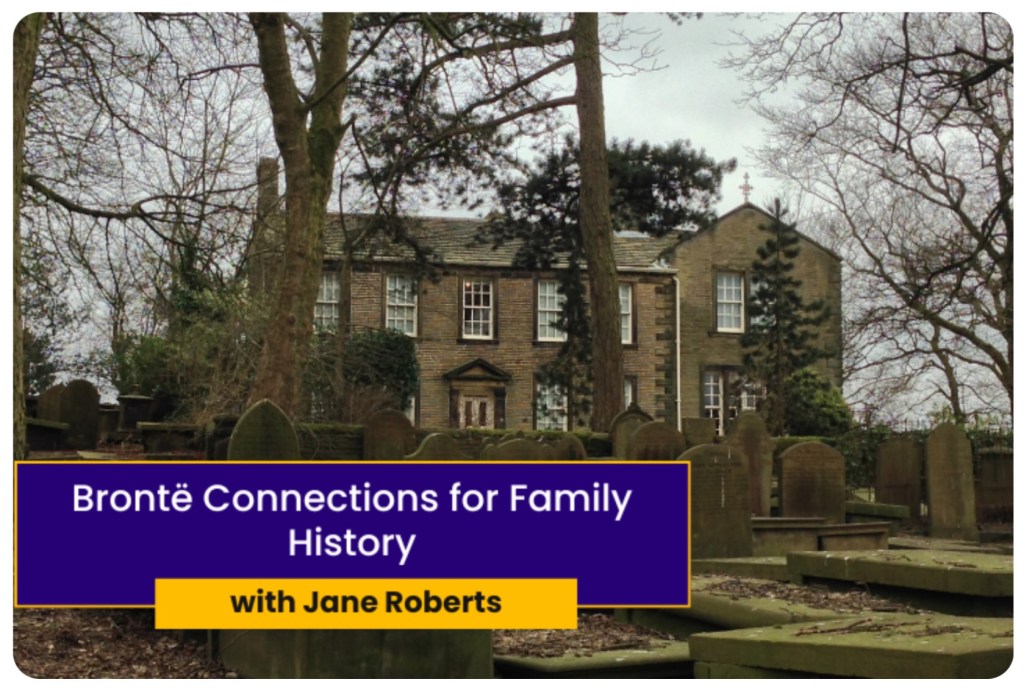
Well, I’m delighted that I’ve been asked to give an online talk all about exploring Brontë Connections for Family History.
Here’s the blurb about it, to give you some idea of what I’ll be covering:
The latest film adaptation of Emily Brontë’s dark, Gothic literary classic, Wuthering Heights, has triggered a fresh wave of Brontë-mania. A new generation of tourists are descending on the village of Haworth, keen to find out more about these world-famous sisters, and wanting to carve out their own slice of Brontë magic. But family historians can also channel into the Brontë family’s lives and literature, seeking their own Brontë connections and research inspiration. Jane’s talk will give you some ideas of how, and where to look.
I’d love to see you there, as I’m immensely proud of where I come from, my area’s Brontë links, all things Brontë, and I might even let you in on my quest to find my links to this amazing literary family!
You never know, as a result you may have ideas and inspiration to see how your family history might be connected.
If you are looking for a family or local history speaker during 2026 and 2027, here are the details of my current and upcoming talks:
Charles the Pigeon and a Yorkshire Spy.
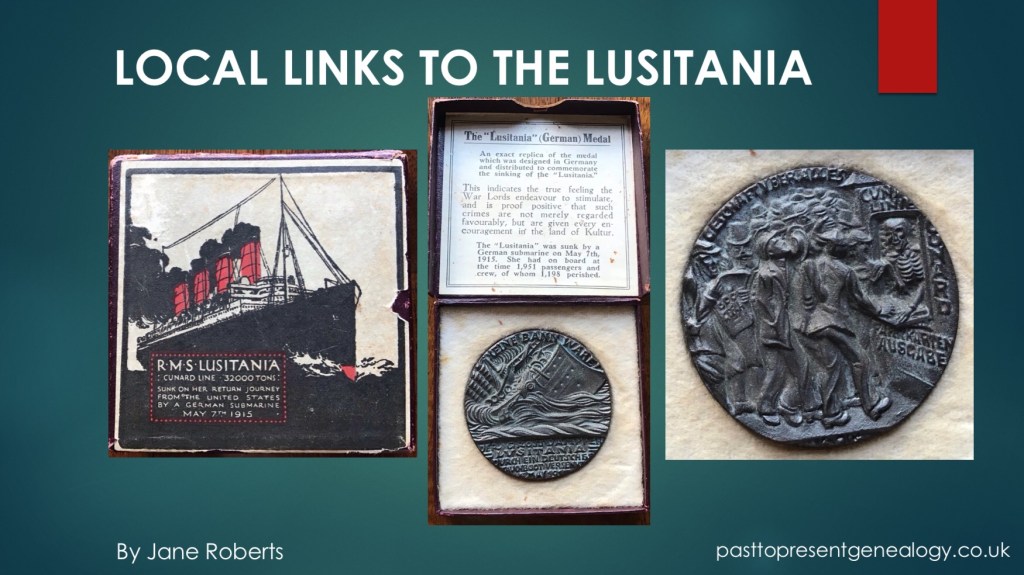
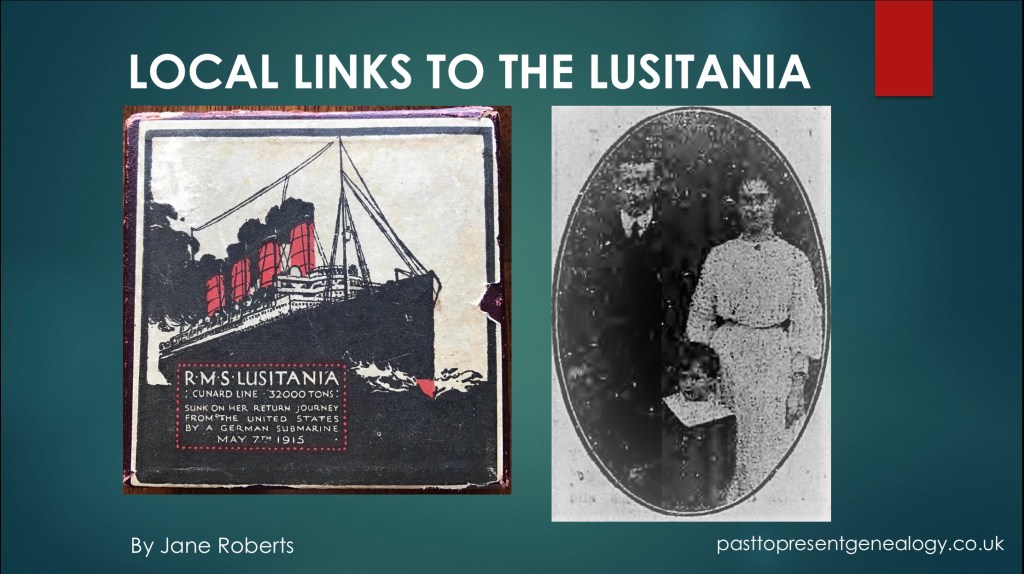
Local Links to the Lusitania.
A Site with a Deadly History – The White Lee Explosion of 1914. UPDATED FOR 2026 – available from September 2026.
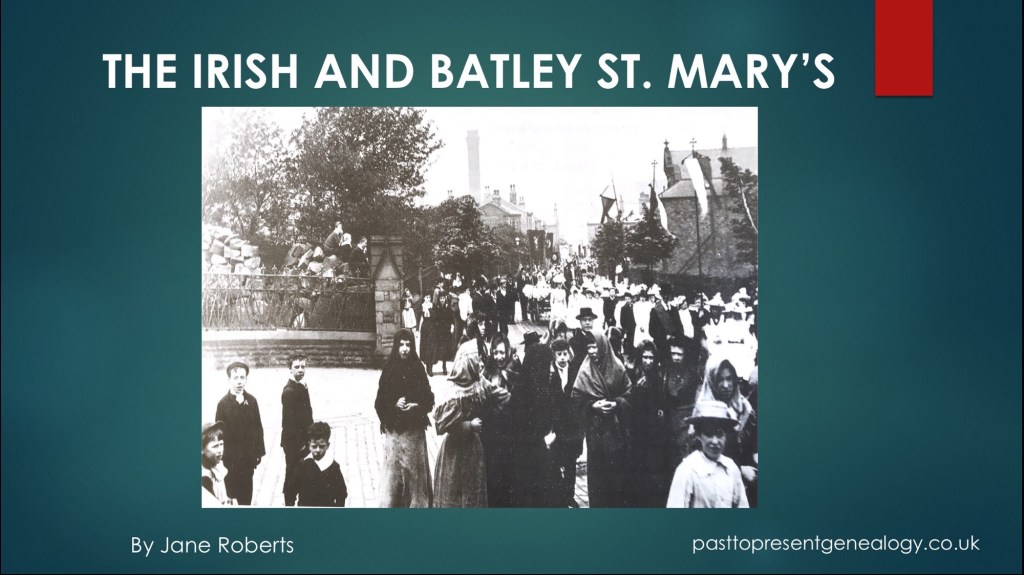
The Early History of the Irish and Batley St. Mary of the Angels. This is the first of three talks about my one-place study.
The Batley St. Mary of the Angels War Memorial – the Sacrifice of a Yorkshire Catholic Parish in the First World War. NEW FOR 2026 – available from October 2026, this is my second one-place study talk.
The People of the Parish – Parishioner’s Tales from my Batley St. Mary of the Angels One-Place Study. NEW FOR 2026 – available from August 2026, this is my third one-place study themed talk.
Tips for Researching Your Great War Ancestors/First World War Rugby League Players.
How to Research Your Family Tree.
Census Sense and Census Oddities. NEW FOR 2026 – available from November 2026.
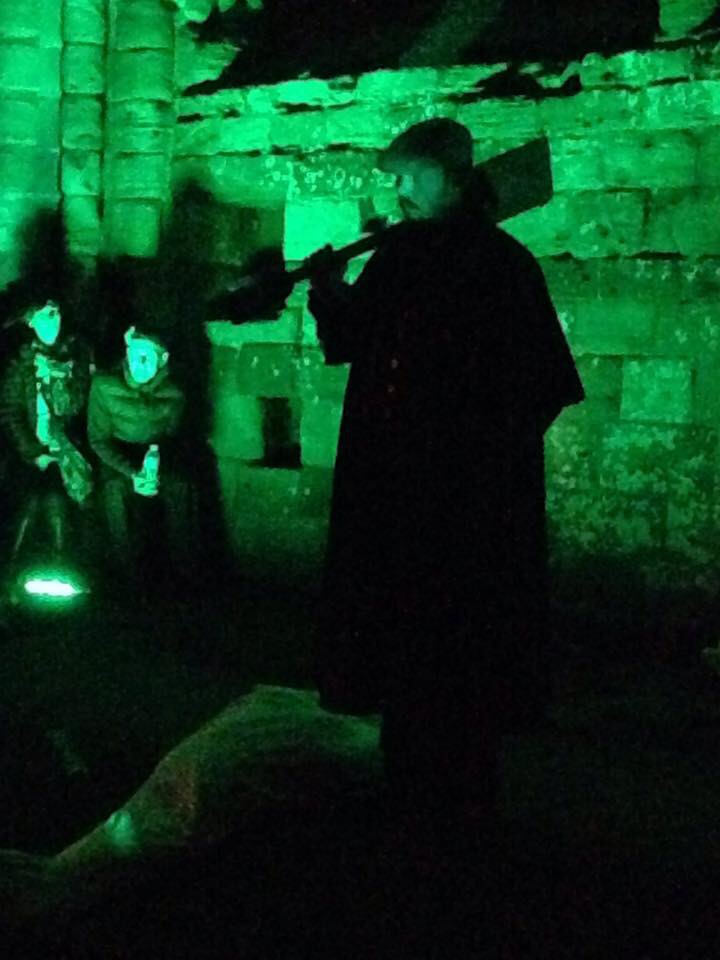
From Body Snatched to Brush-Makers and Child-Stealing Chimney Sweeps. Tales from my Family History. NEW FOR 2027 – available from March 2027.
In terms of regions covered, the first three talks have a distinctly Yorkshire flavour. My three St. Mary’s one-place study based talks look at various aspects of my Batley study, intertwining the Irish and Yorkshire character of the parish. The seventh talk is tailored around rugby league players killed in the First World War from your locality. The eighth talk is about family tree research in England and Wales generally, and can be geared around research tips for Yorkshire ancestors. The ninth talk focuses in detail on one specific family history record set, the census of England and Wales. The tenth talk will be predominantly Yorkshire-based, but covers other areas in the north of England too.
All the talks run to 45 minutes, with time for questions afterwards. However if you require a shorter or longer talk, these generally can be accommodated depending on topic.
More details about each talk are below. But if you need more information, including around costs and to enquire about making a booking, please contact me at: pasttopresentgenealogy@btinternet.com
Charles the Pigeon and a Yorkshire Spy.
Charles the Pigeon and a Yorkshire Spy is the story of an unsung Yorkshire hero, living behind enemy lines and carrying out works of espionage and sabotage during World War One. His adopted pigeon Charles played an important part in these wartime exploits. Their daring deeds are more like a boy’s adventure story than real life. But this is a true tale of wartime courage, and one which deserves wider telling.
Local Links to the Lusitania focuses on people with Yorkshire connections on board the Cunard liner, torpedoed and sunk off the Irish coast on 7 May 1915. The sinking did not affect only the rich and famous. Many ordinary Yorkshire people, including from the Heavy Woollen District and areas more generally around the former West Riding, were involved. This talk provides context to the sinking and explores some of their stories.
There is a possibility this talk can be tailored to your local area.
A Site with a Deadly History – The White Lee Explosion of 1914.
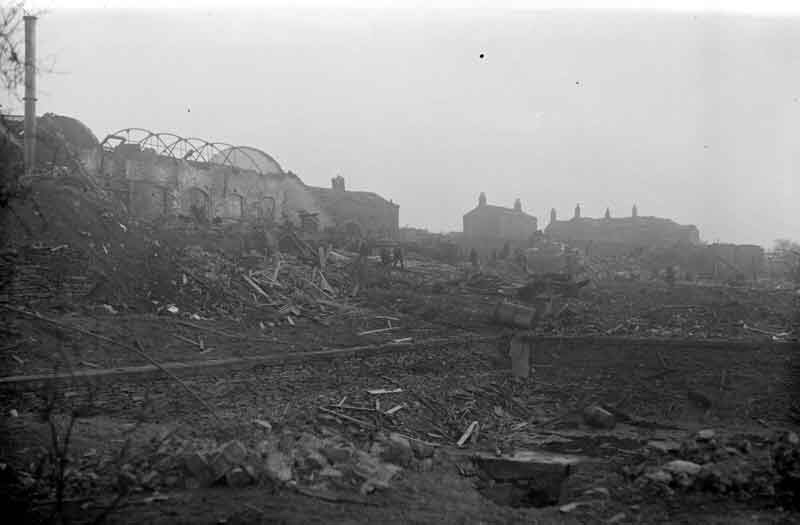
The Home Front: the White Lee Explosion of 1914 is a talk based around the events of December 1914 when a devastating explosion, caused during the manufacture of picric acid for the war effort, took place at White Lee. It resulted in deaths and injuries, as well as damage across a vast area of Batley, Heckmondwike and the Spen Valley. It is an event often overlooked because of later explosions in Yorkshire at Low Moor and Barnbow. This talk aims to provide more information about this Heavy Woollen District incident, the forerunner to the later explosions. The talk will explore the unlucky history of the site, as well as the events on the day and the aftermath.
The Early History of the Irish and Batley St. Mary of the Angels.
This is the first of my one-place study talks, and it covers the history of the Irish in Batley and the Catholic parish of Batley St. Mary of the Angels until circa the 1880s. It investigates what a one-place study is, why I embarked on one, why I chose this particular study, as well as my findings – including the Irish migration angle, how they were received locally, the building of the church, all with a focus on ordinary parishioners.
The Batley St. Mary of the Angels War Memorial – the Sacrifice of a Yorkshire Catholic Parish in the First World War.
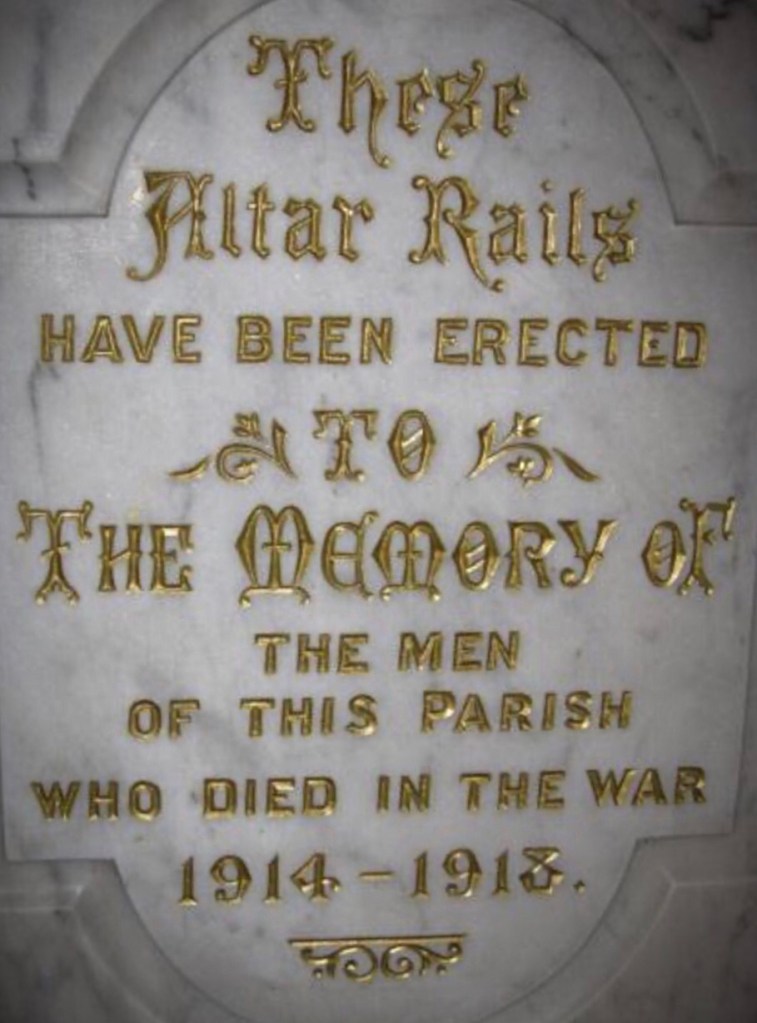
The second of my Batley St. Mary of the Angels talks is about the War Memorial which provided the catalyst for my one-place study. The Memorial commemorates 72 parishioners who paid the ultimate sacrifice in the First World War, and my talk will give some overall context to their backgrounds, the branches of the military and the regiments in which they served, as well as picking out some of the individual stories.
The People of the Parish – Parishioner’s Tales from my Batley St. Mary of the Angels One-Place Study.
My third Batley St. Mary of the Angels one-place study talk looks at some of the ordinary people from the parish across the decades who have some surprising, if not extraordinary, life tales. They illustrate the amazing richness of working-class local history which a one-place study can unearth – stories which often undeservedly get overlooked, with the focus history inevitably tends to place on the more illustrious middle-class townsfolk.
Tips for Researching Your Great War Ancestors/First World War Rugby League Players.
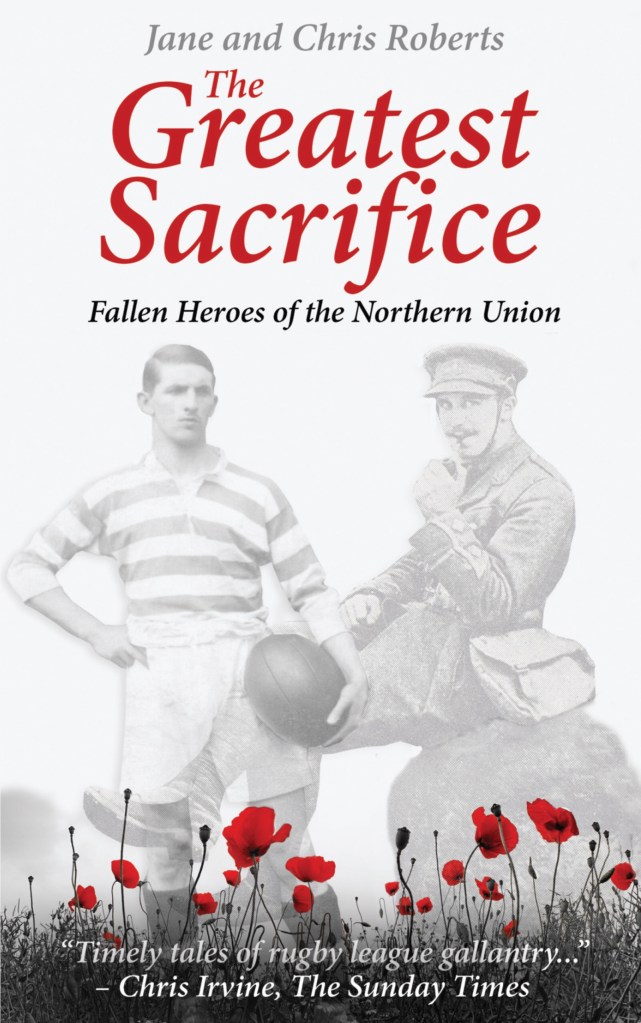
Based on my groundbreaking book The Greatest Sacrifice: Fallen Heroes of the Northern Union about rugby league players who died in World War One, the talk investigates the stories behind some of the men. It is also packed with tips for researching your own Great War Army ancestors. For local history groups, I can drop the family history research tips aspect, and base the talk solely about the players.
This talk will help those embarking on their family history journey, but it will also provide useful reminders and advice for those who have already started out on their ancestral adventure. In this talk I will guide you through building your family tree. I will cover the basics to help you start your research on the right track, give you lots of tips, help you avoid those all-important pitfalls, and provide ideas for taking your research further. If required, I can slant this talk towards Yorkshire ancestral research.
The census talk focuses in detail on this one specific family history record set. It covers background details about this essential building block for family history research in England and Wales, includes some all important search tips, and has some hidden (and sometimes humorous) gems from the entries.
November 2025 was a busy month for the Batley St. Mary of the Angels One-Place Study. Four new posts were added, bringing the total number to 419. I also gave two talks about the early history of the Irish in Batley and the parish – one via Zoom to the Society of One-Place Studies; the other in-person to Batley History Group. If you missed them, I will be repeating the Irish and St. Mary’s talk next year with bookings already made for it, along with my other talks.
To start off with, I wrote a light-hearted piece about Buffalo Bill and A Right Royal Celebration for Batley’s Schoolchildren, a celebration in which the children of St Mary of the Angels participated. I describe, and include a photograph, of the special commemorative medal presented to all the schoolchildren, so that if you have one in your family you can identify it and know more about its history.
In a change of tone, with November being the month of Remembrance, one of the new posts was about James Edwards, one of the parishioners commemorated on the parish’s World War One War Memorial.
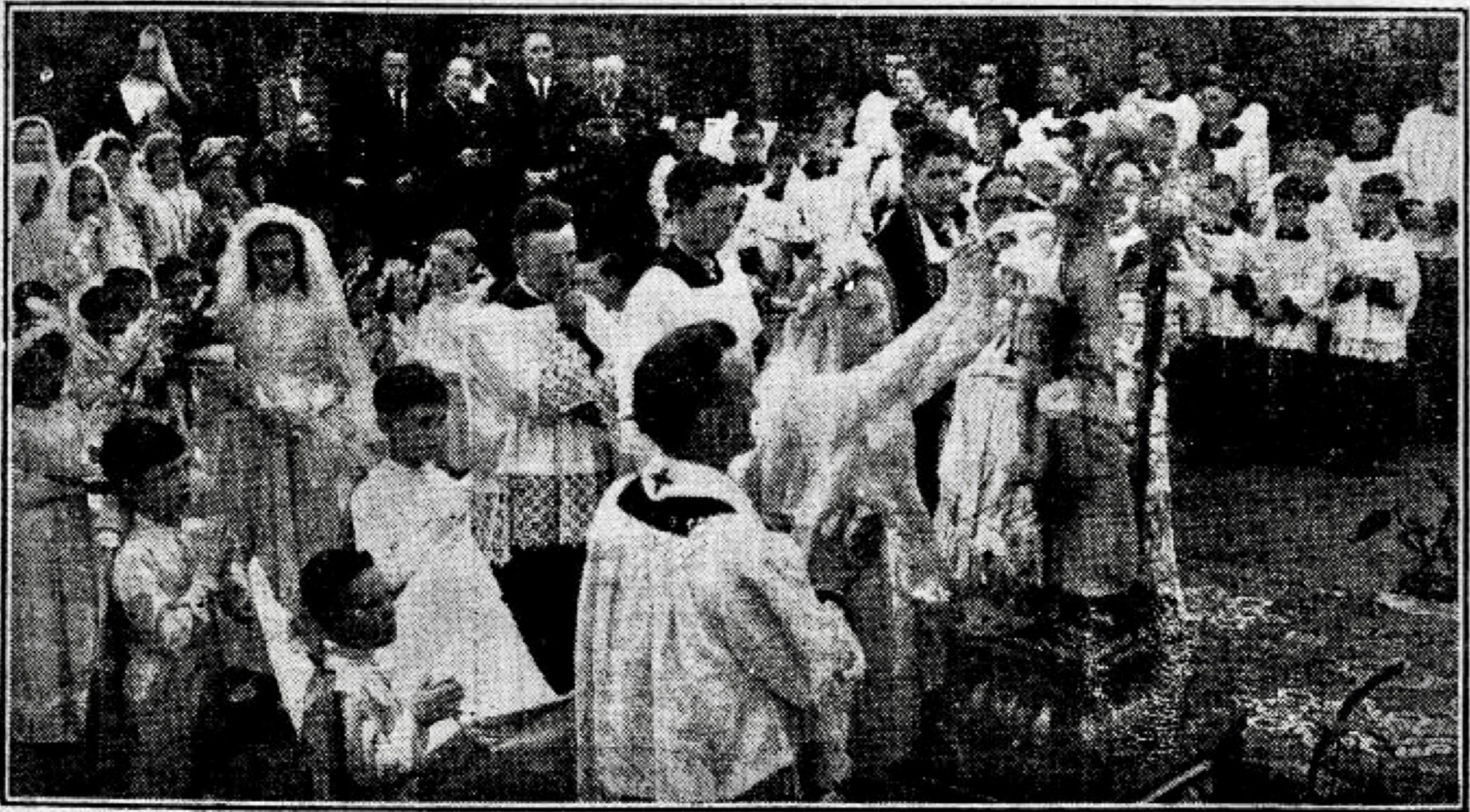
In the May Queen section I have added a piece about the 1952 ceremony when Patricia Anne Cain was the May Queen (as shown in the photograph to the left). It includes names of many others involved in the procession that day, which was a historic one in terms of its format that year.
The final post for the month was the parish history snippets piece for November 2025. These snippets cover a variety of events and people from the parish from years gone by, and can be found in the Bulletin for Batley St Mary of the Angels and Birstall St Patrick section. Even if you have seen them on the Bulletin, it is worth checking them here as some have links to more detailed pieces I have written.
Below is the full list of pages to date. I have annotated the *NEW* posts, so you can easily pick these out. Click on the link and it will take you straight to the relevant page.
If you want to know the background, and what is involved in a one-place study, click here. Otherwise read on, to discover a wealth of parish, parishioner and wider local Batley history.
Postscript: I may not be able to thank you personally because of your contact detail confidentiality, but I do want to say how much I appreciate the donations already received to keep this website going. They really and truly do help. Thank you.
The website has always been free to use, and I want to continue this policy in the future. However, it does cost me money to operate – from undertaking the research to website hosting costs. In the current difficult economic climate I do have to regularly consider if I can afford to continue running it as a free resource.
If you have enjoyed reading the various pieces, and would like to make a donation towards keeping the website up and running in its current open access format, it would be very much appreciated.
Please click 👉🏻here👈🏻 be taken to the PayPal donation link. By making a donation you will be helping to keep the website online and freely available for all.
Thank you.
As a professionally qualified genealogist, if you would like me to undertake any family, local or house history research for you do please get in touch. More information can be found on my research services page.
Finally, if you do have any information about, or photos of, parishioners from the period of the First World War please do get in touch. It does not have to be War Memorial men. It could be those who served and survived, or indeed any other men, women and children from the parish.
I would also be interested in information about, and photos of, those parishioners who were killed in World War Two, or others from the parish who undertook any war service and survived. This can be as broad as serving in the military, or work in munitions factories, the Land Army, even taking in refugees. This is an area I’m looking to develop in the future.
If A House Through Time has piqued your curiosity about your own home and its previous residents, why not make this the year to find out more?
I can unveil the mysteries of the history of your house, discover more about those who have also called your home theirs and the events which influenced their lives, all interwoven with tales of their triumphs, alongside sensitive handling of the more challenging times they may have faced.
I will place your home within its local history context, often integral to shaping the stories of those who lived there. Viewing your home through the lens of local, and even national, history will help you see it in an entirely fresh light, giving you a new appreciation of its place in the history of your local community.
Through my meticulous, professional research, drawing upon a wide range of sources including archive-only material, the rich and colourful tapestry of the lives of those who have left their invisible footprints in your home will be once more brought to light. As an experienced researcher, I really can breathe life into the history of your home.
Whatever the house style or era, a professionally researched and written house history is a wonderful talking point amongst family and friends. It is a fabulously unique house-warming gift to treasure. It can also be a real selling point if you do eventually wish to move on.
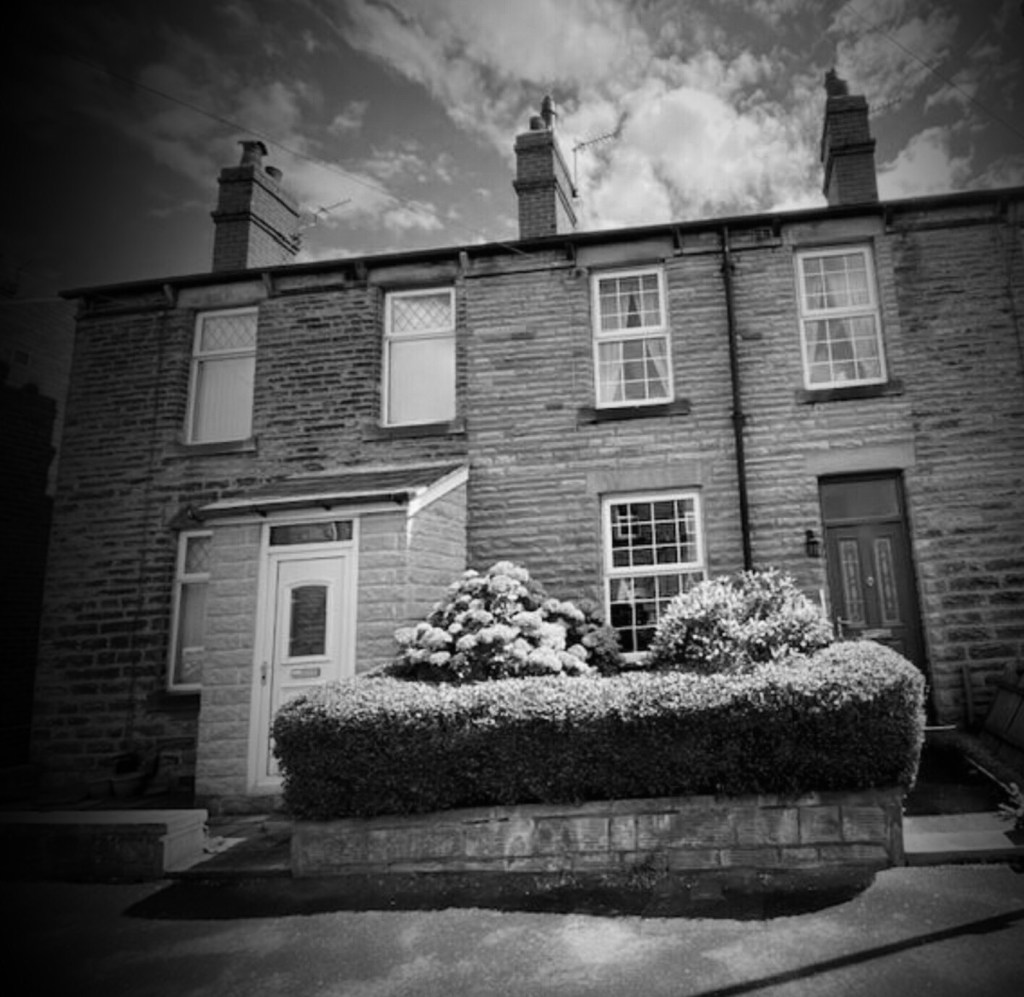
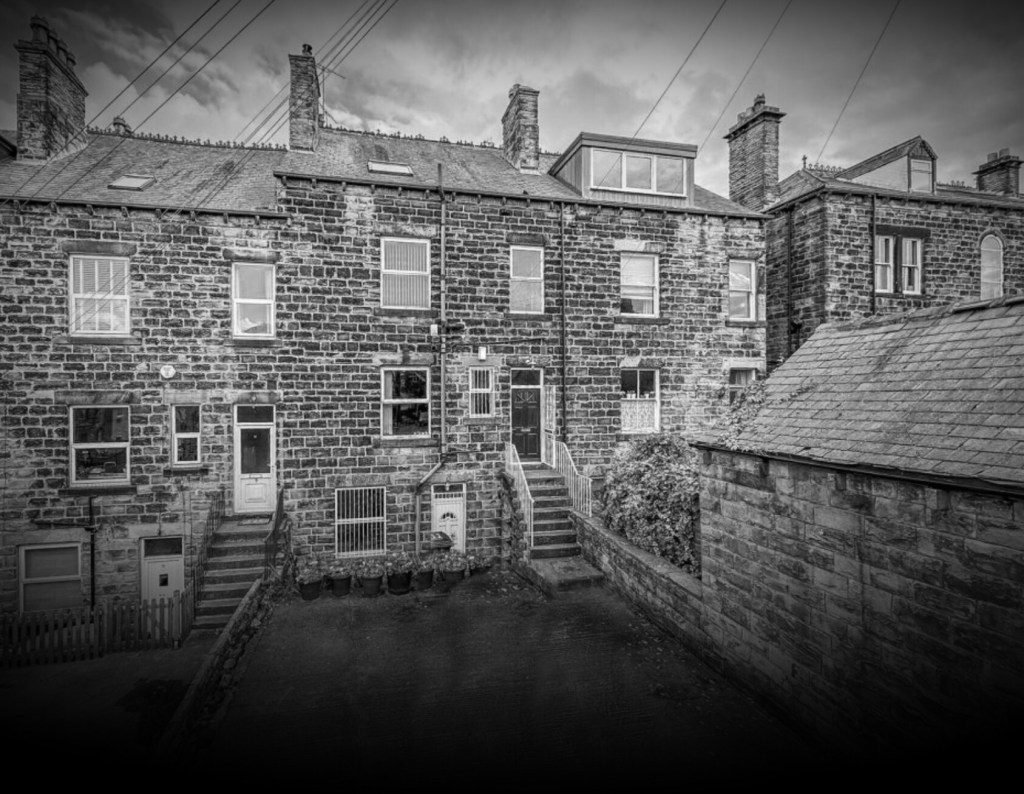
Edwardian, 1930s, Victorian and older – a whole range of house ages and styles can reveal fascinating backstories
Don’t just take my word for it. Here’s the feedback from two of my recent house history clients.
Jane has gone above and beyond in producing a written account of the history of my house. It really was like having my own personal “A House Through Time” researcher. I am amazed at what she discovered, both about the history of the house and those who lived in it. CI, UK
We finally moved in and I gifted the [house history] book to my wife. She loves it. She hasn’t read it all but now she knows the names of all the ghosts she can hear. Thanks again.BK, UK
If you want to discuss the various options about engaging me to write the history of your home, please do get in touch via email at: pasttopresentgenealogy@btinternet.com.
This includes if you are undertaking your own house history research but live a distance from the West Riding Registry of Deeds, and would like me to undertake look-ups on your behalf there.
Alternatively, you can access me via my Association of Genealogists and Researchers in Archives (AGRA) profile, which can be found here.
House history is just one of the research services I offer. I also undertake family and local history research, ranging from individual document look-ups and archive visits, to brick wall busting, and multi-generational family trees or full family histories. I can also be engaged as a speaker, with my list of current talks here. Contact details for all these services are as above.
If you are looking for a family or local history speaker during 2025 and 2026, here are the details of my current talks:
Charles the Pigeon and a Yorkshire Spy.
Local Links to the Lusitania.
My Batley St Mary’s One-Place Study. (Covers the history of the Irish in Batley and the Catholic parish of Batley St Mary of the Angels until turn of the 20th century).
The Home Front: the White Lee Explosion of 1914 and the Unlucky History of the Site (available from September 2026).
Tips for Researching your Great War Ancestors. This is based around my book about Northern Union – rugby league – players killed in the First World War. For local history groups, I can drop the research tips aspect, and base the talk solely about the players.
How to Research your Family Tree. This talk will help those embarking on their family history journey, but it will also provide useful reminders and advice for those who have already started out on their ancestral adventure.
The first four have a distinctly Yorkshire flavour. The fifth will be tailored around rugby league players from your locality. The family tree research talk can be geared around research tips for Yorkshire ancestors.
Charles the Pigeon and a Yorkshire Spy is the story of an unsung Yorkshire hero, living behind enemy lines and carrying out works of espionage and sabotage during World War One. His adopted pigeon Charles played an important part in these wartime exploits. Their daring deeds are more like a boy’s adventure story than real life. But this is a true tale of wartime courage, and one which deserves wider telling.
Local Links to the Lusitania focuses on people with Yorkshire connections on board the Cunard liner, torpedoed and sunk off the Irish coast on 7 May 1915. The sinking did not affect only the rich and famous. Many Yorkshire people were involved. This talk explores some of their stories.
There is a possibility this talk can be tailored to your local area.
My Batley St Mary’s talk is based around my one-place study into the Catholic parish of St Mary of the Angels, with a focus on its early history and period up to the 1880s. It investigates what a one-place study is, why I embarked on one, why I chose this particular study, as well as my findings – including the Irish migration angle, how they were received locally, the building of the church, all with a focus on ordinary parishioners.
The Home Front: the White Lee Explosion of 1914 is a talk based around the events of December 1914 when a devastating explosion, caused during the manufacture of picric acid for the war effort, took place at White Lee. It resulted in deaths and injuries, as well as damage across a vast area of Batley, Heckmondwike and the Spen Valley. It is an event often overlooked because of later explosions in Yorkshire at Low Moor and Barnbow. This talk aims to provide more information about this Heavy Woollen District incident, the forerunner to the later explosions. The talk will explore the unlucky history of the site, as well as the events on the day and the aftermath.
Based on my groundbreaking book The Greatest Sacrifice: Fallen Heroes of the Northern Union about rugby league players who died in World War One, the talk investigates the stories behind some of the men. It is also packed with tips for researching your own Great War Army ancestors.
In this talk I will guide you through building your family tree. I will cover the basics to help you start your research on the right track, give you lots of tips, help you avoid those all-important pitfalls, and provide ideas for taking your research further. If required, I can slant this talk towards Yorkshire ancestral research.
If you are looking for a speaker during 2024 and 2025 covering family or local history, here are my list of talks for the period.
They are:
Charles the Pigeon and a Yorkshire Spy.
Local Links to the Lusitania.
My Batley St Mary’s One-Place Study. (Covers aspects of the Catholic parish of Batley St Mary of the Angels until circa 1929).
The Home Front: the White Lee Explosion of 1914.
Tips for Researching your Great War Ancestors. This is based around my book about Northern Union – rugby league – players killed in the First World War. For local history groups, I can drop the research tips aspect, and base the talk solely about the players.
The first four have a distinctly Yorkshire flavour, whereas the final one is far broader despite its rugby league connections.
Charles the Pigeon and a Yorkshire Spy is the story of an unsung Yorkshire hero, living behind enemy lines and carrying out works of espionage and sabotage during World War One. His adopted pigeon Charles played an important part in these wartime exploits. Their daring deeds are more like a boy’s adventure story than real life. But this is a true tale of wartime courage, and one which deserves wider telling.
Local Links to the Lusitania focuses on people with Yorkshire connections on board the Cunard liner, torpedoed and sunk off the Irish coast on 7 May 1915. The sinking did not affect only the rich and famous. Many Yorkshire people were involved. This talk explores some of their stories.
There is a possibility this talk can be tailored to your local area.
My Batley St Mary’s talk is based around my one-place study into the Catholic parish of St Mary of the Angels, with a focus on its early history and period up to the aftermath of the First World War. It investigates what a one-place study is, why I embarked on one, why I chose this particular study, as well as my findings – including the Irish migration angle, and with a focus on ordinary parishioners – including some of their tales.
The Home Front: the White Lee Explosion of 1914 is a talk based around the events of December 1914 when a devastating explosion, caused during the manufacture of picric acid for the war effort, took place at White Lee. It resulted in deaths and injuries, as well as damage across a vast area of Batley, Heckmondwike and the Spen Valley. It is an event often overlooked because of later explosions in Yorkshire at Low Moor and Barnbow. This talk aims to provide more information about this Heavy Woollen District incident, the forerunner to the later explosions. The talk will explore the unlucky history of the site as well as the events on the day and the aftermath.
Based on my groundbreaking book The Greatest Sacrifice: Fallen Heroes of the Northern Union about rugby league players who died in World War One, the talk investigates the stories behind some of the men. It is also packed with tips for researching your own Great War Army ancestors.
Heads up about my forthcoming talk on 4 March at Leeds Central Library.
Based on my groundbreaking book The Greatest Sacrifice: Fallen Heroes of the Northern Union about rugby league players who died in World War 1, the talk investigates the stories behind some of the men. It will also be packed with tips for researching your own Great War Army ancestors.
The book, co-authored with Rugby League writer Chris Roberts, has received widespread acclaim, locally and nationally, in print and on radio. The reviews include:
The talk will take place in the Leodis Room, starting at 1pm. It will last for one hour, with opportunity to ask questions. Tickets are free and available through Ticket Source. You can also contact the library direct on 0113 378 5005.
This is one of a series of talks I give. The others scheduled for 2020 are:
That’s also the contact if you would like to buy a copy of the book. The price, including p&p within the U.K., is £14.99. It is also available direct from the publisher, Scratching Shed Publishing Ltd. It is also stocked at independent Leeds bookshop, Philip Howard Books. And it’s also available from the normal retail outlets.
2020 promises to be another busy and exciting family history year, both professionally and personally. Away from my professional research, I’m continuing with my monthly family history column in ‘Down Your Way’ magazine. I’m also starting my second year as editor of the Huddersfield & District Family History Society Journal.
But, as ever, I want to set myself some personal family history and general research targets. I’m aiming for a variety of tasks which will be mentally stimulating and stretching, as well as emotionally rewarding. Setting them down in writing will, I hope, focus my mind on these specific pieces of work. If I formally write them down, I can’t ignore them.
Keep on Blogging: If you’d have said back in 2016 how many would read my blog in 2019 I’d be gobsmacked. Due to other time-pressures, blogging is becoming increasingly difficult. The local history pieces are particularly labour-intensive. However, because the mix of local history, family history tales, genealogy tips and one-name studies posts is proving of interest I want to continue with the variety. I am formally committing to continuing writing a minimum of two posts per month.
Conference Commitment: In 2020 I aim to attend one national event, as well as a mixture of courses, talks and local family history fairs. I do feel formalising this is a signal that family history is not only looking backwards. It is pushing forwards, equipped with new skills and strategies.
Tree Review: My family tree has been developing for over 15 years. In 2020 I want to revisit this early research. This is important because my skills today are so much more advanced than my 2004 research abilities. Looking at everything with fresh eyes, using the knowledge I’ve gained over these years, may help me spot gaps and provide a wrecking-ball to earlier brick walls. I also want to re-visit my earlier research to include full source citations. When I started out I was more concerned with the thrill of the hunt, rather than establishing fully documented proof. Now I realise the importance of the latter, not only for me and the need to record the sources for hypothesis and their results, but also for the future generations to whom I will pass on the family history baton. They need to see exactly how I built my proof case.
A New Book Beckons: After completing ‘The Greatest Sacrifice: Fallen Heroes of the Northern Union‘ I said never again to researching and writing another book. The whole experience of authorship was akin to having a baby. The anxiety, doubts and pain of researching, writing, re-writing and proofing took over my life for months. My daily existence revolved around producing a perfect book which would do full justice to those in it. In the final weeks my entire being seemed to be totally devoted to creating this entity. It was my first thought in the morning, my last at night … it even haunted my sleep. And even then, once I’d given birth to it, the nurturing continued. I wanted to ensure others loved it the way I did. Seeing the fruits of all my labour was an overwhelming experience. And now, over a year on from publication, it is out there with a life of its own. I’m there guiding it and watching over it.
But it’s gained its independence. And I’m now ready to create once more. So 2020 will be the start of my new book’s research and development phase. Publication won’t be until 2021 at the earliest. I won’t say too much for now. But it will be based around giving voices to those not normally heard. And it will use my family history research skills. Watch this space for further updates.
It’s Good to Talk: I have already delivered several talks locally. However, I’m expanding on this in 2020. I am rolling out three talks aimed at family and local history audiences. They are about my Rugby League WW1 book, and more generally researching Great War Army ancestors; a Batley and Spen Valley local history talk; and, based on my experience as a genealogy blogger, I have one talk dedicated to blogging for family and local history.











 Past To Present Genealogy