What family historian isn’t a bibliophile? I’m no exception to the rule, living by the principal “A house isn’t a home without at least one bookcase for every room”.
I love exploring a multitude of family and local history topics, so it was a pleasure to be introduced to a new subject – the baronial system in Scotland, as covered by David Dobson in his book Scottish Baronial Families, 1250-1750. Published by the Genealogical Publishing Company, this paperback runs to 199 pages.
It opens with a brief summary of the feudal governance system introduced and used by Scottish monarchs, at the heart of which was the administrative unit of a barony. Headed by a baron, who in effect was a crown vassal, it was a system which operated until 1747 when the British government curtailed their powers with the Heritable Jurisdiction Act, their response to Jacobite rising of 1745-46. With Baronial responsibilities extending to the tax collection, supplying of men for military purposes, as well as jurisdiction over civil and criminal matters, and the baron’s principal seat of authority being the caput, in terms of English equivalent a baron was something akin to a Lord of the Manor.
The introductory section also explains the difference between barons and the noble rank of baronet, the latter created in 1611 by King James VI1 as a way of fundraising, along with promoting the Plantation (organised colonisation) of Ulster, and settlement in Nova Scotia. These are also featured in the book.
Next there is a simple one-page bibliography, which acts as a very basic proxy for specific source citations.
Before getting into the meat of the publication, there are seven images. Whilst they are captioned, I would have found it helpful to also have an accompanying page number to link them to the specific section in the book.
We then come to the main body of the book. Drawing mainly on the Register of the Great Seal of Scotland, this is an alphabetical listing of the Scottish Baronial families – covering in total around 1,000 Scottish baronies and baronetcies. And whilst the listings are dominated by men, there are also a smattering of female holders. The listings detail the families, plus when, where, and by who, they were granted their baronies/baronetcies. Some have additional information. The pieces range from a couple of sentences, to – in some cases – upwards of a page for those families with multiple grants, or where there is extra details.
The book concludes with a select listing of Scots-Irish baronetcies established in Ireland and in the New World.
It is a book to dip into for reference, rather than one to read from cover to cover, and it acts as a concise introduction to the subject. Personally, as part of this reference material, I would also have found a place name index useful, in order to link locations to baronies. But there’s no doubt this is an impressive starting point and companion book for researchers and local historians investigating these families.
The book was published in 2024, ISBN 9780806359748. For ease I’ve attached the purchase links for both Amazon and Genealogical.com
Full disclosure: I received a free copy of the book from Genealogical.com in return for a honest review. I have expressed my truthful opinion in the above review.
Footnotes: 1.King James I of England, although it was not until 1707 that new baronets were established under the United Kingdom.
The number of posts in the Batley St Mary of the Angels One-Place Study creeps ever-closer to the 400 mark. The three new posts added in February 2025 brings it up to 386. One of those posts is a result of my February visit to the Leeds Diocesan Archives, and hopefully in the coming months more pieces will follow on from my finds that day. Two other posts were updated.
Below is the complete list of all the St Mary’s posts published up to the end of February 2025, including links to them, with those new and updated posts signposted so you can easily locate them.
If you want to know the background, and what is involved in a one-place study, click here. Otherwise read on, to discover a wealth of parish, parishioner and wider local Batley history.
Batley St Mary of the Angels
The first piece arising from my Diocesan Archives visit is a description of the parish boundaries given by Fr, Lea in 1918. It is interesting because of the changes which have taken place in the intervening period, with streets appearing, and other landmarks vanishing.
The second piece is about the deaths of the husband and wife Smallpox Hospital caretakers within days of each over the Christmas/New Year period of 1921/22. Again there is additional interest here for people who might remember the old Smallpox Hospital, and the separate Infectious Diseases Hospital which later became Oakwell Geriatric Hospital.
The final addition is in the Bulletin for Batley St Mary of the Angels and Birstall St Patrick section. It is the piece covering the parish history snippets included in the parish bulletins during February 2025. There are some additional links here to fuller pieces I’ve written about some of these snippets.
As for the two updated pieces, one details more parishioners who served in, and survived, the First World War. The other is an update to A St Mary’s Parishioner in the Holy Land, which covers a physical attack he sustained whilst there.
Below is the full list of pages to date. I have annotated the *NEW* and *UPDATED* ones, so you can easily pick these out. Click on the link and it will take you straight to the relevant page.
Postscript: I may not be able to thank you personally because of your contact detail confidentiality, but I do want to say how much I appreciate the donations already received to keep this website going. They really and truly do help. Thank you.
The website has always been free to use, and I want to continue this policy in the future. However, it does cost me money to operate – from undertaking the research to website hosting costs. In the current difficult economic climate I do have to regularly consider if I can afford to continue running it as a free resource.
If you have enjoyed reading the various pieces, and would like to make a donation towards keeping the website up and running in its current open access format, it would be very much appreciated.
Please click 👉🏻here👈🏻 to be taken to the PayPal donation link. By making a donation you will be helping to keep the website online and freely available for all.
Thank you.
As a professionally qualified genealogist, if you would like me to undertake any family, local or house history research for you do please get in touch. More information can be found on my research services page.
Finally, if you do have any information about, or photos of, parishioners from the period of the First World War please do get in touch. It does not have to be War Memorial men. It could be those who served and survived, or indeed any other men, women and children from the parish.
I would also be interested in information about, and photos of, those parishioners who were killed in World War Two, or others from the parish who undertook any war service and survived. This can be as broad as serving in the military, or work in munitions factories, the Land Army, even taking in refugees. This is an area I’m looking to develop in the future.
At the beginning of October 1918, whilst lying paralysed and almost speechless in the Leeds Workhouse Infirmary, septuagenarian Ferdinand Hanson1 made international headlines.
This admittance to hospital brought a sensational, and very public, end to Ferdinand’s 30-year-old secret – it revealed the Hamburg-born widower, who claimed to be a Danish national, was actually a woman.
The secret began to unravel in early September 1918 on his customary weekly shopping trip to buy coffee from a shop on Boar Lane, Leeds. Returning home via Briggate, Ferdinand collapsed, suffering a stroke. Two women managed to get him back to his Leeds lodging house at Lilac Grove, just off Skinner Lane.
There, sitting by the fireside, Ferdinand’s condition worsened – but he stubbornly refused to let his landlady help get him into more comfortable clothing. He deteriorated so much that in the end she called the doctor, who advised admittance to hospital. Despite Ferdinand’s vehement protests, an ambulance was called.
Ferdinand Hanson pictured in the 1890s
Once in Beckett Street Infirmary, the reasons for Ferdinand’s protests became clear – undressed, it was discovered he was a woman. The Infirmary recorded their new patient under the name of Dora Hanson.
Ferdinand’s landlady of seven years, widow Carrie Green, collapsed in shock when told her male lodger was actually a woman. She could not conceive that the person with whom she shared her home for so long was anything other than a man. Perhaps there was also the dawning realisation that she may have been scammed out of hundreds of pounds.
She had implicitly believed the back-story Ferdinand told her about his life. So much so that when the authorities investigated Ferdinand during the war and concluded he was German, not Danish, she managed to keep him out of an internment camp by promising to “look after the old man”.
Carrie described Ferdinand as exceedingly polite, never failing to raise his hat to the women in the neighbourhood. Short in stature, with a pale, rather finely-featured face, and with white, close-cropped hair, Ferdinand seemed well-educated, being fluent in seven languages. He gave the impression that a previous employer of 20 years was the White Star Line, for whom he acted as an onboard interpreter.
Ferdinand’s one vice was being a heavy smoker, using really strong and noxious smelling tobacco in his clay pipe. He even smoked in bed. Initially, Carrie objected, concerned he might inadvertently set the house alight, but her lodger assured her “it is all right; I have always been very careful”. After the sex revelation, some theorised this excessive smoking was adopted as a means to reinforce Ferdinand’s masculinity – although, to be fair, many women did smoke pipes.
Ferdinand also claimed to have travelled extensively in the United States as an expert photographer, working in several cities – including Philadelphia, Washington and New York. It was in the latter he said he married, his wife working as a milliner in that city.
He asserted it was the death of his wife which prompted his return to Europe, with him settling in Yorkshire where he obtained work in various photographic shops as a photographer-canvasser. This was an advertising role, promoting the studio employing him. Initially he lived in Dewsbury, working for a photographer there. After his move to Leeds, he worked in a Grand Arcade photographers shop, though he had been unemployed in the years leading up to his seizure.
Ferdinand Hanson took up lodgings with Carrie Green in around 1911, having previously boarded for around 12-14 years with Batley Carr-born Martha Whitaker. The suggestion was he first stayed with Martha when she ran digs in Dewsbury. By 1901 she and her husband William ran a boarding house on Wade Lane, Leeds. Martha then moved to Portland Crescent in Leeds, where she continued as a boarding house keeper after her husband’s death. Unfortunately, Ferdinand is not recorded in the 1901 and 1911 censuses with Martha, either at Wade Lane or Portland Crescent. A canvasser’s job did involve travelling though.
It was Martha who recommended Ferdinand to Carrie, as a “quiet, respectable, well-behaved gentleman”. Martha was dead by autumn 1918 when Ferdinand’s secret came to light. It was left to Carrie Green and Martha’s adopted daughter, the now married Dorothy Emms,2 to wrack their brains for any missed clues.
Dorothy, who was only a child when Ferdinand stayed with them, remembered his lack of friends, and his frequent solo rambles through the streets of Leeds. He also used to receive regular letters from abroad which Dorothy believed contained money. These letters stopped by the time Ferdinand lodged with Carrie, who could only think of one letter ever arriving for him.
Though Ferdinand was adept at needlework, Carrie believed the explanation given to her – being married to a milliner, he used to help his wife trim hats. According to Carrie, Ferdinand was very domestically inclined, washing all his own clothes, helping out around the house, and he even rather liked peeling potatoes! She interpreted this as Ferdinand being anxious to lighten her load.
Ferdinand Hanson in the 1910s
There was only one possible clue that all might not be as seemed, with Dorothy recalling occasional comments about the remarkable whiteness and softness of Mr. Hanson’s skin.
There was, however, a much darker side to this tale. Because Ferdinand never paid Carrie as much as a solitary sixpence in the entire seven years he stayed with her. In fact, she even lent him money to buy clothes. In effect, Ferdinand conned her, under the pretext of having a wealthy sister living in Hamburg who had willed all her possessions to him. He told Carrie, as he had no other relations in the world, he would share his entire inheritance with her. Carrie believed him. It was an expensive error of judgement. She calculated the scam left her £300 out of pocket. It also destroyed her trust in people.
Some speculated that work was the reason Ferdinand lived as a man for 30 years – it helped secure photography jobs. But despite attempts to find out the motive directly from the horses mouth, it was a secret which Ferdinand took to the grave.
Never recovering from that life-changing stroke, almost two years later 74-year-old Ferdinand Hanson died in the Leeds Workhouse Infirmary. And although the hospital did give Ferdinand a female name on admission, Ferdinand was the name under which the death was registered, and the name recorded in the Harehills Cemetery burial register when the enigmatic Ferdinand Hanson was laid to rest on 25 May 1920.
Postscript: I may not be able to thank you personally because of your contact detail confidentiality, but I do want to say how much I appreciate the donations already received to keep this website going. They really and truly do help. Thank you.
The website has always been free to use, and I want to continue this policy in the future. However, it does cost me money to operate – from undertaking the research to website hosting costs. In the current difficult economic climate I do have to regularly consider if I can afford to continue running it as a free resource.
If you have enjoyed reading the various pieces, and would like to make a donation towards keeping the website up and running in its current open access format, it would be very much appreciated.
Please click 👉🏻here👈🏻 to be taken to the PayPal donation link. By making a donation you will be helping to keep the website online and freely available for all.
Thank you.
As a professionally qualified genealogist, if you would like me to undertake any family, local or house history research for you do please get in touch.
Footnotes: 1. Hansen was another surname spelling variant. I have used Hanson in this piece as this was the name used for death registration. 2. Dorothy Whitaker was born in Scotland in 1895. Although she is recorded as Whitaker in the 1901 and 1911 censuses, her birth surname was Novello.
Other Sources: • Censuses England and Wales, various dates. • Harehills Cemetery Burial Register. • GRO Indexes. • Newspapers – Various.
The intriguing inscription on Robert Shackleton’s impressive headstone in Batley cemetery commands attention.
After noting his death date of 24 September 1874, it reads:
HE WAS THE FIRST BOROUGH ACCOUNTANT OF THIS TOWN AND HELD THE OFFICE TILL HIS DEATH HIS UNIFORM INTEGRITY AND KINDNESS WON FOR HIM THE ESTEEM OF ALL WHO KNEW HIM. AND HIS SUDDEN REMOVAL UNDER CIRCUMSTANCES MOST PAINFUL WAS THE CAUSE OF DEEP SORROW TO A LARGE CIRCLE OF RELATIVES AND FRIENDS.
What were these most painful circumstances causing his sudden removal? I had to investigate – and in the process discovered a dark Victorian tale, with an unexpected twist of compassion.
Robert Shackleton’s Batley Cemetery headstone – photo by Jane Roberts
Robert Shackleton was born in Holbeck on 15 August 1817, the son of miller Richard Shackleton and wife Ann. His was a Quaker family and, rather than baptism, Robert’s birth was registered in the Brighouse Monthly Meeting book – though later in his life Robert switched from Quakerism and would be associated with the Methodist New Connexion denomination.
Subsequently, rather than milling, Richard’s primary job focus was as a proprietor of a grocer’s shop. Initially this was the trade his son followed, with the 1851 census describing Robert’s occupation as a grocer and watchmaker. At this point he was living in the Havercroft area of Batley, lodging with his brother George Walker Shackleton, also a grocer. George’s wife, Susan, was a daughter of Michael Sheard, one of Batley’s leading cloth manufacturers. So the Shackletons were already well-connected locally.
On 18 January 1855, Richard further cemented these powerful local connections when he married widow Rachel Fox at Batley parish church. Five years after the death of her husband David, the 1851 census noted an unusual occupation for her – as a rag dealer employing five girls. Dig deeper, and perhaps it was not totally unexpected. Her husband worked in the woollen trade, and her father, Joseph Jubb, was among Batley’s textile manufacturing royalty. Associated with Hick Lane Mill, founded in 1822, and said to have been the first built for the production of shoddy cloth, Joseph later operated from New Ing Mill. More about a tragedy which took place in connection to his business can be read here.
It seems Robert took over his wife‘s business, as the 1861 census finds the family at Up Lane, Batley, with Robert recorded as a rag merchant employing five women. However, when Batley became a Borough in 1868, Robert was appointed Batley’s first Borough accountant. This is the job recorded for him in the 1871 census.
The stresses of work may have affected Robert, because he was prone to indigestion, popping into William Parrington’s chemist shop on Commercial Street two or three times a week to have a draught of pepsine made up. 23-year-old Benjamin Scatcherd, who had worked for three months as the chemist’s assistant, had of late done this under the supervision of his boss.
At around 6pm on 22 September 1874, just before going to the Town Hall for a Sanitary Committee meeting, Robert called in at the chemists for his usual draught. William Parrington had nipped out, so Ben made it up unsupervised. It comprised of four elements – pepsine, water, bi-carbonate of potash, and compound ammonia. The pepsine dose was around 10 grains, unweighed.
At around 7pm, William Parrington returned and saw an empty glass measure on the counter. Ben told him Mr Shackleton had been in for his draught. Eagle-eyed William then noticed that whilst the pepsine bottle was in the correct place, a morphia bottle was on the wrong shelf. The two bottles were the same size, and morphia and pepsine were similar coloured powders.
William Parrington quickly suspected what had happened, a suspicion which the horrified Ben Scatcherd confirmed. Despite the shop being well-lit and the bottles clearly labelled, his young assistant, distracted by other customers in the shop, had confused the pepsine with morphia. Even worse, 10 grains of morphia was a fatal dose – the normal dose being an eighth of a grain, to a grain!
Hoping to avert disaster, William hot-footed it over to the Town Hall, only to find he was too late – Robert had already taken the draught. In response to the chemist’s enquiry he said he felt “sleepy and drowsy.” William told him about the medicine mix-up, and took the drug-poisoned Borough accountant to his shop where emetics were unsuccessfully administered. No vomiting ensued to dispel the poison.
Ben Scatcherd was dispatched at speed to fetch Drs. Bayldon and Keighley, who gave stronger emetics and applied a stomach pump three times – all to no avail. The potion was not brought up.
Robert’s brother-in-law, Healey warp agent John Thomas Marriott (who happened to be one of the Councillors at the dramatically interrupted meeting), was called to Parrington’s shop at about 9pm. He – along with the chemist – took the stupefied accountant back to Robert’s home on Hanover Street, staying with him through the night. Over the next two days the chemist and doctors were frequent visitors to the Shackleton home. Robert did briefly rally from his comatose state on Wednesday, being able to speak and raise himself up in bed, but it proved temporary. By the evening of Thursday 24 September he once more relapsed, dying at around 10.40pm that night.
His funeral, held on Saturday 26 September 1874, was a major civic display, with the town’s great and good – including its Mayor, Councillors, and an assortment of high-ranking Corporation officials – prominently represented. The five family mourning coaches and several private carriages gave further indication of the status of the deceased.
As the cortège made its way from the Shackleton’s Hanover Street home to Batley cemetery, it passed through Batley’s quietened streets, bordered by shuttered shops and blind-drawn houses, and lined by hundreds of townsfolk paying their silent respects.
Ben Scatcherd in later life
Whilst great sympathy was expressed with the Shackleton family, this sympathy extended to Ben Scatcherd, the young man whose lapse in concentration led to him administering the fatal dose morphia.
The inquest, held the day before, considered whether Scatcherd had been guilty of criminal negligence. Whilst the foreman indicated the assistant had displayed a degree of carelessness, their unanimous verdict was “Death from misadventure.” The only punishment inflicted on Ben Scatcherd was the heavy burden to his conscience, knowing his error had resulted someone’s death.
Surprisingly, the 1881 census shows Kirkburton-born Scatcherd still working as a druggist’s assistant. He also had a spell as a rag merchant’s book-keeper, before setting up his own business as a stocking knitter and dealer in woollen goods in Batley Carr. His business expanded, and he took on premises in Town Street, becoming a highly respected tradesman in the area. He died in 1917.
Postscript: I may not be able to thank you personally because of your contact detail confidentiality, but I do want to say how much I appreciate the donations already received to keep this website going. They really and truly do help. Thank you.
The website has always been free to use, and I want to continue this policy in the future. However, it does cost me money to operate – from undertaking the research to website hosting costs. In the current difficult economic climate I do have to regularly consider if I can afford to continue running it as a free resource.
If you have enjoyed reading the various pieces, and would like to make a donation towards keeping the website up and running in its current open access format, it would be very much appreciated.
Please click 👉🏻here👈🏻 to be taken to the PayPal donation link. By making a donation you will be helping to keep the website online and freely available for all.
Thank you.
As a professionally qualified genealogist, if you would like me to undertake any family, local or house history research for you do please get in touch.
Sources: • Batley Cemetery Burial Register. • Censuses England and Wales, various dates. • Coroner’s notes. • Newspapers – Various. • Parish Registers – Various. • Power and Influence, Batley Cemetery Walk – Malcolm Haigh. • Quaker Records. • Vivien Tomlinson’s Family History website, https://vivientomlinson.com/batley/index.htm
2025 got off to a great start for the Batley St Mary of the Angels One-Place Study, with the addition of five posts which cover a varied mix of the history of the parish and its people. It brings the total number of posts to 383. One other post was updated.
Below is the complete list of all the St Mary’s posts published up to the end of January 2025, including links to them, with those new and updated posts signposted so you can easily locate them.
If you want to know the background, and what is involved in a one-place study, click here. Otherwise read on, to discover a wealth of parish, parishioner and wider local Batley history.
Batley St Mary of the Angels
Two new War Memorial biographies were added, those of Harold Gaunt and Thomas Dolan. The former covers a lesser known aspect of military service. The latter includes some cherished photos, used with the family’s permission. I also identified more parishioners who served in, and survived, the First World War. That list has been updated.
The Bulletin for Batley St Mary of the Angels and Birstall St Patrick section, has one addition. This is the piece covering the parish history snippets which were included in the parish bulletins during January 2025 – one of which may be rather surprising but reflects commonly held initial world attitudes to someone who turned out to be a monster.
It also links to the one of the two new posts in the Miscellany of Information section. One is about a former parishioner who played an unexpected and significant role, bringing him into contact with people across the world. The other post is a topic I never thought would be covered in the St Mary’s One-Place Study. Given this month, on the 27 January, we commemorated World Holocaust Day and the 80th anniversary of the liberation of Auschwitz-Birkenau, the largest Nazi concentration camp complex, it serves as a timely and important reminder.
Below is the full list of pages to date. I have annotated the *NEW* and *UPDATED* ones, so you can easily pick these out. Click on the link and it will take you straight to the relevant page.
Postscript: I may not be able to thank you personally because of your contact detail confidentiality, but I do want to say how much I appreciate the donations already received to keep this website going. They really and truly do help. Thank you.
The website has always been free to use, and I want to continue this policy in the future. However, it does cost me money to operate – from undertaking the research to website hosting costs. In the current difficult economic climate I do have to regularly consider if I can afford to continue running it as a free resource.
If you have enjoyed reading the various pieces, and would like to make a donation towards keeping the website up and running in its current open access format, it would be very much appreciated.
Please click 👉🏻here👈🏻 to be taken to the PayPal donation link. By making a donation you will be helping to keep the website online and freely available for all.
Thank you.
As a professionally qualified genealogist, if you would like me to undertake any family, local or house history research for you do please get in touch. More information can be found on my research services page.
Finally, if you do have any information about, or photos of, parishioners from the period of the First World War please do get in touch. It does not have to be War Memorial men. It could be those who served and survived, or indeed any other men, women and children from the parish.
I would also be interested in information about, and photos of, those parishioners who were killed in World War Two, or others from the parish who undertook any war service and survived. This can be as broad as serving in the military, or work in munitions factories, the Land Army, even taking in refugees. This is an area I’m looking to develop in the future.
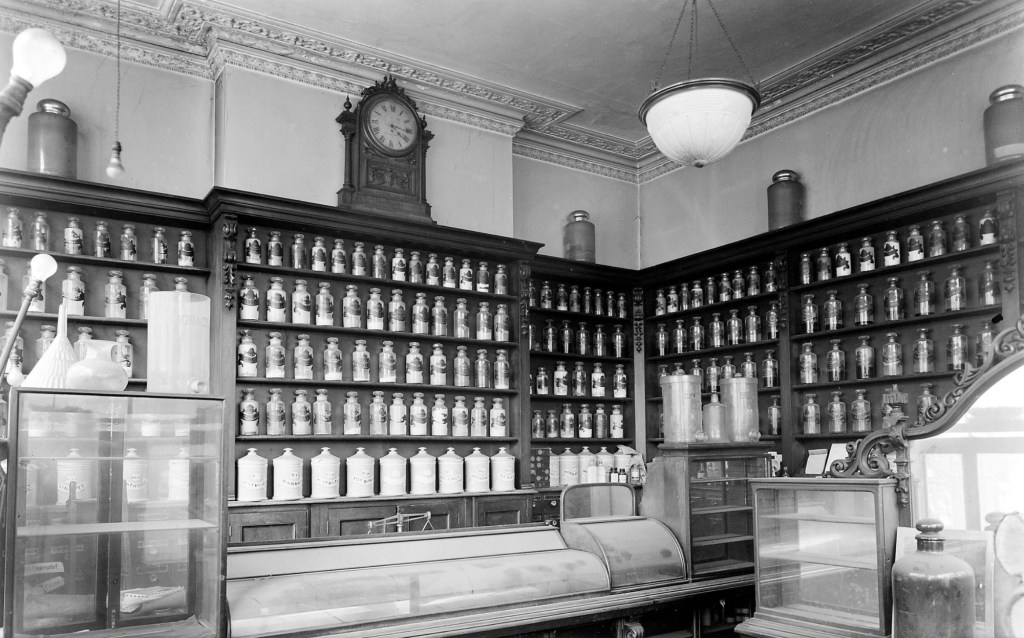
If A House Through Time has piqued your curiosity about your own home and its previous residents, why not make this the year to find out more?
I can unveil the mysteries of the history of your house, discover more about those who have also called your home theirs and the events which influenced their lives, all interwoven with tales of their triumphs, alongside sensitive handling of the more challenging times they may have faced.
I will place your home within its local history context, often integral to shaping the stories of those who lived there. Viewing your home through the lens of local, and even national, history will help you see it in an entirely fresh light, giving you a new appreciation of its place in the history of your local community.
Through my meticulous, professional research, drawing upon a wide range of sources including archive-only material, the rich and colourful tapestry of the lives of those who have left their invisible footprints in your home will be once more brought to light. As an experienced researcher, I really can breathe life into the history of your home.
Whatever the house style or era, a professionally researched and written house history is a wonderful talking point amongst family and friends. It is a fabulously unique house-warming gift to treasure. It can also be a real selling point if you do eventually wish to move on.
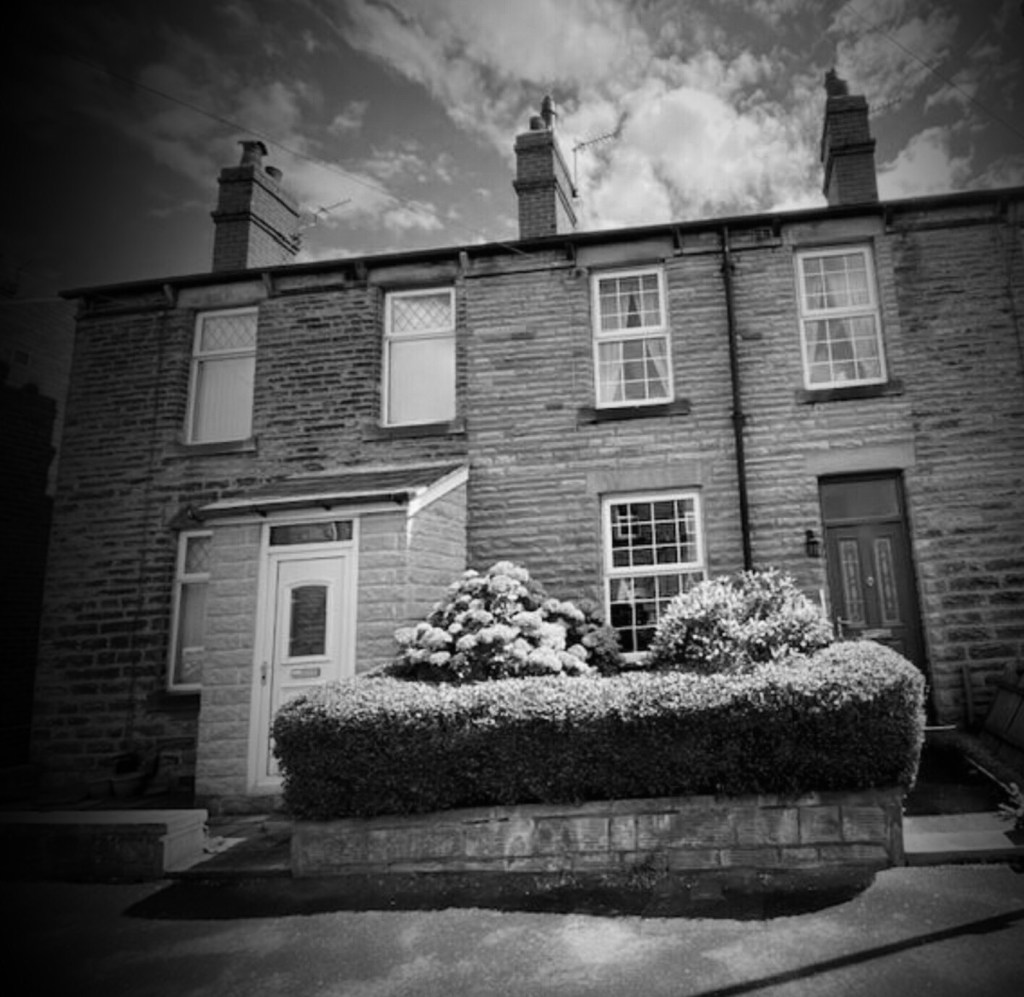
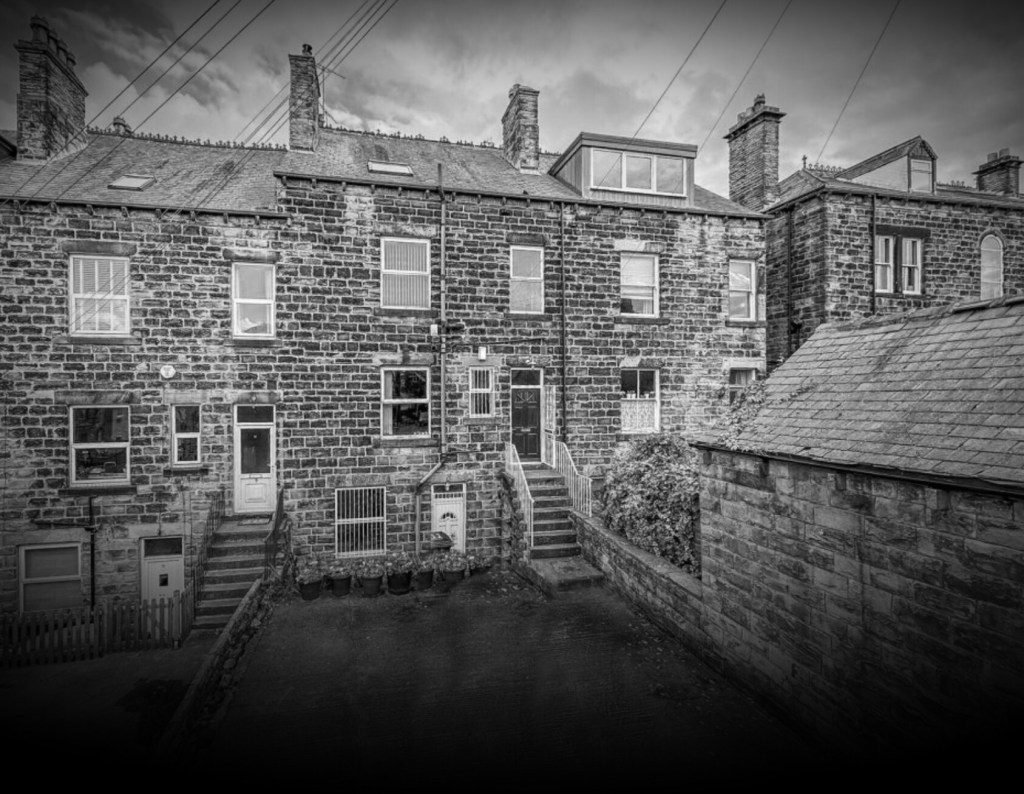
Edwardian, 1930s, Victorian and older – a whole range of house ages and styles can reveal fascinating backstories
Don’t just take my word for it. Here’s the feedback from two of my recent house history clients.
Jane has gone above and beyond in producing a written account of the history of my house. It really was like having my own personal “A House Through Time” researcher. I am amazed at what she discovered, both about the history of the house and those who lived in it. CI, UK
We finally moved in and I gifted the [house history] book to my wife. She loves it. She hasn’t read it all but now she knows the names of all the ghosts she can hear. Thanks again.BK, UK
If you want to discuss the various options about engaging me to write the history of your home, please do get in touch via email at: pasttopresentgenealogy@btinternet.com.
This includes if you are undertaking your own house history research but live a distance from the West Riding Registry of Deeds, and would like me to undertake look-ups on your behalf there.
Alternatively, you can access me via my Association of Genealogists and Researchers in Archives (AGRA) profile, which can be found here.
House history is just one of the research services I offer. I also undertake family and local history research, ranging from individual document look-ups and archive visits, to brick wall busting, and multi-generational family trees or full family histories. I can also be engaged as a speaker, with my list of current talks here. Contact details for all these services are as above.
The final month of the year brought seven new posts to the Batley St Mary of the Angels One-Place Study, bringing the total number to 378. In addition to the seven new posts, four more were updated.
This update contains the list of all the St Mary’s posts published up to the end of 2024, including links to them, with last month’s new and updated posts signposted so you can easily locate them.
If you want to know the background, and what is involved in a one-place study, click here. Otherwise read on, to discover a wealth of parish, parishioner and wider local Batley history.
Batley St Mary of the Angels
Two new War Memorial biographies were added, those of James Gavaghan and Michael Hopkins. I also updated Thomas Donlan’s biography as a result of the James Gavaghan research. I identified more parishioners who served in, and survived, the First World War. That list has been updated.
The Bulletin for Batley St Mary of the Angels and Birstall St Patrick section, has one addition. This is the piece covering the parish history snippets which were included in the parish bulletins during December 2024.
And the final additions for the year are in the During This Week newspaper section, with four new pages added covering the editions of the Batley News published December 1918. I have accordingly updated the surname index to these During This Week newspaper pieces, so you can easily identify newspaper snippets relevant to your family.
Below is the full list of pages to date. I have annotated the *NEW* and *UPDATED* ones, so you can easily pick these out. Click on the link and it will take you straight to the relevant page.
Postscript: I may not be able to thank you personally because of your contact detail confidentiality, but I do want to say how much I appreciate the donations already received to keep this website going. They really and truly do help. Thank you.
The website has always been free to use, and I want to continue this policy in the future. However, it does cost me money to operate – from undertaking the research to website hosting costs. In the current difficult economic climate I do have to regularly consider if I can afford to continue running it as a free resource.
If you have enjoyed reading the various pieces, and would like to make a donation towards keeping the website up and running in its current open access format, it would be very much appreciated.
Please click 👉🏻here👈🏻 to be taken to the PayPal donation link. By making a donation you will be helping to keep the website online and freely available for all.
Thank you.
Finally, if you do have any information about, or photos of, parishioners from the period of the First World War please do get in touch. It does not have to be War Memorial men. It could be those who served and survived, or indeed any other men, women and children from the parish.
I would also be interested in information about, and photos of, those parishioners who were killed in World War Two, or others from the parish who undertook any war service and survived. This can be as broad as serving in the military, or work in munitions factories, the Land Army, even taking in refugees. This is an area I’m looking to develop in the future.
This November has brought eight new posts to the Batley St Mary of the Angels One-Place Study, bringing the total number to 371 posts. In addition to the eight new posts, two more were updated.
This update contains the list of all the St Mary’s posts published up to the end of November 2024, including links to them, with last month’s new and updated posts signposted so you can easily locate them.
If you want to know the background, and what is involved in a one-place study, click here. Otherwise read on, to discover a wealth of parish, parishioner and wider local Batley history.
Batley St Mary of the Angels
One new War Memorial biography has been added, that of Clement Manning. More parishioners to the list of those who served in, and survived, the First World War section, so this list has been updated.
The Miscellany of Information section has a new post this month, about a huge talent whose promise was never fulfilled. That talent though is memorialised on William Berry’s headstone.
The Bulletin for Batley St Mary of the Angels and Birstall St Patrick section, has an addition. This is the piece covering the parish history snippets which were included in the parish bulletins during November 2024.
And the other November additions are in the During This Week newspaper section, with five new pages covering the editions of the Batley News published during the month of November 1918. I have accordingly updated the surname index to these During This Week newspaper pieces, so you can easily identify newspaper snippets relevant to your family.
Below is the full list of pages to date. I have annotated the *NEW* and *UPDATED* ones, so you can easily pick these out. Click on the link and it will take you straight to the relevant page.
Postscript: I may not be able to thank you personally because of your contact detail confidentiality, but I do want to say how much I appreciate the donations already received to keep this website going. They really and truly do help. Thank you.
The website has always been free to use, and I want to continue this policy in the future. However, it does cost me money to operate – from undertaking the research to website hosting costs. In the current difficult economic climate I do have to regularly consider if I can afford to continue running it as a free resource.
If you have enjoyed reading the various pieces, and would like to make a donation towards keeping the website up and running in its current open access format, it would be very much appreciated.
Please click 👉🏻here👈🏻 to be taken to the PayPal donation link. By making a donation you will be helping to keep the website online and freely available for all.
Thank you.
Finally, if you do have any information about, or photos of, parishioners from the period of the First World War please do get in touch. It does not have to be War Memorial men. It could be those who served and survived, or indeed any other men, women and children from the parish.
I would also be interested in information about, and photos of, those parishioners who were killed in World War Two, or others from the parish who undertook any war service and survived. This can be as broad as serving in the military, or work in munitions factories, the Land Army, even taking in refugees. This is an area I’m looking to develop in the future.
If you are looking for a family or local history speaker during 2025 and 2026, here are the details of my current talks:
Charles the Pigeon and a Yorkshire Spy.
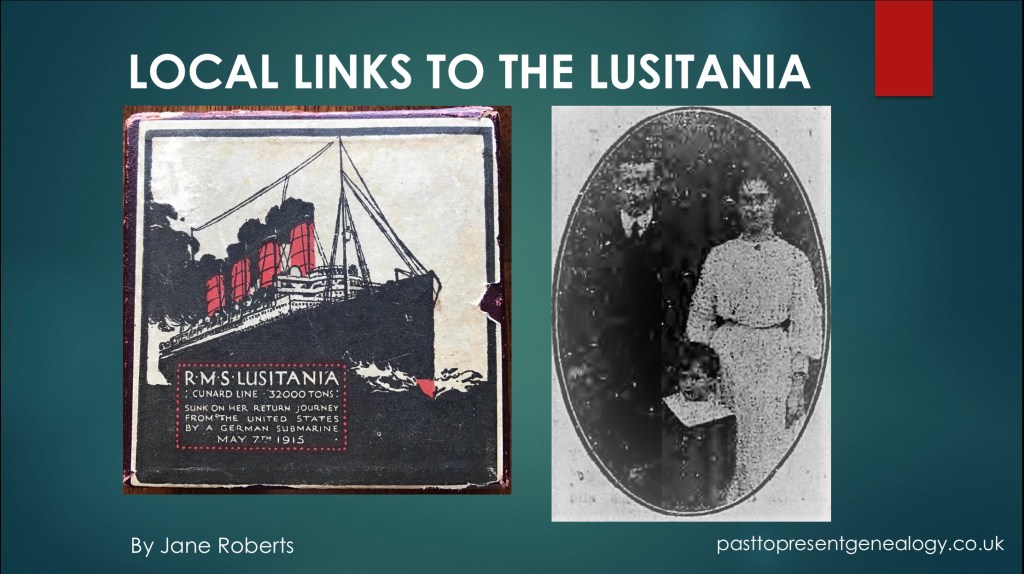
Local Links to the Lusitania.
My Batley St Mary’s One-Place Study. (Covers the history of the Irish in Batley and the Catholic parish of Batley St Mary of the Angels until turn of the 20th century).
The Home Front: the White Lee Explosion of 1914 and the Unlucky History of the Site (available from September 2026).
Tips for Researching your Great War Ancestors. This is based around my book about Northern Union – rugby league – players killed in the First World War. For local history groups, I can drop the research tips aspect, and base the talk solely about the players.
How to Research your Family Tree. This talk will help those embarking on their family history journey, but it will also provide useful reminders and advice for those who have already started out on their ancestral adventure.
The first four have a distinctly Yorkshire flavour. The fifth will be tailored around rugby league players from your locality. The family tree research talk can be geared around research tips for Yorkshire ancestors.
Charles the Pigeon and a Yorkshire Spy is the story of an unsung Yorkshire hero, living behind enemy lines and carrying out works of espionage and sabotage during World War One. His adopted pigeon Charles played an important part in these wartime exploits. Their daring deeds are more like a boy’s adventure story than real life. But this is a true tale of wartime courage, and one which deserves wider telling.
Local Links to the Lusitania focuses on people with Yorkshire connections on board the Cunard liner, torpedoed and sunk off the Irish coast on 7 May 1915. The sinking did not affect only the rich and famous. Many Yorkshire people were involved. This talk explores some of their stories.
There is a possibility this talk can be tailored to your local area.
My Batley St Mary’s talk is based around my one-place study into the Catholic parish of St Mary of the Angels, with a focus on its early history and period up to the 1880s. It investigates what a one-place study is, why I embarked on one, why I chose this particular study, as well as my findings – including the Irish migration angle, how they were received locally, the building of the church, all with a focus on ordinary parishioners.
The Home Front: the White Lee Explosion of 1914 is a talk based around the events of December 1914 when a devastating explosion, caused during the manufacture of picric acid for the war effort, took place at White Lee. It resulted in deaths and injuries, as well as damage across a vast area of Batley, Heckmondwike and the Spen Valley. It is an event often overlooked because of later explosions in Yorkshire at Low Moor and Barnbow. This talk aims to provide more information about this Heavy Woollen District incident, the forerunner to the later explosions. The talk will explore the unlucky history of the site, as well as the events on the day and the aftermath.
Based on my groundbreaking book The Greatest Sacrifice: Fallen Heroes of the Northern Union about rugby league players who died in World War One, the talk investigates the stories behind some of the men. It is also packed with tips for researching your own Great War Army ancestors.
In this talk I will guide you through building your family tree. I will cover the basics to help you start your research on the right track, give you lots of tips, help you avoid those all-important pitfalls, and provide ideas for taking your research further. If required, I can slant this talk towards Yorkshire ancestral research.
This morning I attended a behind-the-scenes guided tour of the Leeds branch of the West Yorkshire Archive Service (WYAS), part of a series of free events organised by Libraries in Leeds.
Guided by archivist Vicky Grindrod, it was an informative, fascinating and entertaining peek at what goes on beyond those search room doors. As a frequent archives visitor, it was really useful to get some idea of what is involved in getting documents to that search room desk. Equally, for those with only a minimal knowledge about an archive – like my husband – it was a demystifying introduction to what for some might appear to be an offputting environment only for academics.
Located in Morley, the West Yorkshire Joint Services building accommodates not only the archive, but cross-county organisations including archaeology and trading standards services. Hence the many bags full of archaeological dig soil, and various weights and hoists in evidence in certain areas.
The shared nature of the building is part of the reason why documents need pre-ordering in advance of visits, along with the need to juggle search room space each day depending on what type of materials visitors want to see, and the fact documents may not necessarily always be held on site.
We learned about the work which goes on to get new material archive-ready, from vans bringing it to the unloading area, to assessing documents for mould and bugs, decontaminating them, and undertaking the conservation work to get them strong-room fit. It’s all very technical, down to ensuring air flow systems don’t spread any air-borne pollutants from new material to the rest of the archive, regular bug monitoring, down to maintaining optimum storage temperatures (15-18 degrees) and humidity levels (55 per cent).
We also found how small the archive team is, the variety of jobs they undertake, and how this is evolving to take account of the new digital document mediums and the challenges that brings – from the risk of cyber attacks, to mitigating technology changes which can make earlier digital documents unreadable.
There’s also the ongoing cataloguing work, including of holdings already at the archives which require more detailed descriptions. This is an area in which volunteers can get involved, especially those with skills and knowledge linked to the collections. The Tetley’s brewery collection might be one which will appeal to many!
A Selection of Material from the Waddington Collection
We were also introduced to the range of archive holdings. From the John Waddington collection with monopoly boards and prototype Cluedo designs (“Shall we play Murder? I think it was Colonel Yellow with a bomb in the Conservatory.”); to the World War One material including diaries, letters, Fattorini Leeds Bantam Battalion badge designs, and poor relief book entries (indoor and outdoor) for ex-soldiers, including one suffering from shell shock, and a boy who enlisted age 15½, was discharged in July 1916 as underage and now had phthisis.
Then there was the array of waterways documents, which included a hot-spot map of deaths along the Leeds canal, along with an anonomysed list of children fished out of it in the 1940s…all boys.
More surprising was the maritime-related material, given the land-locked nature of the Leeds area. Intriguingly, the archive has a range of material relating to naval impressment, with details of names, ages and parishes of those who were forced into the navy and escaped. There was also table of rates of wages on HMS Jolly from 1711. Plus lots of photographs of those serving in the navy. All a legacy of family estate papers, and our seafaring and British Empire history.
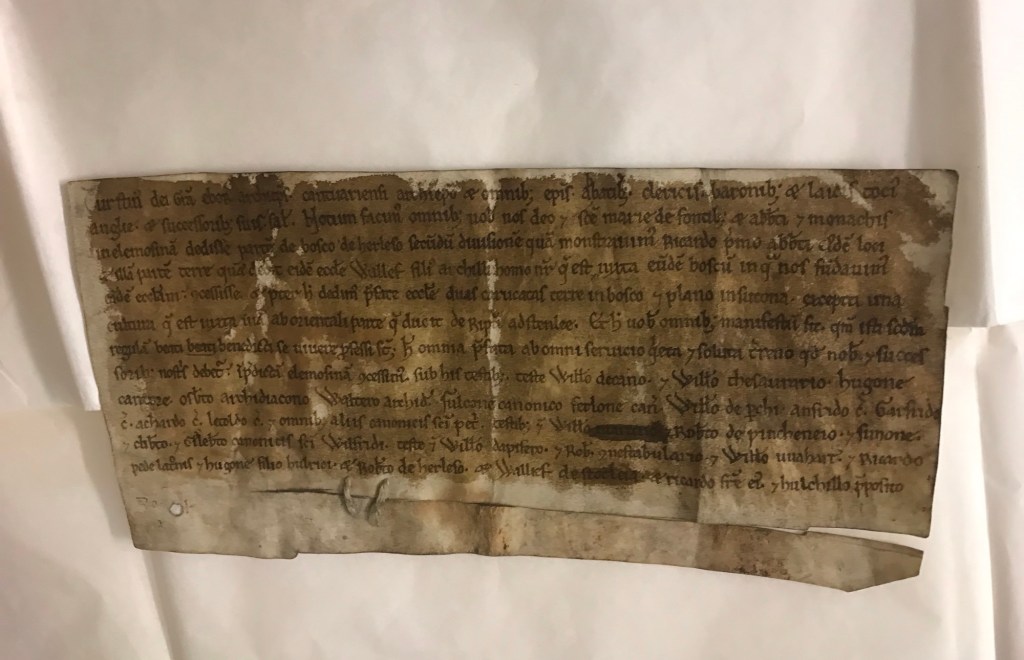
But if you think a 1711 document is old, it was a mere infant compared to the oldest document held by WYAS, and housed at Leeds. That document is pictured below, and it is one we were allowed to hold.
Document Reference: WYL150/925. Feoffment, Thurstan Archbishop of York to the monks of Fountains Abbey.
Dating from circa 1138 – almost 900 years old – this document is from the Fountains Abbey Collection – because the Leeds branch of WYAS has collections from outside the Leeds area, and even beyond the current West Yorkshire boundaries. It details the grant of land made to the monks at Fountains Abbey as long as they continued to live according to the rules of St Benedict. For more details about it click here.
And to listen to the translation of the oldest document in the Fountains Abbey collection, click here.
Those on today’s tour really did touch history.
If you do get the chance to do a backstage visit to an archive, go for it. It is well worth it, and you may be surprised what your local archive does hold!












 Past To Present Genealogy