A “German” Family in WW1 England – Pork Butchers in Liversedge

Whilst browsing a September 1914 edition of “The Batley News” an announcement in the public notices column caught my attention. Addressed “To All Whom it May Concern” it read as follows:

Notice is hereby given that Mrs Christiana Schulz and her family are all naturalised British subjects and, in the present circumstances, it has been deemed advisable that the public of the immediate neighbourhood should be made acquainted with the following facts, namely:-

1. Mrs Christiana Schulz, now residing at Frost Hill, Liversedge, is the widow of the late Mr George Schulz, and she, along with her late husband and family, have resided in England for a period of nearly 50 years.
2. The late Mr George Schulz and his wife and family for a period of over 14 years have been naturalised British subjects and gave resided in the immediate neighbourhood.
3. All the children of the late Mr George Schulz are British-born and are loyal British subjects.
4. The late Mr George Schulz prior to his death carried on, and since that date his Widow in conjunction with her family have carried on, business in the immediate neighbourhood as ‘Pork Butchers’ under the style of ‘George Schulz and Sons’ in an honourable and straightforward manner. The said business has been carried out at the following addresses namely:- Frost Hill, Liversedge, Batley Road, Heckmondwike and 165, Bradford Road, Moorend, Cleckheaton.
5. Since settling in England they gave to the utmost of their ability discharged in a proper manner all their obligations as British subjects.
6. England is the country of their adoption and their interests and sympathies are entirely British, and notwithstanding rumours to the contrary they have neither relations in nor any interests whatever in Germany. On the other hand they desire it to be publicly known that as loyal British subjects their interests and sympathies are purely British, and by this Notice to intimate to the public that their sincere desire is for the ultimate success of the British and their Allies in the present regrettable struggle.

Dated this 2nd day of September 1914.
Thomas Mitcheson
Market Place, Heckmondwike
Solicitor for the said Mrs Christiana Schulz and her family”.

Public Notice in the “Batley News” 5 September 1914

I was intrigued by the notice and wondered what became of the family. However I failed to find any further reference to Christiana Schulz in the GRO indexes. I could track her up to the placement of the notice, but thereafter I drew a blank.

In terms of family prior to this public proclamation of British sympathies, I first traced what appears to be George Schulz in the 1871 census. A 21 year old pork butcher from Germany named George Schalz is lodging with the Wray family in New Bridge Street, Dewsbury. As this is just one of a number surname variants which occurred in records for the family I’m not too hung up about the spelling. All other details fit in with what I’ve discovered.

The following year, GRO indexes record the marriage of a George Schulz and Nanette Egner in Dewsbury Registration District (Q3 1872). From subsequent census entries, combined with Parish Register baptismal entries, I suspect Nanette is Christiana.

Thereafter followed a steady flow of children born country-wide. These are detailed in the table below:

Schulz

Ancestry.co.uk (West Yorkshire births and baptisms 1813-1910 and West Yorkshire non-conformist records 1646-1985). GRO indexes and Huddersfield and District FHS Heckmondwike St James baptism booklet 

The censuses corroborate the family’s journey round the England, with their children’s birth locations corresponding with baptismal details. I’ve not discovered George Frederick’s baptism, but censuses identify Birmingham as his birthplace (1). GRO baptism indexes record the Q2 1879 birth registration of a George Frederick Schulz in the Birmingham Registration District.

The family census addresses were:

  • 1881: 9, Doncaster Road, Liverpool;
  • 1891: Woodhall, Healey Lane, Batley;
  • 1901: Frost Hill, Liversedge; and
  • 1911: Frost Hill, Liversedge

I’ve not traced a death for Nanette or a marriage for a George and Christiana. But, as mentioned, the censuses combined with the baptism details are the main reasons for my suspecting Nanette is Christiana:

  • The 1877 baptism of Caroline names her mother as Christiani [sic];
  • The 1881 census taken on 3 April 1881. This was prior to the birth of George Arthur. The family address is 9, Doncaster Road, Liverpool. The household comprises George Schulz, his wife Christina [sic] and children Fanny E, Caroline and George F. All details match the family. Then in July 1881 the Parish Register of St Martin in the Fields, Liverpool has the baptism of George Arthur. The address corresponds with the family, as does George’s occupation – but the baby’s mother is Nanette;
  • Adolphus Egner, brother-in-law, is in the household in 1901. Not conclusive as it could be a brother-in-law through a previous marriage, but it is another nugget of information; and
  • The 1911 census states George and Christiana have been married for 39 years – which would correspond with a 1872 marriage

I’d love to obtain some certificates to prove or disprove the theory. However, given their cost, it may be on permanent hold. The Schulz family are not part of my ancestry and I still have certificates I want relating to my own family history research.

Some censuses indicate George and Christiana were from Württemberg, Germany. George’s birthplace is confirmed in his February 1900 naturalisation papers. He was born in the Württemberg town of Langenburg,  the son of George and Margaret Schulz.

Probate records show George died on 6 April 1911. He was 61 years old. But there were plenty of family members to continue his business. Sons George Frederick, George Arthur, Charles, John Herbert and Ernest were all engaged in the trade. Son-in-law Carl Schuler, also from Langenburg (2) and husband of Caroline, owned a pork butcher’s business in Shipley.

However, their Great War fate continued to niggle me. It wasn’t my ancestry but so many of the locations associated with the Schulz’s were familiar to me. Staincliffe Church is less than ten minutes walking distance from my home; the location of their Batley Road shop is a similar distance and I can recall a butchers shop there, although it may not be the same one; I can see the Woodhall area from my window, about five minutes walk away; and I discovered they had a Healey business which burned down in 1891 – the area I’ve spent most of my life in. So I wanted to know how their story ended.

Staincliffe Church, scene of a number of Schulz baptisms & marriages

I knew British attitudes to foreign nationals changed at the outbreak of war, with Germans living in the country categorised as “enemy aliens“. I was also aware that, naturally enough, anti-German feelings were prevalent and hardened as the war progressed, especially after incidents such as the May 1915 Lusitania sinking.

From August 1914 newspapers carried numerous reports ranging from boycotting of German businesses, to attacks on and looting of German shops, even those belonging to naturalised British subjects. Many of these attacks were on the shops of pork butchers, a trade particularly associated with Germans. And many occurred in West Yorkshire.

One incident was far too close to home for the Schulz family. On 29-30 August 1914 anti-German riots broke out in Keighley. Over the course of the weekend a huge, angry, largely Irish mob attacked shops owned by tradesmen of German origins, including several pork butchers. Fuelled by alcohol and spurred on by cries of “Down with the ***** Germans”, “Come on: Let’s do to the ***** Germans the same as they are doing to the Belgians” and “Who will join Darcy’s Army” (3) they caused pandemonium in the town, terror to the citizens and injuries to several policemen. They also caused damage estimated at over £400. One shop was even set alight.

As I’d discovered from the 1911 census Charles Schulz had a pork butcher’s shop in Low Street, Keighley. And indeed his was one of the shops attacked. The 12 September edition of the Yorkshire post states:

Next the crowd went to the shop of a pork butcher named Schulz, in Low Street, which was also damaged and rifled, the windows being kicked through”.

The violence is also referred to in Lyn MacDonald’s “1914: The Days of Hope”. It contains the reminiscences of Eva Leach, daughter of a Keighley publican. She recalls the attacks on, and looting of, the pork butchers in Keighley. She recalls the Schulz’s as a “nice couple with a baby“. When the looting of their shop commenced “the Schulzes rushed next door and sheltered with the Mitchells until the trouble died down. Mrs Schulz was in an awful state, quite terrified“.

Undoubtedly this is the incident which prompted the family to employ a solicitor to place the newspaper notice within days of the Keighley events. If Christiana’s son’s Keighley shop could come under attack, so could the family’s Frost Hill business. The notice is powerful testimony to their concerns and the threat they were under.

But I was still no nearer to finding out what happened to Christiana after September 1914.

Then finally in January 2016 the final jigsaw puzzle piece clicked into the place. Not by any research on my part other than generally sharing the September 1914 notice on social media (4). As a result someone told me they believed the family adopted the English surname Schofield.

The Gate Hangs High” is a book by Mildred Coldwell. It recounts her family memoirs about living in Heckmondwike between 1909-1921. A passage from it provides confirmation of the wartime name change:

….there were quite a number of families in the Spen Valley of German descent who were ostracised by a section of our community. One such person was Mr Schultz [sic] (5), the pork butcher, whose spotless shop was up Frost Hill, a man and his family respected by us all. I cried when I heard that a stone had been thrown through his shop window. Mr Schultz wasn’t a German, he was one of us, a Spen Valleyer. Arthur, his little boy, was in my class at school and would even fight in the playground. Anyhow, the Hun wore helmets with a spike on top, and I couldn’t imagine Mr Schultz wearing one of those. But he stood his ground and showed everybody that he didn’t want to be a German, he was English, so a new sign was put up over his shop ‘Schofield’s Pork Butchers”. Mr Schultz had made his choice. It was lovely to go down with a basin as usual for half a pound of warm, roast pork covered with gravy, and served by the now Mr Schofield, smiling once more, standing there in his lovely, laundered blue and white striped apron, sharpening his long knife on the hone fastened on to a polished leather belt round his ample waist. Quite a few more families with German names followed his example”.

The changing of Germanic surnames to British sounding ones was not unique to the Schulz family. Many adopted this device to hide their origins and proclaim their Britishness.  Even the Royal Family did it in 1917, ditching Saxe-Coburg-Gotha in favour of Windsor.

Further corroboration of the Schulz to Schofield change comes with the death of Christiana in 1922. The National Probate Calendar has the following entry:

SCHOFIELD Christianna [sic] Rosina Sophie of Frost Hill, Liversedge, Yorkshire died 21 April 1922 Administration London 8 June to George Frederick Schofield butcher. Effects £1913 15s 7d

The GRO indexes (Q2 1922) confirm that Christiana R S Schofield was 69.

I’ve loved researching this family and feel there is so much more to discover. The early 20th century is my favourite period of history and I enjoyed researching it from a slightly different perspective: that of families of German origin in England during World War 1. This is just one family. I’m delighted to find they remained in England. 
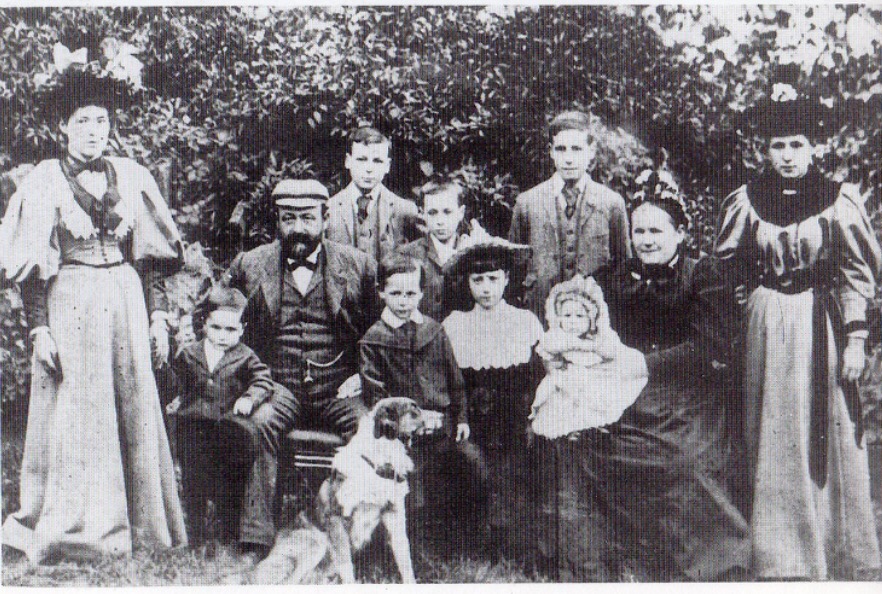
The Schulz Family


Footnotes:

(1) The 1911 census says Worcester, Birmingham. Others state Birmingham, Warwickshire
(2) Taken from his 1912 naturalisation papers
(3) One of the ringleaders was William Darcy
(4) Spen Valley Family and Local History Group on Facebook
(5) A son of George carrying on the family business

Sources

  • Ancestry.co.uk – England & Wales National Probate Calendar (Index of Wills and Administrations) 1858-1966
  • Ancestry.co.uk – HO 334 Naturalisation certificates and declarations of British nationality 1870-1912
  • Ancestry.co.uk – West Yorkshire births & baptisms 1813-1910 and West Yorkshire non-conformist records 1646-1985
  • Batley News” – 5 September 1914
  • Find My Past – 1871-1911 Censuses
  • Find My Past newspapers
  • GRO Indexes via FreeBMD and Find My Past
  • Huddersfield & District Family History Society Heckmondwike St James Baptisms 1883-1907 (note this West Yorkshire parish is not covered by Ancestry)
  • The Gate Hangs High” – Mildred Coldwell
  • 1914: The Days of Hope” – Lyn MacDonald

I Left it too Late: Batley’s Greenhill Mills Destroyed

Thank goodness no-one died, but even so I am feeling quite emotional about this. On 14 January a massive fire ripped through Greenhill Mills, Grange Road, Batley razing it to the ground.  

Apart for the sadness for those who will have lost their jobs, it was a place very much associated with an ancestor, Jesse Hill, who died in WW1: the ancestor I have spent most time researching. 

That connection has now gone, wiped out in a matter of hours. 

The firm Jesse Hill worked for, Wrigley & Parker, went into liquidation in the late 1920’s and the mill was sold. But it was still the same building. 

The mill was only down the road from me. I kept meaning to photograph it but I never got round to it. And I never made the effort to see inside, walk on the wood floors, touch the stonework. I know that sounds odd, perhaps it’s a family historian thing. 

Unlike many other places connected with my family history, because it was on my doorstop I didn’t have to make a special trip. It was there, I’d do it one day, no rush. A Victorian structure, still being used. It wasn’t like it would disappear overnight…..or so I thought.  

Following the inferno of 14 January, that’s exactly what happened.   

Not sparing the time to take that handful of photographs to record Jesse Hill’s workplace is something I now very much regret. As is never seeing the interior. It’s example of how we take for granted our local and family history.  

So a lesson learned the hard way. Don’t put off the chance to visit a family history connected location; don’t put off talking to family to record memories. Because one day you’ll wake up and realise that chance has gone. 

This is the only photo I took – too late.  

The remains of Greenhill Mills

 
Neither does Jesse Hill’s Spurr Street home exist. 

Spurr Street, Batley

Top Ten Genealogy/Family History Books by a Self-Confessed Bookworm

Tsundoku” – the Japanese word for buying books and letting them pile up unread. Yes I’m guilty of that. But I also have piles of read books because I don’t have enough bookshelf space, despite buying yet another one last year to accommodate my burgeoning genealogy and WW1 book collection. I return to these books time and time again for pleasure and my research (interchangeable, because I get enjoyment from research).   

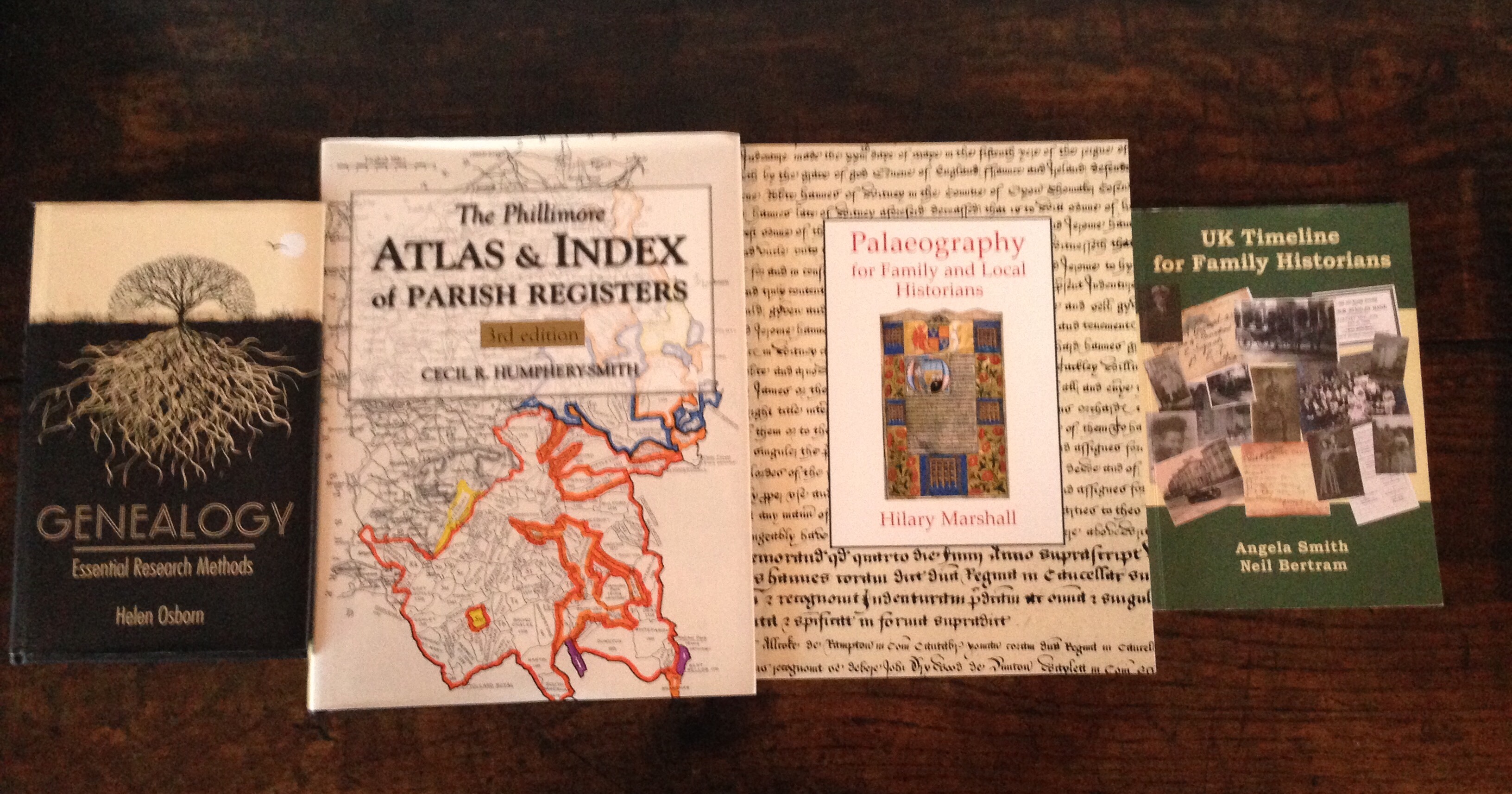
Part of my Book Collection

 Trying to narrow it down to my top ten go-to books has been a really difficult decision because it depends on which aspect of research I’m concentrating. Some such as the handy little Gibson Guides covering topics from Militia Lists, to Hearth Tax and Probate Jurisdictions are invaluable but very specific. I wanted a broader range of topics in my selection.

So in the end I’ve gone for a mixture of general reference and more specialised books, including some tailored to my own family history interests. Here they are, in no particular order: 

  • Ancestral Trails: The Complete Guide to British Genealogy and Family History” – Mark Herber. Exactly as described in the title. It’s my definitive reference book, written in a easy-to-read style and jam-packed with information. A book I couldn’t do without.
  • The Dictionary of Genealogy” – Terrick V H FitzHugh. An alphabetical glossary of terms. A quick reference source to dip into.
  • Tracing your Ancestors in the National Archives: The Website and Beyond” – Amanda Bevan. An in-depth guide which clearly set outs and explains The National Archives series of records. It is indeed “the biggest and best guide to The National Archives”  
  • The Phillimore Atlas and Index of Parish Registers” – edited by Cecil R Humphrey-Smith. Although this might not be for everyone because the information is available on the Internet, I find it invaluable having everything about pre-1832 parishes at county-level in one place, juxtaposed with the topographical county map. There is a comprehensive index of the parishes complete with dates of registers. The Ecclesiastical and Peculiar Jurisdictions are also included. It covers England, Scotland and Wales. Though for those with poor eyesight, a magnifying glass to see the maps in detail is advisable!
  • UK Timeline for Family Historians” – Angela Smith & Neil Bertram. Provides a timeline for family historians setting genealogical events and resources into a wider historical context. It’s not exhaustive but it is a really useful quick, basic reference book.
  • Genealogy – Essential Research Methods” – Helen Osborn. This is a different type of book. It is a detailed, well laid out reference for problem-solving research strategies to help break down brick walls. Some excellent advice on research methodology.
  • Palaeography for Family and Local Historians” – Hilary Marshall. I think it is essential to have a book about palaeography, abbreviations and Latin to help with deciphering old handwriting and language. I have a number all of which I use to varying degrees, so it was difficult to chose one. But in the end I went for this comprehensive book. It has the standard characteristics of letters, abbreviations and a Latin vocabulary. But it also includes copies of original documents accompanied by the transcript, translation, a description and any notable features of the script. So everything in one book.  
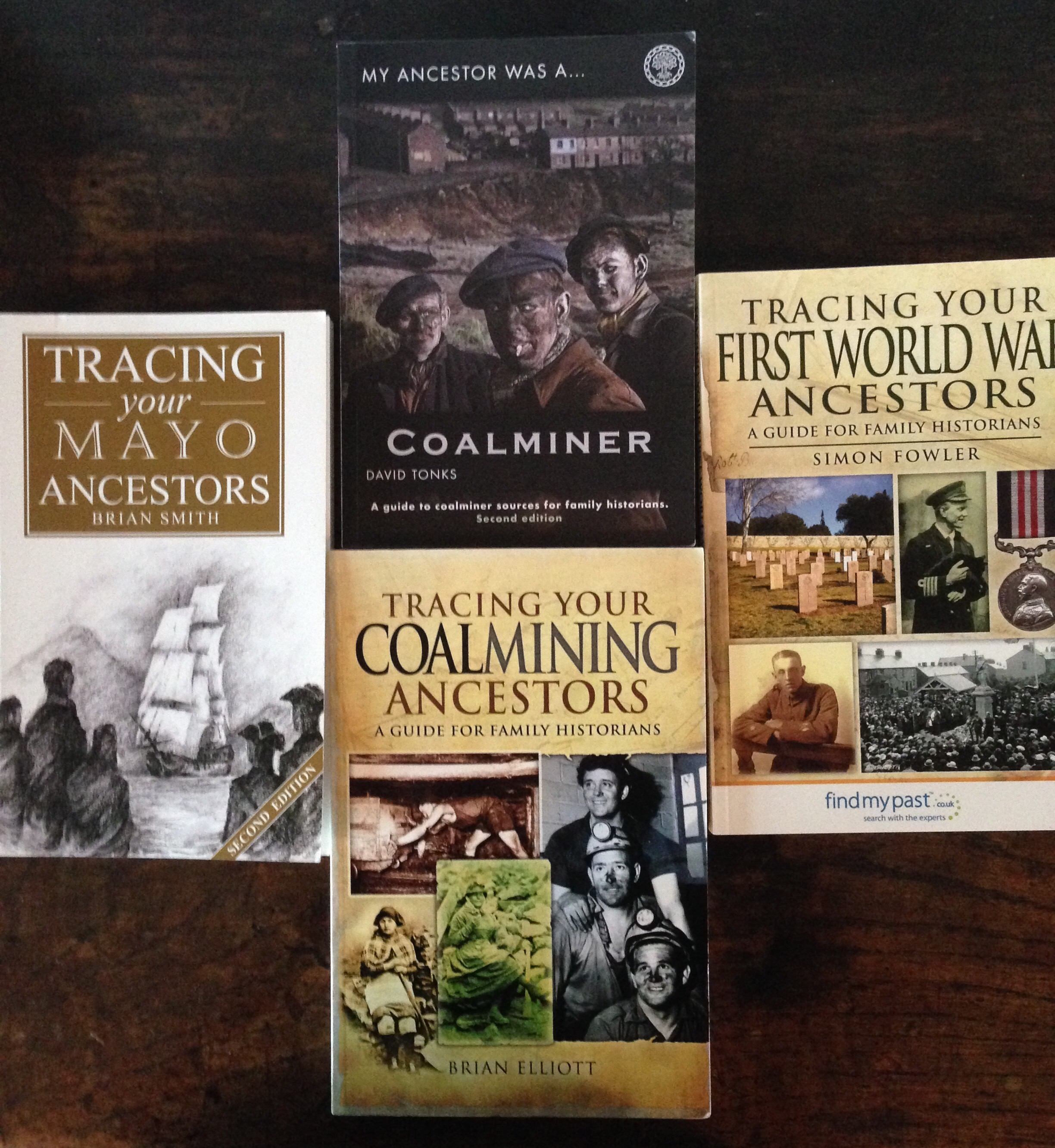
  • Tracing your Mayo Ancestors” – Brian Smith. I have a significant contingent of Irish ancestors. I agonised about which Irish ancestry book to include in my list. I was torn between this and John Grenham’s “Tracing Your Irish Ancestors” covering the whole of the country. But as, so far, all my ancestors are from County Mayo I went for a book focusing purely on the records for this County. There are other County books in this series of Flyleaf Press publications.
  • My Ancestor was a Coalminer: A Guide to Coalminer Sources for Family Historians”  – David Tonks. I love the SoG “My Ancestor was A…..” series of books, alongside Pen & Sword’s “Tracing Your Ancestor” series. My ancestors were predominantly coalminers, so for me a coal-mining family history research book is essential. I’ve included this one for the comprehensive pointer to various coal-mining sources. But I could have equally chosen Pen & Sword’s very informative and generally more detailed “Tracing Your Coalmining Ancestors: A Guide for Family Historians” by Brian Elliott (I’ve cheated though and  included this book in my final picture). However the deciding factor was my final choice, another Pen & Sword publication.
  • Tracing Your First World War Ancestors” – Simon Fowler. First World War ancestry is another one of my particular interests, having researched the 76 men on my local church War Memorial, St Mary of the Angels RC Church, Batley. I have a number of books about military research. But this is a good basic introduction covering the full range of those involved in the conflict, including women and civilians at war.  

To keep a track of my books I keep a A-Z by author index of them all. I make sure I take to any family history fairs and events so, in theory, I won’t duplicate purchases; and even if I can’t immediately spot a book on my over-crowded bookshelves, I know it’s there somewhere!

If you have tips for essential family history books please feel free to share them. It’s great to hear about key books, whether you are beginner to family history research or more experienced.

Who Do You Think You Are? Live 2016 – Workshops

I’m pushing on with my Family History New Year’s Resolutions, as described on 1 January. Today’s task has been around keeping up with the latest developments and building upon my knowledge.

I booked my ticket to “Who Do You Think You Are? Live 2016” late last year. Today I checked out the Workshop programme. Last year I failed to book these in advance. As a result the ones I wanted to attend were full. Although I was able to hang around the periphery and eavesdrop, it wasn’t quite the same as having a seat. This was my blog post based on my view of the 2015 event.

Irish Catholic Records Workshop in 2015

The programme is more or less finalised, and the workshops available to pre-book. Lots of interesting talks around a full range of topics, from Irish ancestry, copyright and War Records, to brick walls, maps and pre 1837 research. There are the inevitable workshop clashes. But I’ve deliberated and finally made my selection. These are based around a combination of my interests and areas I want to strengthen.

The full programme is here

My choices are:

  • “The Luck of the Irish” – Irish Census and Census Substitutes Might Lead You to Your Family in Ireland Prior to 1864 Registration – Grant Edward Curley (10.15)
  • Research Before 1837: Church Records on and Off Line – Else Churchill (11.15)
  • Writing Your Family History – Gill Blanchard (12.15)
  • What They Don’t Tell You About Archives – Simon Fowler (14.15)
  • Tracing a 16th and 17th Century Family Tree – Celia Heritage (15.15)
  • Copyright and Family History – Margaret Haig (16.15)


Update:
I have now received a follow up email from “WDYTYA? Live” informing me that the workshop schedule has changed since I made my booking. The “Writing Your Family History” workshop has moved to Friday’s show, so I will have to miss that one.

And “Research Before 1837” has moved to later in the day on Saturday….and it now clashes with the “Copyright and Family History” one. I’m now agonising over which one to attend. It may be that my husband will find himself attending the latter, tasked with note-taking: as a journalist, but not a family historian, it is the one he will probably get the most from.

I now have a gap at 11.15, so will probably go for Chris Baker’s  “The Fog of War: Breaking Through the Records of Soldiers of 1914-1918″, one of the talks I toyed with when making my original decision. My husband has booked for that one – so I will ask him to consider donating his place to me!

Looking at “The Education Zone” offerings which have now largely been fleshed out since my booking, Andrew Robertshaw’s “The Story of the Somme” appeals. Running between 13.50-14.10 I can probably squeeze that one in (just). But the other one I’m interested in, “Using Findmypast to Unlock Your Irish Family History“, by Brian Donovan clashes with the Archives talk.

The fact there are so many talks I’m interested in is testimony to the continued relevance of the show to family history researchers.

And the event has challenged my timetabling to the max. I only hope I haven’t gone too far with workshop overload….and I can find time to explore the various exhibitors.

I am also hoping that the surgery I’m now scheduled for will be in the week after the show. Otherwise all my planning will be in vain.


January Sale: Huddersfield & District Family History Society Publications

A proper January sale for me. Not clothes or household goods. But Parish Register index booklets.

Many of my ancestors are from the area of West Yorkshire covered by the Huddersfield & District Family History Society (FHS). So naturally this is one of the societies I’m a member of. This month they are reducing the price of their Register Transcription booklets to £1.00 and CDs to £5.00. Here is their Publication Page link.

img_0310

A Selection of my HDFHS Index Booklets

Although the Ancestry West Riding Parish Register collection is wonderful, and nothing can beat a visit to the local Archives, I must admit to a strong attachment to these index booklets and the hard work of all the FHS transcribers they represent. So in part this post is a shout out for all the fantastic work they do.

Yes, I do check my ancestral finds against the Registers for the rare, but inevitable, transcription error. And I do enjoy  looking through the Registers. But I still love the physical comfort and solidity of a book(let), not to mention the eye-relief especially when browsing generally.

And despite the big push by genealogy companies and the impression they sometimes give, not everything is available on the Internet…including some of the Parishes covered by these indexes.

I’m fortunate to live in the same area of many of my ancestors, so I can easily visit West Yorkshire Archives, local studies libraries and the excellent local libraries, including the one in my hometown of Batley. Others do not have this luxury. These indexes are excellent finding aids and another gateway to the Registers, providing a complementary, alternative source of information.

So whilst my husband was out at work on New Year’s Day, I spent part of it perusing the several hundred booklets produced by the FHS, checking against my list of previous purchases, and placing my (large) order.

Family History 2016: My Genealogy New Year’s Resolutions

That time of the year again. Time to look at my genealogy New Year’s Resolutions. I’m not into setting myself up for failure with overly-ambitious goals. So nothing too grand. More a case of “back to basics”. Some targets are more challenging than others, but all are attainable; and I hope that re-establishing good habits will ultimately bear fruit with my family history research.

I’ve culled my Resolutions to six. Weird number I know. But when setting work-linked objectives, which is essentially what these Resolutions are, sticking to a small manageable number works best for me. It encourages focus.

So this is my 2016 line-up (or walk of shame):

Regular Data Back-Ups
I’ve so much information stored on my ageing laptop. From my Family Historian tree to genealogy coursework; from research notes to information downloads such as burial registers and directories; not to mention scanned family and location photos and the final versions of my St Mary’s War Memorial and Hill Family History book. So, on the first of each month, I’m going to commit to a regular data back-up. A boring task which is all too easy to skip, as I know only too well; and before you know it weeks can easily become months between back-ups, and the consequences of a laptop failure after such a time-lapse doesn’t bear thinking about. This objective fits neatly into the SMART acronym.

  • Specific;
  • Measurable;
  • Achievable;
  • Realistic; and
  • Time-bound

Record Keeping
I love researching. It’s the thrill of putting all the pieces of a family puzzle together. What I’m not too hot with is the day-to-day routine. Meticulously recording my searches (failures as well as finds), updating my Family Historian programme, recording sources, filing documents etc. All this is such a chore in comparison to finding that elusive relative. I do it when researching for others because it is crucial work; but over the past couple of years I seem to have I have developed a blind spot with my own family history research. I’ve a stack of documents to record and notes to sort – but I always manage to find an excuse to put it off. No more! I will get them up to date in the first quarter of the year, and from then on record and file as I go along.….something I always used to do.

Get a Grip of Subscriptions
Over the years I’ve accumulated various subscriptions including magazines, Family and Local History Societies and websites. I’m now loosing track of what I’ve got, the costs and the renewal dates. It also means I’m not making the best use of my subscriptions. So this month I’m going to make a list of them all, along with the renewal dates. Then over the course of the year I’ll monitor my usage, evaluate them and decide which ones to continue with. Hopefully by doing this I’ll also keep up to date with what is out there, make fuller use of my subscriptions and become more involved.

A Selection of my Family History Subscriptions

A Selection of my Family History Subscriptions

Keep Informed about Latest Family History Developments
I’m going to ensure I set aside some time each week to keep up to date with family history developments in an organised way. As a start I do have several “free” hours each week travelling too and from work, so I can make far better use of this “dead” time to catch up with the latest news. This will comprise a mixture of platforms including:

  • making sure I do read those family history magazine and online genealogy newsletters I subscribe to;
  • keeping up with information from genealogy websites and companies;
  • continuing to broaden my knowledge by reading genealogy/family history books (at least one a month);
  • regularly reviewing what courses, talks and webinars are out there. After participating in The National Archives 1939 webinar, I’m going to sign up for other similar learning events from a mixture of sources (a minimum of six in the year); and
  • attending at least two family history fairs during the year

Get Back to my own Family History Research
This could be the real tricky one. Particularly over the last year or so I’ve found I have spent less and less time on my own personal research and more and more time researching for others. There have also been family illness issues which have intervened. Don’t get me wrong, I love researching for others. But I really do want to make some time to return to my own roots. I never did get to do my mum’s Family History book; neither did I make any progress with my husband’s Staffordshire and Shropshire tree. There are also lots of other loose ends I want to pursue. So I will need to commit time to my own research. That means my next big project will be the Callaghan/Rhodes Family History book. I will plan the outline by autumn, and make a start on writing it towards the end of 2016. I also want to move on with my husbands tree – I’ve lots of certificates lined up to buy, but I may still delay here in the hope that the cost does come down in 2016!

DNA
In 2015 I embarked on my genetic genealogy journey. In 2016 I aim to upload my data to GEDmatch, dig deeper into the findings and respond to contacts from others within two weeks. The end goal is to generally get more from the results than I have to date. A challenge to a self-confessed technophobe!

So New Year, clean slate. It will be interesting to see if I’ve managed to stick to these when 2016 draws to a close. Hopefully putting them into the public domain is another incentive for me to succeed with them!

Right, I’m off to do my data back-up.

My 2015 Blogging Year in Review: A San Francisco Cable Car

Promise, this really is my last post for 2015. But as a bit of a stats geek I couldn’t resist sharing the WordPress.com 2015 annual report for my family history blog. Momentous for me, because 2015 marked its birth!

The report includes useful information such as:

  • posting patterns;
  • top referring sites; and
  • most viewed posts

And on the subject of my most popular posts, I’ve added links to some of my favourites from 2015 which didn’t make the official “hit” list. These are:

As ever I’d welcome any feedback about which of my posts you particularly enjoyed in 2015; and what you would like to see more of in 2016.

So thank you for reading. And I hope to share more posts in 2016.

Here’s an excerpt from the report:

A San Francisco cable car holds 60 people. This blog was viewed about 2,900 times in 2015. If it were a cable car, it would take about 48 trips to carry that many people.

Click here to see the complete report.

My Bizarre Christmas-Associated Family Name: AKA There’s more to Family History than DNA

In “Shrapnel and Shelletta[1] I wrote about war-associated baby names. This is a more seasonal post about a particular Christmas-associated family name.

When naming a baby at Christmas-time, which names conjure up this magical time of year? Which can be considered as festive and beautiful as this special period? Holly, Ivy, Joy, Noel/le, Merry, Nick or Rudolph might spring to mind. Perhaps Caspar, Gabriel, Emmanuel, Balthasar and Gloria? Or maybe the Holy Family names of Jesus, Mary and Joseph?

In contrast, which name would make you recoil with shock and horror? Which name would you think “No way! How inappropriate! What on earth are they thinking of?”

Probably near the top of the list would be the one associated with my family tree.  For on 24 December 1826 at Kirkheaton’s St John the Baptist Parish Church (oh, the irony of date and church name)[2] the baptism of Herod Jennings took place.

Saint-Sulpice-de-Favières_vitrail1_837 Herod

Magi before Herod the Great, Wikimedia Creative Commons License, G Freihalter

Herod was born on 3 November 1826, one of five children of coal miner George Jennings and his wife Sarah Ellis. They married in October 1818 at St Mary’s, Mirfield and by the time of Herod’s baptism had settled in Hopton, a hamlet in that township, midway between Mirfield and Kirkheaton.

Herod’s siblings included the equally wonderfully named Israel (baptised 20 June 1824) and Lot (born 8 March 1830), so some fabulous biblical associations there too. The other family names of James (baptised 24 September 1820) and Ann (baptised 20 October 1822, buried 7 July 1823) seem disappointingly ordinary in comparison.

Sarah died in 1832, age 36 leaving George to bring up his four surviving children. James married Sarah Pickles on 25 December 1839, another example of Christmastime events in this branch of the Jennings family![3]So, by the time of the 1841 census, it was just George and his two sons, Israel and Herod, along with a female servant Jemima Gibson living in the Upper Moor, Hopton household. Youngest child Lot was along the road at Jack Royd, with the Peace family. This may have been a permanent arrangement given the family situation.

By the time of this census young Herod already worked down the mine, a job which ultimately would possibly contribute to his death.

On 7 October 1850 he married Ann Hallas at St Mary’s, Mirfield. Both Herod and Ann lived at Woods Row, Hopton. Ann was slightly older than Herod, being born in 1824. By the time of their wedding, she was already the unmarried mother of two. Her son, Henry, was born in 1843; and my 2x great grandmother Elizabeth’s birth occurred in November 1850, 11 months prior to Ann’s marriage to Herod.

This then is my family connection to Herod: His marriage to my 3x great grandmother. And it is one of the mysteries I still hope the DNA testing of mum and me will solve. Was Herod the father of Elizabeth? She was certainly brought up to think so, with all the censuses prior to her marriage recording her surname as Jennings, whereas her brother Henry went under his correct Hallas surname. And when registering the birth of her son Jonathan, there is a slip when Elizabeth starts entering her maiden name as “Jen”. This is subsequently scored through and correctly written as “Hallas”.

It appears Henry too was minded to look upon Herod as his father-figure. At his baptism at St Peter’s, Hartshead in June 1857 he appears in the register as Henry Jennings, not Hallas. When he married Hannah Hainsworth at Leeds All Saints on 24 December 1866, his marriage certificate records his father’s name as “Herod Hallas”. And in 1870 he named his eldest son Herod. Although by no means a common name, a glance at the GRO indexes shows it did appear occasionally, along with its alternative forms of Herodius and the feminine Herodia. The fact Henry gave his son this unusual name seems to indicate a measure of affection for the man who brought him up. Finally, at the time of the 1871 census Herod, son William and nephew Charles were boarding in the Leeds home of Henry.

So, whether or not there is a DNA link, he is still a major figure in my family tree. And for me this brings home the fact that there is more to family, and family history research, than DNA links alone!

Herod and Ann had nine other children: Ellen (born April 1851), Louisa (born January 1853), Harriet (born November 1854), Mary (born May 1858), William (born 1860), Eliza (born April 1862), Rose (born 1864), Violet (born 1866) and James (born 1871).

The family moved frequently, presumably due to Herod’s work as a coal miner. They are recorded at various locations in the area, many within walking distance of where I live. These included Mirfield, Battyeford, Hopton, Hartshead, Roberttown, White Lee and Batley.

Outside of work Herod had a keen interest in quoits, arranging and taking part in park challenge games especially around local Feast times. This game was particularly popular with miners and mining communities in Victorian times, with the metal rings being made of waste metal from mine forges. Challenge matches were also a way to raise funds, for example for sick and injured miners.

Herod died age 52, at Cross Bank, Batley as a result of asthma and bronchitis, which presumably owed something to his mining occupation. Working in cramped, filthy, air-polluted, damp, sometimes wet conditions from an early age, this was a hazardous and unhealthy occupation. The conditions and physical exertion led to chronic muscular-skeletal problems and back pain as well as rheumatism and joint inflammation. Most colliers had lung associated problems, with many becoming asthmatic whilst still relatively young. So Herod’s cause of death, from a lung-related illness, is unsurprising.

Ironically Herod’s date of death occurred on 5 January 1878, a day we associate with the Christmas period, falling before 12th night. And in the Western Christian tradition the 6 January is the Epiphany, marking the visit of the Magi to the infant Jesus in Bethlehem. This brings us once more to the King Herod connection, at Herod Jennings’ death as well as his baptism.

This is what Matthew’s gospel says about those events at the first Christmas:

Then Herod summoned the wise men to see him privately. He asked them the exact date on which the star had appeared, and sent them to Bethlehem. ‘Go find out all about the child,’ he said ‘and when you have found him, let me know, so that I too may go and do him homage.’  Having listened to what the king had to say, they set out. And there in front of them was the star they had seen rising; it went forward and halted over the place where the child was. The sight of the star filled them with delight, and going into the house they saw the child with his mother Mary, and falling to their knees they did him homage. Then, opening their treasures, they offered him gifts of gold and frankincense and myrrh. But they were warned in a dream not to go back to Herod, and returned to their own country by a different way. 

After they had left, the Angel of the Lord appeared to Joseph in a dream and said, ‘Get up, take the child and his mother with you, and escape into Egypt, and stay there until I tell you, because Herod intends to search for the child and do away with him.’ So Joseph got up and, taking the child and his mother with him, left that night for Egypt, where he stayed until the death of Herod……Herod was furious when he realised he had been outwitted by the wise men, and in Bethlehem and its surrounding district he had all the male children killed who were two years old or under, reckoning by the date he had been careful to ask the wise men”.[4]

Herod was buried in Batley Cemetery on 7 January 1878.

I have a great deal of affection for Herod, whether or not there is a direct family blood-tie. The fact he took on one, possibly two children when he married Ann; and they in turn acknowledged him as a father, which speaks volumes for him. I can relate to the location links. And I can totally sympathise with his asthma suffering.

This is my final family history blog post of 2015, and an apt one given the time of year. Thanks ever so much for reading them. As someone new to blogging your support, encouragement and feedback has meant so much over the past eight months.

Merry Christmas everyone – wishing you all peace, health and happiness for 2016!

Sources:

[1] Shrapnel and Shelletta: Baby Names and their Links to War, Remembrance and Commemoration | PastToPresentGenealogy https://pasttopresentgenealogy.wordpress.com/2015/11/04/shrapnel-and-shelletta-baby-names-and-their-links-to-war-remembrance-and-commemoration/
[2] Herod the Great was responsible for trying to elicit the three wise men to reveal the  whereabouts of Jesus and, when this failed, subsequently ordering the killing of all infant boys under the age two and under, the so-called “Massacre of the Innocents”. His son, Herod Antipas, had John the Baptist killed.
[3] It was not uncommon for working-class people to have wedding ceremonies on Christmas Day. It was, after all, a holiday so they had time off work.
[4] The Jerusalem Bible, Popular Edition 1974 – Matthew 2: 7-17

Another blogging mystery solved – the Liebster Award

I started writing my blog about eight months ago so it’s all still fairly new to me. Although I struggle with the techie aspects, I enjoy writing posts because it helps me to focus on my family history research. I also find it a useful discipline to construct an ancestor story, rather than having all the individual sources stored in various files, catalogued in card indexes and documented in computer software programmes. This re-evaluating of research can result in new leads. But I have occasionally wondered if it was worth putting it in a blog, and even went so far to question it in a recent twitter posting. After all, would anyone else be interested?

Then a few months ago I received a comment from Suzanne Hopper Gray. She has a fabulous family history blog Filling in the Family Tree all about her ancestors and the genealogy process generally. She had nominated me for a Liebster Award.

The Liebster Award is a lovely way to welcome new bloggers and also introduce them to other blogs. Thank you ever so much Suzanne. It made my day to know that others do read my blog.

The Liebster Award is, I suppose, the blogging equivalent of a chain letter. But it has some wonderful benefits. As a result of Suzanne’s nomination I’ve got to read some really interesting blogs, ones that I otherwise may not have seen. And hopefully my blog will be similarly introduced to others in the blogging community.

Here is how it works:

Make a post thanking and linking the person who nominated you. Include the Liebster Award sticker in the post too.

Liebster Award

Nominate 5 -10 other bloggers who you feel are worthy of this award.
Let them know they have been nominated by commenting on one of their posts. Ensure all of these bloggers have less than 200 followers. Answer the eleven questions asked to you by the person who nominated you, and make eleven questions of your own for your nominees or you may use the same questions. Lastly, COPY these rules in your post. (Note: I removed a line that said you could re-nominate the person who nominated you. If you want that, add it back it in!)

So, in no particular order, here are my nominees for the Liebster Award:

  • starryblacknessa family history blogger sharing the lives of her ancestors. These include ones from Devon and Cornwall, areas I love visiting. There are also ones from West Yorkshire, my home-county;
  • Dunfermline News 100 Years Ago – I love old newspapers and I’m particularly fascinated by the WW1 period, so I really enjoy reading these news snippets about life and times a century ago;
  • Victorian Detectives – for those interested in Victorian Crime and Punishment, this is a wonderful blog;
  • The Pharos Blog: Lighting up Genealogy – in-depth, thought-provoking genealogy articles by Pharos Tutors, an online genealogy and family history course provider;
  • Life in the Past Lane – A family history blogger writing about her research journey, including her DNA discoveries.

Here are my answers to the questions asked by Suzanne:

What do you do for fun?
Read, cross stitching, research my family history, support my rugby league team (Huddersfield Giants), walk and have days out with my family. 


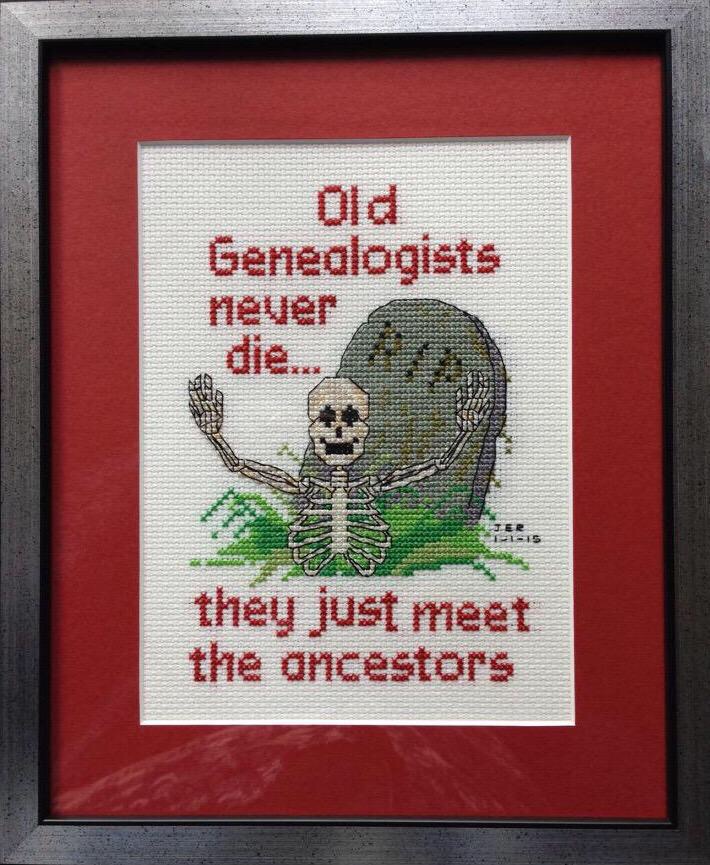
Combining two of my favourite things: family history & cross stitching


What happened on the happiest day that you can remember?
My daughter was born.

What is your favourite meal?
A seasonal, proper autumn/winter Sunday lunch. Mashed and roast potatoes, roast beef, Brussels sprouts, carrots, horseradish sauce, English mustard, lashings of gravy and, most importantly of all given my roots, Yorkshire pudding. 

What do you hope to accomplish with your blog?
To have fun bringing together my ancestors’ stories so their lives live on; to also research and remember other people who lived in the Batley area; and if others enjoy reading it, well that’s a bonus

What is your preferred genre of music?
Rock/Heavy Metal in my teens and early 20’s. Numerous gigs and festivals attended. Now my taste is far more eclectic and, to the benefit of my hearing and fellow commuters, played at a reduced volume level. Given the current work stresses I’m into soothing sounds of sea/ocean waves, nature type music, if it can be classed as music!

If a genie came to you and said “Your wish is my command!” what would you wish?
This is a tough one. There are so many horrible things including illness, poverty and hunger. On a personal level it is tempting to say health for all my family. But trying to look at it from a more selfless/greater good angle I think I’d wish for an end to conflict in the world, from individual and community level right through to nations and religions.

Where would you like to go on your dream vacation?
County Mayo, Ireland

What irritates you?
People on public transport who take up more than one seat – one for themselves and the other for their bag!

What are you reading right now?
The Wills of our Ancestors: A Guide for Family and Local Historians  by Stuart A Raymond – I’m due to start my final assessed genealogy course module in the New Year!

What’s your favourite movie?
I don’t watch movies – I don’t have time! Think the last one I saw was “Titanic”. 

What are you most proud of?
Gosh another tricky one. My daughter (she’d be most put out if I didn’t say that). After that it is 50/50 between writing my paternal family history book which was a Father’s Day present for my dad in 2014. I finished it a couple of months before he was diagnosed with terminal stomach cancer. 13 months on he’s still with us and Mid Yorkshire NHS Trust have admitted they misdiagnosed him, but that’s a whole new issue!!!!!! And seeing my charity fundraising booklet in print. It’s about the men of Batley St Mary’s RC Church who lost their lives in WW1. I spent over three years researching the 76 men and the booklet has raised several hundred pounds for St Mary’s and The Royal British Legion Poppy Appeal. St Mary’s are currently raising money to repair the church roof. More information can be found at:

http://www.stmarybatley.co.uk/roof-fund.html


Labour of Love: Batley St Mary’s War Memorial Booklet


Here are my questions for those I’ve nominated:

  1. What do you do for fun?
  2. What is your biggest regret in life?
  3. What happened on the happiest day that you can remember?
  4. Why did you start blogging?
  5. What is your earliest memory?
  6. If a genie came to you and said “Your wish is my command!” what would you wish?
  7. Where is the favourite place you’ve ever visited and why?
  8. What irritates you?
  9. What book are you currently reading?
  10. If you could go back in time, which era would you want to visit and why?
  11. Which achievement are you most proud of?

Thank you Suzanne – really appreciated this. And thank you for introducing me to some wonderful blogs.

PS – to those I’ve nominated, do not feel obliged to take up the challenge. Some of you may have probably received nominations in the past!


Christmas Party Tips and Etiquette: 1915

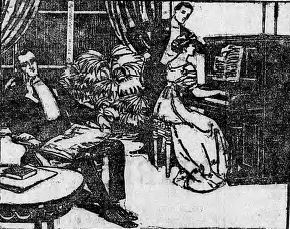
In late November 1915 a local newspaper helpfully provided a “humorous” series of 1915 Christmas “don’ts” to help its readers avoid any seasonal social faux-pas.

Christmas Donts 1

These were as follows:

  • Don’t arrive half an hour too soon and jocularly explain that you’ve come to avoid the crush;
  • Don’t entertain the company with a humorous description of the old gentleman you saw coming up the street. He may arrive later;
  • Don’t always catch the same girl when playing blind man’s buff. People may suspect that you can see;
  • Don’t attempt to do conjuring tricks unless you have tried them before;
  • Don’t say “I thought so” when you are informed the mince pies are homemade – it’s ambiguous;
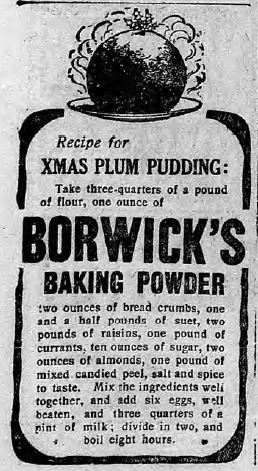
  • Don’t say that the plum pudding is “just like mothers”. It might be considered a poor compliment;
  • Don’t say “That yarn of yours always makes me laugh” when your host introduces his annual joke. It sounds like another way of saying “Chestnuts”;
  • Don’t sing more than half-a-dozen songs in succession because – well, it’s bad for the voice;
  • Don’t, when asked to take a glass of port wine, sip it, and then inquire whether it’s port or sherry. You may be misunderstood; and
  • Don’t, when conversing harp on the “ripping time” you had at Brown’s the other night. It savours of odious comparisons.

Christmas Donts 2

I’m not sure how many of these handy hints would apply to the party season a century on – perhaps they still should! Although an idealistic and possibly tongue in cheek portrayal of life, they do evoke some of the gentility, values and manners of a Christmas 100 years ago. They also provide a contrast to the War raging on the continent. 

For me these contemporaneous snippets, with their wonderful phraseology and language, help make family history more than just finding a trail of names and dates. They give a flavour of the times in which my ancestors lived. And you never know, the tips might prove handy this year!

Christmas Donts 3

Source:

  • “Batley News” – 27 November 1915