This is the latest Batley St Mary’s one-place study update, looking at the posts added in January 2023. The update also contains links to all the posts in the study to date.
If you are new to to this one-place study and want to know what it is all about, click here. Otherwise read on to discover all the other posts, new and old, containing a wealth of parish, parishioner and wider local Batley history.
St Mary’s Church – photo by Jane Roberts
January 2023 saw the addition of nine new posts, bringing the total number for the study to 212. Three other pages were updated. Two other categories, looking at statistics for Batley and the parish of St Mary’s, were renamed.
The additions included four weekly newspaper pages for January 1917. I have accordingly updated the surname index to these During This Week newspaper pieces, so you can easily identify newspaper snippets relevant to your family.
January saw the addition of two new Memorial biographies, those for Arthur William Bayldon Woodhead and Martin Gallagher,
More men who served and survived have been identified and that page includes these new names. However, no new biographies were added here this month. They will follow in due course.
And this month there is an unusual tale in the Miscellany of Information section – a post about a bizarre crime which took place in Batley cemetery under cover of black-out darkness in 1942.
As for the renamed categories, Batley Descriptions now becomes Batley Statistics and Descriptions – Population, Health, Mortality, Fertility etc. It will cover general information about Batley. This will provide an overview of the town where St Mary of the Angels is located and therefore some more context to the lives of the parishioners. Two new posts have been added here. One looks at the population of Batley between 1801 and 1939. The other looks at Batley in the 1921 census, with all the changes wrought by the war.
The other renamed category is Population, Health, Mortality and Fertility, which has been renamed Batley St Mary’s Population, Health, Mortality and Fertility Information and Comparisons. This will look at population and health issues at a parish rather than town level, and may draw on information from the town section to enable comparisons.
Below is the full list of pages to date. I have annotated the *NEW* and *UPDATED* ones, so you can easily pick these out. Click on the link and it will take you straight to the relevant page.
Postscript: Finally a big thank you for the donations already received to keep this website going. They really do help.
The website has always been free to use, but it does cost me money to operate. In the current difficult economic climate I am considering if I can continue to afford to keep running it as a free resource, especially as I have to balance the research time against work commitments.
If you have enjoyed reading the various pieces, and would like to make a donation towards keeping the website up and running in its current open access format, it would be very much appreciated.
Please click here to be taken to the PayPal donation link. By making a donation you will be helping to keep the website online and freely available for all.
On an evening in late May 1942, under cover of darkness in wartime black-out Batley, a bizarre crime was under way. The mystery would make headlines in newspapers across the country – including the nationals.
On Saturday night, 23 May, Allan Pollard of Coal Pit Lane, employed by Batley Corporation as the Cemetery Ranger, undertook his normal routine at Batley cemetery. At 8pm, after checking thoroughly to make sure everything was in order and that the grounds were empty of the living, he locked the gates for the night.
In Batley police station, Monday 25 May was proving a fairly routine morning for 27-year-old Police Constable Arthur Peakman of the West Riding of Yorkshire Constabulary. But things took a dramatic turn and became anything but routine at 9.25am, when Robert Edward Cardwell, foreman gardener at Batley cemetery, burst in to report a strange occurrence.
Cardwell lived on Towngate Road, local to the cemetery, and had entered the cemetery grounds at 7.50am on Sunday morning. He could not believe the sight which met his eyes in the Roman Catholic portion. One of the graves, S.1078, had been re-opened. The opening measured five feet long, two feet wide and five feet deep. Soil had been thrown on surrounding graves causing damage to five of them, estimated to be around five shillings in each case.
Cardwell initially informed Fred Burn, the Cemetery Registrar, who confirmed the grave had been opened without his permission. After going through the register and identifying the owners of the affected graves, they agreed the incident must be reported to the police… although there was a delay of a day between the discovery of the incident and its official reporting.
After hearing Cardwell’s incredible tale and taking down his official statement, PC Peakman, accompanied by his superior, Sergeant Micklethwaite went to investigate. The graves were located near to the boundary wall on the Healey side of the cemetery. In this period, prior to the building of Healey Estate, it was a particularly secluded area.
Ordnance Survey Maps – Six-inch England and Wales, 1842-1952, Yorkshire CCXXXII.11.SE, Revised: 1938, Published: 1946 – National Library of Scotland, shared under the the Creative Commons Attribution (CC-BY) licence.
With trepidation, the two policemen used a prodder to examine the plot further. It was with immense relief that around one foot below the re-opened depth the prodder struck something solid – the coffin was still there. It had not been tampered with. Nothing appeared to have been stolen from this grave, or those surrounding it.
Continuing their search of the cemetery and surrounding fields, the policemen found traces of clay on the boundary wall, indicating where someone had climbed over to the Cemetery Fields footpath. There the trail ended. The police also found a small area of clay with the imprint of clothing on it. The assumption is this is where the culprit had knelt. Unfortunately the ‘digger’ had been sufficiently alert to ensure he left no tools.
The conclusion of the investigating officers was :
The person who re-opened the grave is evidently strong and virile and might be called an expert in the use of a spade judging form the method in which he cut the clay out.1
Photo by Jane Roberts
But who had carried out this act? And why, as none of the burials in the graves involved in this odd event were so remarkable as to warrant this attention? Was it a solo venture, or were there accomplices? What was being sought? Did the ‘digger’ or ‘diggers’ achieve their objectives, or were they disturbed? Did they fail to complete their task before daybreak and the lifting of blackout restrictions, just after 5am. And which graves were involved?
The disturbed plot was owned by Lilian Igo. The grave contained the body of her husband, 32-year-old James Igo, a Denby Grange Colliery miner, who died in hospital on 8 February after a sudden illness. A parishioner of St Joseph’s, the Batley Carr Catholic parish, his funeral was conducted in Batley cemetery on 13 February 1940.
The damaged graves belonged to:
Michael Finn, an ex-serviceman from the Great War. His wife Ann was buried there on 24 April 1941, age 60.2 They were St Mary’s parishioners.
James Harkin (sometimes the spelling is Horkin). The Harkin family were associated with St Mary’s parish. James’ 57-year-old wife, Mary, was buried there on 2 April 1931.
John William Harkin, whose 45-year-old wife Mary Jane, was buried there on 30 March 1941.3 This family were also associated with St Mary’s.
Mary Hill. This grave contained the body of her 33-year-old husband John Herbert (Jack) Hill. He had been killed in a tragic accident whilst building an air-raid shelter at Batley Hospital on 14 March 1940. A former St Mary’s parishioner, the family had recently moved into St Joseph’s parish.
Mary Travis. The most recent burial in this grave, on 17 October 1940, was 44-year-old Harold Travis, husband of Agnes (formerly Cairns) of St Mary’s parish.
Batley Cemetery, Photo by Jane Roberts
Following up, PC Peakman now conducted a series of interviews. Later that day he took formal evidence from Cemetery Ranger Allan Pollard, who was adamant that between 6pm and 8pm on 23 May, on his two visits in the vicinity of the grave, all was correct.
Peakman also spoke with Mary Ann Igo (mother of James), Lilian Igo (his widow) and Fathers Kennedy and McMendmin, priests at St Josephs, who had officiated at the funeral.
Accompanied by Inspector Hunter, Peakman’s enquiries continued. These included another visit to Lilian Igo. The policemen also spoke with her father, Harry Riley. Others questioned included Joe Igo and his wife, (brother and sister-in-law of James), Edward Kerfoot (stepbrother of James) and Fathers McBride and Mahoney of St Mary’s. All to no avail. No useful information was gained. They were no further forward in solving the mystery.
The police maintained a nightly vigil of the cemetery for a week afterwards, but no further incidents occurred.
The Batley News paid surprisingly little attention to the strange goings-on in the cemetery, giving them minimal coverage. Describing it as an “Incident That Stirred up the Imagination”4 the newspaper castigated London and provincial newspapers for letting their imaginations run riot. The Batley News take was:
…there is little to relate except that the earth was removed in the dead of night and the digging had been neatly done…it seems a trivial event in the history of a town to create national interest.5
But national interest it did create, with reports of police guards in the cemetery to prevent further desecration of graves. The Daily Mirror even interviewed James’s bewildered mother, with her quotes appearing in the newspaper, as follows:
Why should James’s grave have been chosen? He had not been married for a year when he died in hospital a few days after two urgent operations.6
The most macabre theory doing the rounds involved a Yorkshire murder victim.
On the evening of 10 June 1939 Charles Borman, an amateur bird-spotter, made a gruesome discovery in a hedge at Leggett Wood, Scholes: a newspaper parcel containing the head of a woman. Police were summoned and two further similar parcels discovered, containing the woman’s left arm and left leg. The woman’s torso was discovered two days later in Low Wood, near Wellington Hill, Leeds.
The victim was identified as 20-year-old Thornhill-born Ethel Wraithmell, also known as Shirley, whose last known residence was Leeds.
Ethel’s brother, Harry, lived in Batley. For this reason apparently, on 21 July 1939, her remains were encased in a square box and interred in a public grave in Batley cemetery. The location of this public grave was only yards away from the disturbed graves.
Police continued to investigate the “Leeds Torso” case. Almost a year elapsed before it was finally solved. On 27 April 1940, 28-year-old railway worker Wilfred Lowe handed himself into the police, with the words:
I have heard you have been making further inquiries and I have come to tell you it is me you want.7
Wilfred Lowe’s trial commenced at Leeds Assizes on 15 July 1940. He pleaded not guilty. On the second day of the trial, the jury reached its verdict. They agreed, acquitting him of murder, but finding him guilty of manslaughter. He was sentenced to twelve months’ imprisonment.
These sensational events would still be very familiar to many West Riding folk. However, in Batley, the theory of any link between the Wraithmell case and the grave re-opening was roundly dismissed. Registrar Fred Burn told the police he believed the perpetrator had opened the grave he intended to, as all the graves in that portion had number stones. It was not a case of mistaking the grave for that of Ethel Wraithmell.
With police investigations at a dead end, on 3 June 1942 Dewsbury-based Superintendent Stone, wrote to the Batley Town Clerk to inform him that:
…so far no trace has been found of the person or persons responsible….Should any information concerning the matter be obtained I will have you informed.8
The files I viewed contained no further information, although it is clear some other documents concerning the case did exist. Unfortunately, I have not traced them. Perhaps they do not survive.
However, this story does show the importance of local archives. I found the initial information about this bizarre episode purely by chance. I was intrigued by a West Yorkshire Archive Service (WYAS) catalogue description which read “Crime report relating to the re-opening of a grave by persons unknown in Batley Cemetery.” The documents were held by the Kirklees Branch of the WYAS. I quickly made an appointment to view them before this branch’s temporary closure.
When I began reading the file, my interest increased, because it was the Catholic part of Batley Cemetery. It fitted in with my Batley St Mary’s one-place study. My jaw hit the floor though as I read on. One of the graves involved in the incident was my grandad’s.
The files held a series of crime scene photos – and these include my grandad’s damaged grave, with its original wooden cross maker. I cannot publish these photos as they are subject to WYAS copyright. But they are an amazing addition to my family history. And it was a story no living member of the family had heard about.
It goes to show that archives catalogue descriptions (if they do exist, as not everything is catalogued) do not always tell the full story – they are signposts. And research curiosity does sometimes really pay unexpected dividends.
As yet I’ve not found out the identity of the individual(s) who tampered with the grave. Neither have I found a motive. Perhaps the mystery was never solved….unless you know different?
Postscript: Finally a big thank you for the donations already received to keep this website going.
The website has always been free to use, but it does cost me money to operate. In the current difficult economic climate I am considering if I can continue to afford to keep running it as a free resource, especially as I have to balance the research time against work commitments.
If you have enjoyed reading the various pieces, and would like to make a donation towards keeping the website up and running in its current open access format, it would be very much appreciated.
Please click here to be taken to the PayPal donation link. By making a donation you will be helping to keep the website online and freely available for all.
Thank you.
Footnotes: 1. Crime report relating to the re-opening of a grave by persons unknown at Batley Cemetery, WYAS, Ref KMT1/Box63/TB83. 2. In Robert Edward Cardwell’s witness statement, as taken by PC Peakman, Michael Finn is incorrectly referred to as Michael Timms. 3. The Batley Cemetery Burial Register incorrectly records her age as 69. 4. Batley News, 6 June 1942. 5. Ibid. 6. Daily Mirror, 1 June 1942. 7. Yorkshire Evening Post, 21 May 1940. 8. Crime report, Ibid.
Other Sources: • 1939 Register. • Batley Cemetery Burial Register. • Batley News, 22 July 1939, 17 February 1940, 16 March 1940, 23 March 1940, 20 July 1940, 19 October 1940, 5 April 1941, 26 April 1941, 23 May 1942. • Bradford Observer, 30 May 1942. • Census of England and Wales, 1891 – 1921. • Daily News (London), 30 May 1942. • GRO Indexes. • Leeds Mercury, 15 June 1939, 22 June 1939, 23 June 1939. • Nottingham Evening Post, 30 May 1942. • Parish Registers (various). • Yorkshire Evening Post, 12 June 1939, 13 June 1939, 14 June 1939, 15 June 1939, 17 June 1939, 22 June 1939, 29 April 1940, 21 May 1940, 3 July 1940, 15 July 1940, 16 July 1940, 17 July 1940, 29 May 1942. • Yorkshire Post & Leeds Intelligencer, 12 June 1939, 13 June 1939.
If you are interested in family history, please do read. This post is not what it may at first seem to be.
Few people in UK and the United States will have avoided the media frenzy surrounding the publication of Prince Harry’s memoir Spare. It has provided headline news for days. In the run up to the 10 January release date its contents have been poured over and analysed ad nauseam, spawning daily discussions on radio, TV and in the newspapers. Even passing people in shops, cafes or in the street you can here snippets of conversation about it. Becoming the fastest selling non-fiction book ever in the UK, it has been difficult to escape from all the hype and noise.
Tescos in Batley, the day after publication – photo by Jane Roberts
But what relevance does this publication have for family historians? I would argue it has huge implications, and should perhaps provoke some thought and debate amongst this cohort.
As someone wanting to get to know my ancestors beyond mere names and dates, to really dig into their individual life stories setting them against the context of their communities and times, I’ve always believed autobiographical notes, diaries, letters etc., have been akin to a family historian’s holy grail. Particularly ones they wrote. But the contents of Spare have caused me more than a twinge of discomfort … and on several levels. Here’s why.
From a personal perspective I was an avid diarist from around the age of 13 right through to becoming a mother. After that I was too exhausted to keep up the discipline. However, I still have them all – many volumes tucked away in an inaccessible cupboard, along with old Christmas decorations.
Diaries by non-public figures who are not thinking of a future potential audience, are more likely to contain intimate and authentic thoughts and words. Mine are probably filled with teenage angst. Truth is I haven’t looked at them in donkey’s years. I couldn’t face it. And if I find the thought of reading them horrifying, would I really want close family seeing them?
But I can’t bear to throw them away either … yet. They were a record of my life and feelings set in the context of the time they were written. They would be immensely useful for family historians of the future – not just my descendants (if any ever are interested in family history) – but descendants of all others who may find themselves unwillingly featuring! Though looking at it from yet another perspective, would passing them on place an immense moral burden for whoever inherited them?
For me Prince Harry’s autobiography has also brought into sharper focus another family history source – letters. I have the letters my dad wrote to my mum when they were courting. I’ve had them for a few months. But I have no intention of reading them. Dad died only a few years ago. Mum is still alive but ill. It is all too close, both in time and relationship, and feels like a massive intrusion of privacy.
Conversely I was given the letters an uncle wrote home whilst on National Service in the 1950s. He was killed in the course of this service. I never knew him. And although I did find it difficult, I have read them, and they do provide a unique insight into his life and personality. I feel immensely privileged to have them. So perhaps there is something there about proximity in relationship and time.
As for autobiographies, how does Prince Harry’s searingly personal account of his life (perhaps in parts it could be described as providing ‘too much information’) leave me feeling? If I’m honest, confused.
First impression it’s family history gold dust if you inherited something like that. But then pause for thought. If you are writing your story to set it out for descendants how honest should you actually be? Should it be warts and all? Or should you employ some element of self-censorship both for personal details and in relation to others named in the narrative – because perhaps some things should remain private.
These autobiographies, whether the rich or famous like Prince Harry, or those written by ordinary individuals to hand down to their families once more lead me back to diaries which may have been used as the basis for writing them. What happens to them?
And, as hinted at earlier, all this leads to a whole new set of dilemmas. If you do discover, or inherit, letters, diaries, life stories etc, how (if at all) should these be shared? What responsibilities do you have? Is it to tell the full story? Or do you have some duty to handle information with sensitivity. And is there a difference between information relating to your direct family, or information relating to distant relatives, or those to whom you have no familial connection?
This post provides no answers. But I hope it does highlight some of the ethical dilemmas of creating, coming across or owning this type of document.
Postscript: Finally a big thank you for the donations already received to keep this website going.
The website has always been free to use, but it does cost me money to operate. In the current difficult economic climate I am considering if I can continue to afford to keep running it as a free resource, especially as I have to balance the research time against work commitments.
If you have enjoyed reading the various pieces, and would like to make a donation towards keeping the website up and running in its current open access format, it would be very much appreciated.
Please click here to be taken to the PayPal donation link. By making a donation you will be helping to keep the website online and freely available for all.
At the start of January 2022 many of us were eagerly awaiting the 1921 Census release, so we could find out about our families in post-Great War England and Wales. I wrote about the background to this census and what type of information to look out for here.
One year on, I thought it time for me to note some findings relating to Batley generally. This includes the debate the 1921 census results caused locally in the months and years which followed their release. This was the type of debate happening up and down the country, so you may find this post interesting even if your ancestors did not live in Batley in this period. It may also be helpful if you want to compare the findings for your area of interest with Batley, an industrial Yorkshire town with a population of 36,137, whose growth over the previous hundred years was built on its textile industry. And it will definitely be of interest if your family lived in 1921 Batley, to compare them against the overall populace of the town.
Census night was 19 June 1921. It was delayed from its planned April date because of the state of emergency declared as a result of the coal miners’ strike. In the week after the census, Batley’s local newspapers reported that the enumerators were on the whole well-received across the district. Some difficulties did arise though. In many cases forms were not filled in ready for collection on Monday as specified (although the census instructions contained the originally intended 25 April collection date.) Instead some unfortunate enumerators were delayed in their duties, having to wait for them to be completed when they called round. In some cases enumerators were still collecting forms on Tuesday. One frustrated enumerator had to call ten times to get the return from one resident. Apparently the enumerators also encountered many amusing incidents – unfortunately for us they did not wish to repeat them to the local journalists for publication.1
Although there were few refusals to fill in the papers, errors and omissions were reported to have abounded, with many householders feeling the form was needlessly complex and one enumerator claiming “only about 4 per cent of the papers would be quite accurate.”2 It was also noted that with an absence of ink in many households, pencil was resorted to for completing the forms.3
So, what were the findings for Batley Municipal Borough in 1921?
When the preliminary figures came out in August 1921, there was one main headline for Batley – after decades of an increasing population, the number of inhabitants recorded on census night now stood at 36,151. This was a decrease of 238 since 1911. When the census figures were reviewed and finalised in 1923, the amended 1921 population figure was even lower – 36,137, marking a 252 decrease over 1911.4 For the remainder of this post, unless stated, I will stick with the final confirmed numbers rather than the preliminary ones released in August 1921.
This decrease was not predicted. In fact in May 1921, the month before the 1921 Census, Batley’s Medical Officer, G. H. Pearce, was finalising his 1920 annual health report for the town. In this the population for Batley as at the end of 1920 was put at 36,527 based on the Registrar General’s estimates.5 This was a small increase over the 1911 Census figure. So the 1921 figure was not really anticipated.
However, in hindsight this decrease should not have been any surprise to anyone, and that was the received wisdom once the figures did come out. You have only to take a look at the in excess of 800 names on Batley War Memorial to see the impact of the Great War locally. This was recognised in the reporting analysis.
Batley War Memorial
And it was not only this loss of a generation of men. There was also a fall in the birth rate during the war years, as a consequence of so many being away serving in the military. In 1914 Batley’s birth rate was 22.1 per thousand. By 1919 it had dropped to 16.4 per thousand, with a low point in 1917 of 15.7 per thousand.6
There had also been the flu pandemic which pushed the 1918 death rate in Batley up to 19.7 per thousand – with 104 extra deaths directly attributed to the pandemic that year, and a further 83 in 1919.7
In the opinion of Dr Pearce, the town’s medical officer, the combination of war losses, a declining birth rate and the hit of the flu pandemic largely accounted for Batley’s population decrease. The conclusion reached was, but for the war, there would have been no population decrease.8
And there was cause for optimism going forward, in that by 1920 Batley’s birth rate had bounced back, jumping to 24.3 per thousand.9
But broader factors had to be considered too. Local occupations also impacted on population growth. Batley was dominated by its textile industry. The 1921 Census once again confirmed this. A total of 7,885 people (3,842 males and 4,043 females) aged 12 and over were classed as textile workers. This equated to 296 male workers per 1,000 and 622 female workers per 1,000 occupied in this industry. To this should be added a further 599 individuals (14 males and 585 females) involved in rag, bone and bottle sorting, which fell under a different occupational classification – and a significant proportion of these would be rag sorters for the local mills. The textile industry was way ahead of Batley’s second employer, the mining and quarrying sector, which accounted for 1,688 males. I will cover Batley occupations in detail in a separate post at a later date.
In general terms in Yorkshire it was found mining-dominated districts had increased in population between 1911 and 1921, whereas those where the textile industries were paramount had remained practically stationary in population compared to 1911.10
To demonstrate the difference in population growth between 1911 and 1921 in mining and textile districts, the Yorkshire Post of 24 August 1921 compared the West Riding districts of Bingley, Elland, Golcar, Saddleworth, Shipley, Skipton and Sowerby Bridge, where textile industries were dominant, with eight West Riding mining districts of similar size – Bentley-with-Arksey, Bolton-on-Dearne, Castleford, Mexborough, Stanley, Wath-on-Dearne, Wombwell and Worsborough. These textile areas had a total population of a little over 100,000 in 1911, and by 1921 this had fallen by 19. In contrast the mining areas had a population increase of 16,566, or over 15 per cent, three times as great an increase than for the whole county.
One reason given for this difference was something said to be well-known in official circles – textile operatives had very much smaller families than many classes of working people.11
And the war even played a part in population growth in certain areas between 1911 and 1921. Wartime industries drew people into areas such as Barrow-in-Furness and other locations associated with heavy industry. Sheffield, for example, had an inrush of munitions workers. These workers boosted the population, and post-war there was no corresponding mass exodus due, it is said, to problems for these workers in moving and securing houses elsewhere. This in part was the explanation for why Sheffield had a population increase of around 30,000 between 1911 and 1921. In contrast, any new wartime industries brought to Batley though were relatively small, and the area was not a population importer during the war, focussing on what it always did – textile manufacture.12
Industrial environment also had an impact on sex distribution, with men generally outnumbering women in the mining areas. The same Yorkshire Post survey of mining/textile districts referred to earlier, showed that in the seven textile towns there were 1,202 females to 1,000 males; in mining towns only 938. This is born out when looking specifically at Batley, where this figure was 1,171 females per 1,000 males, an increase over the 1911 female/male ratio of 1,149:1,000. Essentially textile areas drew in women who could undertake the type of work offered in mills, and this also helped retain the existing female population. In mining dominated areas there was less work to draw in women, and there was a push away for local women seeking work.
Housing – or rather lack of it – brought into sharp focus another issue for Batley, where it was argued overcrowding limited population growth and was a factor in the 1921 census figures. The housing dilemma had been perceived as a problem for many years in Batley, with the levels of overcrowding described as considerable. Dr Pearce pointed out that the Registrar General’s analysis from the 1911 census was 19.3 per cent of Batley residents were living in overcrowded conditions, based on the standard of more than two people per room.13 Though this had improved – in part due to the war and men being away on military service – it was still a problem. Yet despite it, only 24 houses had been built in Batley between 1916 and 1920.14 In fact, because of the lack of progress, in November 1919 the Housing and Town Planning Committee passed a resolution that 500 houses be erected in Batley.15
There were also problems around the type of housing, as highlighted in the Medical Officer’s annual report in 1920. The town had few middle class type dwellings. Essentially the housing stock was split between working class dwellings and mansions, with the former predominating. Many of these working class houses were back-to-back, consisting of only two rooms, one above the other, and built in long rows. As for their condition, many had damp problems as a result of defective roofs, walls or absence of damp proof courses, lack of light and defective ventilation. Sanitary standards also lagged behind modern ideals, with hundreds of water closets being shared by the occupants of two dwelling houses. There were also still large numbers of brick fixed receptacles for ashes and refuse, rather than the preferred covered metal ash bins.
The housing shortage was even said to have prevented many from getting married.16 The housing problem was seen as a long-term brake on population growth, especially if road transport developed as was expected, which would mean some moving out from the crowded centres. Already a good many miners employed in Batley Borough lived outside the area.17 Dr Pearce was of the view that if more houses were built, more people would live in Batley.18
However, even in the years immediately after the census there was a clear lack of action. When Dr Pearce issued his Medical Report for 1924 he pointed out the 1919 Batley Town Council housing programme of 500 new houses still had not yet been fulfilled. And in the meantime the situation had worsened – Dr Pearce now estimated that Batley needed 2,000 more houses.19
There was one other major factor which many blamed for Batley’s population decline in the 1921 census – timing. As I pointed out at the beginning census night was 19 June 1921. Although attempts were made to avoid the holidays in the big industrial towns of the north, it was inevitable that some were away. One unnamed Batley official went as far as to say the whole of Batley’s decrease might be accounted for by this.20 A quick look through the Batley returns shows a raft annotated with phrases such as “not at home” or “away from house”. Official statistics show 212 Batley dwellings were vacant on census night. With 9,509 recorded as occupied, that is around a 2.2 per cent vacancy rate. In cases where the census form is annotated “not at home” etc., it is as well to also check the address page as this may give the occupier’s name. And it is true that the seaside resorts of Blackpool, Scarborough, Whitby, Filey, Hornsea, Saltburn and the like had noticeably swelled numbers when compared to 1911.
A few other interesting information snippets from the 1921 Census Batley details.
The impact of the war was reflected in some entries of men who had returned. For example 36-year-old Adam Gregory’s occupation is “an ex-soldier under treatment.”21 23-year-old John William Boot’s occupation entry reads “Disabled during the Great War.”22 Dennis Kennedy, from the Batley St Mary’s One-Place Study, has a similar occupation entry, “Disabled at war unable to work.”23 Whilst 31-year-old John Lynch, a coal miner by trade, was also unable to work. His former coal-mining occupation is scored through and replaced by “Disabled Soldier.”24
The census also included a new question around orphanhood, with entries for children under 15 having to state if both parents were alive, if the father was dead, the mother dead or both parents dead. The Great War had an impact here. In Batley of the 9,303 children in this under 15 category, 698 had dead fathers, the mother had died in 196 cases, and 34 children had lost both parents. A further 105 replied not known, or had left this section incomplete. It did mean though that 8,270 children had both parents alive. However, it was acknowledged that there were issues with how census forms were filled in for this new question.
This census also included a question for the first time around marriages dissolved by divorce, in recognition of its increased availability. 16,682 people in England and Wales declared themselves so. In Batley, according to the official figures, this amounted to three men and five women. Table 1, below, taken from the 1921 Census, shows Batley’s population by marital condition. It also shows the age splits between males and females.
Table 1 – Extracted from Table 14a of the 1921 Census, Yorkshire
Table 2 looks in graphical form at the percentage male/female age split, including the lost Great War Generation differences.
Table 2 – Extracted from Table 14a of the 1921 Census, Yorkshire
In terms of age, the average age of males in Batley was 30.5, and females 30.6.
To draw all this together here are some more Tables illustrating different Batley population aspects based on the 1921 Census, and in some cases with comparisons to 1911 to show the changes. Tip, if the font is too small to read, click on the Table to bring up a new screen with an enlarged version.
Table 3 shows the housing of private families in Batley in 1921, with a comparison to the 1911 census.
Table 3 – Extracted from Table IX of the 1921 Census, Yorkshire
In Batley there were 0.85 people per room in 1921, compared to the County average of 1.04. In Batley there was an average of 3.85 persons per family in 1921 compared to 3.97 in 1911. There was an average of 3.29 rooms per dwelling, so towards the lower number in comparison with other areas of Yorkshire – Leeds for example was 4.19, Dewsbury 3.42. Though Birstall, at 3.21, was lower. Note rooms covered the usual living rooms, including bedrooms and kitchens, but excluding sculleries, landings, lobbies, closets, bathrooms, or any warehouse, office or other shop rooms. On the plus side the percentage population living in more than 2 persons per room had dropped from 19.3 per cent in 1911 to 18.8 in 1921, and all this equated to a 27 per cent deficiency in rooms. Although not at as bad as, for example, Birstall at 22.6 per cent (room deficiency of 28.9 per cent) or Birkenshaw at 21.8 (room deficiency of 30.1 per cent), it was worse than Dewsbury’s 18 per cent (room deficiency of 24.2) or at the other extreme Ilkley with a room surplus of 27.8 per cent. And saying that Batley’s population was far higher then Birstall, Birkenshaw or Ilkley.
Table 4 shows Batley’s population in 1921, with comparisons to previous censuses. This table clearly illustrates the small decline in population between 1911 and 1921, after a growth in the 1901-1911 decade.
Table 4 – Extracted from Table 2 of the 1921 Census, Yorkshire
Table 5 shows the acreage, population, private families and dwellings statistics for Batley. Here you can clearly see the differences between the areas in Batley, with the North and Soothill Wards having a large acreage with a comparatively small population, whilst the West and East Wards have far less land, but contain a much larger population. For example the East Ward, being the most densely populated, has 33.7 people per acre, compared with the overall Batley average of 11.2.
Table 5 – Extracted from Table 3 of the 1921 Census, Yorkshire
Table 6 contains analyses of the buildings and structurally separate dwellings in Batley in 1921. The upper part of the table looks at the classes of buildings (split between five groups). The lower part of the table is split into two parts. The left looks in at Group V buildings. Whilst in the right-hand side the analysis according to dwellings is continued in respect of certain selected classes of private family occupation. Note 212 dwellings were vacant on census night.
Table 6 – Extracted from Table 10 of the 1921 Census, Yorkshire
Table 7 contains an analysis of the private families within Batley according to the number of persons in the family, and the number of rooms occupied by the family.
Table 7 – Extracted from Table 11 of the 1921 Census, Yorkshire.
Table 8 illustrates the number of people in Batley attending educational establishments. These are split by age, sex and whether attending school full or part time.
Table 8 – Extracted from Table 15 of the 1921 Census, Yorkshire
The final series of tables – Table 9, 10 and 11 – are different ways of displaying the previous datasets. These are as set out in the 1923 Borough of Batley Annual Report of the Medical Officer of Health, G. H. Pearce.
Table 9 – Batley Municipal Borough Buildings, Dwellings, Rooms and Families, 1921 CensusTable 10 – Batley Municipal Borough – Ward Populations, 1921 CensusTable 11 – Housing of Private Families – Batley Municipal Borough – 1921 Census
These overall statistics for Batley, and other statistics gathered as the study progresses, including the additional detail around occupation, will enable comparisons to be made for the Catholic population against the overall population of the town. For example looking at the number of people per family, the number of people per room etc., or comparing the Catholic and non-Catholic population on an individual street or two similar sized streets. Also did those who worked in the textile industry really have smaller families than those from, for example, mining families?
One final point to note for family historians looking for ancestors in Batley. There are issues with the Batley census returns. If you cannot find your family in this census it may be because some household returns were damaged and have not been indexed by Findmypast. It is worth trying workarounds to look at the images. I have had success for example searching by address – and although the writing was faint and therefore not indexed, I have been able to work out sufficient portions to confirm it was the family I was seeking and add to my knowledge of them.
Postscript: Finally a big thank you for the donations already received to keep this website going.
The website has always been free to use, but it does cost me money to operate. In the current difficult economic climate I am considering if I can continue to afford to keep running it as a free resource, especially as I have to balance the research time against work commitments.
If you have enjoyed reading the various pieces, and would like to make a donation towards keeping the website up and running in its current open access format, it would be very much appreciated.
Please click here to be taken to the PayPal donation link. By making a donation you will be helping to keep the website online and freely available for all.
Thank you.
Footnotes: 1. Batley Reporter, 24 June 1921 and Batley News, 25 June 1921. 2. Batley Reporter, 24 June 1921. 3. Batley News, 25 June 1921. 4. The official 1911 census figures for Batley’s population was 36,389. However, in several Medical Officer reports it is consistently put at 36,395. I have stuck with the official figures. 5. Borough of Batley Annual Report of the Medical Officer of Health for the Year 1920 – G. H. Pearce. 6. Borough of Batley Annual Report of the Medical Officer of Health for the Year 1919 – G. H. Pearce. 7. Ibid. 8. Batley Reporter, 26 August 1921 and Batley News, 27 August 1921. 9. Borough of Batley Annual Report of the Medical Officer of Health for the Year 1920 – G. H. Pearce. 10. Yorkshire Post, 24 August 1921. 11. Batley Reporter, 26 August 1921. 12. Ibid. 13. Batley News, 27 August 1921. 14. Borough of Batley Annual Report of the Medical Officer of Health for the Year 1920 – G. H. Pearce. 15. Borough of Batley Annual Report of the Medical Officer of Health for the Year 1919 – G. H. Pearce and Batley Reporter, 26 August 1921 16. Batley Reporter, 26 August 1921 17. Batley News, 27 August 1921 18. Ibid. 19. Borough of Batley Annual Report of the Medical Officer of Health for the Year 1924 – G. H. Pearce 20. Batley News, 27 August 1921 21. 1921 Census, The National Archives (TNA), Ref RG15/22341/30 22. 1921 Census, TNA, Ref RG15/22328/306 23. 1921 Census, TNA, Ref RG15/22346/7 24. 1921 Census, TNA, Ref RG15/22345/160
The Batley St Mary’s one-place study hit a major milestone in December 2022 – the two hundredth post was published, a little over two years after the study started. More of that later.
If you are new to to this one-place study and want to know what it is all about, click here. Otherwise read on to find out what the milestone post was, and discover all the other posts, new and old, containing a wealth of parish, parishioner and wider local Batley history.
St Mary’s Church – photo by Jane Roberts
December 2022 saw the addition of eight new posts, bringing the total number for the study to 203. Two other pages were updated.
The additions included five weekly newspaper pages for December 1916. I have accordingly updated the surname index to these During This Week newspaper pieces, so you can easily identify newspaper snippets relevant to your family.
There were also three new school log books added, for the infants’ department. These covered 1913, 1916 and 1917. And it is the 1917 log book which has the distinction of being the study’s two hundredth post.
Unfortunately, due to other work priorities, this month there were no new Memorial biographies. I hope to begin adding to them once more in the New Year, if time and work permits. And, although more men who served and survived have been identified and that page includes these new names, no new biographies were added here either.
Below is the full list of pages to date. I have annotated the *NEW* and *UPDATED* ones, so you can easily pick these out. Click on the link and it will take you straight to the relevant page.
Postscript: My website has always been free to use, but it does cost me money to operate. In the current difficult economic climate I am considering whether I can continue to afford to keep running it as a free resource, especially given the time this research takes.
If you have enjoyed reading the various pieces, and would like to make a donation towards keeping the website up and running in its current open access format, it would be very much appreciated.
Please click here to be taken to the PayPal donation link. By making a donation you will be helping to keep the website online and freely available for all.
Family historians will ‘get’ the feeling of pure elation I felt one damp Tuesday afternoon in Northumberland in late November 2022.
The changeable weather that day prompted a post-lunch visit to Kirkharle Courtyard. These converted 18th century stone farm buildings house a lovely selection of independent craft and artisan shops, so it seemed a perfect pre-Christmas haven to escape any threatened showers. Here’s the website link for more details.
Kirkharle Coffee House – photo by Jane Roberts
As it happened, the weather improved which meant we could explore further the wider Courtyard surroundings.
The tiny hamlet of Kirkharle was the birthplace of the iconic landscape gardener Lancelot “Capability” Brown. Here the Shakespeare of English gardening took the first fledgling steps in his illustrious career, employed as a gardener on Sir William Loraine’s Kirkharle estate until 1739.
But he retained a connection to his birthplace, and first employer’s family, even after he had moved onwards and upwards. One of his landscape designs for Kirkharle was discovered in 1980, shoved at the back of some drawers. Thought to date from around 1770, when he was at nearby Alnwick, his vision finally came to fruition in 2010, interpreted and adapted to fit the current Kirkharle landscape. We enjoyed a pleasant stroll around the serpentine lake, the centrepiece of this plan.
As usual, driven by the obsession of a family historian, I now felt compelled to visit Kirkharle’s tiny church. It is only a short walk from the courtyard complex, and on the way you pass a Grade II listed monument to Robert Loraine who was “barbarously murdered” here by the Scots in 1483. He was on his way home from church when set upon by them.
In a gruesome warning to others who would – like him – defend the borderlands against the Scottish raiders, the attackers cut his corpse up into tiny pieces, stuffed them into his horse’s saddlebags and set it loose to wander home. That was some kind of warning message!
The Loraine Monument, Kirkharle – photo by Jane Roberts
The inscription reads:
This New stone was set up In the place of an old one by S[i]r William Loraine Bar[one]t in 1728 In Memory of Robert Loraine his Ancestor Who was Barbarously Murderd in this place by the Scots in 1483 for his good service to his Country against their thefts & Robbery As he was returning home from the Church Alone Where he had Been at his private Devotions
This replacement monument would have been erected during the period “Capability” Brown worked here.
On then to St Wilfrid’s Church, or St Wilfred in the Historic England Grade I listing. This small, simple, squat building, dating mainly from 1336 and restored in 1884, is best known as the baptism place of “Capability” Brown, on 30 August 1716.
St Wilfrid’s, Kirkharle, with the “Capability” Brown plaque – photos by Jane Roberts
Inside I was drawn to the font. Dating from the 15th/16th century, I was stunned to discover until 1786 it was the baptismal font at the old All Saints church, Newcastle upon Tyne. Therefore not the one in which a young “Capability” Brown was inducted into the church. For me this was no disappointment – it was now far more thrilling and personal.
Image if the old All Saints church, from Sopwith’s ‘A Historical and Descriptive Account of All Saints’ Church, in Newcastle upon Tyne’, published in 1826, out of copyright.
Completed in 1286 and initially known as All Hallows’ church, by 1786 the old All Saints church in Newcastle upon Tyne had fallen into such a state of disrepair and collapse that a meeting of parishioners in the vestry room on Easter Tuesday, 18 April voted unanimously to completely demolish it and build a new church.1
Ruined interior of the old All Saints’ Church, Newcastle upon Tyne, from The local historian’s table book, of remarkable occurences, historical facts, traditions, legendary and descriptive ballads, etc., etc., connected with the counties of Newcastle-upon-Tyne, Northumberland and Durham, Vol II – published 1841 – out of copyright
The last service in the old church was held on 9 July 1786, and by August 1789 its total demolition was complete.2 This included disposal of all the old fixtures and fittings, even to the extent of placing an advert in the Newcastle Courant of 15 July 1786 requesting anyone entitled to any of the monuments or monumental inscriptions to immediately remove them.
The foundation stone for the new church was laid on 14 August 1786, and the building completed with the placing of the top stone of the spire on 21 October 1796. It went on to be used as a place of worship until 1959.
The new All Saints Church, Newcastle upon Tyne, from Sopwith’s ‘A Historical and Descriptive Account of All Saints’ Church, in Newcastle upon Tyne’, published in 1826, out of copyright.
But back to my particular interest – the old All Saints church font, now at Kirkharle. I discovered it had a varied – and colourful – history. This included being hidden by stone mason Cuthbert Maxwell from Scots raiders in around 1640. It was eventually reinstated in the Newcastle upon Tyne church in 1660 following the Restoration of King Charles II.3
The font from the old Newcastle All Saints Church demolished in 1786, it is now at St Wilfrid’s Kirkharle – photo by Jane Roberts
There is a description of the font in T. Sopwith’s A Historical and Descriptive Account of All Saints’ Church, in Newcastle upon Tyne. It reads:
The font, which was of stone, was placed immediately on entering the body of the Church by the middle aisle, a situation which it generally occupied in former times, and by which was intimated the baptismal entrance of the Christian Church. It was a plain octangular pillar, the sides of which extending outward at the top, formed large cavettos,4 supporting an octagon of a larger size, with concave sides, decorated with armorial bearings…Above this octagon which contained the bason,4 a cover was formerly suspended. In the churchwardens’ accounts for 1636, mention occurs of a charge for hanging the font cover – in 1685, a bason and cover for the font cost £2, and in 1700, it was new painted and gilded. On the demolition of the Church, the stone font was given to Alderman Hugh Hornby, by whom it was placed in the garden of his house, in Pilgrim-Street, and left there when the house was sold to Mr. Clapham.6
Its worn appearance may therefore owe something to its period as a garden ornament.
Plaque about the font, and its carved armorial bearings representing the Dent, Beverley, Roddam, Lumley, Lilburne, Anderson and Rutherford families, plus a merchant’s mark – photo by Jane Roberts
So how did it come to end up in a tiny church in rural Northumberland?
In 1836 Thomas Anderson of Little Harle purchased Kirkharle from the Loraine family. His father had acquired the font three years earlier. When St Wilfrid’s was restored in 1884, Thomas’ son George placed the font in the church.6
And why did all this send shivers down my spine?
Newcastle All Saints was a church associated with my paternal ancestors. It is where my 4x great grandmother, Ann Jackson, was baptised on 22 August 1773. More details of her here.
I’d quite by chance stumbled across a religious artefact associated with my family history. I had absolutely no idea the baptismal font from her era was at Kirkharle.
This was the highlight of my holiday – made all the better for its sheer unexpectedness.
Footnotes: 1. Mackenzie, E. A Descriptive and Historical Account of the Town and County of Newcastle upon Tyne Including the Borough of Gateshead. Vol 1, 1827. Page 292-322 2. Sopwith, Thomas. A Historical and Descriptive Account of All Saints’ Church in Newcastle upon Tyne: Illustrated with Plans, Views, & Architectural Details. Newcastle: Edward Walker, 1826. Page 21 3. Bourne, Henry. The History of Newcastle upon Tyne or, the Ancient and Present State of That Town. by the Late Henry Bourne, M.A. Curate of All-Hallows in Newcastle. Newcastle upon Tyne: J White, 1736. 4. A concave moulding with a regular curved profile that is part of a circle, widely used in architecture as well as furniture, picture frames, metalwork and other decorative arts. 5. A variant spelling of basin. 6. Sopwith, Thomas, ibid. Page 40 7. Information board at St Wilfrid’s church, Kirkharle.
The dust is beginning to settle on the 1921 Census release, and I’ve had chance to familiarise myself with Findmypast’s online search, Here are some tips to help you get the best out of it.
1. Draw up your wish list and set your budget. I’m not entering into the debate over the cost of viewing the 1921 Census online, or the tie-in with Findmypast as sole provider for the immediate future. Only to say it is standard for these major record releases, and company’s have to recoup the massive digitisation costs involved. Filming, transcribing and indexing something on this scale does not come cheap. And there is opportunity to access the 1921 Census for free – at The National Archives (Kew), Manchester Central Library, and The National Library of Wales (Aberystwyth). But then you need to factor in transport costs, and possibly an overnight stay. Family history, like many other hobbies and interests, does cost.
What I will say is before you even start searching is draw up a wish list of those people you are most interested in, prioritise them, set your maximum budget and stick to it. Otherwise it is all too easy to get carried away.
I compiled my immediate wish list, for direct line ancestors alive in 1921, and stuck to it. It amounted to eight images. Any other records, including ones relating to my one-name study (there are 527 people named Aveyard in this census), and my Batley St Mary’s one-place study will have to wait until I can get to Manchester Central Library for free access, or until it all becomes part of the Findmypast subscription.
2. Play around with searches to familiarise yourself with the system. The second piece of advice I would give is don’t dive straight in. Play around with searches to get used to how the system works. That way you are going to get the best, and most accurate, results – and crucially minimise the risk of purchasing the wrong record.
3. Be aware of transcription errors. This release appears to be littered with them across the entire range of possible searches, and this will affect results. Try to keep an open mind when searching. Be flexible with searches, and alert to possible transcriptions errors.
For example, for one of my ancestors the Christian name Martin was incorrectly transcribed as Morton, perhaps signalling the transcriber as a fan of the Morton Farrier Genetic Genealogist book series! I did not automatically discount the entry. Based on other information I was able to identify it as a likely error and took the plunge. But it could, depending on the error scale, result in a negative search. And the pay-per-view angle may rule out speculative purchases.
There is a transcription error reporting mechanism if you purchase the transcript – as I said I’ve not done this, preferring to spend my money on the original image. If you have not purchased the transcript you can still report the error, but the method is via email to Findmypast, at transcriptsupport@findmypast.com. The link giving more details about this is here.
4. Make use of the Advance Search facilities. When you conduct a search you are given some basic information to enable you to determine if the result is the one for your family. For example, when searching for my great grandad Patrick Cassidy in Batley, the following clues are given.
Findmypast image
The hint says the record includes Patrick, John, Mary and two others. My problem with this was no John is linked to my great grandad’s family. And who are the two others? Can I confirm these names? Was this the correct family?
There is a simple way you can drill down this information to a more complete, granular level. Go to the Advanced Search. Leave the ‘Who’ boxes blank, and go down to the ‘Parish’ box and put in ‘Batley,’ and in other ‘Other Household Member” box type ‘Patrick Cassidy’. The results confirm the full names, birth year and birthplace of the other four members of the household, including Anne Cassidy, Mary Cassidy and Nelly Cassidy, plus Durham-born John Nixon. All this gave me confidence that I would be purchasing the correct record.
This is one example of an Advanced Search which worked well in this instance, though it may prove more challenging for common names. And some found Registration District worked better than Parish.
However, do not be put off. There are lots of other filters and options too. It is a case of playing with them to find the ones which help narrow the results suited to particular circumstances. And you can find lots of information simply through the free Advanced Search – and this may be sufficient to construct plans and spreadsheets for example for a one-place or one-name study.
One other thing to be aware of when searching on age is this census has a change. It gives it in years and months, with those under one month noted as such, rather than only years. This may affect searches, though it is always good practice to broaden age searches to give years +/- either side, as accuracy and ages in the census do not necessarily go hand-in-hand.
And, in a similar vein, do always keep at the back of your mind transcription errors and (in)accuracy of information provided by ancestors, which can skew results. Which leads onto Tip 5.
5. Be aware people may not be where expected, or tell the truth with the information they give. There’s always the possibility that people may not be with their family on census night. The timing of this census, 19 June, instead of early spring has added complications. People may have been on holiday.
There is also the issue of seasonal workers. My County Mayo-born grandpa, who by the mid-1920s was in Batley, looks to be over on a farm in Cheshire with two of his brothers in this census, working as a farm labourer. They are appropriately living in Irish Man’s Cottage! The men in this family did have a tendency to come over to England in the summer for seasonal farm labouring work, and this appears to be borne out in the 1921 Census. It may also be the case for others normally resident in Ireland but who came over to England seasonally to undertake work on farms. It is worth checking to see if they do feature.
And, as ever, be alert for those half-truths and downright misleading lies which always creep in and can affect your search.
Again it is a case of keeping an open mind – though the pay per view element of this release may curtail the ability to undertake speculative downloads. This is a luxury which may best be reserved for the free access locations at The National Archives (Kew), Manchester Central Library, and The National Library of Wales (Aberystwyth). But you can undertake the prepatory work from home using the free basic searches, short of any image purchase.
6. View the image, not the transcript. Linked to 3 (above), I would advise the image purchase option is always preferable to buying a transcript, even if it costs slightly more. The transcript may contain multiple errors which, unless you view the image, you will be oblivious to. Whereas if you view the image you can see exactly what the entry should say. And it may include details not referred to in the transcript. And there is always that added frisson of excitement of seeing the actual handwriting and signature of those completing the form.
7. Make sure you click on the Extra Materials. Your purchase covers more documents than the original image. Don’t focus on this image at the expense of the ‘Extra Materials.’
‘Extra Materials’ available through purchasing the image – Findmypast
In these you will find the cover, which contains the RG15 Series Reference for the original household image, and Piece Number. Though I must admit my preferred method for obtaining the document reference is by downloading and saving the image (see 9, below), simply because the cover may be difficult to read and downloading/saving provides more accuracy by hopefully cutting out any enumerator error. Also be aware it is not a full reference number.
The ‘Front’ document contains that all-important address which is missing from the original household image. For more details about addresses see 8, below.
There are also maps which, besides pinpointing the area linked to the household, also have some useful background information – for example, population numbers, or details of any boundary changes.
The final files in these ‘Extra Materials’ are Plans of the Division. There may be more than one of these. The plans contain Enumeration District information, including boundaries and contents, basically the route the enumerator took. So, for example, for one set of my Hill ancestors, the Enumeration District where they lived comprised of:
Commencing at 1 Richmond Street taking all houses on left hand side to top odd nos. thence all houses in Vera Street, Crescent Street, Back Crescent Street all yards and Back Upton Street and down the left hand side of Upton Street to bottom even nos.
This is all vital information to pinpointing where the Hill family lived. This is particularly important if it is an area is unfamiliar to you, or if the streets have long-since gone. It will enable you to easily identify the area in old OS maps.
Note, once you have purchased an image it, along with the extra materials, are available to you each time you log on to Findmypast. So, if you missed them in your first eager foray into the census, you have not lost the opportunity.
8. The address is not missing when viewing the image. Whilst it may not be immediately obvious, contrary to what some on social media believe, the address is there. There are two ways of accessing it. The ‘Extra Materials’ document suite includes one entitled ‘Front.’ This has the schedule which includes the address.
The same document can be accessed by clicking on the arrow to the right of the completed household schedule. Do be careful when using this method that you do not click too far as this will take you to the next household schedule and the option to buy it.
Clicking this arrow should take you to the address image – Findmypast
9. Download the images to save, including that all-important document reference. Always save the document images to ensure you always have access to them. The best way of doing this, and getting the clearest image, is by using the ‘download record’ facility. When saving this way the RG15 document reference and piece number is included in the file title. It is not the full reference number, but it is a start.
You can also get the document reference from the cover, which is in the extra materials.
It is good practice to note the document reference, and including it as part of the file title is ideal.
10. Take note of the employment information. The single most exciting information section in this census from my point of view is that on employment. Not only is there the occupation title, but for those working for an employer the name of that employer is provided, along with the place of work. This is fertile ground for further research to expand your knowledge of not only what your ancestor’s occupation was, but also where they worked, and investigation as to what business records survive – including any relating to employees.
For example, my husband’s 14-year-old grandma is described as a pottery paintress at Keeling and Co. Ltd, Dalehall, Staffs. I can now find out more about this pottery works.
My nana was a 16-year-old cloth weaver at J., T. & J. Taylor’s woollen manufacturers. West Yorkshire Archive Services has some company records which may be worth checking.
A whole series of my male ancestors worked in the coal mining industry. This census was taken during the coal miners’ strike. My ancestors do give their coal mining employment details, with the ominous words “Out of Work”. The names of their employers, and the specific coal mines, means I can now look at local papers to find out about the effect of industrial action generally locally, as well as how it affected specific coal mines. For me these include confirmation that my great grandfather did indeed work at Soothill Wood Colliery, Batley.
For my previous 1921 Census post, which looks at its background, includes some tips, has things to look out for, discusses why it is so important, & explains why I’m looking forward to it, click here.
Postscript: Finally a big thank you for the donations already received to keep this website going.
The website has always been free to use, but it does cost me money to operate. In the current difficult economic climate I am considering if I can continue to afford to keep running it as a free resource, especially as I have to balance the research time against work commitments.
If you have enjoyed reading the various pieces, and would like to make a donation towards keeping the website up and running in its current open access format, it would be very much appreciated.
Please click here to be taken to the PayPal donation link. By making a donation you will be helping to keep the website online and freely available for all.
Forget the New Year countdown and the return of Big Ben’s bongs this year. Instead, like many other family historians, I’m counting the days down to 6 January 2022, the day which marks 1921 census release day. Its family clues and secrets have been hidden for over 100 years. But this is the day when they will finally be revealed.
But why are family and local historians so excited? What is its background? Why is it so important for family and local history? How can you access it?
I’ll try to answer those questions in this post.
Background: This was the census conducted in the immediate aftermath of the Great War, the Spanish flu pandemic and the introduction of voting rights for some women. It was a time of turmoil, upheaval and change.
The census was eventually taken on 19 June 1921, delayed for two months from its originally planned date of 24 April 1921, because of the state of emergency declared as a result of the coal miners’ strike.
Although care was taken to avoid holidays in the big industrial towns of the north, do be aware of the possibility the delay to the summer months may mean your family could be away from their expected residence.
What Information Will the Census Contain?
This census had the usual familiar mix of questions, but with some crucial omissions and additions from the 1911 Census. Questions included:
Name and Surname;
Relationship to the Head of Household;
Age – in years and (in a difference to previous censuses) completed months, with those under one month noted as such;
Sex;
Marriage or Orphanhood – For those 15 and over this means single, married, widowed or if the marriage has been dissolved. For children under under 15 this includes details about which parents are living/dead;
Birthplace and Nationality;
Personal Occupation (including attending school), Employment and Place of Work;
Married Men, Widowers and Widows also complete details about the number and ages of all living children and step children under 16 years of age, whether residing in the household or elsewhere.
The enumerator who collected the form was also responsible for recording the number of “living rooms” at the premises. And, for the first time, individuals in a household could also make separate confidential returns.
I’m disappointed that the so-called fertility question is missing from this census, with no information given about the number of completed years of marriage and the total number of children born within it, split between still living and dead. There question around blindness, deafness and dumbness has also gone.
But there are some big compensating questions. For example the changes to the questions around work will add a new family history component. This was introduced to find out about the travelling involved to get to a place of employment. The question around dissolved marriages is an interesting commentary about the recognition of increased availability of divorce. I am interested to see if any of my family is amongst the 16,682 people who declared themselves divorced on the returns. And, in light of the aftermath of the Great War and influenza pandemic, the recording of information for under 15s about whether both parents were alive or if either or both parents had died is a sad snapshot on the fragility of life.
If you want to familiarise yourself with the 1921 Census household form for England in advance of 6 January, you can download a copy here, courtesy of the ONS (Office for National Statistics) website.1
Why the Excitement with this Census Release? All new major record releases are exciting. But for many the 1921 Census will be particularly special. From the poignant moment of seeing family members in a census for the first or last time, to finding out the impact the War had on family and community structures; to discovering the employment and possibly employers of their ancestors in this period of industrial strife, to where they were – and who they were with – on census night. Then there’s societal changes at the start of the Roaring Twenties, like the increase of divorce, and changes in the work of women from previous censuses. And not forgetting the inevitable disentangling of truth from mistakes and pure fiction in the entries of our ancestors – no, they were not always honest on official documents!
On the more humorous side, will there be any quirky, or protest, entries this time? And what will be the most unusual or unexpected occupation or name?
All this information, even these errors, half-truths and lies, will shed new light on the lives and characters of our ancestors – the type of information we family historians are constantly seeking.
Crucially, it is an excitement not to be repeated for another 30 years, because the next census release will not be until 2051, with the 1951 Census.
For many, this will be the last chance to experience the anticipation and thrill surrounding a census release. The highs of finding that missing piece of the family history puzzle, to simply finding out a little more about the lives of your ancestors. To the lows of will the site crash with the volume of hits?
My Census Plans I have spent the Christmas period drawing up my family history census wish list.
I’m looking forward to the release on a personal family history level to find if my grandpa had made the move from Ireland to England at this point. If so, where was he living? And was he with family who had already made the move?
I also want to discover what various direct line ancestors and their families were doing. In particular, only three months before this census, my great grandfather died aged only 42. I want to see if there is any evidence of impact on his family. For example, were they still in the same home? Was the family still all together? Did my great grandmother have an occupation listed?
Also, being from a long line of coal mining ancestors, I want to see how many were still involved in the industry, especially given the census backdrop of a coal miners’ strike.
I have a wider interest in this census too, for my St Mary’s Batley One-Place Study. This focuses on the parish particularly in World War One, looking at not only those who served and died, but those who returned home, and the parish as a whole. I’m interested in seeing the impact both the war and the flu pandemic had on the parish population and family structures, with a particular interest in those families who had suffered war casualties. I’m also interested in any further Irish migration to the parish between 1911 and 1921. And I want to build up a bigger picture about employment in the parish. Batley was a significant textile town with the industry employing both men and women. The other major industry for the area was coal. Given this was the period of the coal miners’ strike, I want to see what impact this had on the census employment returns for the parishioners. Also, for returning military, was there a difference between their 1911 and 1921 employment? This, though, because of the scale, may be a longer-term plan based on a visit to one of the free access sites.
Note, the following section is now partially out-of date, with Findmypast’s wider release of the census for those with a relevant subscription.
How Can I View the 1921 Census? Now for the all-important administrative details about census access.
1. Who does this Census release cover? • This release covers 38 million people in England and Wales. Technically the full scope of it is England & Wales, the Channel Islands, the Isle of Man and the Armed Forces at sea or overseas (including in the nascent Irish Free State). 2. When can you access it? • The launch date is 00.01 GMT on 6 January 2022. 3. Where can you access it? • Online it will be available via commercial genealogy dataset provider Findmypast. They won the National Archives digitisation contract and have exclusivity for the 1921 census for up to three years. This will be the only online provider access during this period. • In-person access of the digital images is available at The National Archives, Kew. The census will also be available via Findmypast at the Manchester Central Library, and the National Library of Wales, Aberystwyth. • If you are still unsure, professional genealogists (including me) are undertaking census lookups. This may prove more efficient, accurate, cost-effective and ultimately less stressful. 4. How much does it cost? • You will be able to search the indexes on Findmypast for free. But a pay-per-view system will operate to actually view the transcripts and images. It costs £2.50 for every record transcript, and £3.50 for every original record image. • If you are a 12-month Pro subscriber there is a 10% discount. • Whether a transcription or image, purchasing the record of one individual will allow you to view the entire household’s census return in that purchased format. Unless that person was in an institution. 5. Can you access the 1921 Census for free? • Yes. It will be available to view digitally at The National Archives at Kew. It is also available to view free via Findmypast at Manchester Central Library and the National Library of Wales, Aberystwyth. 6. Which countries does the release cover? • The release applies to England and Wales. • Indexed images of the 1921 Scottish Census will be released on http://www.scotlandspeople.gov.uk and in the Scotlands People Centre, Edinburgh, in the latter half of 2022. • The 1921 Census was not taken in Ireland due to the Irish War of Independence. Censuses in Ireland and Northern Ireland were conducted in 1926.
Update: If you’re planning on going to Manchester Central Library to access the 1921 Census, the image below (posted on the Manchester and Lancashire Family History Society Facebook page) gives some important information. It’s essential pre-visit planning reading.
I’ll end this post with some snippets from Yorkshire to get you in the census mood.
The Sheffield Independent and Sheffield Daily Telegraph newspapers for 21 June 1921, reported on the case of three census wanderers. On census night, Sheffield police were tasked with searching highways and by-ways to round up those living outside. The three men, brought before the magistrates on 20 June and charged with lodging out, or wandering abroad without visible means of subsistence, included George H Jerram, of no fixed abode. He was found at 12.30am asleep in one of the Tinsley Park coke ovens with only 5d in his possession. He could not afford any lodgings.
Jerram remarked that “he was lodging out in France from August, 1914, to April, 1920,” and since coming out of the Army had only worked five weeks.”2
The Chairman discharged him, giving him the opportunity to fill out his census form.
I wonder if he will appear?
The Yorkshire Post of 21 June 1921 had a reporter going round an industrial quarter of Leeds with a census enumerator. Someone asked: “We have not put the dog on the paper. Will that be all right?”
I wonder if pets will feature though, something I wrote about in an earlier census piece. Please click here if you want to read this, and the other quirky entries which have appeared in previous censuses.
However, a dismal story of unemployment and overcrowding also emerged in this Yorkshire Post piece.
For example, an Irish woman and her brother (both single), their brother, sister-in-law, and seven children aged 3 to 19, living in four rooms, Three of the adults were out of work;
A coal-hawker and a son assisting him, both out of work, two errand boy sons out of work, and five children attending school, with only one son (aged 20) working;
An out-of-work boot riveter, his wife and six children, ranging from 23 years old downwards, living in three rooms.
Occupants were described as being terribly afraid they would be turned out of their squalid dwellings because of overcrowding. Authority could, and did, strike fear.
In Grimsby, forms revealed in one instance five families living in four rooms; in another seven families were in one house, with a further house consisting of eight families.
The Hull Daily Mail of 21 June 1921 reported on a census conundrum regarding a baby born after midnight but before 1am (British Summer Time), the equivalent of 11pm and midnight Greenwich mean time. Was the baby born too late for the census? No definite pronouncement was made, but the assumption was the system in operation at the time, British Summer Time, would govern such questions.
I wonder if anyone does have an example of a child recorded in this census who should technically not be?
And in an example of a potential missing entry, a correspondent’s letter appeared in the Halifax Daily Courier and Guardian of 25 June 1921. Essentially, a son completed the household form for his father (the head), himself, his sister, and his sister’s three children (two grandsons and a grand daughter of the household head). They all slept in the house on census night. However, when the enumerator collected the form, he said the grandchildren should not be recorded and crossed them out. The correspondent was concerned they would not now be counted.
Again, some of us may therefore have difficulty in finding people we know should be there. It may simply be down to a mis-transcription, or not adopting the correct research strategies. But it could also really be down to an omission, or deliberate dissembling to disguise identity. This is an example where a professional researcher may be able to help.
So get ready for 6 January, and the big day in the family history world. I hope you find what you’re looking for.
Postscript: Finally a big thank you for the donations already received to keep this website going.
The website has always been free to use, but it does cost me money to operate. In the current difficult economic climate I am considering if I can continue to afford to keep running it as a free resource, especially as I have to balance the research time against work commitments.
If you have enjoyed reading the various pieces, and would like to make a donation towards keeping the website up and running in its current open access format, it would be very much appreciated.
Please click here to be taken to the PayPal donation link. By making a donation you will be helping to keep the website online and freely available for all.
Thank you.
Footnotes: 1. For Wales and Monmouthshire, there was an extra question for each person (over three years) on whether they spoke English and Welsh, English only or Welsh only; and for Scotland (when that is released) watch out for the extra questions about whether each person (over three years) spoke Gaelic only and also whether they were entitled to benefits under the National Insurance (Health) Acts; 2. Sheffield Independent, 21 June 1921;
The Foundlings is the ninth novel in the Morton Farrier Forensic Genealogist series of books by Nathan Dylan Goodwin. And I promise no spoilers in this review. Suffice it to say if you read the book you’re in for a treat!
Once more genealogist Morton Farrier’s latest investigation is a fast-paced enjoyable read with plenty of plot twists and turns along the way, keeping you guessing right to the end. Farrier’s own family history is woven into the case, which proves all the more emotionally challenging for him because it is close to home.
It’s a case in which Farrier combines traditional family history research with DNA and genetic genealogy in order to find out the parentage of three women abandoned as babies. There’s real creative skill in how the author draws together all the various strands in this multi-layered story, with shades of darkness, to build to a credible ending. And for me it’s a sign of a good book when I’m compelled to flick back through the pages once I’ve finished, to re-read those “Aha” moments whose significance I’d not realised in my first run through.
As a family historian I really appreciate this series of books because I love following Farrier’s research processes. I can relate to the various records used, both online and in archives. And I do try to guess what steps he will take. This tale introduced an ethical dimension too. That being said, you certainly do not need to be a genealogist to become immersed in the story. If you like a satisfying mystery or crime novel, especially with some history thrown in too, The Foundlings – and the previous Forensic Genealogist books – will be right up your street.
I must confess I’m already an avid fan of the Morton Farrier Forensic Genealogist series of books, so his character was not new to me. I had just finished reading The Spyglass File. It meant The Foundlings was a few jumps ahead from where I’d got to in the series. And yes, I can confirm it can be read as a stand-alone novel, though I did quickly skip the few references to his previous case so as not to give away any clues to that story. I can also confirm it is up there with the previous books in the series, which goes from strength to strength.
In summary, if you’re in to family history, crime mysteries or historical thrillers I can highly recommend this book, along with all the others I’ve read in the series.
If you’ve not read any of the previous books in the Forensic Genealogist series and want to start at the beginning to sequentially see how the character’s back story evolves, here’s the full list:
The Asylum – A Morton Farrier short story;
Hiding the Past;
The Lost Ancestor;
The Orange Lilies – A Morton Farrier novella;
The America Ground;
The Spyglass File;
The Missing Man – A Morton Farrier novella;
The Suffragette’s Secret – A Morton Farrier short story;
The Wicked Trade;
The Sterling Affair;
The Foundlings.
Finally, here’s the all-important purchase information for The Foundlings. I read the paperback version, ISBN-13: 979-8481041421, price £8.99. There is also a kindle edition. Full purchase details forthis, and all the previous books in the series, can be found on Nathan Dylan Goodwin’s website.
Footnote: I was given a copy of this book by the author to preview. But if I hadn’t received a copy I would have certainly bought it – as I have all the earlier ones
Whilst looking at a 19th century map of the West and East Ardsley areas, the place name Who could have thought it captured my imagination. Although I don’t live too far away from the area, this was the first time I had encountered it.
That was it. Instead of focusing on a course about agricultural labourers (the reason I’d been studying the map in the first place) I now set about trying to find out more about the origins of this unusual location name. Amazingly this led me down a rabbit hole which was connected to my own family history.
Map showing the proximity of Chestnut Terrace to Brewery Lane, Ordnance Survey Maps – Six-inch England and Wales, 1842-1952, Yorkshire 233 Surveyed: 1848 to 1851, Published: 1854 – National Library of Scotland, under the Creative Commons Attribution-NonCommercial-ShareAlike 4.0 International (CC-BY-NC-SA) licence
Some sources state that Who Could Have Thought It was named after a tragic accident in 1809, in which ten East Ardsley miners were killed.1 The location was a small cluster of miners’ cottages at Spring Bottom, which, as a result of the tragedy, became known locally as Who Could Have Thought It. The name appears on O.S. maps until circa 1930, after which it becomes Haigh Hall Terrace.
As a result of this information my interest was piqued further. I have direct maternal line ancestors who were miners in and around East Ardsley in this period. These include my 4x great grandfathers David Hudson, born in circa 1795, and George Broadhead, baptised in East Ardsley in 1803.
Now it was time to find out about this accident.
The York Herald and County Advertiser reported on it as follows:
We have to record a most melancholy accident which happened on Friday week, in two of the pits belonging to Mess. Lee, Watson and Co., situate at East Ardsley, near Wakefield. Ten men and four boys, colliers, employed in the said pits, were instantly drowned by the bursting, it is supposed, of the tunnel of some old pits, lying near and not now in use. —The water, which is not less than ten or eleven yards deep in each pit, is drawing off as quick as possible, but it is thought the bodies will not be got out before Tuesday. —Several of the unfortunate sufferers have left wives and families; thus in a moment bereft of their only earthly protectors and friends. Three young lads, who were at the mouth of one of the pits, on hearing the running water, swarmed up the rope, and alarming, by their cries, the men at the top, were fortunately extricated from their perilous situation. An inquest will be held on the bodies of the sufferers as soon as they can be got out. It since appears that only six men were drowned – four having escaped, but through what means we have not learned.2
The escape of these four additional men reduced the death toll to ten. An article in the Morning Post provide more details about their rescue. It also provided the names of the dead:
DREADFUL ACCIDENT
In the melancholy catalogue of misfortunes, so frequently occurring in Coal Mines, few have produced a deeper impression on the public, or been more dreadfully fatal in their consequences, than that which happened in the pits of Messrs. Lee, Watson, and Co, at East Ardsley, near Wakefield on Friday the 30th ult. The workmen at the time the accident happened, were driving through a throw, as it is technically called, when coming in contact with some exhausted pits, the water rushed through an aperture with irresistible impetuosity, and almost instantly inundated the pit where the people were at work. Three lads, fortunately in a situation to take the bucket, were drawn up without injury, but eleven men and three boys were shut up in the subterraneous abode, and for three days and nights consigned, in the imagination of their families and friends, to the mansions of the dead. Every exertion was made to drain the pit in hope that some lives might be saved; two engines were set to work for that purpose, and the Colliers from the works of Messrs. Branding, Smithson, Fenton, Wood, and Walker, were unremitting in their endeavours to rescue, if Providence had so ordered it, some, at least, of their unfortunate fellow workmen from the jaws of death.
On Monday, voices were heard to ascend from the pits; imagine the anxiety of wives, mothers, fathers, and children, all standing at the mouth of the abyss – anxious to catch a sound – and intensely anxious in that sound to recognise the well-known voice for some near and dear relative.
The moment had arrived when the hopes of some were to be elevated into reality, and the fond expectation of others to be sunk to dispair [sic]. Two men and two boys, John Hudson, Robert Kendrew, William Broad, and Joseph Goodyear, were drawn up alive and in health, though they had remained for three days and nights without rest or sustenance, except a little bread, which Kendrew happened to have in his pocket, and which, with unexampled generosity, he divided among his half famished companions, supplying his own wants with a quid of tobacco.3 The following are the names and families of the ten unfortunate sufferers:—
Aaron Haigh, a boy; George Gothard, an unmarried man; Samuel Bower, an unmarried man; John Haigh, has left a wife pregnant; Thomas Brook, one child and a wife pregnant; Thomas Broad, a wife and two children; William Broad, a wife and three children; Thomas Marshall, a wife and five children; Thomas Hartley, a wife and six children; and Jonathan Gothard, a wife and nine children.4
According to another report John and Aaron Haigh were brothers. They were alive for some time after the flooding. Eventually they made a bid to get out, but were drowned in the attempt. The remaining eight corpses were dragged out of the pit once the water subsided. Their lifeless bodies were presented to their heart-broken relatives.5
By now I was well and truly hooked. A Hudson featured amongst the saved, as did a Broad. Two further Broads were amongst the dead, including a Thomas Broad.
The cogs in the family history part of my brain were kicking into overdrive as a result of the Broad angle. My earlier research into the Broadhead family had revealed they sometimes used the surname Broad. My 4x great grandfather, George Broadhead, married in 1826 under the name Broad, and this was the recording of his surname in one census (1841). Some (but not all) of his children were baptised as Broad too. And George’s 1803 baptism entry (under Broadhead) names his father as miner Thomas. Other than that, I had no more information about Thomas. To be fair it is a branch I’ve not looked at for a few years. Could this mining accident be a breakthrough?.
A couple of more general points struck me from the newspaper coverage. Firstly the community involvement, with miners from other local pits helping in the rescue and recovery attempt.
Secondly, there is an incredible amount of detail for a newspaper report of the time into a mining accident in a Yorkshire village: Even down to the victims’ names, marital status and number of children. Reports in this period can be very sketchy on such details.
That the events in East Ardsley captured the public imagination is evident. It is not hard to see why. Apart from the tragedy, it had elements of raw human emotion, bravery and acts of pure selflessness, with the events having a central hero in Robert Kendrew.
Such was the impact of the East Ardsley pit disaster, and the survival over days of the four miners, in 1818 the Reverend James Plumptre, the Vicar of Great Grandsen, Huntingdonshire, wrote a play based on them. Entitled Kendrew: or, The Coal Mine, it focuses on the struggle for survival of Robert Kendrew, John Hudson, William Broad and Joseph Goodyear. The play is still available to read, with its religious overtones, its whitewashing of the realities of pit work, its romanticised depiction of a female miner and the weaving in of a love story.6
Back to reality, I decided to check parish registers for the burial of the men. So far I have located information for eight.
Four of the burials took place on 4 July 1809 at Woodkirk St Mary’s parish church. The register has the helpful annotation that they drowned in a pit on 1 July (note this is the day after the accident).7
William Hartley, from East Ardsley, Collier;
Thomas Brook, of Hague Moor, Collier;
John Hague of Hague Moor, Collier; and
Aaron, son of Aaron Hague of Westerton, Collier.
St Michael’s Church, East Ardsley – Photo by Jane Roberts
The burials of a further four of the victims are recorded, minus any explanatory notes, in the parish register of St Michael’s, East Ardsley.8
4 July 1809 – Sam[ue]l, son of Jonathan Bower, Labourer, Wakefield Parish;
4 July 1809 – Tho[ma]s Marshall, Miner;
5 July 1809 – Thomas Broadhead, Miner; and
5 July 1809 – William Broadhead, Miner.
My heart skipped a beat. Here Thomas’ surname is recorded as Broadhead, not Broad. Disappointingly there were no further clues in the register entry. An age would have been a bonus. The Bishop’s Transcript (BT) unfortunately added nothing further. Although on this occasion the BT was no help, they are always worth checking. The only hint as to age, therefore, came from the newspaper which indicated he had a wife and two children.
It was now time to hit the parish registers in earnest. In addition to East Ardsley, this included checking its surrounding parishes in this period: Dewsbury, Woodkirk, Rothwell and Wakefield. Searches included both Broadhead and Broad. As a result I now have page upon page of Broadhead research and family notes!
For consistency, in the following write-up of this research, I will use the surname Broadhead rather than Broad. However, I will indicate when the Broad version was used in records.
I focused on not only Thomas, but William Broadhead too, in case there was a family connection between them. The newspapers had mentioned the Haighs were brothers, nothing about the relationship between the Broadheads. But perhaps they were cousins?
The newspaper indicated William had three children and Thomas two. I first set about trying to identify these children to see if there was a possibility this Thomas was the father of my 1803 baptised 4x great grandfather.
Sod’s law. William was a doddle, Thomas was not.
William Broadhead was baptised at East Ardsley parish church on 13 June 1784, the son of coal miner William Broadhead.9 Siblings included David, Nanny and James. No sibling named Thomas has been found. William married Mary Claiton, also at East Ardsley, on 25 December 1805.10 Their children, all baptised in the same church, were:
Hannah, baptised 27 July 1806;11
Jane, baptised on 16 December 1807;12 and
Elizabeth, baptised on 24 June 1809, less than a week before her father’s death.13
In all the baptism entries William is listed either as a miner or coal miner. Elizabeth died in 1810.14 The other two girls survived, with Hannah marrying John Wainwright in 1823,15 and Jane marrying John Bedford in 1825.16
Over to Thomas, then. I checked for any Broadhead East Ardsley baptisms between 1773 and 1823, with a father named Thomas. The post-1809 dates were deliberate, to see if there was a Thomas in the parish after the accident.
There were eight baptisms in total, all occurring between 1797 and 1810. Four could be discounted as they related to children of a clothier from Wakefield parish. Another, linked to a labourer from Wakefield parish, was similarly ruled out. That left three, as follows:
George, baptised 13 March 1803, son of Tho[ma]s, miner [my 4x great grandad];17
John, baptised 11 February 1805, son of Tho[ma]s, miner.18 He died in 1818;19 and
Ellin, baptised 20 August 1809, daughter of Tho[ma]s and Hannah, miner.20
The obvious issue here is the number of children – three as opposed to the two cited in the newspaper. The other issue is Ellin’s baptism took place after the 30 June 1809 accident, and there is no reference in her baptism entry to her father being dead. The only difference in the BT was name, Ellioner, so no help there. I checked the baptism entry for John Haigh’s child for comparison purposes. The newspaper reports mentioned his wife was pregnant at the time of his death – no such mention for Thomas Broadhead’s wife. Unfortunately for my purposes the Haigh baptism took place in Woodkirk parish so the phraseology for the entry in this parish cannot be directly compared with that of East Ardsley. In the Woodkirk register, whilst John is named as the baby’s father, the entry clearly indicates he is deceased.21
The anomaly may simply be a newspaper oversight: Thomas did have two children when he died – George and John. But had his wife so very recently given birth to a third that it had been missed in reporting? Although saying that, William’s third child had only recently been born and she was included. The more likely scenario, however, assuming the likely interval between birth and baptism was weeks (though accepting this was not always the case), and with the 20 August baptism date, was Hannah being pregnant at the time of Thomas’ death, and this being overlooked in press reporting. Though the discrepancy is worth noting as an end that does not neatly tie, this latter scenario seems not improbable.
There is one final document to build the case for Thomas being my 5x great grandfather, and this is a probate document from the Exchequer Court of York. On the 12 August 1809 Administration of the goods of Thomas Broadhead, late of East Ardsley who died intestate, was granted to his widow Hannah Broadhead.22 The death can refer to none other than the miner who lost his life in the pit. This document is confirmation of the name of the widow of this miner.
As it stands I believe the balance of evidence is overwhelming now pointing to the 1809 death being George’s father, and my 5x great grandfather, Thomas Broadhead. There is simply no other candidate.
I wanted to find out what happened to Ellin, as much as anything for any further clues this might offer. Besides parish registers, other sources used here included censuses to corroborate age and birthplace, and GRO indexes.
Ellen Broad (note the surname) married Jonathan Hanson at Dewsbury All Saints parish church on 16 September 1827.23 The witnesses offer no further family information. The interchange between the Broad and Broadhead surnames is demonstrated by the registration of those children born after the introduction civil registration. Two have Broadhead as mother’s maiden name, and one has Broad.24
I now returned to Thomas and Hannah. When did they marry?
There were two candidates for the marriage, neither in East Ardsley:
Wakefield All Saints, 16 January 1792, Thomas Broadhead and Hannah Batty, both of this parish, with a William Broadhead as a witness;25
Rothwell Holy Trinity, 19 April 1802, Thomas Broadhead and Hannah Lumb, both of this parish, with a John Broadhead as witness.26
The first was eliminated. This couple appeared to be having children baptised in Wakefield parish from 1792 to 1807. And the baptism of one child, Charlotte, in 1804 provided the confirmation, naming Hannah as the daughter of David Battye.27 Interestingly one baptism for this family, from 1799, mentions an abode of Beck Bottom. only a hop, skip and jump over the East Ardsley parish boundary. And in 1817 David Broadhead, (brother of William who died in the accident), along with his wife Hannah and six children were removed from East Ardsley to Alverthorpe with Thornes.28 There does appear to be a particular location focus emerging for these Broadheads, around the southern East Ardsley parish boundary with the Alverthorpe area of Wakefield parish at the time.
Map showing location of Who Could Have Thought It, Beck Bottom and Kirkham Gate. The latter two fall under Alverthorpe Township. The East Ardsley parish boundary runs just to the north of Kirkham Gate and Beck Bottom, and covers Who Could Have Thought It. To give some idea of distance, Beck Bottom is under a mile away from Kirkham Gate.
This left the 1802 Rothwell marriage of Thomas to Hannah Lumb. Broadhead was not a common name in this parish. A Thomas cannot be traced in it before the marriage. There are no children of the couple baptised there subsequently. Another Broadhead marriage took place there in 1806, that of a William Broadhead to Charlotte Wainwright.29 Despite this also saying the couple were both of this parish, William was actually from Woodkirk parish, this is where the couple lived after their marriage and it was the baptism parish of their children. On this basis I have concluded the 1802 Rothwell marriage of Thomas Broadhead and Hannah Lumb is the correct one.
As for when Thomas Broadhead was born, this is still a work in progress. The most obvious baptism is one at East Ardsley on 29 October 1780, for Thomas son of miner John Broadead.30 But I cannot be definitive as there are other options in Wakefield and Woodkirk (the most likely other parishes) which I need to work through. Checking baptisms between 1740-1790 produced this list of candidates:
Wakefield, 26 October 1741 – Tho[ma]s, son of Dan Broadhead;
Wakefield, 16 February 1741[42] – Tho[ma]s, son of Adam Broadhead, Potovans;
Wakefield, 1 September 1755 – Tho[ma]s, son of Sarah Broadhead, base begot by John Beaumont, Thornhill;
Wakefield, 18 November 1769 – Tho[ma]s, son of Samuel Broadhead;
Wakefield, 26 December 1770 – Tho[ma]s, son of Jonathan Broadhead;
Woodkirk, 9 February 1772 (note this parish is still using old style dating and it is 1771 in the Register) – Thomas, son of James Broadhead, Beggarington, collier;
Wakefield, 24 February 1775 – Tho[ma]s, son of Joshua Broadhead;
Wakefield, 24 August 1778 – Tho[ma]s, son of Widow Broadhead;
East Ardsley, 29 October 1780 – Tho[ma]s, son of John Broadhead, miner;
Unfortunately, because of the scant information in parish registers of this period, it may prove impossible to reconcile them all with marriages and burials. I may be left with more than one candidate. I may have to see what alternative sources exist, and even that might be insufficient.
And in further frustration I have yet to establish what, if any, connection there was between the 1809 mining casualties Thomas and William Broadhead. The only lead I have is very tenuous. Witnesses at the 1823 East Ardsley marriage of William’s daughter Hannah to John Wainwright include what looks like two separate George Broadhead signatories. Having these handwriting examples for comparison purposes have not helped yet. Unfortunately, when my 4x great grandfather George Broadhead married Rachel Speight, at Woodkirk on 18 June 1826, he made his mark.31 This was a period when he was styling himself Broad, not Broadhead which constitutes yet another smokescreen. I have known people who did switch between marks and signing their name, but to date I have no signature for my 4x great grandfather with which to compare. In another complication neither of the other two George Broadheads I know who were around in this period signed their names when they married, so I cannot definitively eliminate them either. 32
Parish Register signatures: 1823 marriage at East Ardsley of Hannah Broadhead with a George Broadhead as witness; and my 4x great grandfather George Broad[head]’s mark in the Woodkirk parish register at the time of his marriage in 1826.
Finally, it looks highly probable that the boy named William Broad[head] named amongst the rescued, was baptised at East Ardsley on 25 December 1794, son of miner John Broadhead.33 I did initially wonder if he could be a younger brother of Thomas, especially if the 1780 East Ardsley baptism is the correct one. But further analysis showed this William’s parents were John Broadhead who married Mary Marshall at East Ardsley on 18 November 1793.34 Furthermore John and Mary are alive in the 1841 census, with John’s age being 70 (possibly rounded down in accordance with that census).35 His burial at East Ardsley on 23 July 1848, age 77, provides yet further confirmation this man cannot be the father of Thomas who married in 1802.36 But could he be a brother? More work needed there.
All this mixed bag of results goes to illustrate that family history is not simple. It takes time, and at the end of it there may not be a conclusive answer. I believe the evidence has stacked up in favour that Thomas Broadhead, who died in the 1809 mining accident, being my 5x great grandfather. Also that Hannah Lumb is my 5x great grandmother. If this is the case, I also have two siblings for my 4x great grandfather, in John and Ellen. But beyond that I have not found Thomas’ baptism. The most probable is the 1780 East Ardsley one, son of John. But I cannot categorically state that and add it to my family tree.
I also need to find out what became of Thomas’ widow, my 5x great grandmother Hannah Lumb, after his death.
It’s a typical case of answer one family history question and end up with a whole bunch more.
More work remains. In the list of priorities I need to:
Visit Morley Library (original) or West Yorkshire Archives (microfilm) to see if anything further can be found in the East Ardsley township and Churchwarden records about the Broadhead family, in particular after the death of Thomas;
Try to confirm Thomas’ baptism. Whilst the 1780 is a possible, I need to do more in investigation around the other Thomas Broadhead baptisms. Ultimately it may come down to attempting to reconstruct the Broadhead families in the East Ardsley, Woodkirk and Wakefield parishes, which is where the main linkages appear to be. And this will involve going through parish registers page by page. It is a painstaking and time-consuming task. And after all that I may still have no perfect answer; and
It is also then a case of seeking out any other sources which may help for the parishes of interest, beyond the East Ardsley ones mentioned above. Things like wider parish poor law records including removal orders, settlement certificates, bastardy bonds…if they survive!
And then there’s trying to trace Hannah Broadhead (formerly Lumb) in records – knowing in advance there are a number of Hannah Broadheads in the area.
If there are any developments coming out of this work I will provide an update.
The ‘Who Could Have Thought It’ area in May 2021 – Photo by Jane Roberts
In conclusion, this has been a glorious rabbit hole to explore. At a minimum I now know more about the turn of the 19th century East Ardsley community of my ancestors. Above all I believe I have made a family tree breakthrough and identified a set of 5x great grandparents. I also have information about my 5x great grandfather’s death, and added to my mining family history in the process.
Who would have thought a course on agricultural labourers, a map and a place called Who Could Have Thought It would lead to that?
Postscript: I am still unclear how the pit accident could lead to this peculiar place name, unless it was some reference to the survival of the four miners. Also the place name is not unique. I have since discovered another Who Could Have Thought it to the north-east of Thornton, Bradford on the 1847-1850 surveyed six-inch ordnance survey map, published in 1852. Who knows how many more there are?
Finally a big thank you for the donations already received to keep this website going.
The website has always been free to use, but it does cost me money to operate. In the current difficult economic climate I am considering if I can continue to afford to keep running it as a free resource, especially as I have to balance the research time against work commitments.
If you have enjoyed reading the various pieces, and would like to make a donation towards keeping the website up and running in its current open access format, it would be very much appreciated.
Please click here to be taken to the PayPal donation link. By making a donation you will be helping to keep the website online and freely available for all.
Thank you.
Footnotes: 1. Loyal “Who Could Have Thought It” Lodge No. 416 of the Grand United Order of Oddfellows (Huddersfield Unity), Huddersfield Exposed, https://huddersfield.exposed/wiki/; 2. York Herald and County Advertiser, 8 July 1809; 3. Chewing tobacco; 4. Morning Post, 11 July 1809; 5. Statesman, 11 July 1809; 6. Plumptre, James. Original Dramas … With Prefaces and Notes. MS. Notes and Corrections by the Author. Cambridge: J. Hodson, 1818. Available via Google Books; 7. Woodkirk St Mary’s parish register, West Yorkshire Archive Service, Reference: WDP108/1/1/4; 8. St Michael’s East Ardsley parish register, West Yorkshire Archive Service, Reference: WDP16/1/2; 9. St Michael’s East Ardsley parish register, West Yorkshire Archive Service, Reference:WDP16/1/1; 10. St Michael’s East Ardsley parish register, West Yorkshire Archive Service, Reference: WDP16/1/8. Register records she was the daughter of Mary, a widow; 11. St Michael’s East Ardsley parish register, West Yorkshire Archive Service, Reference: WDP16/1/2; 12. Ibid; 13. Ibid; 14. St Michael’s East Ardsley parish register, West Yorkshire Archive Service, Reference: WDP16/1/2; 15. St Michael’s East Ardsley parish register, West Yorkshire Archive Service, Reference: WDP16/1/8; 16. St Michael’s East Ardsley parish register, West Yorkshire Archive Service, Reference: WDP16/1/9; 17. St Michael’s East Ardsley parish register, West Yorkshire Archive Service, Reference: WDP16/1/2; 18. Ibid; 19. St Michael’s East Ardsley burial register, West Yorkshire Archive Service, Reference WDP16/1/16 20. St Michael’s East Ardsley parish register, West Yorkshire Archive Service, Reference: WDP16/1/2; 21. St Mary’s Woodkirk parish register, baptism of Rachel Haigh, 20 August 1809, West Yorkshire Archive Service, Reference: WDP108/1/1/4; 22. Thomas Broadhead, Administration, East Ardsley, AUG 1809, Exchequer Court of York, Borthwick Institute 23. All Saints Dewsbury marriage register, West Yorkshire Archive Service, Reference: WDP9/21; 24. Dewsbury registered Emma (1837) and John (1840) have Broadhead; Martha Ann, registered in Halifax in 1845, has Broad; 25. All Saints Wakefield parish register, West Yorkshire Archive Service, Reference: WDP3/3/5; 26. Rothwell Holy Trinity parish register, West Yorkshire Archive Service, Reference: RDP91/3/3; 27. Charlotte Broadhead baptism 30 December 1804, Wakefield St John the Baptist parish register, West Yorkshire Archive Service, Reference: WDP45/1/1/1; 28. West Riding Quarter Sessions, Leeds Sessions 16 October 1817, West Yorkshire Archive Service, Reference: QS10/4; 29. William Broadhead marriage 8 September 1806, Rothwell Holy Trinity parish register, West Yorkshire Archive Service, Reference: RDP91/3/3; 30. St Michael’s East Ardsley parish register, West Yorkshire Archive Service, Reference: WDP16/1/1; 31. St Mary’s Woodkirk marriage register, West Yorkshire Archive Service, Reference: WDP108/1/3/3; 32. George Broadhead who married Mary Hartley at Wakefield All Saints on 26 August 1822, son of William and Mary and baptised at Wakefield on 20 April 1801; and George Broadhead who married Elizabeth Broadhead at Woodkirk on 18 November 1828, likely the son of John, baptised at East Ardsley on 24 May 1807; 33. St Michael’s East Ardsley parish register, West Yorkshire Archive Service, Reference: WDP16/1/2; 34. St Michael’s East Ardsley parish register, West Yorkshire Archive Service, Reference: WDP16/1/8; 35. 1841 England and Wales census, The National Archives, Reference HO107/1267/1/13/23; 36. St Michael’s East Ardsley burial register, West Yorkshire Archive Service, Reference: WDP16/1/16.
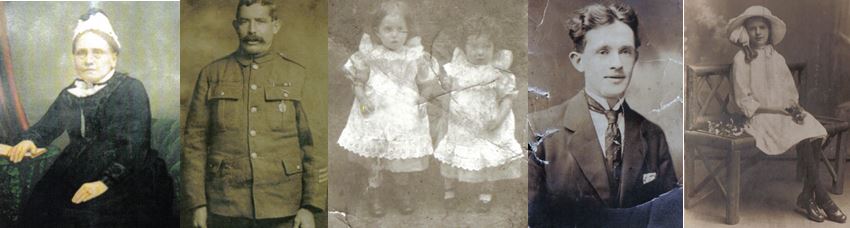
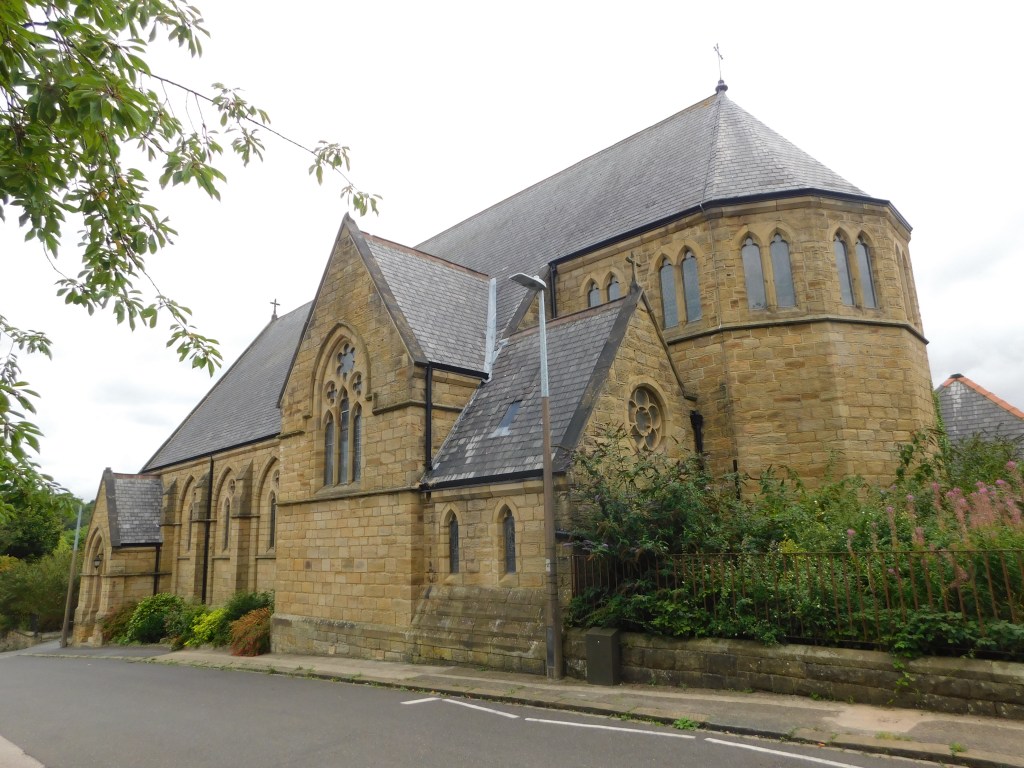
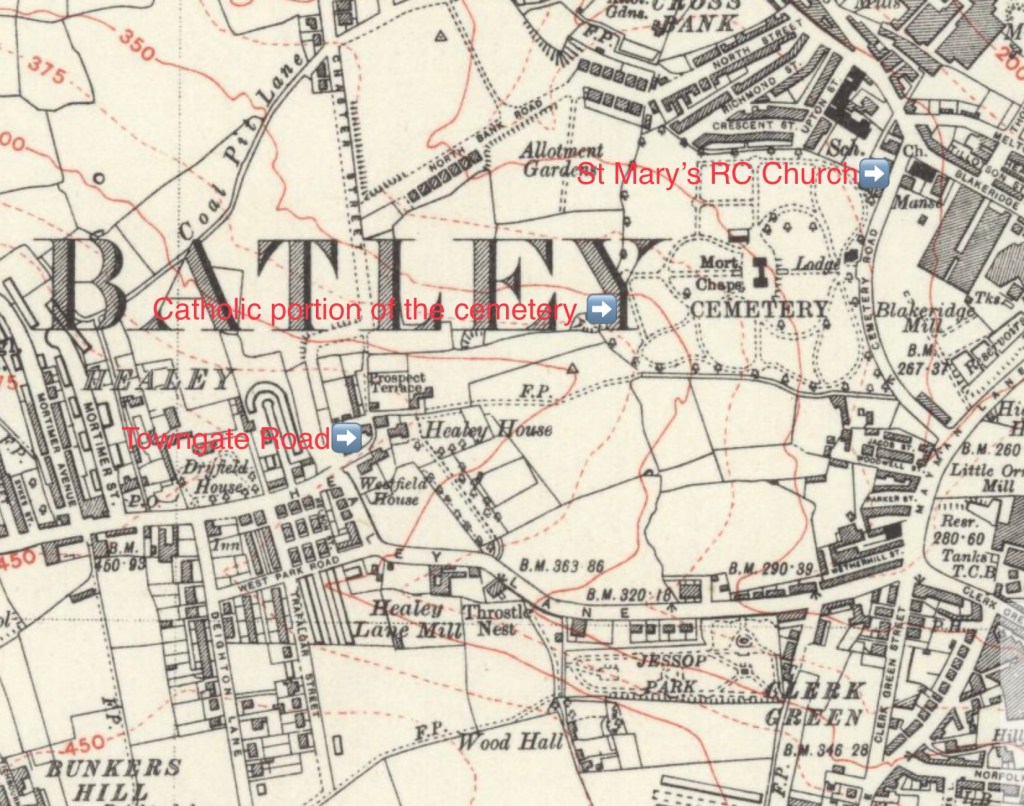

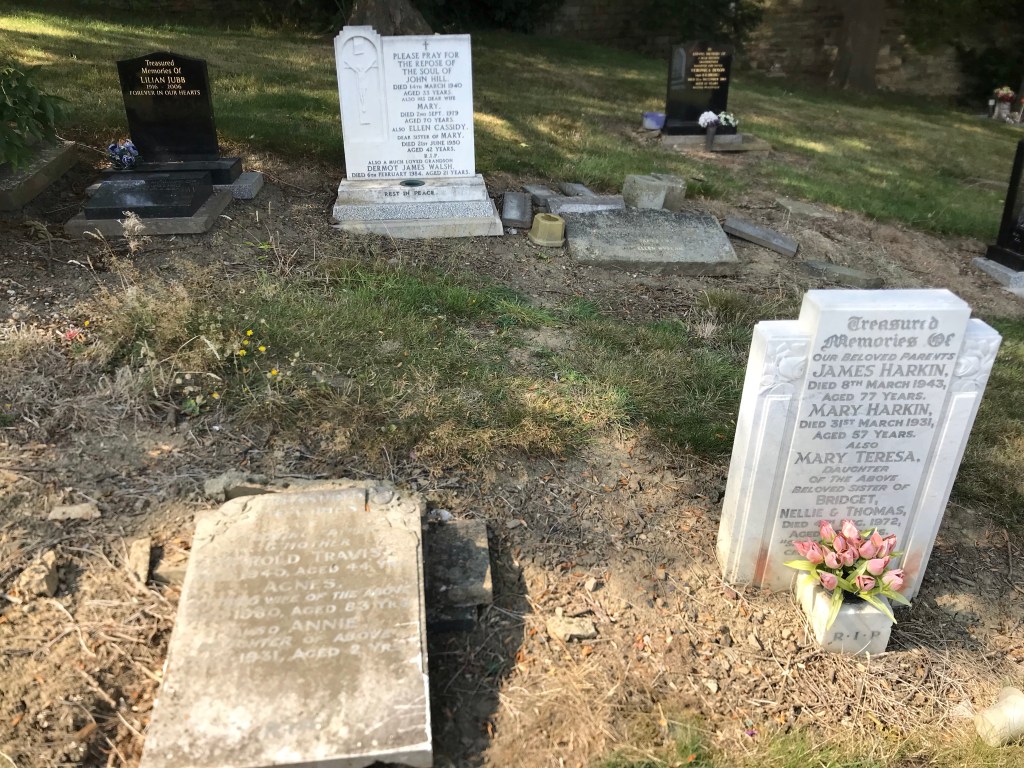
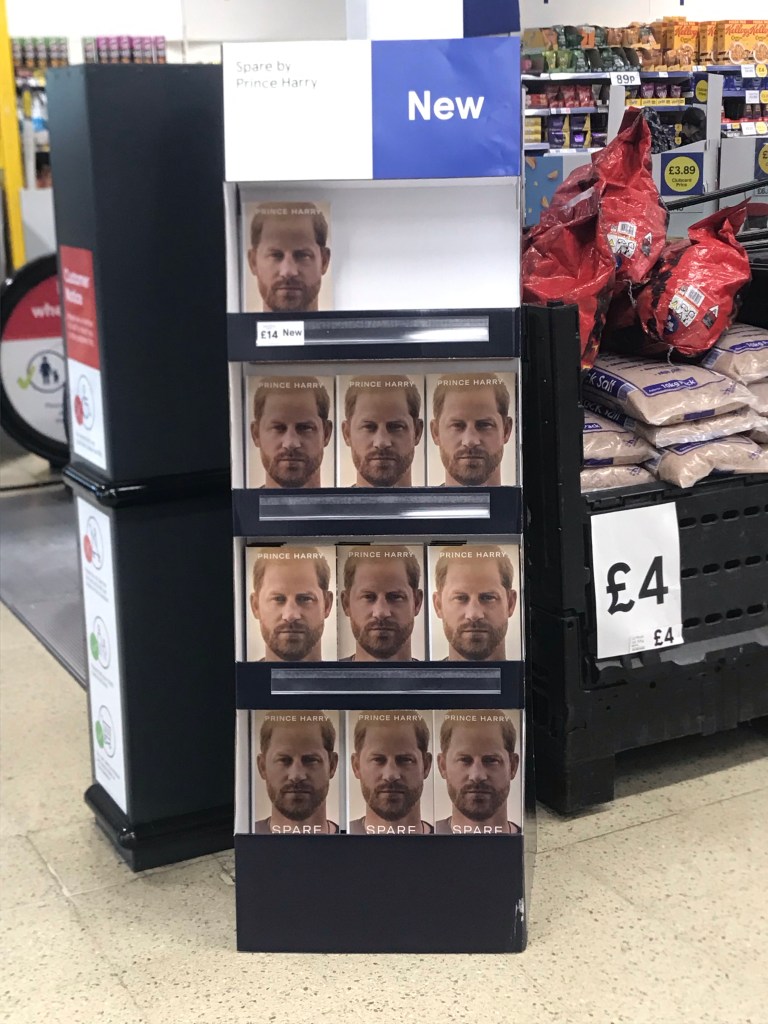


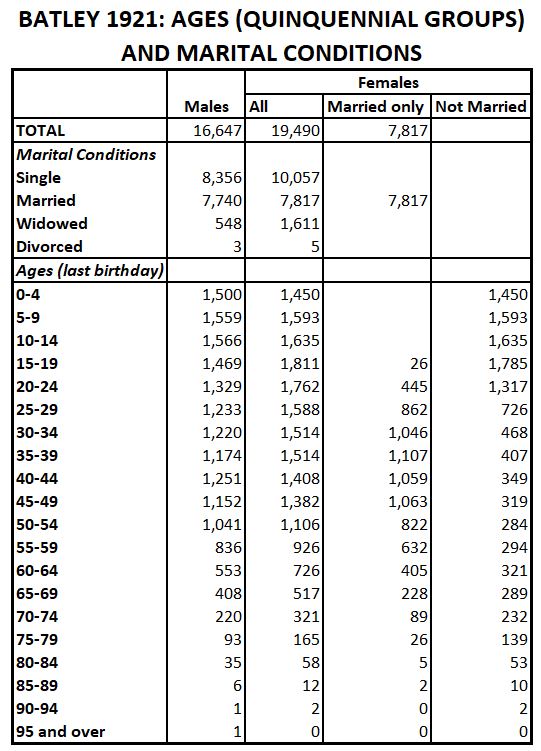
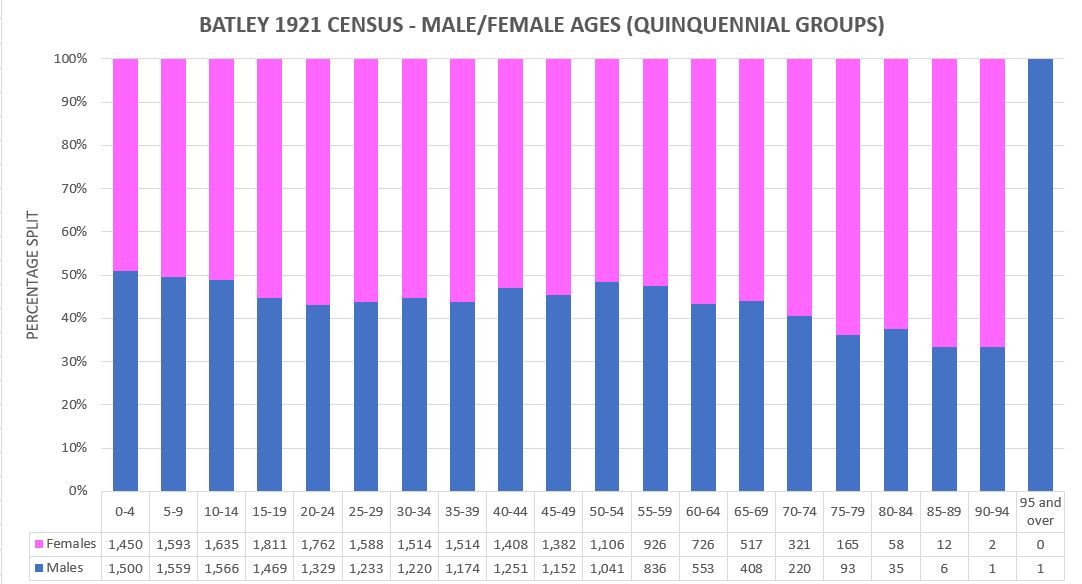

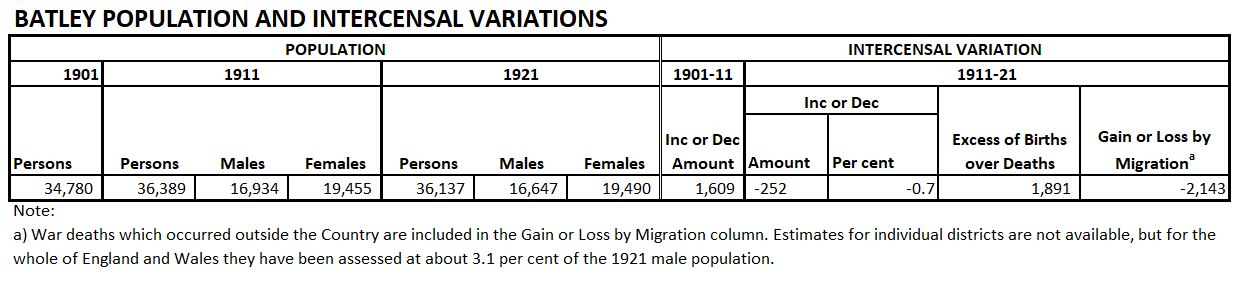
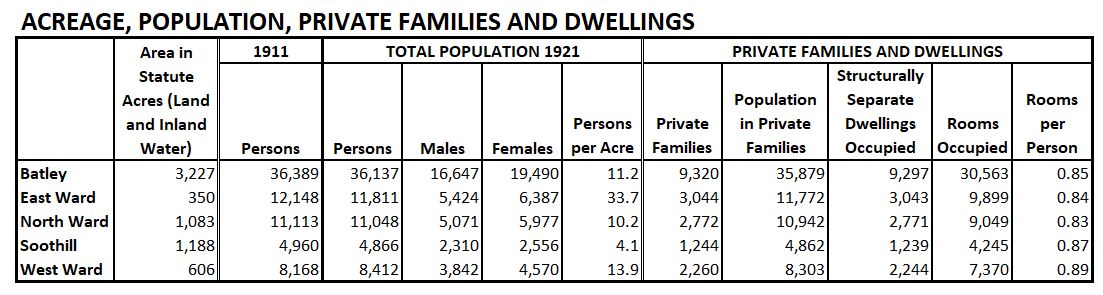


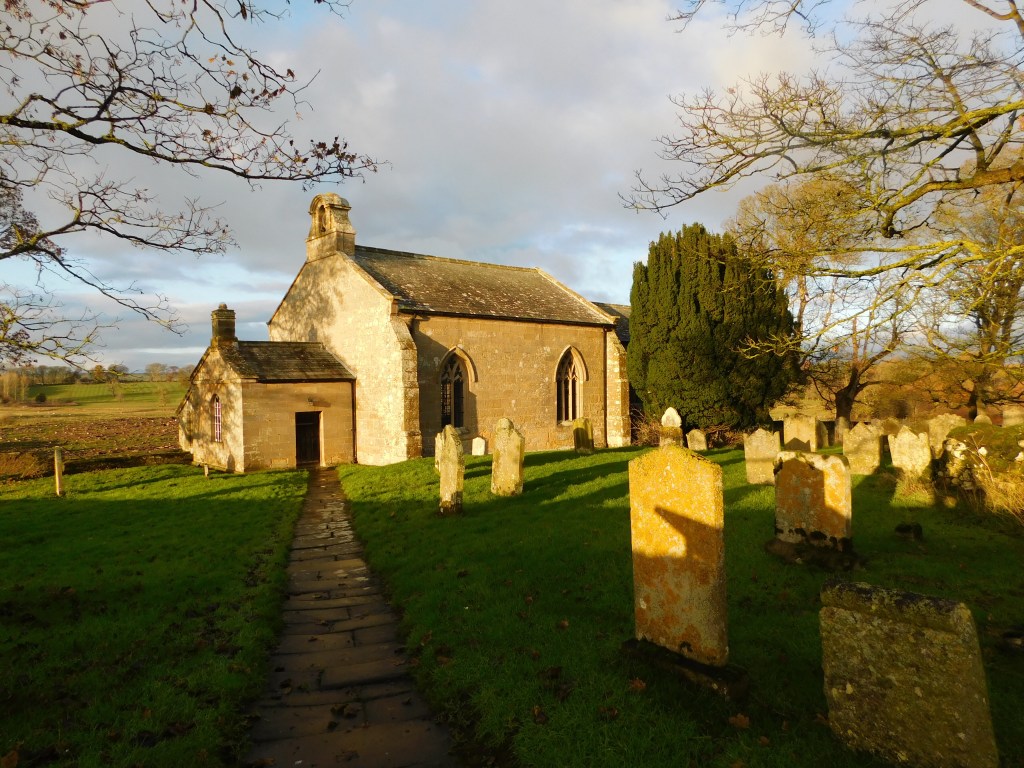


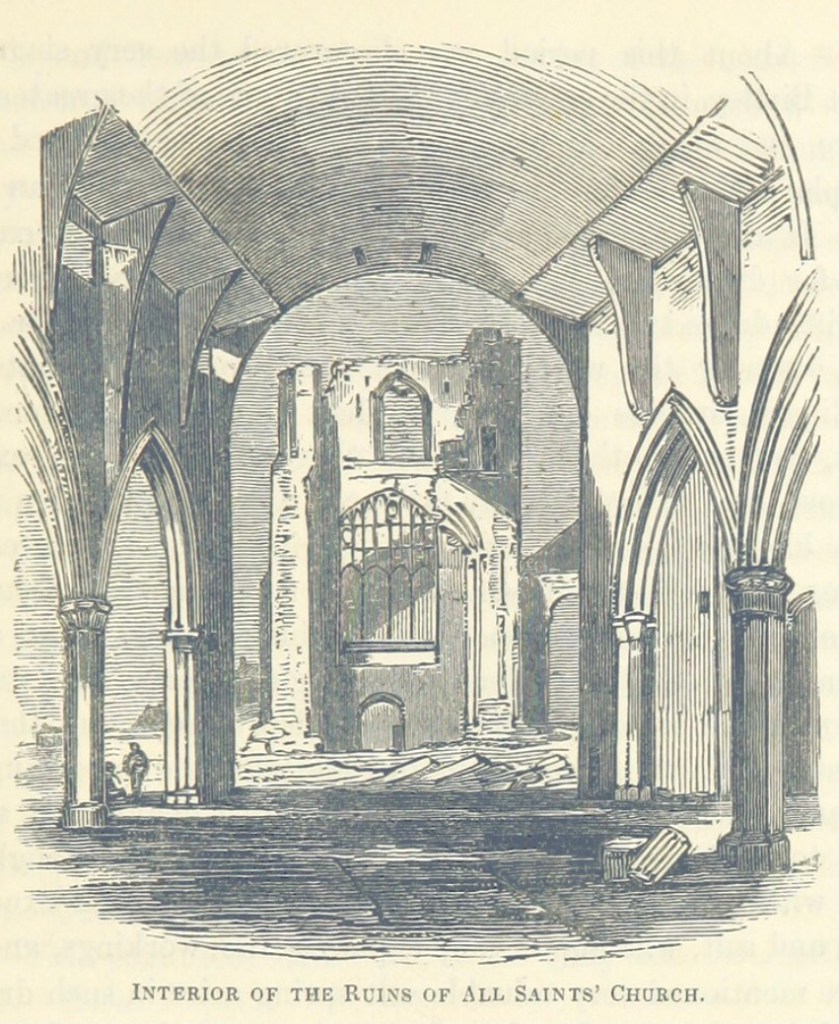


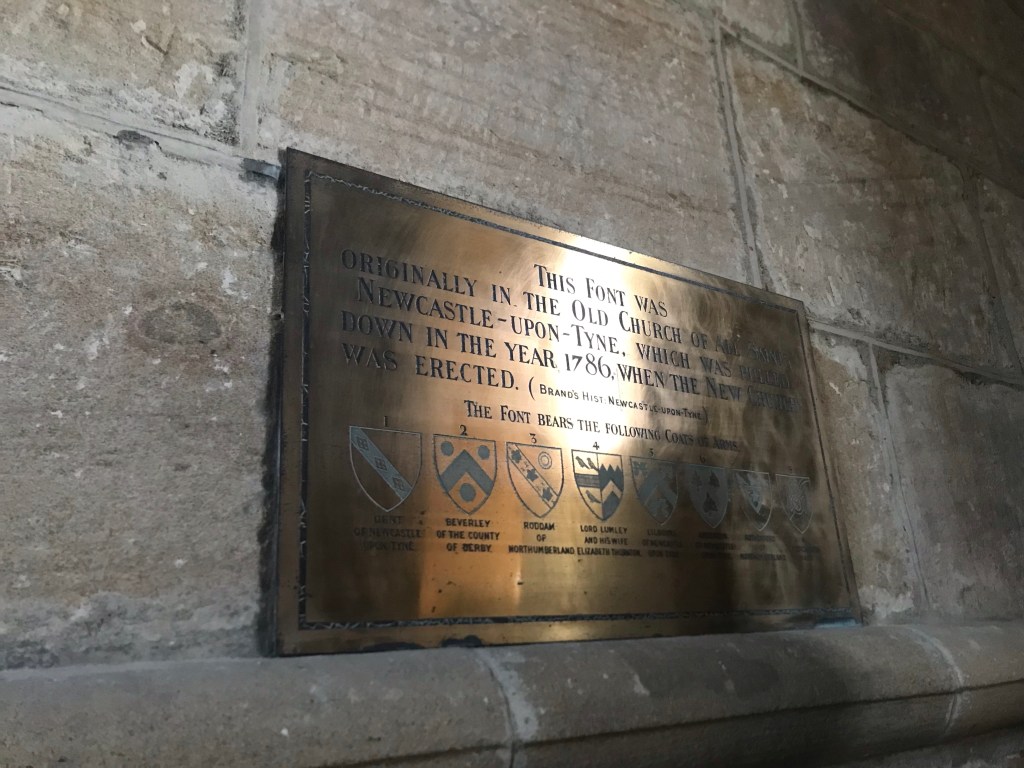

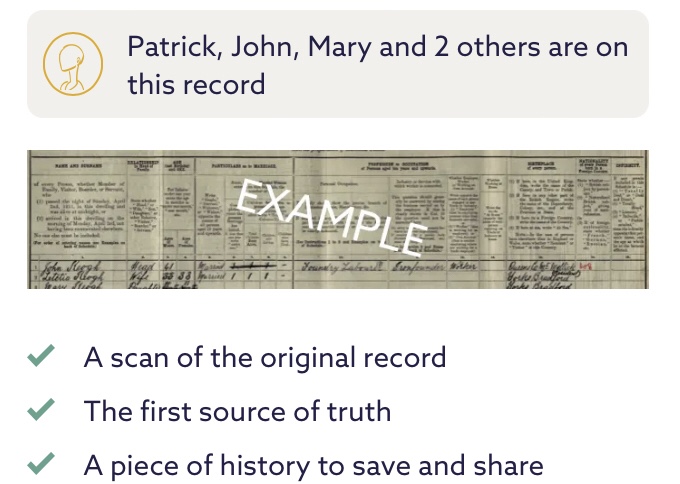
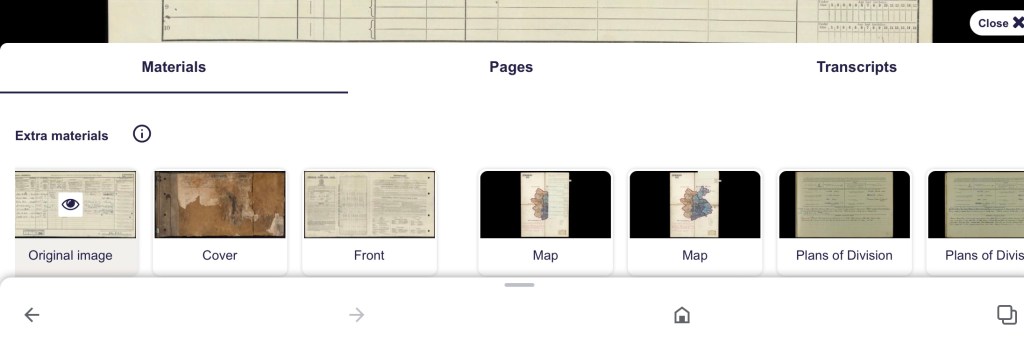
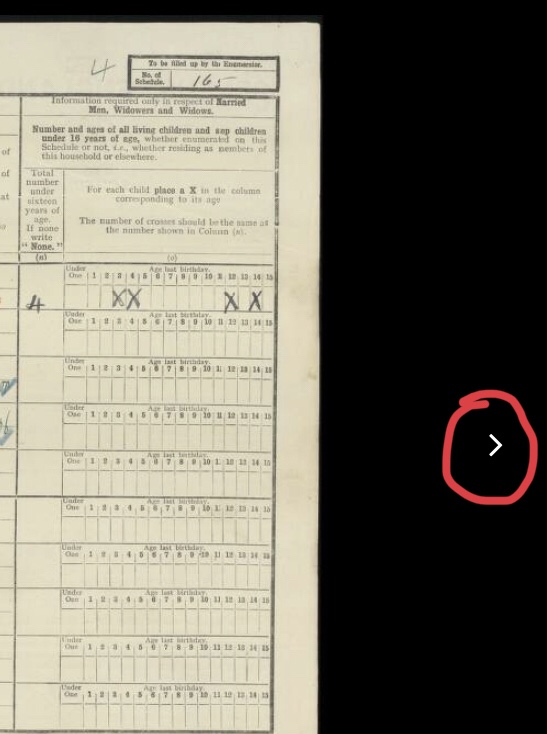
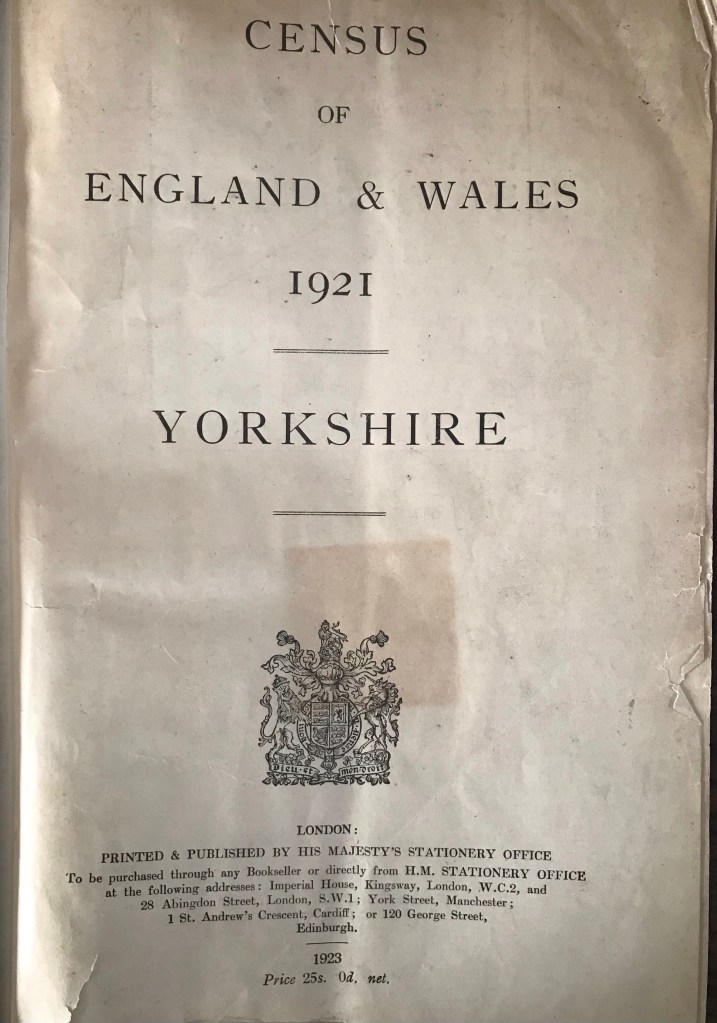


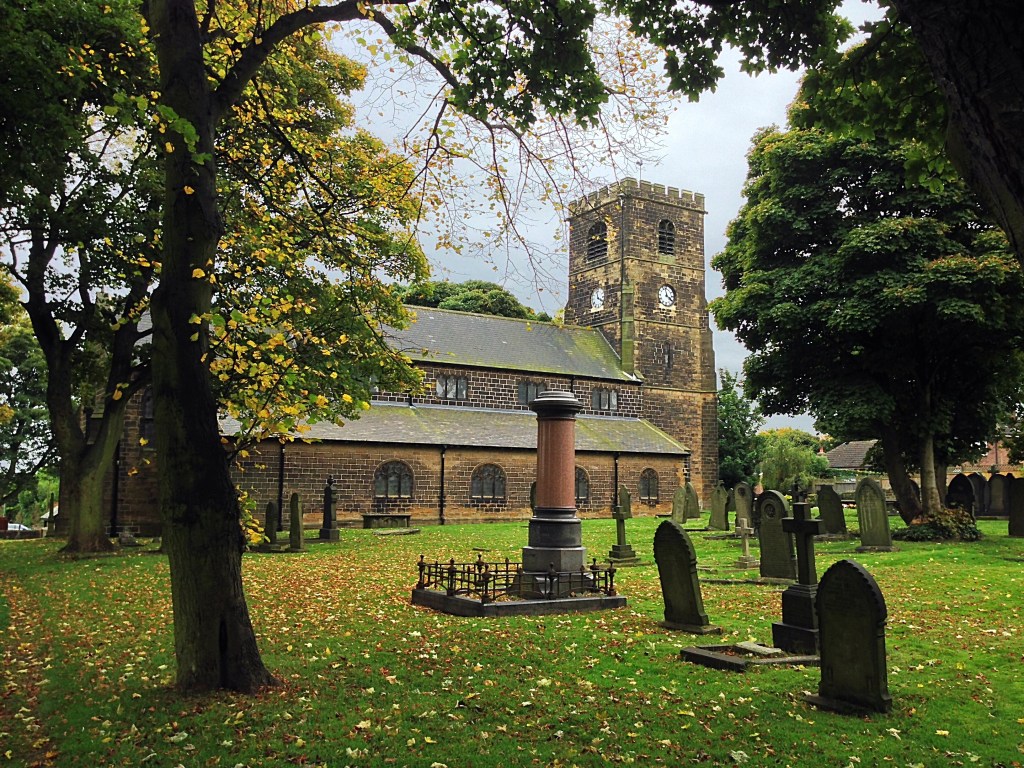
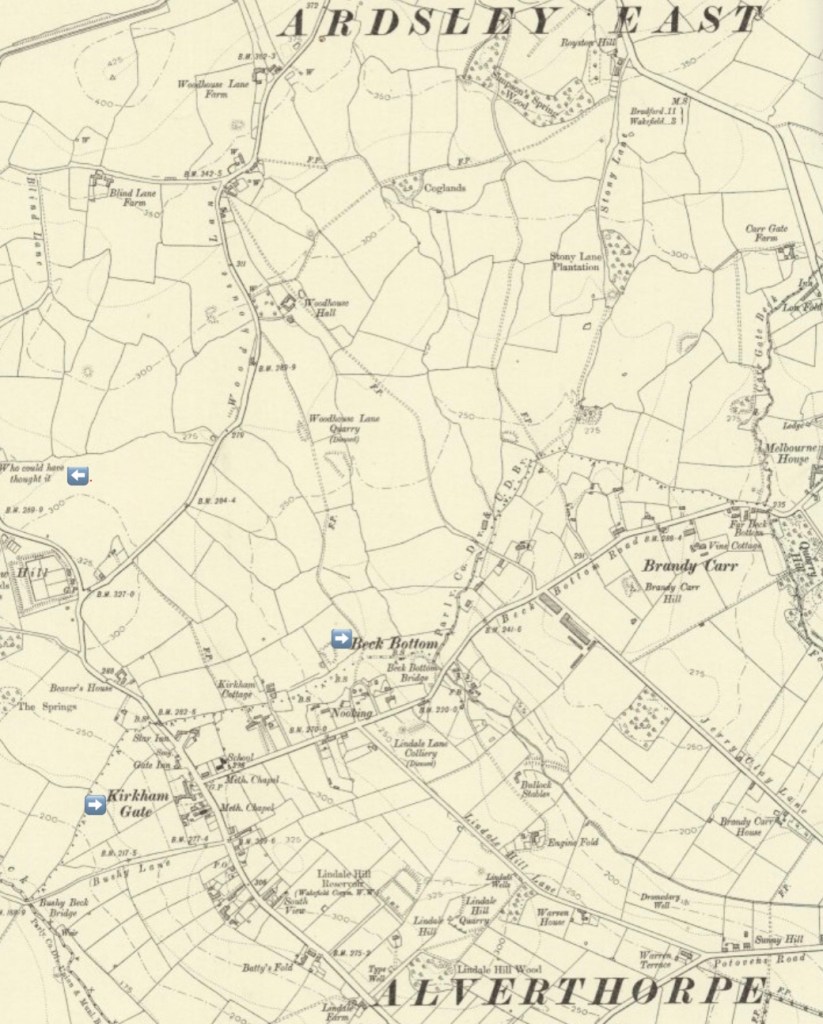


 Past To Present Genealogy