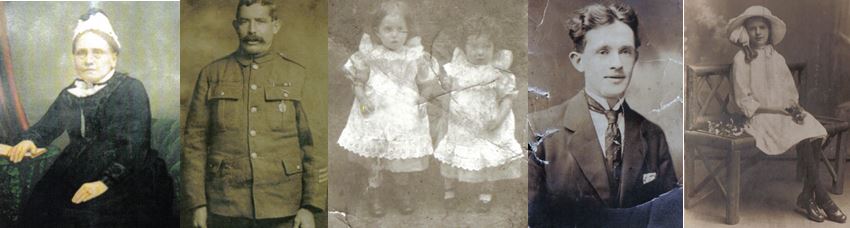
Monthly Archives: February 2025

The Extraordinary Secret of Ferdinand Hanson

At the beginning of October 1918, whilst lying paralysed and almost speechless in the Leeds Workhouse Infirmary, septuagenarian Ferdinand Hanson1 made international headlines.

This admittance to hospital brought a sensational, and very public, end to Ferdinand’s 30-year-old secret – it revealed the Hamburg-born widower, who claimed to be a Danish national, was actually a woman.

The secret began to unravel in early September 1918 on his customary weekly shopping trip to buy coffee from a shop on Boar Lane, Leeds. Returning home via Briggate, Ferdinand collapsed, suffering a stroke. Two women managed to get him back to his Leeds lodging house at Lilac Grove, just off Skinner Lane.

There, sitting by the fireside, Ferdinand’s condition worsened – but he stubbornly refused to let his landlady help get him into more comfortable clothing. He deteriorated so much that in the end she called the doctor, who advised admittance to hospital. Despite Ferdinand’s vehement protests, an ambulance was called.

Ferdinand Hanson pictured in the 1890s

Once in Beckett Street Infirmary, the reasons for Ferdinand’s protests became clear – undressed, it was discovered he was a woman. The Infirmary recorded their new patient under the name of Dora Hanson.

Ferdinand’s landlady of seven years, widow Carrie Green, collapsed in shock when told her male lodger was actually a woman. She could not conceive that the person with whom she shared her home for so long was anything other than a man. Perhaps there was also the dawning realisation that she may have been scammed out of hundreds of pounds.

She had implicitly believed the back-story Ferdinand told her about his life. So much so that when the authorities investigated Ferdinand during the war and concluded he was German, not Danish, she managed to keep him out of an internment camp by promising to “look after the old man”.

Carrie described Ferdinand as exceedingly polite, never failing to raise his hat to the women in the neighbourhood. Short in stature, with a pale, rather finely-featured face, and with white, close-cropped hair, Ferdinand seemed well-educated, being fluent in seven languages. He gave the impression that a previous employer of 20 years was the White Star Line, for whom he acted as an onboard interpreter.

Ferdinand’s one vice was being a heavy smoker, using really strong and noxious smelling tobacco in his clay pipe. He even smoked in bed. Initially, Carrie objected, concerned he might inadvertently set the house alight, but her lodger assured her “it is all right; I have always been very careful”. After the sex revelation, some theorised this excessive smoking was adopted as a means to reinforce Ferdinand’s masculinity – although, to be fair, many women did smoke pipes.

Ferdinand also claimed to have travelled extensively in the United States as an expert photographer, working in several cities – including Philadelphia, Washington and New York. It was in the latter he said he married, his wife working as a milliner in that city.

He asserted it was the death of his wife which prompted his return to Europe, with him settling in Yorkshire where he obtained work in various photographic shops as a photographer-canvasser. This was an advertising role, promoting the studio employing him. Initially he lived in Dewsbury, working for a photographer there. After his move to Leeds, he worked in a Grand Arcade photographers shop, though he had been unemployed in the years leading up to his seizure.

Ferdinand Hanson took up lodgings with Carrie Green in around 1911, having previously boarded for around 12-14 years with Batley Carr-born Martha Whitaker. The suggestion was he first stayed with Martha when she ran digs in Dewsbury. By 1901 she and her husband William ran a boarding house on Wade Lane, Leeds. Martha then moved to Portland Crescent in Leeds, where she continued as a boarding house keeper after her husband’s death. Unfortunately, Ferdinand is not recorded in the 1901 and 1911 censuses with Martha, either at Wade Lane or Portland Crescent. A canvasser’s job did involve travelling though.

It was Martha who recommended Ferdinand to Carrie, as a “quiet, respectable, well-behaved gentleman”. Martha was dead by autumn 1918 when Ferdinand’s secret came to light. It was left to Carrie Green and Martha’s adopted daughter, the now married Dorothy Emms,2 to wrack their brains for any missed clues.

Dorothy, who was only a child when Ferdinand stayed with them, remembered his lack of friends, and his frequent solo rambles through the streets of Leeds. He also used to receive regular letters from abroad which Dorothy believed contained money. These letters stopped by the time Ferdinand lodged with Carrie, who could only think of one letter ever arriving for him.

Though Ferdinand was adept at needlework, Carrie believed the explanation given to her – being married to a milliner, he used to help his wife trim hats. According to Carrie, Ferdinand was very domestically inclined, washing all his own clothes, helping out around the house, and he even rather liked peeling potatoes! She interpreted this as Ferdinand being anxious to lighten her load.

Ferdinand Hanson in the 1910s

There was only one possible clue that all might not be as seemed, with Dorothy recalling occasional comments about the remarkable whiteness and softness of Mr. Hanson’s skin.

There was, however, a much darker side to this tale. Because Ferdinand never paid Carrie as much as a solitary sixpence in the entire seven years he stayed with her. In fact, she even lent him money to buy clothes. In effect, Ferdinand conned her, under the pretext of having a wealthy sister living in Hamburg who had willed all her possessions to him. He told Carrie, as he had no other relations in the world, he would share his entire inheritance with her. Carrie believed him. It was an expensive error of judgement. She calculated the scam left her £300 out of pocket. It also destroyed her trust in people.

Some speculated that work was the reason Ferdinand lived as a man for 30 years – it helped secure photography jobs. But despite attempts to find out the motive directly from the horses mouth, it was a secret which Ferdinand took to the grave.

Never recovering from that life-changing stroke, almost two years later 74-year-old Ferdinand Hanson died in the Leeds Workhouse Infirmary. And although the hospital did give Ferdinand a female name on admission, Ferdinand was the name under which the death was registered, and the name recorded in the Harehills Cemetery burial register when the enigmatic Ferdinand Hanson was laid to rest on 25 May 1920.


Postscript:
I may not be able to thank you personally because of your contact detail confidentiality, but I do want to say how much I appreciate the donations already received to keep this website going. They really and truly do help. Thank you.

The website has always been free to use, and I want to continue this policy in the future. However, it does cost me money to operate – from undertaking the research to website hosting costs. In the current difficult economic climate I do have to regularly consider if I can afford to continue running it as a free resource. 

If you have enjoyed reading the various pieces, and would like to make a donation towards keeping the website up and running in its current open access format, it would be very much appreciated. 

Please click 👉🏻here👈🏻 to be taken to the PayPal donation link. By making a donation you will be helping to keep the website online and freely available for all. 

Thank you.

As a professionally qualified genealogist, if you would like me to undertake any family, local or house history research for you do please get in touch. 

More information can be found on my research services page.


Footnotes:
1. Hansen was another surname spelling variant. I have used Hanson in this piece as this was the name used for death registration.
2.  Dorothy Whitaker was born in Scotland in 1895. Although she is recorded as Whitaker in the 1901 and 1911 censuses, her birth surname was Novello.


Other Sources:
• Censuses England and Wales, various dates.
• Harehills Cemetery Burial Register.
• GRO Indexes.
• Newspapers – Various.

A Prescription for Death

The intriguing inscription on Robert Shackleton’s impressive headstone in Batley cemetery commands attention.

After noting his death date of 24 September 1874, it reads:

HE WAS THE FIRST BOROUGH ACCOUNTANT OF
THIS TOWN AND HELD THE OFFICE TILL HIS DEATH
HIS UNIFORM INTEGRITY AND KINDNESS WON
FOR HIM THE ESTEEM OF ALL WHO KNEW HIM.
AND HIS SUDDEN REMOVAL UNDER
CIRCUMSTANCES MOST PAINFUL WAS THE
CAUSE OF DEEP SORROW TO A LARGE CIRCLE OF
RELATIVES AND FRIENDS.

What were these most painful circumstances causing his sudden removal? I had to investigate – and in the process discovered a dark Victorian tale, with an unexpected twist of compassion.

Robert Shackleton’s Batley Cemetery headstone – photo by Jane Roberts

Robert Shackleton was born in Holbeck on 15 August 1817, the son of miller Richard Shackleton and wife Ann. His was a Quaker family and, rather than baptism, Robert’s birth was registered in the Brighouse Monthly Meeting book – though later in his life Robert switched from Quakerism and would be associated with the Methodist New Connexion denomination.

Subsequently, rather than milling, Richard’s primary job focus was as a proprietor of a grocer’s shop. Initially this was the trade his son followed, with the 1851 census describing Robert’s occupation as a grocer and watchmaker. At this point he was living in the Havercroft area of Batley, lodging with his brother George Walker Shackleton, also a grocer. George’s wife, Susan, was a daughter of Michael Sheard, one of Batley’s leading cloth manufacturers. So the Shackletons were already well-connected locally.

On 18 January 1855, Richard further cemented these powerful local connections when he married widow Rachel Fox at Batley parish church. Five years after the death of her husband David, the 1851 census noted an unusual occupation for her – as a rag dealer employing five girls. Dig deeper, and perhaps it was not totally unexpected. Her husband worked in the woollen trade, and her father, Joseph Jubb, was among Batley’s textile manufacturing royalty. Associated with Hick Lane Mill, founded in 1822, and said to have been the first built for the production of shoddy cloth, Joseph later operated from New Ing Mill. More about a tragedy which took place in connection to his business can be read here.

It seems Robert took over his wife‘s business, as the 1861 census finds the family at Up Lane, Batley, with Robert recorded as a rag merchant employing five women. However, when Batley became a Borough in 1868, Robert was appointed Batley’s first Borough accountant. This is the job recorded for him in the 1871 census.

The stresses of work may have affected Robert, because he was prone to indigestion, popping into William Parrington’s chemist shop on Commercial Street two or three times a week to have a draught of pepsine made up. 23-year-old Benjamin Scatcherd, who had worked for three months as the chemist’s assistant, had of late done this under the supervision of his boss.

At around 6pm on 22 September 1874, just before going to the Town Hall for a Sanitary Committee meeting, Robert called in at the chemists for his usual draught. William Parrington had nipped out, so Ben made it up unsupervised. It comprised of four elements – pepsine, water, bi-carbonate of potash, and compound ammonia. The pepsine dose was around 10 grains, unweighed.

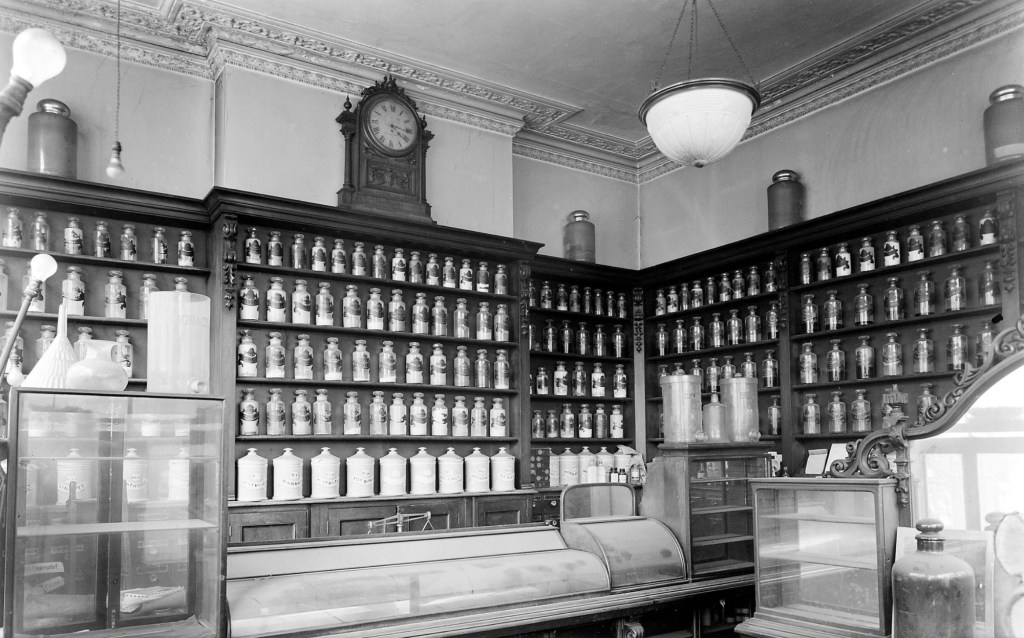
At around 7pm, William Parrington returned and saw an empty glass measure on the counter. Ben told him Mr Shackleton had been in for his draught. Eagle-eyed William then noticed that whilst the pepsine bottle was in the correct place, a morphia bottle was on the wrong shelf. The two bottles were the same size, and morphia and pepsine were similar coloured powders.


An array of medicine bottles in a late 19th century chemist’s shop Licence: Attribution 4.0 International (CC BY 4.0)
Credit: Late 19th century Chemist’s shop formerly owned by N.F. Tyler.Wellcome Collection. Source:Wellcome Collection.

William Parrington quickly suspected what had happened, a suspicion which the horrified Ben Scatcherd confirmed. Despite the shop being well-lit and the bottles clearly labelled, his young assistant, distracted by other customers in the shop, had confused the pepsine with morphia. Even worse, 10 grains of morphia was a fatal dose – the normal dose being an eighth of a grain, to a grain!

Hoping to avert disaster, William hot-footed it over to the Town Hall, only to find he was too late – Robert had already taken the draught. In response to the chemist’s enquiry he said he felt “sleepy and drowsy.” William told him about the medicine mix-up, and took the drug-poisoned Borough accountant to his shop where emetics were unsuccessfully administered. No vomiting ensued to dispel the poison.

Ben Scatcherd was dispatched at speed to fetch Drs. Bayldon and Keighley, who gave stronger emetics and applied a stomach pump three times – all to no avail. The potion was not brought up.

Robert’s brother-in-law, Healey warp agent John Thomas Marriott (who happened to be one of the Councillors at the dramatically interrupted meeting), was called to Parrington’s shop at about 9pm. He – along with the chemist – took the stupefied accountant back to Robert’s home on Hanover Street, staying with him through the night. Over the next two days the chemist and doctors were frequent visitors to the Shackleton home. Robert did briefly rally from his comatose state on Wednesday, being able to speak and raise himself up in bed, but it proved temporary. By the evening of Thursday 24 September he once more relapsed, dying at around 10.40pm that night.

His funeral, held on Saturday 26 September 1874, was a major civic display, with the town’s great and good – including its Mayor, Councillors, and an assortment of high-ranking Corporation officials – prominently represented. The five family mourning coaches and several private carriages gave further indication of the status of the deceased.

As the cortège made its way from the Shackleton’s Hanover Street home to Batley cemetery, it passed through Batley’s quietened streets, bordered by shuttered shops and blind-drawn houses, and lined by hundreds of townsfolk paying their silent respects.

Ben Scatcherd in later life

Whilst great sympathy was expressed with the Shackleton family, this sympathy extended to Ben Scatcherd, the young man whose lapse in concentration led to him administering the fatal dose morphia.

The inquest, held the day before, considered whether Scatcherd had been guilty of criminal negligence. Whilst the foreman indicated the assistant had displayed a degree of carelessness, their unanimous verdict was “Death from misadventure.” The only punishment inflicted on Ben Scatcherd was the heavy burden to his conscience, knowing his error had resulted someone’s death.

Surprisingly, the 1881 census shows Kirkburton-born Scatcherd still working as a druggist’s assistant. He also had a spell as a rag merchant’s book-keeper, before setting up his own business as a stocking knitter and dealer in woollen goods in Batley Carr. His business expanded, and he took on premises in Town Street, becoming a highly respected tradesman in the area. He died in 1917.


Postscript:
I may not be able to thank you personally because of your contact detail confidentiality, but I do want to say how much I appreciate the donations already received to keep this website going. They really and truly do help. Thank you.

The website has always been free to use, and I want to continue this policy in the future. However, it does cost me money to operate – from undertaking the research to website hosting costs. In the current difficult economic climate I do have to regularly consider if I can afford to continue running it as a free resource. 

If you have enjoyed reading the various pieces, and would like to make a donation towards keeping the website up and running in its current open access format, it would be very much appreciated. 

Please click 👉🏻here👈🏻 to be taken to the PayPal donation link. By making a donation you will be helping to keep the website online and freely available for all. 

Thank you.

As a professionally qualified genealogist, if you would like me to undertake any family, local or house history research for you do please get in touch. 

More information can be found on my research services page.


Sources:
• Batley Cemetery Burial Register.
•  Censuses England and Wales, various dates.
• Coroner’s notes.
• Newspapers – Various.
• Parish Registers – Various.
• Power and Influence, Batley Cemetery Walk – Malcolm Haigh.
• Quaker Records.
• Vivien Tomlinson’s Family History website, https://vivientomlinson.com/batley/index.htm


St Mary of the Angels, Batley: One-Place Study Update – 1 to 31 January 2025 Additions

2025 got off to a great start for the Batley St Mary of the Angels One-Place Study, with the addition of five posts which cover a varied mix of the history of the parish and its people. It brings the total number of posts to 383. One other post was updated.

Below is the complete list of all the St Mary’s posts published up to the end of January 2025, including links to them, with those new and updated posts signposted so you can easily locate them.

If you want to know the background, and what is involved in a one-place study, click here. Otherwise read on, to discover a wealth of parish, parishioner and wider local Batley history. 

Batley St Mary of the Angels

Two new War Memorial biographies were added, those of Harold Gaunt and Thomas Dolan. The former covers a lesser known aspect of military service. The latter includes some cherished photos, used with the family’s permission. I also identified more parishioners who served in, and survived, the First World War. That list has been updated.

The Bulletin for Batley St Mary of the Angels and Birstall St Patrick section, has one addition. This is the piece covering the parish history snippets which were included in the parish bulletins during January 2025 – one of which may be rather surprising but reflects commonly held initial world attitudes to someone who turned out to be a monster.

It also links to the one of the two new posts in the Miscellany of Information section. One is about a former parishioner who played an unexpected and significant role, bringing him into contact with people across the world. The other post is a topic I never thought would be covered in the St Mary’s One-Place Study. Given this month, on the 27 January, we commemorated World Holocaust Day and the 80th anniversary of the liberation of Auschwitz-Birkenau, the largest Nazi concentration camp complex, it serves as a timely and important reminder.

Below is the full list of pages to date. I have annotated the *NEW* and *UPDATED* ones, so you can easily pick these out. Click on the link and it will take you straight to the relevant page.


Postscript:
I may not be able to thank you personally because of your contact detail confidentiality, but I do want to say how much I appreciate the donations already received to keep this website going. They really and truly do help. Thank you.

The website has always been free to use, and I want to continue this policy in the future. However, it does cost me money to operate – from undertaking the research to website hosting costs. In the current difficult economic climate I do have to regularly consider if I can afford to continue running it as a free resource. 

If you have enjoyed reading the various pieces, and would like to make a donation towards keeping the website up and running in its current open access format, it would be very much appreciated. 

Please click 👉🏻here👈🏻 to be taken to the PayPal donation link. By making a donation you will be helping to keep the website online and freely available for all. 

Thank you.

As a professionally qualified genealogist, if you would like me to undertake any family, local or house history research for you do please get in touch. More information can be found on my research services page.


Finally, if you do have any information about, or photos of, parishioners from the period of the First World War please do get in touch. It does not have to be War Memorial men. It could be those who served and survived, or indeed any other men, women and children from the parish. 

I would also be interested in information about, and photos of, those parishioners who were killed in World War Two, or others from the parish who undertook any war service and survived. This can be as broad as serving in the military, or work in munitions factories, the Land Army, even taking in refugees. This is an area I’m looking to develop in the future.

I can be contacted at: pasttopresentgenealogy@btinternet.com


1. About my St Mary of the Angels Catholic Church War Memorial One-Place Study;

Batley’s Public Buildings and Institutions
2. Batley Hospital: The First 50 Years – 1878 to 1928 
3. The Early History of Batley’s Public Baths 

Batley St Mary’s Population, Health, Mortality and Fertility Information and Comparisons
4.  1914: The Health of Batley School Children Generally, with a Particular Focus on St Mary’s School Children

Batley Statistics and Descriptions – Population, Health, Mortality, Fertility etc.
5. 1914: Borough of Batley – Town Information from the Annual Report of the Medical Officer of Health.
6. Batley and the 1921 Census 
7. Batley Population Statistics 1801-1939

Biographies: Men Associated with St Mary’s Who Died but Who Are Not on the Memorial 
8. Thomas Gannon 
9. Reginald Roberts 
10. William Frederick Townsend

Biographies: The War Memorial Men
11. Edward Barber 
12. William Barber (Memorial name spelling) 
13. Herbert Booth 
14. Edmund Battye
15. Dominick (aka George) Brannan 
16. Michael Brannan 
17. John Brooks 
18. Michael Cafferty 
19. Patrick Cafferty 
20. John William Callaghan 
21. Lawrence Carney 
22. Martin Carney 
23. Thomas William Chappell 
24. William Colbeck
25.  Michael Cunningham 
26. Thomas Curley
27. Peter Doherty 
28. Thomas Dolan *NEW*
29. Thomas Donlan 
30. John W. Enright 
31. Mathew Farrer 
32. Thomas Finneran 
33. Michael Flynn 
34. Thomas Foley D.C.M. 
35. Martin Gallagher 
36. James Garner
37. Harold Gaunt *NEW*
38. James Gavaghan 
39. Thomas Gavaghan 
40. Henry Groark 
41. James Groark 
42. Michael Groark (also known as Rourke) 
43. James Griffin 
44. William Hargreaves 
45. Michael Hopkins 
46. Patrick Hopkins
47. Michael Horan
48. James Hughes 
49. Lawrence Judge 
50. John Leech 
51. Michael Lydon 
52. Patrick Lyons 
William McManus – See William Townsend below
53. Thomas McNamara 
54. Clement Manning 
55. Patrick Naifsey 
56. Austin Nolan 
57. Robert Randerson 
58. James Rush 
59. Moses Stubley 
60. William Townsend, also known as McManus
61. James Trainor 
62. Richard Carroll Walsh
63. Arthur William Bayldon Woodhead

Biographies: Those who Served and Survived (this includes a list of those identified to date and who will later have dedicated biographical pages) *UPDATED*
64. Patrick Cassidy 
65. James Delaney
66. Thomas Donlan (senior) 
67. Thomas Gannon 
68. Michael Rush 

Burials, Cemeteries, Headstones and MIs
69. Cemetery and Memorial Details 
70. War Memorial Chronology of Deaths .

During This Week
71. During This Week Newspaper Index 
72. 1914, 8 August – Batley News 
73. 1914, 15 August – Batley News 
74. 1914, 22 August – Batley News 
75. 1914, 29 August – Batley News 
76. 1914, 5 September – Batley News 
77. 1914, 12 September – Batley News 
78. 1914, 19 September – Batley News 
79. 1914, 26 September – Batley News 
80. 1914, 3 October – Batley News 
81. 1914, 10 October – Batley News 
82. 1914, 17 October – Batley News 
83. 1914, 24 October – Batley News 
84. 1914, 31 October – Batley News 
85. 1914, 7 November – Batley News 
86. 1914, 14 November – Batley News 
87. 1914, 21 November – Batley News 
88. 1914, 28 November – Batley News
89. 1914, 5 December – Batley News 
90. 1914, 12 December – Batley News 
91. 1914, 19 December – Batley News 
92. 1914, 24 December – Batley News 
93. 1915, 2 January – Batley News 
94. 1915, 9 January – Batley News 
95. 1915, 16 January – Batley News 
96. 1915, 23 January – Batley News 
97. 1915, 30 January – Batley News 
98. 1915, 6 February – Batley News 
99. 1915, 13 February – Batley News 
100. 1915, 20 February – Batley News 
101. 1915, 27 February – Batley News 
102. 1915, 6 March – Batley News 
103. 1915, 13 March – Batley News 
104. 1915, 20 March – Batley News 
105. 1915, 27 March – Batley News 
106. 1915, 3 April – Batley News 
107. 1915, 10 April – Batley News 
108. 1915, 17 April – Batley News 
109. 1915, 24 April – Batley News 
110. 1915, 1 May – Batley News 
111. 1915, 8 May – Batley News 
112. 1915, 15 May – Batley News 
113. 1915, 22 May – Batley News 
114. 1915, 29 May – Batley News 
115. 1915, 5 June – Batley News 
116. 1915, 12 June – Batley News 
117. 1915, 19 June – Batley News 
118. 1915, 26 June – Batley News 
119. 1915, 3 July – Batley News 
120. 1915, 10 July – Batley News 
121. 1915, 17 July – Batley News 
122. 1915, 24 July – Batley News 
123. 1915, 31 July – Batley News 
124. 1915, 7 August – Batley News 
125. 1915, 14 August – Batley News 
126. 1915, 21 August – Batley News 
127. 1915, 28 August – Batley News 
128. 1915, 4 September – Batley News 
129. 1915, 11 September – Batley News 
130. 1915, 18 September – Batley News 
131. 1915, 25 September – Batley News 
132. 1915, 2 October – Batley News 
133. 1915, 9 October – Batley News 
134. 1915, 16 October – Batley News 
135. 1915, 23 October – Batley News 
136. 1915, 30 October – Batley News 
137. 1915, 6 November – Batley News 
138. 1915, 13 November – Batley News 
139. 1915, 20 November – Batley News 
140. 1915, 27 November – Batley News 
141. 1915, 4 December – Batley News 
142. 1915, 11 December – Batley News
143. 1915, 18 December – Batley News 
144. 1915, 23 December – Batley News 
145. 1916, 1 January – Batley News 
146. 1916, 8 January – Batley News 
147. 1916, 15 January – Batley News 
148. 1916, 22 January – Batley News 
149. 1916, 29 January – Batley News 
150. 1916, 5 February – Batley News 
151. 1916, 12 February – Batley News 
152. 1916, 19 February – Batley News 
153. 1916, 26 February – Batley News 
154. 1916, 4 March – Batley News 
155. 1916, 11 March – Batley News 
156. 1916, 18 March – Batley News 
157. 1916, 25 March – Batley News 
158. 1916, 1 April – Batley News 
159. 1916, 8 April – Batley News 
160. 1916, 15 April – Batley News 
161. 1916, 22 April – Batley News 
162. 1916, 29 April – Batley News 
163. 1916, 6 May – Batley News 
164. 1916, 13 May – Batley News
165. 1916, 20 May – Batley News 
166. 1916, 27 May – Batley News
167. 1916, 3 June – Batley News 
168. 1916, 10 June – Batley News 
169. 1916, 17 June – Batley News 
170. 1916, 24 June – Batley News 
171. 1916, 1 July – Batley News 
172. 1916, 8 July – Batley News 
173. 1916, 15 July – Batley News 
174. 1916, 22 July – Batley News 
175. 1916, 29 July – Batley News 
176. 1916, 5 August – Batley News
177. 1916, 12 August – Batley News
178. 1916, 19 August – Batley News 
179. 1916, 26 August – Batley News
180. 1916, 2 September – Batley News 
181. 1916, 9 September – Batley News
182. 1916, 16 September – Batley News 
183. 1916, 23 September – Batley News 
184. 1916, 30 September – Batley News 
185. 1916, 7 October – Batley News
186. 1916, 14 October – Batley News 
187. 1916, 21 October – Batley News
188. 1916, 28 October – Batley News 
189. 1916, 4 November – Batley News
190. 1916, 11 November – Batley News
191. 1916, 18 November – Batley News
192. 1916, 25 November – Batley News 
193. 1916, 2 December – Batley News 
194. 1916, 9 December – Batley News 
195. 1916, 16 December – Batley News 
196. 1916, 23 December – Batley News 
197. 1916, 30 December – Batley News 
198. 1917, 6 January – Batley News 
199. 1917, 13 January – Batley News 
200. 1917, 20 January – Batley News 
201. 1917, 27 January – Batley News
202. 1917, 3 February – Batley News 
203. 1917, 10 February – Batley News 
204. 1917, 17 February – Batley News 
205. 1917, 24 February – Batley News 
206. 1917, 3 March – Batley News
207. 1917, 10 March – Batley News 
208. 1917, 17 March – Batley News 
209. 1917, 24 March – Batley News 
210. 1917, 31 March – Batley News
211. 1917, 7 April – Batley News 
212. 1917, 14 April – Batley News 
213. 1917, 21 April – Batley News 
214. 1917, 28 April – Batley News 
215. 1917, 5 May – Batley News 
216. 1917, 12 May – Batley News 
217. 1917, 19 May – Batley News 
218. 1917, 26 May – Batley News 
219. 1917, 2 June – Batley New
220. 1917, 9 June – Batley News
221. 1917, 16 June – Batley News
222. 1917, 23 June – Batley News
223. 1917, 30 June – Batley News
224. 1917, 7 July – Batley News
225. 1917, 14 July – Batley News 
226. 1917, 21 July – Batley News 
227. 1917, 28 July – Batley News 
228. 1917, 4 August – Batley News 
229. 1917, 11 August – Batley News 
230. 1917, 18 August – Batley News 
231. 1917, 25 August – Batley News 
232. 1917, 1 September – Batley News 
233. 1917, 8 September – Batley News 
234. 1917, 15 September – Batley News 
235. 1917, 22 September – Batley News 
236. 1917, 29 September– Batley News 
237.  1917, 6 October – Batley News 
238. 1917, 13 October – Batley News
239. 1917, 20 October – Batley News
240. 1917, 27 October – Batley News 
241. 1917, 3 November – Batley News
242. 1917, 10 November – Batley News
243. 1917, 17 November – Batley News 
244. 1917, 24 November – Batley News 
245. 1917, 1 December – Batley News 
246. 1917, 8 December – Batley News 
247. 1917, 15 December – Batley News 
248. 1917, 22 December – Batley News 
249. 1917, 29 December – Batley News 
250. 1918, 5 January – Dewsbury District News 
251. 1918, 12 January – Dewsbury District News 
252. 1918, 19 January – Batley News 
253. 1918, 26 January – Batley News
254. 1918, 2 February – Batley News 
255. 1918, 9 February – Batley News 
256. 1918, 16 February – Batley News 
257. 1918, 23 February – Batley News 
258. 1918, 2 March – Batley News 
259. 1918, 9 March – Batley News 
260. 1918, 16 March – Batley News 
261. 1918, 23 March – Batley News 
262. 1918, 30 March – Batley News 
263. 1918, 6 April – Batley News 
264. 1918, 13 April – Batley News 
265. 1918, 20 April – Batley News 
266. 1918, 27 April – Batley News 
267. 1918, 4 May – Batley News
268. 1918, 11 May – Batley News 
269. 1918, 18 May – Batley News 
270. 1918, 25 May – Batley News 
271. 1918, 1 June – Batley News 
272. 1918, 8 June – Batley News 
273. 1918, 15 June – Batley News 
274. 1918, 22 June – Batley News
275. 1918, 29 June – Batley News 
276. 1918, 6 July – Batley News 
277. 1918, 13 July – Batley News 
278. 1918, 20 July – Batley News
279. 1918, 27 July – Batley News
280. 1918, 3 August – Batley News 
281. 1918, 10 August – Batley News 
282. 1918, 17 August – Batley News 
283. 1918, 24 August – Batley News 
284. 1918, 31 August – Batley News 
285. 1918, 7 September – Batley News 
286. 1918, 14 September – Batley News 
287. 1918, 21 September – Batley News 
288. 1918, 28 September – Batley News 
289. 1918, 5 October – Batley News 
290. 1918, 12 October – Batley News 
291. 1918, 19 October – Batley News 
292. 1918, 26 October – Batley News 
293. 1918, 2 November – Batley News 
294. 1918, 9 November – Batley News 
295. 1918, 16 November – Batley News 
296. 1918, 23 November – Batley News 
297. 1918, 30 November – Batley News 
298. 1918, 7 December – Batley News 
299. 1918, 14 December – Batley News 
300. 1918, 21 December – Batley News 
301. 1918, 28 December – Batley News 

Electoral Registers 1918-1921 
302. 1918 Batley Electoral Register, North Ward, Polling Districts A and B – Naval and Military Voters

Guest Contributions
303. Memories of Skelsey Row – by Brian Foley 

Maps and Photographs
304. Aerial View of St Mary’s Church and the Surrounding Streets 
305. Batley St Mary’s – Map Published in 1894 
306. Batley St Mary’s – Map Published in 1907 
307. Batley St Mary’s – Map Published in 1922 
308. Batley St Mary’s – Map Published in 1933 

Miscellany of Information
309. A Bitter-Sweet Remarriage *NEW*
310. A Colliery Accident with Tragic Consequences 
311. A Grave Disturbance in Batley 
312. A Part of St Mary of the Angels in Batley Cemetery 
313. A “Peace” of Batley History
314. An Appeal to Ireland to Build a Catholic Church in Batley 
315. A Potted Early History of the Irish in Batley, the Building of St Mary of the Angels Church, and the Parish Priest’s Fatal Accident 
316. A St Mary’s Parishioner in the Holy Land *NEW*
317. A St Mary’s School Sensation
318. A St Mary’s School Trip Souvenir 
319. Batley’s Secret Irish Society and the Ammunition Seizure 
320. Batley St Mary’s First Torchlight Procession 
321. “Daddy’s Death and then Triplets” 
322. Heritage Impact Assessment: St Mary’s Catholic Primary School and Convent, Batley 
323. Hot-Cross Buns and the Yorkshire Tea-Cake Dilemma. Plus A Suggested Meal Planner for Batley Families in 1917 
324. Into the Valley of Death – One of the Six Hundred 
325. St Mary of the Angels Catholic Church – 1929 Consecration Service
326. The Consequences of a Refusal to Work in 1918
327. The Controversial Role Played by St Mary’s Schoolchildren in the 1907 Batley Pageant
328. The Earliest Published Account of Batley St Mary’s Church and Schools 
329. The Great War: A Brief Overview of What Led Britain into the War 
330. The Unholy row between St Mary’s Church and the Batley and Birstall Irish Clubs 
331. Thomas Ate My Rat 
332. William Berry – A Beautiful Voice Stilled 
333. Willie and Edward Barber – Poems

Occupations and Employment Information
334. Occupations: Colliery Byeworker/Byeworkman/Byworker/Bye-Worker/By-Worker 
335. Occupations: Confidential Clerk 
336. Occupations: Lamp Cleaner 
337. Occupations: Limelight Operator 
338. Occupations: Mason’s Labourer 
339. Occupations: Office Boy/Girl 
340. Occupations: Piecer/Piecener 
341. Occupations: Rag Grinder 
342. Occupations: Willeyer

School Log Books 
343. Boys’ School – Log Book, 1913 
344. Boys’ School – Log Book, 1914 
345. Boys’ School – Log Book, 1915 
346. Boys’ School – Log Book, 1916 
347. Boys’ School – Log Book, 1917 
348. Boys’ School – Log Book, 1918 
349. Boys’ School – Log Book, 1919 
350. Boys’ School – Log Book, 1920 
351. Infant School – Log Book, 1913 
352. Infant School – Log Book, 1914
353. Infant School – Log Book, 1915
354. Infant School – Log Book, 1916 
355. Infant School – Log Book, 1917
356. Infant School – Log Book, 1918 
357. Infant School – Log Book, 1919 
358. Infant School – Log Book, 1920 
359. Mixed Department – Log Book, 1913 
360. Mixed Department – Log Book, 1914 
361. Mixed Department – Log Book, 1915 
362. Mixed Department – Log Book, 1916 
363. Mixed Department – Log Book, 1917
364. Mixed Department – Log Book, 1918 
365. Mixed Department – Log Book, 1919
366. Mixed Department- Log Book 1920

The Bulletin of St Mary of the Angels and Birstall St Patrick – Parish History Section 
367. March 2024 Bulletin History Pieces 
368. April 2024 Bulletin History Pieces
369. May 2024 Bulletin History Pieces 
370. June 2024 Bulletin History Pieces 
371. July 2024 Bulletin History Pieces
372. August 2024 Bulletin History Pieces 
373. September 2024 Bulletin History Pieces 
374. October 2024 Bulletin History Pieces 
375. November 2024 Bulletin History Pieces 
376. December 2024 Bulletin History Pieces 
377. January 2024 Bulletin History Pieces *NEW*

The Families
378. A Death in the Church
379. St Mary’s Schoolboys Wreak Havoc in a Batley Graveyard

World War Two
380. World War Two Chronology of Deaths
381. Thomas Egan
382. Michael Flatley
383. William Smith