The Fateful Effects of Intemperance: Knife Crime & Premature Death

In “Attempted Murder in Halton” I wrote about the nasty confrontation which occured in 1842 between my 4x great grandfather Francis Hill and his eldest son William. This resulted in the detention of Francis, accused of stabbing his son in so serious a manner as to endanger his life.

I was reminded once more of Francis whilst doing my Cause of Death Pedigree Charts. He died on 5 April 1857 in Leeds Infirmary.  

Described as a farmer, his death certificate states he died as a result of “Disease of the Brain”. I think farmer was used in its loosest terms. The 1847 Tithe Map of Temple Newsam shows Francis renting a cottage and garden in Halton from Joseph Asquith. The cottage was the equivalent of 1 perch and the garden 15 perches. A perch equates to 1/160th of an acre. The cottage and garden were not adjacent and the area was surrounded by mainly grassland with some patches of cultivated land. So he did have a little land to cultivate, but not a farm. And I can’t see things changing at the time of his death.

Starting off as a butcher, essentially throughout most of his adult life Francis worked as a general labourer. He, and some relations, seemed to have set up together as hay dealers in the 1820s, but this petered out. Other sources at the time of his death described him as labourer, and putting it together with all other documented sources for his occupation I’m inclined to question the death certificate information.  

The death certificate also inaccurately gives his age at death as 71. Wrong – he was 67 years old. 

Francis’ funeral took place at St Mary’s, Whitkirk on 7 April.  
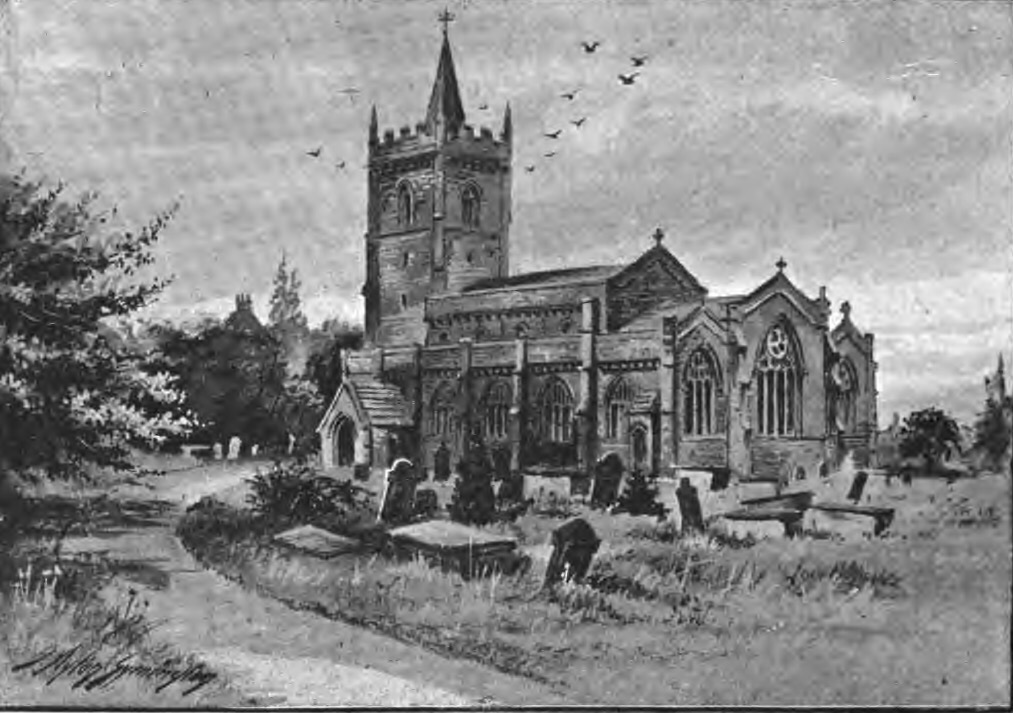
Whitkirk Parish Church

 I did wonder about his cause of death and why it occurred in Leeds Infirmary. Also his death was registered by the Coroner, Mr Blackburn. So what had happened?  

Further investigations left me stunned. 

With hindsight the drunken argument with his son 15 years earlier provided a clue. Things though hadn’t always been so bleak for Francis. When I first started researching him I felt optimistic that he and his wife Grace Pennington (in early documents her family name appears as Penitent) would have a fairly good life. They married by licence at St Mary’s Whitkirk on 25 September 1811. This, I hoped, was an indication of a more comfortably off background, where life wouldn’t be quite such a struggle. 

Initially they settled in Francis’ home parish of Sherburn in Elmet. This is where their first two children were baptised, Mary (1812) and William (1814). And it is where William was buried in 1815.  

By the time their next child was born the family were back in Halton, from where the Pennington family hailed. This baby was also named William. He of the 1842 stabbing incident. And his baptism was not without controversy either.  

The parish register entry at St Mary’s Whitkirk, records William’s baptism on 14 July 1816. However his surname is down as Pennington, and the entry states he was the illegitimate son of Grace. This was an extremely serious error. If left uncorrected the stigma could have significant consequences in terms of the family’s perception amongst their neighbours as well as for William’s future inheritance rights. At a time before general registration and birth certificates, the entry in the parish register was crucial providing legal proof of the antecedents of an individual, so the error could have grave implications. It came to light weeks later and the register does contain a corrigendum, a reflection of the legal importance of baptism entries. 

It is not clear exactly how the error was discovered, but the correction does contain hints and it is clear that Francis took swift action to put the record straight. The fact that the couple’s marriage took place within the parish and appeared in the marriage register would have simplified a resolution of matters. 

A note in the parish register states that on 1 September 1816, when William was brought to church having being privately baptised on 14 July, the original entry was discovered to be erroneous, Grace being lawfully married. It points out that the correct entry should read that William was the son of Francis and Grace Hill of Halton and that Francis worked as a butcher. Both the vicar and Francis signed the amendment. Perhaps the private nature of the baptism is a clue – William may have been ill at birth and the baptism rushed, possibly not in church, without Francis’ attendance.  

Francis and Grace had four further children: Joseph (1821), John (1822), Francis (1824) and Sarah (1827).

Back to events in April 1857 and his cause of death. One headline in the 11 April edition of the “Leeds Times” summed it up: “Frightful Death Of An Intemperate Man”. On the same day the “Leeds Intelligencer” reported under the banner “Deaths from Drunkenness” 

The multiple use of the word “death” shows this wasn’t an isolated incident. Alcohol-related deaths featured regularly in the Victorian newspapers. The 1830 Beerhouse Act (amended 1834 and 1840) was designed to curb the consumption of gin and steer working people towards the lesser evil of beer drinking. The Temperance Movement of the time supported the change. They were primarily an anti-spirit movement in the early 19th century, who regarded beer as more wholesome alternative.  

However the Acts led to the rapid expansion of beer drinking establishments. Drunkenness from beer drinking was added to that from gin drinking, and the Temperance Movement switched to being one of teetotalism. Newspapers were filled with tales and warnings of the evil of intemperance, its effects and impact on the moral, social and industrial fabric of Victorian society. 
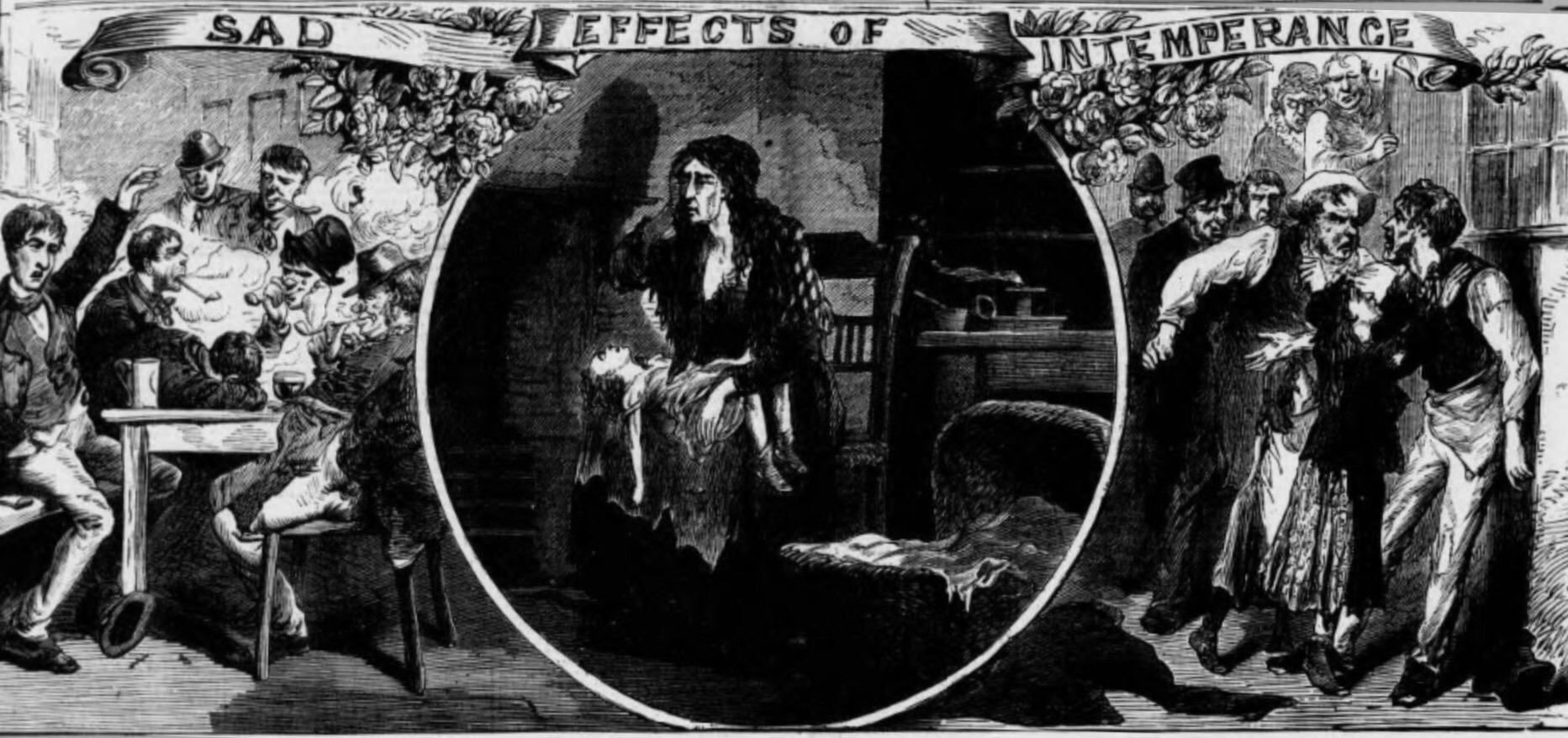
 Francis’ life, and death, should be seen in the context of this background.

At midnight on Thursday 2 April, Francis was discovered in a state of helpless intoxication, lying in mud, on York Road. He was taken to the police station and from there to Leeds Infirmary. He died in the hospital on Sunday 5 April, just over two days after his prone body was stumbled upon. 

The inquest took place on 6 April. It appears from the unnamed witness that Francis was a regular and well-known drinker in the area – the number of Halton beerhouses, inns and taverns would have provided ample opportunity for socialising of an evening. York Road was less than a mile north of where Francis lived. How long he lay in the dark, wet, unlit road before his discovery is not mentioned in the reports. Neither is the person who found him named, but presumably the fact that he was taken to the police station and not to his home may indicate it was not a friend searching for Francis.  

In accordance with the evidence presented by Mr R.G. Hardwick, house surgeon to the Infirmary, the inquest jury returned a verdict of “Died from disease of the brain; but whether it was induced by lying in the wet, or some other cause, there was no evidence to show”. 

Once again the family were centre-stage for the wrong reasons. The events surrounding Francis’ death would have been the topic for much tittle-tattle in the local community, only adding to the family’s anguish. Maybe older residents remembered the earlier incident of 1842, and all this too was dredged up by Halton gossips, much to the embarrassment of the family. Perhaps the mental afflictions of Grace’s aunt were also poured out by these same scandalmongers. 

Francis’ widow Grace died in 1873. In the years after Francis’ death she features regularly in the Whitkirk parish charities’ records, receiving money from four separate parish charities. And in the 1871 census, age 80, she still worked as a herb gatherer, an indication of the tough financial circumstances of her old age. But her life wasn’t always thus. I will return to another twist in her story at a later date. And that twist may also shed further light on the 1842 stabbing.

Sources:

  • Illustration of Whitkirk Parish Church by J.A. Symington from Morkill & Platt’s “Records of the Parish of Whitkirk” 1892. Copyright expired and in the public domain
  • Death Certificate for Francis Hill
  • Whitkirk Parish Records – parish register & charities’ records
  • Leeds Times” & “Leeds Intelligencer” – 11 April 1857 -FindMyPast newspapers
  • Tracks in Time, the Leeds Tithe Map Project: http://www.tracksintime.wyjs.org.uk

Cancer, Colic, Chest Complaints & Constipation: Causes of Death

Following my Birthplace Pedigree post, I’m turning my attention to a more macabre topic: a Cause of Death Pedigree.

Victorian Headstones – Photo by Jane Roberts

This is based on evidence provided in death certificates, so is time limited to after the introduction of General Registration in July 1837. Burial entries in parish registers have provided a cause of death for some of my ancestors prior to this date. However, given the small numbers this applies to and the fact these are normally reserved for “unusual” deaths, for the purposes of this exercise I decided against including them.

As it is based on the General Registration period it goes beyond the popular five generation format for my English lines. For my Irish ones I’ve had much less success. The other tweak is I’ve started with my grandparents as, thankfully, my parents are still alive. Something I didn’t think would be possible this time last year when my dad was living under the shadow of a terminal cancer diagnosis and given a matter of weeks to low months to live. That turned out to be a misdiagnosis, only discovered 12 months later…..but that’s a whole new story.

I’ve also gone beyond a simple cause of death. I’ve included ancillary conditions listed on the death certificate. I’ve also included an age and year of death to see if the length of my ancestor’s lives improved in line with medical and public health advances. Where I have no proof of birth date I have accepted the age of death given on the certificate, although for some I do have doubts. If I know the age is definitely wrong on the death certificate, through other documentary evidence such as a birth certificate or baptism entry, I have amended it to reflect my ancestor’s correct age at death.

I’ve created separate charts reflecting the lines of all my grandparents. Those charts containing Irish ancestry are significantly shorter than the ones for my English branches.

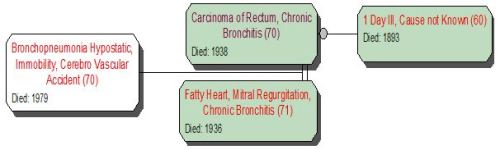
The first, for my paternal grandmother, is one such example. This is very limited in terms of cause of death information. As yet I’ve to trace death certificates for three of my four Irish 2x great grandparents.

Cause of Death Pedigree grandma Hill 2

Chart 1: Paternal Grandmother Cause of Death Pedigree

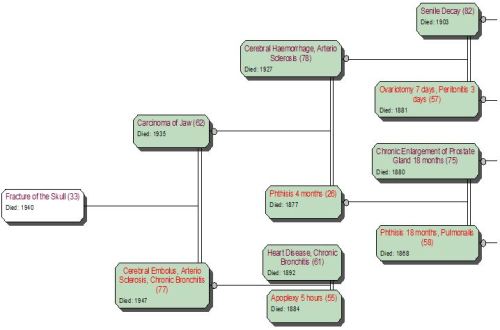
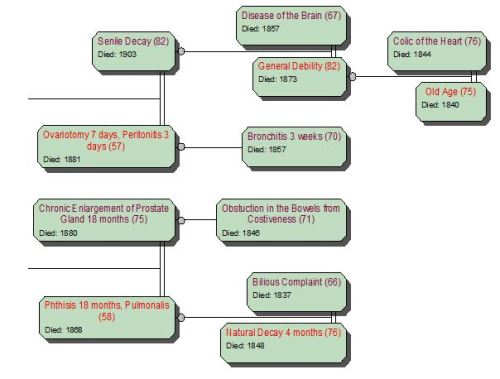
The next charts (2a and 2b) reflect the causes of death in my paternal grandfather’s line. His is a mix of English and Irish ancestry. Because of the size I’ve split this one in half. The cross-over point is my 3x great grandparents, who feature in both parts. Hopefully this makes things easier to read than a 17th century document!

Cause of Death Pedigree grandad Hill 3a

Chart 2a: Paternal Grandfather Cause of Death Pedigree

Cause of Death Pedigree grandad Hill 3b

Chart 2b: Paternal Grandfather Cause of Death Pedigree

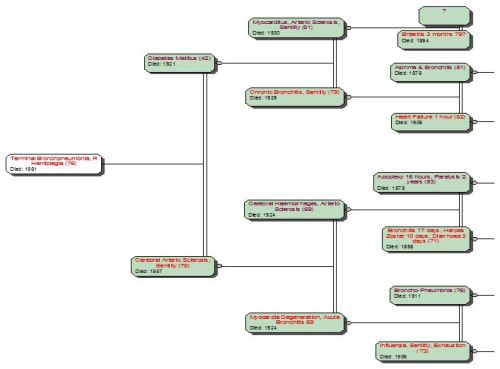
The next set of charts are for my maternal grandmother, a purely English line. Again, given the size, I’ve split this into two parts. My 3x great grandparents are the cross-over point featuring at the end of  3a and the start of 3b:

Cause of Death Pedigree nana Callaghan 1a

Chart 3a: Maternal Grandmother Cause of Death Pedigree

Cause of Death Pedigree nana Callaghan 1b

Chart 3b: Maternal Grandmother Cause of Death Pedigree

The final pedigree chart is another Irish one, my maternal grandfather’s ancestors.

Cause of Death Pedigree grandpa Callaghan 1

Chart 4: Maternal Grandfather Cause of Death Pedigree

One feature I was pleased, and surprised, to see is the relative longevity of both my maternal and paternal lines. I’m hoping that holds true, given my impending surgery. The average age of death for mum’s line is 71 and dad’s 66, far higher than I anticipated before doing this analysis. It illustrates yet again childhood was the most dangerous period. By their very nature direct line ancestors survived till adulthood – and mine seemingly fared well in the longevity stakes.

The range of death causes, particularly on dad’s side, also struck me. Looking at his line the most common death cause appears to be general old age. And sticking with this branch, in terms of diseases traditionally associated with Victorian England, phthisis (TB) struck a couple of ancestors, and that was it despite living in increasingly urban areas of Yorkshire.

Of note is the ovariotomy resulting in the death of my 3x great grandmother in 1881, a procedure with a lamentable success rate in this era. In fact, controversially during this period, an ovariotomy could be performed to remove normal ovaries, not just for treating diseases such as cysts and tumours.  This practice started in 1872 and it became the fashionable treatment for menstrual madness, pre-menstrual syndrome, neurasthenia and “all cases of insanity“. The practice of removing normal ovaries was supported by distinguished gynaecologists and psychiatrists, becoming one of the great medical scandals of the 19th century.

Turning to mum’s side, other than general old age, chest problems feature prominently. Some are occupational, but others are definitely not. These range from bronchitis and pneumonia to long term conditions such as asthma. There are also a number of possible stroke-related deaths. The diabetes-related death of my great grandfather has health repercussions in the family today. And once again there are very few of those historic infectious diseases particularly associated with the 19th century. There is a single case of typhus.

A few other quick points, not rocket science but amply illustrated in this “cause of death” sample:

  • the imperfection of diagnosis in the 19th century. Not a shock, given my 21st family example. But it’s interesting to see concrete demonstrations back then. One of my ancestors has a death certificate which actually states “1 day ill, cause not known“.  Another certificate stated “cramps“;
  • linked to these diagnostic limitations, perhaps some of these cases of old age, general debility and natural decay, as well as prostate gland enlargement, masked other illnesses such as cancer. Cancer started appearing in death causes for my family in the early 20th century, particularly on my paternal line;
  • illnesses manageable or treatable today, such as bronchitis, asthma and diabetes, were fatal back then. Some other conditions are curable. One of my ancestors died of an obstruction in the bowels from costivenes (a word for constipation). Again an imperfect diagnosis, possibly cancer, but potentially eminently treatable in the 21st century; and
  • despite the passage of time and medical advances, my oldest ancestor in this sample died in 1852 age 96. So luck plays a part.

I’ve found this exercise particularly worthwhile and informative on a number of levels. Apart from the causes of death and ages, it has highlighted there are three English death certificates on my maternal line I need to track down. So a genealogical help, encouraging a critical review of information and information gaps. Also, looking to the future, there are definite identifiable illness susceptibilities which feature in the descendants of these ancestors today. So potentially a medical help.

My “Holey” Birthplace Pedigree: The (Bad) Luck of Irish Ancestry

Everywhere seems awash with birthplace pedigree charts based on the one created by J. Paul Hawthorne. His template can be found  here: http://bit.ly/1RjfZEZ

So, as a bit of Easter fun, I thought I’d have a go at my own. I’ve modified his template and created two charts. One for my dad’s origins:

Birth Pedigree Dad

Paternal Birthplace Pedigree

The other is for my mum’s side of the family:

Birth Pedigree Mum

Maternal Birthplace Pedigree

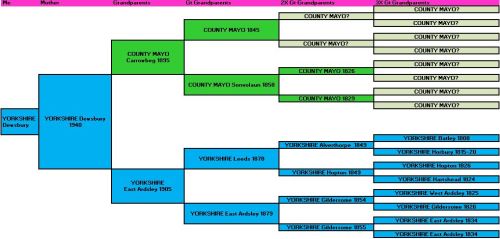
What strikes me is how geographically constrained my family is: a mix of Yorkshire and County Mayo on both maternal and paternal sides. Only in the 18th century does my English family extend beyond the Yorkshire boundaries – and then only into County Durham and Northumberland on my paternal side. This is beyond the scope of the generations on the charts. This is why I’ve made an adaptation, to include the birthplace and year. Otherwise my chart is way too boring – and I haven’t broken the geographical mould. Guess it’s an illustration of how wonderful Yorkshire is!

The  other notable feature illustrated in the chart is the challenging nature of discovering my County Mayo ancestry. Whereas I can extend my English roots back to the 18th and, in some cases, 17th century there is no such luck with my Irish side. From the 1850’s onwards things are difficult with my County Mayo ancestors, but no real brick walls. Prior to this date it’s a real struggle. In fact I only know the names of two of my 20 Irish 3x great grandparents, and can only assume they all hailed from Mayo. And I’ve had to make that birthplace assumption for six of my 2x Irish great grandparents, based on the fact it’s their location in the earliest records I can find for them.

So I’m very envious of those who can fill in all their pedigree chart ancestral locations, many covering a wonderful array of almost holiday-like destinations. Sadly my birthplace pedigree chart will never match that, even in the unlikely event of tracing my Mayo roots.


What a Difference a Year Can Make – Calendar Confusion

I spent last week recording data on my Family Historian software, ticking off another of my genealogy New Year Resolutions. It included a raft of 18th century parish register entries. Entering the information I was reminded of one of my early family history basic errors which I need to re-visit in my family tree file.  I recorded a swathe of entries under the wrong year.

In my first enthusiastic rush into ancestral research I totally failed to appreciate the calendar change of 1752, the amended start to the year and the implications of this. In fact in those early days I probably didn’t even know a calendar change occurred.

I couldn’t understand why some dates didn’t fit, with babies being baptised at the beginning of March 1747 to couples who married in April 1747. I thought I’d unearthed a family scandal, but there was no hint of illegitimacy in the normally brutally censorious registers.

I assumed the calendar back then was the same one in operation today, with 1 January marking the start of the year. How mistaken I was.

I subsequently discovered from around the 12th century in England the year started on 25 March, Lady Day. So, for example, the day after 24 March 1747 was 25 March 1748.

Not until 1752 did the year start on 1 January, as a result of the 1750 Calendar Act and the 1751 amended Act. Also known as Chesterfield’s Act, it brought the start of the new year into line with England’s European neighbours and ones even closer to home: Scotland adopted 1 January as the official start of the year from 1600.img_0595

It meant that in England 1751 was a short year to take account of the change. It started on 25 March and ended on 31 December.

1752 also had a reduced number of days, as this Act moved England from the Julian to the Gregorian calendar used by many European countries. It meant September 1752 was reduced to 19 days, with 2nd September being followed by 14th September. These lost 11 days were a result of a correction to an anomaly in the Julian calendar.

Chesterfield’s Calendar Act Extract

The Christian world throughout the Middle Ages used the Julian calendar. Based on a 365 day year with an extra day every fourth year it was devised to to ensure seasonal stability in an agrarian society.

But here’s the simplified scientific bit. The 365 ¼ days of the Julian calendar cycle did not accurately reflect the time taken by the earth to rotate the sun. It was too slow. Only fractionally. Less than 11 minutes annually. But it made the calendar too long. Another way of looking at it is there were too many Leap Years. However the cumulative effect of this discrepancy meant by the 16th century the year was 10 days ahead of where it should have been relative to the earth’s cycle. Significantly, apart from any agricultural seasonal impacts and the affect on navigation, for the Catholic Church there were implications for Easter.

Corrective action was needed. Enter Pope Gregory XIII who in 1582 enacted a papal bull introducing the new calendar, named the Gregorian calendar. This omitted 10 days to bring things back into line with the earth’s solar cycle. It also included a mechanism around Leap Years to account for the actual length of a year in future. From now on Leap Years only occurred in the last year of the century if their first two digits could be divided by four (ie/ only in 1600 and 2000).

Religious politics now came into play. Catholic states generally fell into line using the new calendar. Protestant countries such as Britain and Ireland and its colonies (such as the USA) resisted – they did not wish to follow any Papal edict. But gradually, given its obvious agricultural, commercial, legal and international relationship benefits (for instance by the 18th century what was 20 June in France would be 9 June in England), uptake increased.

By the time England came round to accepting that the benefits of the Gregorian calendar outweighed any religious reluctance, it was 11 days out of sync. Hence the missing 11 September days in 1752.

img_0596

But even with the 1751 Act things aren’t straightforward as far as the New Year is concerned. I’ll use some West Yorkshire parishes associated with my family history to illustrate this.

Leeds Parish Church complied with the Act and entries on 1 January displayed the New Style year of 1752. This also applied to Kirkburton All Hallows and Mirfield St Mary’s.

However it wasn’t universal. Some parishes were behind the pace.

One such example is St Peter’s Birstall. The combined baptism, marriage and burial register acknowledged the September change. An entry at the beginning of September 1752 stated:

September hath 19 days this year

Then, after a baptism entry on 2 September:

According to an Act of Parliament passed in 24th year of his Majesty’s Reign in the year of our Lord 1751 the Old Style ceases here and the new takes place and consequently the next Day which in the old account would have been the 3rd is now to be called the 14th so that all the intermediate Days from the 2nd to the 14th are omitted or rather annihilated this year and the month contains no more than 19th Days as the Title at the Head expresses”.

Birstall St Peter’s Parish Register Explanation for September 1752 Calendar Changes

No similar note mentioning the New Style calendar affected the start date of the year. This part of the Act wasn’t implemented on 1 January 1752 in Birstall. The New Year in this parish register did not start until Lady Day in March. In other words no difference.

1 January 1753 came and there was a tiny entry, a mere nod at the change. Almost imperceptibly tucked away in miniscule script. Certainly no fanfare announcement along the lines of the September change.

Birstall St Peter’s Parish Register Low-Key Entry for January 1753

Contrast that with the shouty heading marking the first post-Lady Day christening of 1753. By 1754 though they were fully towing the line.

Birstall St Peter’s Parish Register Fanfare Entry Post-Lady Day 1753

The neighbouring Parish of Batley similarly adopted the New Style from 1 January 1753 rather than 1752. The register does briefly explain the September 1752 issue, but without the pointed remarks about “annihilation” of days.

So some parishes implemented the Act with the year starting on 1 January from 1752. And from my unscientific example others didn’t adopt the change until 1 January 1753, seemingly grudgingly. Others, however, even went beyond this.

Wakefield All Saints’ register retained the Old Style up up to and including 1755, with the change only made from 1756. There may be examples of other variations if I delve deeper. And there may even be instances of it pre-January 1752, as acknowledgement of the difference did occur in documents prior to the official change.

To sum up even knowing the year change was supposed to take place on 1 January 1752, it still pays to check the register if at all possible to ensure the switch did indeed take place on the prescribed date. And accurately record the year to indicate whether the date is Old Style (O.S.) pre-calendar change or New Style (N.S.) post-change. I use a “double dating” format for those 1 January to 24 March days prior to the calendar change. So, for example, I record 23 March 1747 O.S. as  23 March 1747/48. This indicates the event took place in 1747 according to the O.S. calendar, but 1748 in the N.S.

After all that year could make a big difference to your family tree and subsequent research.

Sadly (?) I don’t think I’ll progress my family history to pre-12th century to concern myself with any calendar in use then.

Footnote:
I’m not going as far as adding in the “annihilated” 11 days to my Family Historian package à la George Washington’s Birthday though! Born on 11 February 1731 according to the then-used Julian calendar, with the adoption of the Gregorian calendar the corrected date celebrated is 22 February 1732. But that this may have happened is worth noting too.

My St Patrick’s Day Mystery: The Missing Callaghan (Callahan) Sisters of County Mayo – Location Massachusetts

I have a more than a drop of Irish blood in my veins. As such, the run-up to St Patrick’s Day seems appropriate to write about one of my County Mayo brick walls. But this one isn’t so much tracking back as going forward.

My grandpa John Callaghan, born in 1895, came from Carrowbeg, (sometimes spelled Carabeg/Carrabeg in records), near Kilkelly. One of nine children born to Michael Callaghan and Mary Murphy, he was the last son to leave his birthplace and move to England. All the Callaghan boys settled in either Lancashire or Yorkshire, before the autumn of 1920. The latter county had family associations for a number of years prior to their eventual move, with either Michael or some of his sons coming over seasonally to help at harvest time. I will return to the boys and their parents another time.

But it is my grandpa’s three sisters I have “lost”. The girls all crossed the Atlantic.

Bridget, the eldest, went first. The family intended selling a cow to fund her passage. There’s a tale here as the brother tasked with taking the cow to market pocketed the money! And it appears in the end another family member paid the fare.

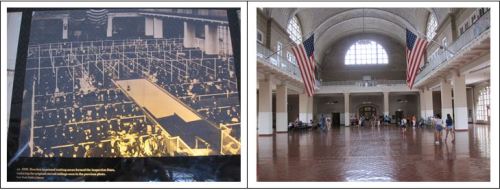
Bridget set sail from the Irish port of Queenstown (now known as Cobh) on board the White Star Line ship S.S. “Teutonic” on 23 September 1909, arriving in New York on 29 September. But her ultimate destination was 22 Winchester Street, Boston, Massachusetts to stay with her aunt Lizzie Callaghan. A diminutive 5’2”, she was described as fair complexioned with brown eyes and hair. So possibly taking after her mother’s side of the family in colouring. She described her occupation as a servant. And she displayed creativity with her age. Born in 1886 she claimed to be 19.

Ellis Island duo 1

Ellis Island  – Photos by Jane Roberts (July 2012)

Mary was next to make the journey. But this was several years later after the death of her parents. All her brothers had left Ireland too at this stage. Her prospects in the U.S.A were far better than remaining in rural Mayo. And she had family to go to, though possibly not her sister Bridget. But more of that later.

Initially Mary travelled to England to make her journey. Did she meet up with her brothers one last time before departure? Certainly the port she sailed from, Liverpool, was within easy reach of her Lancashire-based brothers.

She left the port of Liverpool on board the S.S. “Carmania” on 9 November 1920. The ship had returned to trans-Atlantic service in December 1918, after seeing action in the Great War. Mary left her sister Catherine, sometimes referred to as Kate, behind in Ireland.

Ellis Island duo 2

Ellis Island – Photos by Jane Roberts (July 2012)

Arriving in New York on 20 November 1920, the 27 year old domestic was also bound for Boston. This time to her aunt Bridget Hayes at 39 Border Street. The passenger list describes her as 5’3” with a fresh complexion, fair hair and blue eyes.

Interestingly Mary’s surname is recorded as “Callahan” on the lists, reflecting its pronunciation. It so annoyed my grandpa when the letter “g” was enunciated.

Finally it was the turn of Catherine. The youngest of the Callaghan siblings, she was the last to leave their Irish homeland. Her closest relative in Ireland was her aunt Mary Caulfield. She too lived in Carrowbeg. In 1911 the widowed Mary lived in a house built for her by her brother Michael, close by the Callaghan farm. Whether Catherine now lived with her aunt is unclear, as the Callaghan farm was still retained by the family.

Her sister, Mary, paid her passage from Liverpool to Boston, on board the S.S. “Ausonia”. By now Mary’s address was 2 South Cedar Place, Boston, MA. Catherine’s passenger list entry indicates her intention was not to remain in Boston. This was purely a visit, and she planned eventually to return home to Ireland. The timing, sailing on 9 December 1922 and docking on 20 December, suggests her stay was arranged to coincide with the festive season. Whatever the intention was, Catherine ended up settling in America permanently. She was of similar stature to her sisters, standing at 5’3”, with fresh comlexion, brown hair and blue eyes. I gather she too subsequently adopted the “Callahan” surname variant.

I would love to know what became of the three sisters. This was one of the mysteries I hoped genetic genealogy might solve. This is a wish shared by my mother, and one of the factors which swayed her into doing a test.

I know the family gradually lost touch. One of the sisters, possibly Bridget but this is unconfirmed, ended up marrying a French-Canadian and settled in Canada. This might explain why when Mary went to Boston she stayed with an aunt. I also understand this Canadian-settling sister adopted a boy who corresponded with one of my mum’s brothers. Sadly this brother died in 1955 in tragic circumstances and contact was lost.

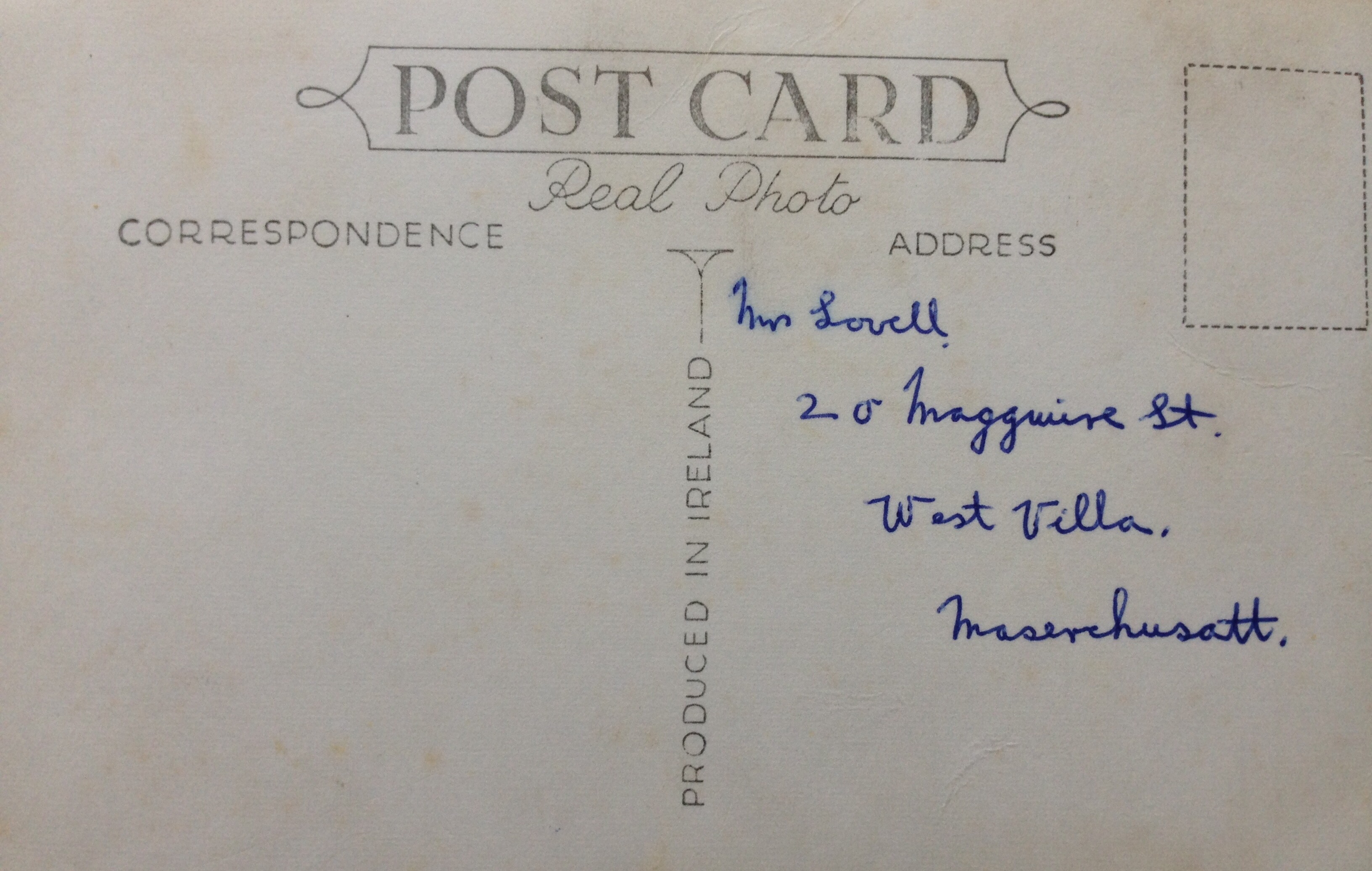
I do have a postcard my grandpa addressed to a “Mrs Lovell, 20 Magguire St, West Villa, Maserchusatt [sic]” (below). No date, or message and the postcard was never sent. It contains a picture of a church associated with the family in County Mayo. Is Mrs Lovell the married name of one of his sisters?

Grandpa’s Mystery Postcard

And I did have a brief ray of optimism with a very close Ancestry DNA match to my mum and my tests. No tree, but someone who appears descendant of one of the sisters. But no further progress. I’ve not given up hope though.

Maybe one day I will solve the mystery. Fingers crossed it is sooner rather than later.

Sources:

  • 1911 Census – The National Archives of Ireland
  • UK Outward Passenger Lists, New York Passenger Lists & Massachusetts Passenger and Crew Lists – Ancestry.co.uk

A Bit of Good News

In my post Education, Education, Education I said I would be embarking on an online course, “Searching for Wills and Administrations in England and Wales”. This was my final module in the Pharos Tutors and the Society of Genealogists Family History Skills & Strategies (FHSS) (Intermediate) with Certificate programme.

I completed the module at the end of February and I’ve now received the result. I’m pleased, and relieved, to say it was a distinction. Relieved because, having achieved that level in all the other modules, I didn’t want to slip up at the final hurdle. And it means that overall I’ve passed the FHSS Certificate with distinction.  

 I can definitely recommend the Certificate. I’d been researching my family tree for about seven years prior to undertaking the courses, but I discovered there was so much I hadn’t considered.  

Apart from having a lot of fun in a wonderfully supportive environment, I’ve learned so much about a broad range of records across many aspects of family history research. But beyond these sources, the certificate courses helped me focus on the importance of research planning as well as critically analysing and interpreting the records, putting them into their historical context.  

As a direct result of implementing the knowledge and skills I’ve gained through the Certificate, I’ve made many breakthroughs in my own family history research. The “Wills” module was no exception. I hope to write about this latest brick wall demolition in the coming weeks.  

So now I’ve completed the FHSS Certificate I’ve to decide on my next steps. Do I want to push on with my genealogy education? Do I want to take on more research for others than I do currently? If so what are the options? The Pharos Tutors/Society of Genealogists Advanced Certificate? IHGS? Or a University of Strathclyde or Dundee course? Can I even commit the time to further structured learning, given I have a “day job, albeit part-time? Or do I take a step back and concentrate on my own research? I’ll decide in the coming weeks. Possibly after “Who Do You Think You Are? Live

A Shout Out for Libraries – A Family History Gateway

My local library has been so much a part of of my life I can’t imagine a world without it. It has been there at all stages: from the magical joy of childhood stories; to the text and reference books for my school studies; the escapist pleasure of novels transporting me to different worlds, times and places from my armchair (or bus seat); and full-circle taking my own little girl to choose her first books.

But more than that: 10 years ago it provided my gateway to family history. 

When I took my first tentative family history steps, they took me to the familiar surroundings of Batley library. There I got used to operating the microfilm and microfiche readers to look at the local censuses, newspapers, parish registers and cemetery records. There I practised deciphering old handwriting and making transcripts and abstracts.

image

Batley War Memorial & Library – Jane Roberts

In those early novice days I don’t think I would have dreamed of going to West Yorkshire Archives. The prospect was far too daunting. It would be full of experienced, serious researchers. Not a place for a “newbie” like me who didn’t have a clue what a microfilm reader was, let alone how it worked.  

I felt far more comfortable going to my local library where I knew the staff. And they had endless patience showing me what records were available and how things worked. 

Their holdings provided a very local focus. Beyond the newspapers and parish registers they had those peculiarly local resources, often provided by researchers with a love of and affinity with the area. From the card index of local War Memorials compiled by Christopher Frank, (I still don’t know who he is but I’m eternally grateful to him because it was through his index that I had the jolting realisation that one of my ancestors was on the Memorial, a fact never mentioned by the family), to the research piece by Janice Gilbert on “The Irish in Batley”.

Even now my local library is a go-to family history research location. It is still the place for local newspapers – neither “The Batley News” or “The Batley Reporter & Guardian” are on the British Newspaper Archive or FindMyPast. Not all West Yorkshire Parish Registers are on Ancestry. There are resources such as Batley Cemetery Records, Batley Borough Council minutes, Directories, Batley Grammar School Magazines and various programmes, brochures and memorabilia from a multiplicity of local events. Then there is the wonderful Soothill War Register which I wrote about in a recent post.image

One of my particular library favourites are the annual Reports by the Batley Borough Medical Officer of Health. I briefly referred to them in “A Short Life Remembered“. They provide a fascinating and detailed insight into all aspects of health, disease and social conditions of my Batley ancestors: from school-by-school statistics of Batley children, to breakdown of causes of death; from birth rates and infant mortality to incidence of infectious diseases. I find them an invaluable source for giving context to the times, lives and deaths of my ancestors.image

They even have free computers, Wi-Fi and Ancestry access! 

The impressive Batley Market Square library building is steeped in history. With funding from philanthropist Andrew Carnegie it opened to the Batley public in 1907. I imagine my ancestors browsing through the thousands of lending and reference library books or catching up with latest local, national and international events in the newspaper room. And over a century later I am researching the lives of those ancestors in the very same building.

In an era of Government spending cuts and their knock-on impact on Council funding for services, libraries are easy targets. “My” library was a fundamental first step up the genealogy tree all those years ago; and it is just as relevant for me today. I do so hope that such valuable community hubs, important at all stages of life, are not lost. 

Given the subject it seems appropriate to post this on World Book Day.

We Will Remember Them: Contemporary Parish War Register Books

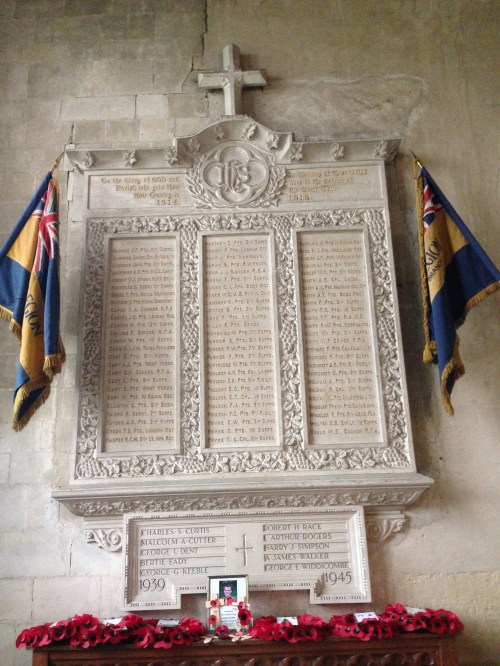
War Memorials can be found in churches, towns and villages the length and breadth of the country, inscribed with the names of those who paid the ultimate sacrifice. Years later researching those named can prove problematical, as all that exists on the Memorial is a name.  I know this only too well from my Batley St Mary’s research!

However some Parishes and Districts went a step further and, in addition to these Memorials, they produced registers and books containing more details about their war dead.

This Christmas my parents bought me a limited edition reproduction of one such book, the Upper District of Soothill War Register and Records of War Service 1914 to 1920.  Soothill War Book

The original was compiled by the Rev W.E. Cleworth, Vicar of St Paul’s, Hanging Heaton. Printed by E.F. Roberts in Batley, it was based on a War Service Register kept by the Vicar from the start of the war. The Soothill Upper War Memorial Committee subsequently assisted. When the war ended 1,000 Record Forms were printed, information inserted from the Manuscript Register and then these were distributed to households in the area for correction and additions. Over 900 were returned and these were used in the production of the book, which was truly a parish effort. Copies of the original book are held at St Paul’s Hanging Heaton and Batley library.

It is particularly noteworthy that this book contains the names of not only those who gave their lives in the course of the conflict; it includes information about all those from the District who served. So a wonderful record of those who came home and are all too often overlooked.

It contains addresses, Units, age when war service commenced, places served, promotions, distinctions and other points of interest about the service careers of those featured.

Details of the limited edition reproduction organised by Margaret Watson, including more about the original, can be found in October 2014 editions Batley & Birstall News. However I understand the reprint has now sold out. The book includes a number of men linked to my family tree, including Jesse Hill, so I am so pleased to now own a copy. And I am indebted to Margaret and all those who worked on putting the reprint together.

On a recent visit to Lavenham, Suffolk I popped into the local Parish Church of St Peter and Paul to look at their War Memorial. To my surprise and joy beneath their Memorial they too had a book.

Lavenham Church

Lavenham Parish Church – Jane Roberts

This one commemorated those who died in both World Wars. A handwritten Book of Remembrance dating from 1922, it was compiled with the specific intention that those who died would have more than their names remembered.

Lavenham War Memorial

Lavenham War Memorial – Jane Roberts

There appeared to be a page devoted to each man, giving name, age and address alongside service details and even extracts from letters informing families of their loss. A wonderful lasting legacy for generations to come.  Lavenham book of remembrance

These books are particularly poignant because of their “of the time” nature. I wonder how many more are out there? And how many are being reprinted to ensure these men’s memories are perpetuated?

A Short Life Remembered: Margaret Hill

Immersing myself in the lives of my ancestors inevitably means dealing with their deaths. Lots of them. Because I invest so much time in my research, that connection with my ancestors goes way beyond the simple bloodline link. Learning about their lives and struggles, I develop an emotional attachment. Discovering their deaths, which were occasionally under traumatic circumstances, can stop me in my tracks. And whilst not quite moving me to tears it can bring a lump to my throat. I’m not sure if this is a common feeling amongst other family history researchers.

The deaths of children can be particularly difficult. They never had a chance to make a mark, achieve their potential, fulfil their parent’s hopes and dreams, marry and have families of their own. But for family history research, many would be forgotten for ever. One of my first blog posts, A Census In-Betweener, was one such example. It remembered the all too fleeting existence of Thomas Gavan, my great grandmother Bridget Gavan’s eldest child. Towards the end of the year another post focused on the tragic accident in which Oliver Rhodes died. He was the son of my great grandparents Jonathan Rhodes and Edith Aveyard.

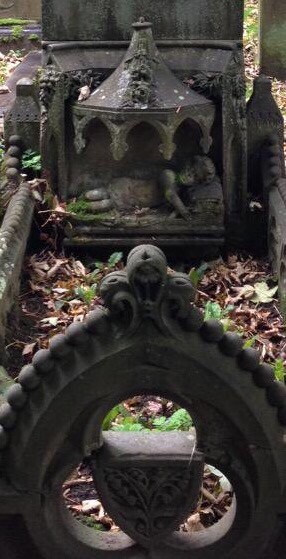
Victorian Headstone for a Child – Photo Jane Roberts

This year I intend to write a series of blog posts commemorating more of the briefer lives of those in my family tree. This is the first. It marks the short life of Bridget Gavan’s youngest child, Margaret Hill. But for the 1911 census I would never have known about her existence. It was news too to other family members, something I find difficult to comprehend. After all it wasn’t that long ago.

In this post, as well as describing what little is known of her short life, I will try to give a flavour of the times in which she lived.

In 1897 Bridget Gavan married coal miner John Herbert (Jack) Hill. Jack was a widower, Bridget an unmarried mother of two girls, though it is possible Jack was the father of the younger of the two, Agnes.

Jack and Bridget went on to have seven further children. Margaret, their final child, was born on 29 August 1910 in the family’s home at 16 New Street, Hanging Heaton. The family now totalled nine children ranging from newly-born Margaret to eldest Annie, who celebrated her 17th birthday the day before Margaret’s arrival.

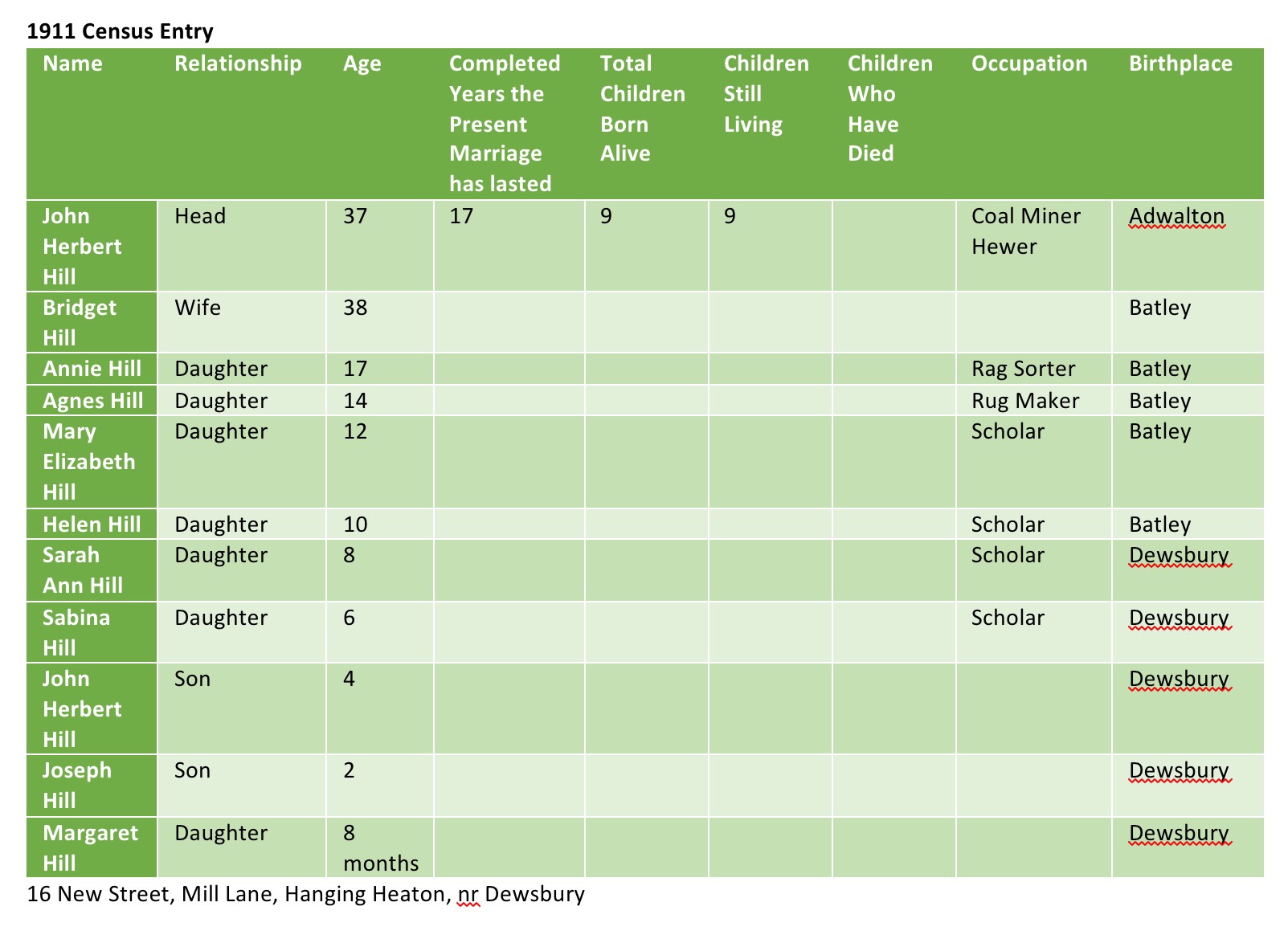
The 1911 census shows the complete family unit. It is notable for Jack and Bridget’s judicious tinkering with names and dates. Interestingly they claimed to have been married for 17 years, which conveniently corresponded with the age of Bridget’s eldest daughter Annie who is listed as “Annie Hill”, not Gavan. Daughter Agnes, also born outside of wedlock, is similarly listed as Hill and not Gavan. All nine children are claimed as “children born alive to present marriage”. There is also the usual flexibility around adult ages to minimise the gap between Jack and Bridget’s ages (she was born in 1869).

In terms of events during Margaret’s short life, 22 June 1911 marked the coronation of the new King, George V, and his wife Queen Mary. A cause for celebration with parades, parties, decorations and a bonfire to mark the occasion. And in December that year the Liberal Government introduced a National Insurance Act. It meant for that workers would have cover against sickness and unemployment. So there was perhaps some optimism as the things seemed to be on the up for families like Jack and Bridget’s.  But this may have been tempered as a result of industrial action the following year, and its affects on family income.

Miners were notoriously militant with frequent strikes. The records of the Yorkshire Miners Association (YMA) show in the latter part of the 19th century and early into the 20th Soothill Wood, the pit where Jack worked, was one of the more non-militant and politically moderate pits. Nevertheless, although being characterised in district ballot votes as non-militant it was conversely, even then, regarded as particularly “strike prone”.

Just a glimpse through newspapers show for instance strikes were threatened in 1892 over amongst other things distribution of corves. A short strike took place in 1894 over reduction of wages. Outside this period, a lengthy strike took place in 1906 affecting not just Soothill, but wider throughout Yorkshire. And in 1912 there was a national strike, lasting five weeks, the objective being a national minimum wage.

The national strike began in February, Britain in the grip of yet another severe winter with temperatures plummeting and thousands dying of hypothermia. Heavy snow fall had affected Yorkshire at the end of January. A strike was the last thing Britain needed at this particular time. As a result of the action more than a million people were out of work.

Although the outcome was not as profitable as the miners wanted, hewers in the Batley area, such as Jack, were guaranteed a minimum daily wage of 6s 8d, subject to clauses around for example age and attendance, although some employers did try to flout this.

Then another 1912 Soothill strike in early July resulted in 72 men being summoned to appear in court that month  – just a small fraction of the hundreds involved.

A newspaper report in 1918 stated the wages of a Soothill Wood Colliery averaged of £2 13s a week. But this needs to be seen in context of the economy at the time. Since the beginning of the war to 1916 there was an estimated 45 per cent reduction in the purchasing power of foodstuffs. Soothill Wood is more accurately described as a low to average pit in terms of wage level during the period 1894-1918.

So although the Hill family were not in the poorest category, life would still be a struggle full of difficult spending choices to make. Balancing how much to spend on rent against food and other essentials such as coal (although this would be cheaper than the norm given Jack’s job), lamp oil, gas, wood, candles, matches, soda and soap (a particular high usage item for a mining family), blacking and transport costs. And if you went for cheaper rents, these houses would be smaller, damper and darker resulting in higher expenditure on fuel and lighting, not to mention being more detrimental healthwise.

The family would weigh the affordability of burial insurance against the risks of not having it. As we saw in the story of Thomas Gavan, Bridget was minded to take out insurance, but was this still the case with a much larger family?

Then there was clothing and boots. Could they afford to put aside weekly in a clothing or boot club, or were they faced with the hit of paying it all upfront as and when needed? The school log book for St Mary’s, the school the Hill family went to, has accounts of children not being sent to school for lack of boots during this period.

And then there would be budgeting for emergencies such as medicine and doctor’s bills.

As for food, for the working class it was bland and monotonous, the emphasis being on staving off hunger rather than nutrition. Men, the breadwinners, had the most. They needed to be fit and strong to go out to work, especially for a manual job such as Jack’s. The principal article of diet in this period was bread which was cheap and convenient. It was followed some way behind by potatoes, meat and fish. Meat was principally bought for the men, with the main expenditure being on Sunday dinner when the entire household would be at home. Cold cuts from Sunday would be eaten on Monday, eked out longer if possible. When potatoes did not feature, the replacement would be suet pudding with golden syrup. There would be the occasional egg, and tiny amounts of tea, dripping, butter, jam, sugar and greens.

Milk, although crucial for children in particular, was costly. There were also issues of storage to consider in these years before refrigeration. A pint of milk a day for an infant or child would equate to around 1s 2d a week when the food for a whole family may have to be supplied out of 9s a week after all other household expenses were taken into account. As a result women nursed their babies as long as possible, often until they were about one year old. After that often the only milk children got was tinned evaporated milk, this despite it not being recommended for infants. This tinned product was used in tea, and sometimes also used as a spread on bread. Where boiled milk was given to babies and infants it was often thickened with bread and biscuits in an attempt to bulk it out. In 1916 the local Coroner censured such a practice in the inquest of the baby son of a fellow Batley St Mary’s parishioner. But the reason why infants did not get milk was the same reason they lacked good housing and clothing – it came down to cost and family finances. In short the diet where there were several children in a family, such as the Hills, would be chosen for its cheapness and for its filling, stodgy qualities.

All of these considerations may have played a part to some extent in Margaret’s death.

On a national scale one event dominated 1912. British confidence was shaken in the spring when news reached home of the unthinkable, the sinking of the “Titanic” on 15 April, with the loss of more than 1,500 lives. Headlines screamed out from billboards and newspapers – day upon day of grim news. Deaths included those of bandleader and Dewsbury resident Wallace Hartley, with tales of how the band played on adding to the whole pathos surrounding the event.

There were perhaps some particular highlights to the Hill’s year though. On 10 July 1912 following much preparation and accompanied by great excitement King George V and Queen Mary visited Batley. A three minute ceremony in the market square was attended by around 4,000 school children hoping to catch a glimpse of their monarch. However, it ended in disappointed children and much indignation on the part of parents and teachers when many failed to see the Royal couple, such were the crowds and the swiftness of the event. Margaret was too young, but some of her siblings may have taken part and returned home dispondant.

It is also doubtful whether the event took Jack’s mind off the Soothill Wood Colliery strike which culminated in those July court cases.

On a more personal family level one event dominated the year – the marriage of Bridget’s daughter Annie to Lawrence Carney on 30 November 1912.

So things ticked over until 4 August 1914, when a life-changing announcement was made which would affect many families nationwide: Britain declared war on Germany. There now followed a period of intense hardship and sorrow for many families including the Hills, now living at 2 Yard, 2 Victoria Street in the town’s Carlinghow area. But that was still to come.

With the war in its infancy and family members, such as Lawrence, now serving in the military, tragedy closer to home struck the family. On 9 October Margaret, died age four, as a result of tuberculous (TB) meningitis. She was one of only nine people in Batley Borough to die of this illness in that year.

TB meningitis typically affected children under ten years of age. It was especially associated with improper feeding, malnutrition, poor hygiene or childhood illnesses such as measles and whooping cough. Caused by tuberculosis bacteria invading the membranes and fluid surrounding the brain and spinal cord, it usually began with vague, non-specific symptoms such as fatigue, listlessness, loss of appetite and headache. The afflicted child became peevish and irritable. Vomiting and constipation followed along with a dislike of lights and sound. As the headache intensified the child would scream with a peculiar cry and display classic neck stiffness. As the disease progressed seizures occurred, the child lapsed into a coma and eventually died. Horrifically Margaret suffered these symptoms and decline over a period of three weeks.

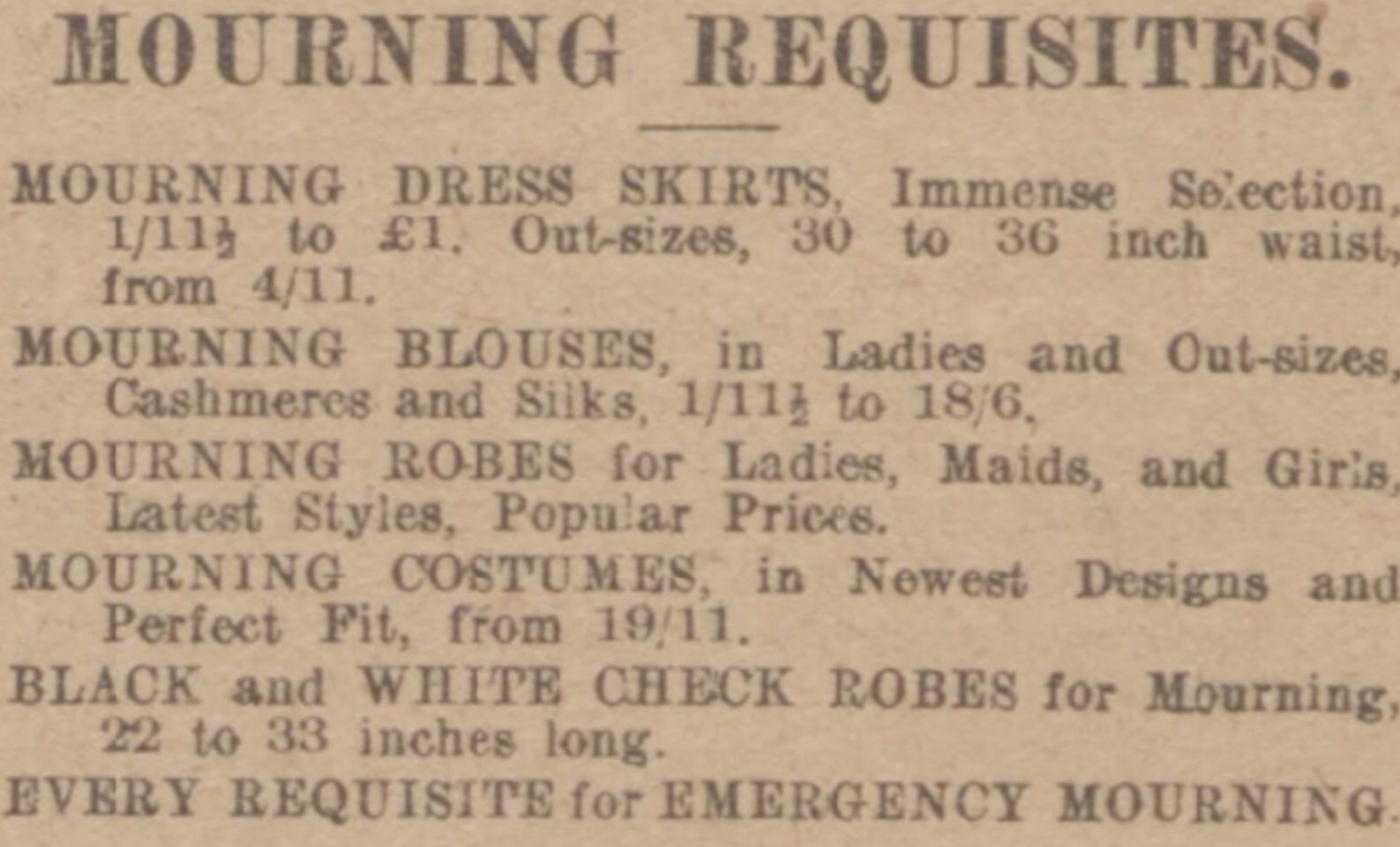
1914 Mourning Dress Advert

Apart from the tragedy, such an event was crippling financially to already hard pressed families. A child’s funeral alone could cost upwards of £2, including a death certificate, funeral costs, flowers, gravediggers, hearse attendants, a woman to lay the body out, and a black tie for the father. Most families took out burial insurance. This cost on average each week 1d per child, 2d for a mother and 3d for a father, though some overcautious women paid more. So for the Hill family, with their flock of children, this would amount to a weekly sum of just over 1s. But even with insurance a burial plot may not have been affordable.

Batley Cemetery – Photo Jane Roberts

This proved the case for the Hill family.

Margaret was buried on 12 October in a common grave in Batley cemetery, echoing the fate of her eldest half-brother Thomas Gavan.

Sources:

  • Batley News
  • Batley Reporter & Guardian
  • Batley Cemetery Burial Records
  • Batley Medical Officer of Health Reports
  • GRO certificates – Birth and Death certificates for  Margaret Hill
  • The History of the Yorkshire Miners 1881-1918” – Carolyn Baylies
  • The History of Batley 1800-1974” – Malcolm Haigh
  • Round About A Pound A Week” – Maud Pember Reeves
  • St Mary of the Angels School Log Book
  • FindMyPast – 1911 Census


Shropshire, Staffordshire, Shrouds & Shoes: Striking a Light on the Captain Webb Connection

In Shropshire, Staffordshire, Shrouds & Shoes I said I’d start to piece together my husband’s family tree. The project was inspired by my mother-in-law. She was very enthusiastic about it and retained that enthusiasm throughout. But sadly, as her health deteriorated, I found it wiser to quietly drop my research. I found she was becoming so involved she could no longer distinguish between past and present, fact and false memory. An example was frantic phone calls and threats to summon the police in the middle of the night because she had time-travelled. She was convinced she was back in the 1950s. It turned out she’d dug out some old newspapers before going to bed, woke up in the early hours, started reading them then saw the date.   

Things reached crisis point at the beginning of December when she was admitted to hospital on a long-term basis. In hindsight her detention has been a blessing as we now have a definitive diagnosis, Alzheimer’s, and she is finally able to access the correct treatment. 

She is now is out of hospital, the illness has truly taken hold, and she is no longer has her own home. In the process of clearing it we discovered more family papers which I will go through in due course, once things have settled down.  
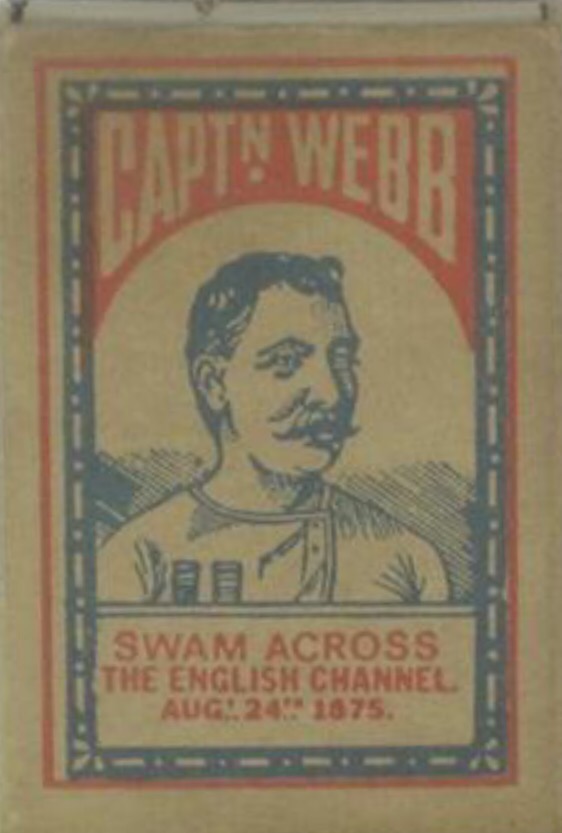
But initially they have solved one mystery: the Captain Webb connection. He of the English Channel swimming fame. Even as far back as the early 1990s my husband had insisted they were related. He wasn’t sure how. 

My preliminary research yielded no obvious link. There was a common surname. My husband’s great great grandmother was Mary Webb. She was born in Adbaston/Flashbrook area of Staffordshire in around 1830. She married Joseph Haynes at Aston in Edgmond, Shropshire, on 10 February 1859. Joseph founded a wheelwrights business in Stone, Staffordshire. But I could see no link. However, my mother-in-law’s papers seemed to indicate Mary Webb was the supposed connection.  

In her possession was a “Nostalgia Notebook” article from the “Staffordshire Newsletter” dated 28 October 2004. It states that Joseph’s wife “Mary was believed to be the sister of Captain Webb…..”  

Captain Matthew Webb was the son of surgeon Matthew Webb and his wife Sarah Cartwright Garbitt. They married in 1845. Matthew was a bachelor, aged around 32, at the time of his marriage. Their second son, Matthew of the swimming fame, was born in Dawley, Shropshire in around 1848. He was baptised in Dawley Parish Church on 9 March 1848 and the entry is annotated with the words “Swam the English Channel August 25 1875”. 

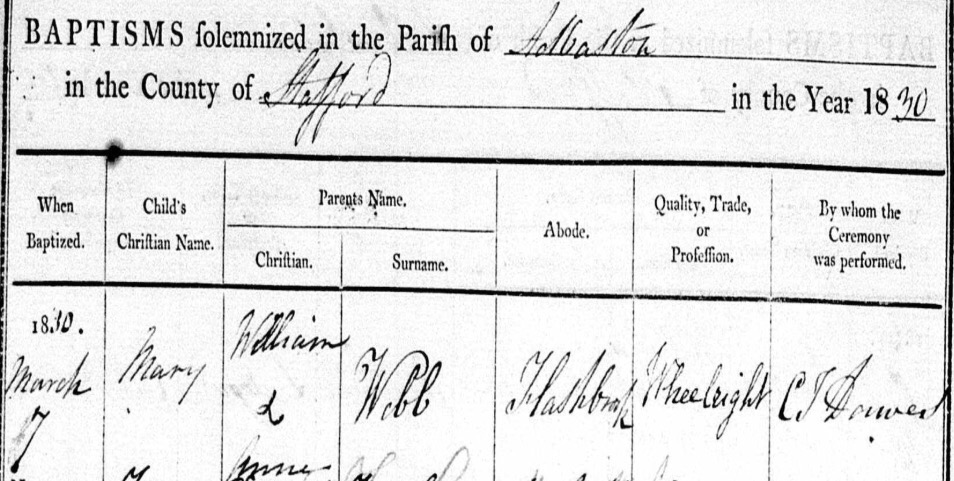
In contrast Mary Webb’s baptism took place on 7 March 1830 at Adbaston Parish Church, Staffordshire. She was the daughter of William Webb, a wheelwright, and his wife Ann.  

Baptism entry for Mary Webb

 Her father’s name is confirmed on her marriage certificate. It is also detailed in various newspaper marriage announcement columns, including the “Wolverhampton Chronicle and Staffordshire Advertiser” of 16 February 1859. This goes on to say for 12 years she had been a valuable and faithful servant for William Sillitoe Esq., The Bridge, Newport. The 1851 census shows her as a house servant in this household. 

“Wolverhampton Chronicle & Staffordshire Advertiser” marriage announcement for Joseph Haynes & Mary Webb

 
I’m not ruling out a Webb connection further back. But if the link was supposed to be as stated, that my husband’s great great grandmother was the sister of Matthew Webb, it is false. As a result, my husband’s claim to family history fame seems to be on very dodgy ground with the flickering match flames rapidly extinguishing. And the Webb family have one bunch fewer kinsfolk.    
So be prepared when you start out looking into your family tree – you may end up disappointed and learning things you’d rather be oblivious to! 

Sources

  • Find My Past – newspapers, censuses & Shropshire & Staffordshire Parish Registers
  • Staffordshire Newsletter” – 28 October 2004