Armistice Day 2019, the 11th hour of the 11th day of the 11th month, marked the centenary of the first two-minute silence. The tradition of holding a silence to remember the dead began a year after World War One ended. But for many wounded ex-servicemen their personal battle was not over when the guns ceased firing. Not even a year on as the country paused to reflect.
As the country fell silent at 11am on Monday, I attended a Project Bugle graveside wreath-laying ceremony for St Mary of the Angel’s man Sergeant Joseph Edward Munns of the 12th King’s Own (Yorkshire Light Infantry). He was awarded the Military Medal (formally announced in The London Gazette of 13 September 1918) for saving the life of an officer trapped under the debris of a burning building whilst seriously wounded himself – wounds which resulted in a badly damaged right arm and the amputation of his right foot. He died at Prescot Hospital on 7 January 1921, age 32, and is buried in Batley Cemetery. Because he died before the Commonwealth War Graves Commission (CWGC) cut-off point of 31 August 1921 he has a CWGC headstone and is commemorated on their Debt of Honour database.
Project Bugle Wreath-Laying Ceremony for Sgt Joseph Edward Munns – Photo by Jane Roberts
Whilst in the cemetery I also visited the grave of another St Mary’s man, Gunner James Delaney. He was my mum’s uncle, married to my nana’s sister. My mum never knew him, but according to her family he was a lovely man. I have a photograph of him and on the back is written the fact that he died of injuries he received during the Great War. He died on 27 January 1928 so was not eligible for an official CWGC headstone. He features on no database of the dead. He is not recalled on any War Memorial. He is but one of so many others whose deaths occurred years after the end of the War, but whose lives were cut short as a result of the injuries and health issues directly attributable to it. They are casualties as much as those who died whilst the war raged. They are the forgotten casualties.
James’ headstone reflects his sacrifice, bearing his rank and Regimental details.
James Delaney’s Headstone – Photo by Jane Roberts
Here is his story.
James Delaney was born in Batley on 9 July 1895, the son of Dublin-born John Delaney and his wife Ann McLouglin, who hailed from Dumfries in Scotland. The family were associated with St Mary of the Angels RC church in Batley, where James was baptised. His older siblings included Sarah Ann, William, John Edward and Charles Emmett. From the 1881 to 1911 censuses the family lived in the Courts off Taylor Street in Batley. In the 1911 census it was 4 Court, 2 Taylor Street, with James now working as a cloth finisher. This was his abode and occupation when he attested in Batley on 9 December 1915, age 20.
He was mobilised on 28 December 1915 and the following day posted to 1B Reserve Brigade, Royal Field Artillery (RFA) at Forest Row Camp in East Sussex, assigned Service Number 111921. His Company Conduct Sheet whilst at Forest Row shows only two offences. He was absent from 6.30pm parade on 9 May 1916. Then he overstayed his leave from midnight on 28 May 1916 until 4pm on 30 May 1916. For this latter offence he was deprived two day’s pay and sentenced to the humiliation of Field Punishment No.2., shackled in irons and liable to undertake menial and heavy labour. But these were relatively minor misdemeanours and overall his military character was described as very good.
On 15 July 1916 Gunner Delaney was posted to France, joining the ‘A’ Battery of the 80th Brigade RFA on 24 July, part of the 17th Divisional Artillery. Their Unit War Diary refers to reinforcements of men and horses being allotted that day, whilst in camp at Dernancourt. The RFA operated the army’s medium calibre guns and howitzers. These mobile guns were horse-drawn, and deployed close to the front line.
James joined his unit in the midst of the Battle of the Somme. The Unit War Diary notes total casualties for July, (killed, wounded and from sickness) was 5 officers, 124 other ranks, and 32 horses. These rates explain the need for reinforcements.
On 1 August 1916 they moved to the Montauban area, where James saw action until the 20 August when the Brigade was withdrawn. Days later the news came through the Brigade was being broken up to supply guns and personnel to other Brigades in the Division. James was deployed to ‘A’ Battery in the 78th Brigade. His first full month in action had seen much lower losses than in July, with only two other ranks killed and 16 wounded.
September was spent with his new unit. His final
days at the beginning of October 1916 saw them operating in the Hebuterne area,
with the guns primarily employed in wire cutting. However, James was back on
home soil on 11 October 1916, with 5C Reserve Brigade.
His Casualty sheet and Medical History forms are not among his surviving service records, so the specific reason for his return home is unclear. However, he was back on the Western Front on 30 May 1917, joining the 24th Divisional Ammunition Column (DAC) on 12 June 1917 in Belgium. DACs were responsible for transporting all ammunition and artillery as well as small arms for the Division, taking it as far forward as possible for collection by batteries and infantry brigades. This made them targets for enemy guns and aircraft. They also provided reinforcements of men for the RFA. James was once more in action in another infamous battle – 3rd Ypres, better known as Passchendaele.
But yet again his stint did not last long and he was once more back in England on 21 July 1917. From notes on his service records it is clear this was as a result of injury or illness as he now spent time in 3rd Northern General Hospital, Sheffield. There are no more details as to the specific problem at this point in time.
Following his discharge from hospital he re-joined
5C Reserve Brigade at Charlton Park on 8 September 1917. But it is clear he
never re-gained his health. He was compulsorily transferred to the Royal
Engineers in June 1918, serving with the Tyne Electrical Engineers at
Haslar Barracks, Gosport. His new rank was Pioneer, and new Service Number
365987.
Suffering from the painful condition of neuritis, this disorder is defined as inflammation of the nerves. It can be caused by injury, infection or autoimmune disease. In addition to pain, symptoms include tenderness, impaired sensation, numbness or hypersensitivity, weakened strength and diminished reflexes. Maybe this was the legacy of the injuries which necessitated his earlier hospital stay. His resulting health category of B3 meant he was only fit for sedentary work. As a result, he was only capable of undertaking HQ Fatigues work.
James’ condition was serious enough to lead to his
discharge on 1 October 1918. After serving for two years and 278 days he was no
longer deemed fit for military service. He was awarded a conditional pension of
11s per week, to be reviewed after 52 weeks. This pension continued beyond this
date, over the years mainly set at 12s per week with his disability estimated
at 30 per cent.
He returned home to Batley and towards the end of 1919 married 19-year-old Ethel Rhodes. The couple settled at 18 Brearley Street, Mount Pleasant, Batley, with James back at his old job as a worsted cloth finisher. The couple had no children. In brittle health after the tolls of the war, Ethel became his carer as well as his wife. It was a role she made her job for others after James’ death.
James Delaney and Wife Ethel Rhodes
James died on 27 January 1928 as a result of
cardiac failure, myocardial disease and rheumatoid arthritis. He was only 32.
He died with Ethel by his bedside not at home in Batley, but in the East
Lancashire Soldiers’ and Sailors’ Home, Park Lane, in the Higher Broughton area
of Salford.
This was an establishment for disabled servicemen
opened under the auspices of the East Lancashire Branch of the British Red
Cross Society. With a massive influx of wounded men returning home to ad-hoc
care facilities, in the summer of 1916 the organisation – along with the Mayor
of Manchester and the Earl of Derby – was involved in the launch of a public
appeal to raise money to provide suitable accommodation in which they could be
cared for. By the end of September 1916, and after only one month, £22,841 was
raised. The fund hit the £75,000 mark by February 1917, an amazing amount for a
cash-strapped war-torn society. The appeal was so successful it enabled the
provision of not one but five homes which, by 1921, provided in excess of 100
beds. One of these still provides care for ex-service personnel today.
Two of the private houses purchased to provide
these facilities were on Park Lane, and both were still in operation in 1929.
Miss A.E. Tasker was the sister in charge of Palm House, whilst Miss M. Tracy
was the matron at Broughton House. Neither James’ death certificate or the
newspaper notices by his wife, parents and siblings indicate in which home he
died. He was buried in Batley cemetery on 31 January 1928.
Ethel was understandably devastated after her husband’s death. Her mother, Edith, was instrumental in helping her through this intensely difficult period, when at one period in particular Ethel felt she had no reason to carry on. She did eventually re-build her life and married Fred Armitage in 1931. Ethel never had children. She died on 8 November 1958 and chose to be buried alongside James.
As a footnote to this story, the one surviving former East Lancashire home for Disabled Servicemen is Broughton House. More details about its history, current work and future plans are here. It includes information about how you can help support the continuing work of the charity, because funds are needed throughout the year, not just in the period leading up to Armistice Day.
Sources:
24th Divisional Ammunition Column (DAC) Unit War Diary WO 95/2198/3;
78th Brigade Royal Field Artillery Unit War Diary WO 95/1991/3;
80th Brigade Royal Field Artillery Unit War Diary WO 95/1991/5;
1929 Kelly’s Directory of Manchester, Salford and Suburbs;
1881 to 1911 England and Wales censuses;
Batley Cemetery burial records;
Batley News – 13 July 1918 and 4 February 1928;
Batley Reporter and Guardian – 12 July 1918 and 4 February 1928;
Posted onAugust 28, 2019|Comments Off on Mining Genealogy Gold – A Hidden Gem in Leeds Central Library
As a family historian, I’m always on the look-out for sources which flesh out the lives of my ancestors. Leeds Central Library has one particular gem which deserves a spotlight. For those of us with early Victorian mining ancestry it is a must.
The Children’s Employment Commission looking at children and young persons working in mines published its findings in 1842 [1]. This report is only a fraction of the evidence gathered. It draws on the masses of summaries, information and interviews produced by its Sub-Commissioners countrywide. These far more detailed Sub-Commissioners’ reports formed separate publications, reprinted by the Irish University Press in 1968 as part of its Industrial Revolution Parliamentary papers series [2]. Leeds Library holds two volumes of this evidence, containing a wealth of information which did not make the cut for the main report.
Appointed from late 1840 onwards, the remits of these Sub-Commissioners encompassed all fields of mining – from coal, to copper, tin, lead, zinc and ironstone. It covers those toiling underground, as well as those engaged in surface work and smelting. All corners of the country are represented – including Scotland, Wales and Southern Ireland. So it would be a mistake to think it is only relevant for those with Yorkshire or coal mining ancestry.
Yorkshire coal mining, though, is my particular interest, and the focus of this summary. However, this summary will give you a taster for the information available for other regions and sectors of mining.
Three Sub-Commissioners
reported on the West Riding coal mining areas. Their evidence spans both
volumes, and the amount of name-rich genealogical information they produced is
staggering. We owe tremendous thanks to the trio.
William Raynor Wood examined the employment of children and young persons in the collieries and iron works of the towns of Bradford and Leeds;
Samuel S. Scriven investigated those employed in the collieries around the Halifax and Bradford districts; and
Jelinger C. Symons looked at the remainder of the Yorkshire coal field.
They considered a range of issues including ages, numbers of children, the employment of girls and women, how the children were hired, the jobs they undertook, their wages, their working hours including night shifts, their workplace conditions including accidents, meals both in and outside the workplace, holidays, how they were treated, their educational standards and the impact the work took on their physical, religious and moral condition. These findings are illustrated with sketches of children and youths at work, diagrams showing pit layouts and illustrations of machinery.
The physical and moral conditions of the children and young persons employed in mines and manufactures. London: HMSO, John W. Parker, 1843. Folding plate showing children transporting coal in mines and collieries. Credit: Wellcome Collection. CC BY
Tables and appendices collate an array of information, some of which is unexpected material. Fatal pit accidents in a 3½ year period in Bradford and Halifax District feature, with the names and many ages of the victims. There are lists of child workers in particular pits. These include details of in excess of 200 named Bradford and Halifax hurriers with their ages, height, physical condition, whether they could read and write, along with their employment details. There is a tabulated medical examination of children in Dewsbury Colliery. There are also tables showing the names, ages and wages of the three youngest children and three oldest young people working at selected collieries. Beyond this, for comparison purposes, similar wage, age, physical and educational information is collated for children in other industries such as worsted workers in Halifax, or scribblers, carders, spinners and card setters. So, don’t rule out evidence relating to mines if you have ancestors working in other industries.
Crucially, these findings were based on interviews with a cross section of people directly involved in, or with an interest, in mining. You get the usual suspects – coal mine proprietors, doctors, workhouse staff and vicars. But you also have statements from coal miners, mothers and fathers of children employed in the industry, as well as the children themselves. Working class folk whose voices are not ordinarily heard. Here are the real treasures of these reports. You can almost hear the accents and regional phraseology of these long-gone people in the written statements. And yes, there is an explanation of terms generally in use among colliers of the West Riding. Addle, agate, leet, lake and mashed up are my favourites [3].
Each interview is prefaced by the deponent’s name and gives location, age and employment details. And because the interviews were conducted at around the time of the 1841 census, it is easy to cross match them to your ancestors. From this you can find out precisely where they worked, what they did, wider family information, their health, their educational standard, what they ate, even where they lived and their previous abodes.
My 4x great grandfather Jonathan Ibbetson, a widower, and three of his children, are interviewed by Symons. These include his 11½-year-old daughter, Elizabeth. From the interviews I learned that two out of his three daughters worked below ground, one having done so since the age of six. The girls were hurriers, employed by their brother. This was common practice – the colliers, not the mine proprietors, generally employed, and paid, hurriers themselves. The hurrier’s job was to convey the empty corves (wagons, usually with small wheels) to the miner, help fill them with coal, then push the laden corves by dragging, pushing, or ‘thrusting’ them with their heads in readiness for them to be taken to the surface. In this case the two girls worked together, thrusting the corves a distance of 160 yards, and back, which Elizabeth says hurt and made her head sore. On average they conveyed 16 full corves daily. We learn the family moved from Queenshead (Queensbury) to the Birkenshaw area, and worked in Mr Harrison’s pit in Gomersal. We also learn of their poverty, with John (a hurrier, aged 13½) saying:
I have been to Sunday-school. I stop at home now, I’ve no clothes to go in; I stop in because I’ve no clothes to go and lake with other little lads.
One particularly shameful practice, the plight of pauper apprentices, is highlighted in the evidence. Poor Law Unions were in effect binding out workhouse children to miners to work as hurriers. Dewsbury Poor Law Union were singled out for particular censure for putting out a Batley workhouse boy, Thomas Townend, to work for a Thornhill collier. Symons described it as:
A very gross case of the unduly early employment of a workhouse child…before he was quite five years old.
Thomas is interviewed
saying:
I remember being in the pit. I liked it; but they would not let me stay.
For those of you who watched the BBC TV series ‘Gentleman Jack’ there is evidence from children working at the Rawson-owned Swan Bank and Bank Bottom collieries, as well as ones employed at the late Miss Anne Lister’s Listerwick Pit [4]. There are also details about the ages and wages of some hurriers at Listerwick.
And where else would you
get an entire section devoted to the families of six colliers in Flockton? Not
only do you get the names, ages, relationships, occupations and wages of every
household member, you get a summary of their weekly food and fuel consumption,
along with a description of their house, garden, and furniture right down to
the books they owned. There is even a
pen piece for each family. Samuel and Martha Taylor’s reads:
The parents of this man were ignorant, being totally uneducated, and their moral character not good; yet, notwithstanding, he has turned out a very respectable man; and having married an industrious, worthy young woman, he is likely to become a good member of society. His wife has taught him to read and write; and though brought up amidst dirt and disorder his cottage presents a pleasing picture of comfort.
Pure genealogy gold!
Even if your ancestor is not interviewed or mentioned by name, the evidence is well worth consulting for the incredible overview of all aspects of the everyday lives and work of those employed in the mines in this period.
As a result of the investigation, the Mines and Collieries Act of 1842 was passed. Crucially, from 1 March 1843, it was made illegal to employ women or girls of whatever age underground in any mine or colliery in Britain. Boys under the age of 10 were no longer permitted to work below ground either.
This blog pulls together my three previous posts on this subject. These are:
With special thanks to the staff at the Leeds Local and Family History library for their help in locating a copy of the Children’s Employment Commission: Appendix to the First Report of Commissioners, Mines: Part I: Reports and Evidence from Sub-Commissioners, Industrial Revolution Children’s Employment, Volumes 7 and 8.
Notes: [1] Children’s Employment Commission – First Report of the Commissioners: Mines. London: Printed by William Clowes for H.M.S.O., 1842 [2] Children’s Employment Commission: Appendix to the First Report of Commissioners, Mines: Part I: Reports and Evidence from Sub-Commissioners, Industrial Revolution Children’s Employment, Volumes 7 and 8. 141 Thomas St., Dublin: Irish University Press, 1968. [3] To earn; to be employed; as it happens; to be idling/passing time; and disabled/worn out. [4] Anne Lister died in September 1840 and the evidence was taken in May 1841, but the boys had worked there for around three years.
Comments Off on Mining Genealogy Gold – A Hidden Gem in Leeds Central Library
Posted onAugust 12, 2019|Comments Off on Coal Mining Children: “I’ve Heard I Shall Go to Heaven If I’m A Good Girl”
Have you ever stumbled across what could be the words of your ordinary, working-class ancestors? The type who never usually feature in records beyond those associated with births, marriages and deaths? Words which well over 150 years later hit you like a hammer blow? You can imagine them speaking those words, and through them have a totally unique and unexpected window into their lives. Here is my experience.
Several years ago, when reading extracts of depositions contained within the First Report to the Children’s Employment Commission [1] looking at mines, a series of familiar names featured. Brief extracts were published in various parts of the 1842 Report.
The names were:
J. Ibbetson,
collier in poor health, age 53, Birkenshaw;
John Ibbetson, 13½-years-old.
No further details;
James Ibbetson,
aged about twenty, Collier at Mr Harrison’s Pit, Gomersal whose two sisters
aged twelve and a half and between eight and nine worked as his hurriers; and
Elizabeth Ibbetson,
a hurrier at Mr Harrison’s Pit, Gomersal. Age not stated.
Because they appeared in distinctly separate parts of the Report, there was nothing to indicate if this was one or more families. But the names stood out because my 4x great grandfather, Jonathan Ibbetson (and variant spellings [2]), was a coal miner. Born in around 1788 in Halifax, by the 1841 census (name recorded as Hibbeson) [3] he was living at Tong More Side, Birkenshaw cum Hunsworth. The household comprised of Jonathan Hibbeson (50), a coal miner; William (20); Martha (15); John (14); Bettey (11); and Mary (9) [4]. Jonathan’s wife, Elizabeth Rushworth, who he married on 25 February 1811 in Halifax Parish Church, which is dedicated to St John the Baptist [5], is not in the census household. I have not traced her burial yet, but the possibility is she was dead by 1841. In the 1851 census, which provides more family relationship details, Jonathan is described as a widower.
At the time of Jonathan and Elizabeth’s marriage
their abode was Ovenden. They subsequently lived in Queensbury, and possibly
the Thornton area, before Jonathan ended up in Birkenshaw. A family with
non-Conformist leanings their children included:
Hannah, baptised 20 August 1811 at Mount Zion Chapel, Ovenden. Other information includes she was the daughter of Jonathan and Betty Ibbitson of Swilhill [6];
John, son of Jonathan and Betty Ibbeson of Swilhill. Baptised 28 August 1814 at Mount Zion Chapel, Ovenden [7]. Possible burial 7 March 1815, age 9 months at the Parish Church of St Mary’s Illingworth. Abode Ovenden [8];
James, baptised 16 June 1816 at Mount Zion Chapel, Ovenden. The son of Jonathan and Betty Ibbetson of Skylark Hall [9];
William, born on 4 August 1821 and baptised at Mount Zion Chapel, Ovenden on 5 September 1821, son of Jonathan and Betty Ibbotson of Bradshaw Row in Ovenden [10]. Points to note, if being precise he was two months shy of 20 in the 1841 census, so technically his age should have been rounded down to 15; Also, although his earlier census birthplaces are given as Thornton and, bizarrely, Birstall, by 1871 and 1881 it is corrected to Ovenden;
Martha, my 3x great grandmother. I’ve not traced her baptism, but other sources indicate she was born in around 1824/25 in either Bradford, Thornton or Queensbury, depending on the three censuses where her birthplace is given. Why, oh why aren’t ancestors consistent with information?
John was born in around 1827 and his burial is in the parish register of St Paul’s, Birkenshaw on 15 February 1844, age 17. He is recorded as being the son of collier Jonathan Ibbetson [11];
Elizabeth (Bettey in the 1841 census) was born in around 1830 likely in Queensbury, although again the censuses for her vary [12]. She was baptised at St Paul’s, Birkenshaw on 25 December 1844. Her parents are named as Jonathan and Elizabeth Ibbotson [13]; and
Mary was born in around 1832 in Queensbury or Thornton [14]. She was baptised at the same time as sister Elizabeth [15].
There was possibly another son named Joseph, born
circa 1820. More of him, and why I believe he is linked to the family, is
perhaps the subject for a later post.
St Paul’s Church, Birkenshaw – Photo by Jane Roberts
I never have much opportunity to research my family history to the extent I would wish nowadays. It was only earlier in July 2019 that I finally got around to investigating the Children’s Commission Report further. This meant a visit to Leeds Central Library’s Local and Family History section where the volumes containing appendices to the Report are held [16]. These contain the statements of the various witnesses who gave evidence to the Sub-Commissioners, extracts of which were used in the Report.
They make powerful, and emotionally challenging, reading. In order not to dilute their impact I’ve published in full the Ibbetson statements, and that of the Gomersal pit owner in whose mine they worked. These statements were given to Sub-Commissioner Jelinger C. Symons in 1841. He investigated the West Riding coal mines (excluding those in the Leeds, Bradford and Halifax areas).
No. 263. – James Ibbetson, aged about 20. Examined at Mr. Harrison’s Pit, Gomersal, May 26, 1841: – I am a collier. There are three hurriers [17] in the pit; two are girls; they are my sisters. They hurry for me. None hurry here with belt and chain [18]. The oldest is 12½. The youngest is between 8 and 9. She has been working ever since she was 6 years old. They have both hurried together since she was 6 years old. Sometimes when I have got my stint I come out as I have done to-day, and leave them to fill and hurry. I have gone down at 4 and 5 and 6, and the lasses come at 8, and they get out about 5. They stop at 12, and if the men have some feeling they let them stop pit an hour, but there are not many but what keep them tugging at it. The girls hurry to dip [19]. The distance is 160 yards. The corves weigh 3½cwt. each, and they hurry 22 on average. I don’t think it proper for girls to be in pit. I know I could get boys, but my sisters are more to be depended on; they are capital hurriers. Some hurriers are kept to work with sharp speaking, and sometimes paid with pick-shaft, and anything else the men can lay their hands on. I saw two people killed at Queen’s Head, where they are less civilized than here; and the rope slipped off the gin and jerked and broke, and they were killed. At Harrison’s other pit there are eight boys.
No. 264. – John Ibbetson. Examined May 26, 1841, at Mr. Harrison’s Pit, Gomersal: – I am 13½. I hurry alone. I go down at 7, and sometimes at 8. Sometimes we work a whole day, and then it’s 5 when we come out. I stop at 12, and my sisters too, for an hour and a half. I like being in pit. I’ve been down 6 year or better. I thrust with my head [20] where the coals touch the top of the gates and then we have to push. In all the bank-gates they don’t cut it down enough. I have been to Sunday-school. I stop at home now, I’ve no clothes to go in; I stop in because I’ve no clothes to go and lake [21] with other little lads. I read spelling-book. I don’t know who Jesus Christ was; I never saw him but I’ve seen Foster who prays about him. I’ve heard something about him, but I never heard that he was put to death.
A Hurrier Pushing a Full Corve with his Head – Newspaper Image Over 100 Years Old
No. 265. – Mr Joseph Harrison. Examined May 26, 1841, at Gomersal:- I don’t employ the hurriers; they are entirely under the control of the men, but when they quarrel I interfere to prevent it. I don’t approve of girls coming. I allow two as a favour. I have four pits and 18 children. They thrust two together when they are little. In the bank-gates the coal will catch the roofs sometimes, because we leave seven or eight inches inferior. We don’t require children younger than 10 years, as far as our experience. They can do very little before they are at that age, and I would as lief be without them. We could do if they were to allow us to draw coals for eight hours, with an additional hour for meals. If they could thus make colliers work regular it would be a good thing. They will sometimes work for 12 or 13 hours, and then they will lake perhaps. The getters don’t leave the children to fill and hurry here after they come out of pit, except it be a corf or two. If hurriers are prohibited from working till they are 10, I don’t know whether we could get enough or not.
No. 266. – Elizabeth Ibbetson. Examined at Mr Harrison’s Pit, Gomersal, May 26, 1841:- I am 11 ½ years old. I don’t like being at pit so weel [sic]; it’s too hard work for us. My sister hurries with me. I’ve been two year and a half in this pit. It tires my legs and arms; not much in my back. I get my feet wet. I come down at 7 and 8. I come out at 4, and sometimes at 2, and sometimes stay till 6. I laked on Saturday, for I had gotten cold. I am wet in the feet now; they are often wet. We rest an hour one day with another, but we stop none at Saturdays. I push the corf with my head, and it hurts me, and is sore. I go to Sunday-school to Methodists every Sunday. I read A B C. I’ve heard I shall go to heaven if I’m a good girl, and to hell if I’m bad; but I never heard nought at all about Jesus Christ. We are used very well, but sometimes the hurriers fall out, and then they pay us. My father works at pit.
No. 267. – John Ibbetson, aged 53. Examined at Birkenshaw, near Birstall [undated]: – I have been 45 years in the pits. I am the father of the children you have examined at Mr. Harrison’s pit. I have had three ribs on one side and two on the other broken, and my collar-bone, and my leg skinned. My reason for taking these girls into the pit is that I can get nought else for them to do. I can’t get enough wages to dress the boys for going to school. I get 5s. 6d. For the girls, and I and my two sons earn 17s. 6d. on average a-week. I am done up. I cannot addle [22] much. The eldest girl does nothing at all. We get potatoes and a bit of meat or bacon when they come out of the pit. I knew a man called Joseph Cawthrey, who sent a child in at 4 years old; and there are many who go to thrust behind at that time, and many go at 5 and 6; but it is soon enough for them to go at 9 or 10; the sooner they go in the sooner their constitution is mashed up [23], I have been 13 hours in a pit since I have been here, but 8 hours is plenty. The children went with us and came back with us; they worked as long as we did. The colliers and the children about here will be 12 hours from the time they go away till they come home. They could not addle a living if they were stinted to work to 8 hours at present ages. The children don’t get schooling as they ought to have. I cannot deny it. I cannot get the means. I have suffered from asthma, and am regularly knocked up. A collier cannot stand the work regularly. We must stop now and then, or he would be mashed up before any time. We cannot afford to keep Collier-Monday [24] as we used to do.
The statements are far more detailed than the brief extracts in the published Report, which is a synthesis of masses of evidence. In fact not all statements made the final cut, so if your ancestor is not mentioned in the final Report it is still worth checking the appendices.
The full statements now confirm that a 53-year-old miner John Ibbetson along with sons James (aged about 20) and John (13½), and daughter Elizabeth (11½ or 12½ depending on deposition) plus another unnamed daughter aged between 8 and 9, worked at Mr Harrison’s pit in Gomersal. They confirm the absence of a mother. They also confirm an older, unnamed, daughter who “does nothing at all.” This older daughter would fit with Martha, my 3x great grandmother. Presumably she is taking care of the household chores, in place of her mother. Methodism is indicated, in terms of religion, but the children only have a sketchy concept of the Bible. There is a Birkenshaw link – which is where John Ibbetson provided his testimony. Gomersal to Birkenshaw is about two miles, so perfectly feasible for a work commute. It is also clear John is in poor health and the family is struggling to make ends meet.
The desperation in the statement of the father is palpable. The family managed as best they could. It appears the girls were given priority for clothes, with Elizabeth rather than John being sufficiently well-dressed to attend Sunday School, and their father admitting as much.
There is also the acknowledgement that sending the girls (and even young boys) to work down in the coal mines was not something their father would do through choice – but the income was needed for them to keep going, to keep the family together. There was, I guess, always the dreaded spectre of the workhouse with its associated stigma that somehow you had failed your kith and kin, alongside the threat of family separation. You did all you could to avoid it. If it meant children working, so be it.
It must also be said it was believed that in order to get children accustomed to mine work, and to be able to progress, they needed to be introduced to it at an early age. And, in this pre-compulsory education era, work (even in mines) also offered some measure of childcare – especially if there was no mother, or a working mother.
There is the sense of pride by James in the work his sisters undertook. It is to be hoped that he was a miner who looked kindly on them whilst they toiled, because this attitude could have a huge impact on the lot of the young hurrier. For instance, did he notice when they were tired and, if so, did he let them rest for a little while when they arrived at his bank, and in doing so did he fill the corve himself? Did he help push off the laden corves? His sister Elizabeth indicates she was treated well. And still there remains the image in my mind of the tired, wet Elizabeth with aching limbs and head sore from pushing the corve, yet wanting to be a good girl so she could go to heaven.
And then there is young John, accepting his lot, taking simple pleasures from ‘laking ’, and enjoying his work despite its hardships. His innocent words about never having seen Jesus Christ are echoing in my ears.
But is this my family? The ages for children John, Elizabeth and Mary given in the Commission evidence correspond with the ages ascertained from my family history research for my Ibbetson ancestors. The age of their father John roughly matches that of my 4x great grandfather Jonathan, with 53 equating to a year of birth circa 1788. It also is distinctly possible that John could have been used in the witness statement rather than Jonathan. I’ve reviewed details for a sample of witnesses elsewhere and cross-matched against the 1841 census. From this there is evidence that names do not always match up exactly with this census; and ages do not in all cases match precisely with those given in the 1841 census for under 15’s. [25].
The 1841 census, taken on 6 June, was only a couple
of weeks after the Ibbetsons gave evidence to the Commission. As illustrated
earlier, at that time the census household comprised of Jonathan, William,
Martha, John, Bettey and Mary. I have gone through the 1841 census for the
Birkenshaw and Gomersal areas page by page and can find no other Ibbetson (and
variant) family who would fit as a unit with the names of those giving evidence.
I suppose there is always a remote possibility the family giving evidence left
the area in between their Commission interviews and the census date; or even
that they were for some reason missing from the census. But, taken with other
evidence, I think this is unlikely.
But there remains one major anomaly which makes me hesitate from saying with absolute certainty this is my family giving evidence to the Children’s Commission. It is the discrepancy with an approximately 20-year-old son named James. Although Jonathan did have a son named James, he is not present in the 1841 census household. In any case he would be around 25, not 20. The implication from the Commission statement is the son who gave evidence is still at home and contributing to the family income. Yet it seems a big stretch though to think the name James might be recorded as William. This is the one piece of conflicting evidence I have been unable to resolve.
Neither have I definitively discovered what happened to James. I have traced no death and, so far, I have two living candidates for him – but neither are totally satisfactory. One is married to Ann (née Binns) [26] and living in Birkenshaw in 1841 and 1861 (Thornton in 1851). At the moment he is seeming the most likely, although I’ve yet to find his marriage. My hope was it would be in the Civil Registration era and name his father. But I am still searching. This James died in a mining accident in November 1870 [27], with his age given as 56 [28 and 29], so not quite a fit. His census birthplace is Thornton [30], so not a match for the baptism details. His children included Margaret, Hannah, Ellen, Emma, John, Sophia, Mary, Betsy and Annice.
The other James Ibbetson married Priscilla Robinson in Bradford Parish Church in December 1833 [31] and is living in Thornton in 1841. I have some issues with this one. These include that whilst his bride’s entry in the parish register notes she is a minor and marries with consent, his details do not. If he was baptised shortly after his birth he too would be a minor. I suppose he may not have been baptised as a baby, but it is a niggle. As is the fact the likely death for him, registered in the December Quarter of 1847 gives his age as 35 [32], equating to a year of birth circa 1812. On the plus side is the naming pattern for his children which include some familiar ones – William, Martha, Mary and Betty, alongside the less familiar Joshua and Nancy.
It is here I have one final piece of evidence to throw into the mix, and one which I feel tilts the balance towards it being my family. It comes in the 26 May 1841 Commission statement of ‘James’ Ibbetson when he says “I saw two people killed at Queen’s Head…”
Queensbury, midway between Halifax and Bradford, and a location which in censuses is intermittently cited as the birthplace of various younger Ibbetsons, was not known as such until 1863. Prior to that it was Queenshead. In fact, in the 1861 census Elizabeth’s birthplace is given as Queenshead, Halifax [33]. And it is this which provides yet another link to my Ibbetson family and makes me believe, on balance, it is them who provided statements to the Commission.
This combination of locational links along with the similarity in names, ages, religion, motherlessness, plus my exhaustive search of the 1841 census for any alternatives in the Birkenshaw/Gomersal areas, all add to the weight of evidence supporting this being my family.
So, what happened to my Ibbetson ancestors?
Jonathan’s health was “mashed up”. Whereas for the burial of his son John in 1844 he is still a collier, by the baptism of daughters Elizabeth and Mary at the end of the year he is a labourer. The 1851 census states he was ‘formerly a miner’. He died on 21 February 1857 at Dewsbury Union Workhouse of bronchitis. His occupation recorded on his death certificate is ‘blacking hawker’ [34].
Advert for Nubian Blacking, Chem & Drg.1879. Credit: Wellcome Collection. CC BY
Blacking was used for cleaning, polishing and – crucially – waterproofing boots and shoes. Such footwear was not the disposable item of today. These were precious, valuable essentials for everyday life which had to last. If you didn’t have them you couldn’t work. If you couldn’t work, you didn’t have money to support the family. To my mind 19th century blacking is like petrol and diesel of today. Essential for getting to and from work, as well as actually doing the job. So often boots feature amongst stolen items in court reports. Reading school log books and countless children are unable to attend school, particularly in winter weather, through lack of suitable footwear. They were costly and had to be cared for. Blacking was part of their regular maintenance regime. In 1824 the 11-year-old Charles Dickens was sent out to work in Warren’s Blacking Factory, pasting labels onto individual pots of boot blacking polish, a job which had a significant impact on his life. Blacking was also used widely around the Victorian home for polishing the kitchen range and grates in fireplaces. Jonathan, no longer fit for strenuous mining work, was now selling this essential commodity.
Jonathan’s burial is recorded in the register of Dewsbury Parish Church on 25 February 1857 [35].
Of the children at home in 1841:
William married twice, and died in 1890. His burial is recorded in the register of Birkenshaw St Paul’s on 5 March 1890 [36];
John died in 1844, as mentioned earlier. He was only 17;
Martha married Joseph Hill at Hartshead Parish Church on 21 November 1842 [37] and died 4 February 1881 [38]. Her burial is in the Drighlington St Paul’s register on 7 February 1881 [39];
Elizabeth married Joseph Haigh on 1 April 1850 at St James, Tong [40] and died in 1883. Her burial is entered in the Birkenshaw St Paul’s Register on 31 March 1883 [41]; and
Mary married James Noble at St Peter’s Bradford parish church on 25 December 1850 [42]. The newly married couple are living in Birkenshaw with her father in the 1851 census. She died in 1893, with the Allerton Bywater Parish Church burial register noting the burial date as 19 January 1893 [43].
This tale also goes to show family history research is often not neat and simple with all loose ends tied up. It can be a messy affair, with partial and contradictory information and many negative of eliminatory searches in order to try achieve the genealogical proof standard. It can be a long, ongoing process. And, as such, I do not discount at a later date unearthing more information which might conclusively prove (or demolish) my case.
I would like to conclude by saying a special thank you to the staff at Leeds Local and Family History Library for their help in locating a copy of the Children’s Employment Commission: Appendix to the First Report of Commissioners, Mines: Part I: Reports and Evidence from Sub-Commissioners, Volume 7. This work was key to my research, and illustrates once more why we should love, use and cherish our local libraries as a unique, integral, and ‘accessible for all’ resource.
This is one of a series of four posts on the evidence of the Sub-Commissioners. The others are:
Notes: [1] Children’s Employment Commission – First Report of the Commissioners: Mines. London: Printed by William Clowes for H.M.S.O., 1842. [2] The possibilities are endless. Examples include Ibbetson, Ibbotson, Ibotson, Ibbitson, Ibberson, Ibbeson, Hibbison, Hibetson, Hibberson etc. [3] Hibbeson household, 1841 Census; accessed via Findmypast; original record at The National Archives, UK, Kew (TNA), Reference HO107/1291/4/12/17. [4] Note this census rounded down to the nearest five years those aged 15 and over. [5] Jonathan Ibbotson and Elizabeth Rushworth’s marriage entry, parish register of St John the Baptist, Halifax; accessed via Ancestry.co.uk, West Yorkshire, England, Church of England Baptisms, Marriages and Burials, 1512-1812 [database on-line]; original record at West Yorkshire Archive Service, New Reference Number: WDP53/1/3/13. [6] Hannah Ibbitston’s baptism, Mount Zion Chapel, Ovenden; accessed via Ancestry.co.uk, England & Wales, Non-Conformist and Non-Parochial Registers, 1567-1970 [database on-line]; original record at TNA, General Register Office (GRO): Registers of Births, Marriages and Deaths surrendered to the Non-parochial Registers Commissions of 1837 and 1857; Class Number: RG 4; Piece Number: 3408. [7] John Ibbeson’s baptism, Mount Zion Chapel, Ovenden; accessed via Ancestry.co.uk, England & Wales, Non-Conformist and Non-Parochial Registers, 1567-1970 [database on-line]; original record at TNA, GRO: Registers of Births, Marriages and Deaths surrendered to the Non-parochial Registers Commissions of 1837 and 1857; Class Number: RG 4; Piece Number: 3408. [8] John Ibbotson’s burial entry, burial register of Illingworth St Mary; accessed via Ancestry.co.uk, West Yorkshire, England, Church of England Deaths and Burials, 1813-1985 [database on-line]; original record at West Yorkshire Archive Service, New Reference Number: WDP73/1/4/1. [9] James Ibbetson’s baptism,Mount Zion Chapel, Ovenden; accessed via Ancestry.co.uk, England & Wales, Non-Conformist and Non-Parochial Registers, 1567-1970 [database on-line]; original record at TNA, GRO: Registers of Births, Marriages and Deaths surrendered to the Non-parochial Registers Commissions of 1837 and 1857; Class Number: RG 4; Piece Number: 3408. [10] William Ibbotson’s baptism,Mount Zion Chapel, Ovenden; accessed via Ancestry.co.uk, England & Wales, Non-Conformist and Non-Parochial Registers, 1567-1970 [database on-line]; original record at TNA, GRO: Registers of Births, Marriages and Deaths surrendered to the Non-parochial Registers Commissions of 1837 and 1857; Class Number: RG 4; Piece Number: 3409. [11] John Ibbetson’s burial entry, burial register St Paul’s, Birkenshaw; accessed via Ancestry.co.uk, West Yorkshire, England, Church of England Deaths and Burials, 1813-1985 [database on-line]; original record at West Yorkshire Archive Service, Wakefield, Yorkshire, England; New Reference Number: WDP90/1/3/1. [12] Bradford, Queenshead – Halifax, Thornhill, and Queensbury in the censuses between 1851-1881. [13] Elizabeth Ibbotson’s baptism entry, baptism register St Paul’s, Birkenshaw; accessed via Ancestry.co.uk, West Yorkshire, England, Church of England Births and Baptisms, 1813-1910 [database on-line]; original record at West Yorkshire Archive Service, Reference Number: WDP90/1/1/1.[14] 1861 and 1871 censuses indicate Thornton; 1881 and 1891 Queensbury. The 1851 states Halifax. [15] For Mary Ibbotson’s baptism, see [13]. [16] Children’s Employment Commission: Appendix to the First Report of Commissioners, Mines: Part I: Reports and Evidence from Sub-Commissioners, Industrial Revolution Children’s Employment, Volume 7. 141 Thomas St., Dublin: Irish University Press, 1968. [17] Locally, hurriers conveyed coal from where it was hewn to the shaft by means of corves (wagons, usually small-wheeled), either dragging or pushing their loads. Often it meant running as quickly as possible up an incline with a full load. [18] The hurrier wears a belt around their waist and a chain, attached to the corve (the wagon for transporting the coal). In the thinner seams this chain would runs between the child’s legs and, on all fours, they pull the coal corves like an animal. [19] Coal lies at an inclined plane with the downward inclination known as the dip in Yorkshire. [20] To push the coal corves with your head. [21] To idle, or pass the time away. [22] To earn. [23] Disabled or worn out. [24] Collier-Monday was the tradition of an unofficial, customary holiday which long existed in the coal mining industry. The Bolton Evening News of 23 February 1905 stated “It is the custom of miners to have one day’s play a week, which has gained for it the name of “Colliers’ Monday,” and that this is recognised is shown by the fact that notices placed at some pit heads state that men absenting themselves for two days are liable for dismissal…” [25] I have used under 15s as the benchmark as the convention typically (but not exclusively) used in the 1841 census is to round down those aged over 14 to the nearest 5 years. [26] Ann’s maiden name has been identified via the GRO indexes for the births of the couple’s children. [27] Bradford Observer, 21 September 1870. [28] James Ibbotson, GRO Death Registration, Bradford, September Quarter 1870, Volume 9b, Page 13; accessed via FreeBMD. [29] Death of James Ibbotson, 17 September 1870; accessed via Ancestry.co.uk Web: UK, Coal Mining Accidents and Deaths Index, 1878-1935 [database on-line]; original data Coalmining Accidents and Deaths. The Coalmining History Resource Centre. http://www.cmhrc.co.uk/site/disasters/index.html [30] 1851 census for James Ibitson; accessed via Findmypast; original record at TNA; Reference HO107/2311/165/16 and 1861 census for James Ibbitson, TNA Reference RG09/3403/127/3. [31] James Ibbiston and Priscilla Robinson marriage entry, marriage register of Bradford St Peter Parish Church; accessed via West Yorkshire, England, Church of England Marriages and Banns, 1813-1935 [database on-line]; original record at West Yorkshire Archive Service, Reference Number: BDP14. [32] James Ibbotson GRO Death Registration, Bradford, December Quarter 1847, Volume 23, Page 135; accessed via the GRO website. [33] 1861 census entry for Elizabeth Haigh; accessed via Findmypast; original record at TNA, Reference RG09/3403/114/11. [34] Jonathan Ibbitson’s Death Certificate; GRO Reference Dewsbury, March Quarter 1857, Volume 9B, Page 322, age 70. [35] Jonathan Ibbotson’s burial entry, burial register of All Saints Parish Church, Dewsbury, age 70; accessed via Ancestry.co.uk, West Yorkshire, England, Church of England Deaths and Burials, 1813-1985 [database on-line]; original record West Yorkshire Archive Service, New Reference Number: WDP9/52. [36] William Ibbotson’s burial entry, burial register of St Paul’s, Birkenshaw, age given as 65; accessed via Ancestry.co.uk, West Yorkshire, England, Church of England Deaths and Burials, 1813-1985 [database on-line]; original record at West Yorkshire Archive Service, New Reference Number: WDP90/1/3/2. [37] Joseph Hill and Martha Ibbotson, Marriage Certificate; GRO Reference Halifax, December Quarter 1842, Volume 22, Page 197. [38] Martha Hill, Death Certificate; GRO Reference Leeds, March Quarter 1881, Volume 9B, Page 355, age 57. [39] Martha Hill’s burial entry, burial register of St Paul’s, Drighlington; accessed via Ancestry.co.uk, West Yorkshire, England, Church of England Deaths and Burials, 1813-1985 [database on-line]; original record at West Yorkshire Archive Service, New Reference Number: WDP124/1/4/3. [40] Joseph Haigh and Elizabeth Ibbeson’s marriage entry, marriage register of Tong, St James Parish Church; accessed via Ancestry.co.uk, West Yorkshire, England, Church of England Marriages and Banns, 1813-1935 [database on-line]; original record at West Yorkshire Archive Service, no reference provided online. [41] Elizabeth Haigh’s burial entry, burial register of St Paul’s, Birkenshaw, age given as 56; accessed via Ancestry.co.uk, West Yorkshire, England, Church of England Deaths and Burials, 1813-1985 [database on-line]; original record at West Yorkshire Archive Service, New Reference Number: WDP90/1/3/2. [42] James Noble and Mary Ibbotson’s marriage entry, marriage register of St Peter’s, Bradford Parish Church; accessed via Ancestry.co.uk, West Yorkshire, England, Church of England Marriages and Banns, 1813-1935 [database on-line]; original record at West Yorkshire Archive Service, Reference Number: BDP14. [43] Mary Noble’s burial entry, burial register of Allerton Bywater Parish Church, age recorded as 59; accessed via Ancestry.co.uk, West Yorkshire, England, Church of England Deaths and Burials, 1813-1985 [database on-line]; original record West Yorkshire Archive Service, New Reference Number: RDP3/3/1.
Comments Off on Coal Mining Children: “I’ve Heard I Shall Go to Heaven If I’m A Good Girl”
In my last Aveyard post I wrote about the horrific death in August 1858 of toddler George Aveyard, the son of Daniel and Sophia Aveyard. In it I mentioned his older brother Simeon, who was sent to seek his missing young brother. At the time Gildersome-born Simeon, whose birth was registered in the March Quarter of 1853 [1], was only four.
In a tragic twist
of fate Simeon’s life was also cut far too short through an accident in 1873,
when only 20 years old. In another cruel parallel, his death also resulted in
an inquest before Thomas Taylor, the very same Coroner who headed George’s
inquest over 15 years earlier.
The Aveyard family
moved to Howden Clough shortly after George’s death. A coal mining family,
Simeon followed that traditional occupation. It is here his history is
abruptly halted.
At about 5.30am on 3 September 1873 he and his father Daniel set off to work at Messrs. Haigh and Greaves Howden Clough Colliery Company’s Middleton Main Pit. Long since gone, it was in the Pheasant Drive, Geldard Road and Nab Lane area of present day Birstall.
Simeon worked there
for several years, but for the past couple he’d achieved the pinnacle status of
hewer. He worked his own bank around seven yards wide, with a yard-thick seam
of coal. The roof was considered generally good, consisting of 9-12-inch-thick
clod [2] or black bind [3].
However, Simeon had
told his father there had been some slips in his place the previous day. As a
consequence, Daniel, a seasoned miner, strongly cautioned his son to keep his
wood up to the coal face to support it.
Admit it. How many
sons ignore their father’s advice? Youth is always right? It’s an age-old
dilemma. In this case the carefree invincibility of youth proved wrong, with
fatal results.
John Woffenden, the
pit Deputy, had known Simeon from his infancy. Doing his round of the pit he
arrived at Simeon’s bank at around 7.20am. He could hear groaning and he found
the young man doubled over with his head between his knees and two pieces of
clod on his back. These had fallen between two wooden props which had lids [4]
whilst he was apparently cutting down coal close to the face. Several other
props were lying around ready to be put up when required. Despite his father’s
warnings it appears Simeon had failed to ensure the area was adequately shored
up.
After attempting to
make him more comfortable Woffenden fetched two other men. Between them they
freed Simeon, but his spinal injuries were so severe he could not straighten
himself and was unable to move his legs. He also sustained several cuts to his
head. Despite his injuries he was fully conscious.
It was around 8am when Daniel learned of the accident, meeting the men bringing his son to the pit bottom. Simeon was carried home where Robert Rayner, a Gomersal General Practitioner/Surgeon, [5] attended him. Rayner was familiar with mining injuries and his name crops up in connection with ones received at Howden Clough colliery.
However, Simeon failed to recover, gradually wasting away over the next few days. As his life ebbed away, he admitted to his father that the sole blame for the accident was his. He died between 2-3 o’clock in the afternoon of 15 September.
The inquest, held the following day at Gomersal’s White Horse Hotel, reached the verdict that Simeon had been accidentally crushed [6].
Birstall St Peter’s Graveyard – Photo by Jane Roberts
Simeon’s body was interred in St Peter’s churchyard, Birstall on 17 September 1873 [7].
Notes:
[1] GRO Birth Registration of Simeon Aveyard, accessed via the GRO website, GRO Reference March Quarter 1853, Hunslet, Vol 9B, Page 219. [2] Indurated clay. [3] Indurated argillaceous shale or clay, very commonly forming the roof of a coal seam and frequently containing clay ironstone. [4] A short piece of timber about two feet long placed on top of a prop to support the roof. [5] 1871 & 1881 Censuses accessed via Fimdmypast, Original at TNA, Reference: RG10/4588/27/11 and RG11/4551/31/10 [6] West Yorkshire Coroner’s Notebook, Thomas Taylor’s Notes of Inquest of Simeon Aveyard, 16 September 1873, Accessed via Ancestry.co.uk, Original at West Yorkshire Archive Service, Reference Number: WDP5/1/4/4 [7] Burial of Simeon Aveyard, St Peter’s Birstall Burial Register, accessed via Ancestry.co.uk, Original West Yorkshire Archive Service – Reference Number: WDP5/1/4/4
Other
Sources:
Bradford
Observer, 17 September 1873
Dewsbury
Reporter, 20 September 1873
GRESLEY, WILLIAM STUKELEY. GLOSSARY OF TERMS USED IN COAL MINING. London, New York, E & F.N. Spon 1883.
Today I had a spare few minutes to look at one of my mother-in-law’s photo albums. Who was I trying to kid? A few minutes ended up being well over one hour.
It was actually an album which belonged to her mother, Ada Haynes (née Eardley), 1906-2003, given to her with best wishes for 1935 by someone called Eileen. It had been carefully filled. So many people captured in significant moments and happy times. Group shots, individual portraits, smileless Victorians, proud mothers with babies (beaming or otherwise), holiday photos, weddings, posed formal studio pictures as well as more natural images.
So many faces of people long gone … and most of them were nameless and will remain so for ever more. I felt unutterably flat.
I’ve included a few here.
I spent a good while magnifying the names on the War Memorial, cross-matching with Soldiers Died in the Great War records, and then checking against the Imperial War Museum’s War Memorial Register. I managed to work out it was Chesterton War Memorial, Newcastle under Lyme, Staffordshire. The Staffordshire location makes sense, but I’ve no idea why this Memorial was so significant that its image was in such a treasured album.
So my plea is please label your photos. I’d say on the back of the photo itself, rather than on the album page given the tendency for the photos to come loose. No pressing down either when labelling, so as to avoid indentation damage to the image. Use a soft lead pencil, again to avoid damage. If it’s a more modern glossy photo, pencil won’t work. In this case do not be tempted to use a ballpoint pen. Instead use an archival acid-free pen which won’t fade, is waterproof and dries quickly…and do make sure the ink has dried!
As for what to write? Well don’t put Doris or grandma. That’s they type of cryptic clue on the few and far between labels in the album vexing me. Include full names (with maiden name as well for married women), along with the date, location, address, occasion and even ages, if known: Think how many families in the past recycled names! Basically anything to identify who, when, where and why.
And do it as soon as possible after the photo was taken. You know how memory can play tricks. Plus you don’t want to end up with ‘choredom‘ off-putting stacks of photos to label.
Family history research can be frustrating enough without having to play a game of Guess Who? with photographs. Honestly, your descendants will thank you for it.
As a general rule I don’t normally ‘do’ recent family history blog posts. But I’m making an exception for this event in 1968. It concerns the death of my great uncle, Andrew Callaghan. The brother of my grandpa, Andrew never married and he has no direct descendants, so no-one is closely affected. I wanted to write this blog as otherwise he may never be remembered.
To set the scene, the Callaghan family were originally from the Townland of Carrabeg (Carrow Beg) in the District Electoral Division of Urlaur, in County Mayo. They were a farming family. Their two-roomed house housing eight in 1911 (two less than the decade before) was roofed not with slate, but with a perishable material such as wood or thatch. Their outbuildings consisted of a cow house and a piggery [1]. A typical rural family living from day to day.
My great grandfather, Michael, and some of his sons came over to England seasonally (East Yorkshire according to my uncle Brian) for farming work to supplement the family income. It was a lifestyle Andrew continued with, even when he took up permanent residence in England. He never really put down roots.
Mum only has vague memories of her uncle Andrew. One was a family anecdote about a cow. To pay for the passage to America for his eldest sister Bridget, Andrew was tasked with the responsibility of taking a fattened cow for sale at market. The cow was sold, but the family never saw the money. It all sounds slightly Jack and the Beanstalk-ish minus the beans and giant. Despite it all, Bridget did leave Ireland for a new life in North America in September 1909.
Another memory mum has is that of a gift her uncle Andrew gave her, a pen. It is something which stuck in her mind because presents in the family were rare, typically reserved for Christmas and birthdays. Maybe this was typical of growing up in the 1940s and 1950s.
Andrew led an itinerant lifestyle when he left County Mayo for England, moving where farm labouring work took him. He occasionally turned up at my grandparents house when he happened to be in the area, and short of cash! Grandpa usually fell soft but with a wife and eight children to support, this intermittent and unpredictable financial support was difficult.
As for his demise, mum recalls her dad being informed about the possible death of his brother following local media appeals for relatives of an Andrew Callaghan. It was mum’s brother-in-law – my dad’s sister’s husband Denis – who alerted the family. He worked in the local media industry and put two and two together.
Mum recalls her dad identified the body and, along with another brother Martin, he paid for the funeral. It was over in Wakefield. She also remembers whilst other family members viewed Andrew’s body she wasn’t allowed to, being advised it was bad luck because she was pregnant.
So I sort of knew about Andrew’s back-story. But you know the adage “A builder’s house is never finished?” Well I reckon the same applies to genealogists. I’m that busy doing family history for others, my own research is sadly neglected. In fact most of the writing for this blog post was done in the wee small hours!
Andrew’s death certificate [2] was something I never got round to ordering. The final push came with the impending General Register Office (GRO) price increases earlier this year (2019). This was a death certificate not covered by the cheaper PDF option, so I was especially determined to beat the price rise.
The certificate duly arrived in early February 2019, and it was an intriguing one. It states Andrew was 76, a farm labourer of no fixed abode. He died at Pinderfields Hospital, Wakefield on 7 February 1968. The copy certificate I have is dated 7 February 2019, so exactly 51 years to the date of his death. His death was not registered until some six weeks later, on 21 March 1968. This followed the 20 March inquest. Cause of death was pretty gruesome, as indicated in the certificate snapshot, below.
I was left with lots of questions. I don’t know why, but the hospital death threw me. But the big questions were around why was there a delay between death and inquest which consequently held up registration? Why “insufficient evidence” around the cause of such horrific-sounding injuries? Where had he sustained these injuries? What investigations were carried out to discover the cause of them?
Yet despite these questions, once more my quest to find the answers had to wait.
Five months later I finally squeezed in an opportunity to pick up Andrew’s story. I had a small window of time to look at the Wakefield Express. It’s a paper which is not online, so it meant a special visit to Wakefield Local Studies Library.
The series of reports spanning six weeks and three editions sums up the tale perfectly. I’ve reproduced the reports in full here.
Wakefield Express – 10 February 1968
Road victim
A 77-year-old Leeds man, Mr Andrew Callaghan, of Wharf Street, who was found lying with severe head injuries in the middle of Aberford Road, Stanley, on Tuesday, died in Pinderfields Hospital on Wednesday.
He is thought to have been struck by a vehicle.
Wakefield Express – 17 February 1968
‘Mystery man’s death appeal’
When an inquest opened on Tuesday on a 76-year-old man found lying injured in Aberford Road, Stanley, last week, the Coroner (Mr P. S. Gill) appealed for witnesses and relatives of the dead man to come forward.
He adjourned until March [?] the inquest on Andrew Callaghan, of no fixed address, who died in Pinderfields Hospital on February 7.
D.C. G. Browne (Coroner’s Officer) said Mr Callaghan was found lying in the road at the Leeds side of the Ne[w?]mark[et?] crossroads at about 12.[?] a.m. on February 6. It was snowing at the time.
He was suffering from injuries which suggested that he had been struck by a motor vehicle. He was taken to Clayton Hospital where he died next day.
NOT KNOWN
No witnesses of the accident had come forward and efforts to trace relatives had failed. Investigations by the West Riding Police were continuing.
D.C. Browne said he had found in the man’s possession official documents, including a birth certificate and pension book, giving his name and an address in Wharfe Street, Leeds. Inquiries had been made at the address, which was a type of lodging house, but he was not known there.
“From his clothing, I think he was of the labouring type, travelling the country,” he added.
Adjourning the inquest, the Coroner said: “I hope that someone [is] able to tell us something about the accident will come forward. I include in the appeal anyone who was travelling along the Aberford Road about midnight or late at night in February 5.”
Wakefield Express – 23 March 1968
Open verdict on man (76) found in road
A Wakefield inquest jury on Wednesday returned an Open verdict on Andrew Callaghan, aged 76, who died in Pinderfields Hospital on February 7 after being found lying injured in Aberford Road, Stanley.
The Coroner (Mr P. S. Gill) told the jury: “It would appear that he must have been struck by a motor vehicle, although there is no evidence that he was.”
He recalled that the inquest was adjourned on February 13, when an appeal was made for witnesses of the accident to come forward.
On that occasion the Coroner’s Officer (D.C. G Browne) said that Mr Callaghan was found lying in the road on the Leeds side of Newmarket crossroads at about 12.30 a.m. on February 6.
Documents in his possession gave his address as a lodging house in Leeds, but inquiries showed that he was not known there.
FIVE YEARS AGO
On Wednesday Mr John Callaghan [3], a retired trainer [4] of Moorside Avenue, [5] Dewsbury Moor, said that he had not seen his brother for five years. He was then a farm labourer. He did not know where he had been living.
John H. Kenward, of Queen Elizabeth Road, Eastmoor, said he was driving a car in Aberford Road when he saw Mr Callaghan lying in the road. He went to telephone for help and waited with another motorist, Mr David Lloyd Gladwin, of Grove Road, Wakefield, until the ambulance arrived.
“When I first arrived on the scene the body was covered with snow,” he added.
NO CLUES
P.C. D. Parker said he searched the area and found nothing to indicate how the accident occurred. No witnesses had been found who could give assistance.
Dr Joseph Adler, pathologist said Mr Callaghan seemed to have been struck about chest height and had received a fractured skull, a broken neck and broken arms.
At the close of the inquest, the Coroner expressed appreciation of the help given by Mr Kenward and Mr Gladwin.
Six things struck me:
The inaccuracy of newspaper reports which reinforces the need to check against other sources. For example the first report said Andrew was 77; there are discrepancies in the spelling of Wharf(e) Street; and my grandpa’s occupation and address are incorrect. So corroborate and don’t take at face-value;
These newspapers were chock-a-block with road traffic accidents and offences, a sign of the times maybe with less stringent driving laws, including ones around drink driving? It was only the year before Andrew’s death that the drink driving limit was introduced, but attitudes weren’t the same towards the offence as they are today. Or maybe more a comment about the changes in the local newspaper industry – far much more local news back then so stories that would never make it today with limited space and far fewer papers, were actually covered. Also maybe more incidents were routinely reported to the authorities, with driving and car-ownership on the increase yet still more of a rarity in the late 1960s than today. This is an interesting insight into the history of driving and road safety;
The low-tech investigations of the time which seemed to be limited to visiting a Leeds address, putting out an appeal for witnesses and undertaking a search of the area. Also, as a lay person looking at the brief press reports, it seems incredible that they did not know whether or not the injuries were sustained by a motor vehicle. More to the point there seemed little impetus to find out;
The total whitewash of an inquest. Someone was responsible. Yet was homeless Irishman Andrew so low down in the social pecking order that investigating his death really wasn’t worth pursuing beyond the preliminaries? This was the era of “No dogs, No Blacks, No Irish.” Within a couple of months of his death that was that, case wrapped up;
The lonely, awfulness of Andrew’s life. To be out on a clearly bitterly cold late night in the depths of winter with no place to go. Maybe it was his choice, but a 76-year-old man who had lost touch with his family, with no place to call home, and whose essential travelling documents included his birth certificate because, let’s face it, there was no other place to keep it than on his person; and
That today, with increasing level of social dislocation and homelessness, this situation will be one which continues with people dying alone in their homes or on the streets with no immediately identifiable next of kin.
At least I’ve now managed to find out more about my great uncle. But it’s an unsettling tale which has left me feeling incredibly disconcerted.
Footnote: Although it may not have impacted in this case, a delayed inquest may result in a death registration not falling within the expected Quarter, of even year.
Update via Twitter from Chalfont Research (@ChalfontR):
From the details in the blog entry, it looks like a classic example of knowing what happened, i.e. a hit & run road accident but having found no actual evidence or witnesses to be able to prove it, hence the open verdict.
Notes
Callaghan Household, Ireland – 1911 Census, 15 Carrow Beg, Urlaur. Accessed via The National Archives, Ireland
GRO Death Registration for Andrew Callaghan, age 76, March Quarter 1968, Wakefield, Volume 2D, Page 797. Accessed via Findmypast. Original Record, GRO England & Wales
John Callaghan is my grandpa
Occupation is incorrect. John Callaghan was a retired coal miner
Often when researching family history one major component is missing. You.
As the saying goes ‘Yesterday is History.’ It’s something us family historians often overlook, we’re so focused on earlier generations.
So time to take a pause from all the research and write up your own life story. It is a legacy for future generations of family history researchers – your history, your recollections, and in your words. Your chance to say it as you remember, with all those unique snippets of information, stamped with your personality.Years ago I bought dad a memory journal to complete. He never did. It’s a thing a bitterly regret he never got round to doing. It would have been a precious legacy to all his descendants for ever more, now he’s no longer around to ask. It would have been a much-cherished connection to him and his life through his written words. As it is, I’m the family history recorder, so now his life is viewed through my memories, my prism. One step removed.
And for those with no direct-line descendants this might be even more important.
This is your opportunity to ensure a lasting footprint in your family’s history.
There are so many ways to do it. It’s not like in previous eras where education, cost and social status dictated, and restricted, opportunity.
There is the family history journal method which in theory is the easiest option with all its pre-printed prompts. But you could also write down your life story. There is no need to over-complicate it and create some massive opus, unless you really want to. Family Tree magazine set a challenge recently to write your family history in only 1,000 words. Those 1,000 words could prove of more value than money left in a will, no matter how rough and ready you may feel it is. That’s not the point. It’s the fact it’s down there for posterity.
There’s even the option to do a recording, so not only your words but your voice preserved for ever more (hopefully).
And when you do put pen to paper, finger to keyboard, or voice to recorder, make sure the finished product is passed on to your family or the wider family history community. It could be by ensuring relatives have copies in your lifetime. It could be a formal bequest via your will. But whatever and however: Just do it.
The Family History Show at York is one of my family history year’s highlights, and 2019 did not disappoint.
A one-day event held at York Racecourse, it is billed as The Largest Family History Show in the North of England. With around 60 exhibitors, the stands are close together creating a bustling market-place experience, so there’s a real atmosphere of camaraderie amongst the exhibitors which rubs off on those visiting.
View from the Mezzanine – Photo by Jane Roberts
Sometimes bigger national events in exhibition centres can seem a tad remote and ‘commercialised.’ In contrast York conveys a really friendly, relaxed and welcoming feel. It’s great for show novices because it’s not overwhelming, but for regulars it’s like returning to a much-loved home.
Whilst Ancestry, Findmypast and the big DNA kit push was absent, to be honest it didn’t matter. There was so much else to focus on with a wide representation from the family history world. These included purveyors of postcards, maps, magazines and books to providers of genealogical supplies and courses alongside archives and museums. TheGenealogist, FamilySearch, Society of Genealogists, Ministry of Defence Records Section and the Family History Federation were amongst the bigger organisations. And it was fantastic to see such a range of Family History Societies from across the north of England and beyond.
I’ve attached the list of attendees below.
List of Attendees at The Family History Show York, 2019 – Photo by Jane Roberts
There was also an Ask the Experts area, plus seven talks in the two lecture theatres rounding off with an Expert Panel. Inspired by watching BBC’s A House Through Time I attended Gill Blanchard’s Tracing Your House History talk and came away with lots of tips and ideas to trace my house history … if I ever have the time! Time may be even more of a premium for me, especially as I ended up joining the Family and Community Historical Research Society (FACHRS). I’m full of enthusiasm to get involved.
Family and Community Historical Research Society (FACHRS) Stand – Photo by Jane Roberts
After a busy few hours on my feet it was a relief to have a sit down. There is a cafe area for those all-important refreshment breaks, but this year we brought sandwiches and ate them in fresh air and glorious sunshine overlooking the finishing straight. And what a view it was!
My Lunchtime View – Photo by Jane Roberts
Then it was back to it, and finding out what’s new. Morley Family History Group covers the area synonymous with the surname Aveyard, the subject of my One-Name Study. And they are in the process of producing a raft of new and updated parish register indexes and Memorial Inscription booklets.
Another stop-off must for me was the Ministry of Defence Records Section. They had some fascinating original documents on view including a 1914-1916 Wellington Barracks Footguards Attestation Register and some Air Ministry files about missing WW2 airmen. It was a wonderful opportunity to touch history, reading the lists of names knowing these were all real people who more than a century ago signed on to serve King and Country. It was especially sobering viewing noting how many were annotated with Killed in Action, Died of Wounds or discharged because they were no longer fit for service. One name which stood out for me was Albert Gun[n] who attested in Dewsbury and was Killed in Action.
Some of the Documents on Display at The MoD Records Stand – Photo by Jane Roberts
They also had a prototype online application system for service records which you could test and provide comments on. I understand it is hoped to have more news on this at RootsTech London.
I loved catching up with many familiar faces. And the show would not have been complete without popping over to say hello to the Huddersfield & District Family History Society team of volunteers who, at the end of a busy day, were still on their feet. I must declare an interest here as I edit their quarterly Journal.
The Huddersfield & District Family History Group Volunteers – Photo by Jane Roberts
I did fear with three big national family history shows scheduled for 2019, one of which took place only a couple of weeks earlier, that York would find itself squeezed out. With competing family and budget demands, to get to London and Birmingham from the north of the country for a show is a big commitment both in terms of travel time and cost, particularly if an overnight stay is factored in. The same pressures apply to exhibitors, with many relying on volunteers. York, for this part of the world, is far more accessible.
This accessibility factor, combined with the breadth of relevant exhibitors attending and talks geared towards the audience, thankfully meant my fears did not become a reality. The morning in particular seemed busier than ever.
The Family History Show 2019, York – Photo by Jane Roberts
And the years of experience behind the running of the show meant the organisation was excellent at all points – from booking tickets (excellent value at £8 for two if pre-booked), to directions to the racecourse with its ample free car parking, plus regular free shuttle buses from the railway station for those on public transport. Once at the venue things continued to run smoothly including a fast-track entry lane for those who had pre-booked, two private rooms for the free talks (so no noise seep) with these being large enough to accommodate all who wished to attend, and a floor plan to navigate your way around the exhibitors.
It proved a thoroughly enjoyable day and 20 June 2020, the date of the next Family History Show in York, is already firmly pencilled in my diary.
Family history at its most basic boils down to
births, marriages and deaths. Sometimes it is easy to become immune to the true
meaning of the parade of dates marking the start and end of life. There are,
after all, so many in a family tree. Occasionally, though, one event does stop
you still in your tracks. For me the death of George Aveyard is one such event.
George was the two-year-old son of Daniel and Sophia Aveyard. In the context of my Aveyard One-Name Study, Daniel’s parents were George Aveyard (1780-1854) and his second wife Hannah Asquith. The family originated in the West Ardsley area, but somewhere between March 1832 and June 1841, they moved to Gildersome Street, an area south of the centre of modern-day Gildersome.
Daniel was the second youngest of George’s 18
children, baptised on 4 August 1830 at St Mary’s, Woodkirk [1]. Evidence
strongly suggests George and Hannah were my 4x great grandparents.
Daniel, a coal miner, married Sophia Brook at All Saints Dewsbury Parish Church on 23 August 1852 [2]. Sophia was born on 1 June 1832 and baptised one month later at Woodkirk parish church, her parents being William and Amelia Brook [3].
All Saints, Dewsbury Parish Church – Photo by Jane Roberts
Daniel and Sophia’s marriage resulted in 12 children [4]. So far, I have identified 10 of them – whilst Aveyard is an uncommon name there was more than one Aveyard/Brook marriage in the relevant period. I suspect I have identified at least one of the remaining children, but more work is required (short of purchasing the relevant birth certificates).
The so far identified children are Simeon [5] (birth registered in 1853); George [6] (birth registered in 1855); Sarah Elizabeth [7] (birth registered in 1861); Brook [8] (birth registered in 1863); twins Joseph and Mary [9], whose diminutive name appears to have been Polly [10] – yes, that is a known short form of Mary, (births registered in 1865); Ada [11] (birth registered in 1868). She was buried on 25 April 1869 at St Peter’s Birstall under the name of Adah Aveyard and her father was named as Daniel [12]; Herbert [13] (birth registered in 1870); Richard Newman [14] (birth registered in 1871); and Rachel [15] (birth registered in 1872). She was buried on 21 July 1872 at St Peter’s Birstall with her father named as Dan[ie]l [16].
The events in this post took place in Gildersome
Street on 13 August 1858, with the inquest taking place before Coroner Thomas
Taylor the following day at the King’s Arms Inn, Gildersome. Whilst many
inquest records do not survive for this period, with newspapers being the main
information source, we are fortunate that the HM Coroner of Wakefield records
at West Yorkshire Archives (Wakefield) includes the notebooks of Thomas Taylor
[17] for the period 1852-1900. They include the notes for the inquest of George
Aveyard.
A little over two years old, George was able to talk and had been used to walking alone for about six months. Sarah Aveyard (née Stables) the wife of one of Daniel’s older brothers, Thomas, gave an account at the inquest, testifying there were “...always plenty of children playing about” [18] in Gildersome Street where the families lived.
It was clear that even though a toddler, George was
amongst them. Her young nephew had been to her house on morning of his death,
leaving at around 11 o’clock heading down the road. So, his aunt clearly had no
concerns that he was out and about without his mother.
You can envisage the scene: traditionally based around weaving and cloth manufacture but now becoming a mining village, this was a close-knit community with groups of impoverished, grubby children, the streets their playground, freely popping in and out of houses, many of them occupied by relatives. A place where everyone knew everyone. In this period Gildersome Street really was an Aveyard enclave.
At around 11.45 am George arrived home. His mother, Sophia, gave him a piece of bread and content he once more wandered back outside. At around noon she noticed he was missing. This was out of character, as according to Sophia’s evidence at the inquest “I have not lost him before.” [19]. She sent out her eldest child Simeon to seek him. At this point she believed him to be perfectly safe at his grandmother’s home about 80 yards away. This is most likely to be his paternal grandmother, Hannah Aveyard.
It was dinner time and Sophia was starting to feel anxious. Another neighbour, widow Elizabeth Buckley, overheard her asking one of her daughters if she had seen George. This would have been just gone one o’clock. Elizabeth in fact had seen George two or three times that morning.
Now events took on a dark, stuff of nightmares turn. Alice Aveyard, described as “going in [sic] 11 years” [20], daughter of Thomas and Sarah, and therefore cousin of little George, was the one who made the horrific discovery. I imagine it would haunt her until her dying days, a scene no adult, let alone a child, could never unsee.
According to her inquest evidence:
“…I went yesterday afternoon to George Buttery’s privy adjoining the Wakefield and Bradford Road. The door was wide open. On looking thro’ the hole in the seat I saw a bare knee in the soil and I imm[ediat]ely gave an alarm.” [21]
In the 1851 census, Thomas and Sarah Aveyard’s household details were adjacent to the entry for the family of George Buttery. In other words they were close neighbours.
So what was a privy? Well, I’ll start by saying a
privy was a far cry from the flushing, sanitary toilets of today. Improvements
had, in fact, commenced with the landmark 1848 Public Health Act which decreed:
“That it shall not be lawful newly to erect any House, or to rebuild any House pulled down to or below the Floor commonly called the Ground Floor, without a sufficient Watercloset or Privy and an Ashpit furnished with proper Doors and Coverings.” [22].
There were also provisions for the newly created
Local Boards of Health to issue notices where any houses had insufficient
provision:
“..whether built before or after the Time when the act is applied to the District in which it is situate…” [23]
But this is a bit of gloss which belies the true
unsanitary, conditions. In the period a privy was essentially nothing more
than a small wooden, sometimes brick, building which could be shared by several
families. The implication, however, in the inquest notes is that the
Gildersome Street houses by 1858 did not have massive communal privies shared
by scores of people. Alice’s evidence is that this one belonged to one
household, that of George Buttery. Sarah Aveyard in her evidence stated:
“The privy does not belong to Daniel Aveyard’s house.” [24]
Number of families aside, the very basic interior design was a wooden board with a hole cut into it. In fact, there could be more than one hole, and these not necessarily divided into separate cubicles.
Excreta (liquid and faeces) would drop through this hole and the waste would drain and collect into cesspits. These were generally porous for the liquid matter to drain away, though this did not always happen. And when it did operate correctly, the question is where did it seep to and what contamination did it cause? The (hopefully but not always) dry waste would build up and eventually be shovelled out by night soil men. And yes, it was a job carried out under the cover of darkness. The waste would then be sold on for manure.
So, the soil referred to in Alice’s evidence was
actually a euphemism for human excreta.
Even if not serving a large number of houses, the stench surrounding these privies would be unimaginable at any time of year, never mind August and the height of summer. And it was in this hell hole that a child was trapped.
Alice went to tell her mother she had seen a child’s leg in the privy. It was about quarter past one in the afternoon. Sarah returned with her daughter to the appalling scene, saw the knee and screamed. This attracted the attention of some local women, including Elizabeth Buckley.
Example of a Privy Seat [25]
The women removed George’s body, which was lodged head first in the soil (think about the true meaning of the word soil in this context). Elizabeth testified that when they extracted him, he was dead, his eyes were partly open, there was no froth about his nose and, she observed when she washed his body, that he had no signs of injury. She also stated the the privy seat was not broken and in good order.
In other words this appeared to rule out any foul play, which view the inquest jury duly took. Its verdict was that George had “accidentally suffocated.” It is a verdict which does not even begin to capture the hideous circumstances surrounding this young child’s death.
Back in 1858, with its alarmingly high childhood mortality rates, a child’s death was not the unexpected event it is today in 21st century England. But a child’s death in such a ghastly accident was utterly shocking. Perhaps this was the reason Daniel, Sophia and their family had left Gildersome Street by the time of the 1861 census, and had moved to Boggart Lane in the Howden Clough area of Batley, near Still House Farm, which stands today [26]. They wanted to escape the scene of such personal family trauma?
Such was the hideous nature of George’s death, the inquest was widely reported in local newspapers, as typified by the 21 August 1858 edition of the Pontefract Advertiser [26] which recorded:
SHOCKING DEATH OF A LITTLE BOY – An inquest was held on Saturday, at the King’s Arms Inn, Gildersome before T. Taylor, Esq., on the body of George Aveyard, aged two years, son of Daniel Aveyard, coal miner. On Friday last, about noon, deceased went out of his father’s house, and no more was seen of him until one and two in the afternoon, when he was discovered in the soil of an adjoining privy. When extricated he was found to be quite dead….”
It is a death which over 160 years later, and amidst so many other deaths recorded in the course of my family history research, I cannot forget and one that does not cease to sicken.
As for location, the buildings of Gildersome Street have long been erased from maps. Ironically the present-day area is one which I frequently visit. It lies among the network of busy roads and the industrial estate areas, all within minutes walking distance from where West Yorkshire Archives (Leeds) now stands.
Notes
[1] Baptism of Daniel Aveyard, St Mary’s Woodkirk Baptism Register. Accessed viaWest Yorkshire, England, Church of England Births and Baptisms, 1813-1910 [database on-line]. Originals at West Yorkshire Archive Service; Wakefield, Yorkshire, England; Yorkshire Parish Records; New Reference Number: WDP108/1/2/1
[2] Baptism of Sophia Brook, St Mary’s Woodkirk Baptism Register. Accessed viaWest Yorkshire, England, Church of England Births and Baptisms, 1813-1910 [database on-line]. Originals at West Yorkshire Archive Service; Wakefield, Yorkshire, England; Yorkshire Parish Records; New Reference Number: WDP108/1/2/2
[3] Marriage of Daniel Aveyard and Sophia Brook, All Saints Dewsbury Parish Church. Marriage Register Accessed via Ancestry.com. West Yorkshire, England, Church of England Marriages and Banns, 1813-1935 [database on-line]. Originals at West Yorkshire Archive Service; Leeds, Yorkshire, England; Yorkshire Parish Records; Reference Number: WDP9/28
[4] 1911 Census, Aveyard family entry. Although Sophia is now a widow her Particulars as to Marriage details have been completed. Accessed via Findmypast. Originals at The National Archives, Kew. Reference RG14PN27255
[5] Birth Registration of Simeon Aveyard, March Quarter 1853, Hunslet Registration District, Volume 9B, Page 219, Mother’s Maiden Name Brook. Accessed via the General Register Office Website Birth Indexes.
[6] Birth Registration of George Aveyard, December Quarter 1855, Hunslet Registration District, Volume 9B, Page 184, Mother’s Maiden Name Brook. Accessed via the General Register Office Website Birth Indexes.
[7] Birth Registration of Sarah Elizabeth Aveyard, June Quarter 1861, Dewsbury Registration District, Volume 9B, Page 475, Mother’s Maiden Name Brooke. Accessed via the General Register Office Website Birth Indexes.
[8] Birth Registration of Brook Aveyard, December Quarter 1863, Dewsbury Registration District, Volume 9B, Page 502, Mother’s Maiden Name Brook. Accessed via the General Register Office Website Birth Indexes.
[9] Birth Registration of Mary and Joseph Aveyard, March Quarter 1865, Dewsbury Registration District, Volume 9B, Page 550, Mother’s Maiden Name Brook. Accessed via the General Register Office Website Birth Indexes.
[10] 1891 Census, Aveyard family entry. Accessed via Findmypast. Originals at The National Archives, Kew. Reference RG12/3722/12/17
[11] Birth Registration of Ada Aveyard, June Quarter 1868, Dewsbury Registration District, Volume 9B, Page 575, Mother’s Maiden Name Brooke. Accessed via the General Register Office Website Birth Indexes.
[12] Burial of infant named Adah Aveyard, 29 April 1869 at St Peter’s, Birstall. Accessed via Ancestry.com. West Yorkshire, England, Church of England Deaths and Burials, 1813-1985 [database on-line]. Originals at West Yorkshire Archive Service; Wakefield, Yorkshire, England; New Reference Number: WDP5/1/4/3
[13] Birth Registration of Herbert Aveyard, March Quarter 1870, Dewsbury Registration District, Volume 9B, Page 578, Mother’s Maiden Name Brook. Accessed via the General Register Office Website Birth Indexes.
[14] Birth Registration of Richard Newman Aveyard, March Quarter 1871, Dewsbury Registration District, Volume 9B, Page 604, Mother’s Maiden Name Brook. Accessed via the General Register Office Website Birth Indexes.
[15] Birth Registration of Rachel Aveyard, March Quarter 1872, Dewsbury Registration District, Volume 9B, Page 603, Mother’s Maiden Name Brook. Accessed via the General Register Office Website Birth Indexes.
[16] Burial of infant named Rachel Aveyard, 21 July 1872 at St Peter’s, Birstall. Accessed via Ancestry.com. West Yorkshire, England, Church of England Deaths and Burials, 1813-1985 [database on-line]. Originals at West Yorkshire Archive Service; Wakefield, Yorkshire, England; New Reference Number: WDP5/1/4/4
[17] Taylor was the coroner for the Honour of Pontefract from 1852-1900, deputy county coroner 1855, 1861-1864, and county coroner 1864-1900.
[18] Coroner’s notes at the inquest into the death of George Aveyard, 14 August 1858 Originals at West Yorkshire Archives, Thomas Taylor, West Yorkshire Coroner’s Notebooks June to November 1858, Reference C493/K/2/1/9
Summer tends to be the time of year when family history research takes a back seat. Who wants to be stuck in front of a computer screen or closeted away in some dusty archive or local library when the days are long and the sun is shining brightly?
The meteorological summer is defined as June, July and August. Here are my five seasonal tips to continue with your family history research whilst making the most of those three long, hot summer months (we can but dream!)
Do a bit of ancestral tourism, visiting locations associated with your family history. It could be a street in which your ancestors lived, the school they attended, the church where they married, the cemetery in which they are buried, or even popping into the pub, if it still exists, where a family-associated inquest was held.
For me family history extends beyond names and dates. I love finding about the everyday lives of my ancestors, their occupations, leisure activities, transport methods, living conditions, and the health struggles they faced. I also want to try put their lives into the context of local and national history. Summertime provides ample opportunity to find out more, especially on those cooler summer days. It could be a visit to a museum such as the Thackray Medical Museum, the trio of Ripon Museums covering the workhouse, courthouse and police station/prison, Bradford Police Museum, the National Coal Mining Museum, the National Railway Museum in York, Ryedale Folk Museum or Beamish (the Living History Museum of the North). I’ve concentrated on some northern examples here, but there are so many possibilities to choose from up and down the country. It’s definitely worth checking out ones near where you are holidaying, as it’s something which could be incorporated in to a family vacation or a day trip.
Outdoor events are another option especially when the sun is cracking the flags, from 1940s weekends to Civil War events with living history camps. These require more seeking out, but they are well worth the effort.
Experience the transport methods of your ancestors. Journey back in time accompanied by the evocative smells and sounds of a real steam train, stopping off at stations liveried in colours and signs of a bygone era. In Yorkshire there are plenty to choose from and they’re fantastic for families too. There’s Middleton Railway in Leeds, the world’s oldest working railway; the Keighley and Worth Valley Railway, of Railway children fame and taking in historic Haworth with its Brontë associations; the Embsay and Bolton Abbey steam railway in the beautiful Yorkshire countryside; and the North Yorkshire Moors Historical Railway Trust operating between Pickering and Whitby, taking in Heartbeat country. Volunteer-run, these railways offer far more than the wonderful train rides, with offerings including themed events, tours and even hands-on experiences.
Haworth Station in the Keighley & Worth Valley Railway – Photo by Jane Roberts
And if you really are struggling to drag yourself away from the beach or the pool this summer holiday season, why not pack some genealogy crime and mystery fiction into those suitcases? That way you can get your genealogy fix through plotting the next research steps of a fictional genealogist and trying to crack the case whilst getting some well-earned rest and relaxation. Four authors of this genre to look out for are Nathan Dylan Goodwin with his Morton Farrier forensic genealogist book series; M. K. Jones who writes about genealogy detectives Maze Investigations; M. J. Lee and his former police detective turned genealogical investigator Jayne Sinclair; and Steve Robinson’s series of books based around American international genealogist Jefferson Tayte.
Whatever you end up doing this summer, I hope it’s a good one.
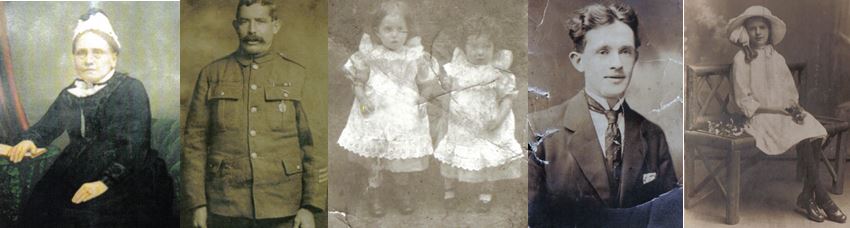


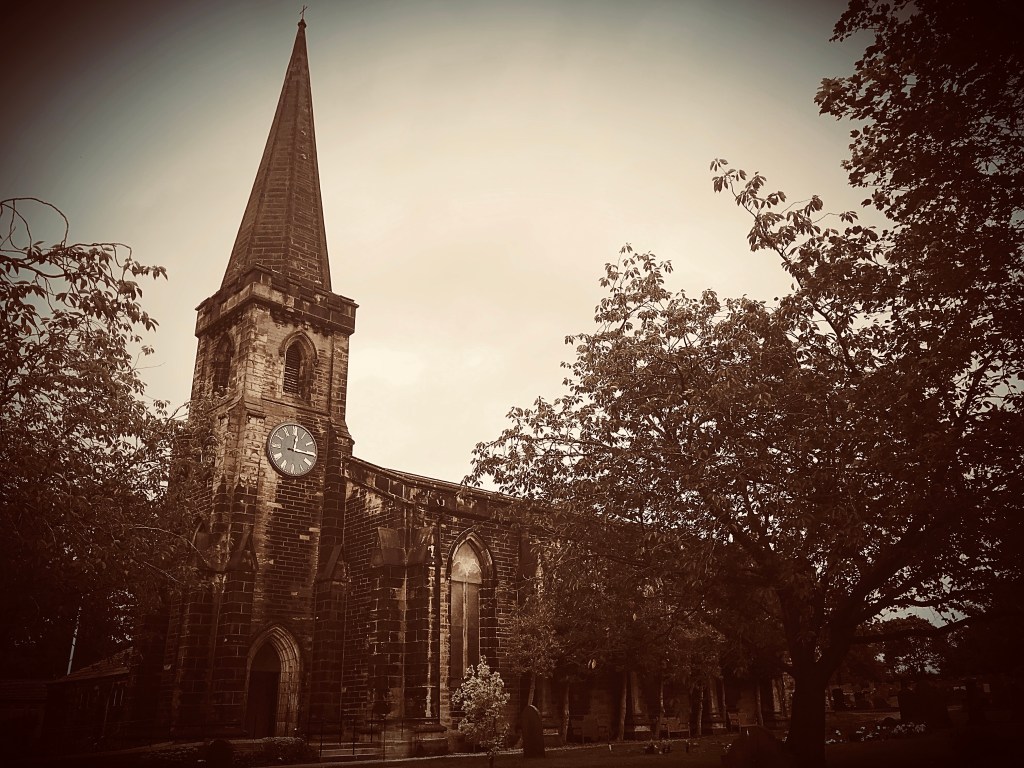
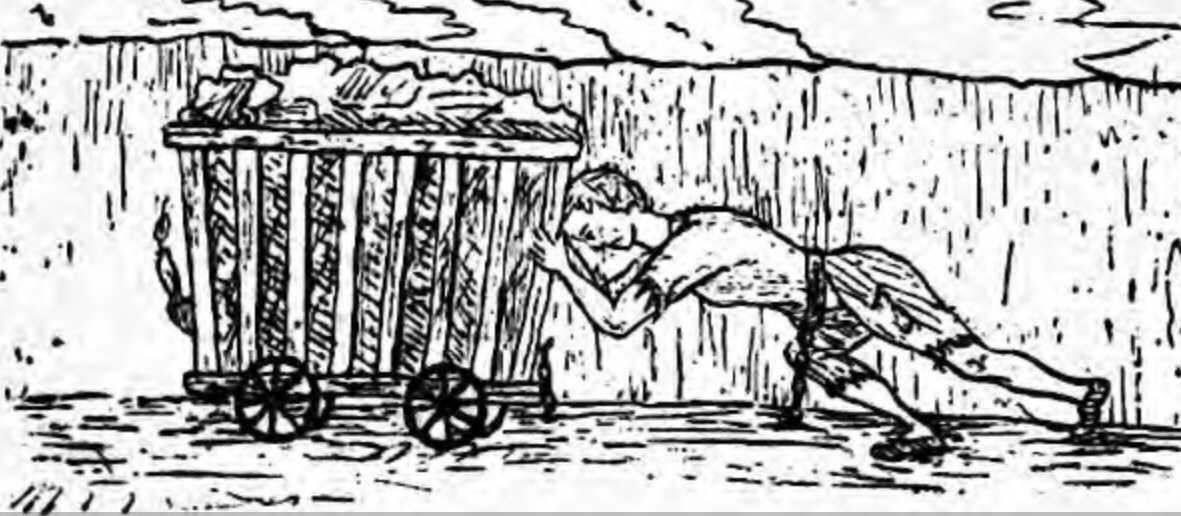
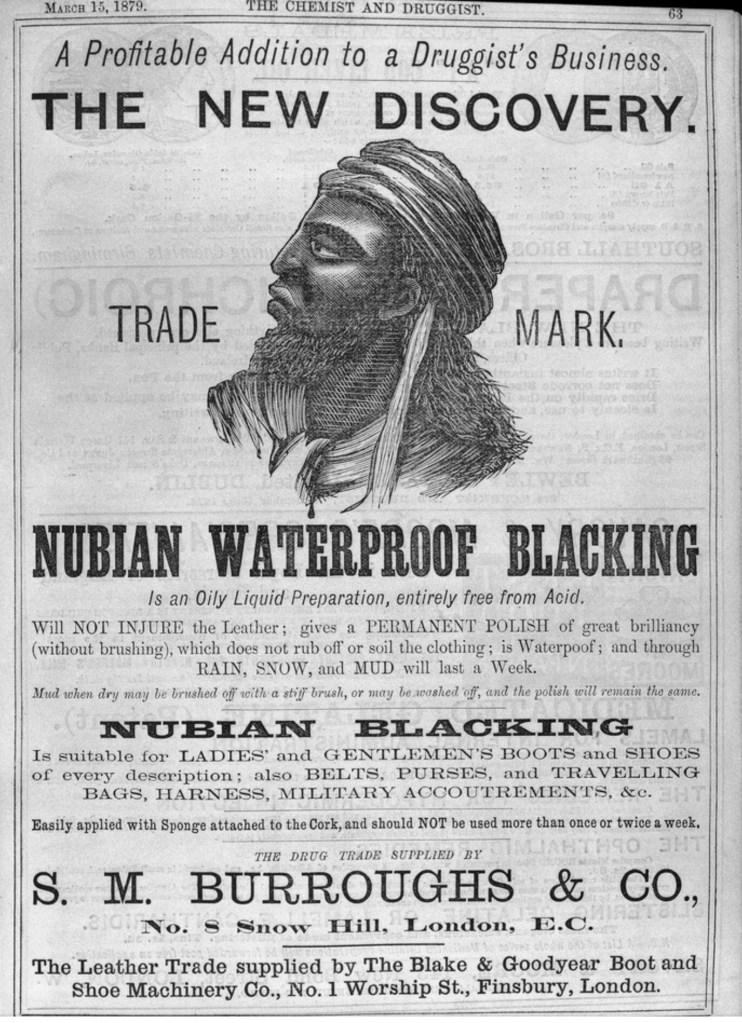

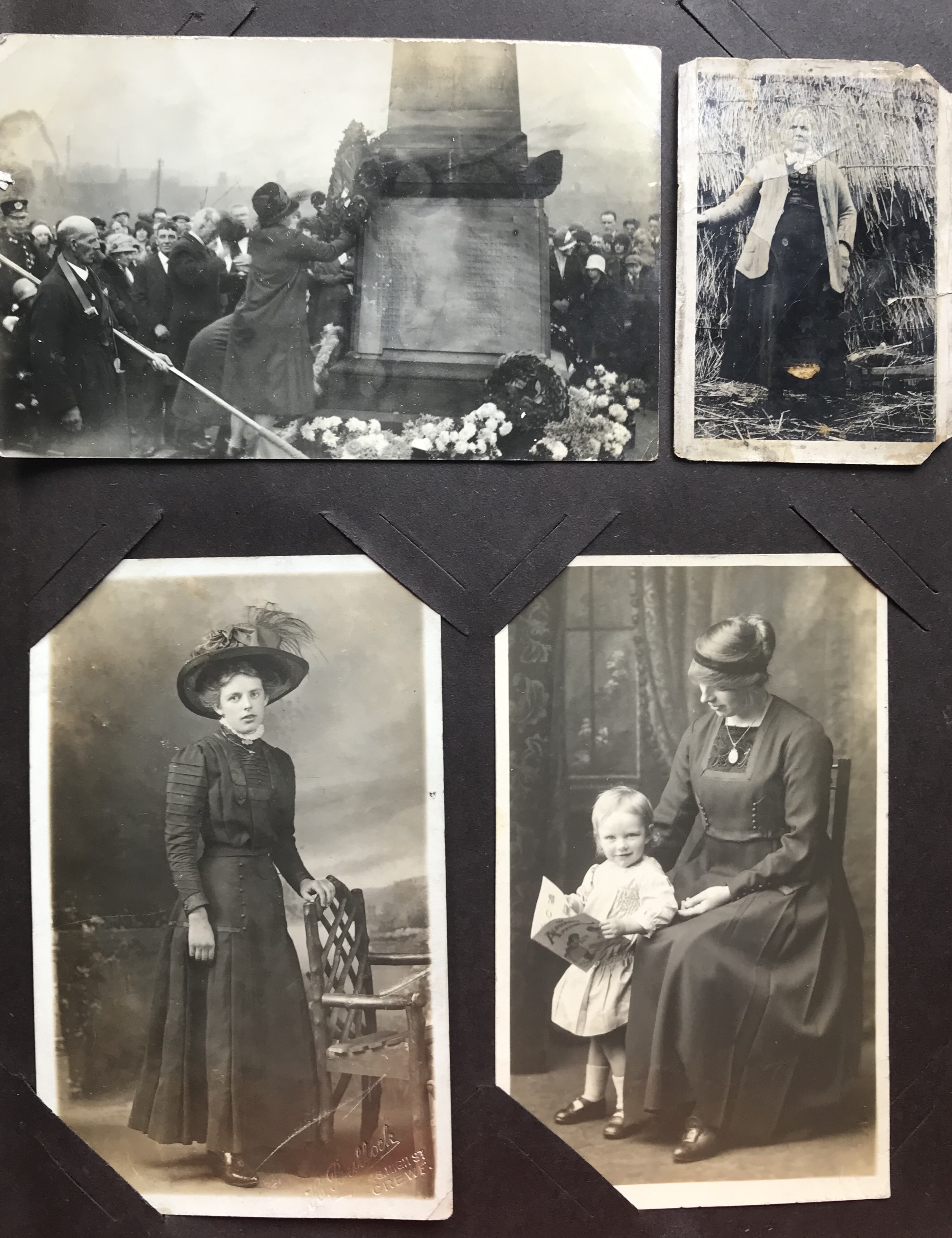
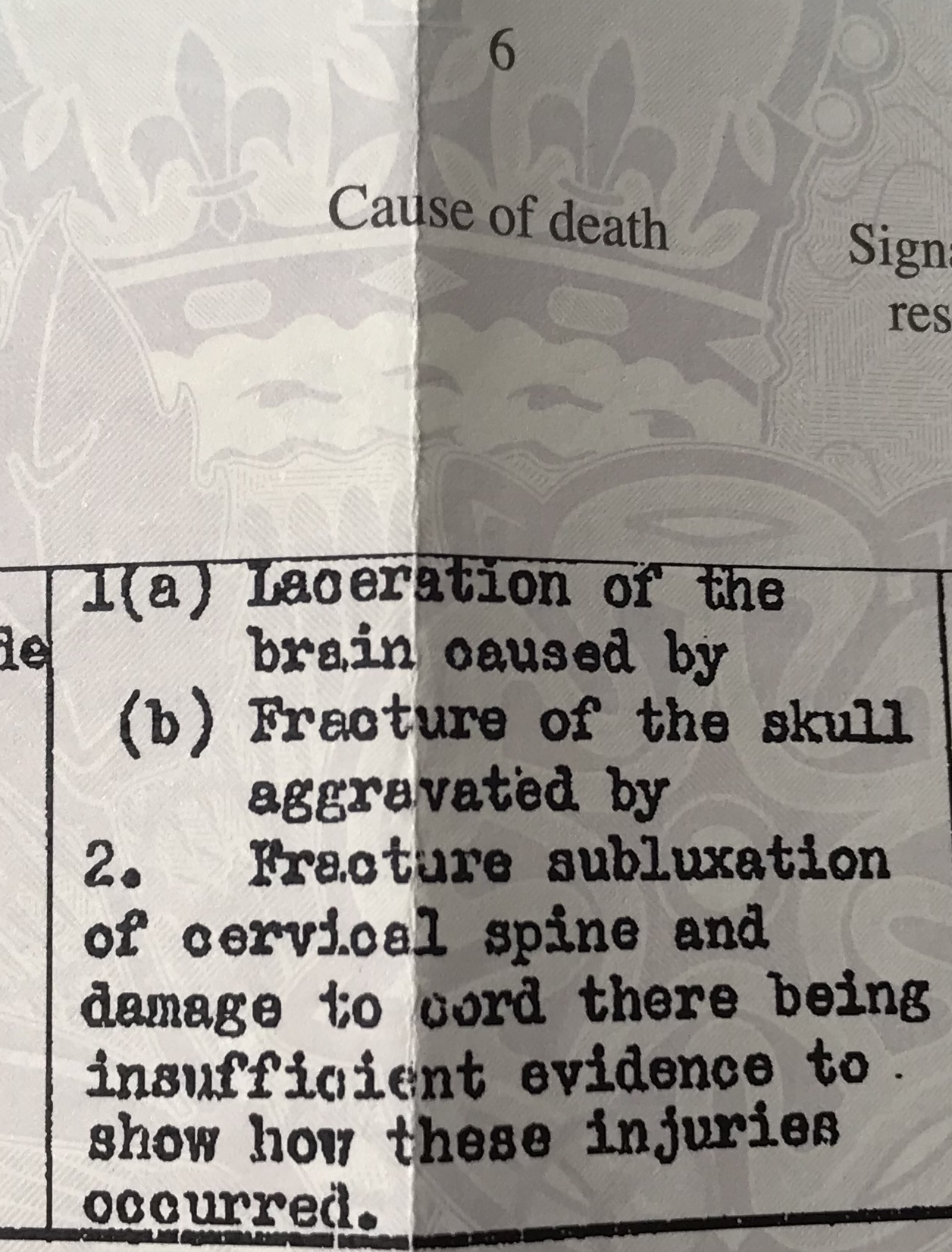
 Years ago I bought dad a memory journal to complete. He never did. It’s a thing a bitterly regret he never got round to doing. It would have been a precious legacy to all his descendants for ever more, now he’s no longer around to ask. It would have been a much-cherished connection to him and his life through his written words. As it is, I’m the family history recorder, so now his life is viewed through my memories, my prism. One step removed.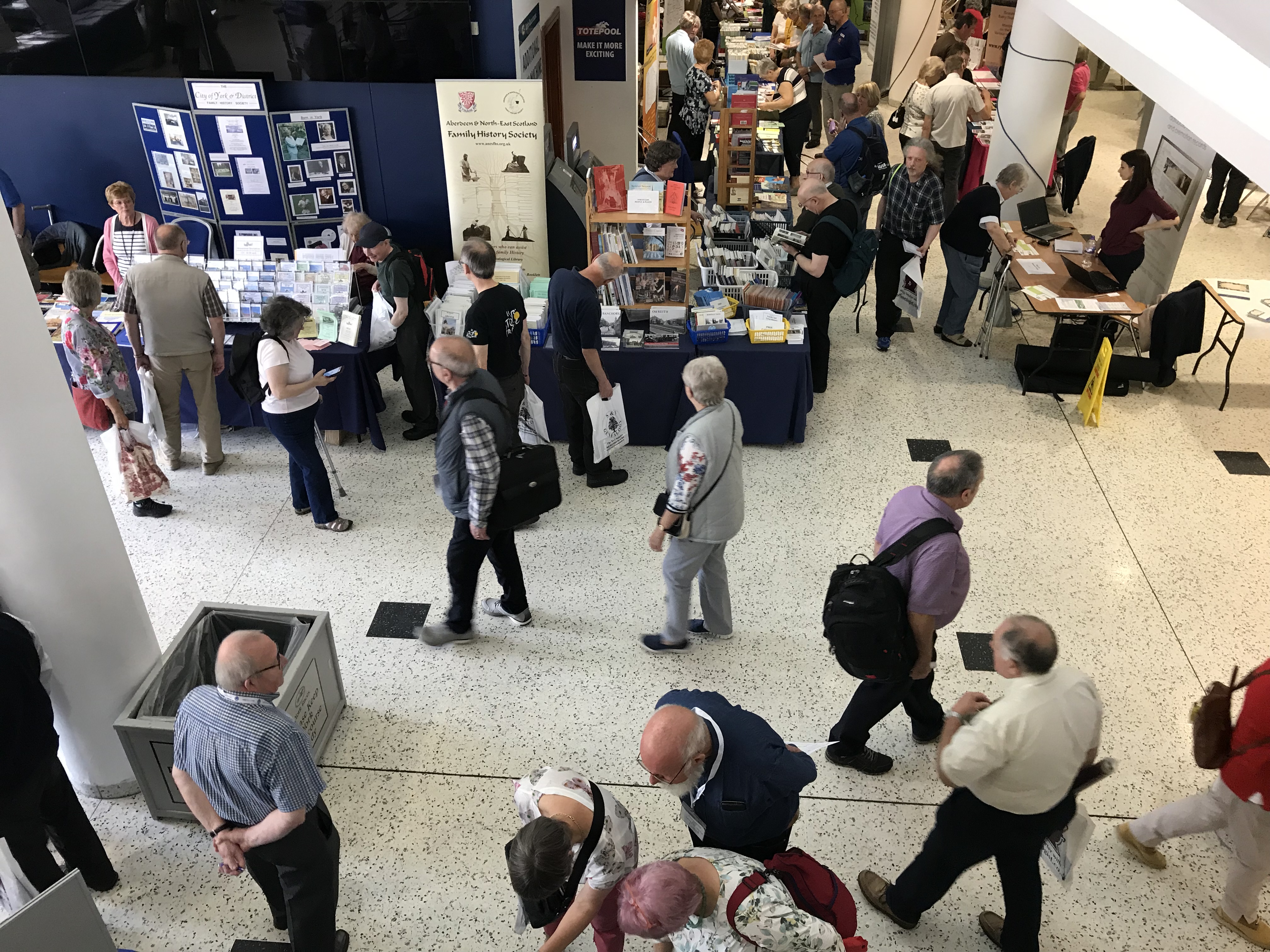


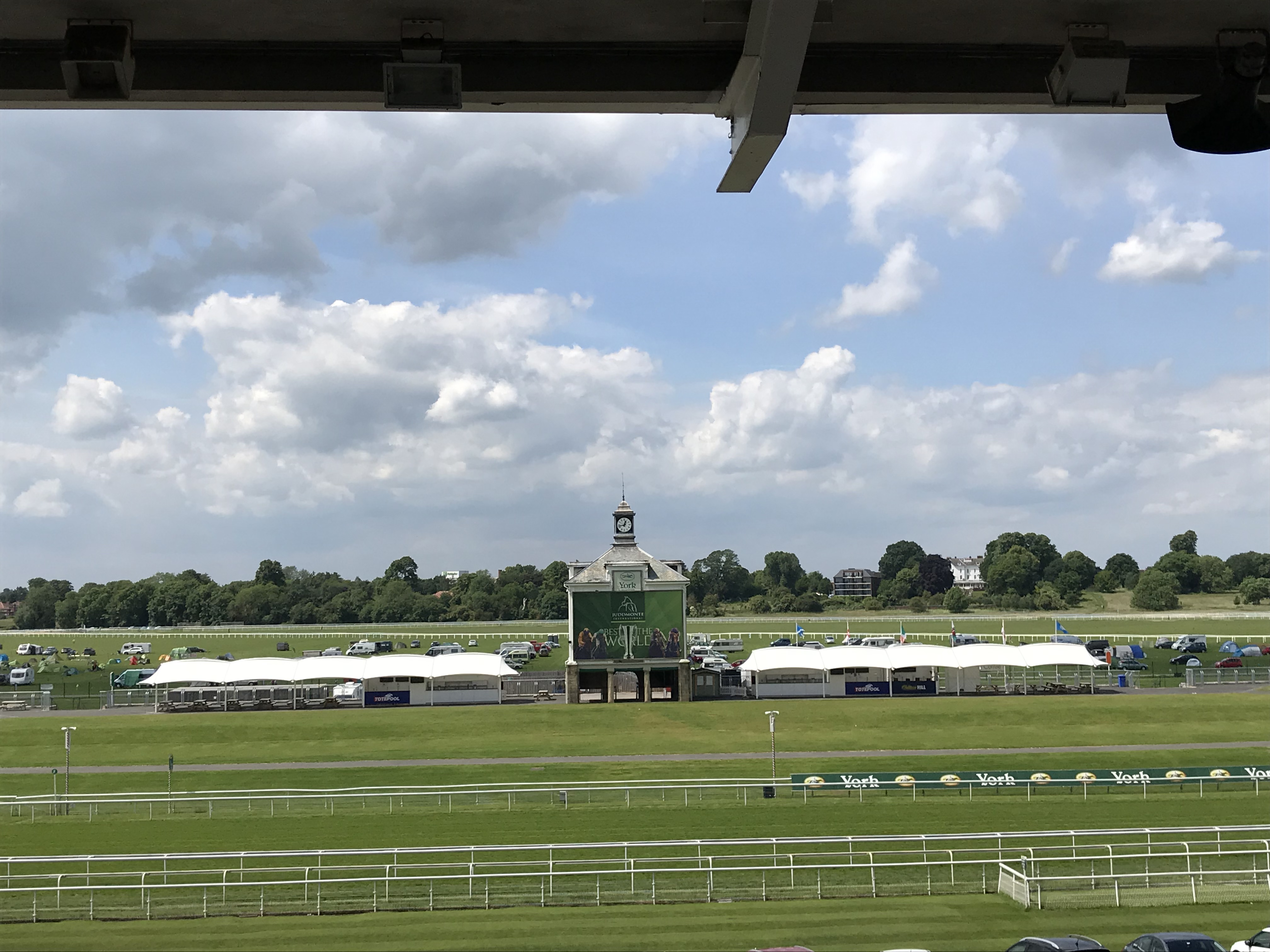


 Past To Present Genealogy
