This is the latest update of the pages relating to my Batley St Mary’s one-place study, the details of which I announced here.
St Mary of the Angels Church – Photo by Jane Roberts
In the past month I have added six new pages. These include five weekly newspaper summary pages. I have accordingly updated the surname index to these During This Week newspaper pieces, so you can easily identify newspaper snippets relevant to your family.
There is one new War Memorial biography – that of Herbert Booth.
Finally for this month, more men who served and survived have been identified. I have also updated that page. The biographies of these men will follow in due course.
Below is the full list of pages to date. I have annotated the *NEW* ones, plus the *UPDATED* page, so you can easily pick these out. Click on the link and it will take you straight to the relevant page.
This is the latest update of the pages relating to my Batley St Mary’s one-place study, the details of which I announced here.
St Mary of the Angels Church – Photo by Jane Roberts
In the past month I have added seven new pages. These include four weekly newspaper summary pages. I have accordingly updated the surname index to these During This Week newspaper pieces, so you can easily identify newspaper snippets relevant to your family.
There are also two new War Memorial biographies – those of Martin Carney and Michael Groark (also known as Rourke).
In addition, more men who served and survived have been identified. I have also updated that page. The biographies of these men will follow in due course.
Finally, for June’s additions, there is a brand new post about the health of Batley school children in 1914, with a focus on those at St Mary’s. This will be the first in a series looking a population, health, fertility and mortality.
Below is the full list of pages to date. I have annotated the *NEW* ones, plus the *UPDATED* page, so you can easily pick these out. Click on the link and it will take you straight to the relevant page.
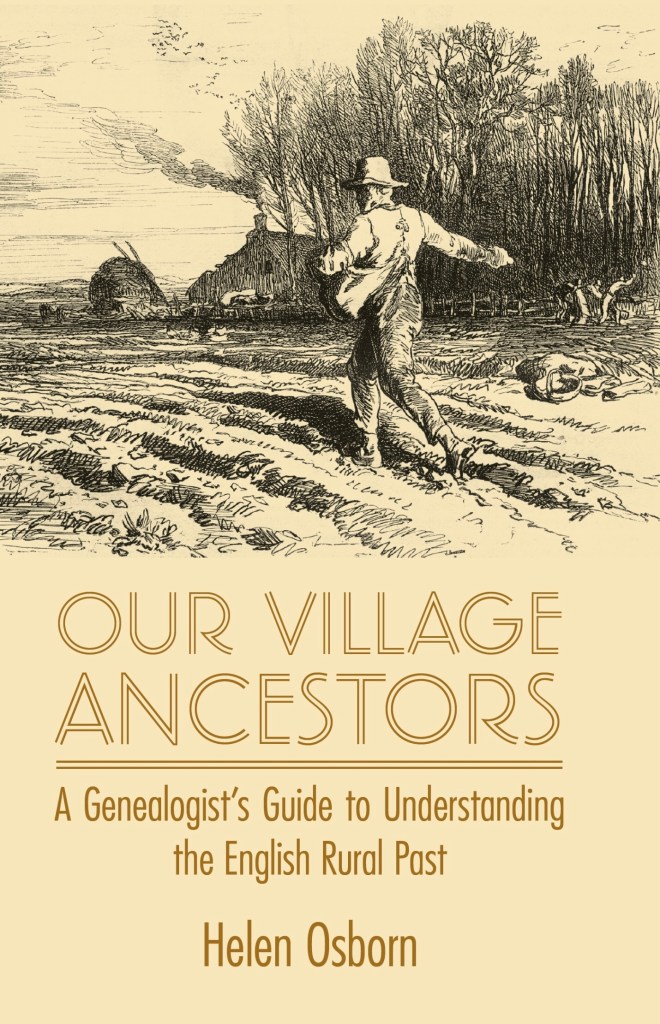
Helen Osborn’s Genealogy: Essential Research Methods is a key book for many family historians. Her latest book, Our Village Ancestors: A Genealogist’s Guide to Understanding England’s Rural Past, is certain to form another important element in the family history researcher’s toolkit.
Focussing on village life from the mid-sixteenth to the turn of the twentieth century, the book is aimed at those who want to fill in the details of the lives of their ancestors, and want to open up – and make best use of – the wealth of records out there to achieve this. Even those at an early stage of their family history journey will benefit from the information it contains.
Placing these records in their geographic and historic context is a theme which runs throughout the book, because as the book explains:
…in order to gather truly the evidence that we need to reconstruct families into genealogical trees, we should understand both the historical and local context as well as have a good understanding of the documents used.
Farming communities and countryside life is integral to the research of most family historians, with up until the nineteenth century the majority of people living a rural existence. As the book says:
Almost everybody with English roots will have an ancestor who lived in a village…
The book covers records applicable to a full range of village ancestors from the humble agricultural labourer to farmer ancestors, those in supporting village industries and crafts, right through to the more affluent landowners.
It contains eight chapters covering a multiplicity of these genealogical records, all of which combine to help build a picture of our village ancestors’ lives. The chapters are:
The Rural Past;
Parish and Family;
The Land and the Farmer;
The Church and the Tithe;
Supporting the Poor;
Work and School in the Countryside;
The Whole Community: Lists of Villagers and the Victorian Census; and
Leaving the Village.
There is also an appendix containing a handy list of dates of interest.
Each chapter introduces a series of key records, explaining the background to their creation, the information they contain, any particular issues or pitfalls associated with them, and how to interpret and locate them. This information is interspersed with examples of these records from across the country. Accompanying this information are fascinating facts, and tips, which aid family historians and provide food for thought in applying to research. There are also pointers as to how indirect evidence can be extracted from records, even when ancestors are not specifically mentioned. The individual chapters conclude with a Starting Points for the Researcher section which neatly summarises the records discussed in the preceding pages.
Through combining information from these sources, pictures of the lives of even quite ordinary ancestors can be built up. The book includes examples of such record-combining to reconstruct a person’s life, including a 19th century agricultural labourer and the harrowing story of the Eaves family.
The book is packed with information, and there are far too many records and information sources for me to mention. But they include parish registers and how to unpick information from them; manorial records; enclosure details; probate inventories; tithe maps and apportionments; glebe terriers; churchwardens’ accounts; vestry minutes; Quarter Sessions; various records relating to the old and new Poor Law; hearth tax; rate books; newspapers; and early censuses. Note, if you are looking for information about records created by Victorian national administrations, such as civil registration from 1837, these are not covered.
In addition to the records, I found the individual topics covered fascinating. From the social status of the farmer, the farm and its work, alongside wages and conditions, to tips on matching tithe maps with older records and using the early census to discover whole communities. And how many of us have ancestors who appear and disappear? The Leaving the Village chapter is full of strategies and tips for filling these gaps.
It is an immensely readable book (I completed it over a weekend). It is also one which will act as a reference, and refresher, to a series of genealogically valuable records for anyone researching their family history, running a one-place or one-name study, or with an interest in local history generally. And, although the focus is on village life, there is a cross-over in terms of many records to our more urban ancestors.
In conclusion, this is a worthy addition to any family historian’s bookshelf.
Our Village Ancestors: A Genealogist’s Guide to Understanding England’s Rural Past – Helen Osborn Publication date: 28 June 2021 Publisher: Robert Hale ISBN 9780719814167 Hardback £15.99
Whilst looking at a 19th century map of the West and East Ardsley areas, the place name Who could have thought it captured my imagination. Although I don’t live too far away from the area, this was the first time I had encountered it.
That was it. Instead of focusing on a course about agricultural labourers (the reason I’d been studying the map in the first place) I now set about trying to find out more about the origins of this unusual location name. Amazingly this led me down a rabbit hole which was connected to my own family history.
Map showing the proximity of Chestnut Terrace to Brewery Lane, Ordnance Survey Maps – Six-inch England and Wales, 1842-1952, Yorkshire 233 Surveyed: 1848 to 1851, Published: 1854 – National Library of Scotland, under the Creative Commons Attribution-NonCommercial-ShareAlike 4.0 International (CC-BY-NC-SA) licence
Some sources state that Who Could Have Thought It was named after a tragic accident in 1809, in which ten East Ardsley miners were killed.1 The location was a small cluster of miners’ cottages at Spring Bottom, which, as a result of the tragedy, became known locally as Who Could Have Thought It. The name appears on O.S. maps until circa 1930, after which it becomes Haigh Hall Terrace.
As a result of this information my interest was piqued further. I have direct maternal line ancestors who were miners in and around East Ardsley in this period. These include my 4x great grandfathers David Hudson, born in circa 1795, and George Broadhead, baptised in East Ardsley in 1803.
Now it was time to find out about this accident.
The York Herald and County Advertiser reported on it as follows:
We have to record a most melancholy accident which happened on Friday week, in two of the pits belonging to Mess. Lee, Watson and Co., situate at East Ardsley, near Wakefield. Ten men and four boys, colliers, employed in the said pits, were instantly drowned by the bursting, it is supposed, of the tunnel of some old pits, lying near and not now in use. —The water, which is not less than ten or eleven yards deep in each pit, is drawing off as quick as possible, but it is thought the bodies will not be got out before Tuesday. —Several of the unfortunate sufferers have left wives and families; thus in a moment bereft of their only earthly protectors and friends. Three young lads, who were at the mouth of one of the pits, on hearing the running water, swarmed up the rope, and alarming, by their cries, the men at the top, were fortunately extricated from their perilous situation. An inquest will be held on the bodies of the sufferers as soon as they can be got out. It since appears that only six men were drowned – four having escaped, but through what means we have not learned.2
The escape of these four additional men reduced the death toll to ten. An article in the Morning Post provide more details about their rescue. It also provided the names of the dead:
DREADFUL ACCIDENT
In the melancholy catalogue of misfortunes, so frequently occurring in Coal Mines, few have produced a deeper impression on the public, or been more dreadfully fatal in their consequences, than that which happened in the pits of Messrs. Lee, Watson, and Co, at East Ardsley, near Wakefield on Friday the 30th ult. The workmen at the time the accident happened, were driving through a throw, as it is technically called, when coming in contact with some exhausted pits, the water rushed through an aperture with irresistible impetuosity, and almost instantly inundated the pit where the people were at work. Three lads, fortunately in a situation to take the bucket, were drawn up without injury, but eleven men and three boys were shut up in the subterraneous abode, and for three days and nights consigned, in the imagination of their families and friends, to the mansions of the dead. Every exertion was made to drain the pit in hope that some lives might be saved; two engines were set to work for that purpose, and the Colliers from the works of Messrs. Branding, Smithson, Fenton, Wood, and Walker, were unremitting in their endeavours to rescue, if Providence had so ordered it, some, at least, of their unfortunate fellow workmen from the jaws of death.
On Monday, voices were heard to ascend from the pits; imagine the anxiety of wives, mothers, fathers, and children, all standing at the mouth of the abyss – anxious to catch a sound – and intensely anxious in that sound to recognise the well-known voice for some near and dear relative.
The moment had arrived when the hopes of some were to be elevated into reality, and the fond expectation of others to be sunk to dispair [sic]. Two men and two boys, John Hudson, Robert Kendrew, William Broad, and Joseph Goodyear, were drawn up alive and in health, though they had remained for three days and nights without rest or sustenance, except a little bread, which Kendrew happened to have in his pocket, and which, with unexampled generosity, he divided among his half famished companions, supplying his own wants with a quid of tobacco.3 The following are the names and families of the ten unfortunate sufferers:—
Aaron Haigh, a boy; George Gothard, an unmarried man; Samuel Bower, an unmarried man; John Haigh, has left a wife pregnant; Thomas Brook, one child and a wife pregnant; Thomas Broad, a wife and two children; William Broad, a wife and three children; Thomas Marshall, a wife and five children; Thomas Hartley, a wife and six children; and Jonathan Gothard, a wife and nine children.4
According to another report John and Aaron Haigh were brothers. They were alive for some time after the flooding. Eventually they made a bid to get out, but were drowned in the attempt. The remaining eight corpses were dragged out of the pit once the water subsided. Their lifeless bodies were presented to their heart-broken relatives.5
By now I was well and truly hooked. A Hudson featured amongst the saved, as did a Broad. Two further Broads were amongst the dead, including a Thomas Broad.
The cogs in the family history part of my brain were kicking into overdrive as a result of the Broad angle. My earlier research into the Broadhead family had revealed they sometimes used the surname Broad. My 4x great grandfather, George Broadhead, married in 1826 under the name Broad, and this was the recording of his surname in one census (1841). Some (but not all) of his children were baptised as Broad too. And George’s 1803 baptism entry (under Broadhead) names his father as miner Thomas. Other than that, I had no more information about Thomas. To be fair it is a branch I’ve not looked at for a few years. Could this mining accident be a breakthrough?.
A couple of more general points struck me from the newspaper coverage. Firstly the community involvement, with miners from other local pits helping in the rescue and recovery attempt.
Secondly, there is an incredible amount of detail for a newspaper report of the time into a mining accident in a Yorkshire village: Even down to the victims’ names, marital status and number of children. Reports in this period can be very sketchy on such details.
That the events in East Ardsley captured the public imagination is evident. It is not hard to see why. Apart from the tragedy, it had elements of raw human emotion, bravery and acts of pure selflessness, with the events having a central hero in Robert Kendrew.
Such was the impact of the East Ardsley pit disaster, and the survival over days of the four miners, in 1818 the Reverend James Plumptre, the Vicar of Great Grandsen, Huntingdonshire, wrote a play based on them. Entitled Kendrew: or, The Coal Mine, it focuses on the struggle for survival of Robert Kendrew, John Hudson, William Broad and Joseph Goodyear. The play is still available to read, with its religious overtones, its whitewashing of the realities of pit work, its romanticised depiction of a female miner and the weaving in of a love story.6
Back to reality, I decided to check parish registers for the burial of the men. So far I have located information for eight.
Four of the burials took place on 4 July 1809 at Woodkirk St Mary’s parish church. The register has the helpful annotation that they drowned in a pit on 1 July (note this is the day after the accident).7
William Hartley, from East Ardsley, Collier;
Thomas Brook, of Hague Moor, Collier;
John Hague of Hague Moor, Collier; and
Aaron, son of Aaron Hague of Westerton, Collier.
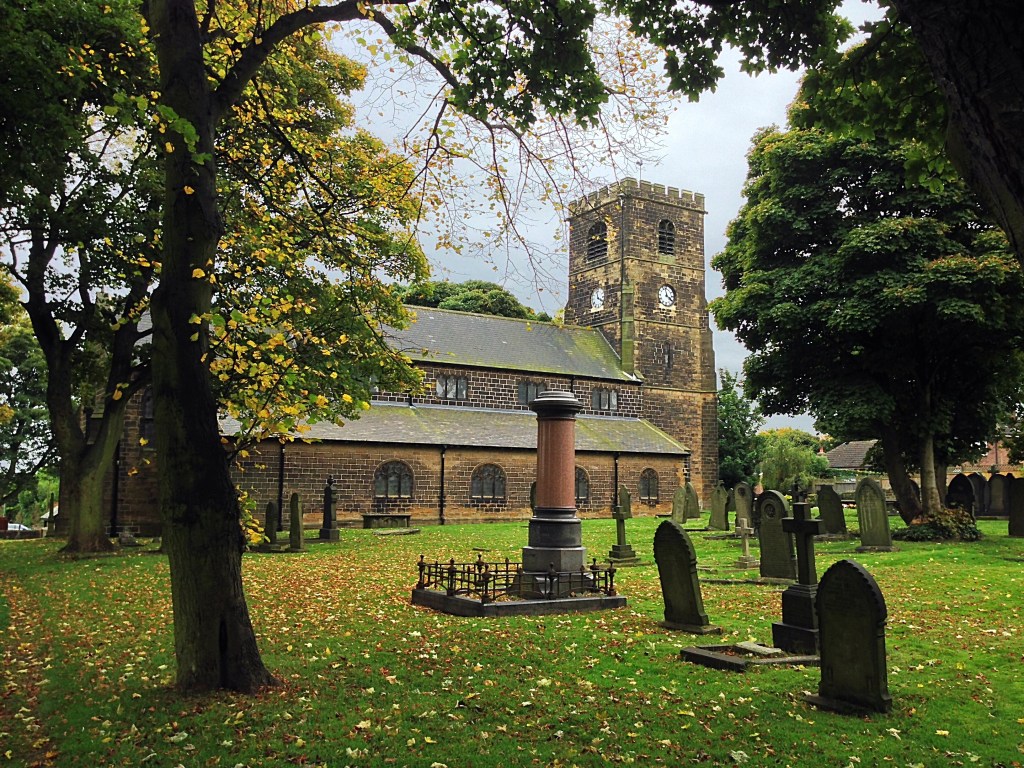
St Michael’s Church, East Ardsley – Photo by Jane Roberts
The burials of a further four of the victims are recorded, minus any explanatory notes, in the parish register of St Michael’s, East Ardsley.8
4 July 1809 – Sam[ue]l, son of Jonathan Bower, Labourer, Wakefield Parish;
4 July 1809 – Tho[ma]s Marshall, Miner;
5 July 1809 – Thomas Broadhead, Miner; and
5 July 1809 – William Broadhead, Miner.
My heart skipped a beat. Here Thomas’ surname is recorded as Broadhead, not Broad. Disappointingly there were no further clues in the register entry. An age would have been a bonus. The Bishop’s Transcript (BT) unfortunately added nothing further. Although on this occasion the BT was no help, they are always worth checking. The only hint as to age, therefore, came from the newspaper which indicated he had a wife and two children.
It was now time to hit the parish registers in earnest. In addition to East Ardsley, this included checking its surrounding parishes in this period: Dewsbury, Woodkirk, Rothwell and Wakefield. Searches included both Broadhead and Broad. As a result I now have page upon page of Broadhead research and family notes!
For consistency, in the following write-up of this research, I will use the surname Broadhead rather than Broad. However, I will indicate when the Broad version was used in records.
I focused on not only Thomas, but William Broadhead too, in case there was a family connection between them. The newspapers had mentioned the Haighs were brothers, nothing about the relationship between the Broadheads. But perhaps they were cousins?
The newspaper indicated William had three children and Thomas two. I first set about trying to identify these children to see if there was a possibility this Thomas was the father of my 1803 baptised 4x great grandfather.
Sod’s law. William was a doddle, Thomas was not.
William Broadhead was baptised at East Ardsley parish church on 13 June 1784, the son of coal miner William Broadhead.9 Siblings included David, Nanny and James. No sibling named Thomas has been found. William married Mary Claiton, also at East Ardsley, on 25 December 1805.10 Their children, all baptised in the same church, were:
Hannah, baptised 27 July 1806;11
Jane, baptised on 16 December 1807;12 and
Elizabeth, baptised on 24 June 1809, less than a week before her father’s death.13
In all the baptism entries William is listed either as a miner or coal miner. Elizabeth died in 1810.14 The other two girls survived, with Hannah marrying John Wainwright in 1823,15 and Jane marrying John Bedford in 1825.16
Over to Thomas, then. I checked for any Broadhead East Ardsley baptisms between 1773 and 1823, with a father named Thomas. The post-1809 dates were deliberate, to see if there was a Thomas in the parish after the accident.
There were eight baptisms in total, all occurring between 1797 and 1810. Four could be discounted as they related to children of a clothier from Wakefield parish. Another, linked to a labourer from Wakefield parish, was similarly ruled out. That left three, as follows:
George, baptised 13 March 1803, son of Tho[ma]s, miner [my 4x great grandad];17
John, baptised 11 February 1805, son of Tho[ma]s, miner.18 He died in 1818;19 and
Ellin, baptised 20 August 1809, daughter of Tho[ma]s and Hannah, miner.20
The obvious issue here is the number of children – three as opposed to the two cited in the newspaper. The other issue is Ellin’s baptism took place after the 30 June 1809 accident, and there is no reference in her baptism entry to her father being dead. The only difference in the BT was name, Ellioner, so no help there. I checked the baptism entry for John Haigh’s child for comparison purposes. The newspaper reports mentioned his wife was pregnant at the time of his death – no such mention for Thomas Broadhead’s wife. Unfortunately for my purposes the Haigh baptism took place in Woodkirk parish so the phraseology for the entry in this parish cannot be directly compared with that of East Ardsley. In the Woodkirk register, whilst John is named as the baby’s father, the entry clearly indicates he is deceased.21
The anomaly may simply be a newspaper oversight: Thomas did have two children when he died – George and John. But had his wife so very recently given birth to a third that it had been missed in reporting? Although saying that, William’s third child had only recently been born and she was included. The more likely scenario, however, assuming the likely interval between birth and baptism was weeks (though accepting this was not always the case), and with the 20 August baptism date, was Hannah being pregnant at the time of Thomas’ death, and this being overlooked in press reporting. Though the discrepancy is worth noting as an end that does not neatly tie, this latter scenario seems not improbable.
There is one final document to build the case for Thomas being my 5x great grandfather, and this is a probate document from the Exchequer Court of York. On the 12 August 1809 Administration of the goods of Thomas Broadhead, late of East Ardsley who died intestate, was granted to his widow Hannah Broadhead.22 The death can refer to none other than the miner who lost his life in the pit. This document is confirmation of the name of the widow of this miner.
As it stands I believe the balance of evidence is overwhelming now pointing to the 1809 death being George’s father, and my 5x great grandfather, Thomas Broadhead. There is simply no other candidate.
I wanted to find out what happened to Ellin, as much as anything for any further clues this might offer. Besides parish registers, other sources used here included censuses to corroborate age and birthplace, and GRO indexes.
Ellen Broad (note the surname) married Jonathan Hanson at Dewsbury All Saints parish church on 16 September 1827.23 The witnesses offer no further family information. The interchange between the Broad and Broadhead surnames is demonstrated by the registration of those children born after the introduction civil registration. Two have Broadhead as mother’s maiden name, and one has Broad.24
I now returned to Thomas and Hannah. When did they marry?
There were two candidates for the marriage, neither in East Ardsley:
Wakefield All Saints, 16 January 1792, Thomas Broadhead and Hannah Batty, both of this parish, with a William Broadhead as a witness;25
Rothwell Holy Trinity, 19 April 1802, Thomas Broadhead and Hannah Lumb, both of this parish, with a John Broadhead as witness.26
The first was eliminated. This couple appeared to be having children baptised in Wakefield parish from 1792 to 1807. And the baptism of one child, Charlotte, in 1804 provided the confirmation, naming Hannah as the daughter of David Battye.27 Interestingly one baptism for this family, from 1799, mentions an abode of Beck Bottom. only a hop, skip and jump over the East Ardsley parish boundary. And in 1817 David Broadhead, (brother of William who died in the accident), along with his wife Hannah and six children were removed from East Ardsley to Alverthorpe with Thornes.28 There does appear to be a particular location focus emerging for these Broadheads, around the southern East Ardsley parish boundary with the Alverthorpe area of Wakefield parish at the time.
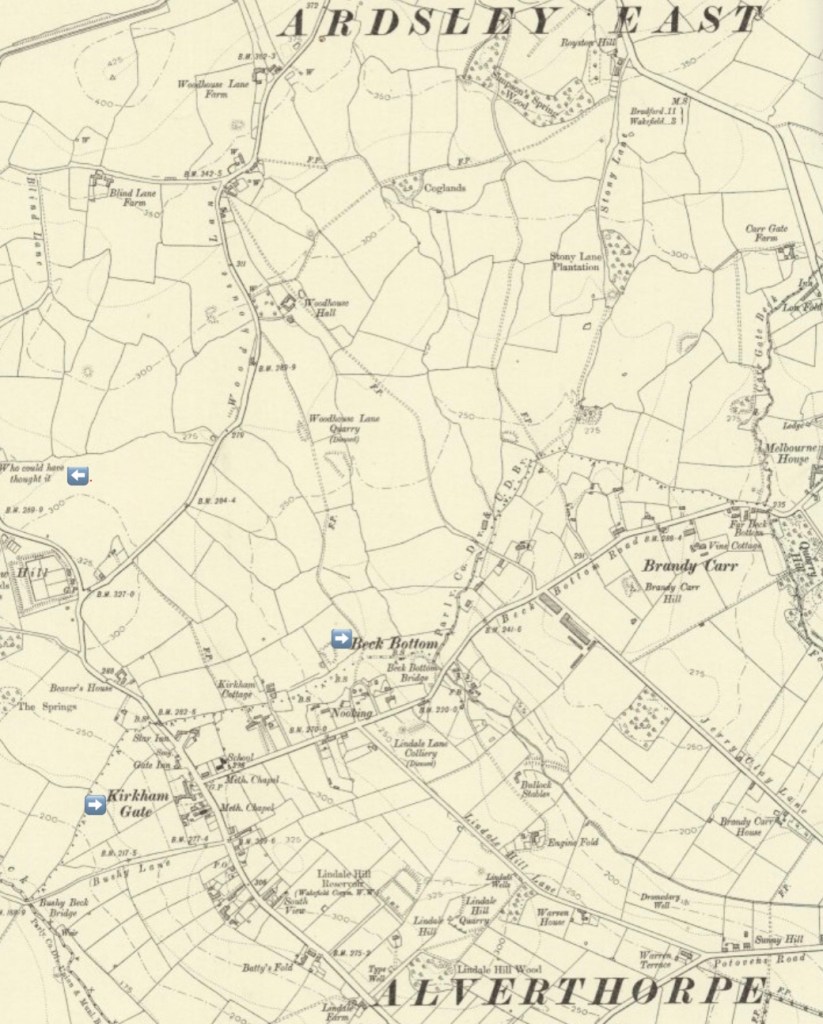
Map showing location of Who Could Have Thought It, Beck Bottom and Kirkham Gate. The latter two fall under Alverthorpe Township. The East Ardsley parish boundary runs just to the north of Kirkham Gate and Beck Bottom, and covers Who Could Have Thought It. To give some idea of distance, Beck Bottom is under a mile away from Kirkham Gate.
This left the 1802 Rothwell marriage of Thomas to Hannah Lumb. Broadhead was not a common name in this parish. A Thomas cannot be traced in it before the marriage. There are no children of the couple baptised there subsequently. Another Broadhead marriage took place there in 1806, that of a William Broadhead to Charlotte Wainwright.29 Despite this also saying the couple were both of this parish, William was actually from Woodkirk parish, this is where the couple lived after their marriage and it was the baptism parish of their children. On this basis I have concluded the 1802 Rothwell marriage of Thomas Broadhead and Hannah Lumb is the correct one.
As for when Thomas Broadhead was born, this is still a work in progress. The most obvious baptism is one at East Ardsley on 29 October 1780, for Thomas son of miner John Broadead.30 But I cannot be definitive as there are other options in Wakefield and Woodkirk (the most likely other parishes) which I need to work through. Checking baptisms between 1740-1790 produced this list of candidates:
Wakefield, 26 October 1741 – Tho[ma]s, son of Dan Broadhead;
Wakefield, 16 February 1741[42] – Tho[ma]s, son of Adam Broadhead, Potovans;
Wakefield, 1 September 1755 – Tho[ma]s, son of Sarah Broadhead, base begot by John Beaumont, Thornhill;
Wakefield, 18 November 1769 – Tho[ma]s, son of Samuel Broadhead;
Wakefield, 26 December 1770 – Tho[ma]s, son of Jonathan Broadhead;
Woodkirk, 9 February 1772 (note this parish is still using old style dating and it is 1771 in the Register) – Thomas, son of James Broadhead, Beggarington, collier;
Wakefield, 24 February 1775 – Tho[ma]s, son of Joshua Broadhead;
Wakefield, 24 August 1778 – Tho[ma]s, son of Widow Broadhead;
East Ardsley, 29 October 1780 – Tho[ma]s, son of John Broadhead, miner;
Unfortunately, because of the scant information in parish registers of this period, it may prove impossible to reconcile them all with marriages and burials. I may be left with more than one candidate. I may have to see what alternative sources exist, and even that might be insufficient.
And in further frustration I have yet to establish what, if any, connection there was between the 1809 mining casualties Thomas and William Broadhead. The only lead I have is very tenuous. Witnesses at the 1823 East Ardsley marriage of William’s daughter Hannah to John Wainwright include what looks like two separate George Broadhead signatories. Having these handwriting examples for comparison purposes have not helped yet. Unfortunately, when my 4x great grandfather George Broadhead married Rachel Speight, at Woodkirk on 18 June 1826, he made his mark.31 This was a period when he was styling himself Broad, not Broadhead which constitutes yet another smokescreen. I have known people who did switch between marks and signing their name, but to date I have no signature for my 4x great grandfather with which to compare. In another complication neither of the other two George Broadheads I know who were around in this period signed their names when they married, so I cannot definitively eliminate them either. 32
Parish Register signatures: 1823 marriage at East Ardsley of Hannah Broadhead with a George Broadhead as witness; and my 4x great grandfather George Broad[head]’s mark in the Woodkirk parish register at the time of his marriage in 1826.
Finally, it looks highly probable that the boy named William Broad[head] named amongst the rescued, was baptised at East Ardsley on 25 December 1794, son of miner John Broadhead.33 I did initially wonder if he could be a younger brother of Thomas, especially if the 1780 East Ardsley baptism is the correct one. But further analysis showed this William’s parents were John Broadhead who married Mary Marshall at East Ardsley on 18 November 1793.34 Furthermore John and Mary are alive in the 1841 census, with John’s age being 70 (possibly rounded down in accordance with that census).35 His burial at East Ardsley on 23 July 1848, age 77, provides yet further confirmation this man cannot be the father of Thomas who married in 1802.36 But could he be a brother? More work needed there.
All this mixed bag of results goes to illustrate that family history is not simple. It takes time, and at the end of it there may not be a conclusive answer. I believe the evidence has stacked up in favour that Thomas Broadhead, who died in the 1809 mining accident, being my 5x great grandfather. Also that Hannah Lumb is my 5x great grandmother. If this is the case, I also have two siblings for my 4x great grandfather, in John and Ellen. But beyond that I have not found Thomas’ baptism. The most probable is the 1780 East Ardsley one, son of John. But I cannot categorically state that and add it to my family tree.
I also need to find out what became of Thomas’ widow, my 5x great grandmother Hannah Lumb, after his death.
It’s a typical case of answer one family history question and end up with a whole bunch more.
More work remains. In the list of priorities I need to:
Visit Morley Library (original) or West Yorkshire Archives (microfilm) to see if anything further can be found in the East Ardsley township and Churchwarden records about the Broadhead family, in particular after the death of Thomas;
Try to confirm Thomas’ baptism. Whilst the 1780 is a possible, I need to do more in investigation around the other Thomas Broadhead baptisms. Ultimately it may come down to attempting to reconstruct the Broadhead families in the East Ardsley, Woodkirk and Wakefield parishes, which is where the main linkages appear to be. And this will involve going through parish registers page by page. It is a painstaking and time-consuming task. And after all that I may still have no perfect answer; and
It is also then a case of seeking out any other sources which may help for the parishes of interest, beyond the East Ardsley ones mentioned above. Things like wider parish poor law records including removal orders, settlement certificates, bastardy bonds…if they survive!
And then there’s trying to trace Hannah Broadhead (formerly Lumb) in records – knowing in advance there are a number of Hannah Broadheads in the area.
If there are any developments coming out of this work I will provide an update.
The ‘Who Could Have Thought It’ area in May 2021 – Photo by Jane Roberts
In conclusion, this has been a glorious rabbit hole to explore. At a minimum I now know more about the turn of the 19th century East Ardsley community of my ancestors. Above all I believe I have made a family tree breakthrough and identified a set of 5x great grandparents. I also have information about my 5x great grandfather’s death, and added to my mining family history in the process.
Who would have thought a course on agricultural labourers, a map and a place called Who Could Have Thought It would lead to that?
Postscript: I am still unclear how the pit accident could lead to this peculiar place name, unless it was some reference to the survival of the four miners. Also the place name is not unique. I have since discovered another Who Could Have Thought it to the north-east of Thornton, Bradford on the 1847-1850 surveyed six-inch ordnance survey map, published in 1852. Who knows how many more there are?
Finally a big thank you for the donations already received to keep this website going.
The website has always been free to use, but it does cost me money to operate. In the current difficult economic climate I am considering if I can continue to afford to keep running it as a free resource, especially as I have to balance the research time against work commitments.
If you have enjoyed reading the various pieces, and would like to make a donation towards keeping the website up and running in its current open access format, it would be very much appreciated.
Please click here to be taken to the PayPal donation link. By making a donation you will be helping to keep the website online and freely available for all.
Thank you.
Footnotes: 1. Loyal “Who Could Have Thought It” Lodge No. 416 of the Grand United Order of Oddfellows (Huddersfield Unity), Huddersfield Exposed, https://huddersfield.exposed/wiki/; 2. York Herald and County Advertiser, 8 July 1809; 3. Chewing tobacco; 4. Morning Post, 11 July 1809; 5. Statesman, 11 July 1809; 6. Plumptre, James. Original Dramas … With Prefaces and Notes. MS. Notes and Corrections by the Author. Cambridge: J. Hodson, 1818. Available via Google Books; 7. Woodkirk St Mary’s parish register, West Yorkshire Archive Service, Reference: WDP108/1/1/4; 8. St Michael’s East Ardsley parish register, West Yorkshire Archive Service, Reference: WDP16/1/2; 9. St Michael’s East Ardsley parish register, West Yorkshire Archive Service, Reference:WDP16/1/1; 10. St Michael’s East Ardsley parish register, West Yorkshire Archive Service, Reference: WDP16/1/8. Register records she was the daughter of Mary, a widow; 11. St Michael’s East Ardsley parish register, West Yorkshire Archive Service, Reference: WDP16/1/2; 12. Ibid; 13. Ibid; 14. St Michael’s East Ardsley parish register, West Yorkshire Archive Service, Reference: WDP16/1/2; 15. St Michael’s East Ardsley parish register, West Yorkshire Archive Service, Reference: WDP16/1/8; 16. St Michael’s East Ardsley parish register, West Yorkshire Archive Service, Reference: WDP16/1/9; 17. St Michael’s East Ardsley parish register, West Yorkshire Archive Service, Reference: WDP16/1/2; 18. Ibid; 19. St Michael’s East Ardsley burial register, West Yorkshire Archive Service, Reference WDP16/1/16 20. St Michael’s East Ardsley parish register, West Yorkshire Archive Service, Reference: WDP16/1/2; 21. St Mary’s Woodkirk parish register, baptism of Rachel Haigh, 20 August 1809, West Yorkshire Archive Service, Reference: WDP108/1/1/4; 22. Thomas Broadhead, Administration, East Ardsley, AUG 1809, Exchequer Court of York, Borthwick Institute 23. All Saints Dewsbury marriage register, West Yorkshire Archive Service, Reference: WDP9/21; 24. Dewsbury registered Emma (1837) and John (1840) have Broadhead; Martha Ann, registered in Halifax in 1845, has Broad; 25. All Saints Wakefield parish register, West Yorkshire Archive Service, Reference: WDP3/3/5; 26. Rothwell Holy Trinity parish register, West Yorkshire Archive Service, Reference: RDP91/3/3; 27. Charlotte Broadhead baptism 30 December 1804, Wakefield St John the Baptist parish register, West Yorkshire Archive Service, Reference: WDP45/1/1/1; 28. West Riding Quarter Sessions, Leeds Sessions 16 October 1817, West Yorkshire Archive Service, Reference: QS10/4; 29. William Broadhead marriage 8 September 1806, Rothwell Holy Trinity parish register, West Yorkshire Archive Service, Reference: RDP91/3/3; 30. St Michael’s East Ardsley parish register, West Yorkshire Archive Service, Reference: WDP16/1/1; 31. St Mary’s Woodkirk marriage register, West Yorkshire Archive Service, Reference: WDP108/1/3/3; 32. George Broadhead who married Mary Hartley at Wakefield All Saints on 26 August 1822, son of William and Mary and baptised at Wakefield on 20 April 1801; and George Broadhead who married Elizabeth Broadhead at Woodkirk on 18 November 1828, likely the son of John, baptised at East Ardsley on 24 May 1807; 33. St Michael’s East Ardsley parish register, West Yorkshire Archive Service, Reference: WDP16/1/2; 34. St Michael’s East Ardsley parish register, West Yorkshire Archive Service, Reference: WDP16/1/8; 35. 1841 England and Wales census, The National Archives, Reference HO107/1267/1/13/23; 36. St Michael’s East Ardsley burial register, West Yorkshire Archive Service, Reference: WDP16/1/16.
This is the latest update of the pages relating to my Batley St Mary’s one-place study, the details of which I announced here.
St Mary of the Angels Church – Photo by Jane Roberts
In the past month I have added six new pages. These include five weekly newspaper summary pages. I have accordingly updated the surname index to these During This Week newspaper pieces, so you can easily identify newspaper snippets relevant to your family.
There is also one new War Memorial biography – that of James Griffin.
Finally more men who served and survived have been identified. I have also updated that page. The biographies of these men will follow in due course.
Below is the full list of pages to date. I have annotated the *NEW* ones, plus the *UPDATED* page, so you can easily pick these out. Click on the link and it will take you straight to the relevant page.
To mark the Spring Bank Holiday weekend in the UK, I decided to run a Twitter poll to find out what would be a family historian’s perfect way to spend it.
Essentially the premise was you have some free time….but, here’s the catch, only enough to do one family history thing. What will it be?
I did not specify things such as weather – my assumption being that it would be neutral, not gloriously warm or pouring with rain which might sway choices.
One other thing that may have impacted the voting is the peculiar circumstances in which we currently live. Yes, pandemic lockdown restrictions are easing – but some constraints on what we can do remain, including numbers around meeting family depending on venue.
Being a Twitter poll I was limited to four options. I chose:
Family history research;
Ancestral tourism – to include any out and about visits to places associated with ancestors, be it where they lived, or went to school and married, to burial place;
Family time/memory making; and
Organising your research (be it formally collating and logging search results, updating family trees, labelling photographs, etc.)
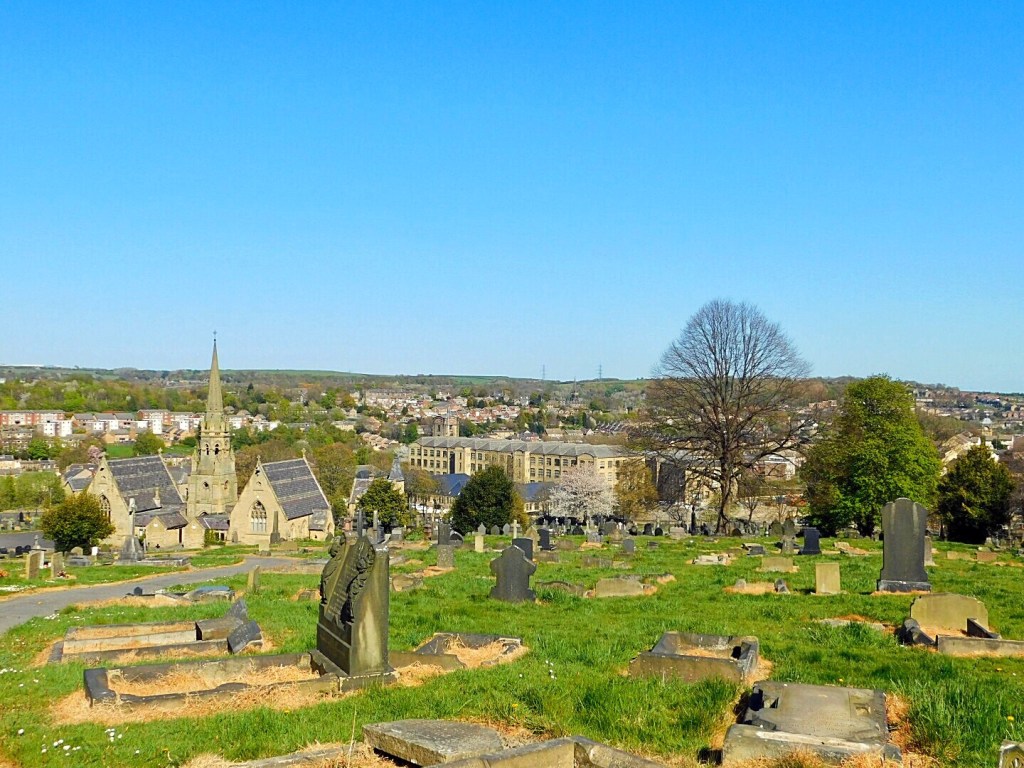
Batley Cemetery – Photo by Jane Roberts
This limitation was frustrating. I ruled archives out, it being a Bank Holiday. However, there were many other possible options I wanted to include: From having a distinct DNA choice like spending time on results analysis, to writing a family history book, biography or blog; from family history-related reading, to undertaking genealogy coursework; even preparing a family history talk, contributing to the work of a Family History Society, or participating in a collaborative crowd-sourcing project.
I would also have liked to get a feel for age ranges and experience of those who voted, as this might also impact on choices.
I realise that many family historians would want to do a combination of elements over the Bank Holiday, rather than focus on one thing. However, forcing one choice only meant that current priorities (and interests) were teased out.
The poll ran over 48 hours, ending at just before 9am GMT on Bank Holiday Monday. 112 people voted (a huge thank you), and it proved to be an interesting, and incredibly close-run, exercise. In fact, it went right down to the wire. Even in the final minutes there was nothing in it – a single vote either way would have swayed it.
The results were as follows:
It is apparent from this that people like results-based, or the more social and active family history, activities – the fun side of it. Perhaps even more so at holiday time. That’s no surprise. If you don’t enjoy it, why bother doing it?
And it is abundantly clear that the important background tasks such as methodical documentation, organising and collating research findings (and by extension planning) is regarded as more of a chore, an undertaking less suited to an entertaining Bank Holiday. Maybe that is an aspect that needs more attention – the importance of these mundane elements in contributing to more effective and better research.
The noteworthy take-away point though was the closeness of the result, with only the slimmest margin of votes separating the top three. Under normal everyday circumstances I would have expected research to be the runaway winner, rather than scraping over the line by a narrow squeak. The Bank Holiday element maybe key here – the desire, or need, to participate in more family-oriented activities. The backdrop of COVID may have made that even more of a priority.
And as for my perfect family history Bank Holiday weekend? I am in the camp where COVID coloured my choice.
The impact of the pandemic on family time made me reevaluate my priorities this Bank Holiday. With the exception of under a month last July, my area of Kirklees has been in some form of lockdown since March 2020. Even in that brief July 2020 window, number and location restrictions limited opportunities to get together. Meeting up with family has, in effect, been non-existent.
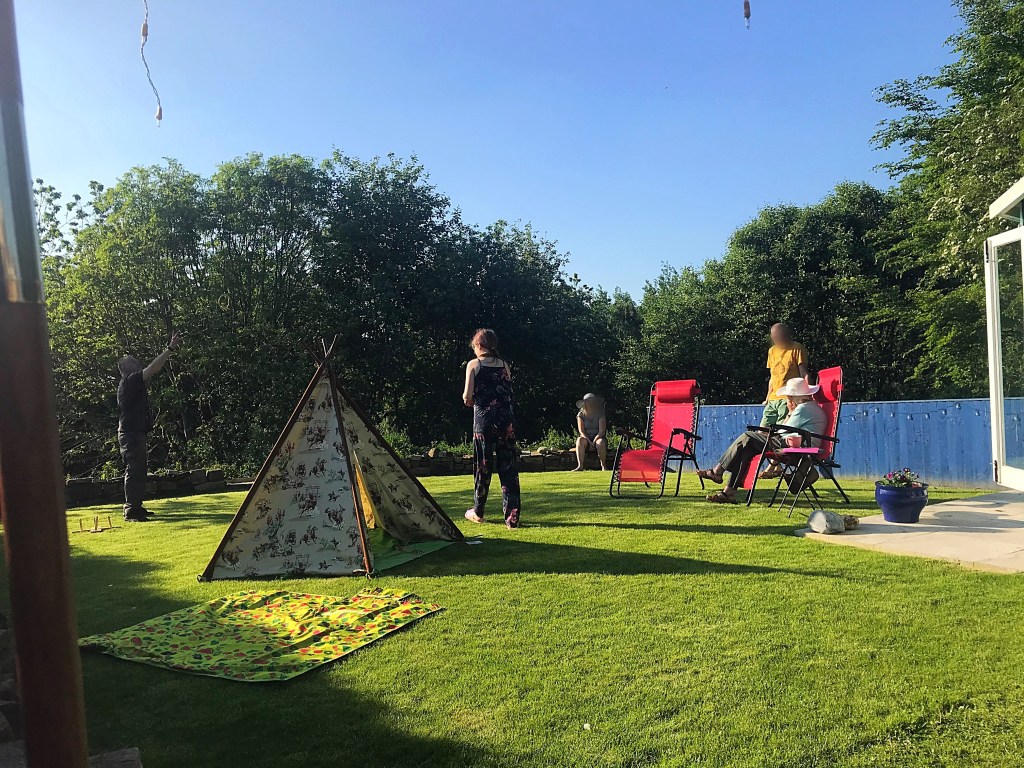
We had a family birthday this Bank Holiday weekend. To celebrate we had a small, socially distanced gathering in a garden to have a birthday tea and catch up generally. This was the first occasion we’ve been able to have any meaningful face-to-face quality time as a family since Christmas/New Year of 2019/2020. I will also be spending time with my daughter and 6-month-old grandson.
A socially distanced birthday – making memories
So for me family catch-up time and memory making trumped research, or any other family history activity, this Bank Holiday – and that time has been priceless.
Whatever your family history activity this Bank Holiday, hope it is an enjoyable one.
This is the latest update of the pages relating to my Batley St Mary’s one-place study, the details of which I announced here.
Thomas Donlan – one of the new biographies in April
In the past month I have added seven new pages. These include four weekly newspaper summary pages. I have also produced a surname index to these During This Week newspaper pieces, so you can easily identify newspaper snippets relevant to your family.
There are also two War Memorial biographies – those of Thomas Donlan and Thomas McNamara.
Another man linked to the parish who is not on the War Memorial but who died has also been identified, and that page has been updated to reflect this man’s name. I will be writing biographies for all these men as the study progresses. I have amended the section covering Burials, Cemeteries, Headstones and MIs to include this additional soldier.
Finally more men who served and survived have been identified. I have accordingly updated that page. The biographies of these will follow in due course.
Below is the full list of pages to date. I have annotated the *NEW* ones, plus the *UPDATED* page, so you can easily pick these out. Click on the link and it will take you straight to the relevant page.
Whilst reading a newspaper from July 1915, my attention was caught by an attempted suicide in Dewsbury. It read:
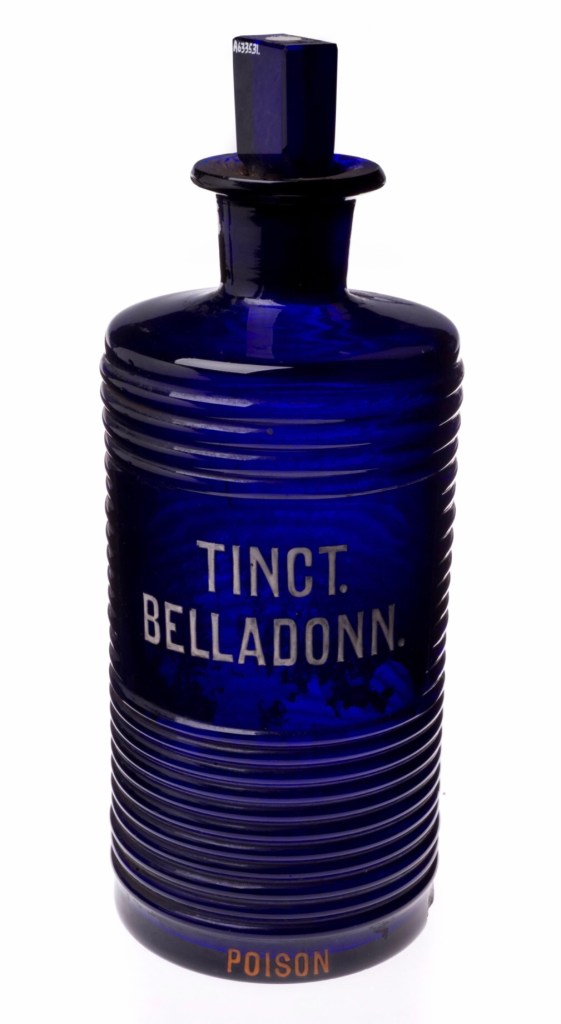
GIRL DRINKS BELLADONNA. Thornhill Lees Servant Upset By Brother Being At The War.
Clara Stead (17), domestic servant, of Pontefract, was summoned for attempting to commit suicide by drinking a quantity of belladonna liniment at Dewsbury on the 15th inst.
Hetty Armitage, who employed the girl at the Perseverance Inn, Thornhill Lees, explained that on Thursday last week Stead was in the kitchen black-leading, but she went to a bathroom and afterwards accused called for witness and said, “Mrs. Armitage, do you know what I have done?” Later she added, “I have taken poison.” Asked where she had got it from, she replied, “From the bathroom,” and asked why she had done it she answered, “I don’t know.” Witness’ husband gave the girl milk and water, and she was afterwards taken to the Infirmary,
In answer to a question in Court, as to the reason for her act, Jones, [sic] who appeared greatly distressed, said, “I have a brother at the war.”
The Chairman: That ought not to have depressed you like that. You are young to do a thing like this.
The girl’s mother preferred to take her daughter back home and look after her.
The Chief Constable thereupon asked for the case to be withdrawn, and the Magistrates agreed.1
That was it. I had to find out more. Who was the girl? What became of her? Did her story have a happy ending? Who was her brother? What happened to him?
And so I disappeared down a research rabbit hole for the rest of the evening. The results reinforced once more that you should check multiple sources even for the same event; and never make assumptions when researching family history.
The first thing was to compare the Batley News report with that of the Dewsbury Reporter to see if that added anything.2 It did. The three main extras were:
Clara had worked at the pub since June;
Fred Armitage was the pub licensee; and
In a difference to the Batley News, Fred gave her hot water and salt, not milk and water.
Next I looked at the locality. Thornhill Lees is now a suburb of Dewsbury, lying around one mile south of the town centre between Savile Town and Thornhill. Back then it was a village. Near the river Calder, it had a station on the Yorkshire and Lancashire railway. Its chief employment industries were the collieries and glass bottle works. If you watched the Jeremy Clarkson episode of Who Do You Think You Are? you will have seen the Kilner Brothers glass bottle manufacturers. The Perseverance Inn, at Forge Lane, Thornhill Lees stood by the Calder and Hebble Navigation Canal. Ironically it had seen its fair share of inquests over the years on those successful in ending their lives, particularly by drowning in the waterway. Although the building still stands today, it is no longer a pub.
Map showing the location of the Perseverance Inn, Ordnance Survey Maps – 25-inch England and Wales, 1841-1952, Yorkshire CCXLVII.7 (Dewsbury) Revised: 1914 to 1915, Published: 1922 – National Library of Scotland, under the Creative Commons Attribution-NonCommercial-ShareAlike 4.0 International (CC-BY-NC-SA) licence
So who was Clara Stead? She was born on 2 December 1897 at Streethouse, near Pontefract, the daughter of William Stead and his wife Kezia (née Cooper). Her baptism took place on 23 December 1897 at Normanton All Saints, alongside that of her siblings William (born according to the baptism register on 16 July 1890, and was he really called William Stead as declared in the register? But more of that later);3 and Emma (born 16 September 1895).4 The couple’s other children were Minnie, born 14 January 1893;5 Colin, born on 13 December 1900;6 Richard, born 10 February 1903;7 and Lena, born in 1906. Note, other than Clara and William’s birth dates, I’ve not corroborated the remaining children’s births against any other sources.
The Stead family lived in the Streethouse part of Snydale-with-Streethouse, in both the 19018 and 19119 censuses. Pontefract lies around four miles to the north east of the village. Coal mining was the principal occupation, and Drighlington-born William was no exception, working as a hewer.
He married Kezia Cooper at Normanton parish church on 18 April 1892. At 26, she was four years William’s senior. The parish register entry records her as the daughter of Benjamin Cooper, and a widow – though this marital status is scored out.10 Unusually (but not impossible) the implication is her deceased husband was also named Cooper. But it is worth paying attention to such anomalies as the scoring out and name. The other thing to note about the marriage is it post-dates their son William’s birth by almost two years.
William’s birth certificate confirms this.11 He is registered as William Kirk. The certificate states he was born on 29 August 1890 at Ferry Fryston, although his birth was not registered until 5 November 1890 – way outside the 42-day limit. Also note this is some six weeks later than the birth date given in the baptism register. No father’s details are entered. But the certificate gives his mother’s name as Kezia Kirk, formerly Cooper. Like Kezia’s marriage to William Stead, this record has more question marks which need following up.
Kezia Cooper’s first marriage was the obvious next step. This was also at Normanton All Saints parish church on 2 January 1882, to John Kirk, a 21-year-old miner from Streethouse.12 The couple had three children – Jane Ann born on 15 October 1882 and who died on her second birthday; Maria born on 15 January 1886 and who died on the 23 January 1889; and another Jane Ann born on 21 July 1888 and who died less than one month later.
No death for John prior to Kezia’s second marriage to William Stead could be traced. The censuses indicated he was still alive, living with his father and step-mother at Streethouse in 1891 (and showing as married).13 Meanwhile in the same census, also in Streethouse, Kezia Kirk (married) and 8-month old William Kirk are living with her parents.14 Skip forward to 1901 and John Kirk is still alive and in Streethouse, but now married to Mary, and with daughter Mary Kirk and sons John Parkes and Charles Kirk.15 The marriage between John Kirk and Mary Parkes took place on 4 June 1892 at Holy Trinity church, Kimberley, Nottinghamshire.16
The assumption might be this marriage, and Kezia’s to William Stead a couple of months earlier, were bigamous. After all, as The National Archives guide states in this period “All divorce suits took place in London, thus restricting divorce to wealthier couples. Divorce did not really open up for all classes until the 1920s with the extension of legal aid and the provision of some local facilities.” 17 John Kirk was a coal miner living in a small Yorkshire village, as was Kezia’s father and new partner. None would seemingly fit the social status of those able to afford all the costs a divorce might entail.
However, Rebecca Probert whilst acknowledging that “the social profile of litigants remained definitely skewed towards the middle and upper classes” also points out that “there were plenty of examples of working-class petitioners” though “Those members of the working class who did petition for divorce tended to be drawn from the ranks of artisans rather than unskilled labourers.”18
The inference to be made from this is just because a couple may not fit the accepted social profile for divorcees in this period, do not rule it out. And so it proved for John and Kezia Kirk.
John filed a divorce petition on 19 March 1891, a little over two weeks before the 1891 census date. The decree nisi was granted on 11 August 1891, and the decree absolute formally ending the marriage was issued on 23 February 1892.19
The grounds for the uncontested divorce were Kezia’s adultery with William Stead. Kezia left John for William on 15 October 1889, and on 18 July 1890 gave birth to William’s child. Note this is yet another date of birth for William Kirk – we now have 16 July 1890, 18 July 1890 and 29 August 1890 depending on record. Normally, considering the relative value of these sources, the birth certificate would carry more weight. But this is not always the case. And may not be in this instance.
So why was Kezia’s real marital status not declared when she married William Stead? Under the 1857 Act, no Church of England clergyman could be compelled to solemnise the marriage of a person who had been divorced because of their adultery. However, any other clergyman entitled to officiate within the diocese could conduct the marriage.20 A church marriage was therefore permissible. However perhaps Kezia stated she was widowed, and also used her maiden name, to try to avoid any difficult questions or judgement. But her second marriage took place in the same church as her first, and the rarity divorce in this community, with hers being finalised only a couple of months earlier and fresh in minds, must have been the talk of the neighbourhood. Also the vicar conducting the ceremony was not one brought in from elsewhere. The fact widowed is scored out indicates there was some background knowledge or question mark. But it all goes to show the Stead family background was more complex than initial appearances.
Now back to Clara and her attempted suicide. What was it that she drank? Belladonna, known also as Deadly Nightshade, is, as its name suggests, a poisonous plant. However its roots and leaves have medicinal properties. Frequently advertised in the late 19th/early 20th century newspapers, it was a popular medicine-store cupboard standby. Its multiple uses included from insomnia relief, to as a diuretic and a muscle relaxant. It was also used as a pain reliever, with belladonna liniment recommended for such things as muscular aches, sprains, and rheumatic pains. Even chilblains and boils were treated with it. But it was also misused, with the newspapers full of poisoning cases and suicides. Then there were accidents, like a Birmingham family who mistakenly used it as a condiment in their stew. Or the Glasgow child who, imitating her sister drinking, took a swig out of a bottle containing belladonna liniment. Luckily Clara survived, unlike many others.
A huge positive about her court case is the compassionate attitude of the Chief Constable and the magistrates. On receiving assurances that Clara’s mother wanted to take her back home and care for her, they all agreed to drop the charges. Whilst this humane course of action is far from unique in this period, especially where there were promises not to do it again and where families were prepared to look after those charged, it could have been all too different. Lots of factors came into play, but I’ve looked at some other cases in the same period for girls of a similar age which had a range of far worse outcomes.
A 17-year-old domestic servant, who attempted to strangle herself on a footpath between Yeadon and Guisely in January 1915, was detained at an asylum;
In August 1915 the Vicar of Mapperley wrote suggesting to the court that a 15-year-old girl who jumped into a pond should be sent away, as it was not advisable to let her return home. The advice was taken and she was sent to a home for two years;
In June 1916 a 17-year-old Northampton girl was remanded to a workhouse for a week after throwing herself into the River Nene; and
Others were bound over, placed in the care of probation officers, or in the care of organisations such as the Salvation Army;
Did this tale have a happy ending? In part ‘yes’. Clara married a local coal miner in Pontefract Register Office on 6 March 1916. Her husband served for seven months with the Coldstream Guards in England towards the end of the war, and survived. The couple raised a family and Clara lived to a ripe old age.
But her fears for her brother, identified as William, turned out to be well-founded.
William Kirk married Heckmondwike girl Lily Victoria Andsley at Normanton All Saints on 16 December 1911.21 The couple had two girls, Dorothy born on 20 September 1912, and Edna born on 29 April 1914.22 William served with the 10th Battalion of the King’s Own Yorkshire Light Infantry (KOYLI) during the war, going overseas on 11 September 1915. This means at the point of Clara’s attempted suicide, her brother, though in the Army, was still in England.
William died on 9 July 1916 as a result of wounds suffered in the initial days of the Battle of the Somme. He is buried at Heilly Station Cemetery, Mreicourt-L’Abbe, France, a cemetery used by medical units from the 36th and 38th Casualty Clearing Station during this period. The additional information provided by the CWGC is that he was the husband of Lily Victoria Stead (formerly Kirk), of 43, Belmont St., Streethouse, Pontefract, Yorks.
I did a double take at her new surname of Stead. It did fleetingly cross my mind that she had adopted the surname of William’s family. However the implication by the use of ‘formerly’ was a remarriage. And this proved to be the case.
William Kirk’s pension card notes his widow married miner Samuel Stead on 9 March 1918.22 The marriage took place once more at Normanton All Saints.23
So ended my rabbit hole exploration.
However the real take away point from this is not Clara’s story. It is far more basic, and to do with research. It is primarily not to accept things at face value and not to make assumptions when investigating family history. Do not try to make facts fit your theories. Approach research with an open mind. Always dig deeper to locate as many sources as possible to corroborate findings. Weigh up and evaluate the relative merit of evidence sources. And make sure you have a wide range of evidence to support your conclusions.
In the case of Clara and her family:
There are discrepancies in the newspapers, including one huge typographical error when Clara in one section of one newspaper report is called Jones. Newspapers aren’t gospel;
Clara’s mother Kezia was not widowed when she married William Stead – she was divorced;
Working class people should not be ruled out from obtaining divorces in this period;
The treatment by courts of those who attempted suicide did vary;
Try to seek as many sources as possible to corroborate information – which can vary from record to record, for example something as straightforward as William Kirk’s birthdate;
Do not make assumptions on surnames. From the parish register entry for her second marriage, it might have appeared Kezia’s ‘deceased’ husband’s surname was Cooper; from the census and his baptism, William seemed to be called William Stead, when in fact he was officially William Kirk; and when William Kirk’s wife was listed as Lily Victoria Stead on the CWGC records, this was no connection whatsoever to the Stead surname of her deceased husband’s family, and a name he had possibly used. She had in fact remarried and her second husband was called Stead;
people do not change. They do not always tell the truth today, and neither did the past confer magical, unwavering truth-telling behaviours on our ancestors, even given the more deferential, religious society in which they lived. It may be some details and events they were genuinely hazy on. But for others they did deliberately lie. And this applies even on official documents; and
read all documents carefully and critically for the clues they offer, either by phraseology, omissions or anomalies.
Footnotes: 1. Batley News, 24 July 1915; 2. Dewsbury Reporter, 24 July 1915; 3. Baptism and birth date details from Normanton, All Saints, Baptism Register, West Yorkshire Archive Service, Reference Number: WDP151/1/2/5; 4. Ibid; 5. 1939 Register, Ref: RG101/3772E/004/17 Letter Code: KRDD; 6. Baptism 3 January 1901, Normanton, All Saints, Baptism Register, West Yorkshire Archive Service, Reference Number: WDP151/1/2/6; 7. 1939 Register, Ref: RG101/3641G/012/2 Letter Code: KMWM; 8. 1901 Census, Ref: RG13/4296/28/18; 9. 1911 Census, Ref: RG14/27482; 10. Normanton All Saints Marriage Register, West Yorkshire Archive Service, Reference Number: WDP151/1/3/6; 11. William Kirk Birth Registration, GRO Ref: Pontefract, December Quarter 1890, Volume 9C, Page 81; 12. Normanton All Saints Marriage Register, West Yorkshire Archive Service, Reference Number: WDP151/1/3/4 13. 1891 Census, Ref: RG12/4588/28/14 14. 1891 Census, Ref: RG12/3759/36/34 15. 1901 Census, Ref: RG13/4296/30/21 16. Nottinghamshire Family History Society Marriage Indexes 17. TNA Research Guide: Divorce – https://www.nationalarchives.gov.uk/help-with-your-research/research-guides/divorce/ 18. Probert, Rebecca. Divorced, Bigamist, Bereaved?: the Family Historian’s Guide to Marital Breakdown, Separation, Widowhood, and Remarriage: from 1600 to the 1970s. Kenilworth England: Takeaway, 2015. 19. Divorce and Matrimonial Cause Files, Divorce Court File: 4262. Appellant: John Kirk. Respondent: Kezia Kirk. Co-respondent: William Stead. Type: Husband’s petition for divorce [hd]., 1891, Ref: J77/468/4262 20. Probert, Rebecca. Divorced, Bigamist, Bereaved?…. 21. Normanton All Saints Marriage Register, West Yorkshire Archive Service, Reference Number: WDP151/1/3/9 22. Western Front Association; London, England; WWI Pension Record Cards and Ledgers; Reference: 114/0536/KIR-KIR 23. Normanton All Saints Marriage Register, West Yorkshire Archive Service, Reference Number: WDP151/1/3/10
This is the latest update of the pages relating to my Batley St Mary’s one-place study, the details of which I announced here.
Moses Stubley
During the past month I have added eight new pages. These include four weekly newspaper summaries. There are also three War Memorial biographies – those of Michael Flynn, Thomas Foley D.C.M., and Moses Stubley.
I have also updated Austin Nolan’s biography with some new information about a childhood scrape he got into with two other of the St Mary’s lads.
Finally I have identified several more men who served and survived, and have accordingly updated that page. The eighth page is a biography of one man in that category, Thomas Donlan. The biographies of the others will follow in due course.
Below is the full list of pages to date. I have annotated the *NEW* ones, plus the *UPDATED* page, so you can easily pick these out. Click on the link and it will take you straight to the relevant page.
Like many other Brits, I can be ever so slightly obsessed with the weather. In fact a Bristol Airport commissioned poll back in 2018 suggested the average British person spends the equivalent of four and a half months of their life talking about the weather. Nearly 50 per cent of those 2,000 adults surveyed said chatting about temperature, sunshine or rain is their go-to subject when making small talk.
Winter Landscape, George Morland – Wikimedia Commons, Public Domain Image
But unlike many of my nationality, I go way beyond the current forecast. I even seek out historical information. There’s a particular reason for my historical weather curiosity though – it adds context, colour and background to my family history research.
My historical weather digging is varied. There are the mundane, everyday issues, like finding out what it was like on various ancestral wedding days. Or whether a significant local weather event provide a talking point in the communities of my ancestors. For example the 1916 lightning strike which destroyed St Paul’s Church, Hanging Heaton (no fatalities, including parish registers, thankfully).
But weather could be extraordinary, and a genuine matter of life and death. An increase in mortality rates in the parish register? Was it the result of a particular illness outbreak like smallpox or measles? Or perhaps harsh winter weather was the primary driver?
And on a more basic everyday level, in the agriculturally-dominated society of bygone years, the changing seasons and weather patterns dictated the rhythm and structure of the lives of our ancestors. Any untoward variation from the expected cycle could have a critical impact. An unusual weather event could mean the difference between a bumper harvest, available work and plentiful food; or delayed sowing, a badly reduced – or even ruined – crop, limited employment, squeezed food supplies, high prices and hunger. It could extend beyond food crops. Livestock might perish and their fodder be in short supply. Weather could therefore have a devastating impact. Drought and crop failure could change the course of lives, potentially even driving migration.
So where to find this information? Here are a few ideas to get you started.
Newspapers are an obvious source. But think beyond their weather forecasts and weather event reports. Even something as simple as a football or rugby match report, a mundane summer fete article, or the circumstances of an accident, may refer to the weather conditions. It’s a case of thinking outside the box even in an obvious source.
When thinking of weather today, the Met Office might be your go-to source. They also retain historic station data, with monthly data made available online for a selection of these long-running historic stations. The series typically range from 50 to more than 100 years in length. The 37 stations cover the length and breadth of Britain, including Armagh, Durham, Bradford, Lowestoft, Southampton, Stornaway Airport and Valley. The relevant website link can be found here.
There are several other weather-related websites. One outstanding example is Martin Rowley’s Booty Meteorological Website. This brought together historical information about the weather in Britain using multiple sources. The site no longer exists. But fear not. It has been archived, via the UK Web Archive, and is still accessible here.
There is a time-slice menu starting at 4000-100 BC and going up to 2000-2049, although the last entry is for 2012 (the site’s last update being February 2013). The information is colour key coded denoting the type of event/year, be it hot or cold, wet or dry, or stormy. There is also a companion historical menu too, which enables you to put climatological events into a historical context.
Examples of the type of entry include:
1768 (February) Snow-melt & rain event overtopped banks (of the River Aire) in Leeds (W. Yorkshire)….I think we can assume that snowfall during January around and above Leeds (across the Pennine headwaters of the Aire) must have been considerable. [The year 1768 is the second-wettest year in the EWP series].1
And:
1859 (October) THE “ROYAL CHARTER” STORM. The gale of 25th / 26th October 1859, which wrecked the fully rigged ship “Royal Charter” on the coast of Anglesey, drowning about 500 people (and loss of gold bullion), led to the introduction of gale warnings (in 1861) by means of hoisting of signals around the British & Irish coastlines (‘hoist North Cones’!). The ship was only one of over 200 vessels wrecked between the 21st October and 2nd November, with the loss of around 800 lives – most of these losses occurred in the ‘Royal Charter Storm’.
TheWebsite of Pascale Bonenfant has a page on British Weather from 1700 to 1849, drawing on Martin Rowley’s information. So if you are struggling to access theBooty Meteorological Website you can see an extracted portion of it here.
TheTempest Database of Extreme Weather in the UK is a project funded by the Arts and Humanities Research Council. Spanning five centuries, this contains historical accounts of weather drawn from archival materials including diaries, letters, church records, school log-books, newspaper cuttings and photographs. The research was focused on five case-study regions – Central England, Southwest England, East Anglia, Wales and Northwest Scotland, though entries do relate to places across the UK (check out the “other” locations in the place/location selector box). Even if your location is not covered, the sources do give some good ideas for ones to check out in your area of interest.
The search is flexible. Options include by case study region, place, date, document type, repository etc. Specific weather events can be searched – and this is extremely wide-ranging from the expected snow, flood, gale and heatwave events, to rainbows, comets and earthquakes. So not only do you get the famous Youlgreave weather of 1615 with its terrible and long-lasting snows, including the memorable sentence “Uppon May day in the Morning, instead of fetching in flowers, the youths brought in flakes of snow which lay about a foot deep upon the Moors and Moutaunes…” you also get the notes of the Rector of Thorpe Malsor, Northamptonshire, on the earthquake in the early hours of 6 October 1863.
Results give those all-important source reference numbers so you can check original entires rather than relying on transcripts. And the results can even be mapped.
My final suggestion is the humble parish register, but you could easily extend this to wider parish records. As seen in the Tempest Database of Extreme Weather, parish records were one of the primary sources it drew upon when gathering information.
Several people sent me some wonderful examples when I asked on Twitter, (I’ve included the link so you can read the full range).
Amongst them is a particularly memorable line summing up the bitter cold at Whittington, Shropshire in February 1776, as submitted by One-Namer and One-Placer Steve Jackson. The entry describes how “The wings of small Birds were so frozen that they fell to the ground.”
Three more from Yorkshire and one from Derbyshire show some further examples of the type of entry. I’ve illustrated the first with some follow-up research.
My ancestor Esther Hallas was buried on 13 July 1817. The parish register of Kirkburton All Hallows notes she was killed by lightning. There are no other details. But that entry led to a newspaper report with more details. The Leeds Mercury of Saturday, 19 July 1817 had the following snippet:
Yesterday se’nnight, a fatal accident took place at High Burton, near Huddersfield, during the thunder-storm on that day: The lightning struck the chimney of a house belonging to Mr Fitton, and having partially destroyed it, proceeded down the chimney, into the kitchen, and in its passage through which a servant girl was struck, and killed on the spot; the face of the clock was melted, and several panes in the window broken. Two men were also hurt by the lightning, but not dangerously
In another example, the Almondbury parish has an original entry in Latin, and alongside it a loose later English translation. Essentially it reads along the lines of:
In this year, 1614, so great a fall of snow as was not known in the memory of any living, far exceeding that in 1540 in magnitude and duration, in which many travellers as well as inhabitants of Saddleworth perished.
The entry is dated 28 January 1614/15. Investigating further, this fits in with the timing of the Youlgreave extreme weather entries of early 1615. A check of theBooty Meteorological Website shows the “Great Snow” of the winter and early spring of 1614/15 affected various parts of the country.
In another snow event, North Yorkshire County Council Record Office sent in this entry from the parish register of Thornton in Lonsdale:
March 16th 1719 is memorable for a prodigious quantity of snow falling… the storm went so high that door neighbours could not visit one another without difficulty of danger…
The final example is from Janet Braund Few, with a 1 February 1715/16 entry from Chapel-en-le-Frith, Derbyshire. This shows the further potential consequences of bad weather:
On that day there was an extreme wind. It blew the weathercock off the steeple and brake it in pieces, and a great Ash down in the Church- yard; with vast great loss to most people in their houses, some being blown downe.
This is by no means an exhaustive list of historical weather sources for family history. But hopefully these six examples give you some ideas to aid your research, providing context, colour and background to it.
Notes: 1. England and Wales Precipitation series (Met Office / Hadley Centre)









 Past To Present Genealogy