If A House Through Time has piqued your curiosity about your own home and its previous residents, why not make this the year to find out more?
I can unveil the mysteries of the history of your house, discover more about those who have also called your home theirs and the events which influenced their lives, all interwoven with tales of their triumphs, alongside sensitive handling of the more challenging times they may have faced.
I will place your home within its local history context, often integral to shaping the stories of those who lived there. Viewing your home through the lens of local, and even national, history will help you see it in an entirely fresh light, giving you a new appreciation of its place in the history of your local community.
Through my meticulous, professional research, drawing upon a wide range of sources including archive-only material, the rich and colourful tapestry of the lives of those who have left their invisible footprints in your home will be once more brought to light. As an experienced researcher, I really can breathe life into the history of your home.
Whatever the house style or era, a professionally researched and written house history is a wonderful talking point amongst family and friends. It is a fabulously unique house-warming gift to treasure. It can also be a real selling point if you do eventually wish to move on.
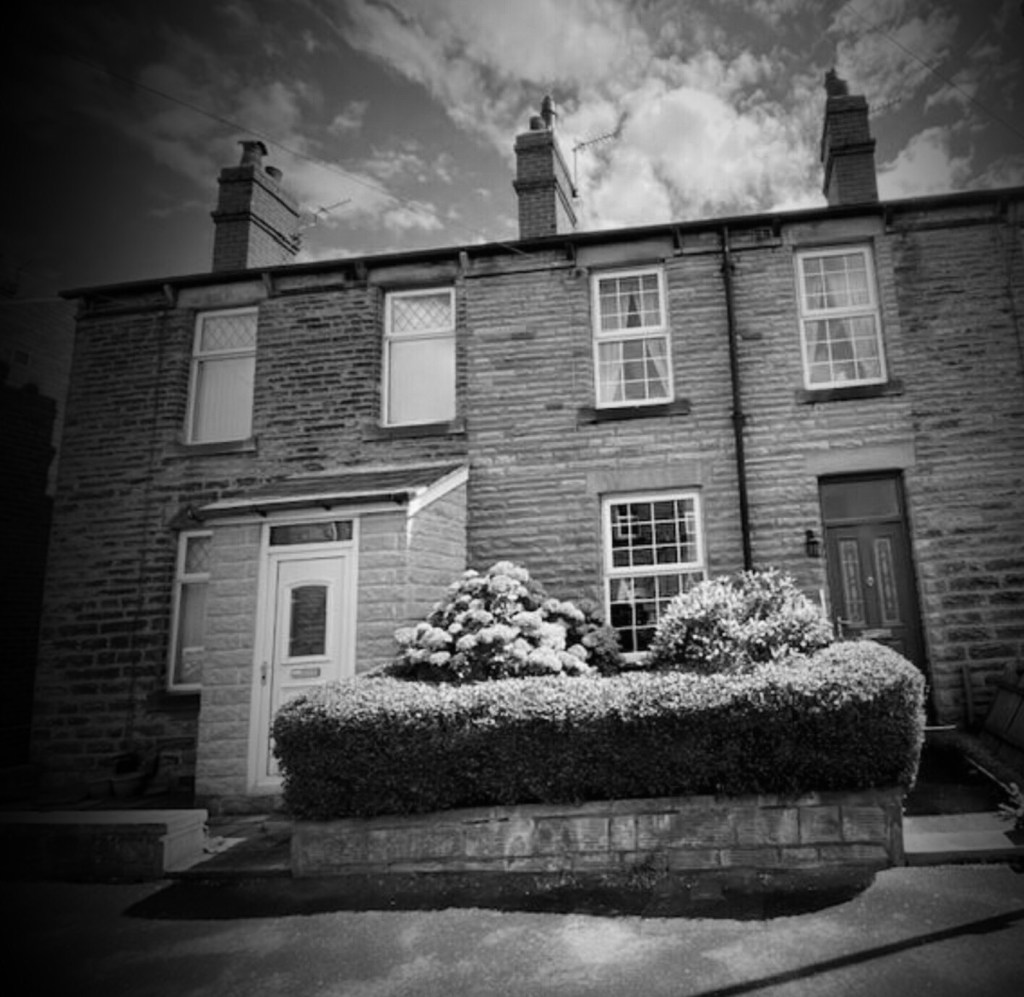
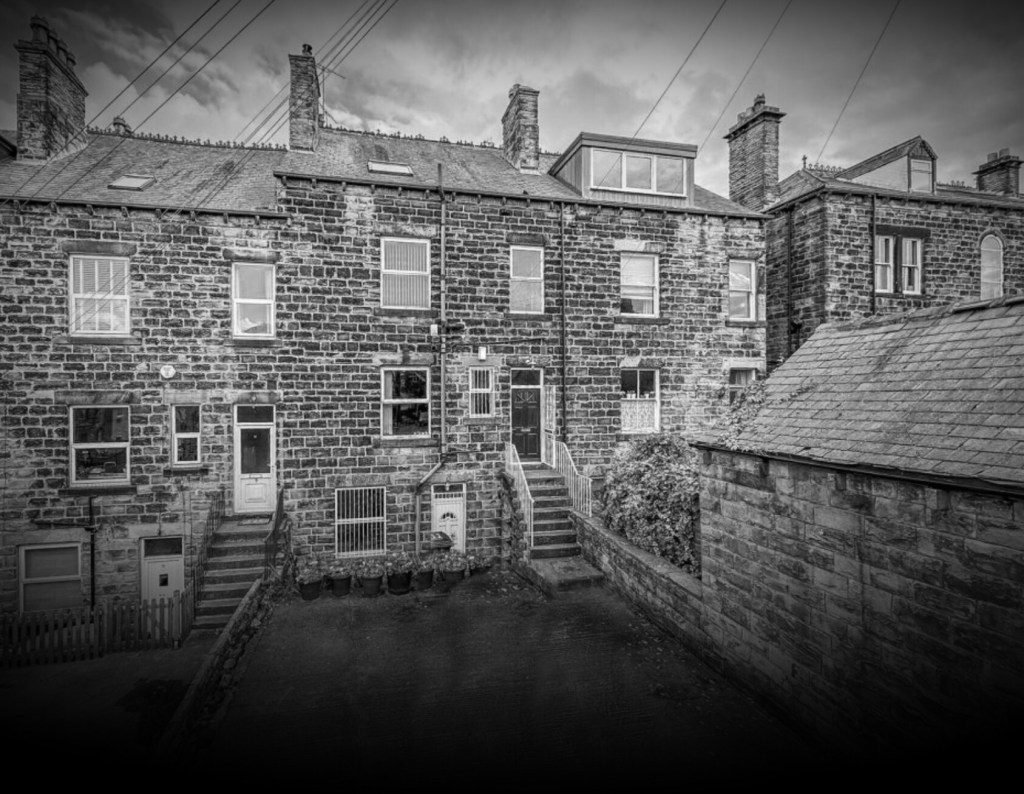
Edwardian, 1930s, Victorian and older – a whole range of house ages and styles can reveal fascinating backstories
Don’t just take my word for it. Here’s the feedback from two of my recent house history clients.
Jane has gone above and beyond in producing a written account of the history of my house. It really was like having my own personal “A House Through Time” researcher. I am amazed at what she discovered, both about the history of the house and those who lived in it. CI, UK
We finally moved in and I gifted the [house history] book to my wife. She loves it. She hasn’t read it all but now she knows the names of all the ghosts she can hear. Thanks again.BK, UK
If you want to discuss the various options about engaging me to write the history of your home, please do get in touch via email at: pasttopresentgenealogy@btinternet.com.
This includes if you are undertaking your own house history research but live a distance from the West Riding Registry of Deeds, and would like me to undertake look-ups on your behalf there.
Alternatively, you can access me via my Association of Genealogists and Researchers in Archives (AGRA) profile, which can be found here.
House history is just one of the research services I offer. I also undertake family and local history research, ranging from individual document look-ups and archive visits, to brick wall busting, and multi-generational family trees or full family histories. I can also be engaged as a speaker, with my list of current talks here. Contact details for all these services are as above.
Looking for some last minute Christmas present inspiration? Hate trailing around shops in the wind, wet and cold? Want to get something unique for your loved ones? Something totally bespoke and personal to them?
How about a block of family or house history research?
I regularly undertake gift research commissions. So if you want to buy a Christmas present with a difference – or come to that a birthday, anniversary or house warming gift – do get in touch to discuss your requirements.
I can undertake ‘surprise’ research, with the recipient being presented with the final results in book format; or you can book a block of research time so the recipient can be involved in the process.
Yes, I know it’s only June and the Festive Season might seem a million miles away – though the weather might seem drab enough for winter, with summer so far seemingly deciding to give this year a miss. But if you do want to guarantee some family, local or house history research before Christmas, now’s the time to start making those booking enquiries. Because you will find that popular, expert researchers are in great demand, and they do get booked up months in advance.
Whilst I do my best to slot in requests for last-minute pieces of research, I am already taking bookings for work to start in late September. In fact, I’ve already a piece of work scheduled for December completion.
So if you’re wanting to commission a piece of research for a Christmas gift or, come to that, for any upcoming special occasion or ancestral visit, please get in touch as soon as possible to discuss your requirements.
To re-write a well-known nursery rhyme:
Christmas is coming, the goose is getting fat, If you want to research 3x great grandad John, now’s the time for that. Brick wall, house walls, trees – root and branches too, Get in touch, book it in, to find out what makes you.
Since then I have pinpointed many of the affected buildings, houses and addresses, including a general summary of the damage inflicted on each property.
Two of the locations covered in this post
This is the second post with these details so you can identify if your home was part of this event in our local history; or if a home associated with your family history was affected. It covers street names from C to F.
One note of caution, although many house numbers remain unchanged from that period, some may have undergone re-numbering in the intervening years (e.g. potentially Deighton Lane, looking at the current numbering/house names and cross-matching to the house names/numbers on the air raid damage list, and also looking at OS maps for the period).1 The numbers here are as they were during the war, not as they are today. Other houses have long gone.
Three of the houses in the damaged properties address list
Also, though hundreds of addresses are listed, I am aware from my earlier research that this is not the complete inventory – there are areas of Batley hit that night which are missing from the list.
Some final points to be aware of. I have detailed the information exactly as it was written, so the damage inventory columns are not consistent. For example ceiling damage sometimes comes under ‘contents’, at others under the ‘generally’ heading.
It is also clear this is not the complete story of damage inflicted. I am aware some buildings did suffer substantially more than is listed for them in the space-limited columns – for example gable ends needing rebuilding as a result of the air raid.
And, to my mind, the list of contents ruined does appear suspiciously light. For example it is hard to believe that crockery and furniture in the majority of houses was undamaged given the structural damage listed. Again has space played a part? There are exceptions – in one detailed entry for an address in another post, although the contents were not listed in the space provided, they were an add-on insertion at the top of the page. It is hard to believe that contents in the majority of entries for other houses suffered no similar damage. I believe it is likely that individual household forms were completed initially and the information then collated and condensed on one form covering all addresses, meaning layers of detail being missed in this overall summary.
Anyway, good luck with locating your home. Don’t forget to scroll across the table to get the full details – there are columns detailing the property description, address, and an indication of the extent of damage (i.e. roof, walls, floors, contents and general damage). And do check my website as I continue to add more posts listing affected houses.
Description
Address
Roof
Walls
Floors
Contents
Generally
Caledonia Road, J E Etherington Ltd
Not known2
House
Oak Cottage, Caledonia Road
Many slates
Public Baths
Cambridge Street
Many slates
House
22 Carlinghow Lane
Window
House
8 Cedar Grove
Window
House
35 Chaster Street
Window
House
41 Chaster Street
Window
House
45 Chaster Street
Window
House
98 Chaster Street
Windows
House
100 Chaster Street
Windows
House
102 Chaster Street
Windows
House
104 Chaster Street
Windows
House
106 Chaster Street
Window
House
108 Chaster Street
Windows
House
110 Chaster Street
Windows
House
14 Clarence Street
Many slates
Ceiling
House
27 Cobden Street
Window
House
2 Colbeck Avenue
3 slates off
Windows
House
3 Colbeck Avenue
3 slates off
Window
House
4 Colbeck Avenue
12 slates off
Plaster
Wiring
Window
House
5 Colbeck Avenue
2 slates off
Window
House
6 Colbeck Avenue
3 slates off
Ceilings & Windows
House
7 Colbeck Avenue
Windows
House
9 Colbeck Avenue
1 Ceiling & Windows
House
11 Colbeck Avenue
Slight
Chimney pot & Windows
House
12 Colbeck Avenue
Windows
House
1 Colbeck Terrace
Slight
1 Ceiling & Windows
House
2 Colbeck Terrace
Windows
House
3 Colbeck Terrace
Slight
House
4 Colbeck Terrace
Light Bowl
Windows
House
5 Colbeck Terrace
Slight
Windows
House
6 Colbeck Terrace
Windows
House
7 Colbeck Terrace
Slight
Windows
House
8 Colbeck Terrace
Windows
House
9 Colbeck Terrace
Slight
Door Lock
Windows
House
10 Colbeck Terrace
Windows
House
11 Colbeck Terrace
Slight
House
12 Colbeck Terrace
Windows
Shop
25 Commercial Street
Window
Electricity Showrooms
Commercial Street
60?
House
94 Commonside
Window
House
33 Crescent Street
Window
House
8 Cross Bank Road
Window
House
62 Cross Bank Road
Window
House
45 Cross Park Street
Many slates
Burnt
Ceiling
Window
House
18 Dark Lane
Window
House
20 Dark Lane
Window
House
22 Dark Lane
Window
House
25 Dark Lane
Windows
House
45 Dark Lane
Ceilings
Windows
House
55 Dark Lane
Windows
House
2 Deighton Lane
Slight
Windows
House
4 Deighton Lane
Ceiling
House
6 Deighton Lane
Ceiling & Window
House
8 Deighton Lane
Ceiling & Windows
House
10 Deighton Lane
Door Lock
Windows
House
12 Deighton Lane
Window
House
14 Deighton Lane
Window
House
16 Deighton House, Deighton Lane
Slight
Ceiling
House
18 Deighton Lane
Window
House
25 Deighton Lane
Many slates
1 Ceiling
House
28 Deighton Lane
Slight
House & Greenhouse Windows
House
29 Deighton Lane
Many Slates
Windows
House
31 Deighton Lane
Many Slates
Windows
House
36 Deighton Lane
Many Slates
Window
House
38 Deighton Lane
Many Slates
Window
House
42 Deighton Lane
Many Slates
Ceiling
House
44 Deighton Lane
Many Slates
Ceilings & Windows
House
45 Deighton Lane
Many Slates
Windows
House
46 Deighton Lane
Windows & Garage
House
47 Deighton Lane
Many Tiles
Windows
House
51 Holmleigh, Deighton Lane
Window & Garage Roof
House
49 Deighton Lane
Many Tiles
House
53 Deighton Lane
Window
House
55 Deighton Lane
Many Slates
Window, Greenhouse & Garage
House
57 Deighton Lane
Many Slates
House & Greenhouse Windows
House
56 Fairholme, Deighton Lane
Many Slates
Windows
House
58 Deighton Lane
Many Slates
Windows
House
59 Deighton Lane
Curtains
Windows & Window Frame
House
60 Deighton Lane
Many Slates
Windows & Eaves Gutter
House
61 Deighton Lane
Window
House
63 Deighton Lane
Window
House
2 Denison Street
Much Damage – Tenant Away – Entry Impossible
Windows
House
4 Denison Street
Plaster
Ceilings
Lock: Windows & Frame
House
6 Denison Street
Plaster
Cellar Wall: Windows
House
8 Denison Street
Many Slates
Plaster
Ceiling
Windows & Frames: Locks
House
10 Denison Street
Many Slates
Plaster
Ceilings
Windows & Frames: Lock
House
12 Denison Street
Windows
House
14 Denison Street
Many Slates
Ceiling
Windows: Lock
House
16 Denison Street
Lock: Windows
House
18 Denison Street
Many Slates
Plaster
Ceilings
Windows & Frames: Lock
House
20 Denison Street
Plaster
Ceiling
Windows & Frames: Lock
House
22 Denison Street
Plaster
Ceilings
Windows & Frames
House
24 Denison Street
Many Slates
Plaster
Windows & Frames: Lock
House
29 Denison Street
Slight
Plaster
Ceilings
Doors, Windows & Frames
House
31 Denison Street
Slight
Plaster
Ceilings
Doors, Windows & Frames
House
33 Denison Street
Slight
Plaster
Ceilings
Doors, Windows & Frames
House
35 Denison Street
Slates: Purlins
Plaster
Ceilings
Doors, Windows & Frames
House
37 Denison Street
Slight
Plaster
Ceilings
Doors, Windows & Frames
House
39 Denison Street
Slight
Plaster
Ceilings
Doors, Windows & Frames
House
40 Denison Street
Flashing
Ceilings: Curtains
Windows & Frames: Doors
House
41 Denison Street
Plaster
Ceilings
Windows
House
42 Denison Street
Flashing
Ceilings
Locks: Fireplace: Windows
House
43 Denison Street
Ceilings
Windows
House
44 Denison Street
Many Slates etc
Plaster
Ceilings
Doors: Windows
House
45 Denison Street
Ceilings
Windows & Frames: Lock
House
46 Denison Street
Many Slates etc
Ceiling
Plinth: Windows & Frame. Doors
House
47 Denison Street
Ceilings
Windows
House
48 Denison Street
Ceiling
Fireplace: Locks: Windows
House
49 Denison Street
Many Slates
Plaster
Ceilings
Lock: Windows
House
50 Denison Street
Ceilings
Windows
House
51 Denison Street
Ceilings
Windows & Frame
House
52 Denison Street
Ceiling
Lock & Windows
House
53 Denison Street
Ceilings
Passage Wall: Windows
House
54 Denison Street
Many Slates
Ceiling
Locks & Windows
House
55 Denison Street
Many Slates
Ceilings
Windows
House
56 Denison Street
Ceilings
Locks & Windows
House
57 Denison Street
Ceilings
Door: Windows & Frames
House
58 Denison Street
Windows
House
59 Denison Street
Plaster
Passage Wall: Windows
House
60 Denison Street
Window
House
61 Denison Street
Ceiling
Lock: Windows
House
62 Denison Street
Many Slates
Locks & Window
House
63 Denison Street
Ceilings
Windows
House
64 Denison Street
Door & Windows
House
65 Denison Street
Many Slates
Plaster
Windows
House
66 Denison Street
Ceiling
Windows
House
67 Denison Street
Plaster
Ceiling
Windows
House
69 Denison Street
Plaster
Ceilings
Locks & Windows
House
71 Denison Street
Windows
House
73 Denison Street
Many Slates
Ceiling
Windows
House
75 Denison Street
Many Slates
Ceiling
Window
House
77 Denison Street
Many Slates
Window
House
79 Denison Street
Window
House & Shop
81 Denison Street
Shop & House Windows
31 Field Lane
Window
Garage (Paint Shop)
Field Lane
Slates
Council School
Field Lane
Window
Data extracted from West Yorkshire Archive Services Ref KMT1/Box42/TB227 – This is only a portion of the information contained. I have not included owners, occupiers, rateable value etc.
For Part 1 – A to B see here. For Part 3 – G to J see here. For Part 4 – K to N see here. For Part 5 – O to P see here. For Part 6 – Q to T see here. For Part 7 – U to Z see here.
Postscript: Finally a big thank you for the donations already received to keep this website going.
The website has always been free to use, but it does cost me money to operate. In the current difficult economic climate I am considering if I can continue to afford to keep running it as a free resource, especially as I have to balance the research time against work commitments.
If you have enjoyed reading the various pieces, and would like to make a donation towards keeping the website up and running in its current open access format, it would be very much appreciated.
Please click here to be taken to the PayPal donation link. By making a donation you will be helping to keep the website online and freely available for all.
Thank you.
Footnotes: 1. In these cases more detailed house history research is required. 2. This building was on a different form where the only column relating to damage was “Indiction of Extent of Damage to Contents”. Other buildings on this form suffered complete destruction. It seems to be a form reserved for those buildings which suffered serious damage. In an earlier post about Batley’s First Air Raid it is noted that a two-storey Rag Warehouse off Bridge Street belonging to J. E. Etherington Ltd had a stock of wool destroyed. Bridge Street backs onto Caledonia Road, so the entry on this form may refer to that building.
Confession time. I have a terrible habit. One that I’m finding impossible to kick. One that regularly annoys my family, and drives them to distraction. I do try to break it. Honest. But every year I lapse back into this irresistible vice.
Wherever I go on holiday it ends up becoming something akin to a field trip. If the location is not linked to family history, I look for other avenues to explore. And this includes spending some time finding out a little about the local history.
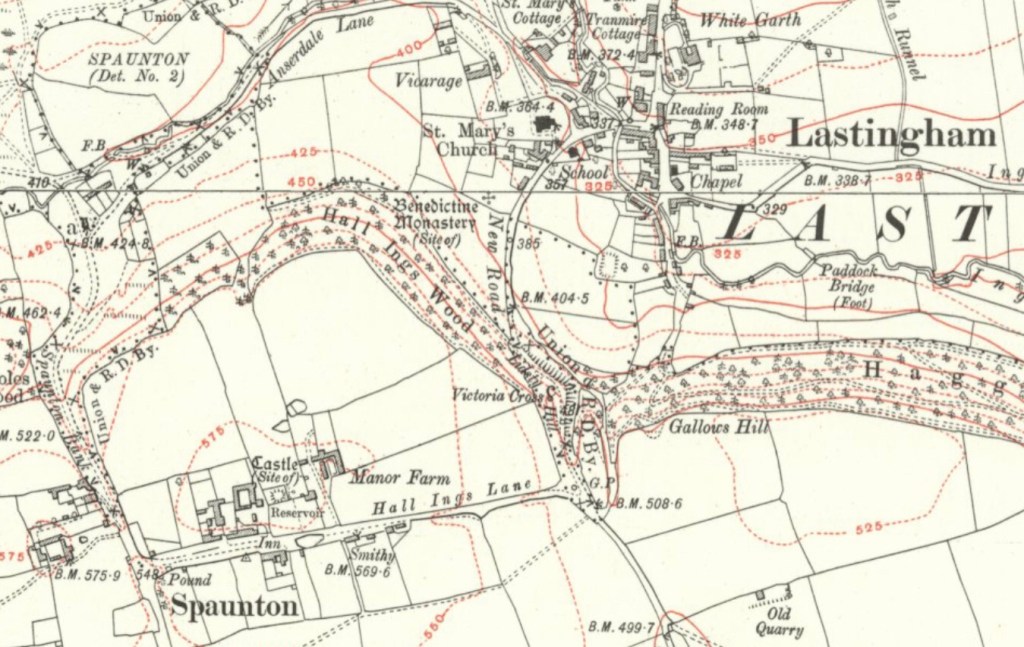
A holiday in October 2021, based in a cottage in the North Yorkshire hamlet of Spaunton, proved no different. Falling within the parish of Lastingham, a parish which is widely scattered across an expanse of moorland, in 2013 Spaunton had a population of 72.1 This is little changed from a century ago and its 1911 census population of 78. It is therefore tiny in terms of population, but big on history. The 1890 Bulmer’s Yorkshire, North Yorkshire, History, Topography & Directory described the Spaunton Township area as:
…comprising 1,540 acres, of which 1,287 are cultivated….Spaunton is the head of an extensive manor formerly held by a family which took its name from the place, and resided here in a castle, the foundations of which are still visible near Manor House….the hamlet consists of about half-a-dozen houses situated on the brow of a hill, half-a-mile from Lastingham.2
Ordnance Survey Map showing Spaunton and Lastingham – Six-inch England and Wales, 1842-1952, Yorkshire Sheets LXXIV NE and SE, Revised: 1910, Published: 1914 – National Library of Scotland, under the Creative Commons Attribution-NonCommercial-ShareAlike 4.0 International (CC-BY-NC-SA) licence
I had no family history connections to the area. But, as usual, I did not let that stop me. I’m so glad I pursued it. Because who could have thought such a quiet, rural backwater, and its environs, could contain so much history? From medieval crypts and a crashed Lancaster Bomber, to a manorial history with a Court Leet still operating today, dealing with petty transgressions. The area is chock full of history. Even my husband got involved in finding out more. Especially as there ended up being a food interest!
And it really does have a long history. Pre-Norman conquest a manor and 6½ carucates at Spaunton were held by Gamel.3 Documented in the Domesday Book, with nine households and an annual value to the Lord of 10 shillings,4 the overlordship in 1086 was held by Bernegar de Toni. He gave six carucates to the abbey which had been removed from Lastingham and refounded outside York.5 More of Lastingham, and the York connection, later.
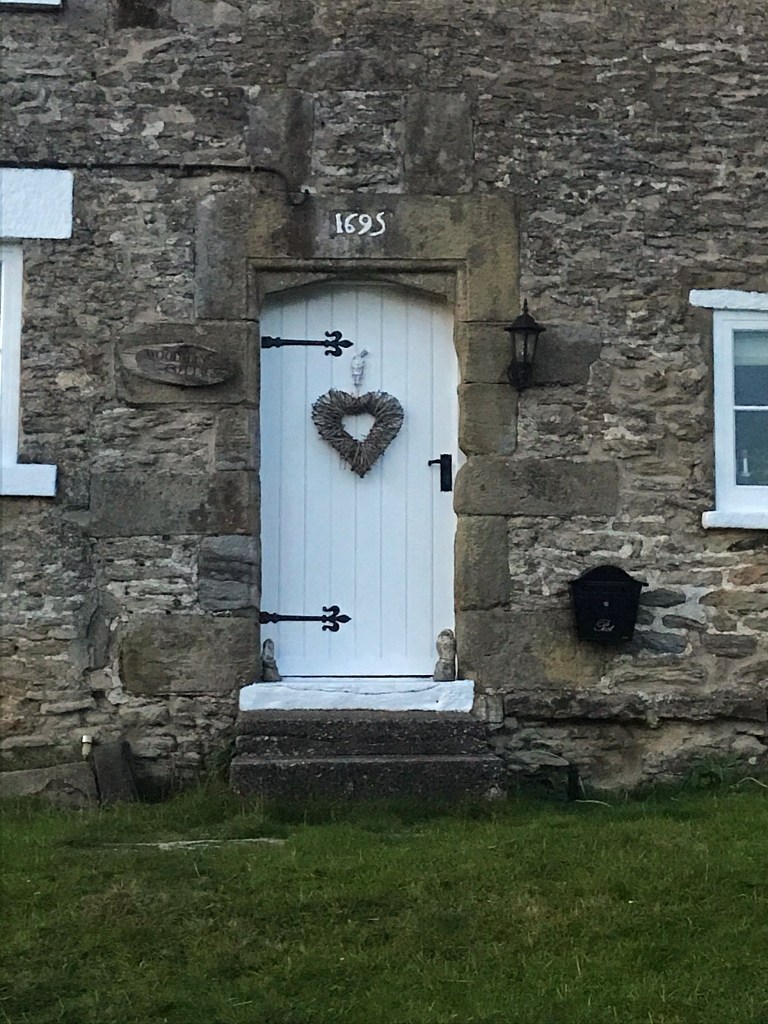
Taking a look around Spaunton, Woodman’s cottage, a Grade II Listed building, originally of Cruck Frame construction, has the year 1695 inscribed on its lintel, and is described as a “fine example of a 17th century yeoman’s house”.6
Woodman’s Cottage, with its date inscription
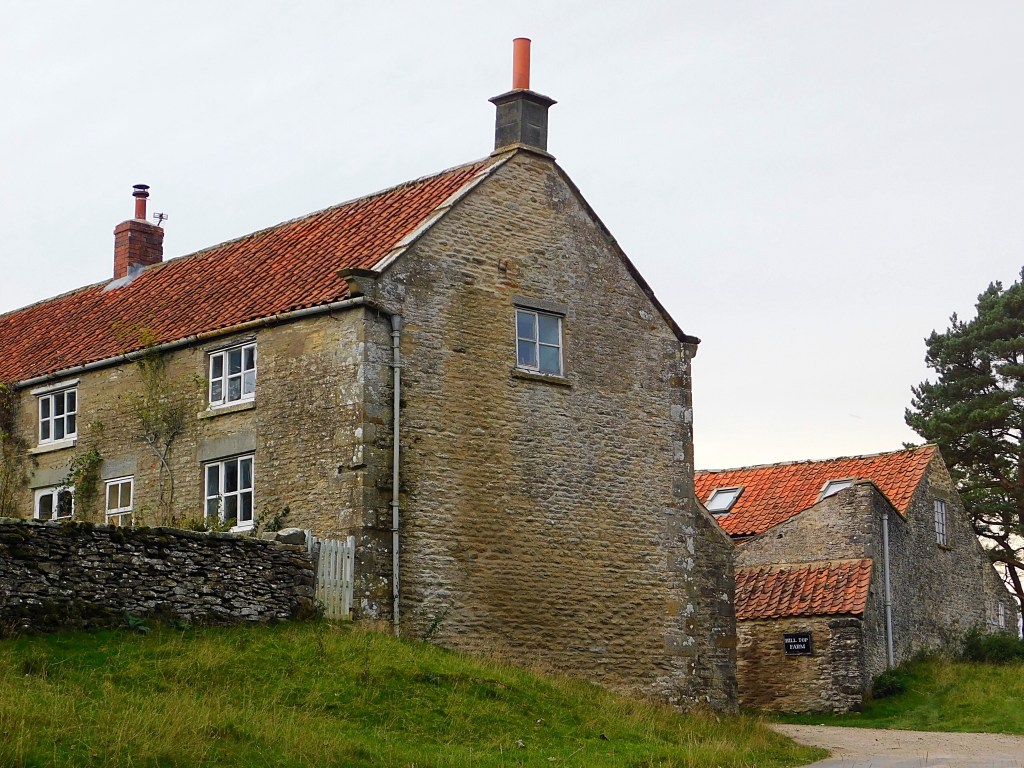
Another Listed building in the hamlet is the Grade II 18th century Hill Top Farmhouse. This was the farm neighbouring the one where our cottage was located, and is better known today as the home of Yorkshire Organic Millers.7
As an avid bread maker I brought home some of their milled bread flour for my next batch of loaves.
The Hill Top Farm product
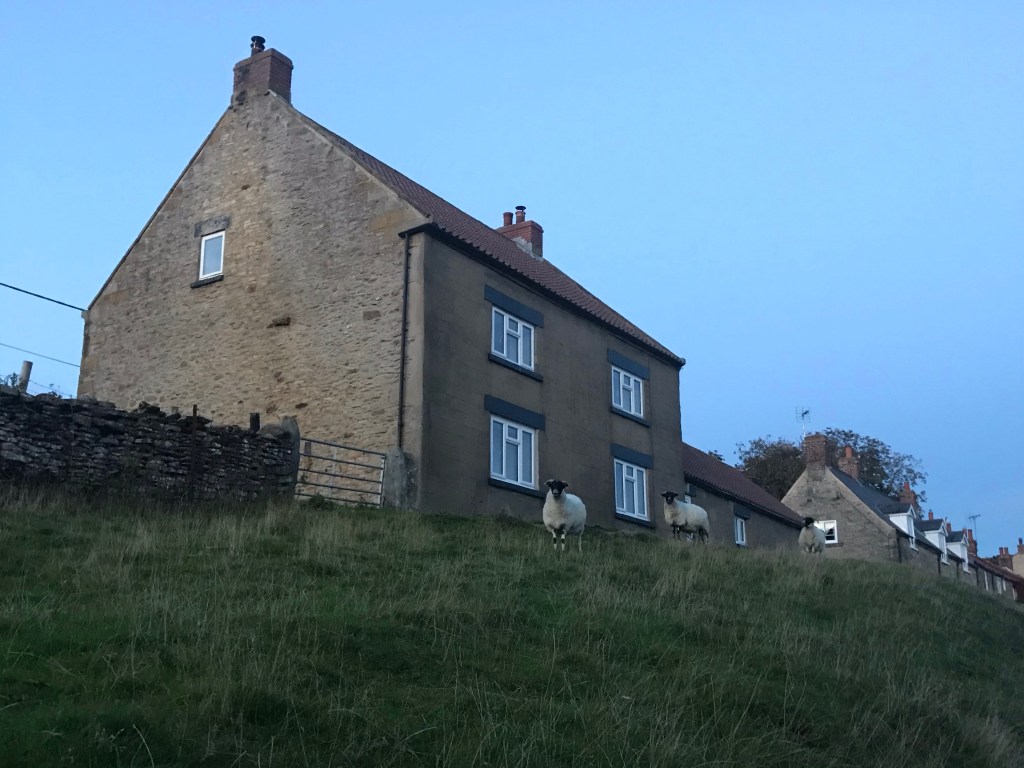
The land in front of many of the properties is common land, with grazing and common rights still in existence.
Sheep grazing on the common land in Spaunton
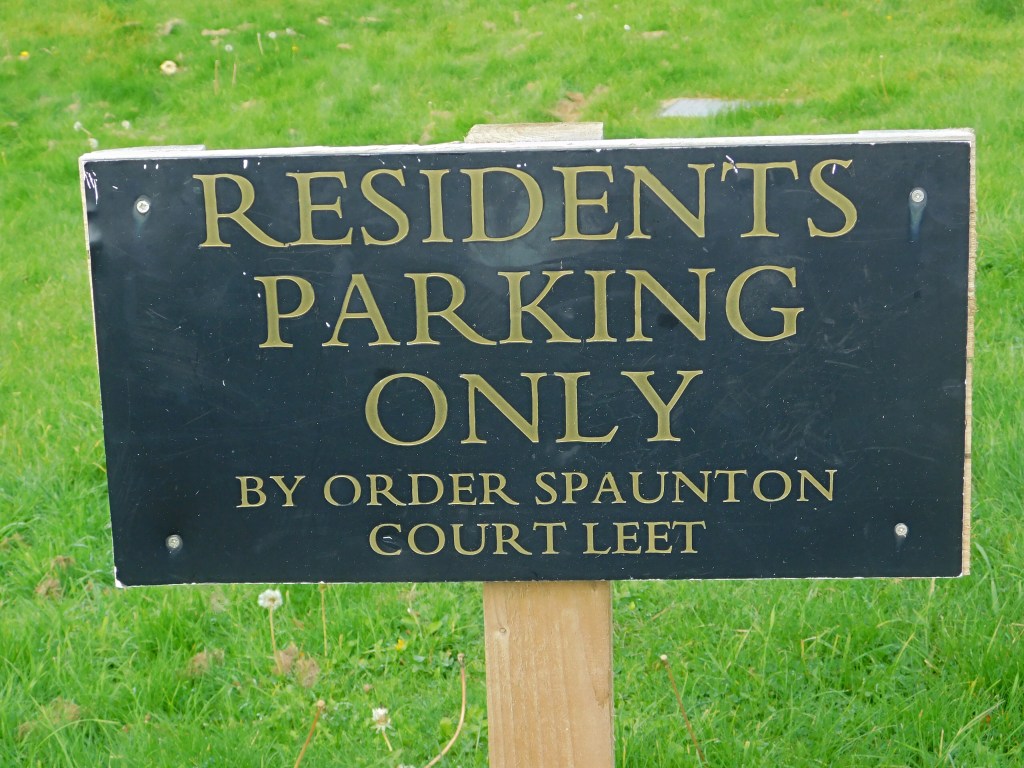
Remnants of the court system of the Manor of Spaunton still operate, with the Court Leet still meeting annually in October to levy fines for those who breech grazing and access rights. The current Lord of the Manor is George Winn Darnley, and the manorial jurisdiction covers land in five parishes.8
A sign in neigbouring Hutton le Hole, showing the wide extent of Spaunton’s Court Leet jurisdiction
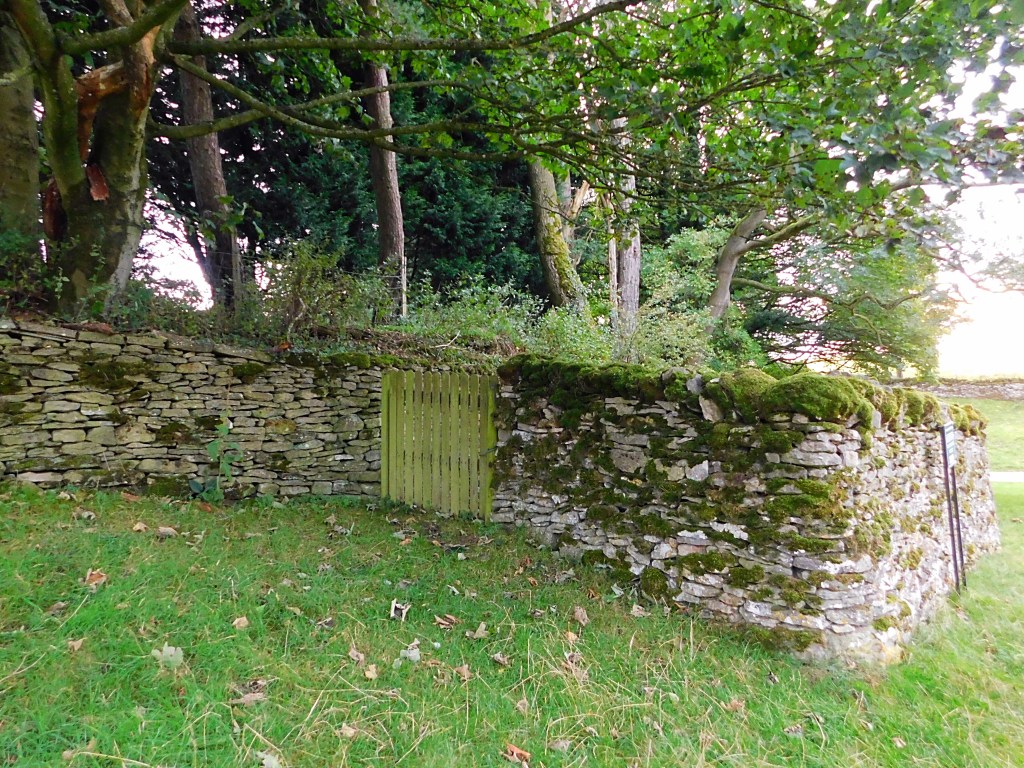
There is a restored Grade II pinfold, dating from probably the 18th century. This enclosure, also known as pound, was where stray animals were confined, with a fine payable by the owners to the pinder, a manor official, to release them.
Spaunton’s restored pinfold
The next piece of history associated with Spaunton came as a real surprise.
The 1939 Register shows farmer William Strickland, his Special Constable nephew George, also a farmer, and his niece Elizabeth Ann (Annie), living at Manor House farm at Spaunton.9
The Stricklands were an old, established farming family, residing at the Manor House. In fact the Strickland’s home was the venue for the annual Court Leet, referred to earlier. Prior to her elderly grandmother’s death in 1915 Annie had assisted her in providing the excellent meal in the Manor House, traditionally served after the court proceedings.10 So it was a family embedded in the community and history of Spaunton and its manor.
On 10 July 1940, less than a year after the Register entry, William Strickland died. This left George and his sister at Manor House farm. They were there, along with an evacuee girl, on the evening of 7 October 1943.
What was the Manor House farm as photographed on my visit in October 2021 – photo by Jane Roberts
That night Lancaster Bomber II D.S.724C took off from Linton-on-Ouse. It’s a RAF base with which I’m acquainted, having visited and flown from it (that’s another story). Part of Squadron 408 of the Royal Canadian Airforce it was bound for a bombing raid on Stuttgart. On board were Flight Sergeant John Douglas Harvey (Pilot), Sergeant Eric James Hurd (Navigator), Flying Officer Stephen William Dempsey (Bomb Aimer), Pilot Officer G.R. Butchart (Wireless Operator/Air Gunner), Sergeant Stanley Enos Campbell (Mid Upper Gunner), Sergeant K.L. Davison (Rear Gunner) and Sergeant H.J Branton (Flight Engineer).
This evening was the first of 408 Squadron’s operational flights since converting to Lancaster Bombers. The entry in 408 Squadron’s Air Operation Book on 7 October 1943 excitedly notes:
At last! the Squadron is back on Operations after almost two months at converting to Lancaster Mark II aircraft. Sixteen aircraft were prepared for Bombing Operations, but two were scrubbed. The remaining fourteen took off on time. Twelve aircraft were successful in reaching their objective…one aircraft made an early return due to the rear guns going u/s…11
That left one aircraft – the one piloted by R141147 Flight Sergeant J.D. Harvey. He had a total of 331 hours flying time at the time of the crash, but only 37 of his hours were on Lancasters. It was also his first operational flight in this aircraft type.12
The details of his aeroplane’s catastrophically short flight, as logged in the Squadron’s Air Operation Book, read as follows:
This aircraft took off from this base at 20.59 hours, but had to be abandoned at 21.08 hours due to controls jamming up. This aircraft crashed at Hutton Le Hall [sic], Yorks approximately 8 miles north of Thirsk. The crew of this aircraft managed a safe parachute descent. One member of the crew Sergeant Campbell, Stanley Enos (Mid Upper Gunner) dislocated his shoulder, fractured a few ribs and suffered pains and shocks, otherwise conditions was fair. The remainder of the crew were uninjured. One civilian Mr. George Strickland, (Farmer) from Manor Farm, Spraunton [sic], Yorkshire was killed by the explosion of a bomb. The inquest to this accident was held at 1600 hours on October 8th, 1943. This aircraft is now categorized E.2 (burnt).13
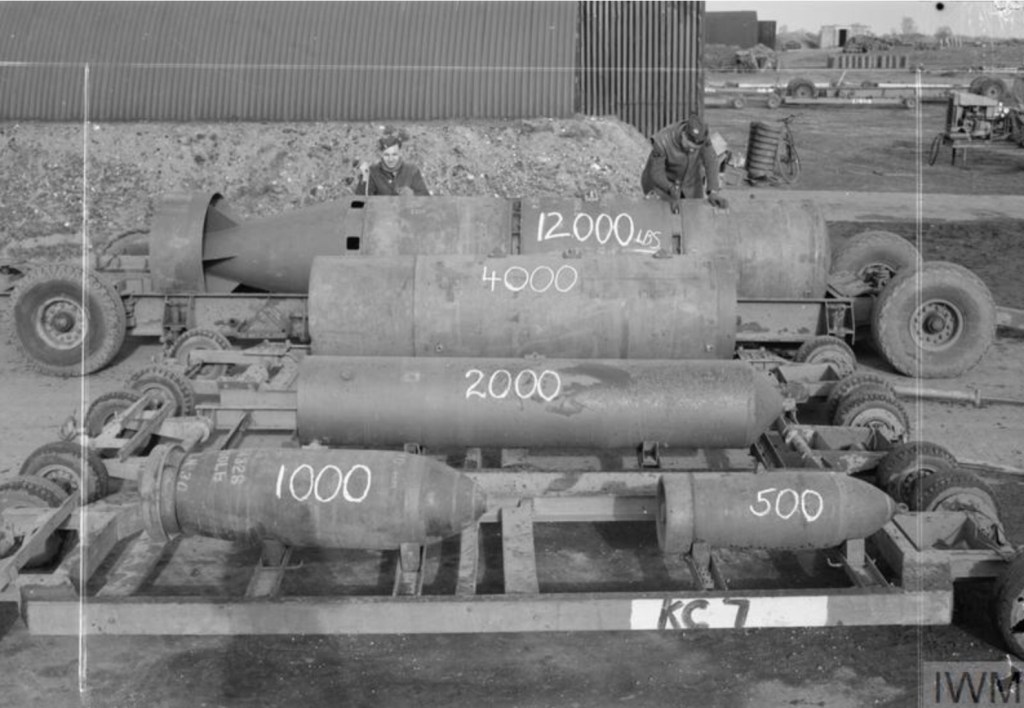
The aircraft, with its full load of bombs, is believed to have come down in the field adjoining the farm. The device which killed George Strickland was a 4,000lb High Capacity bomb,14 the blast from which apparently blew the heavy farmhouse door on top of him.15 It also did considerable damage to the house, and partly demolished the farm buildings.
The Malton Gazette and Malton Messenger of 15 October 1943 reported on the inquest, where a verdict of ‘death by misadventure’ was returned on 53-year-old George.16
As for the cause of the air accident, according to the wonderful Yorkshire Aircraft website, which covers air accidents in the county:
The post-crash investigation found that severe icing on the surfaces of the aircraft was considered to have been a factor in the control of the aircraft having been lost. However the main theory for control being lost almost immediately after take-off was suggested to have been down to the aircraft’s auto-pilot being accidently switched on prior to take-off and this went un-noticed.17
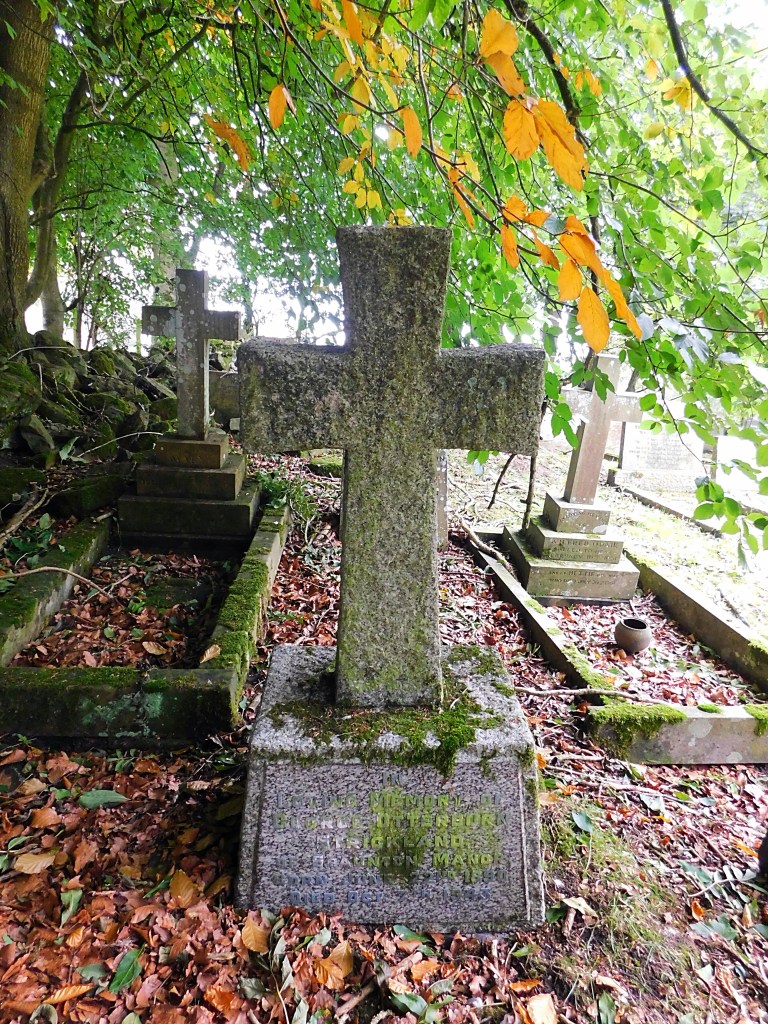
George Otterburn Strickland is buried in the churchyard of Lastingham St Mary’s.
George Otterburn Strickland’s headstone at Lastingham St Mary’s – photo by Jane Roberts
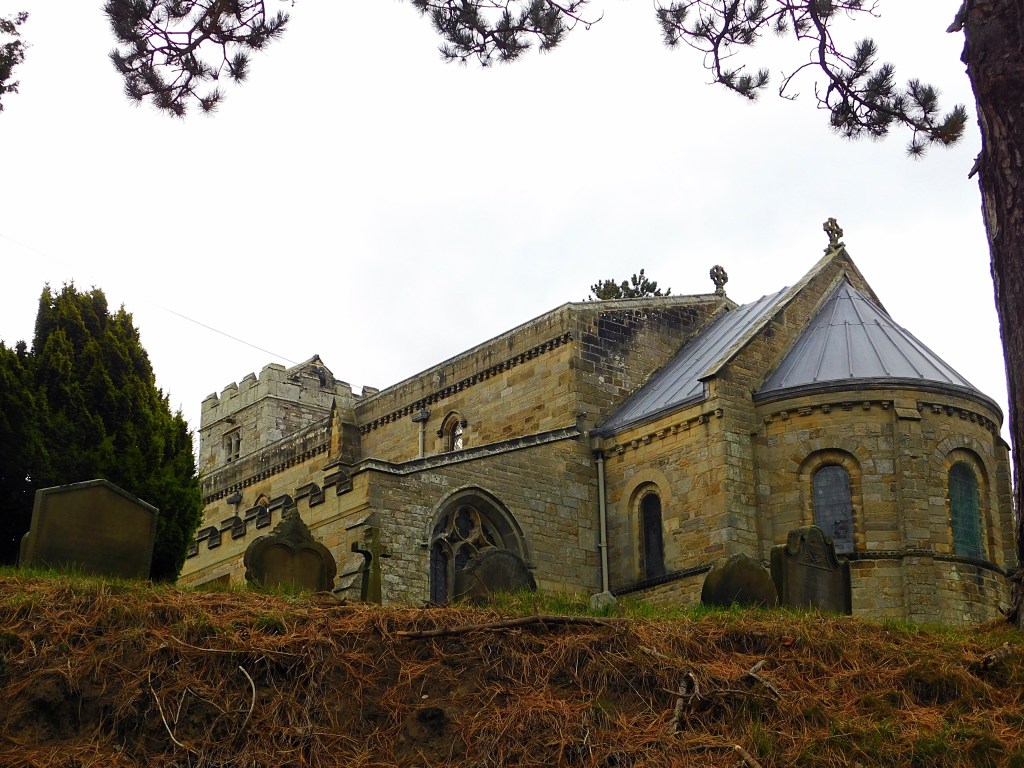
This leads nicely on to the next piece of history, at Lastingham St Mary the Virgin Parish Church, which is the location of a historically significant crypt.
St Mary’s Church, Lastingham – photo by Jane Roberts
As Kelly’s 1913 Directory describes:
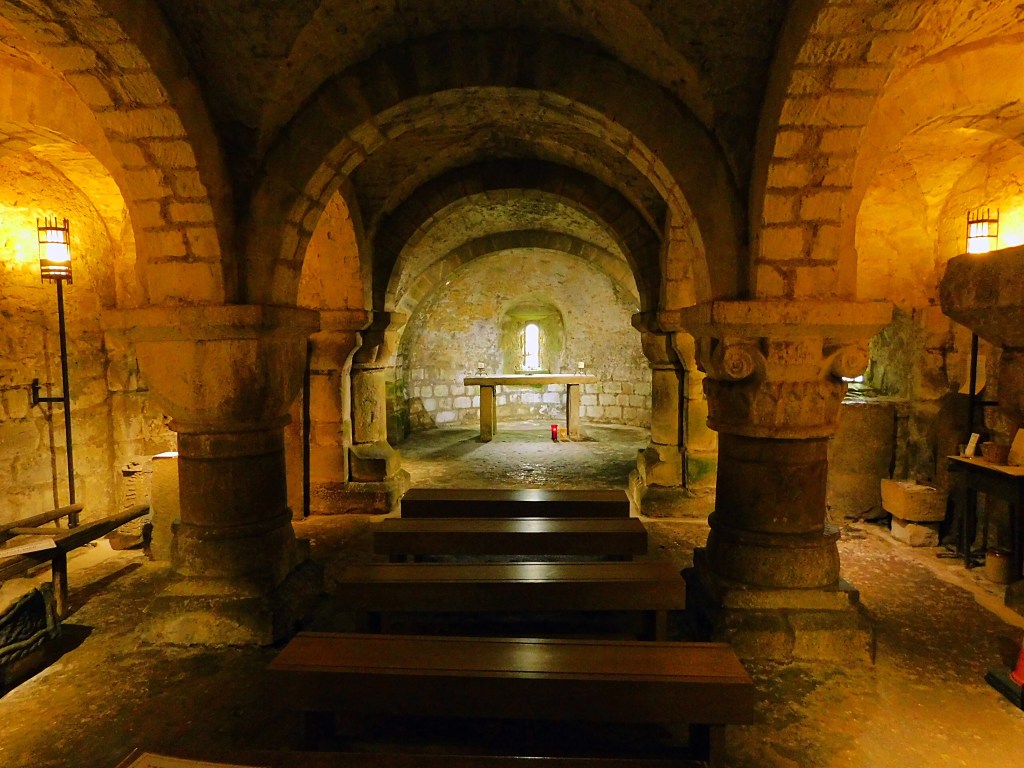
This place was the site of a monastery founded in 648 by St. Cedd, a Saxon bishop, and brother of St. Chad, bishop of Lichfield; St Cedd was eventually buried in the stone church of St. Mary, erected some time after his decease, and the present church, if it does not incorporates portions of the early structure, at least occupies its site, and the very interesting crypt below the church confirms this view….the crypt, which extends under the whole church, with the exception of the western bay, is in fact an underground church, possibly of Early Norman construction, c.1078, and consists of apsidal chancel of two bays, and a nave and aisle of three bays, with a vaulted roof carried on massive piers and capitals enriched with interlaced arches and rude volutes; in the crypt are preserved some stone crosses carved with interlaced work; an altar, possibly Roman, 17 inches high by 14 inches wide, and a pre-Reformation bier; the windows, small and circular-headed, are deeply splayed….18
The Crypt beneath Lastingham St Mary’s Church – photo by Jane Roberts
It is thought the crypt was built possibly on or near the vicinity of the earlier 7th century St Cedd founded structure, with the crypt being part of a huge Benedictine Abbey planned, but never completed, by Abbot Stephen of Whitby. The project was abandoned in 1088 when Stephen and his monks moved to York, and built St Mary’s Abbey.
It really is well worth seeking out. As you descend the stairs to it, you are enveloped in a sense of peace and calm. The early crosses and bier, described in the Kelly’s Directory, are still in situ. I found it a wonderfully contemplative space. And, for the less religious, there’s a highly recommended pub across the road (sadly shut for refurbishment on our visit).
Finally, just over two miles down the road from Spaunton is the village of Hutton-le-Hole, with land which forms part of the Manor of Spaunton. This is yet another location within the Ancient Parish of Lastingham. The village is home to the impressive Ryedale Folk Museum.
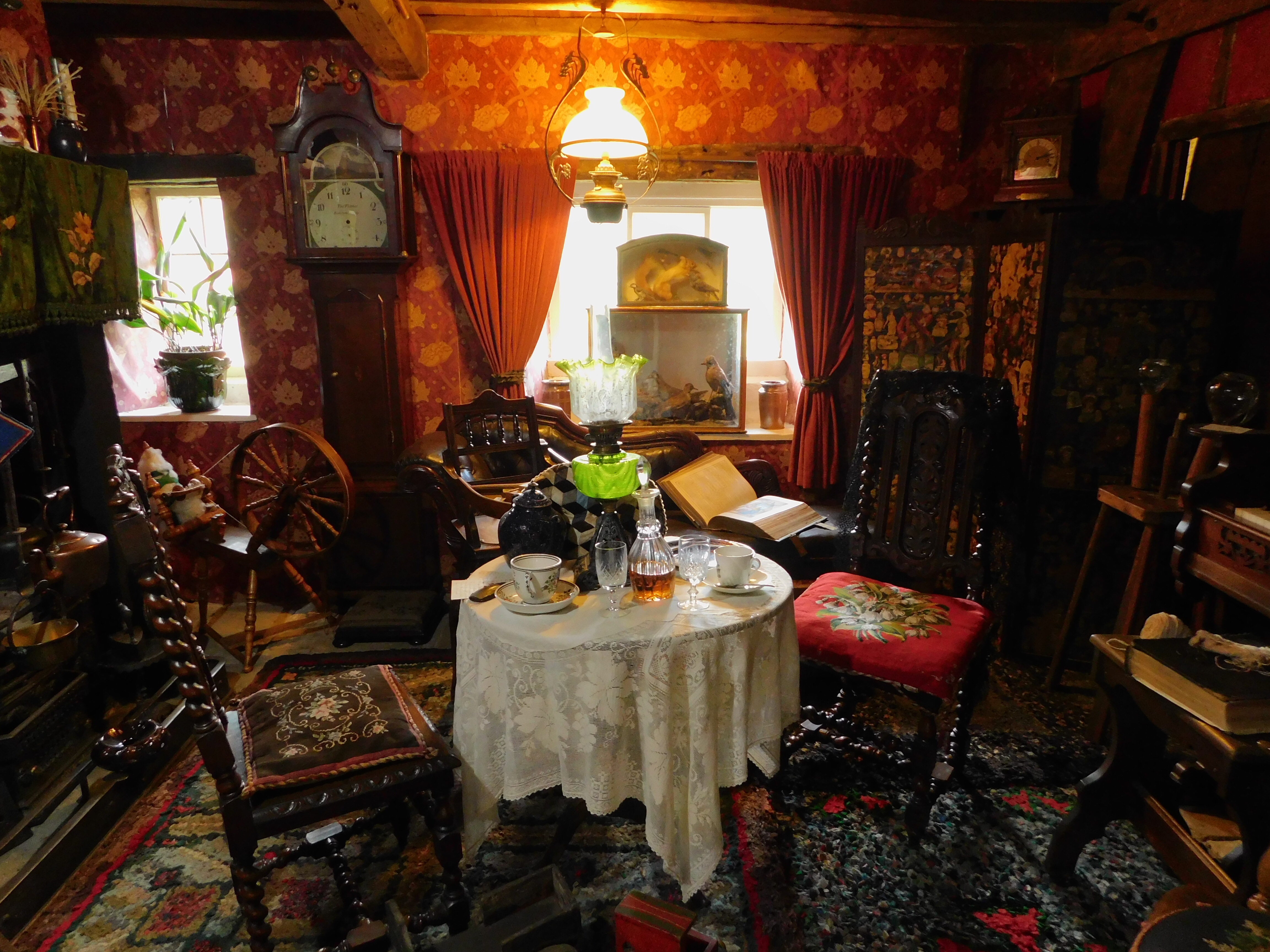
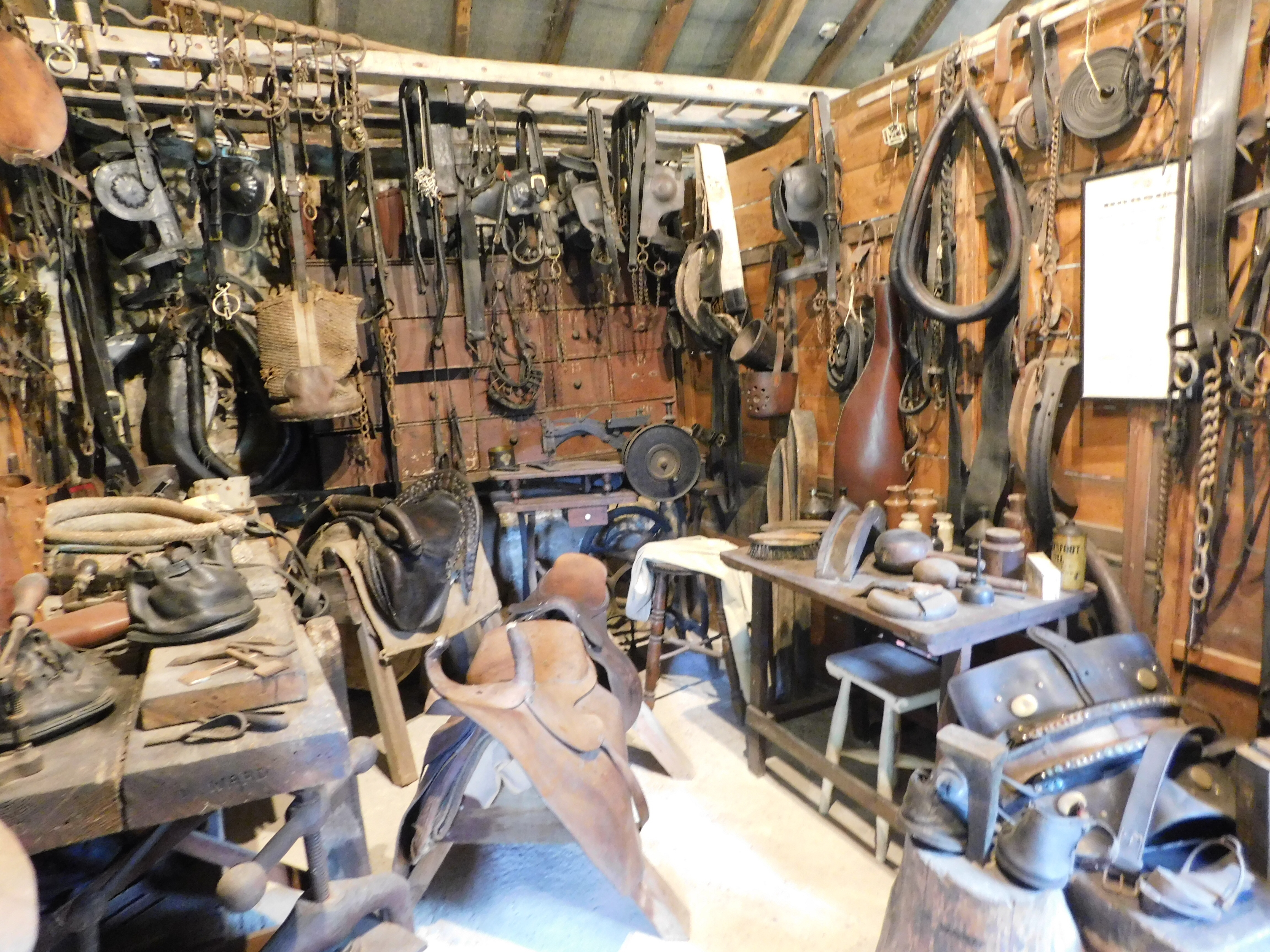
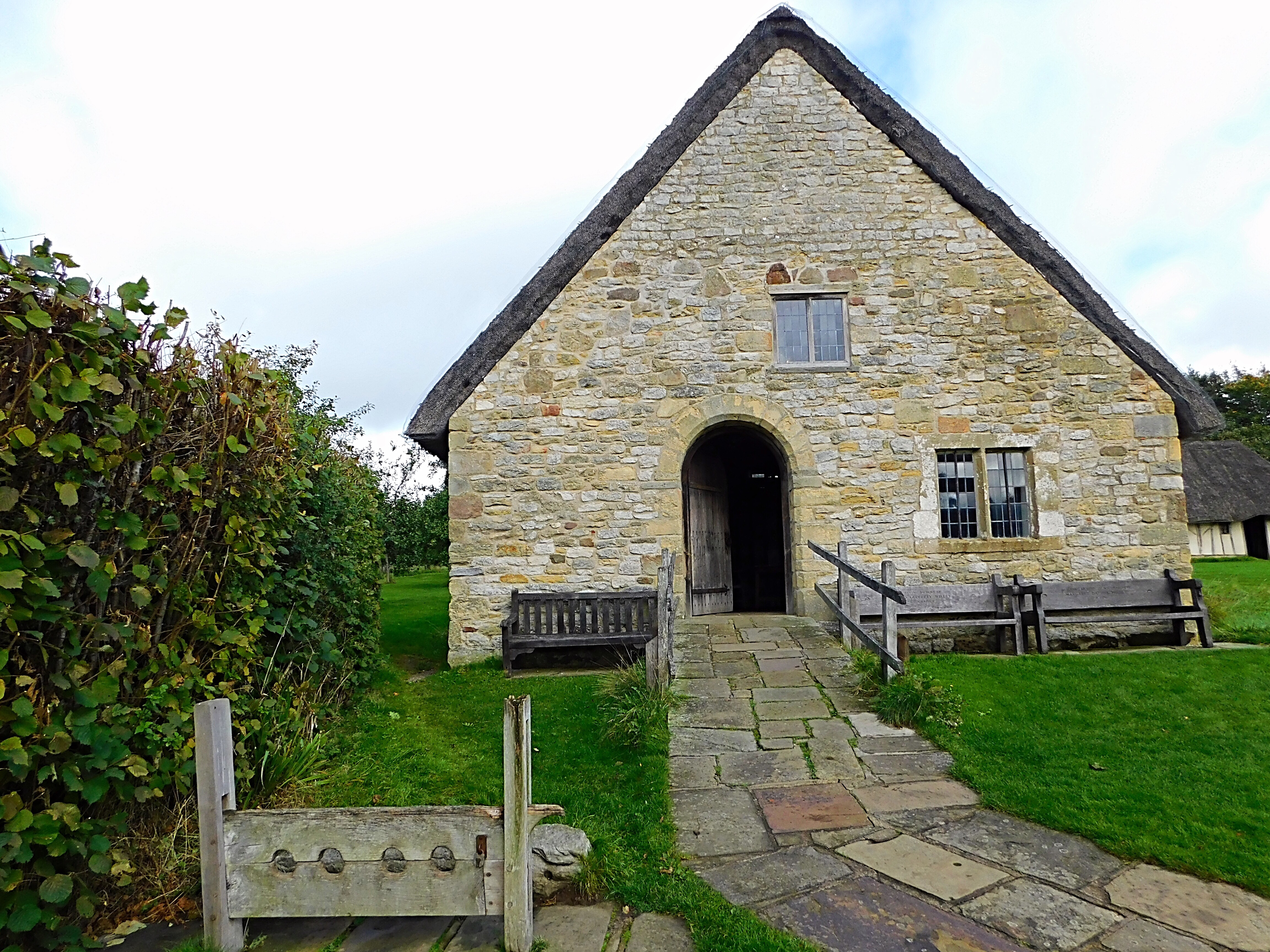
An open-air site set amongst 6½ acres, it has more than 20 heritage buildings. From the thatched Manor House from Harome, to an Edwardian daylight photographic studio, a Medieval crofter’s cottage, the almost 500-years-old thatched longhouse from Stang End, Danby, furnished in the style of the early 18th century, and a Victorian thatched cottage, washhouse and dairy. There are also various workshops including that of the saddler, tinsmith, blacksmith, cobbler and carpenter. Then there’s the vintage chemist and village store, plus the undertakers. And, going back 4,000 years, there is an interpretation of an Iron Age dwelling. Think a North York Moors mini version of Beamish, with buildings from across the National Park dismantled and reassembled on the site.
A selection of buildings and interiors from Ryedale Folk Museum, including a Victorian parlour, inside the saddlers, a Victorian schoolroom, the interior of the the Stang End Longhouse, and Harome Manor House
You can learn about the farming year, and view the range of historic farming implements and machinery. There is also a variety of livestock – including the greedy Tamworth pigs.
This is only a small fraction of what is on site. It is a great place for all the family to spend a good couple of hours. If you’re into house history or family history, and wanting to find out more about your ancestors’ living conditions or village occupations, I’d say the museum is a must.
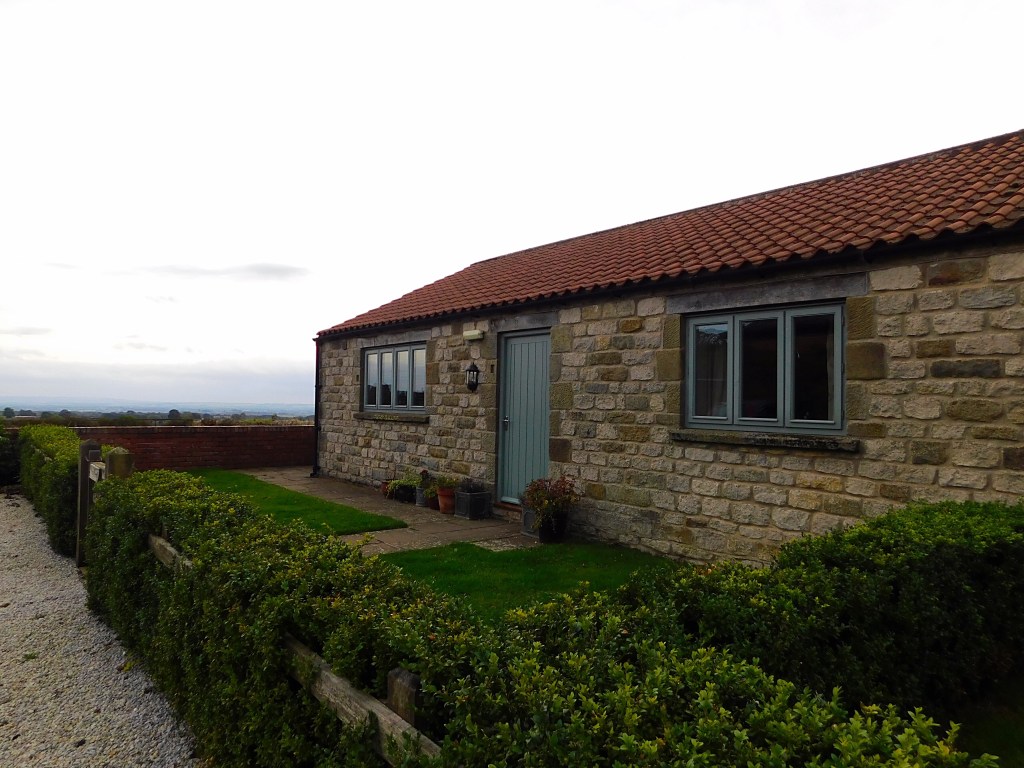
The Wests, the Spaunton cottage which was our home for a week
I stayed at The Wests, one of the cottages on Grange Farm. Whilst there, and finding out a little of the history of Spaunton, I must admit I did think it would make a fabulous one-place study. For a moment I felt really tempted. Really, really tempted. I even got as far as looking at the Manorial Documents Register…then reality kicked in. I’ve enough on already. But if someone else has any free time, and the inclination to embark on a fascinating piece of research, they wouldn’t go far wrong with Spaunton! And yes, there was a bread maker and bread mix in the cottage to bake a loaf!
Footnotes: 1. Appleton le Moors, Lastingham and Spaunton Parish Report, 2013: https://democracy.ryedale.gov.uk/documents/s17204/AppletonleMoorsLastinghamandSpauntonParishPlan.pdf. Accessed October 27, 2021; 2. History, Topography, and Directory of North Yorkshire: Comprising Its Ancient and Modern History ; a General View of Its Physical Features ; Its Agricultural, Mining & Manufacturing Industries ; Family History and Genealogical Descent ; Myths, Legends, Biographical Sketches, &c., &c. ; with a Map Prepared Expressly for the Work. Preston: T. Bulmer, 1890. 3. A carucate was an area of land used as a basis for tax assessment in the Domesday Book. It equated to the amount of land which could be ploughed in a year by one plough with an eight-ox team; 4. Powell-Smith, Anna. “Home: Domesday Book.” Home | Domesday Book. Accessed October 27, 2021. https://opendomesday.org/. 5. “Parishes: Lastingham.” British History Online. Accessed October 27, 2021. https://www.british-history.ac.uk/vch/yorks/north/vol1/pp524-529. 6. Appleton le Moors, Lastingham and Spaunton Parish Report, 2013: https://democracy.ryedale.gov.uk/documents/s17204/AppletonleMoorsLastinghamandSpauntonParishPlan.pdf 7. Yorkshire Organic Millers. Accessed October 27, 2021. https://yorkshireorganicmillers.com/. 8. “Court Leet.” Hutton le Hole, March 27, 2019. https://huttonlehole.ryedaleconnect.org.uk/about/court-leet/. 9. 1939 Register, The National Archives (TNA), Reference: RG101/3279D/007/4 Letter Code: JHIJ – Relationships are not show, but these were established from additional research 10. Whitby Gazette, 24 October 1913 11. Operations Record Books, 408 Squadron RCAF (Royal Canadian Air Force) Records of Events: Y, 1 September to 31 October 1943, TNA Reference AIR 27/1797/17 12. Lancaster DS724 at Spaunton village, Yorkshire Aircraft. Accessed October 27, 2021. http://www.yorkshire-aircraft.co.uk/aircraft/planes/43/ds724.html 13. Operations Record Books, 408 Squadron RCAF (Royal Canadian Air Force) Records of Events: Y, October 1943, TNA Reference AIR 27/1797/18 14. Operations Record Books, 408 Squadron RCAF (Royal Canadian Air Force) Records of Events: Y, 1 September to 31 October 1943, TNA Reference AIR 27/1797/17 15. Lancaster DS724 at Spaunton village, Yorkshire Aircraft. Accessed October 27, 2021. http://www.yorkshire-aircraft.co.uk/aircraft/planes/43/ds724.html 16. The Gazette and Herald Online, 10 October 2012. Accessed October 27, 2021. https://www.gazetteherald.co.uk/news/9977266.from-the-malton-gazette-and-malton-messenger-friday-october-15-1943/ 17. Lancaster DS724 at Spaunton village, Yorkshire Aircraft. Accessed October 27, 2021. http://www.yorkshire-aircraft.co.uk/aircraft/planes/43/ds724.html 18. Kelly’s Directory of the North and East Ridings of Yorkshire, with the Cities of York and Hull, 1913. London, etc: Kelly, 1913.













 Past To Present Genealogy