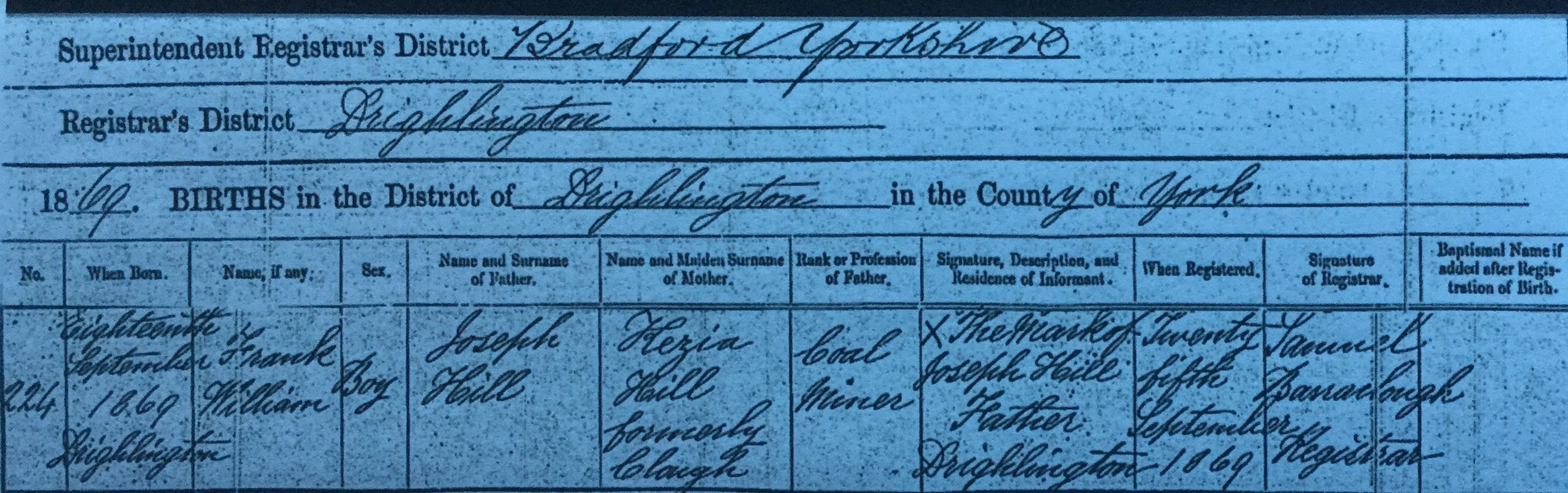
Tag Archives: family history

Child Employment in the Silk Industry 1815-1871 – Part 1

Once you get into your family history, you progress from names and dates to finding about the lives and times of your ancestors. Their employment is a significant part of this discovery process, because it formed a big part of their lives. And although not quite cradle to grave, this work was often from early childhood.

The first time l looked at censuses in any detail was over 30 years ago to produce an analysis of child employment in the silk industry between 1815-1871. Although I do have ancestors in the textile industry, so far I’ve not discovered any in the silk branch. 

It was also the first time I looked at the various parliamentary inquiries into child employment, and discovered what a wealth of information they supplied about working conditions and employment practices. And this in the words of those involved – employers and employees. So a name-rich source to which you may find an ancestor gave evidence. But even if you don’t find your ancestor named, they provide a fantastic insight into their work and conditions.

I’m going to share a summary of this essentially old pre-Internet piece of research (updated with some more recent information) in case it helps anyone else: Either directly for those with silk industry antecedents; or indirectly to show what type of occupational information can be gleaned from primary sources.

It is quite lengthy so I will split it into four posts. The research covers:

  • a general overview of the industry;
  • the nature of the work; and
  • the reasons for, and decline of, child employment in this area.

I will also look at the Factory Acts, and the reasons why initially they only had the partial inclusion of child silk workers.

Background
I chose 1815 as the starting point, as the end of the Napoleonic Wars marked a significant date for the English silk industry, paving the way for free trade and the lifting of protectionism. The years 1815-1820 also marked a period of recession with an influx of returning soldiers seeking employment driving wages down. And, although there was protectionism at this start point, more goods were sneaking in to the country once the Napoleonic Wars ended. 1871 is the finishing point as it coincides with the first census after the passing of the 1870 Education Act.

Silk weaving reached England on a small scale in the mid-fifteenth century. It developed in the mid-sixteenth century when Spanish religious persecutions forced Flemish weavers to seek refuge in the Spitalfields area of London. However it was not until the revocation of the Edict of Nantes, which forced the French Protestant Huguenots to flee the country, that the English silk industry took off in any big way. The refugees included many skilled silk workers from Tours and Lyons, and these too settled in the Spitalfields area.

In this period the industry was domestic in nature. Manufacturers employed weavers as outworkers and supplied them with yarn. These weavers then spun it on their own looms in their own homes or workshops and took the finished product back to the manufacturer who inspected and weighed it, docked money for imperfections, and paid the weaver.

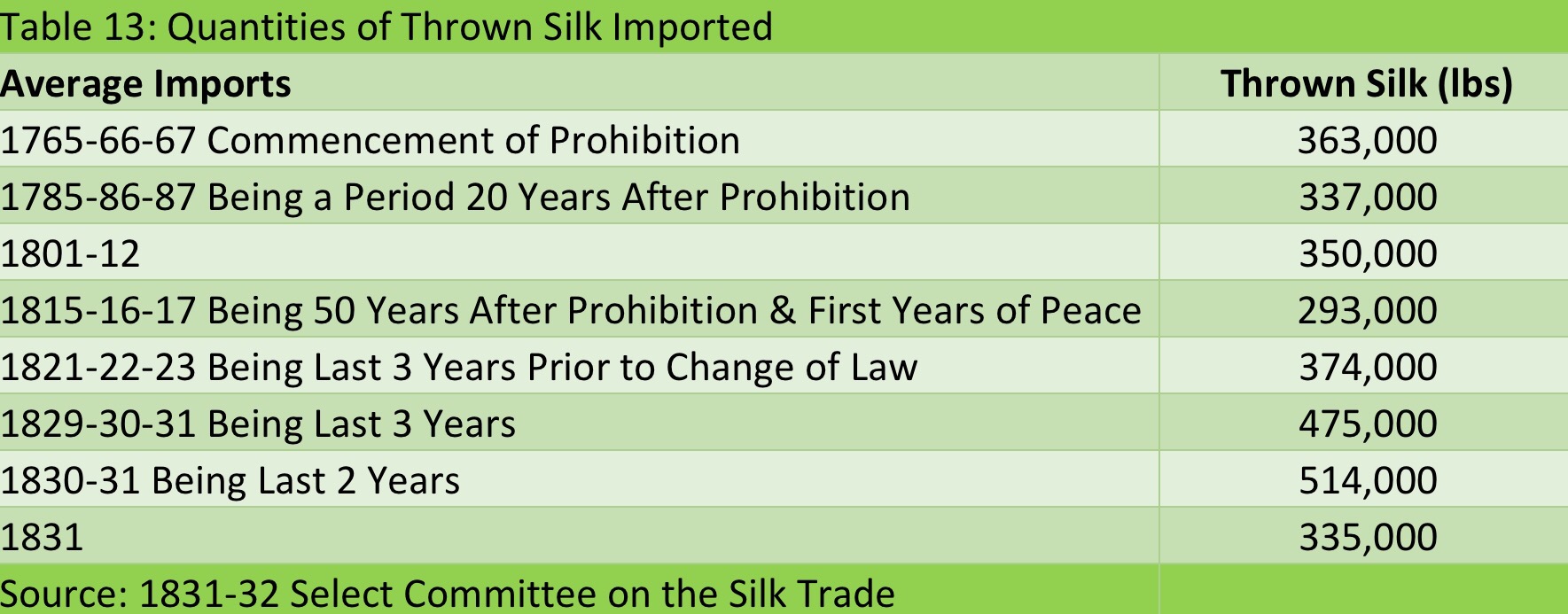
With the patent in 1718 of Thomas Lombe’s silk machine, which converted the filaments of raw silk into yarns and threads, the final main obstacle to English silk production was removed. Previously the silk weaving industry had to import expensive thrown silk. Now the raw silk could be imported and then turned into thrown silk in England. A rapid expansion of the silk throwing industry followed the expiration of Lombe’s patent rights in 1732. This led to the increased development of purpose-built silk throwing and spinning mills.

Yet even after this date the home-based character of silk-weaving branch continued. Factory weaving did take place though, especially from the 1820s onwards when Jacquard mechanisms attached to looms enabled the weaving of ever more complex patterns. Often these were too large for a domestic situation. This, along with the development of power looms, led to an increase in factory based weaving bringing the processes of silk throwing (spinning), warping, dyeing and weaving under one roof.

The protectionist attitude of the attitude of the British government meant between 1765-1826 fully manufactured silk imports were prohibited and duties on other silks were proportionately high. This gave an impetus the English industry. However this protectionism came to an end in 1826 when the importation of foreign silk goods became legal. Despite the levy of a duty of around 30% on Continental goods, it still posed a treat to the English industry, especially given the superior quality of French silks.

The main areas of the silk industry in the 19th century were Lancashire and Cheshire, particularly around Manchester and Macclesfield. Other significant centres included Derby, London and Coventry.

How many children in the silk industry and what did they do?
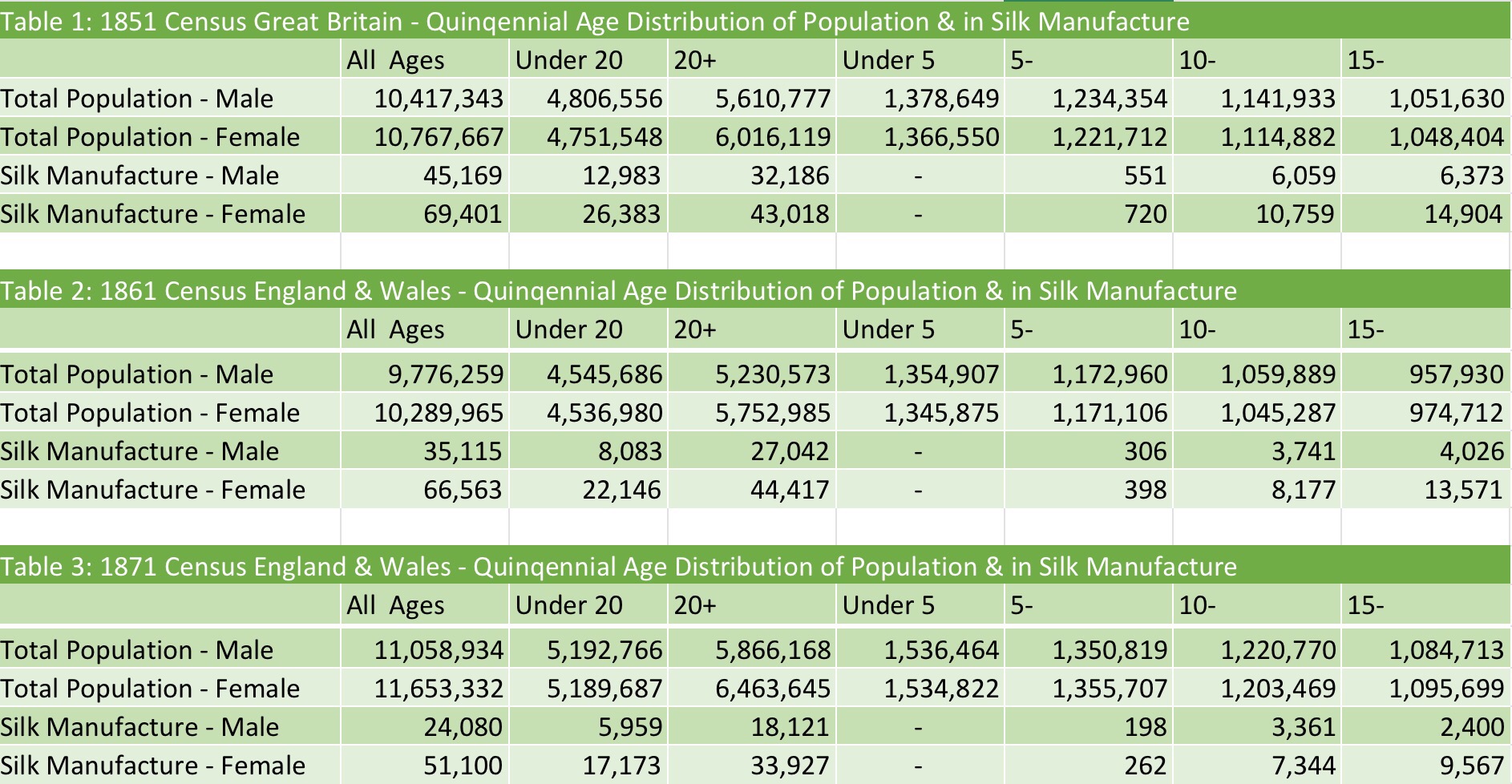
For this I looked at the census figures as well as various Select Committees and Royal Commissions investigating child employment in general. The numbers of children involved in silk manufacturing compared to the overall total population are shown in Tables 1-3. Whilst Table 1 is not directly comparable, being for Great Britain rather than England & Wales, it is illustrative. They show that the silk industry underwent a gradual but noticeable decline in adult as well as child employment. Numbers were skewed towards female operatives. Also in 1851 and 1861, when looking at overall data, the peak age for those employed in silk manufacture across both sexes was the 15- Quinquennial band.

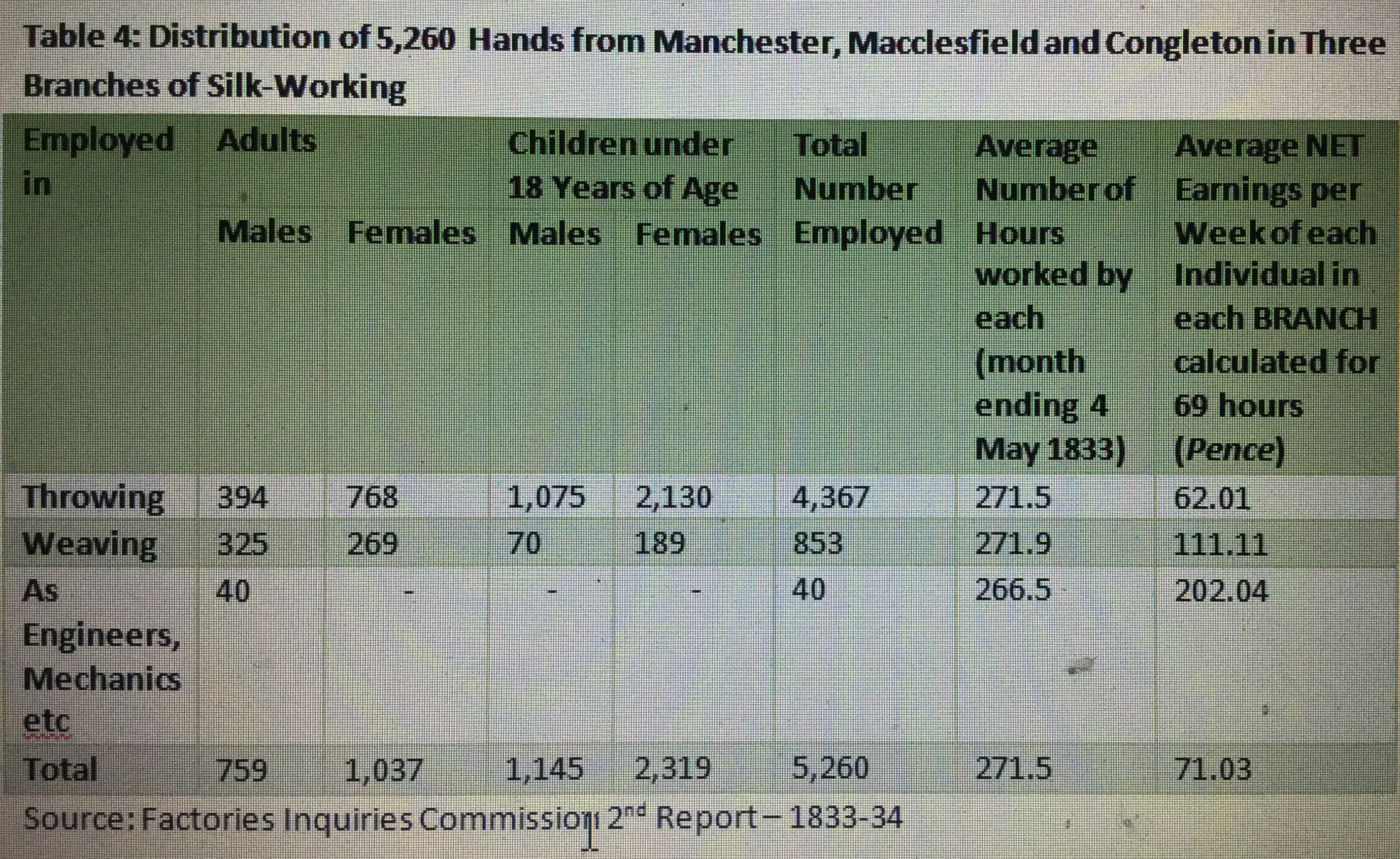
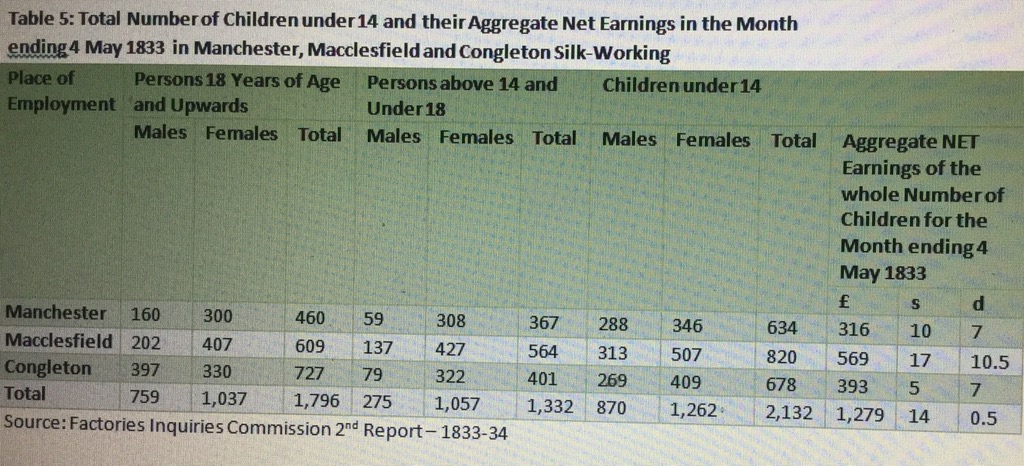
Table 4, from the Factories Inquiry Commission supplementary report of 1834, shows figures from a sample of silk factories in Manchester, Macclesfield and Congleton employing 5,260 operatives. Children were almost exclusively employed in the throwing departments. Their principal job was tying knots when the silk thread broke, each child being in charge of a certain number of threads. Various Select Committees examining child labour in factories reported on this. In 1816-17 it was estimated that a child was in charge of about 20 threads; by 1831-32 this has doubled “on account of the competition which exists between masters; one undersells the other, consequently the master endeavours to get an equal quantity of work done for less money.” By the time of the 1866 report into children’s employment it was down to 12.The children also had an element of responsibility, being accountable for the thread which passed through their hands. This was high value especially when compared to others textiles. Even if the silk was of a good quality that it would not break so often, still a great deal of vigilance was required.

A good description of the jobs children were employed in is provided by James Sharpley for the silk throwsters Messrs Brocklehurst who operated mills in Huddersfield and Macclesfield. As reported in the “Royal Commission on Children Employed in Factories: Supplementary Report” published in 1834 he described their work and progression. “The processes of silk working ascend in difficulties of management, winding being the first and easiest; it is best and cheapest performed by children under twelve years, and thus requires also the most numerous body of workers; about twelve years of age many of the most expert are advanced to the next and more difficult processes, that is, the girls to the cleaning the silk thread, doubling several threads together, etc; and at fourteen or fifteen many of the girls are again advanced to the winding and warping the dyed silk for the weavers, which are the highest kinds of employment; the boys at fourteen are often promoted to the throwing mills, and at sixteen many of them learn to weave silk.

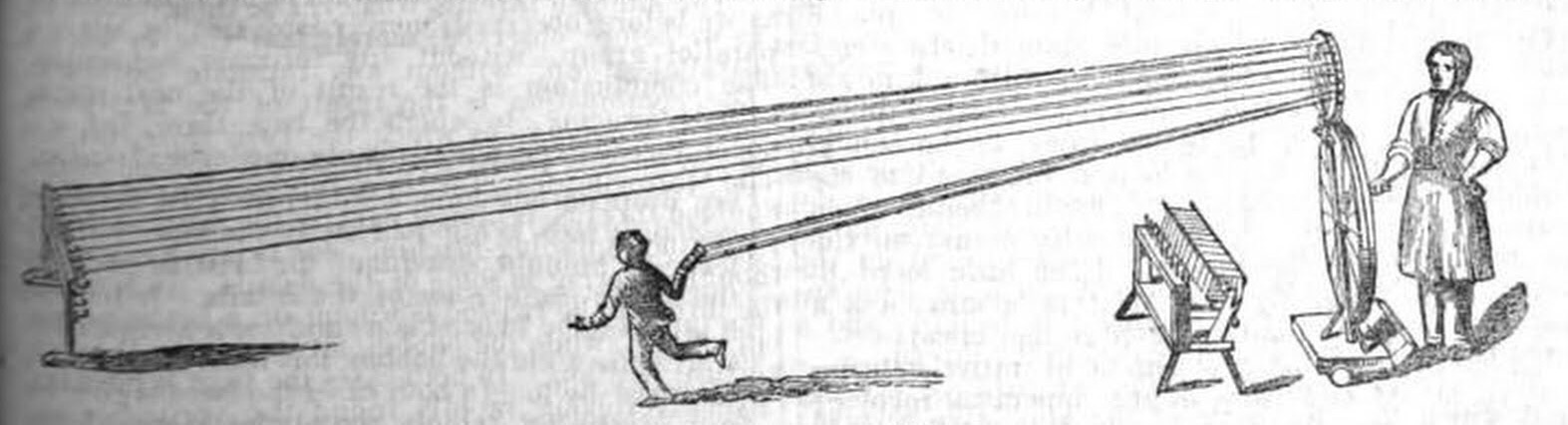
Spinning, twisting and throwing were all used to describe the formation of a rope-like twist of the silken filament, to give it strength. It could be undertaken by machine or hand. A description of the hand process can be found in Lord Ashley’s (the later Earl of Shaftesbury) Royal Commission of Inquiry into the Employment of Children. Sub-commissioner Samuel Scriven described it as such in 1841:

For twisting it is necessary to have what are designated shades which are buildings of at least 30 or 35 yards in length, of two or more rooms, rented separately by one, two or four men having one gate and a boy called a helper… the upper storey is generally occupied by children, young persons or grown women as ‘piecers’, ‘winders’ and ‘doublers’ attending to their reels and bobbins, driven by the exertions of one man… He (the boy) takes first a rod containing four bobbins of silk from the twister who stands at his gate or wheel, and having fastened the ends, runs to the ‘cross’ at the extreme end of the room, round which he passes the threads of each bobbin and returns to the ‘gate’. He is despatched on a second expedition of the same kind, and returns as before, he then runs up to the cross and detaches the threads and comes to the roller. Supposing the master to make twelve rolls a day, the boy necessarily runs fourteen miles, and this is barefooted.

Hand Silk Throwing/Spinning – The Penny Magazine Vol 12, April 1843


Other jobs included “warp picking“, that is taking small defects out of the threads of warp before the weaver receives it; picking up waste; acting as helpers to weavers; or winding in a domestic situation.

For more information about the silk industry and its process “The Penny Magazine” Volume 12 April 1843 has an article “A Day at  Derby Silk Mill.

By this period the silk industry was principally a factory occupation. However it did still exist in a domestic form too. I’ve already referred to the weaving side. But silk throwing, the twisting of the tread of silk from the cocoon which takes the place of spinning, could still be undertaken in the home and sent to the factories for finishing and weaving. In the same 1834 publication J.S. Ward of Bruton, Somerset, mentioned that, besides his factory employees, he employed women and children winding and twisting silk in their own homes. The raw silk was given to the undertaker who would be engaged by the factory to return the silk full weight wound, doubled or twisted. These undertakers would in turn sub-let this work “hence it is that almost every house becomes a domestic manufactury, the husband, the wife, and their children….being occupied in the upper room which is devoted to the purposes of winding, doubling or weaving.” This practice still thrived into the 1860’s.

Besides being engaged as outworkers, children also played a part in handloom weaving. In the silk industry this still continued. For intricate, top quality pieces the handloom was superior to the power loom, due to the delicacy of the material. Outworkers who own looms worked by the piece for manufacturers. Children did not weave, but wound for the family. Children were generally taken from school at around the ages of nine or ten to do this.

Looking at the growing factory branch of the industry, the ages at which children were employed is shown in Tables 1-3. However these are only from 1851 onwards and it is necessary to look at parliamentary papers to get an idea about ages prior to this year. In 1816-17 it appears that children worked from the age of six. By the raft of reports in the 1830’s this increased to eight.  Table 4 (above) and Table 5 (below) give a flavour.
Even in the 1866 report into children’s employment H.W. Lord found cases of children aged eight working, though more typically it was nine. Some manufacturers in the 1830’s claimed their practice was not to take children under the age of nine or ten, but often parents would deceive them. George Senior, from the silk firm of William Harter in Manchester, said “the parents always tell the children to answer ‘going ten’ when they are asked their ages” and Stephen Brown, of Colchester, backed this up.

In my next post I will examine in more detail the ages, wages, working conditions and health of these child silk industry workers.

Another Family History Website Bites the Dust

A sad day for those with coal mining ancestors and interests. Whilst doing some research into my many ancestors working in this industry, I attempted to access one of my favourite occupational websites, “The Coal Mining History Resource Centre” (CMHRC).

However it appears to have vanished.

Ian Winstanley compiled the information for the website. But I believe Raleys Solicitors, an old-established Barnsley law firm specialising in miners’ compensation claims, ran it. They went into administration in March 2016. Whereas client work appears to have transferred to Ison Harrison Solicitors, the website seems to have been a casualty.

Ancestry.co.uk have Ian Winstanley’s “Coal Mining Accidents and Death Index 1700-1950“, which was on the site. But CMHRC was far more than this wonderful database. Described as the UK’s largest and most comprehensive website concerning the history of coal-mining, its resources included maps, the 1842 Royal Commission reports, poems, a glossary of mining terms and a photo gallery. Unlike Ancestry, it was a free website. And to be honest I much preferred its search facility.

I would hope the loss of CMHRC is temporary and it can soon be restored in all its former glory. But in the meantime there is a bit of a work round.

In my post about an obsolete County Mayo website, I described how the Internet Archive Wayback Machine could be useful in accessing defunct websites. You can partly access CMHRC via this mechanism, but be warned you do lose much of the original site functionality.

Screenshot of CMHRC via the Wayback Machine

If searching via the Internet Archive Wayback Machine, the URL to use for CMHRC is:  http://www.cmhrc.co.uk

Make sure you search for 2016 captures and earlier. It is far from perfect but it might help.

There are also the following useful sites:

Feel free to add more to the list.

Some suggestions that I’ve since received (thanks Judy & Fergus):

Grim Times for an 18th Century Coal Mining Family 

The most common occupation in my family tree is “coal miner”. Unsurprising given my paternal and maternal West Riding roots. As a result I’ve spent quite a bit of time researching the history of coal mining: the social and political aspects as well as the general occupation and its development through time.

This research could form the basis of many posts. The aspect I’m focusing on this time is the perilous nature of the work. “Poldark” brought this to mind. Different type of mining, but the death of Francis highlighted the dangers of underground work in the late 18th century and made me think once again about my coal mining forefathers. However grim I think my job is, I only have to think about my ancestors, men, women and children, who worked down the coal mine to realise how lucky I am. 

Even in more recent times coal mining was a hazardous, unhealthy occupation. But in terms of my 18th and 19th century family history, these were days before today’s stringent health and safety regulations. Indeed in the early days of my ancestors the working was totally unregulated. 

The cramped, damp conditions and physical exertion led to chronic muscular-skeletal problems and back pain as well as rheumatism and inflammation of the joints. Many suffered from loss of appetite, stomach pains, nausea, vomiting and liver troubles. Most colliers became asthmatic by the time they reached 30, and many had tuberculosis. And all this would have led to days off sick without income to support the family. 

Then there were the accidents. No-one knows how many deaths there were in the first half of the 19th century, let alone earlier. An unreliable estimate in 1834-5 of the number of lives lost in coal mines in the previous 25 years gave the number of deaths in the West Riding as 346 and the evidence is the high proportion were children. According to the appendices of the Mines Inspectors Report’s 1850-1914 some 70,700 miners died or sustained injures in the mines of Great Britain from 1850 to 1908. However even this is not reliable, because the number of non-fatal accidents taking place between 1850-1881 is unknown. It was no-ones job to collect the information. 

It is true that miners themselves took risks, failing to set timber supports, propping air doors open and working with candles when it was dangerous to do so even after the invention of the Davy lamp. But colliery officials and managers also cut corners and costs leading to dangerous conditions, for example failing to replace candles with lamps, not supplying sufficient timbers, not ensuring adequate ventilation, using defective colliery shafts which were not bricked or boarded and contained no guide rods, as well as drawing uncaged corves (the small tubs/baskets for carrying hewn coal from the pit face) direct from the pits which resulted in falls of coal and people down the shaft. It was not until 1872 that every mine manager was required to hold a certificate of competence. 

Whilst explosions exacted a heavy toll and made headlines, it was the individual deaths and injuries sustained over weeks, months and years by falls of coal and roof which were responsible for most accidents, fatal or otherwise. 

One of the earliest mining ancestors I’ve traced is my 6x great grandfather Joseph Womack, born in around 1738. And his is the earliest family mining fatality. 

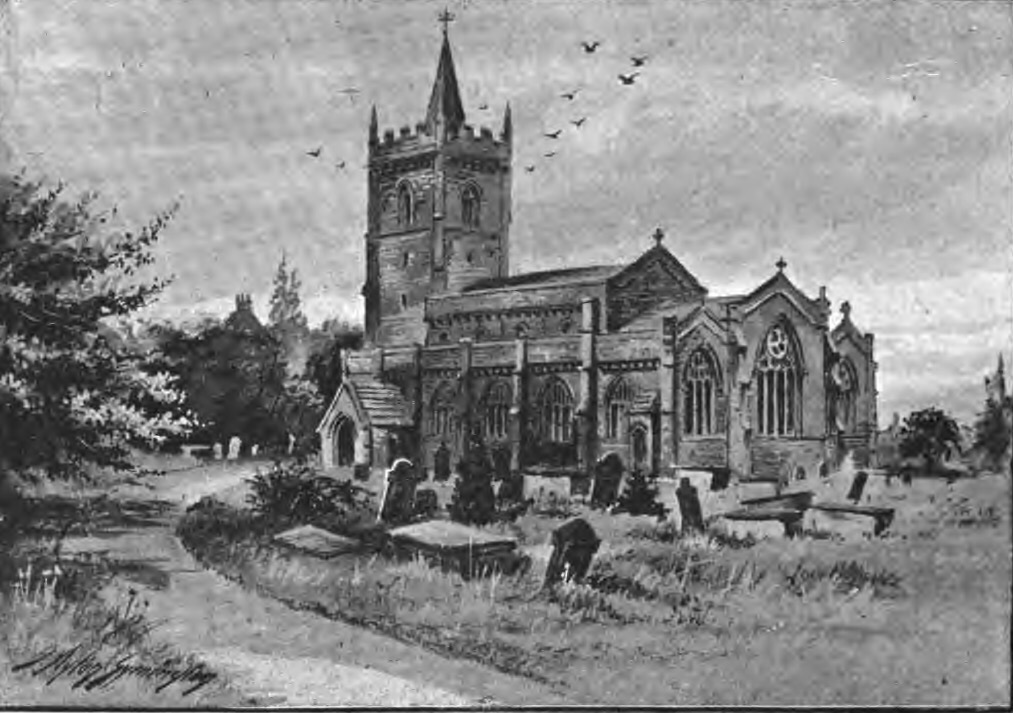
Joseph married Grace Hartley on 11 February 1760 in the parish church of St Mary’s Whitkirk. It is the oldest medieval church in Leeds and a church probably existed on the site at the time of the Domesday Book. The name “Whitkirk” or “Whitechurch” is first recorded in the 12th Century in a charter of Henry de Lacey, founder of Kirkstall Abbey, confirming the land of Newsam, Colton and the “Witechurche” to the Knights Templars. The present building dates from 1448-9 but underwent substantial restoration in 1856. So it is essentially the building in which my 6x great grandparents married. 

Whitkirk Parish Church

The man known as the father of civil engineering, John Smeaton, is buried just behind the main altar. Perhaps Smeaton’s most famous work is the 3rd Eddystone Lighthouse, completed in 1759 just the year before Joseph and Grace’s marriage. His other works included the Forth & Clyde Canal, Ramsgate Harbour, Perth Bridge, over 60 mills and more than 10 steam engines. 

Joseph signed the register in a wonderfully neat hand. It’s always a thrill when I see the signatures of my ancestors. And especially those who worked in manual jobs not associated with literacy.  

The marriage entry indicated Joseph and Grace were both residents of the parish. The location was pinpointed to Halton with the baptism of their first child, Joseph, on 22 October 1760. This location was confirmed in each of their subsequent children’s baptismal entries. Halton was about three miles east of Leeds in Temple Newsam township with Whitkirk parish. 

Another son, Richard, was baptised on 27 June 1762 followed by their first daughter Mary, my 5x great grandmother, on 12 February 1765. Four other Womack children’s baptisms are subsequently recorded – William on 21 January 1770; Henry on 24 September 1772; Thomas on 6 August 1775; and Grace on 14 February 1779. This final baptism is more detailed, giving Grace’s date of birth as 31 December 1778 and stating that her father, Joseph, worked as a collier. 

The Womacks, Joseph and his sons, were a coal mining family working at the local Seacroft colliery. Joseph and his eldest sons Joseph and Richard were there one day in May 1781 when tragedy struck in the form of an explosion. The events reached papers nationally as well as locally. The coverage is typified by this paragraph in the “Leeds Intelligencer” of Tuesday 22 May 1781. According to the newspaper the explosion took place on a Thursday, which would make it 17 May. However this may be inaccurate. I will return to this later. Typically for the time no names are given. 

In the era before the 1815 invention of the Davy Lamp, candles were the only form of light in the mine. But the risk of explosions with naked flames from these candles igniting methane gas was high, even in well ventilated pits. Firedamp was the name given to an inflammable gas, whose chief component was methane. This was released from the seam and roof during working. And on this fateful May day the Womack father and sons were caught in its ignition. 
We turn to the Whitkirk burial register for the details of how this newspaper snippet linked to the Womacks. The register gives the following burial details on 18 May 1781: 

Joseph Womack collier slain by the firedamp at Seacroft also his son Richard Womack who was slain at the same time. The father was aged 43 the son 19 years”  

Slightly later era, but illustration of a pit top after an explosion

Joseph (junior) was one of those hurt in the incident. This is shown by an entry in the same register, dated 2 June 1781: sadly another burial. It is Joseph’s. He lingered for several days before succumbing to his injuries, described as “bruises”. The entry states that his injuries were the result of the same incident in which his father and brother were killed.

Besides being emotionally devastating for the family, with the death of two members on the same day and a third receiving injuries in the same incident leading to his protracted death two weeks later, it would have been economically crippling. The three main breadwinners wiped out in a single stroke. Grace was left to bring up several children – the eldest 16 years old, the youngest just two. 

Less than two years after the death of his father and brothers Thomas died, aged eight, as a result of a fever. This is a notoriously vague catch-all description for the period indicating, yet again, that in these times the precise source of illnesses were often not known but which clearly suggests some kind of infection. There are no other clues or hints. Checking the burial register for the period around Thomas’ death reveals nothing, for example an epidemic or outbreak of common illnesses in the area. He was buried on 25 April 1783 in the parish. 

Surprisingly the family do not appear in the list of recipients receiving parish dole money. Neither are they mentioned in the parish churchwardens and overseers accounts or vestry minutes, but there is very little poor law related material in these specific Whitkirk documents. It is very possible that they were supported by the parish via this mechanism, but these records have not survived, or else I’ve not yet discovered them in my visit to the Leeds branch of West Yorkshire Archives.  

But the two information sources, newspaper and parish register, give an indication of the devastating effect a pit explosion could have on a family at a time when fathers, brothers and sons (and prior to the 1842 Mines Act women plus girls and boys under 10) worked side by side underground. 

A sad footnote to this post concerns the anonymity of those killed. In addition to Joseph senior and Richard, there were two others who lost their lives in the immediate aftermath of the explosion, as reported in the “Leeds Intelligencer” 0f 22 May. Given the date of the article, Joseph junior couldn’t have been one. Their names didn’t appear in any reports I found. I do wonder who they were though, these people who worked and died with my ancestors.

There is nothing to indicate any other Whitkirk burials of the period applied to these victims. Parishes adjoining Whitkirk were Leeds, Swillington, Rothwell and Barwick in Elmet.  Leeds St Peter’s parish church provides a cause of death for all burial entries for the period. Sadly I drew a blank in this search. Likewise for Swillington St Mary’s and Holy Trinity at Rothwell. However, Barwick in Elmet All Saints register records the burial on 17 May 1781 of 33 year old Christopher Dickinson from Lowmoor. He died on 16 May 1781, “kild in Seacroft coalpitts“. So was this the same incident? If so it indicates the inaccuracy of the newspaper date which implied a 17 May accident date. 

Providing the newspaper got the numbers right, the other individual remains a mystery. The only possibility so far is a cryptic and inconclusive 17 May 1781 entry in the nearby parish of Garforth St Mary’s “Thos son of Mathew Limbord colier aged 23 years” No cause of death. And really it’s not clear if it was Thomas or his father who worked as a collier.

The “UK Coal Mining Accidents and Death Index 1700-1950” doesn’t offer a solution either. This was on the now obsolete “Coal Mining History and Resource Centre” website, which I wrote about in my previous post. As indicated in that post, the index is now available on Ancestry.co.uk – but this accident is not recorded. I may never know who the fourth person was. And it makes me think how many other mining deaths are similarly lost.

 Sources:

  • St Mary’s Whitkirk Parish Register and records 
  • Leeds Intelligencer” 
  • National Coal Mining Museum: http://www.ncm.org.uk
  • The North of England Mining Institute of Mining and Mechanical Engineers: http://www.mininginstitute.org.uk
  • The Durham Mining Museum: http://www.dmm.org.uk
  • Voices from the Dark – Women and Children in Yorkshire Coal Mines” – Fiona Lake and Rosemary Preece 
  • “Working Conditions in Collieries around Huddersfield 1800-1870” – Alan Brooke 
  • My Ancestor was a Coalminer” – David Tonks 
  • British Coalminers in the 19th Century” – John Benson 
  • The Yorkshire Miners: A History – Volume I” – Frank Machin 
  • The history of the Yorkshire Miners 1881-1918” – Carolyn Baylies 
  • Tracing your Coalmining Ancestors” – Brian A Elliott 

“Ley Lines” of the Somme: an amazing Somme 100 experience

Do you believe in fate? Of hidden forces drawing people together? I do after my latest Great War pilgrimage.

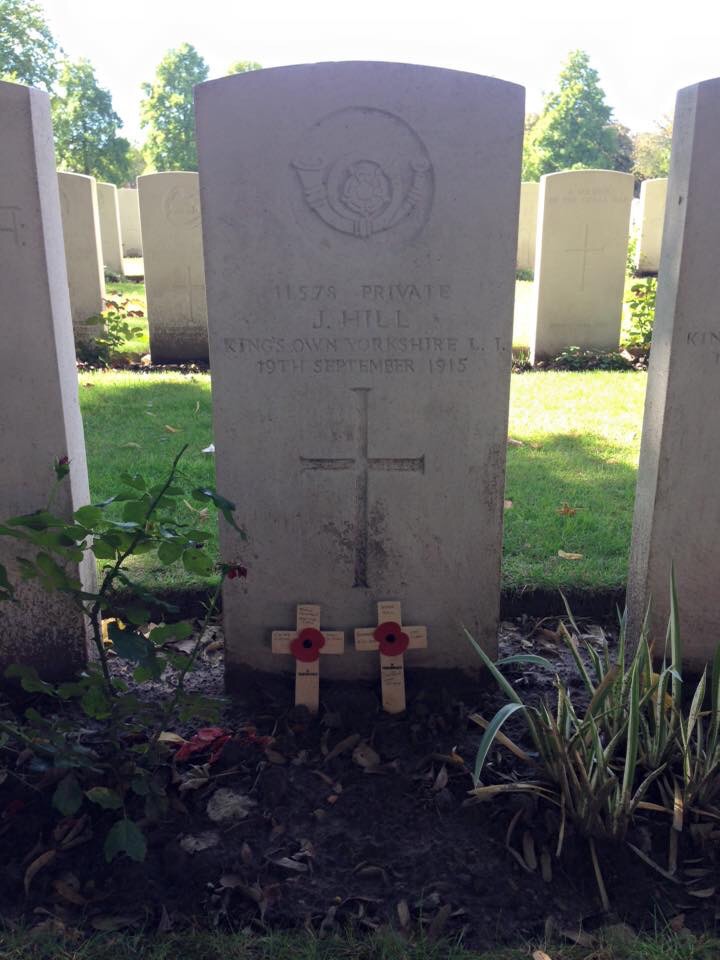
I recently went over to Belgium and France and timed the visit to coincide with two of my Hill family death anniversaries. Jesse Hill, who died on 19 September 1915 and is buried at Ypres Reservoir; and Percy Hill who died, according to soldiers’ effects records, at 2/1 South Midland Casualty Clearing Station on 30 September 1916. Percy is buried at Warloy-Baillon Community Cemetery Extension, just to the west of Albert.

Last year when visiting Jesse, on the centenary of his death, I narrowly missed meeting a relative for the first time. Two poppy crosses and the visitors book showed we’d paid our respects at Jesse’s grave within hours of each other. That was coincidence enough, but nothing in comparison to what happened this year.

Two Poppy Crosses by Jane Roberts

Chris (my husband) and I spent a few days in Ypres before driving to Avesnes Le Sec, near Cambrai, to stay with an “old” school friend for the weekend (sorry about the “old” Anne, but it applies to me too). We finished the final leg of our visit on the Somme, initially at the wonderful “No 56” b&b then at the “Royal Picardie” hotel in Albert for the last two nights. The only reason we transferred to Albert was because the b&b only had availability for three nights.

The early evening of 28 September we finished another long day of walking by stopping off at the beautiful Authuile Military Cemetery, in the village of Authuille (note the spelling difference). 

I love this tranquil cemetery with its feeling of peace and calm, and its eye-pleasingly curving layout of headstones sloping down to the river Ancre. An odd thing to say, but it’s probably my favourite cemetery. It is also the final resting place of Pte Willie Barber of the 1/4th King’s Own Yorkshire Light Infantry (KOYLI) one of the parishioners at Batley St Mary’s who I spent so much time researching.

Authuile Military Cemetery – by Jane Roberts

As we wandered down to the bottom slopes of the cemetery I noticed another visitor. This was unusual, as it was getting on and the cemetery isn’t one people normally beat a path to the door of. By the time we got to the top she had gone.

I sort of wondered if she was here to see Willie, one of those flights of fancy about impossible coincidences. I’m always a bit over-focussed on the St Mary’s men I researched. But there was nothing in the visitors book to indicate why she’d been there. That was the end of that, or so I thought. A chance to find out lost.

The following day we checked into our Albert hotel. Whilst in town sitting outside a café drinking coffee we saw the lady again. But again never spoke.

And then on 30 September, the anniversary of Percy’s death, we went down to our first breakfast in the hotel and she was there with her mum.  This time we did speak. She was over for the centenary of her great grandfather’s death, that very day. The same day as Percy Hill. 30 September.

We talked a bit more, and amazingly discovered both Percy and her ancestor, Jonathan Pearson, were in the same battalion, 1/4th KOYLI. Both died of wounds and both received their injuries during the same period of duty in the trenches near Ulster Tower in mid-September. She had followed Jonathan’s footsteps for those few final frontline days and was on her way across to Boulogne to his grave on his death anniversary, before returning home to the south of England that evening.

She had photos of Jonathan. I had some of Percy, including group photos with some of his pals. And amazingly on one of these photos was a man who looked remarkably like Jonathan. Same colouring, same features including distinctive nose and cut of hair.

We couldn’t believe it. 100 years to the exact day of their deaths we were in a hotel in Albert staring at a picture of what appears to be both men together. It was is if some unseen force had been pulling us together for the past couple of days, starting at Authuile Military Cemetery where fellow 1/4th KOYLI soldier Willie Barber is buried, finally uniting us on the centenary of their death. An incredible, earth-stopping realisation. And if the b&b had been available for the final two days of my visit I wouldn’t have even been in the Albert hotel. A week later and I still can’t believe it.

We parted promising to pass on Jonathan and Percy’s regards at their respective final resting places, around some 90 miles apart.

And so onto Warloy-Baillon. We stopped at Ulster Tower en route and found the poppy cross Jonathan’s family had laid in the area of the KOYLI trenches of mid September 1916. We saw the Pope’s Nose, the German salient with a decaying relic of a observation post/gun emplacement, which was the focus of their trench raids in that period.

We were at Percy Hill’s grave for 1.15pm, the minute is death is recorded. And there, at around 2pm, we met with David Short and his wife Pauline, the relative I so narrowly missed meeting just over a year ago at Jesse Hill’s grave. And in a final piece of symmetry David is from the north east of England, not Yorkshire, the same area from which Jonathan hailed.

My New Toy: Irish Birth, Marriage and Death Images

In my “Fabulous News For Those With Irish Ancestry” post I could scarcely contain my excitement at the release of Irish General Register Office (GRO) birth, marriages and death register images. The site is https://www.irishgenealogy.ie

I’ve had a few days playing with my new family history toy and getting a feel for the system. These searches have focused on my primary interest area, County Mayo, and in particular the Swinford Registration District. I’ve tried a combination of search methods, including wildcards for those multiple spellings. For example I didn’t realise how many ways you could spell the seemingly simple surnames: But Loft* identifies Loftus, Loftice and Loftis; Cass* included Cassidy, Cassedy and Cassiday.

I found it interesting to note how many of my family were baptised before their registered birth date! I knew my grandpa had two birthdays, but it seems he was not unique amongst his siblings. Staggeringly this applied to seven of out of the eight children of Michael and Mary Callaghan, whose birth register images are accessible. But it also features in my Loftus line.

Glan Church, Kilkelly, County Mayo

It points to the religious importance of quick baptism to ensure eternal salvation at a time of high infant mortality; combined with the lesser imperative to officially register, with rural transport factors and employment pressures coming into play. By law, a birth had to be registered within 42 days. Fudging the birth date was a way to avoid a late registration penalty. Interestingly my grandpa carried on the “tradition” of an incorrect birth certificate date with my mum.

As with any new release on this scale there are some glitches:

  • The site did go down a few times and at others it was painfully slow. Hopefully these accessibility issues will improve as the traffic volume decreases;
  • I do get a tad frustrated at constantly proving “I am not a robot” several times within the same session. There’s a limit to how many street signs, grass vistas, milkshakes and shop fronts I must identify before curbing the urge to scream;
  • Not all images are online yet. Births are there from 1864 to 1915. However marriages are only available from 1882 to 1940. Deaths run from 1891 to 1965. The GRO are updating further records of Marriages dating back to 1845 and Deaths dating back to 1864, but no indication of how long this will take;
  • For one of my birth searches, the link was to the wrong image. I couldn’t see any way to browse adjoining pages easily. I tried in vain to overcome the issue using the advanced search options, narrowing down dates and Registration Districts. A frustrating half an hour later and I still couldn’t access it. So I know Andrew Callaghan’s 1891 birth registration is there somewhere, but the crucial image still eludes me. I have reported the issue via the feedback form, but as yet haven’t received a response;
  • The Advanced Search facility has issues, alluded to above. Linked to this, I do wish search guidance was clearer; and
  • I’ve heard anecdotal stories of false negative results, where someone who should be there isn’t identified in searches. So far this hasn’t affected me.

But the positives far outweigh these niggles:

  • FREE register images are instantly available with the click of a few keys;
  • The register pages supply the birth, marriage and death certificate details thus saving researchers €4 a certificate;
  • The information provided may lead to wider family. I quickly noticed that a good number of births were not registered by the parents. Far higher than I anticipated. Many entries were by people described as “present at birth”. For example a couple of my Callaghan births were registered in this manner by a Patrick Callaghan. Tantalisingly in these instances no relationship details were supplied. Possibly the baby’s grandfather or potentially an uncle, so extended family clues. However some entries do give the precise relationship details. I’ve seen sisters and grandmothers identified. So you may strike lucky;
  • You can include the mother’s maiden name in the advanced search option for births. And these fetch results earlier than the 1911 norm for England and Wales GRO searches. However I would not go so far as to say I to trust equating negative results to no results; and
  • There are entries for Northern Ireland Registration Districts. I’m not sure if these are limited to pre-1922 and how complete these are. So even if your ancestry is from the North, the records are worth checking.

In summary, despite its flaws this is a brilliant resource. It is a wonderful companion set to the free NLI Catholic parish register release of 2015. And a massive thank you to the Irish authorities for making Irish Soldiers Wills 1914-1918, the Irish 1901 and 1911 census, and other datasets, also available free of charge via the National Archives of Ireland’s genealogy page.

It is worth comparing with the “pay” attitude for similar information in England and Wales. A prime example being the £9.25 extortionate charges for similar civil registration information, with seemingly very little progress made since the 2015 Deregulation Act which was supposed to pave the way to providing this information in an uncertified, lower cost form. Or the £10 charge for a World War 1 soldier’s will in this centenary commemoration period.

5 October 2016 update:

I have now received a response from Irish Genealogy to my query on errors. They will be adding a mechanism for error reporting, but no indication of timescale.

In terms of coverage they confirmed the General Register Office are currently working on updating further records of Marriages dating back to 1845 and Deaths dating back to 1864. These will be included in future updates to the records available on the website.

Fabulous News For Those With Irish Ancestry

A really short blog post, but I can scarcely contain my excitement. I wanted to share my joy as soon as possible. And what fabulous news it is for those with Irish ancestry. 

The Irish Genealogy website has released the Irish General Register Office (GRO) images of births of over 100 years ago, marriages of over 75 years ago and deaths of over 50 years ago.

These aren’t just indexes, they are the actual GRO images. So mother and father details for births; cause of death information; location information; names of fathers for marriages; occupations; dates. In other words exactly what you’d get on a certificate.

And what’s even better – they’re absolutely free. So no more €4 postal applications for photocopies of Irish certificates me. And no more wasted money on speculative applications either.  

I am ecstatic. This was beyond my wildest dreams when I first heard a whisper about the launch a few days ago. 

A quick look and they’re not complete yet, but already I’m filling in some gaps. And, as they’ve been uploaded ahead of the scheduled 8 September 2016 launch date, I’ve not ruled a further tranche. 

So guess which website I’ll be on over the next few days, ploughing through my outstanding list of civil records: https://www.irishgenealogy.ie/en/

Sources:  

A Short Life Remembered: King Cholera’s Deadly Reign

This is another in my “Short Lives Remembered” series. It focuses on often-forgotten children in family trees who died all too young. The ones who never had chance to marry, have children and descendants to cherish their memory. The ones who, but for family history researchers, would be forever forgotten.

This post is about Sarah Clough. Sadly the most remarkable thing I know about her life is her death.

Sarah was the fourth child of my 3x great grandparents William and Mary Clough (née Burnett). She was born on 22 February 1833 in Adwalton Yorkshire and baptised in the parish church of St Peter’s, Birstall on 2 June 1833.

Historically, Adwalton is probably best known for its part in the English Civil War: The scene of the Battle of Adwalton Moor, when the Royalist forces of the Earl of Newcastle defeated the Parliamentarian forces of Sir Thomas Fairfax bringing Yorkshire under Royalist control.

Alongside it’s neighbour Drighlington, to where the Clough family moved, this was an otherwise historically unremarkable village, following the normal industrial revolution growth and development patterns of other West Riding villages in the 19th century.

By the time of Sarah’s birth, textile manufacture was supplanting farming and mining as principal occupations in Adwalton and Drighlington. William, her father, worked as a clothier, following the traditional occupations of the area. This was before fate stepped in and his working life took a totally different path. But that’s for another time.

Sarah only features in one census, that of 1841. She is shown living in Drighlington with her parents and three older siblings. The next record I have is her death certificate. Which brings me to a period in time when Drighlington hit the news for entirely unwelcome reasons.

Sarah died there on 10 August 1849, age 16. No occupation given, so I do not know if she followed her elder sister into a worsted spinning job in one of the area’s relatively new mills. She’s described merely as the daughter of William Clough. He registered her death the following day.

The certificate reveals she suffered one of those truly awful, and all too common, deaths of our ancestors. It indicates she died after suffering for 11 hours from “malignant cholera”.

Cause of Death Extract from Sarah Clough’s Death Certificate

So once more I venture into the depressing medical world family history researchers frequently inhabit. This time learning about cholera.

Malignant cholera was one of the names given to Asiatic cholera. This was distinct from English cholera. Adverts in 1849 stated that English cholera, which all persons more or less suffered from in summer months, was characterised by “violent looseness of the bowels, attended with sickness, and in extreme cases violent cramps”.  In other words dysentery and food poisoning, more commonly known as gastroenteritis today. If left untreated it could result in Asiatic cholera, or so some quack newspaper adverts claimed.

English Cholera Description, “Leeds Intelligencer” 25 August 1849

In fact Asiatic cholera was a different entity. Originating in India, it first reached the shores of Great Britain in the autumn of 1831, after its relentless march across Europe. It’s first victim was in Sunderland. The epidemic dissipated the following Autumn, but not before claiming the souls of some 32,000 people, roughly a 50 per cent death rate of those afflicted. In these pre-civil registration days this is only a rough estimate, with ranges fluctuating between 20,000 to 50,000+[1]

L0008118 A dead victim of cholera at Sunderland in 1832. Coloured lit

L0008118 A dead victim of cholera at Sunderland in 1832. Coloured lit Credit: Wellcome Library, London. Wellcome Images images@wellcome.ac.uk http://wellcomeimages.org A dead victim of cholera at Sunderland in 1832 by IWG. Coloured Lithograph Circa 1832 Published: – Copyrighted work available under Creative Commons Attribution only licence CC BY 4.0 http://creativecommons.org/licenses/by/4.0/

Like English cholera, Asiatic cholera also struck without warning, but it’s symptoms were more extreme. Although not the top killer in the country during the period, its high mortality rate and the speed with which it killed caused panic. Those afflicted were gripped by dramatic diarrhoea, terrible abdominal cramps and vomiting. In the most severe cases the loss of body fluids was so appalling that the victims rapidly became dehydrated, cold, withered and gaunt. Often their faces became unrecognisably shrunken and they could develop a blue-grey tinge to their skin. The swiftness with which victims succumbed is illustrated by the fact that Sarah was dead within 11 hours of the onset of her symptoms.

V0010485 A young Viennese woman, aged 23, depicted before and after

V0010485 A young Viennese woman, aged 23, depicted before and after Credit: Wellcome Library, London. Wellcome Images images@wellcome.ac.uk http://wellcomeimages.org A young Viennesen woman, aged 23, depicted before and after contracting cholera. Coloured stipple engraving. Published: – Copyrighted work available under Creative Commons Attribution only licence CC BY 4.0 http://creativecommons.org/licenses/by/4.0/

Victims died as a result of dehydration, sometimes hastened by medical ministrations which could be based on purging the body of impurities. Laxatives, such as mercury, and emetics like opium were amongst the armoury of potentially prescribed medications. Hardly the most suitable concoctions to give to patients already exhausted from sickness and diarrhoea. Other remedies touted at this time were passing steam over the patient or pouring boiling water on the patient’s stomach, brandy, bloodletting and “hot air baths”, all of which made dehydration worse. Even arsenic was prescribed.

Official advice, as well as druggists adverts, featured in the press of the day. All equally ineffective.

Official Cholera Remedy – ” Leeds Intelligencer” 23 June 1849

Fundamental to the grip the frightening disease had on the country was the lack of understanding of its causes and transmission. The prevalent theory was that the disease was caused and spread by smelly, contaminated air, otherwise known as miasma. Getting rid of foul smells, including improved sanitation, would combat the deadly menace. Attempts were made to fumigate buildings in affected communities by burning sulphur or tar. Drinking brandy or eating copious quantities of garlic were also widely believed to be a preventative measures.

L0003001 A court for King Cholera

L0003001 A court for King Cholera Credit: Wellcome Library, London. Wellcome Images images@wellcome.ac.uk http://wellcomeimages.org ‘A court for King Cholera’ is hardly an exaggeration of many dwelling places of the poor in London. 19th century Punch Published: 1852 Copyrighted work available under Creative Commons Attribution only licence CC BY 4.0 http://creativecommons.org/licenses/by/4.0/

Medical thinking had not progressed beyond this when the next deadly wave of the disease spread through Britain throughout 1848-49. The poor still lived in cramped and unhygienic conditions, sewerage was still largely inadequate and water supplies were still vulnerable to contamination: All these factors exacerbated by urbanisation. The miasma theory still held sway, promoted by the likes of social reformer Edwin Chadwick. There was no expert agreement about whether or not it was contagious, with debates on the subject aired in the press.

“The Leeds Times” 14 October 1848

However prudent advice in “The Leeds Mercury” of 29 September 1849 suggested precautions such as burning beds and clothing of the deceased and, in what looks like an early attempt funeral humour, “early (though not premature) interment“. In 1849 Dr John Snow publicly stated the disease was transmitted through water. His voice was dismissed.

In terms of fatalities this second outbreak of the disease proved to be the most serious of 19th century epidemics to hit Britain. Estimates vary between 53,000 and 62,000 lives lost[2], including that of Sarah Clough.

L0039174 Map of England showing prevalence of cholera, 1849

L0039174 Map of England showing prevalence of cholera, 1849 Credit: Wellcome Library, London. Wellcome Images images@wellcome.ac.uk http://wellcomeimages.org Map of England shaded to show the prevalence of cholera in the several districts during the epidemic of 1849. The relative degree of mortality is expressed in the darkness of the shading. The dates indicate the time at which the epidemic broke out. Printed Reproduction 1852 Report on the mortality of cholera in England, 1848-49. Great Britain. General Register Office. Published: 1852. Copyrighted work available under Creative Commons Attribution only licence CC BY 4.0 http://creativecommons.org/licenses/by/4.0/


Drighlington was particularly hard hit. Looking at the Drighlington St Paul’s burial register Sarah was just one of many of the village’s inhabitants to die in the summer of 1849.

A look at the a parish register shows 17 burials in August 1849. Of these 15 were Drighlington inhabitants, two from Adwalton. Sarah’s burial took place on 11 August 1849. Compare this with three June burials; four in July; one in September; four in October. Looking at the month of August in the years sandwiching 1849, August 1848 had four burials; whilst August 1850 shows only one. So a dramatic spike that cholera-affected month of August 1849.

The terror of the inhabitants felt is unimaginable: An illness with an incorrectly vague cause and no known cure sweeping their hometown; neighbours, friends and families being suddenly struck down; a succession of funerals held in the local church; many more suffering the distressing and debilitating effects of the illness. 

Newspapers, filled daily with cholera returns and countrywide reports, ratcheted up anxiety levels. They even remarked on the disproportionate numbers affected in Drighlington. For example, this from the “Bradford Observer” of 16 August 1849:

In our last number, we recorded a death from Asiatic cholera in Drighlington. Since then, five other cases have occurred, all of which proved fatal. Taking into consideration the size of the village and the population, this fearful malady is spreading more rapidly than in towns, where the population is so dense. The number of deaths from Asiatic cholera since the commencement a fortnight ago being seven, besides several others from English cholera”.

The “Leeds Intelligencer” of 18 August 1849 put the number of deaths at 11 and described clean-up measures to tackle the outbreak.

“Leeds Intelligencer” 18 August 1849

Put into context the 1851 population of Drighlington township was 2,740. So 11 cholera-related deaths in such a short space of time, not to mention those infected and recovering, and it’s easy to see how ravages of the illness would affect a significant proportion of the village one way or another.

Two further waves of cholera swept Britain but with decreasing death tolls – the 1853-54 outbreak claimed 20,000 souls[3]. Following this outbreak John Snow was able to prove his theory about the bacterial nature of the disease, when he isolated the source of the 1854 Soho outbreak to a contaminated Broad Street water pump.

Although full acceptance was slow, it was an important step in paving the way to laying to rest the bad air/miasma theory. This, ironically combined with the Public Health Acts and Sanitary Act resulting from the work of Chadwick, meant the disease was increasingly more effectively prevented and the 1865-66 epidemic accounted for a mere 10,000 – 14,000 deaths, depending on statistical sources.[4].

It wasn’t until 1883 that a German doctor, Robert Koch, isolated the cholera bacillus. And over 30 years more years elapsed before a vaccination became generally available in 1914.

So the short life of Sarah Clough is significant for the disease which cut it short. Just one of many thousands of people mowed down in Britain alone in what were the worldwide 19th century cholera pandemics. As a result of my research into Sarah’s death, the disease for me is now more than a name.

Others who feature in this series of “Short Lives Remembered” posts are:


Footnotes:

Sources: 

GRO Picture Credit: 

Extract from GRO death register entry for Sarah Clough: Image © Crown Copyright and posted in compliance with General Register Office copyright guidance.

Ordinary Lives: Family History is Best Left in the Graves of Our Ancestors?

Last night a family member asked if I’d unearthed any more embarrassing incidents in our family history. The individual appeared to be particularly concerned about the stigma from having a one-handed gypsy ancestor who gave birth to an illegitimate son whilst on the road in the company of a gaggle of 18th century chimney sweep apprentices. They straw-clutchingly tried to point out that giving birth on the roadside was perfectly normal for the period. There was no ambulance service, or so their argument went.  

And so lies one of the dichotomies of family history. My relative seemingly didn’t want any hint of scandal in our background. They wanted an ordinary, uneventful lineage. They took anything otherwise as casting some kind of lingering reputational stain passed down through the generations. A case of these things are best left in the past. Dirty linen, no matter how old, should never see the light of day. The dead should be portrayed as paragons of virtue. Their human weaknesses buried alongside them in their graves. In short the skeletons of ancestors should be left in their graves. 

They want a family tree populated with ancestors who lived ordinary, unremarkable, hard-working lives, with no speck of scandal. 

Batley Cemetery – Photo by Jane Roberts

Yet for others these more unusual events add colour to the every-dayness of “born, baptised, married, died, buried” records. They stand in the camp of ordinary lives are boring. Not worthy of re-discovery. Unremarkable genealogy is uninteresting. I’m not sure how true this is but, for example, the ordinariness of Michael Parkinson’s ancestry is cited as the reason why his story was ditched by “Who Do You Think You Are?” 

For me family history is about every-day lives. Some are ordinary, some are less so. But that’s part of the rich tapestry of life. It’s a mixture of all sorts. And you can’t gloss over the less palatable tales. No more so than you should discount the mundane. All facets are equally valid.  

Brothers-in-Arms 

Sometimes we overlook more recent family history, concentrating on the more distant past. Currently events of 100 years ago are dominating the news, with national commemoration events for Battles such as Jutland and The Somme, to more individual and personal remembrances for the centenary of the death of a family member.

But here I will focus on a more recent conflict, World War II. We are moving towards a time when this too will disappear from living memory. Sadly those in my family with direct knowledge of this tale are long gone.

This post concerns the fate of Albert Edward Hill, or Ned as he was known: My grandad’s cousin.

Finding out the circumstances surrounding death in conflict can be challenging: Which battle; location; precise cause of death; time; even date; and perhaps there is no known burial place. World War II in many ways presents a bigger challenge than its predecessor, with the public availability of records.

However in Ned’s case it’s all fairly straightforward. He is buried locally at St Paul’s churchyard, Hanging Heaton. His death is well documented. It was not caused by some battle injury. It was the result of a totally avoidably, foolishly tragic accident following a night out.

Ned was born on 2 February 1901, one of the seven children of Albert Hill and Sarah Ann Summerscales. These included Harry who died shortly after birth in 1890; Percy, Annie, Lilian, Doris and Arthur.

Ned never married. The 1939 Register, the population list compiled at on 29 September, as a result of the outbreak of war, shows him living at Wood Lane, Hanging Heaton. He is in the household of his brother-in-law Harry Robertshaw along with Harry’s two young sons. Harry’s wife, Ned’s sister Annie died that summer, her burial taking place at St Paul’s Hanging Heaton on 6 July 1939.

In the 1939 Register Ned is recorded as working as a willeyer in a woollen mill. This was someone who operated what was termed a willeying machine. Fibres were fed into this machine, which separated and combed them ready for carding. Newspaper reports at the time of his death, however, indicate prior to his army service he worked as a builder’s labourer, employed by Hanging Heaton-based building contactors George Kilburn and sons. 

I do suspect some confusion in the report though, and this occupation possibly applied to his brother Arthur. In the 1939 Register he was a public works contractor’s labourer. 

Whatever the true facts are war changed all this, and some two-and-a-half years before his death Ned joined the Army, as a Gunner.

Albert E Hill Batley News July 28 1945 8 (2)

Gunner Hill

His death came entirely out of the blue. Summer 1945, and war in Europe over, Ned returned home to Batley on leave. He finally managed to meet up with his younger brother Arthur, a driver with the RASC, similarly on leave. This was the first time they had seen each other since Ned’s military service. Arthur had been in the Army for four years at this point, serving in Germany, Belgium, France and Holland.

Things must have seemed hopeful. They had survived so far. All being well they would be home soon permanently. The past tragedy of the family would not repeat itself….

Little could they have envisaged that this meeting would be their last, and in three weeks Ned would be dead.

Leave over and Ned returned back to his Unit, the 397 Battery, 122 Heavy Anti-Aircraft Artillery Regiment, stationed at Walberswick, near Southwold in Suffolk. This was part of the network of coastal defences, established in response to the threat of German invasion from May 1940 after their rapid victory in Western Europe. That German threat was now gone.

On 20 July 1945 he and another soldier from the same unit, Gunner Leonard Lomax, had evening leave. They left camp at 6pm that Friday for a night out in Southwold. The ferryman took them over the River Blyth and said he would return for them at 10-30-11.00pm.

An interesting aside is the ferry service from Walberswick had featured in Parliament only weeks earlier on 8 June 1945. There had been a seam steam-driven chain ferry which was discontinued in World War II, and it seems a rowing boat service replaced it. The ferry was privately owned and there had been problems in maintaining a regular service. Suffolk County Council was negotiating to acquire the ferry rights to ensure an adequate service.

Walberswick Ferry circa early 1940s Postcard, F Jenkins, Southwold

Ned and Leonard visited three public houses in Southwold and consumed about six pints of mixed beer. They left town at 10.15pm for the return ferry but there was no sign of the man with the boat. As they were debating whether to return to Southwold to catch the liberty truck to camp, a boat containing two soldiers came from the Walberswick side of the river.

These two soldiers, Lance Bombardier Edward Davis and Bombardier George Rennie were from another Battery. They heard shouts from the Southwold side of the river and thought some men from their Company were stranded as it appeared the ferry service had stopped. Despite having consumed three pints, or maybe because of it, seeing a boat moored in the water they decided to cross to collect their companions, but when they arrived found they were strangers. Nevertheless they offered Ned and Leonard a lift back. 

They clambered in the small boat, which turned out to be a yacht’s dingy and using the home-made paddles which were aboard the boat, Edward and George set about rowing back. About halfway across Leonard became aware of his feet feeling wet, water sloshing over the top of his shoes.

George and Edward were now having difficulty controlling the craft and stood up to paddle. They were about eight yards from the Walberswick side when the boat got into trouble with the tide and started to drift back towards Southwold and then seawards. The boat was filling up with water, either the result of a leak or overloading.  At this point Ned grabbed a paddle from Edward and the boat turned over throwing all four men into the river.

Leonard and George managed to get hold of a step ladder running down the harbour wall and climb ashore. They could not see the other two men, so made their way to Southwold to inform the police.

Meanwhile Edward, realising that Ned could not swim, tried to keep him up despite not being a strong swimmer himself. He managed to get them both to the concrete wall where Ned grabbed some weeds. Unfortunately they broke away. Edward continued to hold onto Ned but eventually became too exhausted and he had to let him go. Edward then managed to get hold of the ladder and escape.

In summing up the Coroner censured the boat’s occupants. The accident, he said, was the result of four “landlubbers” knowing nothing whatever about boating. The two soldiers should never have taken Leonard and Ned aboard because they overloaded the boat. There must have been some movement with the result that the boat capsized.

He went onto say that he hoped the tragedy would be a warning to others not to take boats without leave, and not to go on a swift running river like this one unless they were experienced persons who know how many a boat would take. “It is difficult to blame anyone because it is pure ignorance” he added.

A verdict of “Death through drowning through the upsetting of a boat” was recorded.

The Commanding Officer of the Battery wrote to Ned’s sister Doris extending his and the Battery’s sympathies as follows:

On behalf of the ranks of this battery wish to express to you our horror at this tragedy. Gunner Hill was a grand soldier and a man well-known and loved by the men of this unit”.

Ned’s body was brought back to Batley and he was buried in the church yard at St Paul’s, Hanging Heaton, just weeks before VJ Day and the war effectively ending.

Arthur survived the war. But Ned’s fate echoed that of another brother in another conflict, Percy. He died almost 29 years earlier in The Great War, during the Battle of the Somme.

Memories too of the newspaper “Roll of Honour In Memoriam” notices which the Hill family, including the then teenager Ned, placed in the papers all those decades before, mourning the loss of Percy.

Batley News – 5 October 1918
Hill – In sad but loving memory of our dear son and brother, 1736 Sergt Percy Hill, 1st-4th KOYLI (Batley Territorials) who died from wounds at Warloy Baillon, West of Albert, France, September 30th, 1916, aged 24 years.

When last we met, and fondly parted
Our hopes were high, our faith was strong,
We trusted that the separation
Though hard to bear would not be long 

We often sit and think of him when we are
all alone
This memory is the only thing we can call
our own;
Like ivy on the withered oak, when other
things decay
Our love for him will ever live, and never
fade away 

Ever remembered by his sorrowing mother, father, sisters and brothers, 92, Back Bromley Street, Hanging Heaton 

A family which had now lost a brother in both World Wars.Albert and Percy Hill Headstones

Sources:

“You’ve a Mother and a Father. That’s All You Need to Know” – Batley Borough Court Records: Part 3

I thought long and hard before writing this post, the third in my Batley Borough Court paternity proof series. The reason for the deliberation is it concerns family information not discussed for years, if at all in living memory. “You’ve a mother and a father. That’s all you need to know” is a phrase that springs to mind. But I wanted to know more than that. So on and off I ferreted away at records.

The deciding factors for me in going ahead in writing this are:

  • it relates to my family history;
  • those directly affected are no longer alive. Neither are immediate subsequent generations;
  • the events took place over 100 years ago;
  • the information is publicly available;
  • when researching my family history I want to be even-handed with all aspects, the good and the not so good; and
  • this post may give an indication of some of the sources that are available when looking into the issue of tracing fathers of illegitimate ancestors.

I was elated with the find. Here the Batley Borough Court records have solved one of my long-standing family mysteries, as outlined in an earlier post about Parish Registers. It relates to the paternity of my great grandmother Bridget Gavan’s second child, a daughter, born on 28 August 1893.

The parish priest at St Mary of the Angels, Batley, at the time of the child’s baptism the following month believed Bridget to be married. The baptismal entry in the parish register is under the name “Regan” and Bridget’s husband is named as Charles Regan. The only problem: Bridget was not married. So proof you cannot always take what is written in parish registers as 100% accurate.

A later priest realised the error. When the girl’s marriage took place, some decades later, he noted against her baptismal entry that she married under the name Gavin [sic]. Yes the priests were meticulous in the practice of annotating baptismal entries with later marriage details!

But, although the baptismal entry gave a potential lead into the child’s father, I could not definitively identify Charles Regan. Not until a search of the Batley Borough Court register.

On 5 February 1894 Bridget Gavan was the complainant in a bastardy case heard at Batley Town Hall against Charles Ragan (note the subtle spelling difference here). Charles was ordered to pay 3/ a week until the unnamed child reached the age of 13. As well as court costs he also had to pay birth expenses of £1:1:0. So this provides corroboration of the baptismal paternity information.

Charles Ragan features a further eight times in the Borough Court Register between 1894-1907[1]. Three of these relate to police charges of drunk and riotous behaviour in various areas of Batley. The other five are cases brought by Bridget for bastardy arrears. Full details are at Table 1.Charles Ragan BBC

It can be seen from the entries that Bridget gave Charles time to pay on two occasions. Some of the bastardy cases took place after Bridget’s marriage in November 1897. And some of the adjudications around the bastardy arrears involved straight custodial sentences, without the option of paying a fine.

This then led me to the collection of West Yorkshire Archives Prison Records on Ancestry.

Bingo! I was astounded to find 20 entries in the Wakefield Prison Records Nominal Registers relating to Charles for appearances before West Riding Courts at Wakefield and Dewsbury as well as Batley. They relate to the various bastardy cases heard at Batley, outlined above, as well as charges in all areas for drunkenness and non-payment of costs.

Wakefield Prison

Wakefield Prison Image from around 1916 shared by David Studdard on the Maggie Blanck Website – see Sources

It appears that even where Charles had the option of paying a fine he chose not to do so, or perhaps simply could not afford to, and the alternative custodial sentence was enforced.  This includes one of the instances where Bridget had allowed extra time: Hence the large numbers of entries for him in the Wakefield prison register.

For my research purposes these entries provide a basic description of Charles, his age, religion, occupation, education level and, crucially, a birthplace. Although the records are not consistent, particularly around education levels which range from “imperfect” to “read and write” through to Standards I-III[2], they give a general picture.

Charles was around 5’5” tall, with brown hair, had only a very basic level of education and his employment varied from colliery worker to miner to labourer, so manual work. His birthplace was given as Leeds and further narrowed in some of the register entries to the Beeston/Holbeck area.  And his date of birth was somewhere between 1869-1876. Despite the variations, they clearly all relate to the same man given the detail provided including the previous custodial reference number.

The entries are summarised in Tables 2a and 2bCharles Ragan 2a

Charles Ragan 2bLooking at the censuses with this fresh information, Charles Joseph Ragan, to give him his full name, was born in Holbeck in 1869. He was the son of Irish-born coal miner John Ragan and his wife Sarah Norfolk, a local girl from Hunslet. The couple married in 1866 and by the time of the 1871 census the family was recorded living in Holbeck. Besides Charles other children included six year-old Hannah Norfolk, three year-old Thomas and infant daughter Sarah.

The 1881 census reveals further siblings of Charles: George, age eight; six year-old John; Arthur, four; and Elizabeth, two. By this time Charles had employment as a dray-boy.

1891 shows a move to East Ardsley and two further additions John and Sarah’s family – Alice born in around 1882 and Walter in 1884. Charles now worked as a coal miner, like his father.

The work opportunities in the relatively new pits in East Ardsley probably initiated the move from the Leeds area. The town’s extensive collieries were owned by Robert Holliday and Sons, with East Ardsley Colliery being known as Holliday’s Pit. They started to sink two shafts here in 1872, on land leased from the Cardigan estate. A third shaft was sunk in 1877. By 1881 in excess of 300 East Ardsley men were employed in mining. In 1899 the colliery produced 200,000 tons annually, making it the 11th largest Yorkshire coalfield.

Returning to Charles’ brushes with the law, newspaper reports added a little more detail, but not much. For example in the March 1900 case around arrears, Bridget revealed that Charles had failed to make payments for their seven year-old daughter for three years. Possibly this corresponded with the time Bridget was involved with her soon-to-be husband, who she married in late 1897.

The reports also indicate Charles lived at Lawns in August 1897 and thereafter in East Ardsley. Did his forays from there into Batley indicate he remained in loose contact with his daughter?  Or were other family connections the draw? There were a number of Ragans living in Batley during this period.

In terms of character, Charles certainly seemed fond of a tipple, given the number of drink-related offences. One from the West Riding Police Court, Wakefield, involved the assault on William Forrest, the landlord of an East Ardsley pub, the “Bedford Arms“.  George Mullins was his partner in this crime. The report in the “Sheffield Daily Telegraph” of 24 August 1897 read:

…the defendants did not appear, it being stated they had left the district. On the afternoon of Friday, the 13th inst., the defendents went to the public-house, created a disturbance, refused to leave, and on being forcibly ejected, Mullins bit the landlord on one of his arms, both men struck and attacked him, and defendants re-entered the house and again assaulted the landlord“.

geograph-3204067-by-Betty-Longbottom

The Bedford Arms, East Ardsley

 So what became of Charles Ragan? By August 1906 he was free of his weekly payments for his daughter, she being 13. It appears he married 34 year-old widow Jane Worth (maiden name Sow(e)ry) on 24 December 1911 at St Mary the Virgin, Hunslet. A quick scan of GRO records reveals the birth of three children, all registered in the Hunslet District between 1913 and 1917.

Charles’ death is registered in Leeds North in Q4 1932. He was 63. He is buried in Hunslet Cemetry.

Bridget died in 1947. Their daughter died more than 45 years ago.

See here for Part 1 and Part 2 of my Batley Borough Court series of posts.

Sources:

[1] Up until the end of my search in 1916
[2] See The Victorian School website for a descriptor of the various levels as they applied from 1872 http://www.victorianschool.co.uk/school%20history%20lessons.html