Category Archives: Family History

The Hanging Heaton Vicar Scandal – How Newspaper Reports Can Supplement Family and Local History

Passions were running high in Hanging Heaton in the summer of 1851. The vicar, Stephen Mathews, was attacked by a number of parishioners. Amongst the mob were Jane Halliwell who struck him several times with a coal basket, and James Scargill who hurled stones at him. As he beat a retreat the mob cried “Stone him! Stone him!

The case came before Dewsbury Magistrates at the end of July resulting in fines for Jane Halliwell, James Scargill, George and David Walker. This was the first of three connected cases to come before Dewsbury judiciary in less than two months. Events escalated further, culminating in the Bishop of Ripon ordering an official church inquiry in front of commissioners appointed by him under an Act for Better Enforcing Church Discipline. This was held over between 18 – 24 October 1851 at the Royal Hotel, Dewsbury.

The catalyst for these events was the birth of a boy on 27 May 1851, to unmarried 16-year-old Mary Halliwell of Soothill. Baptised on 29 July 1851 at Holy and Undivided Trinity church, Ossett cum Gawthorpe, he was named Stephen Mathews Halliwell…with the girl identifying the vicar as the child’s father. Jane Halliwell (née Scargill) was the girl’s mother, James Scargill her cousin.

Stephen Britannicus Mathews, the son of surgeon Stephen Mathews and his wife Anne, was born on 8 December 1790 in Calcutta. He was admitted to Cambridge University in 1807 and, after achieving his BA in 1812, he was ordained as a Deacon in Norwich in June 1812 and a priest in December that year. On 14 October 1813 he married Marian Ingle at St James Westminster. The marriage was by licence, Marian being a minor, with consent given by her widowed mother, Susanna.

The couple had one daughter, Helen, in around 1826. Between 1832 to 1837 Rev. Mathews was vicar at Knockholt in Kent. He arrived as incumbent at Hanging Heaton in 1840. The 1841 census saw him living along with Marian, Helen and two servants Amy Collins (35 in this age rounded down census) and local girl Achsah Day (15). By 1851 it was only him and Amy Collins, his wife and daughter having left him around a year ago.
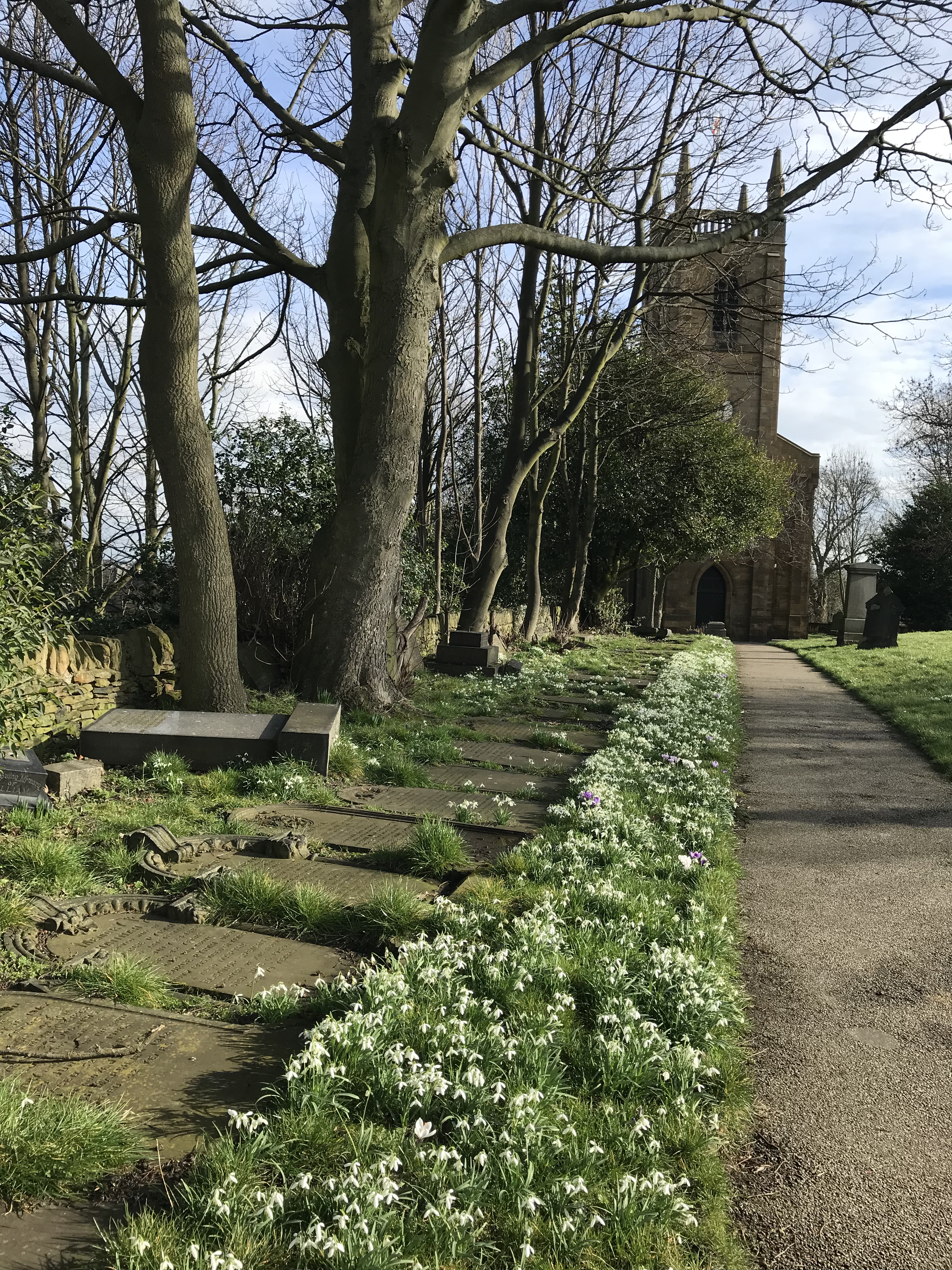
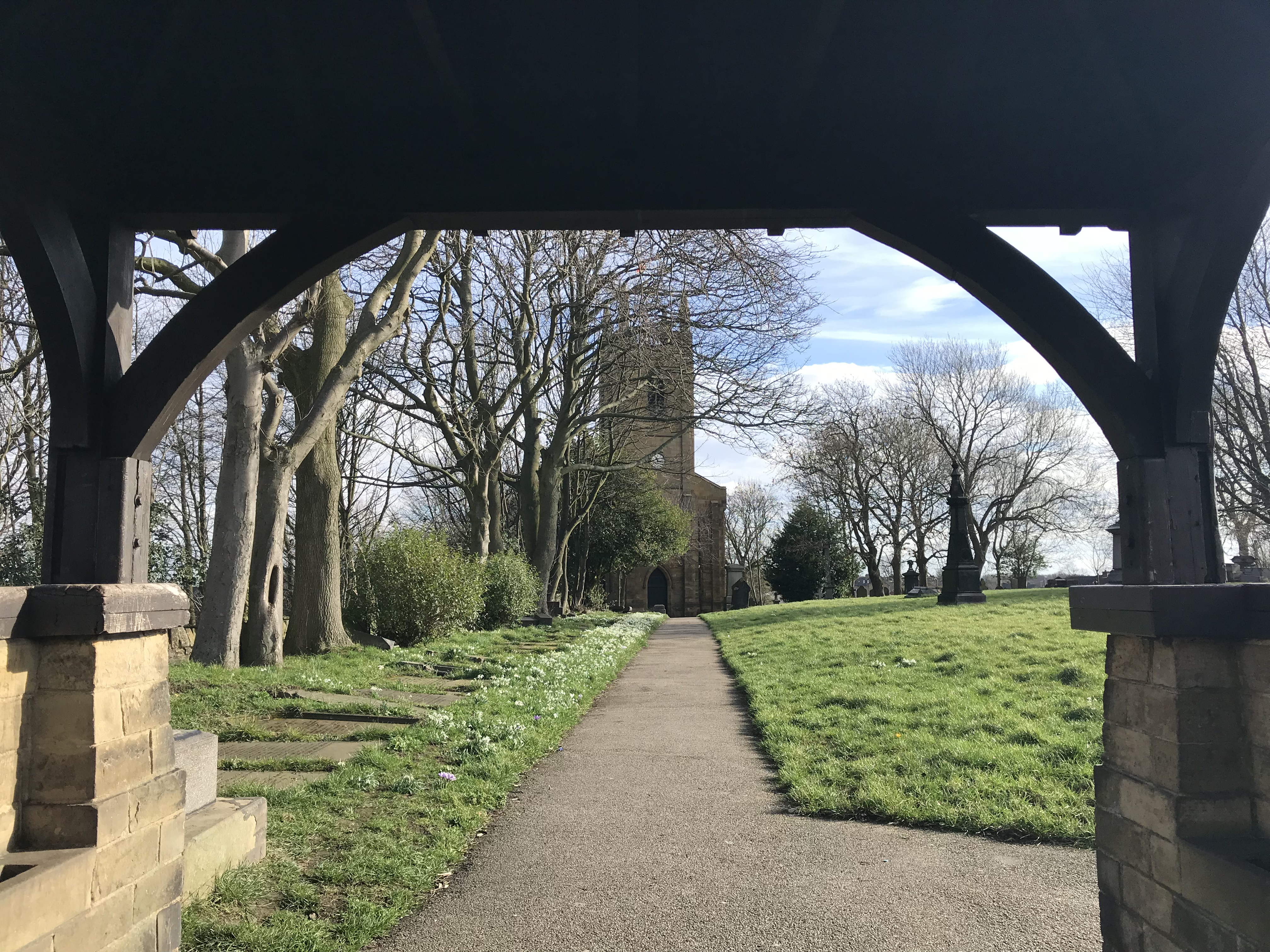
The rebuilt St Paul’s Church, Hanging Heaton. Photo by Jane Roberts

In contrast to the vicar’s travels, Mary Halliwell’s life had been confined to Yorkshire. Her parents, Thomas Halliwell and Soothill-born Jane Scargill, married on 19 July 1834 at St Mary’s church in Prestwich, Lancashire. Mary’s baptism is recorded on 24 November 1834 at St Mary’s, Woodkirk. The family lived on Soothill Lane, with Thomas working as a shopkeeper.

By 1841 their circumstances had changed. Jane and Mary are recorded living at Soothill along with stone masons William (50), Thomas (30) and George (25) Scargill and seven-year-old James Scargill. Woodkirk baptism registers point to William being Jane’s father. The 1851 census shows 41-year-old stone mason Thomas now as head, with widow Jane (39) confirmed as his sister. She is officially listed as a housekeeper. But other sources show she also taught and undertook needlework, including sewing for the wife of the vicar of Woodkirk. Mary, age 16, is recorded as a scholar. Other household members included Thomas’ nephew James (17) and niece Harriet (1). The 1851 census, taken a just under two months away from the birth of Mary’s baby, hides the turmoil.

Mary was ailing, her body swelling. Later it was revealed she knew “she was in the family way” but the vicar had ordered her not to say anything. Her mother, despite the heavy hints and promptings of Batley Carr Surgeon William Rhodes, believed her daughter was suffering from dropsy – an illness already experienced in the family, and which had proved fatal. Dr Rhodes called in a favour and arranged for Mary to see a Leeds-based colleague, Dr Teale, in April. He confirmed Rhodes’ opinion: Mary was pregnant.

It was this pregnancy which led to the stoning of the vicar in late July. The newspapers indicated as much, with The Leeds Intelligencer report of the 2 August stating:

It appears some charge has been made or is about to be made against the rev. gentleman affecting the paternity of an illegitimate child.

The affiliation case came before Dewsbury Magistrates (J.B. Greenwood, J Hague, B. Wheatley and F. Wormald) on the 25 August. The densely crowded court listened to the evidence presented for the complainant. At 9pm Mr. William Watts, acting on behalf of the Rev. Mathews, announced he would not be calling any witnesses at this late hour. He felt assured the magistrates would not see anything in the prosecution evidence which would cause them to find his client guilty. He was correct. Mr Greenwood dismissed the case on the basis of insufficient evidence. At this point press coverage only merited a few paragraphs.

However the verdict created an outcry, with a feeling that justice had not been served. So much so that a rehearing was called for in mid-September. It took place in a court house “crowded to suffocation“, and lasted from 12 noon until 10pm. The magistrates included Hague and Wormald from the previous hearing, but also Rev. Allbut (vicar of Dewsbury), Rev. Milner [Miller] of Woodkirk, Rev. Collins of Ossett and Rev. Payne of Dewsbury Moor.

Mary was described in The Huddersfield Chronicle as:

…small of stature and possesses interesting features, though her general appearance is that of premature womanhood; and the suffererings which she must have undergone have left behind an apparent exhaustion and weakness.

It is clear from this newspaper’s report where their sympathies lie, describing her demeanour as quiet and unassuming, and giving evidence with great propriety.

The packed court heard how Mary, a scholar for nine years and latterly a paid teacher at Rev. Matthews’ school, had been subject to the vicar’s advances since September 1848 when she was just 14, although ‘connexion‘ did not take place until 25 August 1849. Assignations mainly took place in the schoolroom. She received a catalogue of presents, including trinkets, clothes and a portrait of the vicar as a young man. All these were listed in the various accounts of the hearing.Child welfare: Ragged School, Whitechapel, 19thC. (part of). Credit: Wellcome Collection. CC BY

A note was also produced, written by the vicar on 3 September 1849 when he was ill with cholera. It read:

MY POOR LITTLE MARY. If anything should happen to me remember there is a cheque in my desk, made payable to you only, and is duly signed, to authorise you to draw on the West Riding Bank for a sum of money which I have placed there for you, and it is yours alone. Remember this as the gift from your faithful and unchanging friend.

There were claims that in January 1850 Mary told the vicar she was pregnant (enciente was the delicate French term used by The Huddersfield Chronicle of 20 September 1851, mindful of Victorian sensibilities around such matters). As a result he procured three bottles of medicine for her which resulted in a miscarriage. Once she recovered, their relationship resumed. Her solicitor, Mr Scholes, even claimed that the vicar’s wife and daughter had left him as a result of the attention he paid to Mary.

Witnesses gave evidence as to him often being seen in the girl’s company. Her school monitor pay of 3s 6d a week continued even whilst her duties were reduced in order to hide her pregnancy. They heard how, when her pregnancy was confirmed, Rev. Mathews confessed to Mary’s mother he was the father.

Arrangements were hastily made to remove her to relatives, Mary and Rachel Spence, at Denshaw Beck in Woodkirk parish, in order to conceal the pregnancy. The Rev. Mathews involved himself in the finer details, including arrangements for transport and provision of a Morley doctor to attend her during her labour (apparently William Rhodes refused). He even gave Mary a purse containing 4s 6d when she departed for her safe-house. However, Mary stayed only five days before returning home. In a later hearing her mother said this was because both she and her brother thought it:

…wicked of us both to send her there to conceal the birth of a child when she was only a child herself. I did not know that she would ever come back alive, and I never could sleep until she came back again.

Mr Watts once more acted for Rev. Mathews. In cross-examining witnesses he suggested Mary had been involved with a 60-year-old shopkeeper, Benny Scargill, and a youth named William Wainwright. He also called into question the family sleeping arrangements, all sharing the same bedroom – with her uncle and nephew sleeping in one bed and Mary and her mother in another. It was in fact later revealed that this was the room in which Mary gave birth to her child, by which stage a modesty screen had been placed down the middle.

Describing Mary as a “wretched, depraved, lying girl” he claimed she, her mother and uncle had concocted the story to extort money from the vicar. He said there was no other evidence against his client, other than that presented by them. This was uncorroborated evidence, he asserted, which did not satisfy the requirement of the Act of Parliament dealing with these cases.

This Act, as explained in The Huddersfield Chronicle of 27 September 1851, stated that:

If the evidence of the mother [in an affiliation case] be corroborated in some material particular by other testimony, to the satisfaction of the said justices, they may adjudge the man to be the putative father of any such bastard child.

Once again Mr Watts declined to call any witnesses, although the justices insisted he call the Rev. Thomas Allbut, vicar of Dewsbury. His evidence included the fact that on 23 April 1851 Thomas Scargill, Mary’s uncle, had informed him that Mary was pregnant and Mr. Mathews was the father. As a result he interviewed Mary, and she too confirmed the vicar was father of her unborn child. Rev. Allbut admitted he thought the 3 September 1849 letter was a suspicious document, but when he interviewed the girl she said Mr Mathews was ill and she was a poor girl who had lost her character. Rev. Allbut informed them that the case had been referred to the Bishop of Ripon to consider.

Yet again Rev. Mathews gave no statement.

After 30 minutes deliberation the magistrates once more declined to make a maintenance order against the Rev. Matthews. The crowd showed their dissatisfaction with loud hisses which then gave way to:

a general utterance of merciless epithets upon Mr Mathews, the parsons, the church and state.

The case was now making national news. The Huddersfield Chronicle of 27 September entitled ‘Justices’ Justice‘ quoting from the London Examiner. The piece said the Rev. Mathews:

…is described as popular with the magistrates and gentry of the neighbourhood; and two clergymen, whose names occur in evidence, sat on the bench during the hearing of the case…..

It concluded:

As we are writing this article, we see that the case thus dismissed at the first hearing has again during the past week been brought on before the same bench of magistrates, with additional corroborative testimony. The magistrates again declined to make an order upon Mr. Matthews, [sic] stating that “the new evidence adduced had not materially strengthened the case.” We do not wonder at that. Short of evidence which should be of the most direct kind and not simply corroborative, we do not see how it would easily be possible to add strength to a case established so completely by so many witnesses, who stood up to swear one after another, and stood down again, in almost every instance unquestioned.

It was announced after the hearing that the case would probably be carried before another and more competent tribunal. Certainly it cannot rest as it stands. The interests of the church and society are not distinct; and it cannot be supposed that the exposure and punishment of clerical offenders brings a scandal which might be avoided by the church continuing to hold the worst kind of cruelty, vice, and hypocrisy, protected in her bosom.

Mary’s solicitor, describing her as the daughter of a poor widow woman, now publicly appealed for voluntary contributions to enable the bringing of a case of seduction against the Rev. Mathews at the next assizes.

It appeared the growing scandal now forced the Bishop of Ripon into action, leading to the final official inquiry lasting from 18 – 24 October in front of church-appointed commissioners. Mary attended dressed in mourning clothes. Within days of the end of the second hearing, her infant son died. His 19 September 1851 burial is recorded in the parish register of Ossett cum Gawthorpe.

The evidence in the church case was more lurid. The commissioners even proceeded to the home of Batley Carr surgeon William Rhodes who gave evidence from his sickbed. His testimony included further information about about Mary’s earlier miscarriage. It also included the declaration by her solicitor, Mr Scholes, that he could prove the vicar:

…had two bastard children by a girl called Mary Whitehead when he was a minister at Knock Holt, near Seven Oaks, in Kent, and that the girl was a Sunday scholar.

Prior to this hearing, anonymous letters had been sent to several local residents. These praised the virtues of Rev. Mathews, called Mary a common prostitute, claimed her mother Jane was never married (she produced her wedding certificate at this hearing), asserted all Jane’s sisters had lost their character and labelled the entire family as notorious. Witnesses testified the handwriting belonged to none other than the Rev. Matthews.

We have a further physical description of Mary given by Richard Green, superintendent of the Dewsbury district police. He said she was slight, at 5′ 1″ to 5′ 2″, and less than average strength. The vicar stood at 6′ 1″ or above.

Evidence on behalf of the vicar included children claiming he often gave them gifts by way of prizes at school. Some said this included the portrait of him as a young man…which Mary had chosen from a selection.

The proceedings closed on 24 October with the Commissioners declaring that sufficient prima facie grounds existed for further proceedings.

Yet again there had been one notable absentee from proceedings. Throughout the full hearing the Rev. Mathews, suspended from his duties at Hanging Heaton, failed to make any personal appearance to give his side of the story. His defence was subsequently given in the form of an open letter, published in The Leeds Intelligencer on 1 November 1851.

He said he had been compelled to keep back his evidence due to the further threats of action by Mary’s solicitor: basically he was wary of laying all his cards on the table. He denied all the charges, his natural kindness had been deliberately twisted by malign people. Throughout, his sole intention had been to protect Mary from inappropriate relationships and help her escape a life of sin and guilt, only to find himself duped. Mary was a friendless outcast in the parish, but he was determined to help her. He was never alone with her. He said he provided gifts, including clothing, not just to Mary, but to all the poorest children in school. She was not signalled out for special treatment. He also claimed the medicine he gave her was not to procure a miscarriage, but to treat her for scarlet fever which had also affected 30 other children in the parish. And some of these he visited more frequently than he did Mary. When, in September 1849, he was seized with the cholera outbreak prevalent in his parish, he gave her the note authorising the payment of £3 in the event of his death so that her mother could afford to place her in service, or some other suitable occupation. Similarly, the 4s 6d he gave her when she left for Denshaw Beck was because she professed to be penniless. He only reduced her lessons because he believed her to be ill with dropsy and wished to spare her any unnecessary exertion. And he continued to pay her because, as long as he could afford it, he never stopped paying salaries to those he employed, even when they were ill.

However, it failed to sway the church authorities. In March 1852 the Bishop of Ripon deprived the Rev. Stephen Mathews of the incumbency of Hanging Heaton for the “foul crime” of adultery with one of his parishioners, Mary Halliwell.

In June 1860, a couple of weeks after the death of Mary’s mother, the Bishop of Salisbury appointed the Rev. Mathews to the curacy of Zeals in Wiltshire. He died on 3 November 1868 at Saffron Walden.

Mary’s marriage to Emmanuel Halstead was registered in Dewsbury in the first quarter of 1866. The couple settled in Keighley. Their children included Jane, Alice Mary, Lillia, Samuel, Herbert Scargill and Sarah. Mary died on 13 January 1905. She is buried in Utley Cemetery, Keighley.

The case is not one I expected to discover locally, and in this period. The scandal and fall-out this shocking case must have caused in this small, close-knit community is unimaginable. The judicial advantage social standing or religious positions gives is nothing new. But looking at it from a purely factual standpoint, the thing that struck me above all else was the depth of social, historical and local information provided in the extensive reporting of this case – evidence not necessarily picked up elsewhere; information valuable even if your family is not among those named.

The parade of witnesses provide an insight into community relationships, occupations and employers. This includes details of women’s work such as washing and needlework, not necessarily shown in official records. It even includes the number of looms operated by individual families. There is information about when individual children began and ended their education. Physical descriptions are given too. We have corroborating evidence for Jane Scargill’s pre-civil registration marriage in another county. There are local features described such as the quarry, the tenter fields and the position of buildings in relation to others in the village. Disease outbreaks are identified. There is even reference to sleeping arrangements. Yes, the defendant’s solicitor may have used it to try to make some negative comment about Mary’s family – but was this representative of the realities of life for the poorest? And actually it resonates with the tale in my last blog post about my great grandma a century later – and she at one point lived in Hanging Heaton.
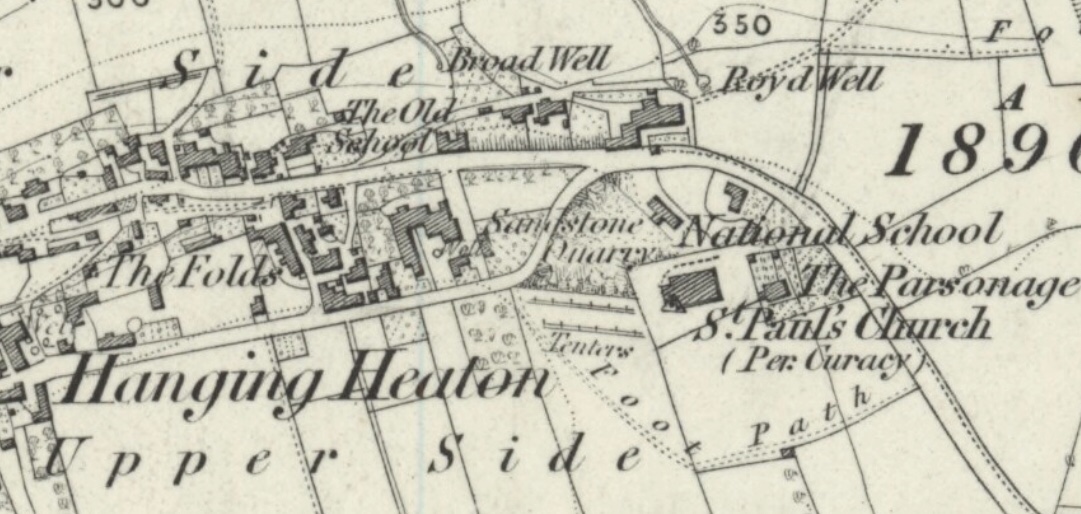
Yorkshire 232 Six Inch OS Map Extract, Surveyed 1847-1851, Published 1851. Adapted

The press reporting was eye-opening too, particularly the critical pieces such as appeared in The Huddersfield Chronicle. The reports point to Victorian sensibilities and long since gone language, with use of phrases such as ‘in the family way‘ or ‘enciente‘ and the distinctions made between ‘taking liberties‘ and ‘connexion‘. Yet, despite the tiptoeing around the sexual aspects, the condemnation of the verdicts, although couched, was unequivocal.

There are mentions of chip shops – but not our modern day understanding. This in the context of wood chips to light fires. There’s reference to a Mary visiting a planet reader in Leeds: a quaint term for a fortune teller.

And the contemporary descriptions of the day-to-day facilities and operation of this mid-19th century school are priceless. This includes information about the weekly attendance payment of 2d fixed due to the poverty of his parishioners, with this being insufficient to pay the salary of a master leading to the vicar personally training two female teachers. The monitorial system is described, with pupils being appointed as paid monitors with salaries dependent on age and experience. Their duties are described right down to cleaning and dusting the school and church after school and on Saturdays. There are even details about the school buildings (the quarry school was the one heavily featured in this tale), their fabric and furnishings.

In short it is a wonderful peak into the community.

For those with mid-nineteenth century Hanging Heaton ancestry I’ve included a list of those residents who gave evidence in the various cases and inquiries.

  • Thomas Albutt – Vicar, Dewsbury and rural dean of the district;
  • George Brearey – Clothier, Hanging Heaton, worked with Joseph Stansfield and occasionally Eliza Stansfield;
  • George Bromley – Clothier, Hanging Heaton;
  • Alfred Day – Hanging Heaton, 11;
  • Abraham Day – owned tenter field with two tenters. A tenter was a wooden frame on which cloth is stretched during the manufacturing process to retain its shape whilst drying;
  • Emma Day – Hanging Heaton;
  • Hephzibah Day – Former Sunday School Scholar and sister-in-law to Sarah. Age 22. Also the sister of Achsah, servant to the Mathews family in 1841;
  • Sarah Day – Wife of Henry Day, Manufacturer. Four children at Rev Mathews’ School
  • Sarah Jane Day – Hanging Heaton, 13;
  • George Gamble – Clothier, Hanging Heaton (some reports say Weaver, Batley). Employed by Abraham Day to tenter and teem;
  • Joseph Oldroyd Gill – confirmed school plan;
  • Richard Green – Superintendent of Police Dewsbury district;
  • Jane Halliwell – Widow, Soothill. Mother of Mary. Married Thomas in Prestwich. Did needlework for wife of George Dempster Miller;
  • Theophilius Hastings Ingham – Collector of Rates, Hanging Heaton. Brother-in-law of William Wainwright;
  • George Dempster Miller – Incumbent of Woodkirk;
  • Mary Mitchell – Chidswell, 11;
  • Charles Oldroyd – Weaver, Hanging Heaton;
  • Hannah Oldroyd – Hanging Heaton, sister of Charles;
  • Rachel Oldroyd – Earlsheaton, 14;
  • John Redfearn – Weaver, Hanging Heaton. Employed by Abraham Day to tenter and teem;
  • William Rhodes – Surgeon, Batley Carr;
  • Jane Richardson – Common Side, Hanging Heaton.15 last August. Went to Jane Halliwell for sewing instruction;
  • Hannah Rylah – Chidswell, 14 next New Year’s Day;
  • Benjamin Scargill – Shopkeeper, Chidswell, age about 60;
  • James Scargill – amongst those who attacked the Vicar, fined and bound over to keep the peace towards him. A James Scargill was nephew of Thomas;
  • Thomas Scargill – Stone Mason, Soothill. Uncle of Mary Halliwell;
  • Benjamin Shaw – Clothier, Shaw Cross;
  • Peter Senior – Clothier, Hanging Heaton. Employed by Abraham Day to tenter and teem;
  • Mary Spence – Husband of Joseph Spence, farmer. Daughter [in-law] of Rachel and living with her at Denshaw Beck. Washed for Rev Dempster Miller;
  • Rachel Spence – Widow, Denshaw Beck. Related to Jane and Mary Halliwell;
  • Eliza Stansfield – Hanging Heaton, wife of Joseph and occasionally worked with him and George Brearey;
  • Joseph Stansfield – Clothier, Hanging Heaton, works with George Brearey;
  • Mark Terry – Clothier, Chidswell;
  • Sarah Terry (Née Marshall) – Chidswell, former teacher, wife of Mark;
  • Esther Tolson – Teacher, Soothill, 24;
  • William Wainwright – organist, Sunday School teacher, carpenter who worked in uncle Charles Wainwright’s chip shop;
  • David Walker – son of sexton, John. Refused to attend Church Commissioners investigation unless expenses paid. Clothier, Shaw Cross. 26. A David Walker was among those who attacked the Vicar, fined and bound over to keep the peace towards him;
  • George Walker – among those who attacked the Vicar, fined and bound over to keep the peace towards him;
  • John Walker – Sexton, father of David. Refused to attend Commission unless transport provided to Dewsbury;
  • Thomas Ward – Rag Dealer, Hanging Heaton; and
  • Benjamin Wilson – no details.

Postscript:
Finally a big thank you for the donations already received to keep this website going. 

The website has always been free to use, but it does cost me money to operate. In the current difficult economic climate I am considering if I can continue to afford to keep running it as a free resource, especially as I have to balance the research time against work commitments. 

If you have enjoyed reading the various pieces, and would like to make a donation towards keeping the website up and running in its current open access format, it would be very much appreciated. 

Please click here to be taken to the PayPal donation link. By making a donation you will be helping to keep the website online and freely available for all. 

Thank you.

Sources:

  • 1841-1901 censuses, accessed via Ancestry.co.uk and Findmypast;
  • Burial Registers: Holy and Undivided Trinity, Ossett cum Gawthorpe; Batley All Saints. Both accessed via Ancestry.co.uk;
  • Death Date and Burial of Mary Halstead (née Halliwell), via Find A Grave Ancestry.com. UK and Ireland, Find A Grave Index, 1300s-Current [database on-line]. Provo, UT, USA: Ancestry.com Operations, Inc., 2012. Original data: Find A Grave. Find A Grave. http://www.findagrave.com/cgi-bin/fg.cgi.
  • Baptism Registers: Ossett cum Gawthorpe; Woodkirk St Mary’s; Both accessed via Ancestry.co.uk;
  • British India Office Ecclesiastical Returns – Parish Register Transcripts from the Presidency of Bengal, accessed via Findmypast;
  • Marriage Registers: St James, Picaddilly, Westminster; Prestwich St. Mary’s. Both accessed via Ancestry.co.uk;
  • GRO indexes for marriage of Mary Halliwell, accessed via Findmypast;
  • England & Wales, National Probate Calendar (Index of Wills and Administrations), 1858-1995, entry for Stephen Britannicus Mathews, accessed via Ancestry.co.uk
  • Alumni Cantabrigienses, accessed via GoogleBooks;
  • OS Map Reproduced with the permission of the National Library of Scotland https://maps.nls.uk/index.html under a Creative Commons licence.
  • Newspapers including: Carlisle Journal – 5 September 1851; The Huddersfield Chronicle – 20 September 1851, 27 September 1851; The Leeds Intelligencer – 2 August 1851, 30 August 1851, 18 October 1851, 25 October 1851, 1 November 1851; The Leeds Mercury – 6 March 1852; The Leeds Times – 30 August 1851, 20 September 1851, 25 October 1851; Liverpool Mercury – 2 September 1851. All accessed via Findmypast
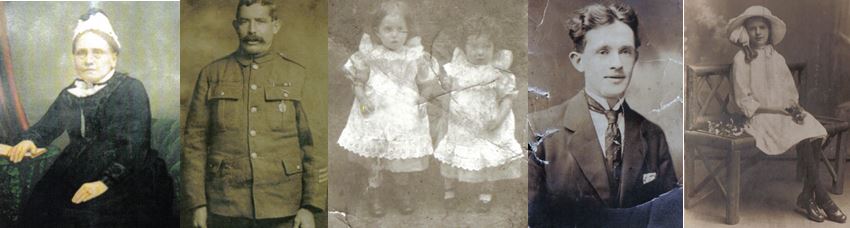
My 1st One-Name Study Story: Edith Aveyard – Yorkshire Born And Bred

For me family history is more than a series of names and dates. I want to try paint a picture of my ancestors lives, their wider family network, the times in which they lived and the communities which shaped them. For many, records are the only way to build up this picture. For others their lives are still within living memory, either first hand or indirectly through others.

Edith Aveyard is my maternal great grandmother and the reason for my one-name study choice. I never met her, but through many hours talking to mum I do feel I have some sense of her character which goes beyond the records.

Born in East Ardsley in the West Riding of Yorkshire on 20 March 1879 she was one of the nine children of Wesleyan Methodist Abraham Aveyard and his wife Sarah Jane (née Broadhead). Her siblings included Peter (1873), Thomas Henry (1875), Bertha (1887), Amos Hartley (born 1881, died 1884), Paulina/Pauline (circa 1884), Eliza (1885), Caroline (1887) and John (1889). Abraham, a coal miner, spent several short spells between 1894 and 1908 in Wakefield Prison for debt.

Family census and various birth, baptism, death and burial records show that by March 1884 the family moved from East Ardsley to Morley. Sometime between May 1887 and March 1889 they shifted to Drighlington but by the mid-1890s they were back in Morley. All were coal-mining areas, so provided employment opportunities for Abraham and his eldest sons.

Edith married coal miner Jonathan Rhodes at Woodkirk Parish Church on 14 August 1897. They were both 18 years old. Edith did not sign her name in the register. Mum recalls that she could never write – yet she could read a horse-racing card well enough in the newspapers to enable her to put on a bet!

It was a marriage which did not meet with the approval of Jonathan’s parents, William Burnley Rhodes and Elizabeth. Mum has the impression they thought they were a ‘cut above’ Edith’s Aveyard family. Perhaps Edith’s father’s periods in jail were central to this belief. However, the marriage was one of necessity as Edith gave birth to a daughter, Alice, less than four months after the wedding.

The couple settled into married life and their home at Healey Croft Terrace, East Ardsley, near-neighbours of Edith’s brother Thomas Henry Aveyard. It was here the couple’s other children were born: Ethel (1899), Oliver (circa 1902), William Henry Bastow (circa 1903) and Pauline (1905).

But life was not without its difficulties. Jonathan was not a well man. A diabetic in the pre-insulin era, he was carrying out the physically demanding job of a coal hewer. And then tragedy hit. First youngest son William died at the Healey Croft Terrace home, on 4 June 1907, struck down by meningitis when only four-years-old. He was buried in the churchyard at East Ardsley St Michael’s two day’s later. Then, shortly after moving to Morley, the couple’s other son 8-year-old Oliver was killed on 8 October 1910 after being knocked down by a motor car on Britannia Road. It’s an incident which I wrote about here. He was buried alongside his brother on 11 October 1910.

By 1916 the family had left Morley and were living in Hanging Heaton. Daughter Alice married Willie Boynes in the Sunday school at Hanging Heaton on 16 April 1916. The school had been given a special licence to hold marriages by the Bishop of Wakefield.

The somewhat unusual venue was because the parish church of St Paul’s Church at Hanging Heaton was gutted by fire after a lightning strike in the early hours of 17 February 1916. Initially, given this was the midst of the Great War, the crowd watching the destruction of this landmark church, speculated that the cause was ‘German incendrianism.’

The Million Act church of St Paul’s, Hanging Heaton, was built originally between 1823-1825 as part of the church building programme sanctioned in the wake of Wellington’s 1815 victory over Napoleon at Waterloo. It was on a dominant hillside position, and the flames were visible for miles around. The High Street home of the Rhodes family was a matter of a few hundred metres away.

High Street, Hanging Heaton today. The old Number 67 where the family lived no longer exists. Photo by Jane Roberts

The fire was spotted at 4.10 am by Sam Pleasants. But, with only one telephone available in the vicinity of Hanging Heaton, summoning help was not straightforward. The Dewsbury Brigade received a call at 4.23am and, according to the Rev. W.E. Cleworth, they were working with the hose on the blaze before 5am (Batley News, 19 February 1916). The Dewsbury Reporter of the same date also stated:

Great praise was bestowed upon Dewsbury Fire Brigade for the very prompt manner in which they responded to the call and the general adaptability they displayed.

The Batley News report went onto say the Batley Brigade did not receive a request to assist until 5.15 am. This delay was criticised as being detrimental to efforts to save the church. The Leeds Mercury of 18 February in its report mentions the Dewsbury Brigade was speedily on the spot, but states Batley’s arrival was delayed for some time at the toll-bar gate at Grange Road. No mention of the problems being down to contacting them.

Later published accounts state that both the Batley and Dewsbury Fire Brigades were delayed in attending the conflagration. These too do not mention the lateness in getting the call through to Batley. Rather they say precisely because of the church’s steep hillside position, the horse-drawn engine from Batley could not access via the direct route up the hill. Instead it had to go via Grange Road where the Toll Keeper, when he eventually was roused from bed, argued about the toll for fire engines. The Dewsbury Brigade were held up because they could not enter the area without the permission of the delayed Batley Brigade. And when they were both finally in position, at the same time, initially they had no water.

Whatever happened with the Fire Brigades, the main point is the flames, fanned by a strong wind, took hold and the church was beyond saving. Its rebuilding was not authorised until 1920, and it was finally rededicated on 17 November 1923.

The vulnerability of the building to lightning strikes was highlighted just prior to the rededication. Building work completed, on Saturday 7 July 1923 it was once more struck by lightning. The top of one of the pinnacles was completely shattered, and a small fire broke out. Fortunately residents witnessed the event and acted swiftly. The blaze was quickly extinguished with buckets of water. This particular storm caused death and destruction across Yorkshire.

On a broader family history note, amongst the things salvaged from the 1916 inferno were the parish registers! One of the ‘rescuers’ of these precious documents was the verger, who also lived on High Street.

Interior of the destroyed Church of St Paul’s, Hanging Heaton

Despite the destruction, sightseers who flocked to view the ruins were allowed to enter the devastated building just over a week later. The Batley News of 26 February 1916 described:

…streams of humanity that flowed to the scene of the fire-wreckage was like unto the multitudes on the days of Lee Fair, [the country’s oldest chartered fair which dates from at least the early 12th century and is held at West Ardsley] a big football match or a big festival.

It is hard to imagine Edith and her family not being amongst these streams, given their proximity to the church. It was there nearest place of worship too, Edith clearly not adhering to her father’s Wesleyanism. She married in the Established Church, and her children were baptised in it.

In 1919 middle daughter Ethel married James Delaney, a Batley Catholic of Irish descent. Serving as a Gunner in the Royal Field Artillery, and latterly as a Sapper in the Royal Engineers, he was discharged from the Army in October 1918 no longer fit for service. He died in the East Lancashire Soldiers’ and Sailors’ Home at Park Lane, Kersal on 27 January 1928. One relative seems to think Ethel, who had nursed her husband, was so low in the aftermath of her husband’s death she could see no point in living. It was Edith who prevented her carrying through with her threat. I’ve found no evidence to back this up as yet. Perhaps I never will.

Once Ethel married, the only daughter remaining at home was Pauline. They were still in Hanging Heaton, but now at 20, Kirkgate. On 6 March 1921 she was by her father’s sickbed whilst her mother, Edith, briefly nipped out. It was whilst she was away that Jonathan died. His funeral took place at East Ardsley St Michael’s where he was laid to rest with his young sons on 9 March 1921.

Kirkgate, Hanging Heaton. Number 20 is now a modern house. These are the nearest old houses. Photo by Jane Roberts

Edith re-married on 25 February 1922. He husband was 38-year-old motor driver William Henry Ellis, a bachelor. Mum knew him as uncle a Bill. St Paul’s Hanging Heaton was not yet rebuilt, so the wedding took place in the Church Hall which had replaced the Sunday School as the building licensed to conduct services.

The Rebuilt Church of St Paul’s, Hanging Heaton. Photo by Jane Roberts

By 1939 bus driver Bill and Edith had moved to Upper Camroyd Street in the centre of Dewsbury. The location suited her perfectly. A stone’s throw from the huge market, and with access to a full array of shops, it was also near the pub where she could pop across to get a pitcher of beer to take home. Subsequently Edith moved a couple of streets away from Upper Camroyd Street to one of a pair of cottages in Battye Street.

It was the same town in which married daughter Pauline now lived with husband John, so mum has plenty memories about her broad Yorkshire-speaking grandma.

A diminutive woman, mum remembers her as being ‘a bit to a tartar‘ who would stand no nonsense from her grandchildren. She recalls a couple of examples. Her grandma had a horsehair settee. Mum, as a child in her short skirt, remembers sitting on it and the fibres pricking into her legs. Despite the discomfort she would sit rigid, as no way would her grandma allow any fidgeting. On another occasion Edith came to look after her grandchildren whilst Pauline and husband John were away. The children were not allowed to open any drawers in their own house!

Yet she was always more lenient with mum’s eldest brother, Jack. And when one of mum’s sisters married, she offered to partition her bedroom down the middle with a curtain so she could live there with her new husband. The offer was declined.

Mum’s other memories include when she first started work. Her job straight from school was at Luke Howgate’s in Dewsbury. The firm still exists today. It manufactures for the funeral trade and mum worked on simple soft furnishings for coffin interiors. She would pop in from work for a Friday fish and chips lunch with her grandma and uncle Bill. Edith was thrilled with her granddaughter’s new job and would ask endless questions about it, whilst imparting her considerable knowledge of the funeral trade. She spoke from personal experience. Besides informally helping bring babies into the world, she also was called upon to lay out the dead in the neighbourhood. She even had her own personal laying out drawer ready for her own death – and her grandchildren were not allowed to open this either!

Edith Aveyard

Uncle Bill died in 1956. Edith died at Staincliffe hospital on 24 October 1957 as a result of cerebral arterio sclerosis and old age. She was buried alongside her first husband, Jonathan, and sons William and Oliver in the unmarked East Ardsley grave.

Her Battye Street home as long since gone. The cottages were demolished. On the very spot where they stood is the Chapel of Rest for George Brooke’s, Funeral Directors. It somehow seems fitting.

Sources:

  • GRO Birth, Marriage & Death certificates – various;
  • Yorkshire Baptisms, Marriages & Burials via Ancestry.com Church of England Parish Register Collection. Original data at West Yorkshire Archives;
  • Abraham Aveyard, HMP Wakefield Records, via Ancestry.com. West Yorkshire, England, Prison Records, 1801-1914 [database on-line]. Original data at West Yorkshire Prison Records. Reference C118: Wakefield Prison. West Yorkshire Archive Service, Wakefield, England;
  • Censuses 1881 to 1911 accessed via Ancestry.co.uk and FindMyPast;
  • 1939 Register accessed via Ancestry.co.uk and FindMyPast;
  • Newspapers as indicated;
  • Pauline Hill’s recollections – conversations with Jane Roberts, February 2019;
  • St Paul’s Hanging Heaton website: http://www.stpaulch.co.uk/;
  • OS Maps – National Library of Scotland;
  • East Ardsley St Michael’s MI booklet – Morley Family History Group;
  • James Delaney, WO 363 War Office Soldiers’ Documents, First World War ‘Burnt’ Documents accessed via FindMyPast. Originals at The National Archives, Reference WO 363/D972.

Don’t Let Parish Register Indexes and Online Searches Lead You Down the Family History Garden Path

It’s so easy to rely on online parish register searches or transcripts and indexes for family history. But by putting absolute faith in them you could be missing out on so much more. Hopefully this post illustrate why you should also invest time in looking at the register itself, or digitised images, and not simply place all your faith in the easier options.

Family History Society transcripts and indexes include the health warning to check against the original register, and it is sound advice. Even if they are accurate, information in the original register may by omitted due to space constraints or because they do not neatly fit in the templates. The same caveats also apply to search results from online providers of family history records.

I finally decided to write about the issue after recently going through baptisms in the Wakefield All Saints register for the 1750s and 1760s and comparing against online search results.

Image courtesy of Pixabay

Here are some of the problems associated with not looking at the original registers, and benefits which may be gained from putting in the effort.

  • Registers can be damaged making entries illegible. It may be just for the odd entry, but it could involve weeks, months or even years. There may be periods where the register does not survive, or was never kept. Whole pages may have been omitted during the digitisation process. This may be the reason why the entry you are seeking does not come up in a search or appear in an index, or why if it does there may be transcription errors. Without checking the actual register, or images, you may never know. And by not knowing you may end up with incorrect family history information or be missing out on work rounds like failing to check Bishop’s Transcripts (BT) copies.
  • If you are relying on searches and indexes to find an entry, do not confine your to check the digitised or original parish register image for the entry concerned. Look at the surrounding ones too to get a feel for the register. These checks should include ensuring the parish or church matches against the one identified on the finding aid. This can be a particular issue if a parish church has associated chapelries. Birstall Parish for example had a Chapel of Ease, White Chapel, which had baptism and, eventually, burial rights. This subtle difference is not necessarily picked up if the register itself is not checked.
  • Mistakes in transcribing and indexing. Recently I’ve seen the surname “Wright” mistakenly indexed as “Might“. Doing an online search for the surname, including any of the usual variants just won’t find it.
  • Similarly Christian names can be totally wrong – James instead of Sam[ue]l is one that springs to mind in one of my family baptism searches. Without checking the register I would be led down the garden path for any future references to the child.
  • On this theme, parish register amendments are not necessarily picked up in any searches. Two examples here. An 1816 baptism at Whitkirk. Ancestry has this indexed in searches as “William Illegitimate Pennington” son of Grace. This is wrong. The child was not illegitimate and the entry should be William Hill. There is a note at the bottom of the page of the baptism register stating it is erroneous and Grace was lawfully married to Francis Hill. Ancestry have not picked this up. And there is a similar theme for Wakefield All Saints when William son of William Jennings was baptised on 8 November 1764. The register has an annotation indicating three competent witnesses testified the child was actually called Thomas. Granted a search for Thomas Jennings on Ancestry.co.uk will fetch “William Jennings” in the results, but you need to drill down to find out the full details.
  • The Wakefield All Saints register which promoted this search had several entries in the early 1760s for the birth of illegitimate children with the register noting the name of the father. Some indicate the child was “basely begot not declaring the father.” Others indicate the father in general terms like “a French Man” or “a French prisoner” (and those entries lead to a whole new set of questions). But others will name the putative father, including some with occupations (plenty soldiers) and some even giving his abode. The father is not shown in online searches, you need to view the entry. And if your ancestor was the father you possibly would not know without going through the register.
  • Burials throw up the issue whereby some online searches give no surname for married women and children. Try Ancestry’s collection of West Yorkshire Church of England Burial Registers 1813-1985. In the early decades of this collection this surname omission is rife. Imagine the problem if your ancestor was an Ann, Mary or Elizabeth!
  • Problems with dates. There are numerous examples of this. The wrong number for the day, month, or even the wrong year given. A particular issue is around the pre and post 1752 calendar change from Julian to Gregorian. Many parishes continued with the old style calendar way beyond 1752 in their registers, with the New Year still starting on 25 March. Without checking the parish register you may end up attributing a birth to the wrong year.
  • Going through the registers yourself improves your transcription skills. You start to get your eye in for reading older documents, which only benefits your wider family history research.
  • And finally by going through the register you start to get a feel for the community of your ancestors, the status of various parishioners, occupations in the locality, indications of disease outbreaks, maybe even weather updates and wider events. The Wakefield register is a perfect example of the snippets you can pick up. Between 1760 and 1764, using baptisms alone, there’s an abandoned child, the three children born to different women by a French man/French prisoner. On 13 August 1763 there is the baptism of Richard Brown, a black man from Carolina. And on 4 October 1764 “John Vernon a Black from Antiga [sic] ab[ou]t 22 y[ea]rs old.

Published indexes and online family history database providers are fabulous finding aids and have opened up family history to a much wider audience. But they should be treated as that – finding aids. Using different sources may help overcome the issue. For example a Family History Society booklet may give different information to an Ancestry, FamilySearch or FindMyPast search, some of which may use the BT rather than the parish register. And that is another issue. What is the source used by the online provider or Family History Society? Is it the parish register or is it a BT? It might seem a minor detail, but this too can impact on search results.

So if at all possible check the original register, or digitised images, for yourself. It may surprise you – and could save you a lot of time in the long run.

How to Pick a Baby’s Name – Enid Blyton Inspiration

This post is prompted by my daughter’s birthday and a Twitter thread about name inspirations.

Way before the resurgence in popularity of Amelia as a name in England, we chose it for our daughter. She was named after my all-time favourite childhood book character – Enid Blyton’s Naughty Amelia Jane.

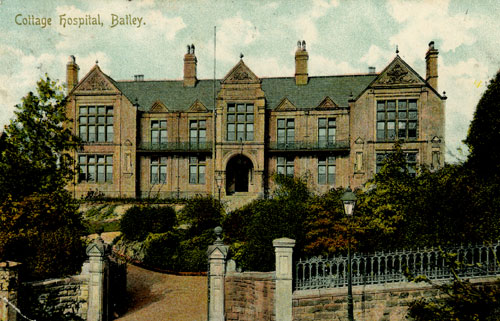
As a child I spent lengthy periods in hospital. One of my earliest memories is one of the nurses in the now long-since closed Batley Hospital reading me a chapter from an Amelia Jane book before bedtime. Incidentally it is in the grounds of this hospital that my grandad died whilst building an air raid shelter.

batley hospital

It also brings to mind my two cousins and I (separated by only three months in birth and five minute’s walking distance as children) swapping Enid Blyton books in school holidays.

In the early 1990’s my love for Amelia as a name was reinforced by my reading of William Makepeace Thackeray’s Vanity Fair. Whilst pregnant my initial favourite name for a girl was Alice. But in the final weeks I returned to a name which evoked happy childhood memories, combined with more recent literary reading.

As to family links, to put in perspective it’s family associations a decade or so ago I was inordinately happy to learn my 4x great aunt was an Amelia. That’s really the closest ties family history-wise.

I did baulk at a middle name of Jane. My daughter was unique and I’ve never been keen enough on my name, which has no real family history, to saddle my daughter with it. In fact I’ve no idea as to why I ended up with it as a name. Funnily enough some do think it is her middle name!

Amelia’s name origins continued to have relevance as she grew up, with me reading to her bedtime stories and tales of the naughtiest toy in the toy cupboard. I loved reading them to her, reliving my childhood in the process – though I do think she preferred The Faraway Tree (Silky was NOT a naming option.)

img_2469

And so I think about my ancestors and naming patterns. So many names are recycled across the generations. But that recycling is disappearing. Family sizes have diminished so there is less opportunity for generational-straddling family names. And in the last century or so name choices have widened. We have literary, musical and cinematography associated names. Travel horizons and migration have broadened, also correspondingly increasing choice. And have middle names also increased in usage? Also we are no longer bound by the same religious constraints with saints names.

In fact our naming choices are far less prescribed than in other countries. Responding to a FOI request in 2008, the General Register Office (GRO) stated:

Registrations of births in England and Wales are made under the Births and Deaths Registration Act 1953 and the Registration of Births and Deaths Regulations 1987. The legislation does not set out any guidance on what parents may name their child.

Our advice to registrars is that a name should consist of a sequence of letters and that it should not be offensive. The reason for limiting the registration of names to a sequence of letters is that a name which includes a string of numbers or symbols etc. has no intrinsic sense of being a name, however the suffix ‘II’ or ‘III’ would be allowed.

The only restriction on the length of a name is that it must be able to fit in the space provided on the registration page. There are no leaflets or booklets available giving guidance on this matter.

Where the registrar has any concerns over a name they will discuss this with the parents and point out the problems the child may face as they grow up and try to get them to reconsider their choice.

For those name and stats geeks (like me) the most popular first names for baby boys and girls in 2017 using birth registration data can be found here. You’ll have to wait until September 2019 for the 2018 stats. The historical data for the top 100 names for baby boys and girls for 1904 to 1994 at 10-yearly intervals is here. Another ‘names through time’ using civil registration information which is great fun is here.

My family history also displays the vagaries of names. And this is something to consider when searching for ancestors in the GRO Indexes.

Dad was never known by his registered first name. My grandma registered it unbeknownst to my grandad who detested it. Hence my dad was always known by his middle name – the source of much official confusion. And payback for my grandma was her next son was born on the saint’s day my dad was registered under.

Another example is of a collateral ancestor known by a totally different name than the one registered. Anecdotally the parent registering apparently used the similar-sounding name of an old girlfriend.

And my 2x grandmother and great grandfather were both initially registered under different names, their parents changing their minds and exercising their option to amend, something I wrote about a while ago.

So for family history purpose do ask why your parents chose your name. Note to self: I need to ask mum why she and dad chose my name. I recall dad saying his choice was Michel(l)e. I reckon they were just popular names at the time.

And if my daughter ever asks, she owes her name primarily to Enid Blyton, and William Makepeace Thackeray was the deciding factor. Charles Lutwidge Dodgson (aka Lewis Carroll) didn’t quite match up.

Sources:

Transcription Tuesday 2019 – Your Chance to Give Something Back to Family History

A date for your diary: 5 February 2019 is Transcription Tuesday.

This annual event, launched by Who Do You Think You Are? Magazine in 2017, promises to be the biggest yet and it’s your chance to be part of it.

As Sarah Williams, the magazine’s editor, says:

The internet has transformed family history but the documents that are going online need to be transcribed or indexed to make them searchable, and for many projects the only way that is going to happen is with the help of volunteers……We hope to see hundreds, if not thousands, of volunteers from across the world join together and give something back to family history.

Three projects, covering three distinct record sets, form this year’s event:

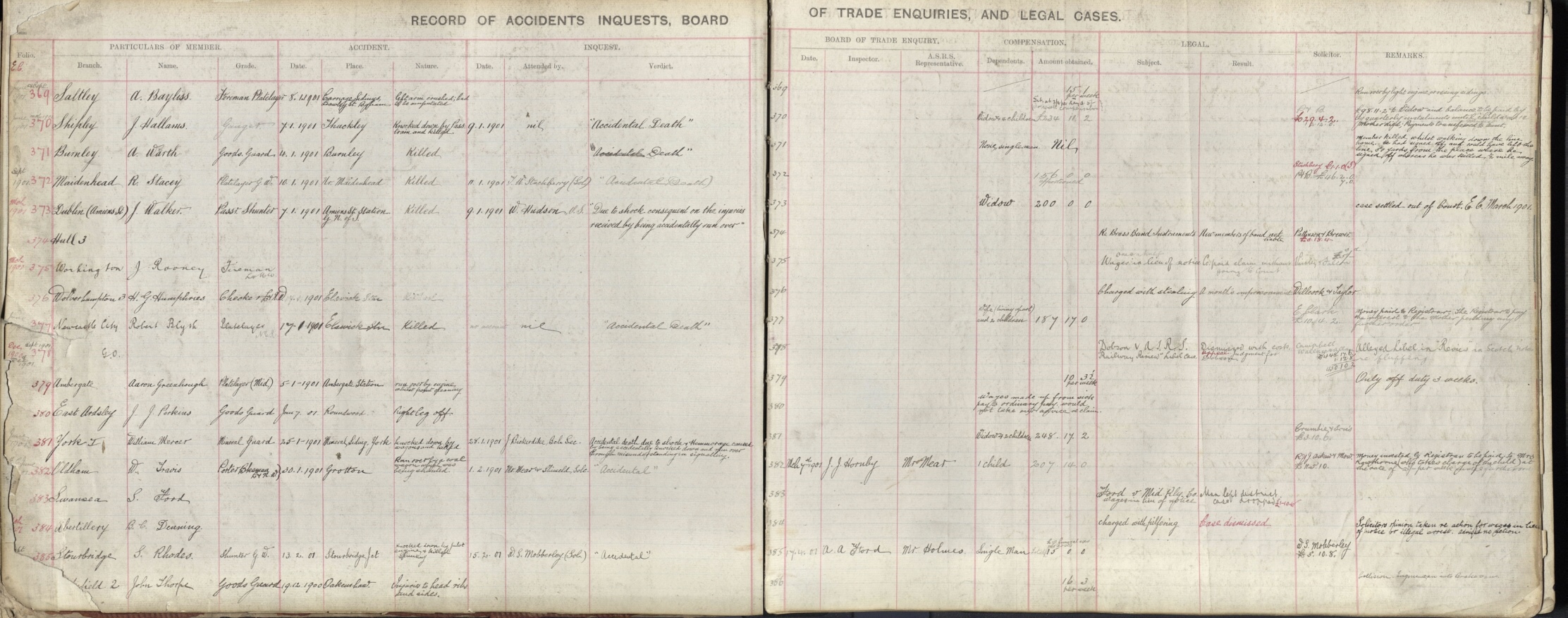
  • Transcribing a book covering railway worker accidents between 1901-1907 in just 24 hours. This Amalgamated Society of Railway Servants volume, the forerunner of the National Union of Rail, Maritime and Transport Workers (RMT), records accidents and legal cases involving its members. It is a strand of the Railway Work, Life and Death project, and is being carried out in conjunction with the University of Portsmouth, the Modern Records Centre based at the University of Warwick and the National Railway Museum (NRM). The tome will make a potential 2,150 railway worker records widely available.

Sample page from the railway accidents book that volunteers will transcribe on Transcription Tuesday 2019 CREDIT: Modern Records Centre

  • Warwickshire witness statements from the county’s quarter sessions. This is a part of Warwickshire County Record Office’s Warwickshire Bytes project encouraging volunteer participation in indexing records held by the archive; and
  • A range of parish registers in association with FamilySearch.

There are so many reasons to take part in Transcription Tuesday. It is your moment to be part of something big; it is an opportunity to give something back to the wider family history community; it is a chance to make more accessible to families the lives of thousands of ancestors; it could help you improve one of the core skills of a family historians – reading and transcribing original documents; and you never know, if you have a railway ancestor, Warwickshire roots or the parish records relate to your ancestral homelands you may be lucky enough to find yourself uncovering part of your family history!

To find out more about the day, the projects and how to get involved visit: http://www.whodoyouthinkyouaremagazine.com/transcriptiontuesday

And please spread the word to help make this year’s Transcription Tuesday the biggest so far.

The Confessions of a Blogger: Review of 2018

I’ll start with an admission: My 2018 blogging year was not as prolific as usual. In fact it was nowhere near the efforts of previous years. But I’m far from downhearted. In fact I’ve thoroughly enjoyed it and I hope you have too.

Here are the details.

The Statistics. My blog saw a noticeable decline in output, with 25 posts during the year, down from 33 in 2017 and in excess of 60 in 2016. This was entirely due to other commitments such as completing my genealogy studies and publishing a book. Neither was it unexpected – I did forecast this in my 2017 blogging review post. And it is pretty much in line with what I promised: two posts a month.

However onto the positives. Despite the downturn in posts, my blog has grown from strength to strength numerically. Views increased from 20,649 in 2017 to well in excess of 21,000 in 2018. Thank you to all those who have taken the trouble to read my random family and local history outpourings.

My blog has now well and truly developed its character with core themes of my family history, interspersed with local history tales from Yorkshire, alongside news from – and my musings on – the genealogy world’s latest developments.

Most Popular Times? Monday proved my most popular blogging day, with 21% of views. And my golden hour shifted to the slightly earlier time of 6 pm. I suspect this shift is as much a result my blog posting times as anything more profound.

How Did They Find You? Search Engines took over as the key engagement route accounting for around 7,000 views.

Where Did They Come From? The global reach of WordPress never fails to amaze me. Going on for 100 countries are represented in my list of views. The UK accounted for well over 10,000 of these which was almost double the number of my next most popular country, the United States. Australia came third with over 1,000. But all corners of the globe feature with readers extending to Cambodia, Tonga, Peru and Tunisia. A huge thank you to you all! You’re what makes it worthwhile researching and writing these posts.

And it’s fantastic to receive so many comments either indirectly via Facebook and Twitter, or directly on my blog site. They’ve added new information, context and connections. Thank you for getting in touch.

Top Five Posts of 2018: Other than general home pages, archives and my ‘about’ page, these were:

General Register Office (GRO) Index – New & Free. This was actually posted in 2016 but, as in 2017, it continued to perform well in 2018 . This post was about a new free source for searching the GRO birth and death indexes (note not marriages) for certain years, one which gives additional search options. It also covered the initial £6 PDF trial, an alternative and cheaper source than buying a birth or death certificate. Note the PDF option, a copy of the register entry rather than a certificate, still continues. However the cost will rise to £7 on 16 February 2019. The cost of a certificate increases from £9.25 to £11.

Living DNA: I’m Not Who I Thought I Was. This was another 2017 post which continued to prove popular. It is testimony to the importance with which genetic genealogy is now seen. lt dealt with my shocking DNA results. I’m 100% from Great Britain and Ireland. No drama there. But it indicated that I’m not entirely the Yorkshire lass I thought – the ethnicity pointed to some genetic material from the dark side of the Pennines. I reckon this could be linked to a potential 5x great grandmother from Colne. I really do need to push on with my Abraham Marshall New Year’s Resolution.

Cold Case: The Huddersfield Tub Murder. Yet another 2017 offering, and in last year’s “one that got away” category as being one of my favourite posts which failed to reach the Top 5 that year. Well it proved immensely popular in 2018. It dealt with the unsolved murder in Huddersfield of a Dewsbury woman of ‘ill-repute’ whose tragic life and abusive relationships ultimately resulted in her death.

“Historical Vandalism” as more Archive Services Come Under Threat. Published in December 2018 its appearance in the Top 5 for the year shows the importance with which any threat to these vital services are seen. It covered some recent swingeing funding cuts to archives and corresponding proposed (and actual) major reductions to these services across the country. Some of the consultations, Surrey (4 January 2019) and Kent (29 January 2019), close imminently. So I would urge you to have your say.

Tripe Tales – Food Nostalgia. My childhood memories of food led me to focus on this particular northern ‘delicacy’, which was very popular when I was growing up. It covered some early 20th century local tripe stories including theft, death and prodigious eating feats, as well as recipes to try. I was also inundated via social media with suggestions of where I could still buy it. I’ve yet to confront once more this culinary challenge.

So yet again this was a mixed bag of popular posts, ranging from topical family history issues, to DNA and general history and local history tales – which sums up my blog perfectly.

The Ones that Got Away: These are a few of my favourite posts which didn’t make the top five:

Fur Coats Can Prevent Flu – The 1918/19 Pandemic looked at how to use various information sources to build up a picture of the impact of the Spanish Flu “plague” on local communities. In my example I focused on Batley.

How the Western Front Association WW1 Pension Ledgers May Have Solved another Family History Mystery. I used this newly available online record source to prove a family tale and discover more about my great uncle.

Irish DNA Breakthrough and Don’t it Make My Brown Eyes Blue covered how DNA led to the demolition of one of my family history brick walls and helped me find out more about two of my Irish grandpa’s sisters who emigrated to the United States.

A Family Historian on Holiday: A Whitby Cemetery and WW1 Shipwreck was about the sinking of the Hospital Ship Rohilla off the Whitby coast in 1914. With links to the Titanic, heroic rescue attempts and a disputed will it illustrates how a family and local historian is never off duty, even on holiday!

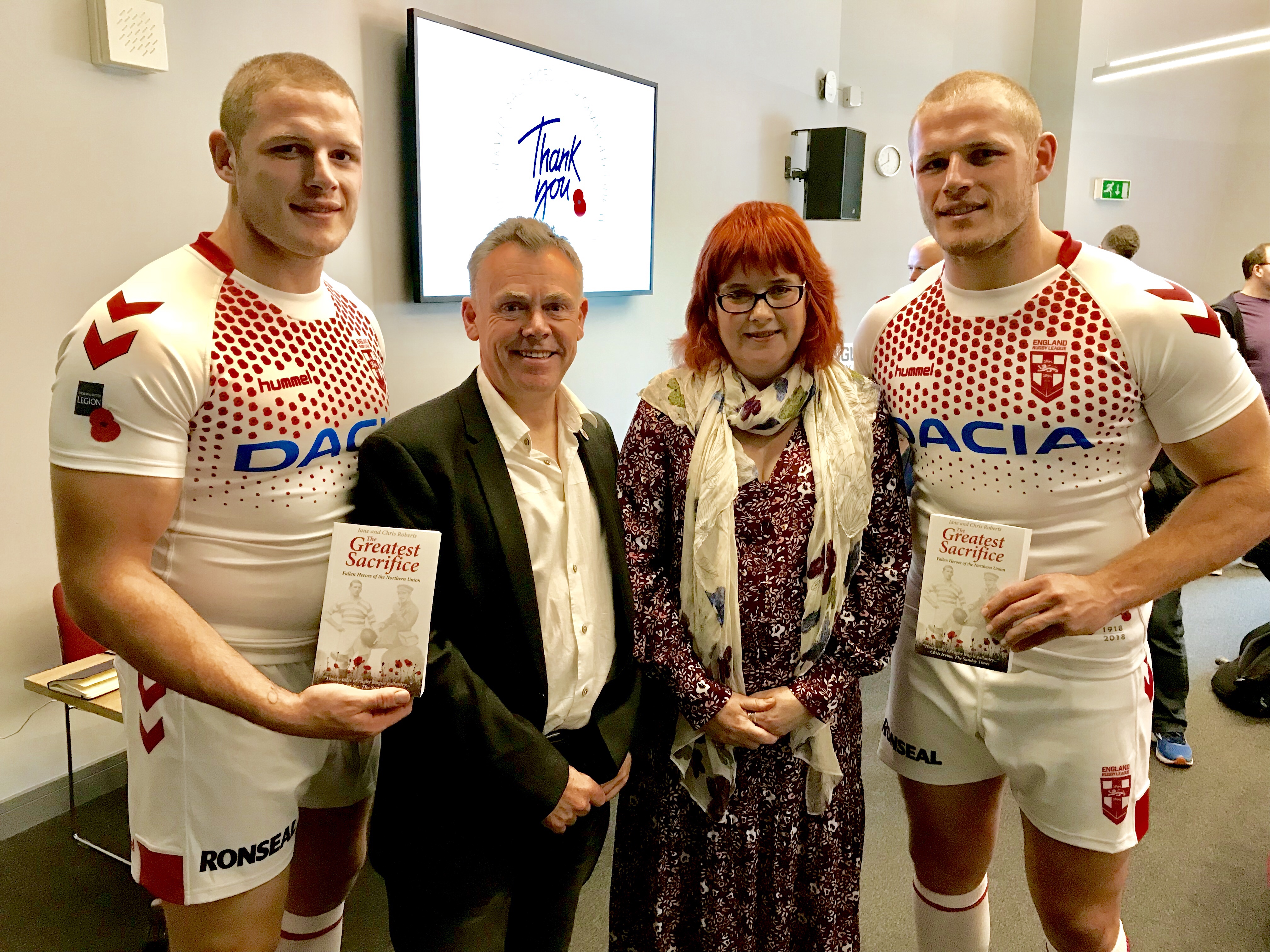
Finally there was Published: The Greatest Sacrifice – Fallen Heroes of The Northern Union. This marked my greatest achievement of 2018 and the culmination of around two years’ work, the publication of my book co-authored with husband Chris. It has been described as the definitive book about those Rugby League players who fell in the Great War.

What Does 2019 Promise? Well, as in 2018, I aim to do two posts a month. These will be on the same type of themes as usual – family and local history tales, plus topical genealogy offerings when anything big hits the headlines. I will also be including some Aveyard One-Name Study stories.

I anticipate my major challenge this coming year, as ever, will be time. I also have the added concern of keeping things fresh and relevant. I now have two other writing roles to add to my blog. At the end of 2018 I took on the role of editor as the Huddersfield and District Family History Society quarterly Journal, the first edition of which came out in January. And I now write a regular family history column in Yorkshire nostalgia magazine “Down Your Way.” So clearly I want to ensure my blog posts are separate and distinct from my other writing commitments. However, my head is buzzing with ideas so I don’t think that will be too much of a creative dilemma.

But whatever direction my blogging year takes, thank you for reading, engaging and supporting.

Wishing you a happy, peaceful 2019 filled with family history fun!

The New Year’s Resolutions of a Family Historian

I’m not sure I can top the success of my 2018 New Year’s Resolutions. It was an incredible year on the family history front, and I’ve achieved more than I could ever imagine and more besides. But that’s no reason to abandon what is a good discipline. In fact it’s all the more reason to have them.

Targets help focus the mind and give you something to aim for.

The key is to make them relevant, realistic and challenging, but not over-ambitious. Neither should you have too many that you lose track of them, or spread yourself too thin. And you do need to monitor them at regular intervals, building in milestones, to make sure you are on track.

Here are my five for 2019.

Personal Research: The family origins of Abraham Marshall. As he was my Achilles heel of 2018 Resolutions, I’m carrying him over to 2019. This has become a tad more urgent with the 16 February 2019 price rise for General Register Office (GRO) birth, marriage and death certificates (England and Wales). The cost of a certificate will increase from £9.25 to £11 and a PDF copy of the register entry will rise from £6 to £7. So I will need to do this work in January to beat the price hike.

Continuing Professional Development: I’m not planning any major assessed courses this year, but I do think it important to refresh and build upon skill sets. I therefore intend to undertake at least one formal course during 2019 and supplement this with some one-off talks, workshops and lectures.

I also WILL read my subscribed to family history magazines. In 2018 I never seemed to have time. But they are a great source of information and as good a way as any to keep up with the latest genealogy news.

Aveyard One-Name Study Data Collection: This is an ongoing piece of work. I’m not committing to completing all the Aveyard census work. I now know that’s setting myself up for a fall. Instead I am setting aside two hours per week to continue extracting my Aveyards from the census. A case of chipping away at it and being realistic with what can be achieved given my other commitments.

Aveyard One-Name Study Tales: begin posting regular blog updates and stories about the Aveyards, six this year as a minimum. I’m still not sure of the best way to work this – whether to set up a stand alone Aveyard blog or integrate it with the one I already have. The former would be the cleaner option, but for now I’m going down the integrated route in order to ensure my blog is a “living” one with regular additions. I may revisit that decision later on.

Sewing: Yes, this is totally off the wall. But I do need to ensure I’m not Family History fatigued. I could quite easily end up spending all my time on it – either doing my day job researching for others, whilst devoting all my spare time to personal projects and doing voluntary work (editing the Huddersfield & District FHS Journal and helping with Batley History Group). It is something I became increasingly aware of in 2018. You can get too much of a good thing to the extent it can become a chore not a joy.

So I’m going to make time for relaxation. Sewing is my real chill down therapy. And I’ve just the project: a cross stitch family tree!!!!! It will go nicely with an earlier picture I stitched…..

Wishing you all a very happy, healthy 2019. And if you do break anything I hope they’re genealogy brick walls!

The Golden Boot or a Christmas Turkey? My Genealogy Resolutions for 2018

2018 was a World Cup Year. Did I get the golden boot, or were my aims well wide of the mark? Time to see if I achieved my 2018 New Year’s Resolutions.

I had five genealogy goals for the year. So here goes.

Work on my Aveyard One-Name Study (ONS): Despite still working on data collection, I reckon on balance this was a success. I did a deep dive into my West Ardsley Aveyard family as part of Resolution Number Two. As a result, I have forged ahead with collecting parish register data, looked at various Borthwick Institute wills and marriage licences, and managed to disentangle the pre-1800 Aveyard branches. The latter is no mean feat, and I will be posting more about this in 2019.

Complete my Pharos Tutors Family History Skills and Strategies (Advanced) Course: Yippee!!!!! I’m thrilled to say not only did I complete the two-year course and construct my project around my pre-1800 Aveyard family, I passed with a Distinction. It has been a tough, but rewarding, two years. I’ve learned so much and met some fantastic people along the way. I’m now enjoying putting all I’ve learned into practice. And amazingly I fitted it all around researching and writing a definitive, major Rugby League history book! Resolution Number 3.

Finish my Book Research: Not only did I complete my research into those Rugby League players who perished in the Great War, but The Greatest Sacrifice: Fallen Heroes of the Northern Union was published in September. It involved far more work than I ever envisaged. But this labour of love has been an overwhelming positive and my biggest work-related achievement EVER. Those eve of war players have finally been recognised by the sport’s national body (the sport never had a Roll of Honour). And for the Armistice Day Centenary Test against New Zealand the current England team read out their names.

In recognition of our work, in November Chris (my husband and co-author) and I were invited as special guests of the Rugby League to the Annual Dinner of the All Parliamentary Party Rugby League Group at the House of Lords. We’ve given several book talks too.

But above all the personal recognition, the names of those players are now out in the public domain.

Personal Research: No hiding place. I only started researching the origins of 4x great grandfather Abraham Marshall on 23 December. My potential Lancashire links are therefore still shrouded in mystery. And it all goes to show that I spend more time on researching other people’s families than I do my own.

Attend a mixture of Conferences, Lectures, Family and Local History Fairs and Talks: I committed to six family-history events and I said I’d champion the work of Family History Societies. I reckon by all measures I’ve overachieved. Not only did I attend the Secret Lives conference, I also went to many other events and talks. These included the Family History Show at York as well as talks at Leeds Central Library, West Yorkshire Archives and various family and local history groups. But I went one step further. Towards the end of the year I took on the role as editor of the Huddersfield and District Family History Society quarterly Journal. My first one is due to be distributed in January 2019. I can therefore safely say this is another resolution achieved.

In conclusion, it has been a fantastic year with some major achievements. I really do not think I will ever have a better one. I’m thrilled I achieved 4 out of 5 my resolutions, especially given the challenging nature of some. Ironically, the more difficult the resolution the better I performed. So although I missed one goal it was certainly not a turkey year, I reckon it’s definitely a silver boot standard!

I will set out my 2019 goals before the New Year.

‘Historical Vandalism’ as more Archive Services Come Under Threat

In recent weeks there has been unwelcome news for archives users countrywide with the announcement of a spate of council budget proposals and public consultations about services in the face of swingeing funding cuts.

These are some of the recent ones:

  • Surrey County Council’s total budget for Cultural Services 2019-20 may be more than halved from £8.7 million to £4 million. The Heritage Service’s consultation, which closes on 4 January 2019 (am I cynical about the timing of this?) can be found here. The response from The Association of Genealogists and Researchers in Archives (AGRA), which perfectly sums up the concerns, is here.
  • It’s a similar tale of woe in Worcestershire. In what is described as an act of ‘historical vandalism’ the council cabinet this month approved a 2019-20 draft budget which more than halves the funding for Worcestershire Archive and Archaeology Service from £700,000 to £295,000. The Worcester News has more details, as does Who Do You Think You Are? magazine.
  • Kent Libraries, Registration and Archives Service are running a consultation on their draft strategy for 2019-2022. This closes on 29 January 2019.
  • In summer 2017 there was a huge public outcry about the reduced free hours and proposed charges at Northampton Archives. That change was shelved, but radical cuts to services across the board are still on the cards for the financially struggling Northamptonshire Council.
  • East Sussex County Council’s August 2018 announcement that it’s overall services and functions would be cut back to the statutory minimum provision. This was further clarified in the Core Offer document of 13 November 2018 to be considered by the Council Cabinet. For Archives and Records it stated:

We will:
• manage the records which we are required to keep by law. We will meet our basic statutory duties as a Place of Deposit for public records at The Keep including a basic level of public access to those records.
The proposed change from our current offer is that:
• We will not be able to provide the same level of support to customers of The Keep when requesting archive material, both in person and online and we will not provide an educational outreach offer.

And who knows how many more archives service changes are under discussion in councils up and down the country? It looks, for example, as if West Yorkshire Archives are conducting a review of opening hours. Their website includes opening hours for the five offices (Bradford, Calderdale, Kirklees, Leeds and Wakefield.) All but Bradford have days on which they are temporarily closed – and these temporary closures have been in force for some time. The Wakefield West Yorkshire History Centre, states with regard to Saturday opening hours:

We are reviewing our opening hours and as a result we are not currently able to offer Saturday appointments. We are aiming to resume normal service as soon as we can.

If anyone does have any other examples of reduced archives services and closures please let me know so I can update this list.

The future facing archives and heritage services, ironically some of which are in new flagship buildings, is an insidious creep of reduced opening hours and closures, alongside staff cuts with a resulting irreplaceable loss of expertise.

The_Hive_-_Worcester_(27316994562)

The Hive, home of Worcestershire County archives, which opened in 2012 – Photo by Esther Westerveld from Haarlemmermeer, Nederland – The Hive – Worcester, CC BY 2.0, https://commons.wikimedia.org/w/index.php?curid=74295190

I’m not going to get into the politics behind these cuts. And I’m sure we can all point to examples of huge wastes of public money which could have been far better spent. But the wholesale demolition of swathes of archive, library and museum services, largely (but not wholly) driven by almost a decade of destructive reduction in central government funding to local authorities, is undoubtedly a retrograde cultural and educational step.

I recognise heritage is an easy target when compared with other essential council services. And these too are under severe pressure and struggling to cope with funding pressures with an immediate hard impact on people, particularly the vulnerable. Impossible choices and trade-offs are being made.

However community-wide history, heritage, knowledge and learning has a far more nuanced impact than front-line services. It is these “softer” services which mark of a progressive, developed and civilised society. And once we get rid of the professional cadre of staff with their unique skills, and reduce access to our history and heritage, it will be very difficult to ever recapture it.

Reducing access to archives, and libraries, results in the lack of incentive for those who wish to deposit records and documents. It so acts as a broader community barrier to accessing knowledge and learning, reducing the chance for many to view, discover and interpret original documents and perhaps reveal new insights into past generations. Ultimately this leads to an overall depletion of heritage and a diminution of education and skills locally. And the brunt of these consequences particularly impact on the opportunities of all but the very rich.

And no. Not all is online. Neither will it ever be.

Updates

  • Suffolk County Council have held a consultation (now ended) to close Lowestoft Record Office, based in the library, and relocate the collections to Ipswich. With thanks to Bob Collis, Chair of Save Our Record Office (SORO), for this information. More details are available in comments section for this blog post.
  • In January 2019 it was revealed Norfolk County Council have proposals seeing Norfolk Record Office reducing its opening days from five to four a week, and those four days will see shorter opening times.
  • An enquiry in early January 2019 to West Yorkshire Archives (Kirklees) to access a specific collection held off site met with a response that due to staffing shortages this was not accessible until 4 February 2019 unless urgent. This collection is not available online.
  • There is an update to the Worcester Archives situation. Full details are in The Worcester News article of 26 January 2019, and in their blog of 1 February 2019. To summarise, the funding reduction looks like being only £250,000 out of the £700,000 budget – not the £405,000 initially mooted. This after a reduction in 2010 when the budget was £1.2 million. The final budget will be confirmed in February. The Friends of Worcestershire Archives have launched a petition against the cuts.

How the Western Front Association WW1 Pension Ledgers May Have Solved Another Family History Mystery

Last weekend I finally gave in and subscribed to Fold3 taking advantage of their cyber week special and buying annual premium membership at a 40% discount of $47.95. The deciding factor was the need to view their exclusive record set:- the Western Front Association (WFA) collection of Pension Record Cards and Ledgers.

Dependents of each serving British soldier, sailor, airman and nurse who was killed in the Great War were entitled to a pension. So were those service personnel wounded or otherwise incapacitated. For those who died the next of kin and pension amounts are detailed in the cards and ledgers. For those who survived they provide details of injury (wounds, illness), plus regimental details (unit, regimental number) and home address. The latter are particularly important for researchers, as those who survived are often more difficult to find information about, especially with common names.

My interest was driven by the need to find out more about my great uncle Michael Callaghan, brother of my grandpa John. The son of Michael Callaghan and his wife Mary (née Murphy) of Carabeg in County Mayo, his birth date was registered in the Swinford District as 17 January 1890.

It’s a date I take with the usual large pinch of salt. His baptism at Glan Chapel, according to transcripts, took place on 1 January 1890, pre-dating his birth and indicative that he was born in late 1889 – Irish catholic baptisms taking place shortly after birth. This is a common theme with my Callaghan ancestors – their official birth dates often postdate their baptisms. It was easier, and more important, to be received into the church. By the time they got round to official registration, dates were fudged to avoid late registration fines.

Mum said she thought Michael served with the Irish Guards during World War One and had received a severe facial injury. She cannot recall ever seeing him, and believed he lived in Leeds. She said she’d been told he was tall, with very dark hair like his mother and, in his youth, had been very good-looking.

That’s as much as I had to go on.

A few years ago, the possible I’d come up with, based on the assumption his injury resulted in his military discharge, was a Private Michael Callaghan of the Irish Guards, service number 11415. According to the Silver War Badge Rolls he enlisted on 31 July 1916 and was discharged on 29 July 1918, age 29, no longer physically fit for war service as a result of wounds. His Badge Number was B71936. Checking with Michael’s Medal Index Card it also showed he had served as a Private in the Labour Corps, Service Number 702152. But this entirely speculative search proved nothing, so I parked the information in my research file.

Silver War Badge – Photo by Jane Roberts

The Pension Record Cards and Ledgers on Fold3 offered a new avenue to explore. Still being uploaded, when I checked on 6 December 2018 there were four records relating to the Silver War Badge Pte Michael Callaghan. They confirmed his injury as a gunshot wound to his face, and the degree of disablement which was attributed to his war service ranged between 40 to 60 per cent. He was awarded a life pension. Interestingly two different birth years were given – 1889 and 1890. The records indicated he was unmarried. Mum seems to think he did marry and had two sons, but she isn’t entirely sure and has no names.

They also gave three addresses – none though in Leeds. The earliest record had an address of Carpenters Arms, West Woodside, Lincoln but also indicated a permanent address of 18 Bound[a]ry Street, Bury. By 1924 the address was recorded as 55 Union Street, Hemsworth, Wakefield. These latter two addresses were of particular interest. My Michael Callaghan had brothers with links to both Bury and Wakefield.

Checking the 1911 census, a 47-year-old widow named Catherine Walsh lived at 18 Boundary Street, Bury. Also in the household were her four surviving Bury-born children Martin, Mary, Annie and John, whose ages ranged from 17-24. There were also two nephews listed – 30-year-old Barney Roan and 25-year-old Thomas Callagn, both miners. They, along with Catherine, were born in County Mayo (recorded as Maho in the census).

This 1911 census entry is a perfect illustration of not relying on indexes: both Ancestry and TheGenealogist record Thomas’ surname as Roan in their index, whilst FindMyPast’s version is Collagen.

Thomas piqued my interest – Michael’s brother Thomas settled in Bury. The surname wasn’t too far out – I’ve seen many a mangled version of Callaghan. His date of birth was 19 November 1884 giving an age of 26 at the time of the census – so not too far out either.

Catherine’s address was also 18 Boundary Street in the 1901 census, when her husband John Walsh was alive. Checking the GRO birth indexes for the registration of Martin, Mary, Annie and John revealed Catherine’s maiden name as Bones or Boans.

I next turned to the Lancashire OnLine Parish Clerk. The marriage of John Walsh (Latin form Joannem used in the parish register), son of Joannis Walsh, and Catherine (Catharinam is the Latin register version) Bones, daughter of Andreae, took place at St Joseph’s Catholic Church, Bury on 29 November 1884.

This was perplexing – so far my Callaghan line doesn’t link to either Bones or Walsh. So was Thomas, described as Catherine’s nephew in the 1911 census, really my grandpa John’s eldest brother?

I decided to look for the baptisms of John and Catherine’s children, again using the Lancashire OnLine Parish Clerk. And it is here Catholic registers come into their own. Anna (Latin form of the name) Walsh, daughter of Joannis Walsh and Catherinae, formerly Bones, was born on 26 August 1888 and baptised at St Joseph’s on 16 September 1888. And the priest helpfully annotated the entry, stating Anna married Thos. Callaghan at St Joseph’s on 15 June 1912.

Unfortunately, this marriage has not been transcribed on the Parish Clerk site. However, the baptism of two of the children of Thomas and Annie are there, including Mary (or Maria as recorded) born on 14 April 1914. The priest’s note that she married Gulielmo J. Dunne on 24 May 1947 was enough. My mum attended this wedding – Mary was her cousin. Bingo! The same family.

One final corroboration was the 1939 Register entry for Thomas and Annie Callaghan. The birth dates of 19 November 1884 and 26 August 1888 matched. Mary’s married name of Dunne has also been added – the Register was a living document used subsequently by the NHS as it’s Central Register.

So now I have a link for Pte Michael Callaghan back to my Callaghan family in Bury via the 18 Boundary Street address on the pension entries. And it appears I have now evidence of my great uncle’s Great War military service and injury, corroborating what mum heard as a child. I’ve still a fair way to go – I would like to learn more about his war service. I also want to know if he did marry and have a family. I also want to find out when he died. But I have now made a start as a result of the Pension Cards and Ledgers.

More information about the cards can be found on the WFA website in a series of articles including ‘The Western Front Association’s Pension Record Card and Ledger Archive,’ ‘Great War Pension Record Cards and Ledgers: deeper understanding‘ and ‘Pension Record Cards and Ledgers: some examples of dependents’ cards.’

20 DECEMBER 2018 UPDATE

If you are a member of the Western Front Association you can now access these records using your membership login and without having to subscribe to Ancestry/Fold3. Here’s the relevant information. As of this month about 37% of the total archive has been digitised, so it’s worth checking back as more are rolled out in 2019.

Sources:

  • Birth Registration for Michael Callaghan, 17 January 1890, Swinford via https://www.irishgenealogy.ie/en/irish-records-what-is-available/civil-records
  • Michael Callaghan Silver War Badge Number B71936, via Ancestry.co.uk, Originals held by The National Archives, War Office and Air Ministry: Service Medal and Award Rolls, First World War, Ref WO329 Piece Number 3087,
  • Medal Index Card for Pte Michael Callaghan, 11415, Irish Guards via Ancestry.co.uk
  • Pte Michael Callaghan, 11415, Irish Guards Pension Cards and Ledgers via Fold3, originals held by the WFA
  • 18 Boundary Street, Bury Household in the 1911 Census via FindMyPast, The Genealogist and Ancestry.co.uk, The National Archives, Ref RG14/23489
  • Catherine Walsh, Bury, 1901 Census via FindMyPast, The National Archives, Ref RG13/3638/38/35
  • Lancashire OnLine Parish Clerk website https://www.lan-opc.org.uk/
  • Thomas and Annie Callaghan, 1939 Register via FindMyPast, The National Archives, Ref RG101/4319E/017/8
  • Western Front Association, webpages indicated via hyperlinks in main body