Tag Archives: Batley

Borough Court Records: Crime, Punishment & Bastardy in Batley – Part 1

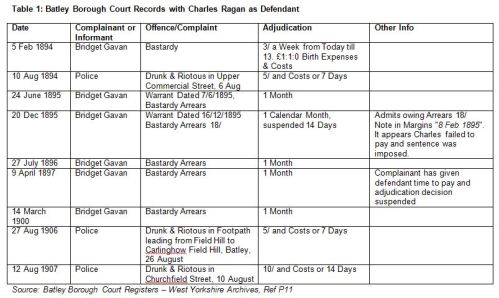
In my murderous assaults post I mentioned I would be undertaking a series of archives visits focusing on the Batley Borough Court registers to try to establish a fuller picture of court cases involving my ancestors.

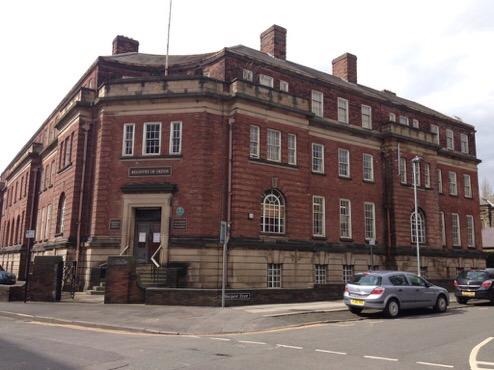
The records are held at the Wakefield branch of West Yorkshire Archives. The office closed on 13 May 2016 in preparation for the move to a new building in early 2017. More details are here. So it was something of a race against time to complete this work. But I am pleased to report I did get there in the end. 

The registers are not available online – no, contrary to what some would hope, not everything is! So it is a case of visiting the archives and going through each register page by page. For me it’s a joyful experience, especially with a set of information-rich records for my family history like these proved to be.

West Yorkshire Archives, Wakefield Office – Photo by Jane Roberts

The Batley Borough Court records run from 1872-1974, 116 volumes in total. However with the 100 year legal restriction access limit, I only (!) had to go through 58 of them.

And it has been wonderfully, and unexpectedly, enlightening.

The registers contain columns giving information such as:

  • the date of the case;
  • name of informant/complainant;
  • name of the defendant and age if under 16;
  • nature of offence;
  • adjudication; and
  • the names of the Justices.

There are also other pertinent notes, for example if the fine was paid and, if not, when the custodial sentence was imposed.

Whilst the registers give only the bare bones, they do lead on to other sources, from bmd and employment records to prison registers and newspapers. And because you have a date for the case it is a short-cut for newspaper searching, especially for those “not online” papers, or where online newspaper optical character recognition (OCR) is problematical.

It also pays to check the other cases heard that day as they may be linked to the “partners in crime” of ancestors. 

The cases brought before the court cover the run-of-the-mill drunk and riotous or obscene language cases; incidents of stealing; animal cruelty; failure to send children to school; wilful damage; employees taking employers to court on non-payment of wages (from these I’ve learned the name of the stone mason who employed my 2x great grandfather William Gavan); to attempted suicide and more serious assault, indecent assault, rape and murder cases, some of which are referred onto a higher court. There are a fair few children brought before the Justices and punishments ranged from birch-strikes to reformatory and industrial school sentences. Smallpox vaccination exemptions, applications for children to perform in theatrical productions and beer selling licence transfers and applications also feature.

There are also more domestic-centred cases including married couple disputes, separation orders, orders relating to married women’s property, child neglect accusations, and unmarried mothers claiming maintenance payments for their illegitimate children – crucially providing the name of the father. These maintenance orders were lodged with the petty sessions, or other jurisdiction, local to the mother up to one year after the child’s birth. In these cases the burden of proof was very much weighted in favour of the mother, for obvious money-saving reasons.

Three women connected with my family history appear in this latter set of cases. All three cases have contrasting elements and outcomes, and will feature in three separate posts. This is the first.

Sarah Gavan was born in Kidderminster in June 1857, the third daughter of my 2x great grandparents William and Bridget Gavan (Knavesay). She was baptised in the town’s Catholic chapel on 5 July 1857. Within three years the family relocated to Batley.

On 19 September 1875 Sarah gave birth to her first child, a son named John Thomas. He was baptised at St Mary of the Angels RC church on 3 October 1875. The baptismal register entry starts to records a father’s name, “Thoma“, but this is scored out and there is no surname for him. Sarah was unmarried. But clearly the child’s father was common knowledge.

I am curious to see a birth certificate for John Thomas, to see if his father officially acknowledged him here. From 1875 the reputed father had to be present at the registration to formally consent to his name being included on the certificate. As the Act stated “The name, surname and occupation of an illegitimate child must not be entered except at the joint request of the father and mother; in which case both the father and mother must sign the entry as informants“.

Looking at the GRO indexes, I can’t see a relevant birth registration for a John Thomas Gavan (or variant). Interestingly the Dewsbury Registration District does have a birth registered for a John Thomas Connell in Q4 1875 Vol 9b Page 625. This is a possible, given subsequent research including bmds and the 1881 census onwards. I would love to look at this to see if it did relate to Sarah’s son, and if so why he is not registered under Gavan: Was “Thomas” from the baptismal register present to jointly register is son’s birth as it appears. Oh for the long awaited certificate price-reduction!

As indicated, my search of the Batley Borough Court records adds an additional layer of paternal proof and a new dimension to events. On 10 November 1875 Thomas Connell appeared before the court on a bastardy charge and was ordered to pay Sarah Gavan 3s a week from their child’s birth until the age of 14.

Payments were occasionally difficult for Irish-born pit-worker Thomas, and his parental responsibility not always diligently complied with. Perhaps his court appearances and fines played a part.

It appears that he, and a number of other coal miners, were taken to court in 1876 by their Batley colliery employer James Critchley for absenting themselves from service without appropriate notice. In Thomas’ case this was from 17-24 January, and his employer sought compensation of 17s 6d. The case was heard at Batley Borough Court on 26 January 1876 and Thomas, who failed to appear, was found guilty and ordered to pay. The incident was reported fully in the local papers.

Weeks later, on 28 February 1876, there is another court register entry with Sarah in the role of complainant against Thomas. The entry merely says bastardy, so presumably this is for arrears. The obvious conclusion is the colliery episode and subsequent fine played a part in his financial difficulties and failure to pay.

The next entry for a case between Sarah and Thomas was on 24 June 1878. This was adjourned for four weeks, until 22 July 1878. The July entry also contains an adjournment note.

After that nothing – because within the month the two were wed. Less than three years after John Thomas’ birth the couple married on 17 August 1878 at St Mary’s. They went on to have at least eight more children before Sarah’s death in 1907.

St Mary of the Angels RC Church, Batley – photo by Jane Roberts

The Borough Court register was a crucial part of evidence in ascertaining the paternity of Sarah’s baby . None of these bastardy cases against Thomas made it to the local papers, as far as I discovered.  Contrast this with the next family court case. To be continued

Sources:

  • Batley Borough Court Registers (P/11) – West Yorkshire Archives
  • Batley Cemetery Register (unconsecrated)
  • Batley Reporter” and “Dewsbury Reporter” newspapers of 29 January 1876
  • Census – 1861-1911
  • GRO indexes
  • Parish Registers – St Ambrose, Kidderminster & St Mary of the Angels, Batley
  • My ancestor was a bastard” by Ruth Paley


Batley Privy Riots and the Death of a Policeman

Searching for my ancestors in the Batley library newspapers, I ended up totally side-tracked reading about the goings-on in the town’s New Street area. Some incidents involved distantly connected relations. But the real value was the insight it gave into the community in which my ancestors lived, over a narrow timeframe. I looked at the two years from Christmas 1875. Whilst I didn’t read every paper, the ones I skimmed gave a flavour.

The 1875 Christmas festivities in New Street, an Irish immigrant area, resulted in court appearances for a number of its residents. The first involved Ann Gavan, a married woman (so far no link with my Gavans), accompanied by the headline in the “Batley Reporter” of 1 January 1876 “The Way Christmas is Kept in New Street”. On 27 December she appeared at Batley Borough Court, convicted of being drunk and riotous on Christmas Day.

She attracted police attention on Christmas Eve. Seeing a crowd gathered around her house, Police Sergeant Gamwell looked through the window. He saw her lying heavily drunk on the floor, surrounded by a crowd of boys. Her husband was also drunk. In fact they were seldom sober. By 3am Christmas Day the pair were cursing and swearing, attracting a large crowd. At this point Police Constable Shewan apprehended Ann. He couldn’t manage her husband too.

But this wasn’t an isolated New Street incident. Appearing in Batley Borough Court on the same day were an assortment of individuals. Christmas Day saw John King, described as an old man – although what constituted old then may not be the case by today’s standards, hauled off to the police station. Again the charge was one of drunk and riotous behaviour. He also assaulted the arresting office, Police Constable Beecroft. On 26 December Patrick Jordan and Patrick Moran’s drunken fight resulted in a drunk and riotous conviction for the pair. Their escapade tied up five or six police officers most of the evening. And Michael McManus was similarly convicted, for the 17th time.

That wasn’t the end of the parade of individuals before Batley Borough Court for events that Christmas in New Street. The following week’s edition of the “Batley Reporter” contained a string of obscene language cases: Mary Foley used obscene language towards several policemen on 26 December; Ellen Tarpey was convicted of using obscene language toward Mary Gavan (a potential family connection here) on 27 December; the case against John Hannan (another family link) was dismissed. He faced a charge of using obscene language towards Ann McCormick on 28 December. And finally yet another case involving Ann McCormick as victim, this time at the receiving end from John McManus on 27 December. The Mayor wished the bench could fine her too, as he considered her equally to blame in the incident.

The idea that this was a one-off string of cases occasioned by Christmas doesn’t hold water. True the police office was nearby, so the area fell under particular scrutiny. But no other area of Batley had such a high proportion of cases. In fact the Mayor “….commented strongly on the number of cases of obscene language brought before the Bench especially from that locality; and said if it was not for the cases from that district the magistrates would have little to do”.

And going through the papers there are more cases, not confined to holidays. The one incident that stuck out for me did involve distant relatives: John Hannan, of the murderous poker assault episode on his father-in-law, and his wife, Margaret. The newspaper heading reads “Dealing Gently With New Street Rioters”.

The incident started at 3.45pm on Sunday 15 October 1876, lasted two or three hours, and involved several residents. It was sparked by the disputed use of a privy in the yard of Patrick Gannon. Hannan and another man broke open its door. They claimed they had a right to be in the toilet. It appears Gannon and nearby neighbour Mary McManus, with whom the Hannans now lodged, shared the same landlord. The landlord authorised Mary’s use of the privy.

687px-Toilet_in_the_Beamish_Museum_01 (2)

Outside Toilet at Beamish – Wikimedia Commons by Immanuel Giel

Gannon claimed that as he challenged the “intruders”, Hannan struck him. At this point Gannon fetched the police.

Normally in these circumstances the police would not attend. They would issue an assault summons. On this occasion Police Constable Friendly Hague went with Gannon to New Street, an action subsequently criticised. He defended it by saying Gannon was afraid to go home. Perhaps the fact Hannan was well-known to the police had an influence.

It was claimed Hannan re-commenced his attack on Gannon. Police Constable Webber, upon seeing the crowd gathered in New Street, went to see what was happening. He assisted Police Constable Hague in apprehending Hannan, who resisted. In the ensuing melee Bridget Gannon, wife of Patrick, came out with a poker. At this point Hannan was on the floor, black in the face from being throttled by Police Constable Hague.

Margaret Hannan now joined in to rescue her husband. She too was armed with a poker, striking both Gannon and Police Constable Hague about the head, shoulders and back with it, saying “I’ll not let the b___ take him”. She was led away by Mary McManus.

Michael Gallagher also joined the affray, kicking Police Constable Hague whilst on the floor, saying “We’ll kill the b___ if you like”. Hannan incited Gallagher further by crying “Go into him”, so Gallagher obliged, aiming another kick.

The upshot of this Court appearance before the Mayor, Alderman J.T.Marriott: Hannan was cleared of assaulting Gannon. He was also cleared of damaging Police Constable Hague’s trousers, as the Mayor said the policeman should not have rushed in as he did. He was, however, convicted of the assault on Hague; as was Gallagher; Margaret was convicted of assaulting both the policeman and Gannon.

Whist on the surface this seems a series of humorous incidents, it highlights the problems faced by these early Victorian police in executing their duty. It was also a precursor to an event with far more serious consequences: the death of a policeman in the town on 9 December 1877. Inevitably New Street featured in the events.

William Peet [1] was born in January 1853, the son of agricultural labourer Thomas Peet and his wife Sarah. His baptism took place on 1 May 1853 in the parish of Wolvey in Warwickshire, close to the border with Leicestershire. The family are recorded here prior to William’s birth in the 1851 census, with daughters Sarah Ann (6), Elizabeth (2) and Jane (2 months).

By the time of the 1861 census the Peets had moved north to Broomhill near Barnsley. In addition to William and his parents, the family included Jane (10), Joseph (6) and infant son Thomas.

William’s father died sometime prior to the 1871 census. This census shows William as the oldest child residing in his mother Sarah’s home. Not yet 50 and described as an annuitant, she had five other sons at home, three under the age of 10. These were Joseph (16), Thomas (10), Fred (8), John (7) and Harry (4). William’s wage from his job as a mason’s labourer must have been a welcome support.

In September 1874 William married 19 year old Mary Downs at Wombwell parish church. The register entry describes his occupation as a miner. Two daughters followed, Lily (1875) and Sarah Ann (1877).

It was shortly after Sarah Ann’s birth that William undertook a significant change of career. 1856 saw the creation of the West Riding Constabulary, an organisation which William joined on 17 September 1877. The Examination Book shows he measured 5”8¼”, had light hair, light blue eyes and a fair complexion. He described his trade as a labourer, his previous employment being at Barnsley’s Lundhill colliery. He was attached to the Division responsible for policing in Batley on 23 October 1877.

It was at around the time of a sequence of serious incidents between Batley’s Irish community and the police. In one incident, originating in New Street at the end of November 1877, Police Constable Beecroft suffered such a serious assault it rendered him unfit for work weeks later. This was the situation facing the new policeman. A situation which cost him his life on Sunday 9 December 1877.

The remarks column of his Examination Book reads:

Killed in a street row at Batley by a number of drunken Irishmen (between 11pm and midnight). He and PC 278 Herring were quelling the disturbance when 7 or 8 Irishmen turned round and began to beat, stone and kick them in a most unmerciful manner, one of them striking a fatal blow on the head with a heavy walking stick taken from PC Herring”.

From around 9pm on 8 December PC Peet and PC Robert Herring patrolled the Batley area around New Street, Wellington Street, Hick Lane and Union Street. At just gone 11pm they heard a disturbance on Cobden Street and witnessed a crowd of around 60 men and women. A number of them, William Flynn (27 year old shoemaker), Patrick Phillips (labourer, age 25 ), John Ryan (labourer, 24) and Michael O’Neill (labourer) had been to a jig at Patrick McGowan’s “Prince of Wales” beerhouse in Cobden Street. New Street’s Ann McCormick, a rag picker and a familiar name in my research of the area, (there was a mother and daughter of this name and I suspect this was the daughter whereas the one involved in the Christmas 1875 incidents was the mother), also attended the dance. Now, after closing time, many of the revellers became involved in a street dispute.

Some men had their coats off, including Flynn, O’Neill and Phillips, and were threatening to strike men from the Staincliffe area and neighbouring town of Heckmondwike, including Patrick Hunt. When PCs Peet and Herring arrived Ann McCormick, screaming and crying, claimed she had been struck by one of the Batley men, pointing in the direction of Flynn and O’Neill. Apparently it was the latter. There is the possibility she was trying to obtain payback for a prevented marriage.

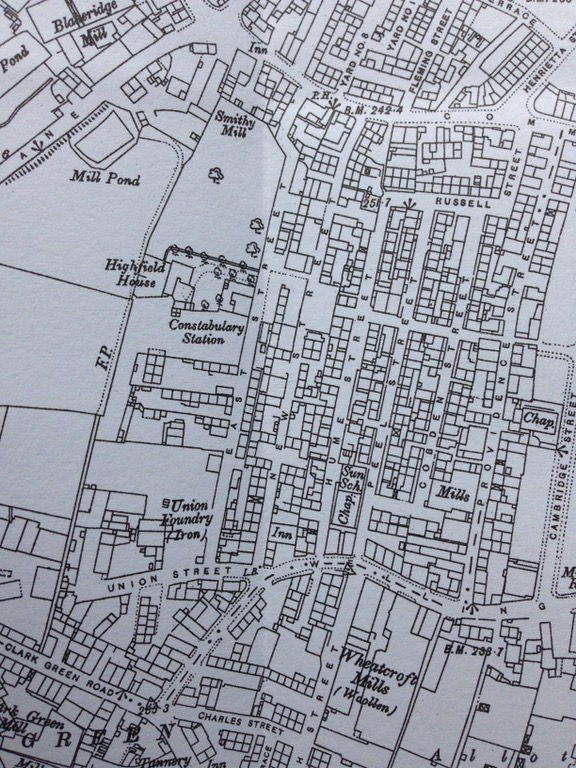
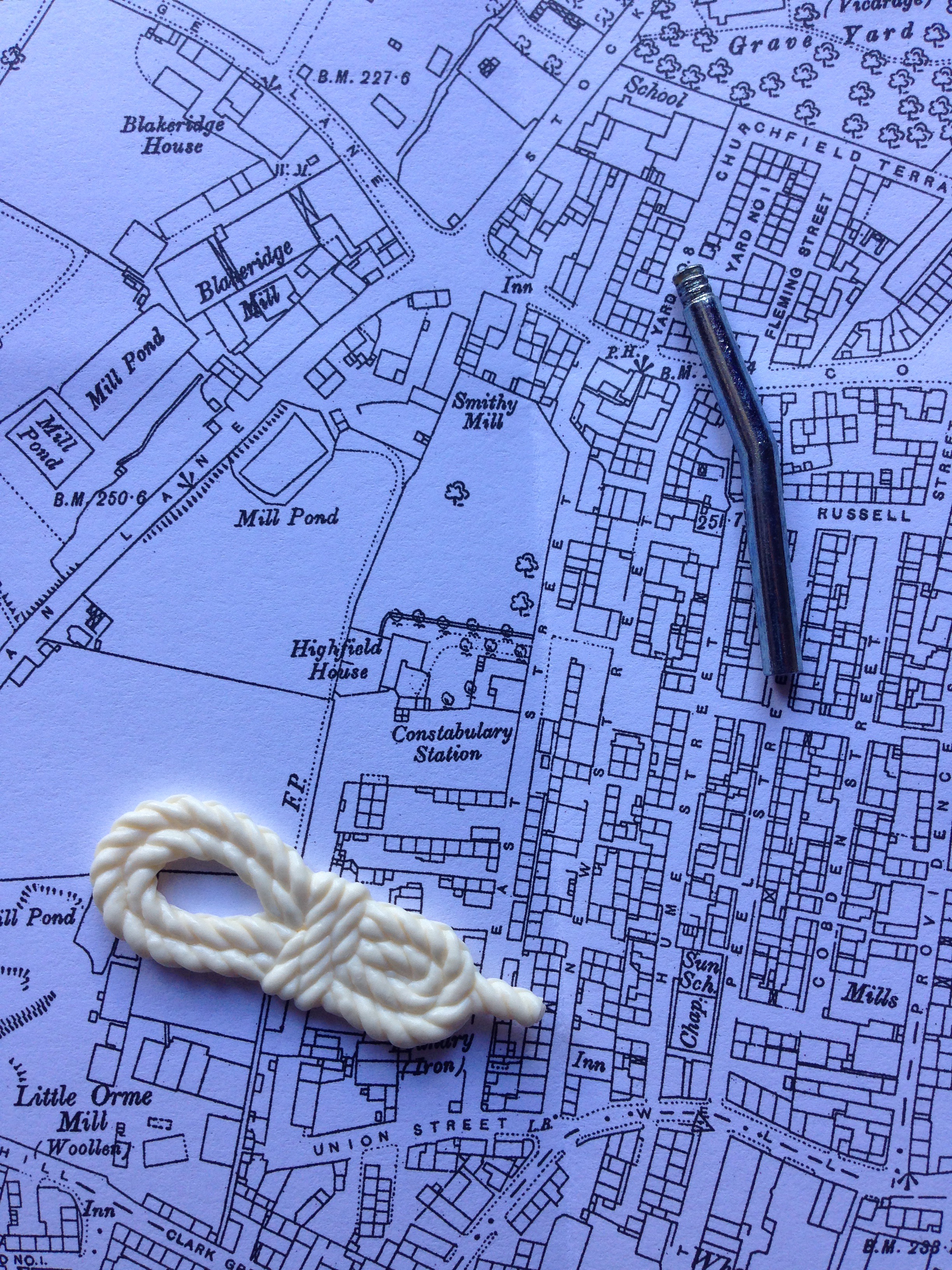
1892 map showing the area events took place

The police tried to diffuse the situation, attempting to get the crowd to disperse. At this point the Staincliffe and Heckmondwike men made their escape. Flynn and his mates progressed down Peel Street, swearing and cursing but then, reaching Wellington Street, refused to move.

Challenged by Herring about their dispersal delay, one of the men knocked the policeman down stealing his wooden stick. He then charged at PC Peet striking him about the head with the stolen weapon, knocking him to the ground and taking his truncheon.

There was some confusion as to the identity of this assailant. PC Herring remained adamant throughout the judicial process it was Flynn; but it was a dark night with little lamplight, and evidence from others was confusing with some indicating O’Neill. Some giving evidence claimed not to have seen blows struck, others only fist blows. Doubt was also cast on Herring’s identification because he had only been working in the Batley area for a few weeks. And new witnesses crawled out of the woodwork disputing events. For example Mary Foley appeared at the Assizes claiming she witnessed the row but hadn’t appeared before the magistrates earlier in proceedings because she “had a queer husband, a large family, and did not want to be mixed up with the police”.

Whilst Peet was down, Flynn, O’Neill and Ryan aimed kicks at him. They then turned on PC Herring.

This provided an opportunity for PC Peet to regain his feet and assist his colleague. The pair managed to grab hold of Flynn. Other men in the crowd began to pelt the police with stones and loose setts which had been left in he street by council workmen carrying out repairs. John McManus, a 25 year old collier, was identified as the man who threw the setts. Phillips as a stone-thrower. Peet was hit on the back of the arm or shoulder. The stone-throwing enabled Flynn to escape into a house in New Street, the police giving chase.

No other officer heard PC Herring’s whistle-blowing calls for help and the crowd refused to assist, so he remained watching the house whilst PC Peet brought police reinforcements. The extra police arrived but upon entering the house they found Flynn had vanished.


The police now went about tracing and arresting those involved. These included Flynn (apprehended in his bed at his Ward’s Hill home 1.30am. His wife woke him and he struck her saying “You b*****”, and to Robert Webber, one of the arresting policemen “It’s thy b***** phizog is it?”). Others rounded up were McManus, Ryan, Martin Devanagh and Patrick and James Phillips. Patrick Phillips, according to some reports, lodged in John Hannan’s house, but the Clark Green[2] location does raise questions as to whether it is “my” man. One person though evaded capture – O’Neill.

Whilst this was going on, at just before 1am in the morning Peet complained of feeling ill and returned to his Purlwell Lane home in the Mount Pleasant area of town. It was a house which he and his family shared with the Herring family. During the early hours he became increasingly unwell, lapsing into a coma. Police surgeon James Cameron was called at around 6am and Peet died just before 8am.

Cameron undertook a post-mortem, assisted by Dr William Bayldon. It revealed Peet had suffered a skull fracture and haemorrhage, causing his death. Peet’s body was taken back to his home near Barnsley for burial.

The two-part inquest in front of Thomas Taylor, district coroner, was held on the 11 and 18 December at the New Inn at Clark Green in Batley. A verdict of murder by Flynn was reached.

The men next appeared before the Magistrates, and a large crowd, at Batley Town Hall on 20 December. The case against Devanagh was dropped as the evidence against him was not sufficiently strong. Herring couldn’t swear to his presence and he, naturally, denied having been there.

At the end of the hearing James Phillips was also discharged. Although said to be at the row, he wasn’t seen doing anything termed fatal.

That left Flynn, Ryan, McManus and Patrick Phillips committed to trial at the Yorkshire Winter Assizes on a wilful murder charge: Flynn as the man who inflicted the fatal blow, the others for aiding and abetting. Some discussion did take place about extending this serious charge  wider than Flynn, but the balance of opinion swayed in favour of it. They concluded it was not necessary that all persons should inflict the fatal blow. If those present aided and abetted, they were all equally guilty of wilful murder.

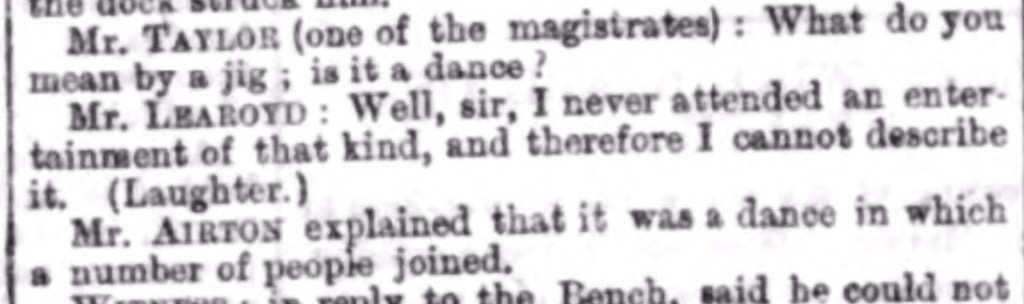
The proceedings in Batley were not without occasional humour, a kind of “us and them” scenario reminiscent of Sir Jeremiah Harman’s Springsteen, Gascoigne and Oasis comments. These included an exchange in Batley Borough Court  about the meaning of “jig“, with Mr Airton from the West Riding Police providing the explanation.
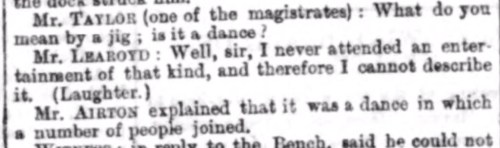
“Dewsbury Reporter” 22 December 1877 – A Jig Explained

At the inquest  Ellen Chappell, a witness, illustrates wonderfully why we have variations in ancestral surname spellings.

Surname Confusion – “Huddersfield Chronicle” 19 December 1877

The Assizes took place at Leeds Town Hall the following month. One of the first decisions made by the Grand Jury was a downgrading of the charges against Ryan, McManus and Phillips as there did not appear to be any common purpose between Flynn and the others to attack Peet. They now faced a charge of assaulting a policeman in the execution of his duty. Only Flynn faced the charge of wilful murder.

His trial took place on 18 January 1878. To an outbreak of applause in the court the jury returned a “not guilty” verdict. This on the basis of uncertainty as to who stuck the fatal blow – they could not definitely say it was Flynn. He was detained to face an assault charge with the others, the following day.

This was the final trial of the Assizes. Because Flynn had been acquitted of Peet’s murder, no evidence was offered for the assault and he was discharged. Guilty verdicts were reached against the other three men, who each received six month sentences.

Mary Peet and her children returned to her hometown of Wombwell, near Barnsley. The Police Committee granted her a £65 gratuity. A subscription fund was also established for her. She married coalminer Den(n)is Bretton in 1879, having a number of other children during her second marriage, including a son named William.

Besides a man loosing his life, the death of PC Peet highlighted racial tension in Batley, between the Irish and local communities. A series of local newspaper letters and articles are testimony to this. One letter illustrating the fact, which attracted much attention, appeared in the “Dewsbury Reporter” of 15 December 1877. It was written from “A Batley Lad”. It harked back to the leniency shown to those New Street privy rioters amongst others. It read:

The murder of a constable, often predicted, in Batley, has at last taken place, and perhaps the Irish now will be a trifle more quiet. They have felled many a policeman during the last two years, and when brought up, especially when Mr J.T. Marriott was Mayor and Ex-Mayor, have been let off, as your paper recorded from time to time, with most inadequate punishment. The Irish in this quarter are a very low lot, and rows and fights have taken place every weekend, but instead of the magistracy supporting the representatives of the law they have leaned to the other, and not virtuous side.

I think it is time that we had our own borough police, for if we had I think we should not allow them to be knocked about by the Irish roughshod as the poor county constables have been.

Perhaps the Irish after this murder will remember Patrick Reid”.[3]

Rev. Canon Gordon, the priest at St Mary of the Angels RC Church, referred to the incident in his sermon on Sunday 16 December 1877. He stated the Irishmen involved in the disturbance and murder never entered Church, and were Catholics in name only. He went on to say the event was a disgrace to all true Irishmen and Catholics. The incident confirmed his previously expressed opinion that a murder would be committed in Batley as a result of the excessive drinking which prevailed in the Irish classes. He concluded by expressing the hope that God would severely punish the guilty as a lesson to future generations.

This was the community in which my Irish ancestors lived and were part of. Its history forms a critical backdrop in shaping their everyday lives.

I’ve named only a fraction of those involved in the various stages of the trial for the murder of William Peet. If anyone believes their ancestor is involved I’m happy to check my notes.

Footnotes:
[1] Sometimes referred to as Peete
[2] Modern spelling is Clerk Green
[3] Patrick Reid was an Irish hawker executed in York on 8 January 1848 for the triple murder in Mirfield of James and Ann Wraith and their servant Caroline Ellis

Sources:

  • Ancestry.co.uk – Warwickshire Anglican Registers for the Parish of Wolvey; West Riding Constabulary Examination Books; Wakefield Charities Coroners Notebooks, 1852-1909; Criminal Registers, 1791-1892 (HO 27);
  • “Batley Reporter” newspaper
  • Census: 1851-1881
  • FindMyPast – Doncaster Archives Yorkshire Marriages; newspapers including “Dewsbury Reporter”, “Huddersfield Chronicle”, “Leeds Mercury”, “Yorkshire Post and Leeds Intelligencer”,
  • GRO Indexes
  • Wikimedia Commons for photograph of outside toilet, by Immanuel Giel – Own work, Public Domain, https://commons.wikimedia.org/w/index.php?curid=1110467
Murderous Assaults with Poker & Rope: The (Un)Fortunate William Gavan

This is a tale of my 2x great grandfather William Gavan, a victim of crime but perhaps himself a wrong-doer? Two recent record releases, one on Ancestry UK and the other on FindMyPast, have supplemented earlier findings. One has possibly revealed a twist on this earlier research. 

William Gavan hailed from County Mayo, moving to England at around the time of the Great Famine of the late 1840s. He was certainly in Kidderminster by the 1851 census. It was in the town’s Roman Catholic chapel that he married County Mayo-born Bridget Knavesay in 1852. They moved to Batley in around 1860 with their young family, Honor, Margaret, Sarah and John. Eldest son James died sometime prior to the move, and Honor’s death followed in 1869. The couple had four further children – Mary, Thomas, Bridget (my great grandmother). Their youngest, William, was born in 1872. 

In the absence of any baptism record, William’s year of birth ranges anywhere between 1821-1832 depending on source. 

The story begins in April 1870. This was the first mention I found of William in Batley’s only town paper at the time, the “Batley Reporter”. I discovered the entry by pure chance whilst doing a library newspaper search for something totally unrelated. The headline captured my imagination: “Murderous Assault with a Poker“. It conjured up visions of the reputed cause of death of Edward II whose tomb I saw at Gloucester Cathedral. This story proved to be far less gruesome, but on a personal level far more interesting. As I read on I realised the victim was my 2x great grandfather William Gavan. 

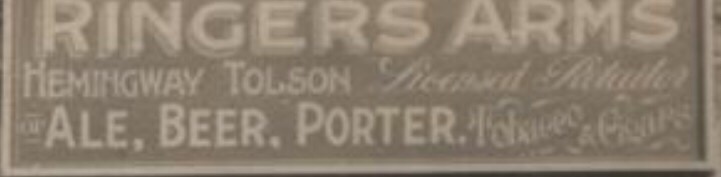
On Saturday 9 April, at around 9.30pm, William was drinking with a friend, James Brannan, in John Farrar’s establishment, the “Ringers’ Arms” on New Street, Batley. The beerhouse was gain-hand for William, as he lived on the same street. Thomas Cain, a New Street neighbour, sat opposite William. Thomas, a much younger Irish man in his early 20s, lived with his mother.  

“Ringers Arms” sign, a few decades later – image courtesy of Batley Community Archive

 Initially conversation was friendly. At some point though Thomas made some remark, about William beating his wife. William responded by telling Thomas to go home and mind his mother. This seemingly innocuous response triggered a dramatic reaction. Thomas grabbed a poker and struck William on the head, a blow so violent as to render him unconscious and draw a copious flow of blood. William was taken home and the Doctor, William Bayldon, summoned. 

He found William slumped in a chair, faint through blood loss which had saturated his hair, covered his face and even soaked into the chair. The almost two inch long wound, on the left of his head, extended through the whole thickness of his scalp and resulted in an arterial rupture of a branch of the left temple artery.  

Police Sergeant Lund apprehended Thomas in his home at around 4am in the morning of 10 April. When charged with the assault he declared “I did hit him once with the poker, and I hope the b______ will die, if I thought he would not, I would have given him another blow”. So a fairly clear admission. 

William was confined to bed for five days after the assault, necessitating the deferral of the case against Thomas. Finally able to give evidence, William appeared at Batley Borough Court on 18 April. He must have cut a dramatic figure with bandaged head, remaining seated throughout the process. Dr Bayldon said the wound had not healed and would probably require treatment for a further fortnight. So a pretty impressive injury. Equally theatrical was the dramatic production of the offending poker during the case.  

The assault was of such a serious nature Batley Borough Court decided to refer the case to the Quarter Sessions at Bradford. The “Batley Reporter” had a one liner reporting the outcome on 21 May 1870: “Nine Months – Thomas Cain, unlawfully and maliciously wounding William Gavin [sic], at Batley” 

This is where the new records in Ancestry.co.uk come in. A recent addition is the West Riding Quarter Session records, 1637-1914. They are searchable by the name of the person indicted, but not by victim or witnesses. Luckily, through newspapers, I knew the name of William’s assailant. The indictment book gives detail of the full charge against Thomas Cain – in essence that he unlawfully made an assault on William and unlawfully beat, wound and ill-treated and did other wrongs to him. It also provides the names of the witnesses. The case was heard on 19 May 1870 and Thomas pleaded guilty. The wording is very formulaic and repetitive and doesn’t really add many details – for that the newspaper report is best. But it does provide another layer of detail, and a search of these records could help identify hitherto unknown charges against ancestors. 

By the time of the 1871 census Thomas was back home from the Wakefield House of Correction and once more living with his mother in New Street. The Gavan family had upped sticks and left the street on which they’d lived since their arrival in Batley. They now resided at Spring Gardens. I do wonder if the re-location owed something to the return of William’s attacker. I don’t expect many would want to remain living in the immediate vicinity of their poker-wielding assailant. 

But at the back of my mind was the wife-beating allegation Thomas made against William, which precipitated events that April 1870 night. Was there any substance in the claim? Was William ever hauled in front of the Magistrates to answer accusations? Did he beat Bridget? No charges on this count showed in the Quarter Session records, but any case wasn’t bound to get to that level. It may most likely have been dealt locally in the Petty Sessions.  

I never got round to further perusing the local newspapers for the period to see if William featured again. In the absence of any other information it was too formidable undertaking; neither did I check at West Yorkshire Archives for any lists of those appearing before Batley Borough Court.  

Here FindMyPast’s newspaper collection came to the rescue. It pays to keep checking because newspapers are added regularly. I was overjoyed to discover the addition of the “Dewsbury Reporter”. Not quite as good as having the “Batley Reporter” or the later Batley town paper, the “Batley News”. But not to be overlooked, because Batley stories feature in this neighbouring town’s paper. Also, it’s fair to point out, on FindMyPast there is a limited run for the Dewsbury paper. So far, it covers editions from its inception in 1869 until 1884. But it is part of the period of my ancestors lived in the town. So definitely worth a speculative search one evening. Hopefully the coverage will expand over time.

I really had to play around to overcome OCR errors as well as the dreaded surname variants for Gavan. It was worth the effort. Whilst there may be more to find, I unearthed some absolute corkers. And not confined to the occasional drunk and riotous episode either. 

Reports for the Gavan family included a rather interesting one dated 6 September 1873. In short William was summoned to appear at Batley Borough Court on Monday 1 September to answer a charge preferred against him by his wife, Bridget, of threatening to take her life. When the case was called she refused to say anything against her husband until Inspector Wetherill said he would lock the pair of them up. This loosened Bridget’s tongue. Apart from anything else, she had young children to consider. Youngest child William was only one.

She and William quarrelled on the 29 August. During the row he threatened kill her, something she took seriously. Afraid he would do her grievous bodily harm she reported him. William was bound over to keep the peace for six months. So perhaps there may have been something in what Thomas Cain alleged over three years earlier. Maybe Thomas was indeed upset at the way William treated his wife. And the hot-headed youth acted whilst in his cups. 

The next gem involved Bridget. On Wednesday 2 June 1875 it was her turn to appear in the Borough Court. I love the phraseology and images conjured up by the newspaper report, so much so I’m reproducing it in its entirety: 

Bridget Gavan was charged with assaulting Mary Winn, wife of Peter Winn, Spring Gardens, on the 20th May. Mr Hudson appeared for the complainant, and stated that the complainant’s husband was a coal agent, and sold coals in the neighbourhood, and collected money in small instalments. On Saturday last he called at the house of the defendant for some money, but instead of receiving the money he received a very warm reception from the defendant’s tongue, which induced him to leave the house and go away about his business. After visiting several other places, he went again and saw the defendant, who struck him, and scratched him in the face. He went home and told his wife, who naturally was not very well pleased with it, and on Monday she happened to meet with the defendant at a friend’s house, and asked her why she had insulted her husband. The defendant used some very naughty words, and afterwards she followed complainant to her house, seized her by the hair of the head, and a scrimmage took place to the detriment of both parties; and then it was that the complainant took out a summons for assault, and the summons was served on Monday. The summons was taken by the defendant, and in a very indecent manner was thrown by her into the complainant’s house, and she also broke a window. Evidence having been given by Peter Winn and the complainant, the defendant said the complainant struck her first with a brush. The Bench thought there had been some provocation on both sides, and only inflicted a fine of 2s 6d and costs”. 

I do wonder what constituted “very naughty words” and the mind boggles at how a summons could be taken in an “indecent manner”.  And why did Bridget react like this? Had Peter Winn overcharged her? Was he trying to collect money already paid? Was the coal he supplied of inferior quality? The dispute between the Winns and Bridget must have been the talk of Spring Gardens! I wonder if the Gavan’s used a different coal agent subsequently? 

But the residents of Spring Gardens were to be treated with another far more dramatic domestic disturbance in the Gavan household a little over a year later, stoking their gossip fires in a way far beyond the coal dispute. 

This jewel in the crown of my finds was accompanied by yet another “murderous assault” headline. Once more William had the role of victim. This time his attacker was his son-in-law, John Hannan. Again a much younger man in his 20’s.

John married the eldest surviving Gavan daughter, Margaret, at St Mary of the Angels RC Church, Batley on 21 September 1875, shortly after Margaret’s 20th birthday. The newly-weds lived at Spring Gardens in the household of Margaret’s parents. 

Less than 12 months after their wedding John, who was well-known to the authorities, appeared in Batley Borough Court facing charges of being drunk and riotous at Spring Gardens, assaulting Inspector Inman and assaulting William. His previous convictions included unlawfully wounding, larceny and attempted breach of the peace in connection with a prize fight. So an array of offences. 

His latest brush with the law followed drink-fuelled events on the evening of Saturday 1 July 1876. At 9pm that evening several women besieged Batley Police Office to report William lay seriously injured, probably dying, following an attack by John. 

Inspector Inman went to the house to find William with his head on a pillow, surrounded by more women. When Inspector Inman asked John what he’d been doing, John’s responded “What are you doing, you b____”. As the Inspector attempted to take John to the police station, John got hold of him by the thigh, threw him on his back and made his escape, assisted by several of the women. These allegedly included William’s daughter, 19 year old Sarah Gavan. She vehemently denied this, claiming she was away at that particular point in proceedings. 

In the meantime Dr Bayldon attended William, the same physician as was called following the 1870 attack. Again mirroring the earlier attack, William had several facial cuts, including a two inch one down to the bone. Bizarrely he also had a rope tied around his neck.  

Crime Scenes – Batley

 Fortunately William’s injuries were less serious than initially thought. Able to appear in court, without undue delay this time, he asked the Bench to “go easy” on his son-in-law. Upon being told that the matter was far too serious, William claimed not to remember anything about the night, when he “had had a sup of drink himself”. He believed John had tied a rope around his neck, but he had no feeling as John had rendered him insensible. Whether this memory loss was legitimate or a way of protecting John is open to question. I know where my suspicion lies. And the Mayor did remark to William “And yet you want to be very kind to him”. 

In his defence John claimed both he and William were drunk. He was attempting to get his father-in-law in the house and to bed. He’d pushed William causing him to fall and receive his injuries. He denied all knowledge of the rope around William’s neck. 

Sarah Gavan’s answers proved equally unsatisfactory and vague. John brought her father home and the pair participated in some “acting”, one trying to get twopence out of the other’s hand. She accounted for the rope around her father’s neck as part of this horseplay. John tried unsuccessfully to get her father to bed and she left them to it.  

It seems that concluded the evidence. John pleaded guilty to the drunk and riotous charge, and to the assault on William. For each of these offences he was fined 10s and costs, or 14 days. To the assault on Inspector Inman, he pleaded not guilty. However the Bench convicted him, imposing a one month prison sentence. No fine option for this offence. 

So a very fruitful search, adding more colour to the characters of my paternal ancestors. What struck me was how neatly the incidents linked, the symmetry between them – neighbourhood quarrels; family fall-outs; hot-headedness; Dr Bayldon’s visits to patch William up; and too much booze.

I am now in the process of a series of visits to the Wakefield branch of West Yorkshire Archives to see if the Batley Borough Court records point to any further potential ancestral misdemeanours. The list of complainants, defendants and dates will make a newspaper search more manageable. And, even in these early stages, there are plenty more newspaper searches to go at as a result.  

However, it’s something of a race against time, given the planned closure of Wakefield on 13 May until early 2017. My impending surgery could in effect mean I may have to wait until next year to finish. I do have a number of archive visits booked, so I’m keeping my fingers crossed. 

Sources: 

  • Ancestry.co.uk:  West Riding Quarter Sessions 19 May 1870 & HO 27 – Home Office: Criminal Registers, England and Wales 
  • Batley Community Archive – “Ringers Arms” sign
  • Batley Reporter” – 16 & 23 April 1870 and 21 May 1870
  • Census: 1851-1881 
  • GRO Marriage Certificate: William Gavan & Bridget Knavesay 
  • Parish Register: St Mary of the Angels, Batley 
  • FindMyPast: 
  • Dewsbury Reporter” – 6 September 1873, 17 October 1874, 5 June 1875 and 8 July 1876 & HO 140 – Home Office Calendar of Prisoners 

A Shout Out for Libraries – A Family History Gateway

My local library has been so much a part of of my life I can’t imagine a world without it. It has been there at all stages: from the magical joy of childhood stories; to the text and reference books for my school studies; the escapist pleasure of novels transporting me to different worlds, times and places from my armchair (or bus seat); and full-circle taking my own little girl to choose her first books.

But more than that: 10 years ago it provided my gateway to family history. 

When I took my first tentative family history steps, they took me to the familiar surroundings of Batley library. There I got used to operating the microfilm and microfiche readers to look at the local censuses, newspapers, parish registers and cemetery records. There I practised deciphering old handwriting and making transcripts and abstracts.

image

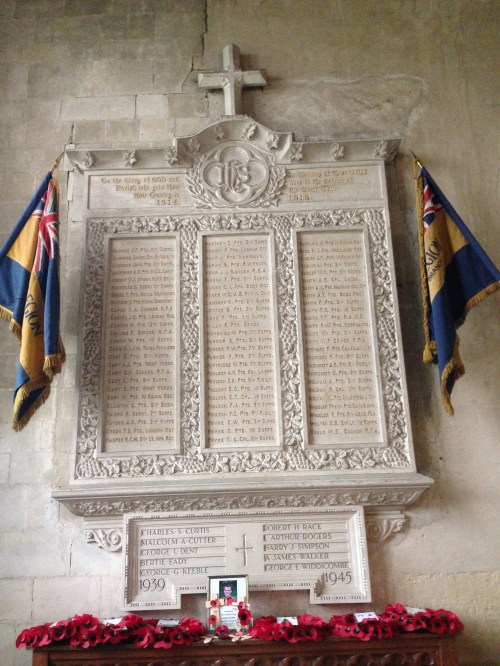
Batley War Memorial & Library – Jane Roberts

In those early novice days I don’t think I would have dreamed of going to West Yorkshire Archives. The prospect was far too daunting. It would be full of experienced, serious researchers. Not a place for a “newbie” like me who didn’t have a clue what a microfilm reader was, let alone how it worked.  

I felt far more comfortable going to my local library where I knew the staff. And they had endless patience showing me what records were available and how things worked. 

Their holdings provided a very local focus. Beyond the newspapers and parish registers they had those peculiarly local resources, often provided by researchers with a love of and affinity with the area. From the card index of local War Memorials compiled by Christopher Frank, (I still don’t know who he is but I’m eternally grateful to him because it was through his index that I had the jolting realisation that one of my ancestors was on the Memorial, a fact never mentioned by the family), to the research piece by Janice Gilbert on “The Irish in Batley”.

Even now my local library is a go-to family history research location. It is still the place for local newspapers – neither “The Batley News” or “The Batley Reporter & Guardian” are on the British Newspaper Archive or FindMyPast. Not all West Yorkshire Parish Registers are on Ancestry. There are resources such as Batley Cemetery Records, Batley Borough Council minutes, Directories, Batley Grammar School Magazines and various programmes, brochures and memorabilia from a multiplicity of local events. Then there is the wonderful Soothill War Register which I wrote about in a recent post.image

One of my particular library favourites are the annual Reports by the Batley Borough Medical Officer of Health. I briefly referred to them in “A Short Life Remembered“. They provide a fascinating and detailed insight into all aspects of health, disease and social conditions of my Batley ancestors: from school-by-school statistics of Batley children, to breakdown of causes of death; from birth rates and infant mortality to incidence of infectious diseases. I find them an invaluable source for giving context to the times, lives and deaths of my ancestors.image

They even have free computers, Wi-Fi and Ancestry access! 

The impressive Batley Market Square library building is steeped in history. With funding from philanthropist Andrew Carnegie it opened to the Batley public in 1907. I imagine my ancestors browsing through the thousands of lending and reference library books or catching up with latest local, national and international events in the newspaper room. And over a century later I am researching the lives of those ancestors in the very same building.

In an era of Government spending cuts and their knock-on impact on Council funding for services, libraries are easy targets. “My” library was a fundamental first step up the genealogy tree all those years ago; and it is just as relevant for me today. I do so hope that such valuable community hubs, important at all stages of life, are not lost. 

Given the subject it seems appropriate to post this on World Book Day.

We Will Remember Them: Contemporary Parish War Register Books

War Memorials can be found in churches, towns and villages the length and breadth of the country, inscribed with the names of those who paid the ultimate sacrifice. Years later researching those named can prove problematical, as all that exists on the Memorial is a name.  I know this only too well from my Batley St Mary’s research!

However some Parishes and Districts went a step further and, in addition to these Memorials, they produced registers and books containing more details about their war dead.

This Christmas my parents bought me a limited edition reproduction of one such book, the Upper District of Soothill War Register and Records of War Service 1914 to 1920.  Soothill War Book

The original was compiled by the Rev W.E. Cleworth, Vicar of St Paul’s, Hanging Heaton. Printed by E.F. Roberts in Batley, it was based on a War Service Register kept by the Vicar from the start of the war. The Soothill Upper War Memorial Committee subsequently assisted. When the war ended 1,000 Record Forms were printed, information inserted from the Manuscript Register and then these were distributed to households in the area for correction and additions. Over 900 were returned and these were used in the production of the book, which was truly a parish effort. Copies of the original book are held at St Paul’s Hanging Heaton and Batley library.

It is particularly noteworthy that this book contains the names of not only those who gave their lives in the course of the conflict; it includes information about all those from the District who served. So a wonderful record of those who came home and are all too often overlooked.

It contains addresses, Units, age when war service commenced, places served, promotions, distinctions and other points of interest about the service careers of those featured.

Details of the limited edition reproduction organised by Margaret Watson, including more about the original, can be found in October 2014 editions Batley & Birstall News. However I understand the reprint has now sold out. The book includes a number of men linked to my family tree, including Jesse Hill, so I am so pleased to now own a copy. And I am indebted to Margaret and all those who worked on putting the reprint together.

On a recent visit to Lavenham, Suffolk I popped into the local Parish Church of St Peter and Paul to look at their War Memorial. To my surprise and joy beneath their Memorial they too had a book.

Lavenham Church

Lavenham Parish Church – Jane Roberts

This one commemorated those who died in both World Wars. A handwritten Book of Remembrance dating from 1922, it was compiled with the specific intention that those who died would have more than their names remembered.

Lavenham War Memorial

Lavenham War Memorial – Jane Roberts

There appeared to be a page devoted to each man, giving name, age and address alongside service details and even extracts from letters informing families of their loss. A wonderful lasting legacy for generations to come.  Lavenham book of remembrance

These books are particularly poignant because of their “of the time” nature. I wonder how many more are out there? And how many are being reprinted to ensure these men’s memories are perpetuated?

A Short Life Remembered: Margaret Hill

Immersing myself in the lives of my ancestors inevitably means dealing with their deaths. Lots of them. Because I invest so much time in my research, that connection with my ancestors goes way beyond the simple bloodline link. Learning about their lives and struggles, I develop an emotional attachment. Discovering their deaths, which were occasionally under traumatic circumstances, can stop me in my tracks. And whilst not quite moving me to tears it can bring a lump to my throat. I’m not sure if this is a common feeling amongst other family history researchers.

The deaths of children can be particularly difficult. They never had a chance to make a mark, achieve their potential, fulfil their parent’s hopes and dreams, marry and have families of their own. But for family history research, many would be forgotten for ever. One of my first blog posts, A Census In-Betweener, was one such example. It remembered the all too fleeting existence of Thomas Gavan, my great grandmother Bridget Gavan’s eldest child. Towards the end of the year another post focused on the tragic accident in which Oliver Rhodes died. He was the son of my great grandparents Jonathan Rhodes and Edith Aveyard.

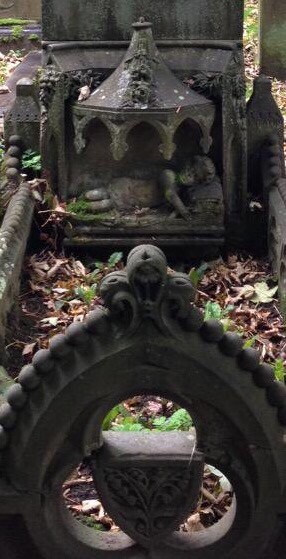
Victorian Headstone for a Child – Photo Jane Roberts

This year I intend to write a series of blog posts commemorating more of the briefer lives of those in my family tree. This is the first. It marks the short life of Bridget Gavan’s youngest child, Margaret Hill. But for the 1911 census I would never have known about her existence. It was news too to other family members, something I find difficult to comprehend. After all it wasn’t that long ago.

In this post, as well as describing what little is known of her short life, I will try to give a flavour of the times in which she lived.

In 1897 Bridget Gavan married coal miner John Herbert (Jack) Hill. Jack was a widower, Bridget an unmarried mother of two girls, though it is possible Jack was the father of the younger of the two, Agnes.

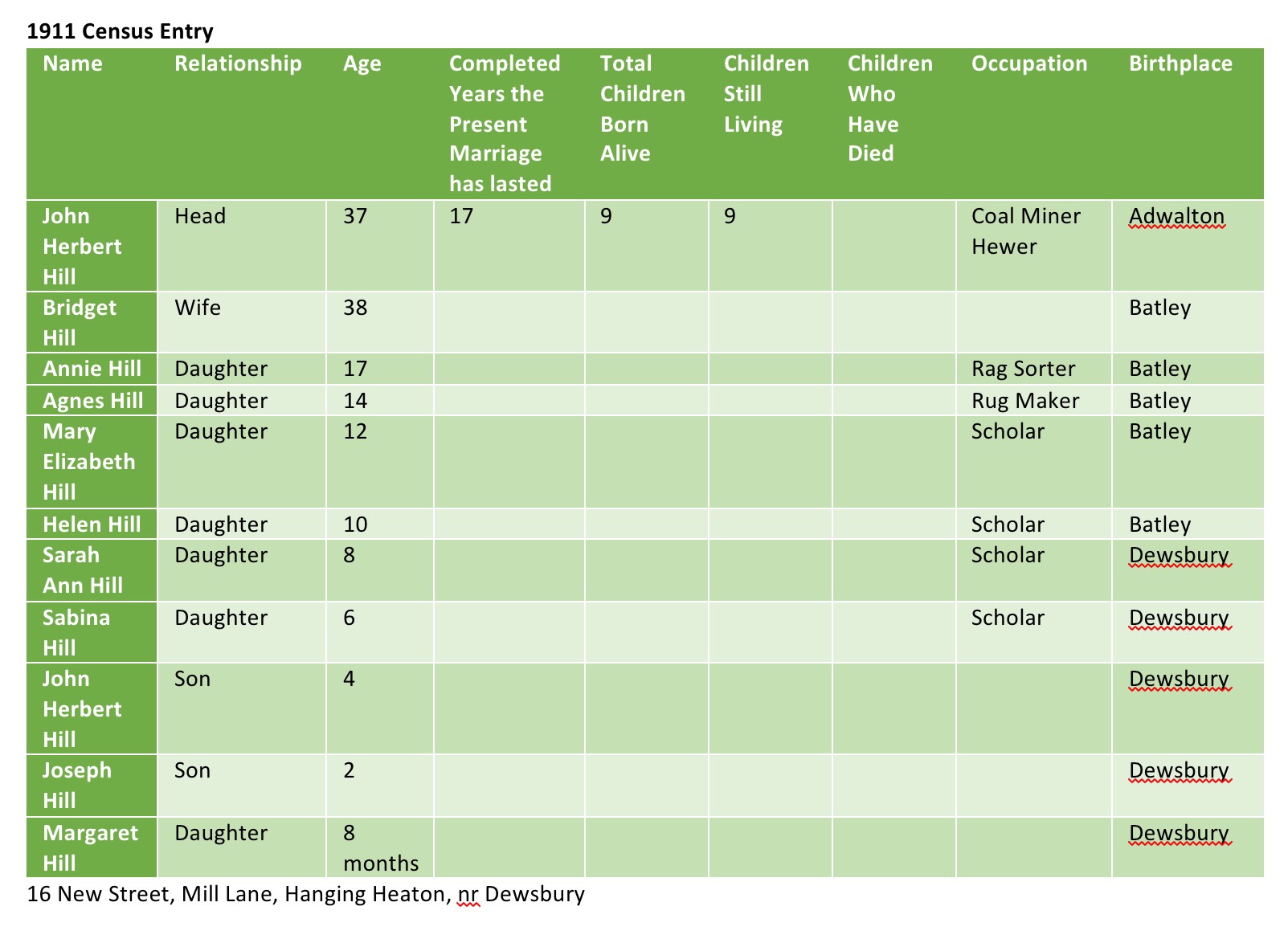
Jack and Bridget went on to have seven further children. Margaret, their final child, was born on 29 August 1910 in the family’s home at 16 New Street, Hanging Heaton. The family now totalled nine children ranging from newly-born Margaret to eldest Annie, who celebrated her 17th birthday the day before Margaret’s arrival.

The 1911 census shows the complete family unit. It is notable for Jack and Bridget’s judicious tinkering with names and dates. Interestingly they claimed to have been married for 17 years, which conveniently corresponded with the age of Bridget’s eldest daughter Annie who is listed as “Annie Hill”, not Gavan. Daughter Agnes, also born outside of wedlock, is similarly listed as Hill and not Gavan. All nine children are claimed as “children born alive to present marriage”. There is also the usual flexibility around adult ages to minimise the gap between Jack and Bridget’s ages (she was born in 1869).

In terms of events during Margaret’s short life, 22 June 1911 marked the coronation of the new King, George V, and his wife Queen Mary. A cause for celebration with parades, parties, decorations and a bonfire to mark the occasion. And in December that year the Liberal Government introduced a National Insurance Act. It meant for that workers would have cover against sickness and unemployment. So there was perhaps some optimism as the things seemed to be on the up for families like Jack and Bridget’s.  But this may have been tempered as a result of industrial action the following year, and its affects on family income.

Miners were notoriously militant with frequent strikes. The records of the Yorkshire Miners Association (YMA) show in the latter part of the 19th century and early into the 20th Soothill Wood, the pit where Jack worked, was one of the more non-militant and politically moderate pits. Nevertheless, although being characterised in district ballot votes as non-militant it was conversely, even then, regarded as particularly “strike prone”.

Just a glimpse through newspapers show for instance strikes were threatened in 1892 over amongst other things distribution of corves. A short strike took place in 1894 over reduction of wages. Outside this period, a lengthy strike took place in 1906 affecting not just Soothill, but wider throughout Yorkshire. And in 1912 there was a national strike, lasting five weeks, the objective being a national minimum wage.

The national strike began in February, Britain in the grip of yet another severe winter with temperatures plummeting and thousands dying of hypothermia. Heavy snow fall had affected Yorkshire at the end of January. A strike was the last thing Britain needed at this particular time. As a result of the action more than a million people were out of work.

Although the outcome was not as profitable as the miners wanted, hewers in the Batley area, such as Jack, were guaranteed a minimum daily wage of 6s 8d, subject to clauses around for example age and attendance, although some employers did try to flout this.

Then another 1912 Soothill strike in early July resulted in 72 men being summoned to appear in court that month  – just a small fraction of the hundreds involved.

A newspaper report in 1918 stated the wages of a Soothill Wood Colliery averaged of £2 13s a week. But this needs to be seen in context of the economy at the time. Since the beginning of the war to 1916 there was an estimated 45 per cent reduction in the purchasing power of foodstuffs. Soothill Wood is more accurately described as a low to average pit in terms of wage level during the period 1894-1918.

So although the Hill family were not in the poorest category, life would still be a struggle full of difficult spending choices to make. Balancing how much to spend on rent against food and other essentials such as coal (although this would be cheaper than the norm given Jack’s job), lamp oil, gas, wood, candles, matches, soda and soap (a particular high usage item for a mining family), blacking and transport costs. And if you went for cheaper rents, these houses would be smaller, damper and darker resulting in higher expenditure on fuel and lighting, not to mention being more detrimental healthwise.

The family would weigh the affordability of burial insurance against the risks of not having it. As we saw in the story of Thomas Gavan, Bridget was minded to take out insurance, but was this still the case with a much larger family?

Then there was clothing and boots. Could they afford to put aside weekly in a clothing or boot club, or were they faced with the hit of paying it all upfront as and when needed? The school log book for St Mary’s, the school the Hill family went to, has accounts of children not being sent to school for lack of boots during this period.

And then there would be budgeting for emergencies such as medicine and doctor’s bills.

As for food, for the working class it was bland and monotonous, the emphasis being on staving off hunger rather than nutrition. Men, the breadwinners, had the most. They needed to be fit and strong to go out to work, especially for a manual job such as Jack’s. The principal article of diet in this period was bread which was cheap and convenient. It was followed some way behind by potatoes, meat and fish. Meat was principally bought for the men, with the main expenditure being on Sunday dinner when the entire household would be at home. Cold cuts from Sunday would be eaten on Monday, eked out longer if possible. When potatoes did not feature, the replacement would be suet pudding with golden syrup. There would be the occasional egg, and tiny amounts of tea, dripping, butter, jam, sugar and greens.

Milk, although crucial for children in particular, was costly. There were also issues of storage to consider in these years before refrigeration. A pint of milk a day for an infant or child would equate to around 1s 2d a week when the food for a whole family may have to be supplied out of 9s a week after all other household expenses were taken into account. As a result women nursed their babies as long as possible, often until they were about one year old. After that often the only milk children got was tinned evaporated milk, this despite it not being recommended for infants. This tinned product was used in tea, and sometimes also used as a spread on bread. Where boiled milk was given to babies and infants it was often thickened with bread and biscuits in an attempt to bulk it out. In 1916 the local Coroner censured such a practice in the inquest of the baby son of a fellow Batley St Mary’s parishioner. But the reason why infants did not get milk was the same reason they lacked good housing and clothing – it came down to cost and family finances. In short the diet where there were several children in a family, such as the Hills, would be chosen for its cheapness and for its filling, stodgy qualities.

All of these considerations may have played a part to some extent in Margaret’s death.

On a national scale one event dominated 1912. British confidence was shaken in the spring when news reached home of the unthinkable, the sinking of the “Titanic” on 15 April, with the loss of more than 1,500 lives. Headlines screamed out from billboards and newspapers – day upon day of grim news. Deaths included those of bandleader and Dewsbury resident Wallace Hartley, with tales of how the band played on adding to the whole pathos surrounding the event.

There were perhaps some particular highlights to the Hill’s year though. On 10 July 1912 following much preparation and accompanied by great excitement King George V and Queen Mary visited Batley. A three minute ceremony in the market square was attended by around 4,000 school children hoping to catch a glimpse of their monarch. However, it ended in disappointed children and much indignation on the part of parents and teachers when many failed to see the Royal couple, such were the crowds and the swiftness of the event. Margaret was too young, but some of her siblings may have taken part and returned home dispondant.

It is also doubtful whether the event took Jack’s mind off the Soothill Wood Colliery strike which culminated in those July court cases.

On a more personal family level one event dominated the year – the marriage of Bridget’s daughter Annie to Lawrence Carney on 30 November 1912.

So things ticked over until 4 August 1914, when a life-changing announcement was made which would affect many families nationwide: Britain declared war on Germany. There now followed a period of intense hardship and sorrow for many families including the Hills, now living at 2 Yard, 2 Victoria Street in the town’s Carlinghow area. But that was still to come.

With the war in its infancy and family members, such as Lawrence, now serving in the military, tragedy closer to home struck the family. On 9 October Margaret, died age four, as a result of tuberculous (TB) meningitis. She was one of only nine people in Batley Borough to die of this illness in that year.

TB meningitis typically affected children under ten years of age. It was especially associated with improper feeding, malnutrition, poor hygiene or childhood illnesses such as measles and whooping cough. Caused by tuberculosis bacteria invading the membranes and fluid surrounding the brain and spinal cord, it usually began with vague, non-specific symptoms such as fatigue, listlessness, loss of appetite and headache. The afflicted child became peevish and irritable. Vomiting and constipation followed along with a dislike of lights and sound. As the headache intensified the child would scream with a peculiar cry and display classic neck stiffness. As the disease progressed seizures occurred, the child lapsed into a coma and eventually died. Horrifically Margaret suffered these symptoms and decline over a period of three weeks.

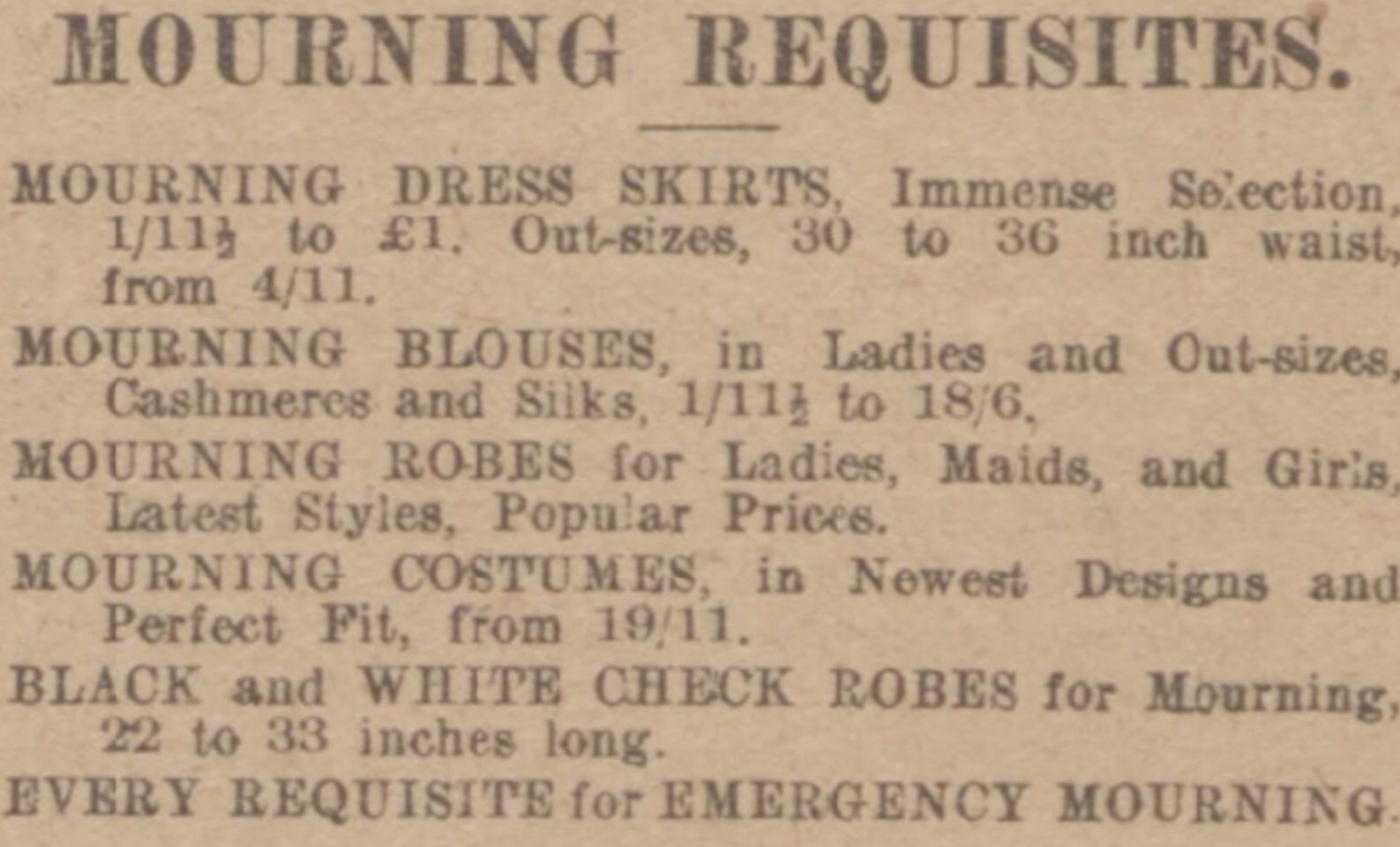
1914 Mourning Dress Advert

Apart from the tragedy, such an event was crippling financially to already hard pressed families. A child’s funeral alone could cost upwards of £2, including a death certificate, funeral costs, flowers, gravediggers, hearse attendants, a woman to lay the body out, and a black tie for the father. Most families took out burial insurance. This cost on average each week 1d per child, 2d for a mother and 3d for a father, though some overcautious women paid more. So for the Hill family, with their flock of children, this would amount to a weekly sum of just over 1s. But even with insurance a burial plot may not have been affordable.

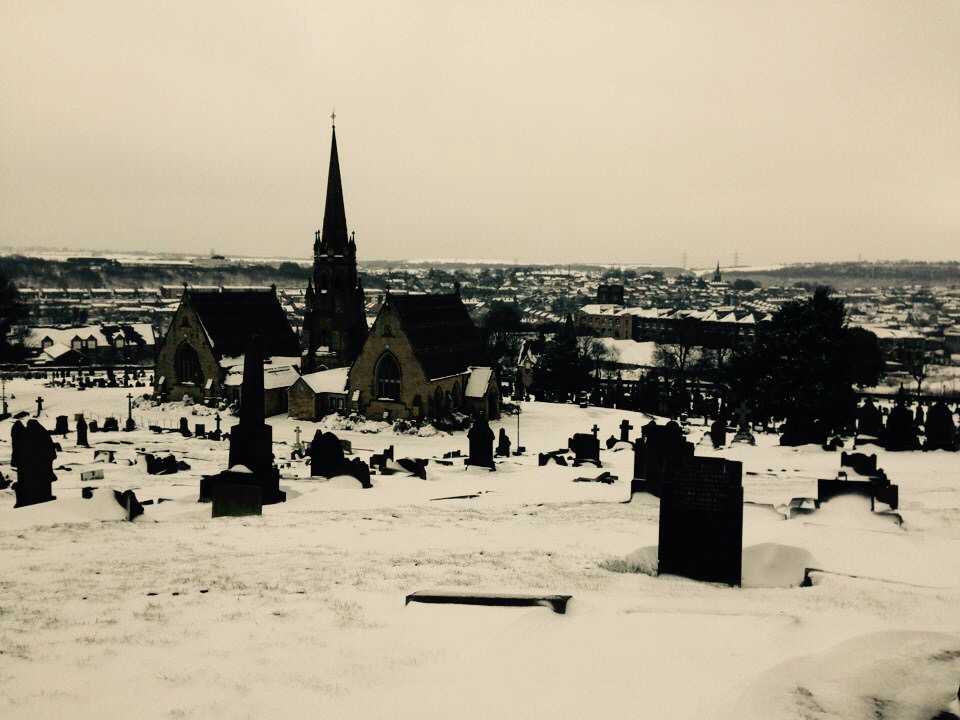
Batley Cemetery – Photo Jane Roberts

This proved the case for the Hill family.

Margaret was buried on 12 October in a common grave in Batley cemetery, echoing the fate of her eldest half-brother Thomas Gavan.

Sources:

  • Batley News
  • Batley Reporter & Guardian
  • Batley Cemetery Burial Records
  • Batley Medical Officer of Health Reports
  • GRO certificates – Birth and Death certificates for  Margaret Hill
  • The History of the Yorkshire Miners 1881-1918” – Carolyn Baylies
  • The History of Batley 1800-1974” – Malcolm Haigh
  • Round About A Pound A Week” – Maud Pember Reeves
  • St Mary of the Angels School Log Book
  • FindMyPast – 1911 Census


Obsolete Mayo Family History Website: Wayback Machine to the Rescue

In a couple of my blog posts (My County Mayo Family and The National Library of Ireland Catholic Parish Registers Website and Parish Registers: Brick Wall Breakers and Mystery Creators) I’ve referred to one of my much loved, and missed, websites. It was a County Mayo baptism and marriage transcript site, EastMayo.org, launched in 2005. Mainly using LDS films, it’s aim was to provide a free facility to researchers of family history in East Mayo. It concentrated on “that area of County Mayo encompassed by the Roscommon border and the towns of Charlestown, Boholo, Swinford, Kiltimagh, Knock, Claremorris and Ballindine”.  

 The transcripts included:

  • Aghamore 1864-1883 and Knock 1869-1905 Baptisms; 
  • Aghamore Marriages 1864-1882; 
  • Claremorris Civil Registrations 1872-1875; 
  • Claremorris Marriages 1806-1890 and Baptisms 1835-1912; 
  • Kilconduff Marriages 1846-1878; 
  • Kilmovee Baptisms 1854-1910 and 1881-1913; 
  • Kilmovee Marriages; 
  • Kilmovee Marriages Out of Parish; 
  • Knock Marriages 1883-1943 

With generations of my family from the Catholic Parish of Kilmovee, this site was a Godsend. I was disappointed when it disappeared. Although in 2015 the National Library of Ireland launched its free Catholic Parish Register website plugging some of the gap, the EastMayo.org had a broader date range for its limited number of Parishes.   

And there were some extras such as the fabulous “Kilmovee Marriages Out of Parish” transcriptions. Basically, if someone married out of Parish, the priest in the Parish the marriage took place contacted the priest in the person’s baptismal Parish informing them. 

I’ve seen something similar in the Batley St Mary’s registers. These contained such letters slipped between the pages. Indeed in this Parish, the priests went so far as to annotate the person’s baptismal entry with their subsequent marriage details, whether the marriage took place in or out of Parish.  

The Kilmovee transcripts covered marriages in the first part of the 20th Century, with marriages taking place within Ireland and beyond. Although only a snapshot of around 30 years, the Batley marriages of my grandpa (John Callaghan) and his brother (Martin Callaghan) are captured in them. 

An example of the global range of these marriages is seen in the initial transcriptions. They included former Kilmovee parishioners marrying as far afield as Glasgow, Batley, Orange – New York, Stockport, Congleton, Manchester, Doncaster, Accrington, Huddersfield, Charlestown, St Helens, Jersey City – USA and Silver Falls, Canada.  

Information on these Out of Parish marriages varied, but could contain: 

  • spouse; 
  • baptismal date (a bit of creativity here – most of the dates given seem to be approximate); 
  • parental details, with sometimes the mother’s maiden name; 
  • date and place of marriage (church and location);
  • witnesses; 
  • officiating priest; 
  • age; and  
  • if the person is widowed. 

The information provided linked your ancestor to a Parish. It also enabled you to track back further, for example by looking at the baptism transcripts.  

Yes, there were acknowledged transcription difficulties, but it was a wonderful resource.  

An updated EastMayo.org site domain name still exists with links to Irish-related websites, though it is not the original site with all that wonderfully name-rich information. But all is not lost. The original, as it stood between 2006-2011, can still be accessed via the Internet Archive Wayback Machine. 

And I’ll end with another really useful County Mayo website, which can be found here. Besides current day information, including where to stay and things to do, there is information about the area’s history, geography and culture generally as well as that of individual towns and villages. There is also a message board which may be helpful for those with Mayo roots.

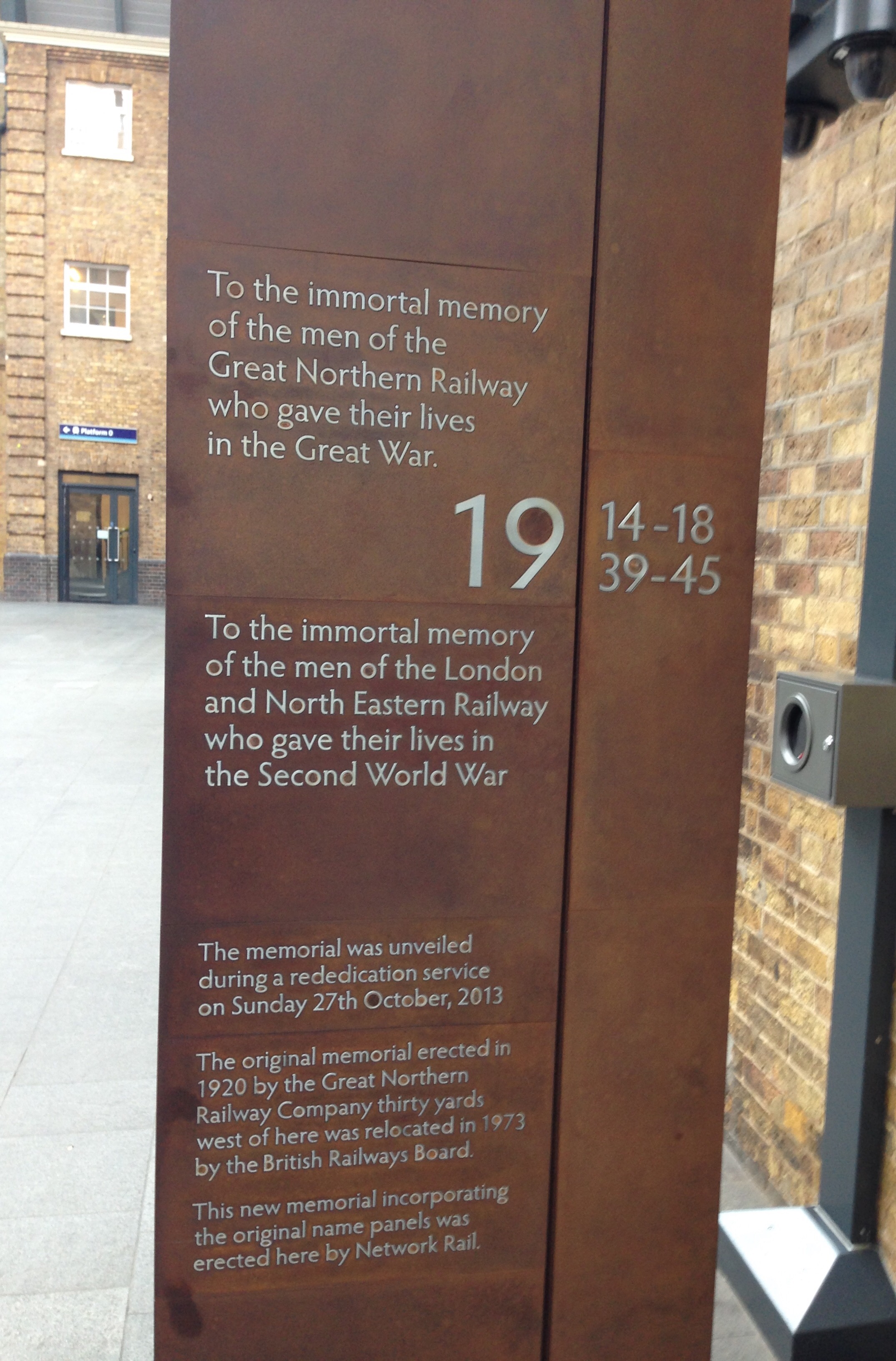
King’s Cross War Memorial for Railwaymen

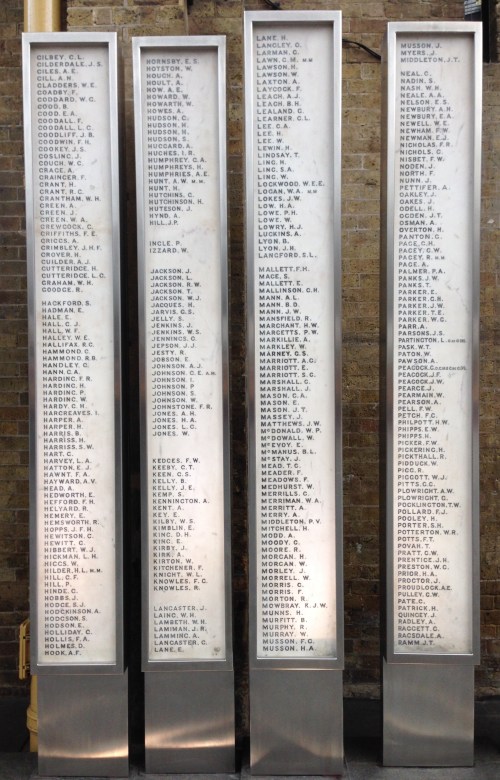
This week was a full-on working week with two long London trips. Although I didn’t have time to do any family history research, I did take the opportunity to visit the War Memorial at King’s Cross station.

Over 20,000 railwaymen died in the First World War and there are various memorials to them dotted around the country. The one at King’s Cross is dedicated to employees of The Great Northern Railway (GNR) who lost their lives in that conflict. It contains 937 names. Originally erected in 1920, it was further dedicated to employees of the London and North Eastern Railway who gave their lives in World War Two. Their names are not listed.

The memorial was re-designed and re-dedicated in 2013. Its 11 tablets are reminiscent of John Singer Sargant’s painting “Gassed“.

I had a particular reason for wanting to stop off at the memorial. Amongst those named is William Colbeck. He was a parishioner at St Mary’s, Batley, and someone whose life I researched as part of my St Mary’s War Memorial book.

Born in 1887, William was the son of David and Catherine Colbeck (neé Garner). He initially followed his father’s trade as a woollen spinner before switching to become a platelayer employed by the GNR at Batley station.

William enlisted in March 1916, serving as a Sapper with the 264th Railway Company, Royal Engineers. The Royal Engineers by the end of the war numbered over a quarter of a million officers and men. Amongst a myriad of other construction roles, they built and maintained the railways. These were a vital part of the war effort, essential for moving men, supplies and equipment. So Williams specialist skills, developed in civilian life, were utilised during his military service.

He died from pneumonia in the 41st Stationary Hospital, France on 6th November 1918 and is buried at Villers-Bretonneux Military Cemetery.

At the time of his death his family placed a number of “In memoriam” notices in the “Batley News”. The one below is from his fiancée Elsie:

No one knows how much I miss him,
None but aching hearts can tell;
Forget him, no, I never will,
Loved him here, I love him still.
“Ever in my thoughts”
From his loving fiancée Elsie.

More information about railwaymen who died in the First World War can be found at the National Railway Museum (NRM) website. It includes a searchable database on the fallen.

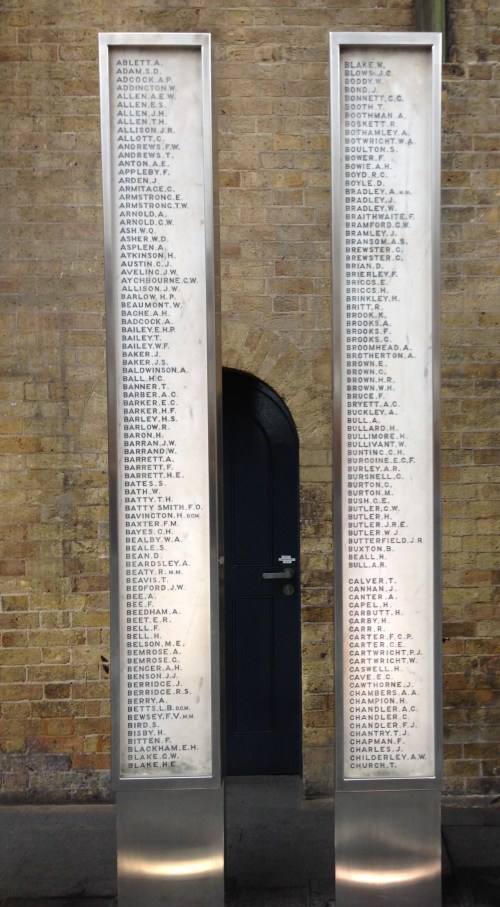
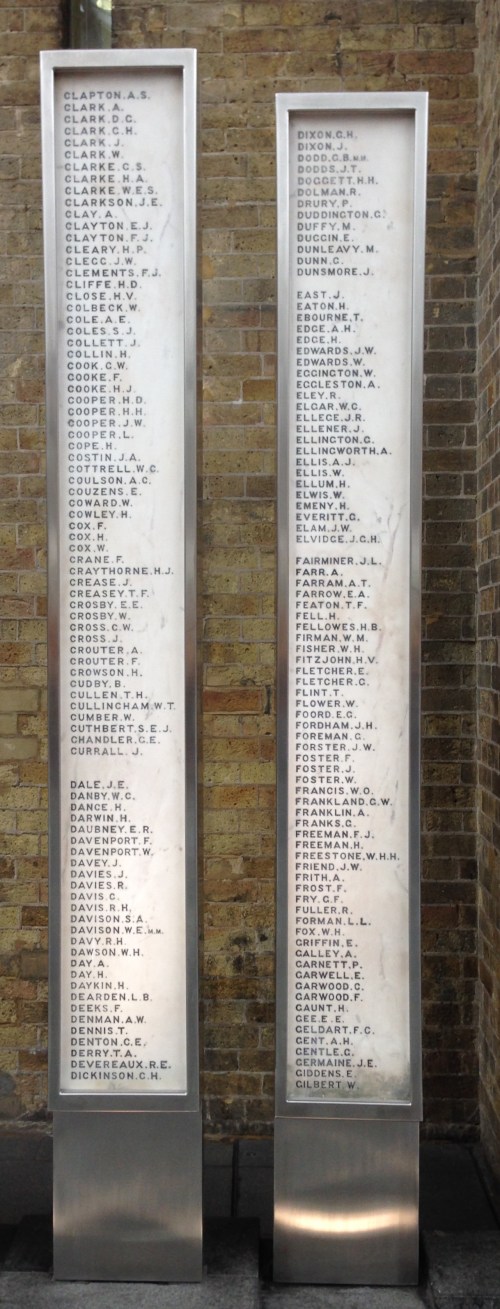
I’ve included a series of close-up photos of the names of the men, which hopefully will be of use to those connected with the men commemorated.

Kings Cross 1

Close up of the names on the first two tablets

Kings Cross 2

Close up of third and fourth tablets

Kings Cross 3

Close up of marble tablets five to eight

Kings Cross 4

Close up of the names on the final three tablets

However, as with many War Memorials, not all those names you expect to find are included. Michael Lydon, another St Mary’s man, is one such example. According to newspapers he was employed as a goods porter by the GNR at Batley station. He lost his life on 1 September 1918. He does not feature on the GNR memorial or on the NRM database.

It would be good if both men (and any others with connections) could be remembered at Batley Railway Station.  

Colbeck and Lydon

I Left it too Late: Batley’s Greenhill Mills Destroyed

Thank goodness no-one died, but even so I am feeling quite emotional about this. On 14 January a massive fire ripped through Greenhill Mills, Grange Road, Batley razing it to the ground.  

Apart for the sadness for those who will have lost their jobs, it was a place very much associated with an ancestor, Jesse Hill, who died in WW1: the ancestor I have spent most time researching. 

That connection has now gone, wiped out in a matter of hours. 

The firm Jesse Hill worked for, Wrigley & Parker, went into liquidation in the late 1920’s and the mill was sold. But it was still the same building. 

The mill was only down the road from me. I kept meaning to photograph it but I never got round to it. And I never made the effort to see inside, walk on the wood floors, touch the stonework. I know that sounds odd, perhaps it’s a family historian thing. 

Unlike many other places connected with my family history, because it was on my doorstop I didn’t have to make a special trip. It was there, I’d do it one day, no rush. A Victorian structure, still being used. It wasn’t like it would disappear overnight…..or so I thought.  

Following the inferno of 14 January, that’s exactly what happened.   

Not sparing the time to take that handful of photographs to record Jesse Hill’s workplace is something I now very much regret. As is never seeing the interior. It’s example of how we take for granted our local and family history.  

So a lesson learned the hard way. Don’t put off the chance to visit a family history connected location; don’t put off talking to family to record memories. Because one day you’ll wake up and realise that chance has gone. 

This is the only photo I took – too late.  

The remains of Greenhill Mills

 
Neither does Jesse Hill’s Spurr Street home exist. 

Spurr Street, Batley

My Bizarre Christmas-Associated Family Name: AKA There’s more to Family History than DNA

In “Shrapnel and Shelletta[1] I wrote about war-associated baby names. This is a more seasonal post about a particular Christmas-associated family name.

When naming a baby at Christmas-time, which names conjure up this magical time of year? Which can be considered as festive and beautiful as this special period? Holly, Ivy, Joy, Noel/le, Merry, Nick or Rudolph might spring to mind. Perhaps Caspar, Gabriel, Emmanuel, Balthasar and Gloria? Or maybe the Holy Family names of Jesus, Mary and Joseph?

In contrast, which name would make you recoil with shock and horror? Which name would you think “No way! How inappropriate! What on earth are they thinking of?”

Probably near the top of the list would be the one associated with my family tree.  For on 24 December 1826 at Kirkheaton’s St John the Baptist Parish Church (oh, the irony of date and church name)[2] the baptism of Herod Jennings took place.

Saint-Sulpice-de-Favières_vitrail1_837 Herod

Magi before Herod the Great, Wikimedia Creative Commons License, G Freihalter

Herod was born on 3 November 1826, one of five children of coal miner George Jennings and his wife Sarah Ellis. They married in October 1818 at St Mary’s, Mirfield and by the time of Herod’s baptism had settled in Hopton, a hamlet in that township, midway between Mirfield and Kirkheaton.

Herod’s siblings included the equally wonderfully named Israel (baptised 20 June 1824) and Lot (born 8 March 1830), so some fabulous biblical associations there too. The other family names of James (baptised 24 September 1820) and Ann (baptised 20 October 1822, buried 7 July 1823) seem disappointingly ordinary in comparison.

Sarah died in 1832, age 36 leaving George to bring up his four surviving children. James married Sarah Pickles on 25 December 1839, another example of Christmastime events in this branch of the Jennings family![3]So, by the time of the 1841 census, it was just George and his two sons, Israel and Herod, along with a female servant Jemima Gibson living in the Upper Moor, Hopton household. Youngest child Lot was along the road at Jack Royd, with the Peace family. This may have been a permanent arrangement given the family situation.

By the time of this census young Herod already worked down the mine, a job which ultimately would possibly contribute to his death.

On 7 October 1850 he married Ann Hallas at St Mary’s, Mirfield. Both Herod and Ann lived at Woods Row, Hopton. Ann was slightly older than Herod, being born in 1824. By the time of their wedding, she was already the unmarried mother of two. Her son, Henry, was born in 1843; and my 2x great grandmother Elizabeth’s birth occurred in November 1850, 11 months prior to Ann’s marriage to Herod.

This then is my family connection to Herod: His marriage to my 3x great grandmother. And it is one of the mysteries I still hope the DNA testing of mum and me will solve. Was Herod the father of Elizabeth? She was certainly brought up to think so, with all the censuses prior to her marriage recording her surname as Jennings, whereas her brother Henry went under his correct Hallas surname. And when registering the birth of her son Jonathan, there is a slip when Elizabeth starts entering her maiden name as “Jen”. This is subsequently scored through and correctly written as “Hallas”.

It appears Henry too was minded to look upon Herod as his father-figure. At his baptism at St Peter’s, Hartshead in June 1857 he appears in the register as Henry Jennings, not Hallas. When he married Hannah Hainsworth at Leeds All Saints on 24 December 1866, his marriage certificate records his father’s name as “Herod Hallas”. And in 1870 he named his eldest son Herod. Although by no means a common name, a glance at the GRO indexes shows it did appear occasionally, along with its alternative forms of Herodius and the feminine Herodia. The fact Henry gave his son this unusual name seems to indicate a measure of affection for the man who brought him up. Finally, at the time of the 1871 census Herod, son William and nephew Charles were boarding in the Leeds home of Henry.

So, whether or not there is a DNA link, he is still a major figure in my family tree. And for me this brings home the fact that there is more to family, and family history research, than DNA links alone!

Herod and Ann had nine other children: Ellen (born April 1851), Louisa (born January 1853), Harriet (born November 1854), Mary (born May 1858), William (born 1860), Eliza (born April 1862), Rose (born 1864), Violet (born 1866) and James (born 1871).

The family moved frequently, presumably due to Herod’s work as a coal miner. They are recorded at various locations in the area, many within walking distance of where I live. These included Mirfield, Battyeford, Hopton, Hartshead, Roberttown, White Lee and Batley.

Outside of work Herod had a keen interest in quoits, arranging and taking part in park challenge games especially around local Feast times. This game was particularly popular with miners and mining communities in Victorian times, with the metal rings being made of waste metal from mine forges. Challenge matches were also a way to raise funds, for example for sick and injured miners.

Herod died age 52, at Cross Bank, Batley as a result of asthma and bronchitis, which presumably owed something to his mining occupation. Working in cramped, filthy, air-polluted, damp, sometimes wet conditions from an early age, this was a hazardous and unhealthy occupation. The conditions and physical exertion led to chronic muscular-skeletal problems and back pain as well as rheumatism and joint inflammation. Most colliers had lung associated problems, with many becoming asthmatic whilst still relatively young. So Herod’s cause of death, from a lung-related illness, is unsurprising.

Ironically Herod’s date of death occurred on 5 January 1878, a day we associate with the Christmas period, falling before 12th night. And in the Western Christian tradition the 6 January is the Epiphany, marking the visit of the Magi to the infant Jesus in Bethlehem. This brings us once more to the King Herod connection, at Herod Jennings’ death as well as his baptism.

This is what Matthew’s gospel says about those events at the first Christmas:

Then Herod summoned the wise men to see him privately. He asked them the exact date on which the star had appeared, and sent them to Bethlehem. ‘Go find out all about the child,’ he said ‘and when you have found him, let me know, so that I too may go and do him homage.’  Having listened to what the king had to say, they set out. And there in front of them was the star they had seen rising; it went forward and halted over the place where the child was. The sight of the star filled them with delight, and going into the house they saw the child with his mother Mary, and falling to their knees they did him homage. Then, opening their treasures, they offered him gifts of gold and frankincense and myrrh. But they were warned in a dream not to go back to Herod, and returned to their own country by a different way. 

After they had left, the Angel of the Lord appeared to Joseph in a dream and said, ‘Get up, take the child and his mother with you, and escape into Egypt, and stay there until I tell you, because Herod intends to search for the child and do away with him.’ So Joseph got up and, taking the child and his mother with him, left that night for Egypt, where he stayed until the death of Herod……Herod was furious when he realised he had been outwitted by the wise men, and in Bethlehem and its surrounding district he had all the male children killed who were two years old or under, reckoning by the date he had been careful to ask the wise men”.[4]

Herod was buried in Batley Cemetery on 7 January 1878.

I have a great deal of affection for Herod, whether or not there is a direct family blood-tie. The fact he took on one, possibly two children when he married Ann; and they in turn acknowledged him as a father, which speaks volumes for him. I can relate to the location links. And I can totally sympathise with his asthma suffering.

This is my final family history blog post of 2015, and an apt one given the time of year. Thanks ever so much for reading them. As someone new to blogging your support, encouragement and feedback has meant so much over the past eight months.

Merry Christmas everyone – wishing you all peace, health and happiness for 2016!

Sources:

[1] Shrapnel and Shelletta: Baby Names and their Links to War, Remembrance and Commemoration | PastToPresentGenealogy https://pasttopresentgenealogy.wordpress.com/2015/11/04/shrapnel-and-shelletta-baby-names-and-their-links-to-war-remembrance-and-commemoration/
[2] Herod the Great was responsible for trying to elicit the three wise men to reveal the  whereabouts of Jesus and, when this failed, subsequently ordering the killing of all infant boys under the age two and under, the so-called “Massacre of the Innocents”. His son, Herod Antipas, had John the Baptist killed.
[3] It was not uncommon for working-class people to have wedding ceremonies on Christmas Day. It was, after all, a holiday so they had time off work.
[4] The Jerusalem Bible, Popular Edition 1974 – Matthew 2: 7-17