If you are interested in family history, please do read. This post is not what it may at first seem to be.
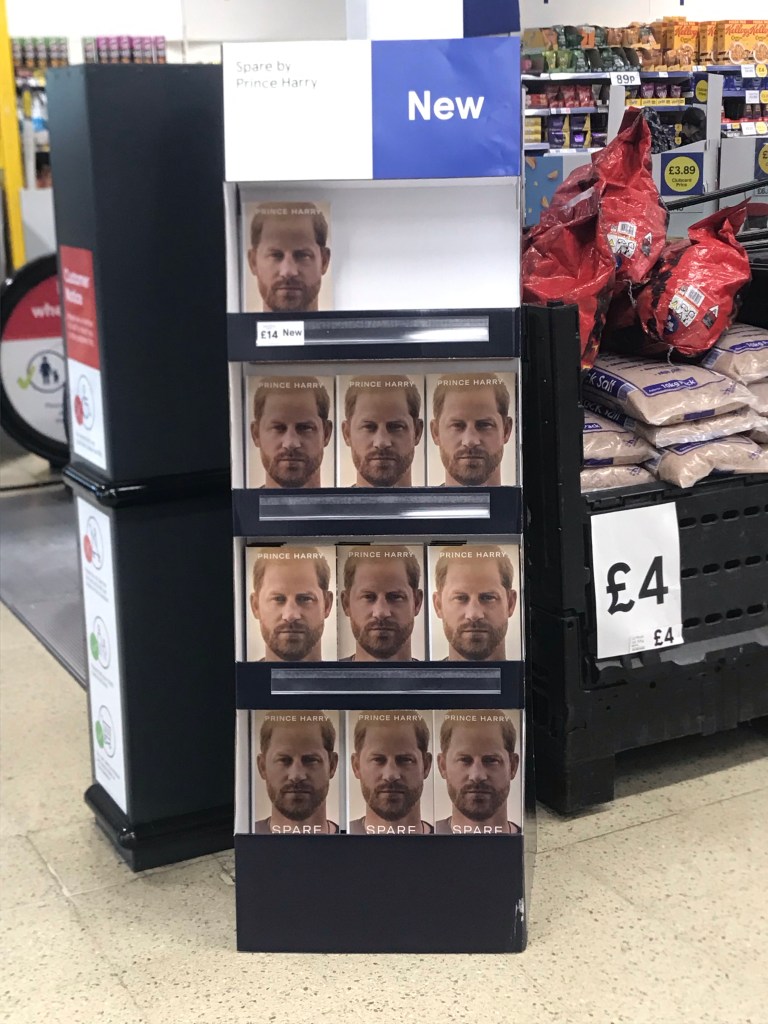
Few people in UK and the United States will have avoided the media frenzy surrounding the publication of Prince Harry’s memoir Spare. It has provided headline news for days. In the run up to the 10 January release date its contents have been poured over and analysed ad nauseam, spawning daily discussions on radio, TV and in the newspapers. Even passing people in shops, cafes or in the street you can here snippets of conversation about it. Becoming the fastest selling non-fiction book ever in the UK, it has been difficult to escape from all the hype and noise.
But what relevance does this publication have for family historians? I would argue it has huge implications, and should perhaps provoke some thought and debate amongst this cohort.
As someone wanting to get to know my ancestors beyond mere names and dates, to really dig into their individual life stories setting them against the context of their communities and times, I’ve always believed autobiographical notes, diaries, letters etc., have been akin to a family historian’s holy grail. Particularly ones they wrote. But the contents of Spare have caused me more than a twinge of discomfort … and on several levels. Here’s why.
From a personal perspective I was an avid diarist from around the age of 13 right through to becoming a mother. After that I was too exhausted to keep up the discipline. However, I still have them all – many volumes tucked away in an inaccessible cupboard, along with old Christmas decorations.
Diaries by non-public figures who are not thinking of a future potential audience, are more likely to contain intimate and authentic thoughts and words. Mine are probably filled with teenage angst. Truth is I haven’t looked at them in donkey’s years. I couldn’t face it. And if I find the thought of reading them horrifying, would I really want close family seeing them?
But I can’t bear to throw them away either … yet. They were a record of my life and feelings set in the context of the time they were written. They would be immensely useful for family historians of the future – not just my descendants (if any ever are interested in family history) – but descendants of all others who may find themselves unwillingly featuring! Though looking at it from yet another perspective, would passing them on place an immense moral burden for whoever inherited them?
For me Prince Harry’s autobiography has also brought into sharper focus another family history source – letters. I have the letters my dad wrote to my mum when they were courting. I’ve had them for a few months. But I have no intention of reading them. Dad died only a few years ago. Mum is still alive but ill. It is all too close, both in time and relationship, and feels like a massive intrusion of privacy.
Conversely I was given the letters an uncle wrote home whilst on National Service in the 1950s. He was killed in the course of this service. I never knew him. And although I did find it difficult, I have read them, and they do provide a unique insight into his life and personality. I feel immensely privileged to have them. So perhaps there is something there about proximity in relationship and time.
As for autobiographies, how does Prince Harry’s searingly personal account of his life (perhaps in parts it could be described as providing ‘too much information’) leave me feeling? If I’m honest, confused.
First impression it’s family history gold dust if you inherited something like that. But then pause for thought. If you are writing your story to set it out for descendants how honest should you actually be? Should it be warts and all? Or should you employ some element of self-censorship both for personal details and in relation to others named in the narrative – because perhaps some things should remain private.
These autobiographies, whether the rich or famous like Prince Harry, or those written by ordinary individuals to hand down to their families once more lead me back to diaries which may have been used as the basis for writing them. What happens to them?
And, as hinted at earlier, all this leads to a whole new set of dilemmas. If you do discover, or inherit, letters, diaries, life stories etc, how (if at all) should these be shared? What responsibilities do you have? Is it to tell the full story? Or do you have some duty to handle information with sensitivity. And is there a difference between information relating to your direct family, or information relating to distant relatives, or those to whom you have no familial connection?
This post provides no answers. But I hope it does highlight some of the ethical dilemmas of creating, coming across or owning this type of document.
Postscript:
Finally a big thank you for the donations already received to keep this website going.
The website has always been free to use, but it does cost me money to operate. In the current difficult economic climate I am considering if I can continue to afford to keep running it as a free resource, especially as I have to balance the research time against work commitments.
If you have enjoyed reading the various pieces, and would like to make a donation towards keeping the website up and running in its current open access format, it would be very much appreciated.
Please click here to be taken to the PayPal donation link. By making a donation you will be helping to keep the website online and freely available for all.
Thank you.


 Past To Present Genealogy
Hi Jane, happy new year.
Your post about Harry’s book was thought provoking. You’re right about old diaries and letters being gold dust (and oh! to find photos with names and dates – priceless 😃) and if it wasn’t for just two lines in one of my mum-in-law’s old diaries, I wouldn’t have found one line of her ancestors. It is a dilemma that I hadn’t given much thought to before. How much should we share? It’s a tricky one 😕
Take care, Jan
Thanks Jan, Happy New Year to you too.
Prince Harry’s book does raise a raft of ethical dilemmas for family historians on several levels. Not only for the creator of such documents, but also for those who inherit or receive them. There really is an enormous responsibility to get it right, but it is a hugely tricky line. At least thinking about it may help inform actions.
Jane
What a great blog! I have discussed something similar with my mum in the last week. We have a biography/family history written by a family member (who is still living) who mentioned information on my grandmother that really wasn’t for the relative to share with the wider family as it really hurt those still living who didn’t know parts of her life that she had decided not to share. It’s made me far more cautious with what I share and who I share it with. I restarted my blog because I felt I had this dilemma on whether I was sharing things that were too close to home with people who were recently passed. It’s looking for balance isn’t it and where we draw the line, what time frame are we looking at and does it impact on people living now (such as discussing a parent, grandparent, aunt, uncle etc who have since passed).
Thank you. The publication of Prince Harry’s memoirs and the fall out really has made me consider it from a family history context. Creating or owning such documents is a huge responsibility. It’s a fine line archives tread to with the 100 year rule there to try to protect. There’s no right answer. But at least if the issue is highlighted and considered it potentially helps informs actions.
With best wishes
Jane
Pingback: Friday Favourites 13th January 2023 – Genie In A Blogger