You may not have come across the Red List of Endangered Crafts before. If you haven’t, the latest edition released in May 2023, is well worth checking out 👉🏻here.👈🏻 The crafts at risk might surprise you.

Published by Heritage Crafts, in Association with the Pilgrim Trust, the 2023 edition shows the incredible range of heritage craft skills we have in the UK. It also highlights the very real risk that many of these skills, which have passed through generations, could be lost forever. Some have indeed now gone, with mouth blown sheet glass making disappearing since the last list was produced in 2021, joining others which have previously disappeared, such as cricket ball making (hand stitched).
The list shows a diversity of crafts, many of which will be familiar to family historians as occupations followed by ancestors. Some will also be known to viewers of The Repair Shop. From tinsmithing, millwrighting, bell founding and lithography, to watch making, clay pipe making and straw hat making.
The list is divided into those crafts now extinct in the UK, those critically endangered and those endangered. On a more positive note there’s also a section covering those currently classed as viable – but it is something not to be complacent about.
The individual craft entries give a wealth of background information, including their historic area of significance, origin in the UK, history, techniques, issues affecting viability, and the number of currently known craftspeople still undertaking the work, with their names or business names (please support them!)
Some of the entries may come as a shock. For example one I would not have thought of was shoe and boot making. But we are talking traditional heritage crafts and craftspeople, rather than mass production.
Many are regional and/or niche, such as sgian dubh making – the hand making of the small, single-edged ‘black knife’ worn as part of traditional Scottish Highland dress. With Yorkshire’s brass band heritage, there’s also brass instrument making.
Some are linked to ways of life, like the waterway trading community with canal boat painting; traveller peoples and their Vardo art; and the fairground art associated with showmen and fairgrounds, with the historic associations to town feasts and feast weeks.
I was particularly drawn to silk weaving, something I have researched and written about in relation to historic child employment, the first part being here (with links to Parts 2-4).
And in my time working on military ceremonial contracts, albeit in the late 1980’s/early 1990s, a heritage craft I dealt with is plume making. In my day the manufacturers were Jaffé (still going), and the seemingly now-gone Appletons, where I believe Louis Chalmers of The Plumery, the other current manufacturer, undertook his training. Examples of this craft will have been seen during King Charles III’s coronation.
Rope making features too. As a frequent visitor to Hawes, I was saddened that Outhwaite & Sons closed last year. Pre-covid it was always part of our visit there, and included a museum where you could learn about, and watch, the process. Our rope bannister was made by them, as was our dog’s lead. On a positive note the company is being continued in some form by both Askrigg Ropes and Kefi Textiles. So I may still be able to get more dog leads for our pooch.
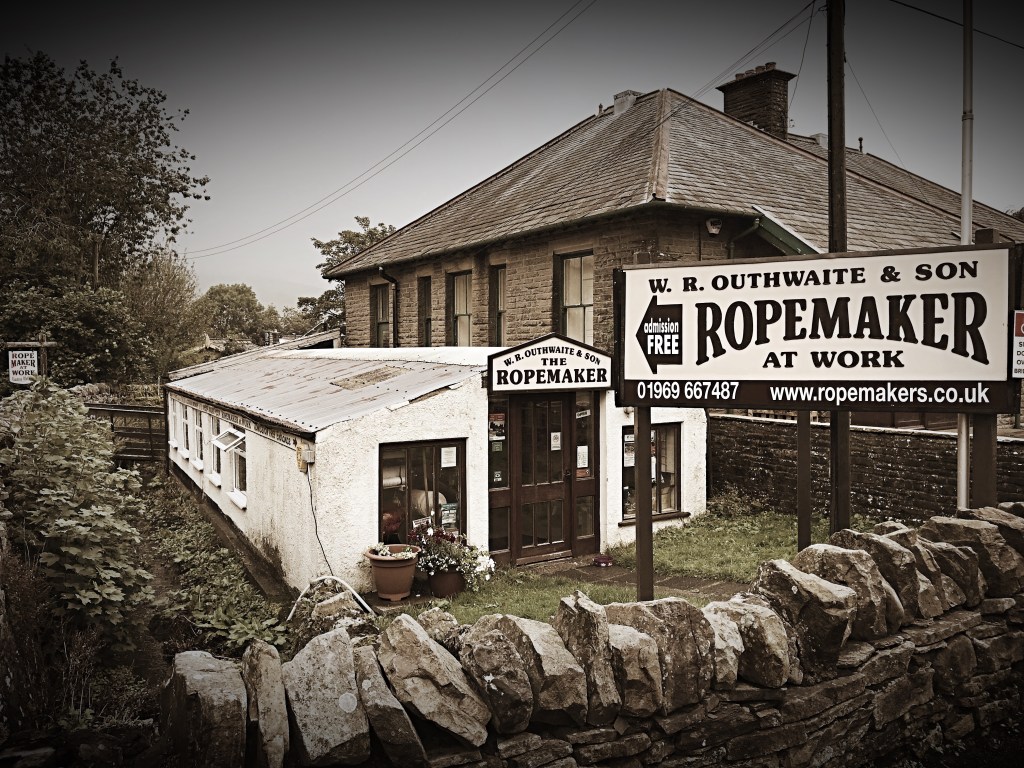

More about Outhwaites, its history and closure can be read in the Yorkshire Post article here.
It is important these crafts, handed down over generations, are supported and preserved, and that other business like Outhwaites are not lost in future. The Red List is part of this work.


 Past To Present Genealogy