
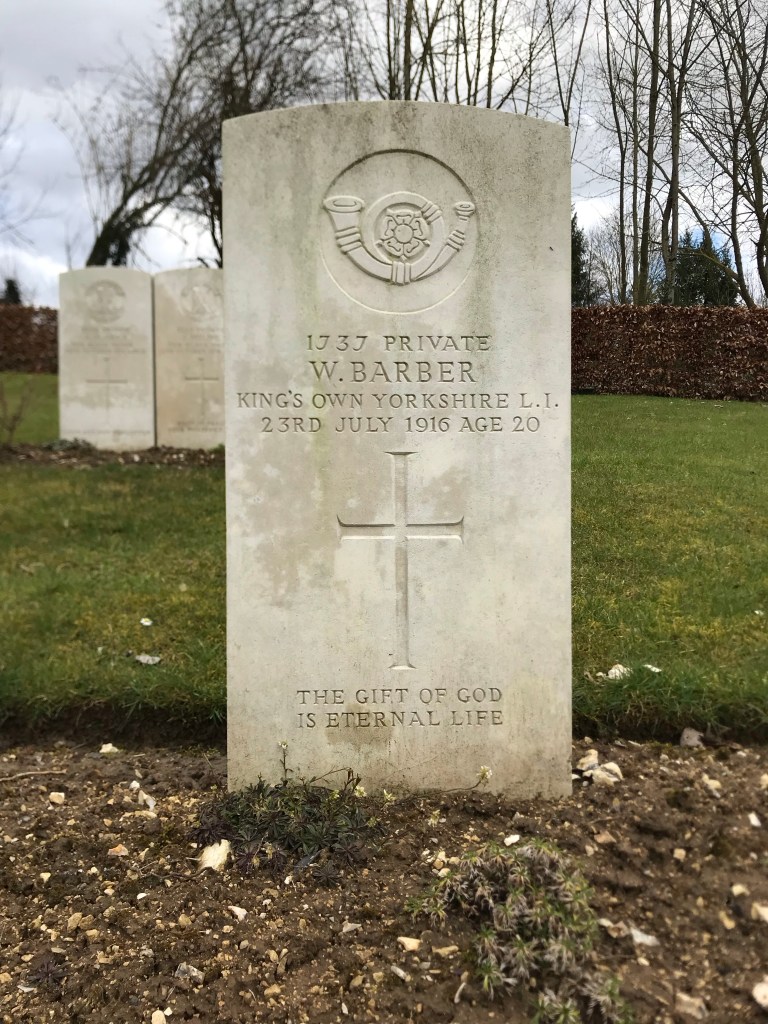
Name: Willie Barber
Rank: Private
Unit/Regiment: 1/4th Battalion, The King’s Own (Yorkshire Light Infantry)
Service Number: 1737
Date of Death: 23 July 1916
Cemetery: Authuile Military Cemetery, Authuille, Somme, France
Willie Barber was the eldest son of Garforth-born William Thomas Barber and his wife Ada (née Pearson), who came from Dodworth, near Barnsley.
The couple married towards the end of 1890. By 5 April 1891 the newly-weds were living at Albert Street, Batley, with Thomas working as a coal miner. Ada was heavily pregnant, and shortly afterwards gave birth to a daughter, Effie May, who was baptised at St Mary of the Angels in May 1891.1
The couple had nine more children. Two more girls came after Effie May – Alice, born in 1892, and Gertrude in 1894; then came Willie, born on 11 December 1895; another boy, Edward, was born in the summer of 1897, when the family lived at Soothill; he was followed by Harold (1899), Arthur (1901), George Herbert (1904), Theresa (1907) and finally, in 1910, Wilfred.2
Willie attended St Mary’s day school, where he played an active part in school life. For example, he was amongst the pupils who controversially represented St Mary’s in a school pageant in August 1907 to celebrate the raising of money to build an extension to Batley hospital. He was amongst a group boys depicting haymakers, claimed to be “not surpassed by anybody in the whole procession” dressed in their linen smocks and rush hats, and carrying hayfield implements, such as rakes.3
Willie was a regular contributor to the Batley News’ children’s column Golden Moments – Aunt Marjorie’s Page for Juvenile Readers. He and his brother, Edward, joined Aunt Marjorie’s gang in June 1907.4 The brother’s poems are thought-provoking and haunting, especially given what became of them only nine years later. I have covered one of Willie’s poems here, which touches on life’s ups and downs, making the most of every day and the web of fate.
Alongside the serious nature of his poetry, Willie also contributed to Aunt Marjorie’s selection of funny stories. This section of the children’s page contained the typical naive, childlike and innocent humour of children at the turn of the 20th century. Willie’s November 1907 submission, which may have been less welcome in the flu pandemic 11 years later, illustrates this:
AN EPIDEMIC
A school board teacher asked a class of children if any of them could tell him what an epidemic was. No answer. “Well, I will tell you. An epidemic is anything that spreads. Now, what’s an epidemic?” “Jam, sir,” shouted the class in chorus.—
From your loving nephew, Willie Barber, 3, Hamburg Street, Caledonia Road, Batley.5
The 1901 and 1911 censuses saw the family settled in a three-roomed house at Hamburg Street, Caledonia Road in Batley. By 1911 it accommodated William, Ada and their 10 children ranging from four months to 19 years old. Incidentally, with the anti-German sentiment generated by the war, less than five years after the 1911 census, the street was renamed Devon Street.

By the 1911 census 15-year-old Willie had left school and was employed as a hurrier in a coal mine. This job involved conveying empty coal corves/tubs from the bottom pit shaft to the hewers cutting out the coal at the coal face. The hurrier might help the hewer fill the corve with the cut coal. Then he would be responsible for returning the laden corve to the bottom of the shaft, ready to be brought up to the surface. These heavy tubs were often hauled by pit horses or ponies, and it seems prior to enlisting Willie’s job entailed driving the pony. These hurrier and driver roles were often starter jobs in the pit for youths, who would then progress to become hewers. Before enlisting, Willie worked in Messrs Critchley’s West End Colliery, the same mine where his brother Edward worked in the lamp department.6.
Outside of work, both brothers were keen footballers, playing for the Batley Albion Association Football team, receiving medals in both the 1912-13 and 1913-14 seasons.7
Football was also a way of reaching out and forging friendships beyond school and church community. Non-Catholic Horace Bennett, who moved to Batley from the Gildersome area just before the war, recalled happy memories of the Barber brothers. In a letter home to his family, upon hearing of their deaths, he wrote:
I feel very sorry about those two pals of mine, Willie and Teddy Barber. Ask mother if she can remember Willie coming to our house just after flitting to Batley to see if I would play football. Poor old lad.8
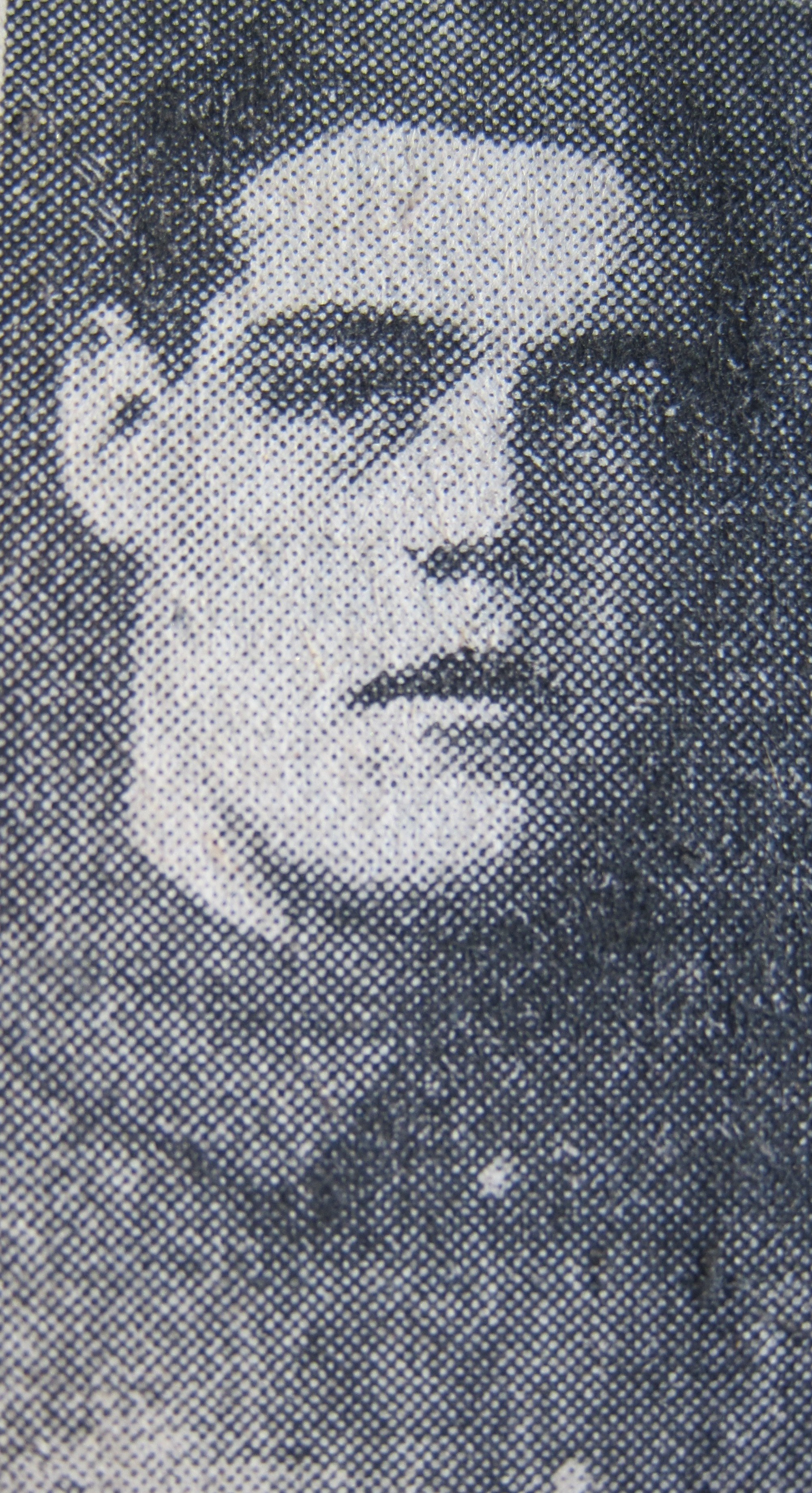
Football was a recurring theme through Willie’s military service, with published letters from him frequently referring to his beloved sport. For example at Christmas 1915 he wrote appealing for a football to be sent out to the boys, who were on the Western Front:
Private W. Barber (1737), 13 Platoon, Z Company, 1st/4th K.O.Y.L.I., 148th Infantry Brigade, 49th Division, B.E.F., addresses the following appeal to readers of the “News”:-
I write these few lines, appealing for an Association football for the benefit of the local Terriers out in France. Will some kind friend oblige and try and get one here for Christmas, if possible, as we are having our Divisional rest, and you know what the Yorkshire lads are for football. Please excuse the brevity of my appeal, as I am rather pushed for time. Wishing your paper every success.9
There is no follow-up to say whether the football was sent. But the day after the letter was published, 19 December 1915, the 1/4th KOYLI were subjected to a German gas attack. The Unit War Diary that day records heavy losses as a result. One officer and 23 men were killed through gas poisoning, and a further two officers and 149 other ranks were wounded.10
By the time of this incident Willie had been on the Western Front for over eight months. A member of the local pre-war Territorial Force, 1/4th The King’s Own (Yorkshire Light Infantry), Willie joined these Saturday night soldiers, so-called because of their part-time nature, in around 1912.11 They regularly gathered at the old Batley Drill Hall to practice.
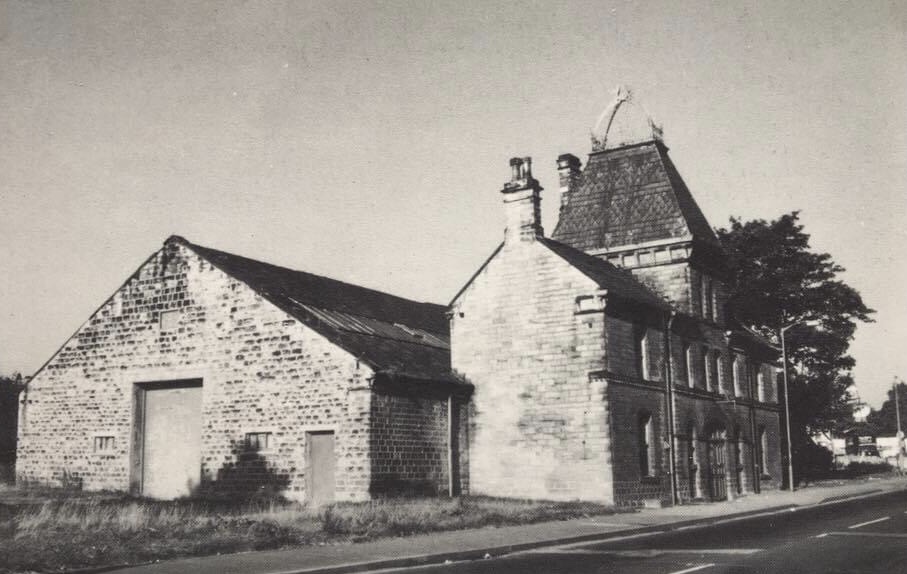
And it was at the Drill Hall where they congregated to parade, receive mobilisation instructions and have medical inspections in the days leading up to their departure to serve. It became the focal point of gathering crowds on 5 August 1914 to wave the “Terriers” goodbye. The outbreak of war had turned them into full-time soldiers, with the men signing their willingness to now serve overseas.
Willie was amongst those who went into training with them when they were mobilised on the outbreak of war. He was with them during the early days of the war at Sandbeck Park, near Maltby in South Yorkshire, and then at Louth and Gainsborough in Lincolnshire.
Those early letters from him were full of details of their early training, adapting to military life, and the recreations that kept them going.
In the lead up to Christmas 1914 he was amongst a detachment undertaking coastal defence duties in Lincolnshire. The newspaper published the following:
Private W. Barber, 4th Company, 4th Battalion, K.O.Y.L.I., in a letter we have received this morning from North Somercotes Camp, near Louth, says: – I am in the best of health. As I am writing this letter they are rehearsing a very fine sketch, “The Executioner’s Daughter.” Also we have some boxing gloves to keep us in training. It is rumoured that we are going to Gainsboro’ the week before Christmas, which I hope will come true. We don’t know whether they will grant us any leave at Christmas or not, but we are hoping they will. The Engineers have removed from Somercotes to their own home at Barnby Don. Since I wrote you last we have been removed to another barn a little higher up the road, which we reach by climbing up a ladder. I think if we are needed for the Front or foreign service we are ready enough for any inconvenience that we may be put to. I think the Germans won’t try to land on this coast if they know the Batley Terriers are waiting for them! It is a very trying experience for the men who are on guard in the trenches at night, but they don’t think anything about that, for they are ready to do more than that abroad. We have no time for football here. The Batley lads are glad to hear that the Gallant Youths beat Halifax at Halifax last Saturday. “God Save the King.”12
He was to be disappointed about Christmas in Gainsborough. He spent a tedious Christmas Day and Boxing Day in the coastal defence trenches. Though Boxing Day evening he described as better, with the men putting on a concert for the villagers.
The accommodation at North Somercotes left much to be desired too. In addition to the barn accessed by a ladder (treacherous at night), there was another barn which he referred to as Hotel-de-Cowshed. Though a National School allocated to them briefly was the best billet of all – primarily because it had a piano they could use.
Then in early January 1915 it was finally to Gainsborough, and billets in the homes of locals. But it was here, on 19 February, that disaster struck the KOYLIs during a raft building training exercise on a pool of water by the side of the River Trent at Morton, known locally as a gyme. The raft proved unstable, and the men aboard it were thrown into the deep water. Seven of them, including St Mary’s man Edmund Battye, lost their lives. Willie Barber played an active part in the desperate rescue attempts which followed. He described his part as follows:
I was on the bank watching the raft, and saw the water was getting into the straw and thought it would sink. I took off my coat and got ready to go into the water, but then the raft seemed to right itself, and I put my coat on again. Then the raft started to sink, and this time it went down. I took off my coat again and dived in and fetched out two men.13
He recalled rescuing only two men, but other men who were present state that he was involved in the rescue of three.14
For more information about the raft disaster, read Edmund Battye’s biography, here.
Days later the 1/4th KOYLI left Gainsborough for York. Then on 12 April 1915 set off to Folkestone, bound for France, arriving the following day – amongst the first batch of Territorials deployed. They became part of the 148th Brigade, 49th (West Riding) Division.
The day of his arrival in France, 13 April 1915, Willie wrote out an informal Will which stated in the event of his death he gave all his property an effects to his mother and father. In a slip of the pen he referred to the family address by its old name, 3 Hamburg Street, Caledonia Road.
Besides letters from home, troops in the field kept in touch with domestic issues by reading the local newspapers which the newspaper proprietors sent out free. Willie remained an avid reader of the Batley News , and he wrote to the paper shortly after his arrival in France giving a brief description of the training he was undertaking as a bomber and his general daily routine. He wrote:
Dear Readers, –I am pleased to let you all know we have landed safe and sound at our destination. The lads who are able to join the Army and are still at home ought to come, and be pleased to answer duty’s call. I am learning grenade throwing, which is a very serious job, and though it is a job some don’t like, it has to be done, of course, despite the danger. While I have been out here, I have seen a few Batley lads, and was delighted when I did come across them.
There are some awful sights – churches, bridges, houses, and all sorts of buildings blown away, but I am glad to say our Battalion has not had many losses in the trenches. It seems to me there is not as much danger in the first line of trenches as in the second line.
We are having very hot weather at present, and it makes one feel glad to lie down and have a rest on the floor, although it is hard. Nevertheless we welcome the chance after our day’s work.
While we are learning our special work we are a fair way from the firing line, and billeted in an empty house, which is at least preferable to a barn.
As I write the officer is just giving the order “Fall in” for physical exercise; for we have physical exercise in the morning from 6.30 to 7.30. Then we have breakfast, and start at 9 o’clock for bomb throwing till 12 o’clock; then dinner; more exercise in the afternoon, and thus we have finished our day’s routine.
The officers have picked a certain number out of every company for grenade work, and I am one of them.
P.S. —I have just received my favourite paper, “The Batley News”.15
Willie was driven to put pen to paper again along with five fellow “Terriers” after reading comments from a Sergeant who wrote to the Batley News implying that soldiers were to blame if they were wounded or killed. They disputed this fact and wrote:
Dear Mr. Editor, —We are six merrie Batley lads, and during our stay in the trenches the “News” was brought to us. We were delighted to receive it, and the letters from our Company fellows were very interesting. Some were perfectly true, but to one in particular I wish to draw your attention. It is from a sergeant, who hints it may be the men’s own fault if they are wounded or killed. Some poor fellows have the misfortune to be hit because it is a man’s duty to look over the parapet during the night, though during the day they generally look through the periscope.
Is it our fault if we are ordered by our officers to let the Germans have some rapid fire? For we have then to fire over the top.
However, I am pleased to say that we are all keeping champion. I hope this will come to the notice of the parents of the poor lads who have been killed or wounded whilst doing their best for their king and country.
Yours truly. —(Privates) J. McManus, J. Ryder, J. Macnamara , E.Pegg, A. Waite and W. Barber. France May 16th 1915.16
In April 1916 Willie had leave and looked in splendid health.17 This was to be his final visit home.
Some confusion exists about Willie’s date of death. Some sources indicate the early hours of 22 July. This is the date given in a letter to the family from a pal. This is also the date on family In Memoriam newspaper notices, and the date they provided to the Batley War Memorial committee. However the parish priest gave the same committee Willie’s date of death as 23 July 1916. This is also the date on official documentation, including his CWGC headstone.
Looking at the Unit War Diary during the phase of the Battle of the Somme in which he died, the 1/4th KOYLI were in support trenches on 21 July, moving into the Front Line south of Thiepval by 11am on 22 July. The diary notes no casualties on these days.18

In the early hours of the morning of Sunday, 23 July 1916, the 1/4th KOYLI were ordered to attack in an attempt to enlarge the 49th Division’s hold in the Leipzig Salient, south of Thiepval. Bombardment of the German lines commenced at 10pm the night before. The 1/4th KOYLI moved along Oban and Campbell Avenues and assembled in the front line on the eastern side of the captured Leipzig Redoubt opposite the German-held Hindenberg Trench. At 2.30am “X” company clambered out of the trench to advance across No Man’s Land. The usual combination of rifle fire and shrapnel took a heavy toll and when the survivors reached the German positions they found them heavily defended. Desperate fighting in the German trench ensued and, as casualties escalated, it became apparent that the much-weakened KOYLI’s could not hold the position and withdrew. The German bombers mounted a counter-attack along the trenches leading to the British front line but were driven off by bombers from the 1/4th KOYLI, along with those of the 1/5th KOYLI and 4th and 5th battalions York and Lancaster regiment who had rushed to their assistance. The operation had cost the 1/4th KOYLI three officers killed and one missing, and six men killed and 60 wounded.19
It appears likely this was the incident in which 20-year-old Willie Barber lost his life, especially given his Officer’s subsequent description of events to the family.
Besides being a bomber, Willie acted as a servant to an Officer and it was he who wrote to the family informing them of Willie’s death. He wrote:
It is with deep regret that I have to inform you of the death of your son, Pte. W. Barber. Kindly accept my very deepest sympathy in your great loss. It may be some small consolation to know how very trustworthy and faithful I, on all occasions, found him as my servant. He met his death doing the highest duty a soldier can possibly do. The Germans were trying to affect an entrance into a trench captured from them, when he was struck down by a bomb and died immediately. He would have no pain. He was always an excellent bomber, and his fine qualities as such undoubtedly helped to stay the Germans. He is buried in a military cemetery in a little village behind the line, along with others of his comrades whose bravery has been beyond description.20
The letter arrived at the family’s Devon Street home on Sunday, 30 July, within around three days of the family receiving notification of the death of Willie’s younger brother, Edward.21 For Edward’s biography, click here.
The family received a second letter, dated 26 July, from one of his friends, Pte. George Jaggar, which gave further details about his death and burial.
It is painful for me to have to acquaint you of the death of your son, who was killed instantly about three o’clock on Saturday morning.22 I regret the loss of him as I knew him quite well before the war ever started, and for a long time now we have both been officers’ servants together, and acted just like brothers. I saw him laid to rest in a grave-yard just behind the firing line, alongside a lot of other comrades, and a small cross is erected in his memory, whilst a few flowers that were gathered round about have been placed on the grave. Now I will close my letter with deepest sympathy.23
A number of other officers’ servants also signed this letter, expressing their sympathy for the bereaved parents.
In common with many families, the Barbers continued to remember Willie and Edward on the anniversary of their deaths in the local newspapers. This entry is for Willie from his father, mother and family from 1917:
BARBER. —In Loving Memory of our dear son and brother, Private Willie Barber 1st-4th Batt. K.O.Y.L.I., Killed in Action Somewhere in France, July 22nd, 1916.
He went away in perfect health,
He looked so young and brave,
We little thought how soon he would
Be laid in a lonely grave.
Sleep on, dear lad, we shall never forget
The sacrifice thou gave;
Thy youth, thy love, aye, even thy life,
For what — why, a soldier’s grave.
Greater love hath no man than this, that
to lay down his life for his friends.
From Father, Mother, and Family, No. 3, Devon Street, Batley.24
Note the 22 July 1916 date given in the above.
Within a couple of years of the deaths of Willie and Edward, most of the family left Batley for Hyde Park Road, Leeds. However daughter Effie May remained, being married to a local man, Joe Graham. And when in October 1918 William and Ada lost a third child, 26-year-old daughter Alice, she was buried in Batley cemetery.
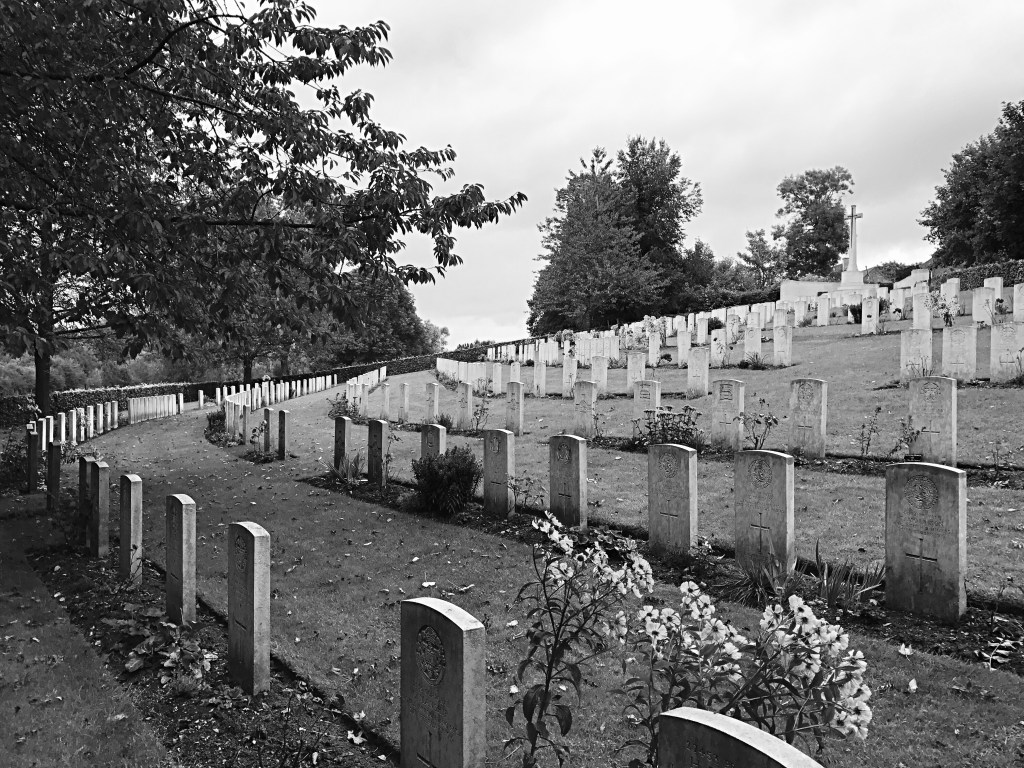
Willie is buried in Authuile Military Cemetery. He was awarded the 1914-15 Star, Victory Medal and British War Medal. He is commemorated as William Barber on the St Mary of the Angels War Memorial. He is also remembered on the Batley War Memorial, with his sister Effie May and St Mary’s parish priest Fr Lea putting forward for inclusion Willie and Edward’s names to the town authorities.
Postscript:
Finally a big thank you for the donations already received to keep this website going. They really do help.
The website has always been free to use, but it does cost me money to operate. In the current difficult economic climate I do have to consider if I can continue to afford to keep running it as a free resource.
If you have enjoyed reading this post (along with the hundreds of others), and would like to make a donation towards keeping the website up and running in its current open access format, it would be very much appreciated.
Please click 👉🏻here👈🏻 to be taken to the PayPal donation link. By making a donation you will be helping to keep the website online and freely available for all.
Thank you.
Footnotes:
1. Parish register – baptisms.
2. Ibid.
3. Batley News, 30 August 1907.
4. Batley News, 21 June 1907.
5. Batley News, 1 November 1907.
6. Batley Reporter and Guardian, 4 August 1916.
7. Batley News, 5 August 1916.
8. Batley News, 9 September 1916.
9. Dewsbury District News, 18 December 1915.
10. Unit War Diary, 1/4th KOYLI, The National Archives (TNA), WO95/2806/1.
11. Batley News, 5 August 1916.
12. Batley News, 14 November 1914. Address error, but it is Willie Barber.
13. Batley News, 27 February 1915
14. Ibid.
15. Batley News, 8 May 1915.
16. Batley News, 22 May 1915.
17. Batley News, 5 August 1916.
18. Unit War Diary, 1/4th KOYLI, The National Archives (TNA), WO95/2806/1.
19. Ibid. And Bond, Reginald C. History of the King’s Own Yorkshire Light Infantry in the Great War, 1914-1918. London: P. Lund, Humphries, 1929. And Johnson, Malcolm K. Saturday Soldiers: The Territorial Battalions of the King’s Own Yorkshire Light Infantry 1/4th 1/5th 5th 2/4th 2/5th, 1908-1919. Doncaster: Doncaster Museum Service, 2004.
20. Batley News, 5 August 1916.
21. Official War Office notification dates as provided by Effie May Graham (formerly Barber) for the Batley War Memorial committee.
22. One of the references to his death on 22 July 1916.
23. Batley Reporter and Guardian, 4 August 1916.
24. Batley News, 21 July 1917.
Other Sources:
• Batley Cemetery Burial Registers.
• Censuses, England & Wales – 1891 to 1921.
• Commonwealth War Graves Commission.
• GRO Birth, Marriage and Death Indexes.
• Medal Index Card.
• Medal Award Rolls.
• National Library of Scotland Scotland Maps.
• Newspapers – various editions of the Batley and Dewsbury papers.
• Parish Registers – various.
• Pension Record Cards and Ledgers, Western Front Association.
• Soldiers Died in the Great War.
• Soldiers’ Effects Register.
• The Long, Long Trail website.
• Will.


 Past To Present Genealogy