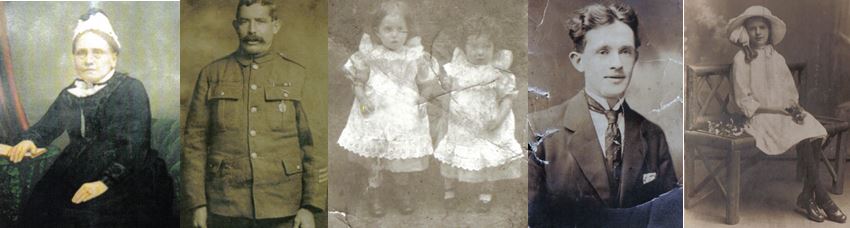
This biography is for the elder of the two Peter Gavaghan parishioners commemorated on the War Memorial. For his younger cousin, please click here.
Name: Peter Gavaghan
Rank: Private
Unit/Regiment: 1st/4th Battalion, The King’s Own (Yorkshire Light Infantry)
Service Number: 3539
Date of Death: 3 November 1916
Cemetery: Warlincourt Halte British Cemetery, Saulty, Pas de Calais, France
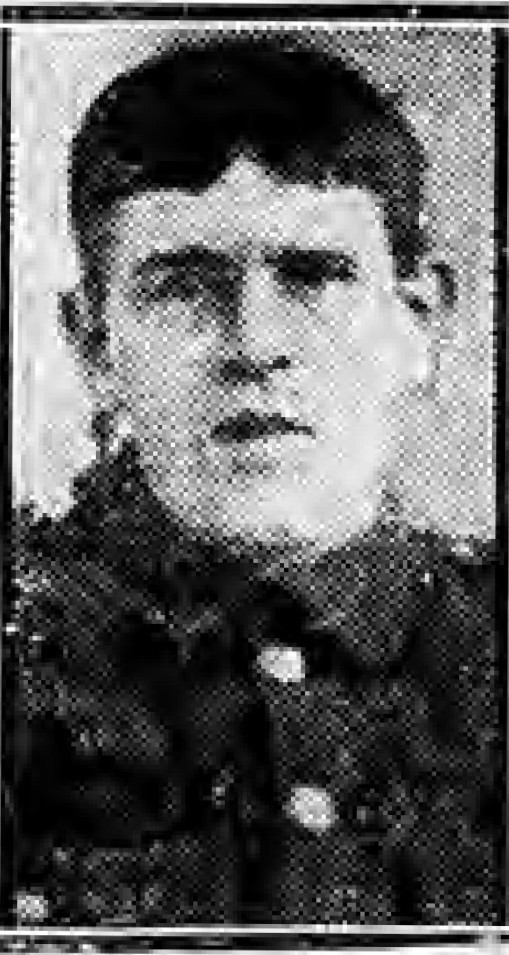
Peter Gavaghan was born in Batley on 13 October 1889, and baptised the following day at St. Mary of the Angels R.C. Church. He was the son of Thomas and Mary Jane Gavaghan (formerly Render), with Thomas being born in Batley to Irish parents, and Mary Jane in Gildersome to an English father and Irish mother, from Belfast.
Thomas and Mary Jane’s wedding had taken place in the same church over five years earlier, on 18 February 1884. This was around four months after the birth of eldest son John.1
In total, the couple had 14 children, 11 of whom were still living at the time of the 1911 census. In addition to John and Peter, they included Joseph (born in 1886), Edward (born in 1887), Mary Elizabeth (born 1891), William (born 1892), James (born 1895), George (born and died within one hour in 1896), another George (born 1897, died 1900), Ann (born in 1899), Catherine (born in1900), a third boy named George (born 1903) and Ellen (born 1904).
In March 1891, coal miner Thomas temporarily left his pregnant wife and children, an offence for which he received a one-month suspended prison sentence that May. It meant that at the time of the 1891 census, on 5 April, cloth weaver Mary Jane and her, at that point, four children – John, Joseph, Edward and Peter – were in Dewsbury Union Workhouse. The separation was short-lived and by 1892 the family were back together in Batley.
The family lived in the Woodwell area of town, with their address in the 1901 census recorded as Woodwell Street. By 1911 they were in neighbouring Jacob Street. This was the family address at the time of Peter’s death. Both streets are indicated in the map below.
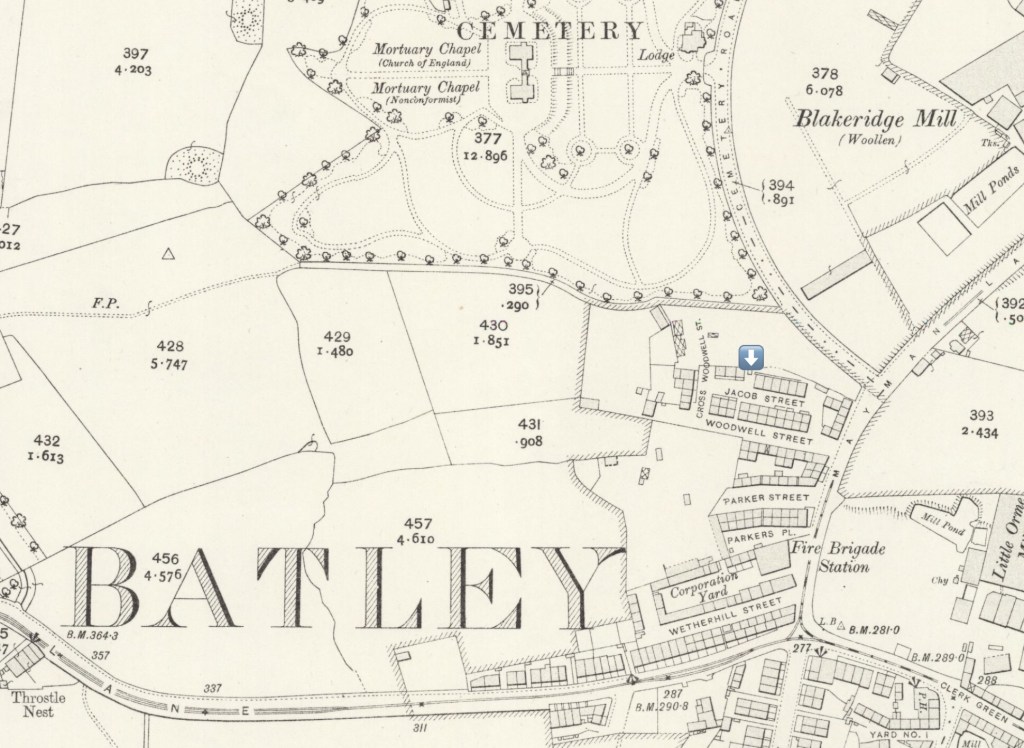
Extract from OS 25 Inch England and Wales, Yorkshire CCXXXII.11
Revised: 1905, Published: 1907 showing Woodwell Street and Jacob Street – Re-use: CC-BY (NLS)
Peter attended St. Mary’s school and when he left he, like his father and other brothers, went to work at the pit. The 1911 census lists his occupation as a miner (hurrier). This role, a starter one in coal mines, involved conveying empty coal corves/tubs from the bottom pit shaft to the hewers cutting out the coal at the coal face. The hurrier might help the hewer fill the corve with the cut coal. Then he would be responsible for returning the laden corve to the bottom of the shaft, ready to be brought up to the surface. These heavy tubs were often hauled by pit horses or ponies.
However, before enlisting in the early months of the war, he had moved on to become a bye-worker at Messrs. Crawshaw and Warburton’s Shaw Cross Colliery.2 This was an underground role involving undertaking general repair tasks. More details about what it involved can be found here.
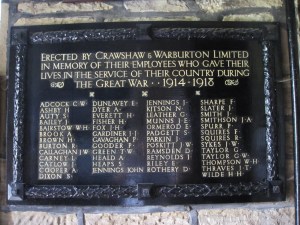
Peter was well-known and respected at the colliery, later being amongst those men commemorated on the work’s War Memorial (as photographed on the right).
Outside of work, Peter was a member of the Batley branch of the United Irish League Club.
Peter attested with a Reserve Battalion of the King’s Own Yorkshire Light Infantry (KOYLI) in November 1914, disembarking in France on 9 July 1915 as part of the reinforcements for the local Territorials, the 1st/4th KOYLI. They had been on the Western Front since that spring, suffering numerous casualties.
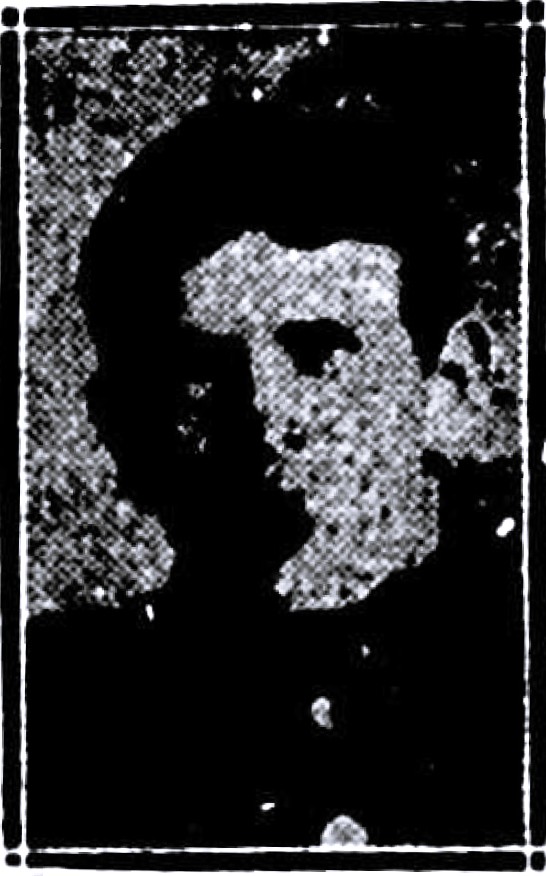
In fact his family was praised by the local newspapers in April 1916 for their patriotism. All six sons eligible to serve had stepped up. In addition to Peter, two of his brothers Joseph (Joe) and William (Willie) were already serving at the Front with the 17th West Yorkshire Regiment. His brothers Edward, John and James had all attested, though they were still working as miners. The exception was 12-year-old George, who was below service age.
By this point, Peter had already suffered the horrific impacts of war, both through personal injury and the death of a close relative.
In the early hours of 19 December, he and his cousin Thomas Gavaghan (who served in the same Yorkshire Terriers Battalion), were caught up in a fatal German gas attack on the Ypres-Boesinghe front line trenches in Belgium. The 1st/4th KOYLI’s Unit War Diary for the day described events:
4.50am: A hissing noise like a fast running motor car was heard in the German lines. Very shortly after the presence of cylinder gas, said to be Fosgene [sic], was detected in the air. Warning was given, tube helmets put on and rapid fire opened on the enemy’s parapet with rifles and machine guns. S.O.S Gas was sent to the Artillery who immediately opened fire. No Infantry attack was made but later a German patrol numbering about ten was seen advancing towards our trenches. Rifle fire was opened on them and they dispersed, only one man being seen to regain the German trench. The enemy heavily bombarded the whole of our front line and Support trenches during the day.3
The Battalion did manage to fend off the enemy, but as they were being relieved that evening a fresh German bombardment was launched using shells filled with lethal phosgene gas.
That day one officer and 23 men were killed through gas poisoning, with a further two officers and 149 other ranks suffered its ill effects to varying degrees.4 Others were killed or wounded in the ensuing attacks of the 19 December 1915. Many were from the Batley/Dewsbury areas. Peter was amongst those to suffer from gas poisoining. Thomas was one of those commended for his actions that day.
Only days later, on 28 December 1915, whilst in the same stretch of the line, Thomas Gavaghan was killed by German snipers. It was Peter who wrote home to the family with the first news of his death. Click here for Thomas’ biography.
By February 1916, the Battalion had left Belgium for the Somme region of France. They were still here at the beginning of July 1916, and the commencement of The Battle of the Somme.
On the 1 July, the opening day, they were held in reserve. But the following day, right through to 7 July, they were involved in action as part of the attack on Thiepval. During this short period at the beginning of July, the Battalion’s Unit War Diary records 20 other ranks killed, and 180 wounded.5
On 14 July 1916 local newspapers reported that Peter was in a Boulougne Hospital, being treated for shell shock, though it was not until 9 August that his name appeared on an official casualty list.
Then, on 25 August 1916, Peter’s brother Joe was killed in action on the Somme. I have yet to write his biography.
After being deemed fit, Peter returned to his Battalion who were still on the Somme. But at the beginning of November 1916 his parents received a telegram which said that their son was dangerously ill in 20th Casualty Clearing Station (CCS), France suffering from gun-shot wounds and, regretfully, permission to visit him could not be granted.
Moving frequently, a CCS was part of the evacuation chain, and in this period the 20th CCS was based in and around a chateau at Warlincourt-Halte.
This initial telegram was followed by a further wire to his family on Saturday 4 November from Territorial Records, York which read:
Regret 3539 Private Peter Gavaghan died November 3rd in 20th Casualty Clearing Station, France.6
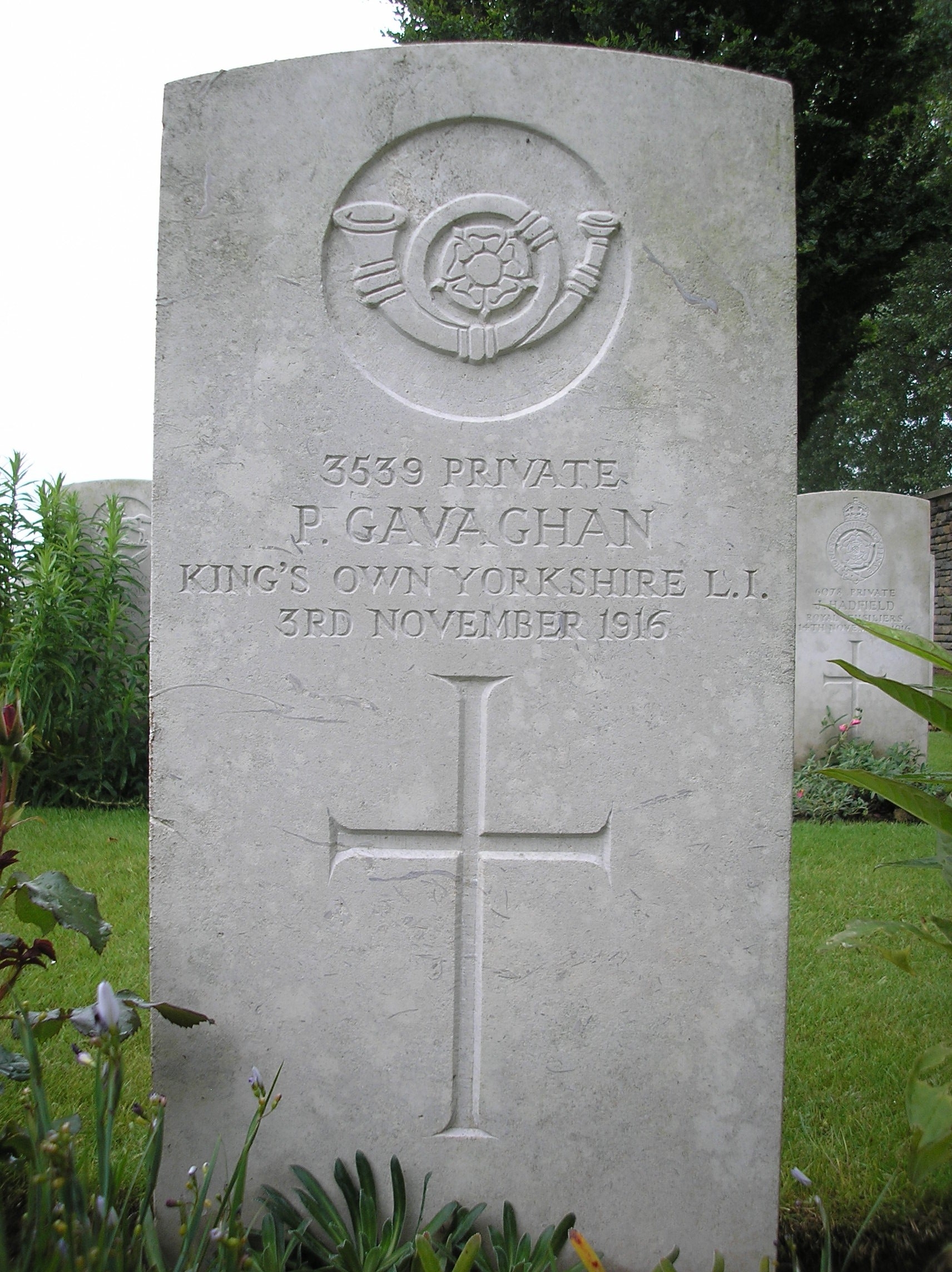
Peter was buried in Warlincourt Halte British Cemetery, Saulty, Pas de Calais, the cemetery which served the 20th CCS in this period. His headstone is shown in the photograph on the right.
Peter’s parents were joint legatees for his soldiers’ effects of £16 11s. 4d.,7 and a later war gratuity payment of £9.8 Subsequently his father, Thomas, was awarded a war pension which ended in 1935 with his death, Mary Jane having died in 1929.
Peter was awarded the 1914-15 Star, Victory Medal and British War Medal.
He is remembered on the Batley War Memorial, with both his father and St. Mary’s parish priest Rev. John Joseph Lea submitting his name.
Of the three Gavaghan brothers at the Front in April 1916, only William survived the war. A further three cousins, brothers James, and the aforementioned Thomas and Peter Gavaghan (2), also died. All three, along with Peter and his brother Joe, are remembered on the St. Mary’s memorial.
And, as mentioned earlier, Peter is also remembered on the Memorial erected by Crawshaw and Warburton for their employees who had died during the war.
Postscript:
I may not be able to thank you personally because of your contact detail confidentiality, but I do want to say how much I appreciate the donations already received to keep this website going. They really and truly do help. Thank you.

The website has always been free to use, and I want to continue this policy in the future. However, it does cost me money to operate – from undertaking the research to website hosting costs. In the current difficult economic climate I do have to regularly consider if I can afford to continue running it as a free resource.
If you have enjoyed reading the various pieces, and would like to make a donation towards keeping the website up and running in its current open access format, it would be very much appreciated.
Please click here be taken to the PayPal donation link. By making a donation you will be helping to keep the website online and freely available for all.
Thank you.
As a professionally qualified genealogist, if you would like me to undertake any family, local or house history research for you do please get in touch. More information can be found on my research services page.
Footnotes:
1. Sometimes referred to as John Thomas, he appears in the General Register Office (GRO) Birth Indexes as Thomas, and under the Latin version of John at baptism.
2. He is also referred to more generally as a miner.
3. 1st/4th KOYLI Unit War Diary, The National Archives (TNA), Ref: WO95/2806/1.
4. Ibid.
5. Ibid.
6. Batley News, 11 November 1916.
7. This was generally pay owed.
8. A payment made based on rank and length of service.
Other Sources (not directly referenced):
• Burial Registers (various).
• Bond, Reginald C. History of the King’s Own Yorkshire Light Infantry in the Great War, 1914-1918. London: P. Lund, Humphries, 1929.
• Censuses, England and Wales (various).
• Commonwealth War Graves Commission.
• Court Records – West Yorkshire Archive Service.
• GRO Birth, Marriage and Death Indexes.
• Newspapers (various).
• Medal Award Rolls and Index Cards.
• National Library of Scotland maps.
• Parish Registers (various).
• Pension Records.
• Soldiers Died in the Great War.
• Soldiers’ Effects Registers.
• The Long, Long Trail website.
• Unit War Diaries (various).


 Past To Present Genealogy