
Name: Michael Cafferty
Rank: Private
Unit/Regiment: 17th (Service) Battalion, The Prince of Wales’s Own (West Yorkshire Regiment)
Service Number: 17/1039
Date of Death: 1 August 1916
Cemetery: St Sever Cemetery, Rouen, Seine-Maritime, France
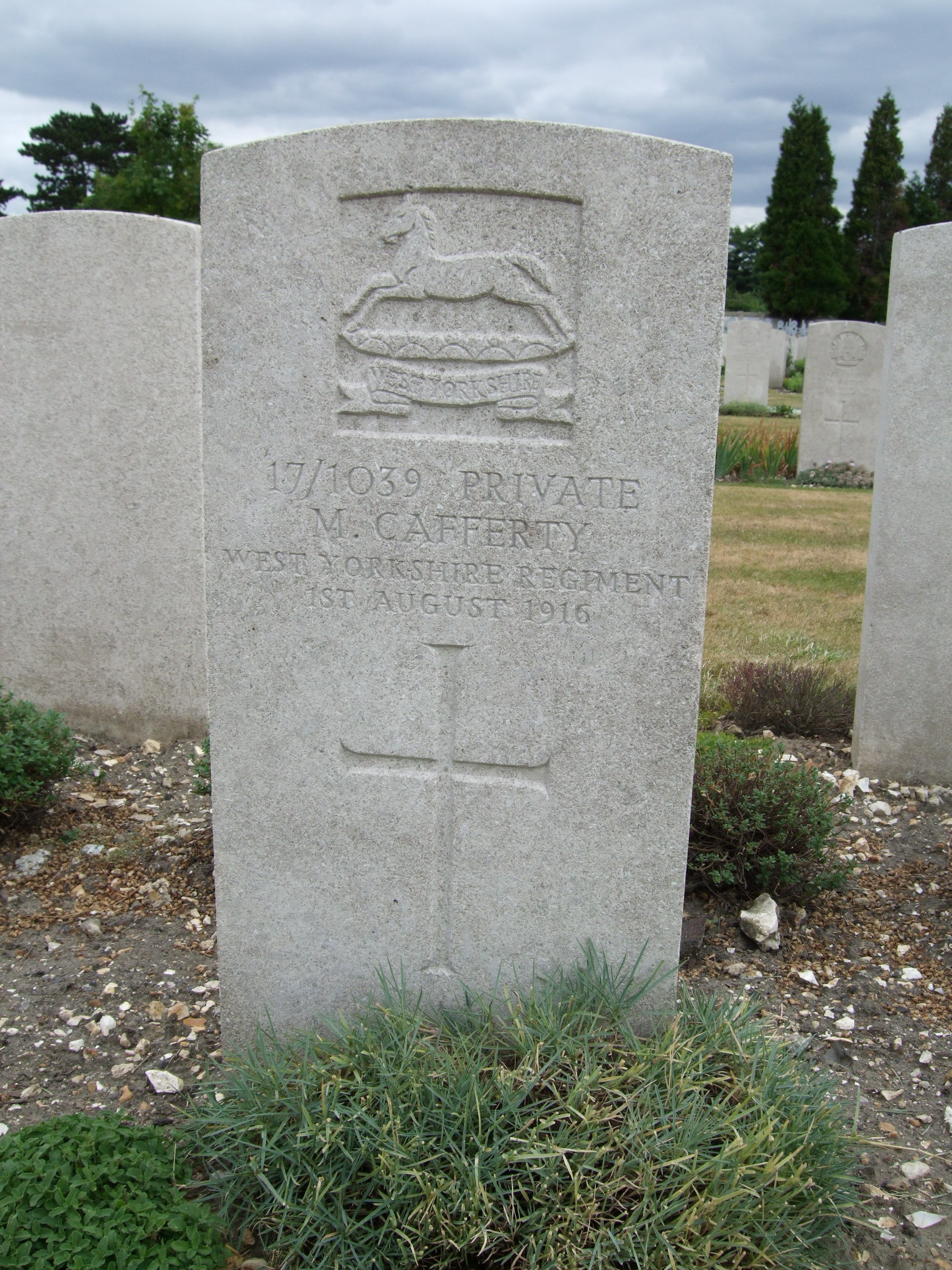
Michael Cafferty was born in Batley on 13 July 1889, the fifth of seven children of Michael and Bridget Cafferty (née Dunn). Michael and Bridget came from County Mayo, but married in Batley in 1881. Both worked in the woollen industry, Michael as a rag grinder and, when her occupation was mentioned, Bridget worked as a rag sorter.
In addition to Michael their other children were John, born in September 1882, but who died in October 1884; Jane, born in February 1884; Patrick in 1886; Thomas in October 1887; Catherine in January 1892, but who died in March 1894; and James, born in 1898.1
In 1891 the family lived at New Street, Batley, but by 1901 they were living at Ambler Street. And it was here the family are also recorded living in 1911, with Michael – now having left school some years ago – working as a hewer in a coal mine.2 In the same street was 22-year-old Margaret Owens, and on 17 February 1912 she and Michael married at St Mary’s.
Michael enlisted in Leeds in early January 1915, joining the 17th Battalion, (2nd Leeds) The Prince of Wales’s Own (West Yorkshire Regiment).
Recruitment for the battalion, which was designated a bantam battalion, only commenced in Leeds in early December 1914, initiated by the Lord Mayor and City, and authorised by the War Office.
These bantam battalions were made up of men who were under the army regulation size of over 5 feet 3 inches, but otherwise fit for service. In theory bantams had to be between 5 feet and 5 feet 3 inches, with a minimum chest measurement of 34 inches, but in practice some recruits were accepted below this minimum height. However, by the end of 1916, it was found that the general fitness and condition of men volunteering as bantams was no longer up to the standard required and no more undersized men were accepted.
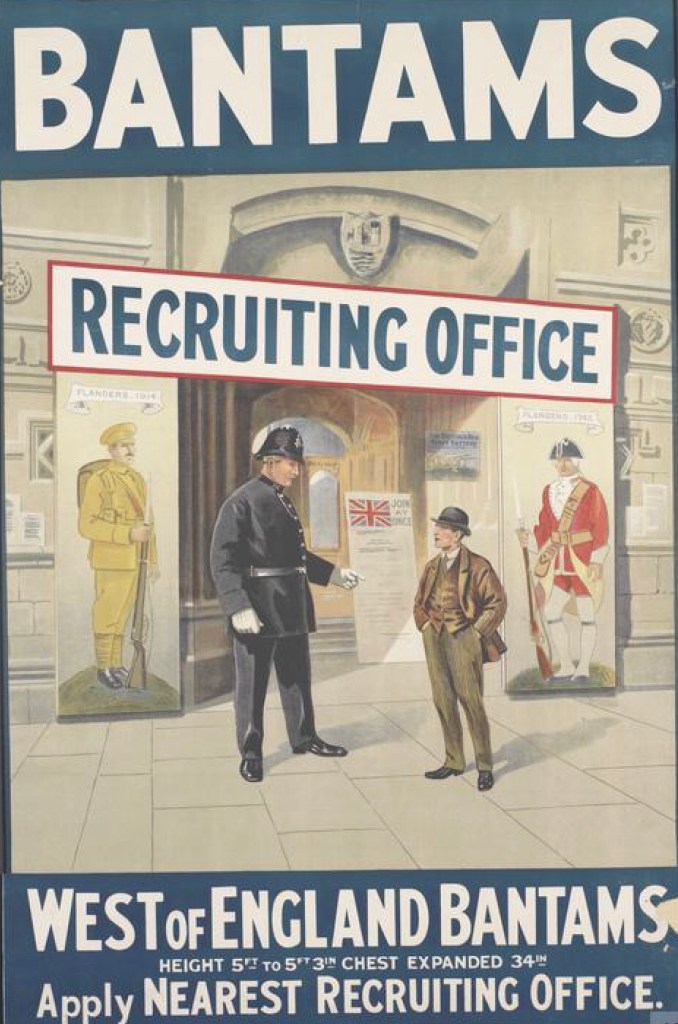
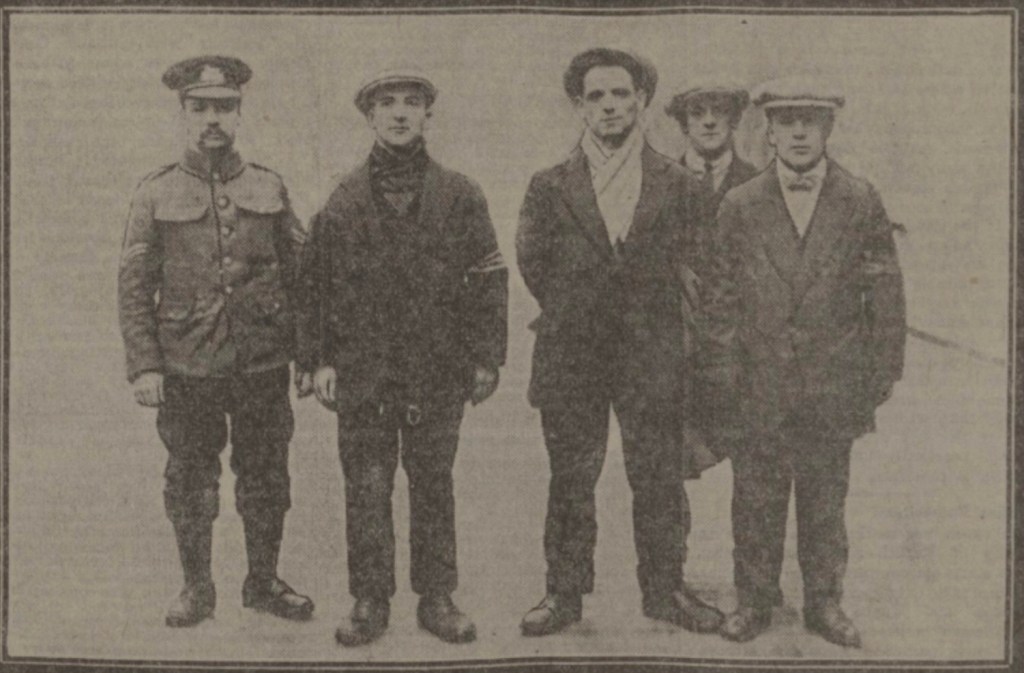
Another 17th West Yorkshire recruit from St Mary’s was the Batley Northern Union full back Jimmy Lyons, who was used as a poster boy to encourage others to enlist.
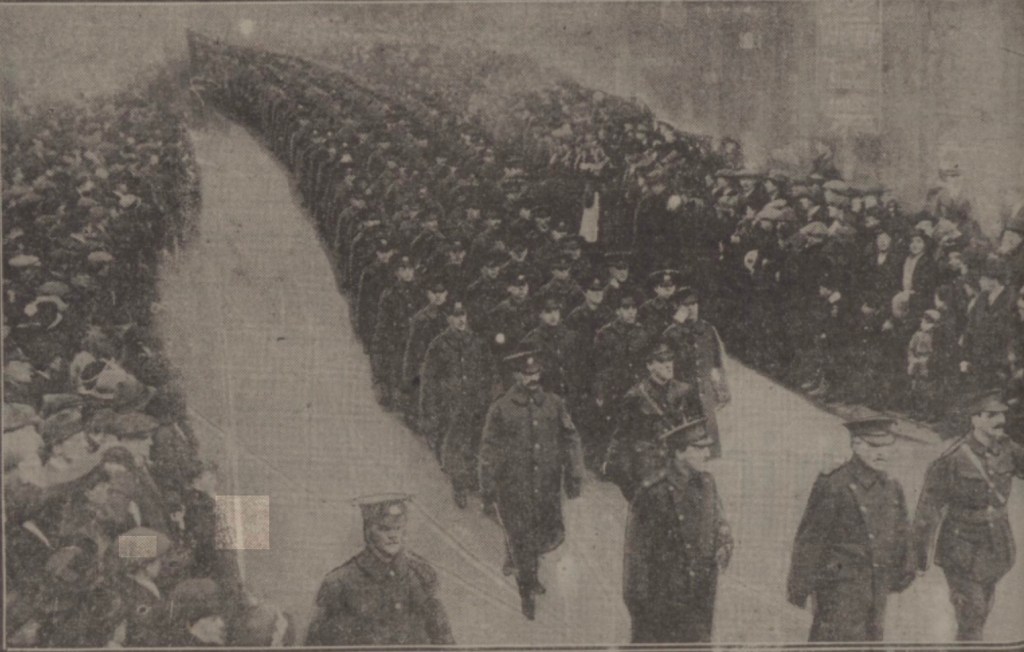
By 14 January 1915, shortly after Michael attested, the strength of the recently formed battalion had reached 1,174 men, almost its full complement.3 And on 16 January they paraded through the streets of Leeds.
Initially the 17th West Yorkshires were billeted locally, firstly at Leeds, followed by Ilkley. From there they went to huts at Skipton, before moving to the tented camp at Masham in June 1915.4 It was around the time of the move from Skipton to Masham that Michael appeared before Batley police court on 21 June 1915, charged with being absent without leave from his battalion since 19 June 1915. He was remanded to await an escort.
Towards the latter part of the year the 17th West Yorkshires moved down south to Wiltshire and the camps on Salisbury Plain in preparation for the move overseas, staying at Chiseldon Camp, Perham Down and Larkhill.5
It was whilst in those final frenetic few weeks of preparing for deployment on the Western Front that Michael’s thoughts turned to the future. He wrote an informal will. Dated 16 January 1916, it stated that in the event of his death he gave the whole of his property and effects to his wife, Margaret, living at 27 Villiers Street, Batley.6
The battalion finally set sail from Southampton on 31 January 1916, disembarking at Le Havre the following day.7
It is not clear when, or where, Michael suffered what were to be his fatal wounds. The only information is he died of them on 1 August 1916.
From mid July 1916 the 17th West Yorkshires were on the Somme, in the Montauban, Bernafay Wood, Delville Wood area, involved in operations to capture the latter. These tasks included providing working parties to carry ammunition to dumps; taking lights, flares and wire to the front lines; loading trench mortar bombs; undertaking repeated attempts to bury cables – these proved unsuccessful because of heavy shelling; carrying out salvage work and the burial of dead; and they were in reserve for an operation on 30 July when they were praised for their actions in pushing through and occupying the front line. Michael served with ‘W’ Company, and they are referred to directly in some of this work.8
The areas they operated in did come under heavy shelling on and off through this period, including sporadic gas shelling. And they paid a high price. Their War Diary entry on 31 July 1916 states that they had 10 officers and 304 other ranks casualties (dead, missing, and wounded) since 13 July 1916.9 In his official history of the West Yorkshire Regiment, Everard Wyrall states it was:
…an exceedingly high percentage, as the Battalion made no attacks on the enemy, neither was it attacked directly.10
Michael died of wounds at the 10th General Hospital, Rouen, on 1 August 1916. He is buried at St Sever Cemetery, Rouen, where, up until September 1916 when an extension was necessary, many of the dead from the several military hospitals operating on the city outskirts were buried.
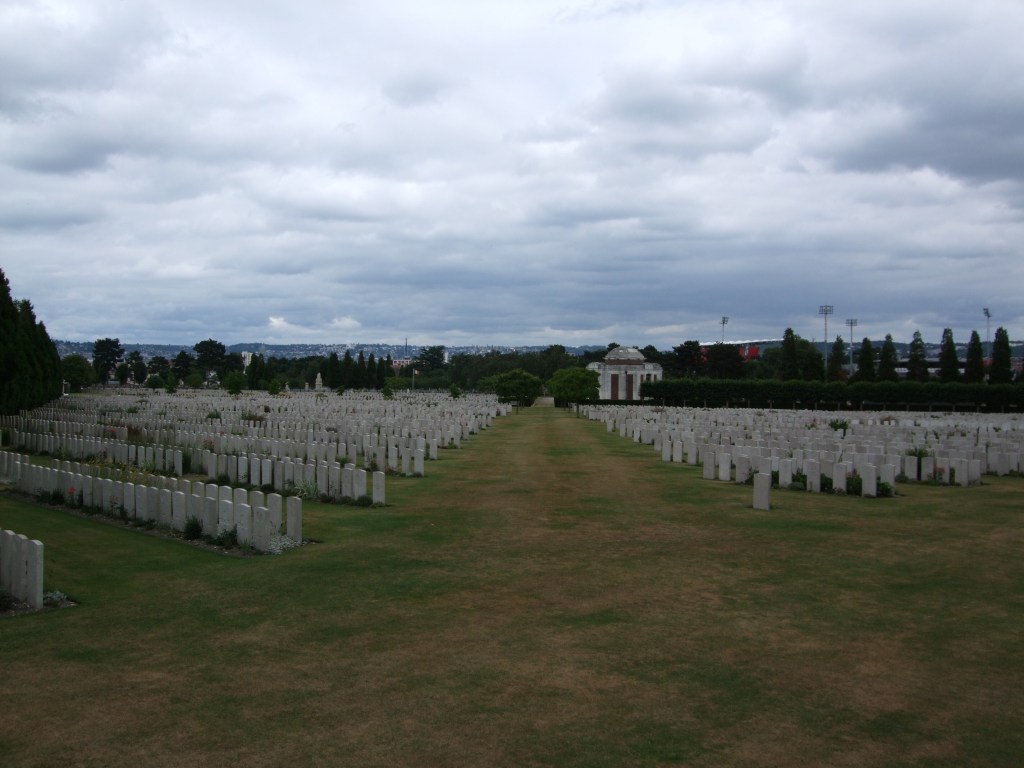
Michael was awarded the Victory Medal and British War Medal. In addition to St Mary’s, he is also remembered on the Batley War Memorial.

News of Michael’s death was published in the Batley News on 9 September 1916, in the form of a list of casualties reported by the War Office. The local newspapers, neither the Reporter or News, contained no further details.
Margaret and Michael did not have any children. She married Martin Gallagher in April 1919. This remarriage of war widows was not uncommon. According to official figures released in 1932 by the Registrar General, the immediate post-war marriage rate was 30 per cent higher in 1919 and 1920 than the pre-war rate, while remarriages among widows aged 20-45 shot up by 50 per cent.11
Margaret died in 1955 and her burial took place on 3 March in Batley Cemetery.
Michael’s brother, Patrick, was killed in action during the war. His biography his here. Another brother, Thomas, served and survived.
Footnotes:
1. A feature with the births of several of the Cafferty children is there births, as noted when baptised, did not always coincide with civil registration. For example John’s birth was not registered until the March quarter of 1883. I have used birth dates given at baptism for the Cafferty children.
2. Note, this census incorrectly gives Michael’s age as 20. 1911 Census, The National Archives (TNA), Ref RG14/27245/60.
3. Leeds Mercury, 14 January 1915.
4. 17th West Yorkshire Regiment Unit War Diary, TNA, Ref WO95/2490/4.
5. Ibid.
6. Probate record for Michael Cafferty.
7. 17th West Yorkshire Regiment Unit War Diary, Ibid.
8. Ibid.
9. Ibid.
10. Wyrall, Everard. The West Yorkshire Regiment in the War, 1914-1918. Lane, 1928.
11. Emden, Richard Van. The Quick and the Dead. London: Bloomsbury, 2012.
Other Sources (not directly referenced):
• 1939 Register.
• 1881 to 1911 England and Wales Censuses.
• Batley Cemetery burial registers.
• Batley Borough Court Records.
• Commonwealth War Graves Commission website.
• GRO Birth, Marriage and Death Indexes.
• The Long, Long Trail website.
• Medal Index Card.
• Medal Award Rolls.
• Newspapers – various.
• Parish Registers.
• Pension Ledgers and Card Indexes.
• Service Records.
• Soldiers Died in the Great War.
• Soldiers’ Effects Registers.


 Past To Present Genealogy