
Name: John Thomas Lynch
Rank: Serjeant1
Unit/Regiment: 1/5th Battalion, The Prince of Wales’s Own (West Yorkshire Regiment)
Service Number: 4/6203
Date of Death: 21 July 1917
Cemetery: Ramscappelle Road Military Cemetery, Nieuwpoort, West-Vlannderen, Belgium
John Thomas Lynch, and his brother Joseph, both served in the First World War. They were the only two of Patrick and Rose Lynch’s six children to survive to adulthood. By the end of July 1917 only Joseph was still alive.
Sligo-born Patrick Lynch married Rose Adams, also from Ireland, at Batley St. Mary of the Angels, on 18 December 1883. They made their home at Ambler Street, located in the predominantly Irish-Catholic Skelsey Row area of town, with Patrick working as a rag grinder and Rose a rag sorter.
The newly-weds welcomed their first-born, a son named James, in May 1884. He survived only eight months, his burial taking place in Batley cemetery on 18 January 1885, the day after his death. At the end of 1885 their second child was born, another son who they also named James. He suffered the same fate as his namesake, for on 3 July 1886 he too died, having survived only for six months.
Their third son, John Thomas Lynch was born in Batley on 6 June 1887 and baptised at St. Mary of the Angels later that month. He was followed by Joseph, in March 1890. In May 1893 their son William was born, but he died later that year on 19 October, at the age of five months. Their final child, daughter Mary Ann, was born at the beginning of June 1897. On 20 March 1901 she died, aged three.
By the time of the 1901 census 13-year-old John was working as a hurrier in a coal mine, but there are also indications he did temporarily step away from colliery work, enlisting for a time with the army in around 1905.2
On 1 February 1908 he married Alice Cawthorne at Batley St. Mary of the Angels. Born in the Howley Park area of Morley in September 1887, she was the daughter of colliery worker John William Cawthorne.
The couple’s early married life was spent living in the Taylor Street area of Batley.
As 1908 closed and 1909 dawned, their first son, James Patrick, was born. He did not live long enough to be baptised, being only three days old when he died. There was no service for his Batley cemetery burial on 4 January 1909.
Their next son, Edward, was born on 21 March 1911. In the census taken on 31 March 1911 he is recorded at the family home of 5 Yard, 2 Taylor Street, aged under one month.
The couple’s third son, John, was born in October 1912. He too was unbaptised, surviving for only two days. It meant once more their baby’s Batley cemetery burial was without a service. Some time after John’s death, the family moved to Timothy Lane, Upper Batley.
The 1911 census records J. T. Lynch’s occupation as a hewer working in a coal mine, with his place of employment in August 1914 confirmed as Batley’s West End Colliery. Once Britain entered the war it was a job to which he would never return.
At 11pm on 4 August 1914, when Britain declared war on Germany, John was not in Batley. Because of his previous army links, he was away from home brushing up on his military skills by taking part in the West Yorkshire Regiment’s annual summer camp. Rather than returning home, he stayed on with his regiment, initially on home shores. From August to December 1915 he was undertaking defensive duties in Cornwall, with the 4th (Extra Reserve) Battalion of The Prince of Wales’s Own (West Yorkshire Regiment).
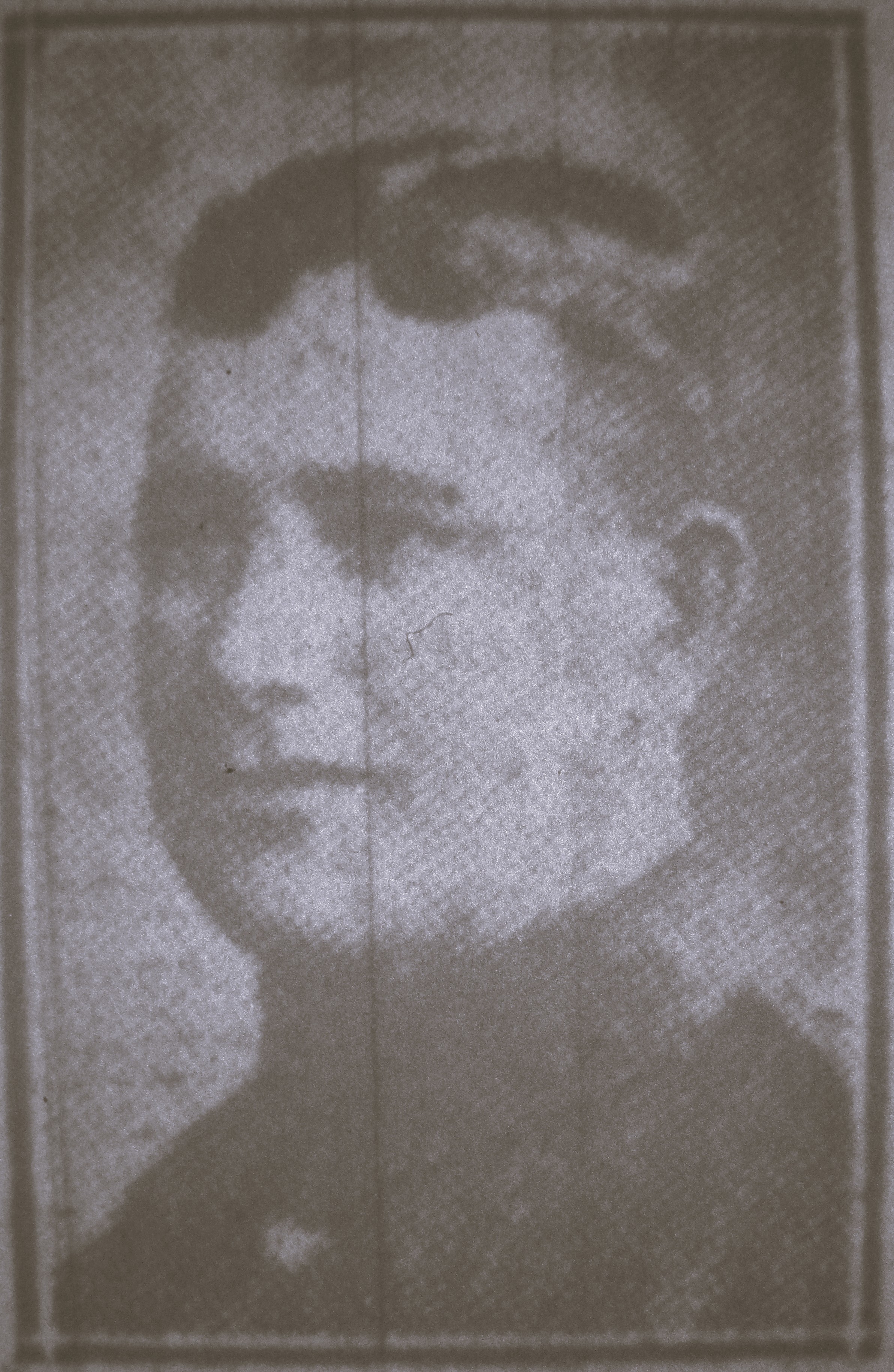
In September 1914, whilst stationed in the Cornish town of Camborne, Corporal J. T. Lynch’s letter to his wife was published in the local paper. It read:
At last I am able to find time to drop you a line. I am just finding my feet. During the first week I was stationed at Hayle – a fine little place about five miles from here.
Camborne is about the size of Dewsbury. We are guarding some gunpowder works and tin mines. We are allowed 2s. a day for grub – 14s. a week – and we get it from a big farm near by. We are living on the best that money can buy, and get all the best cooks in the place….We cannot go out without people coming and speaking to us. We are treated very well. I am a police corporal, and get into town a good deal.3
John’s time in Hayle was referred to in The Cornish Telegraph of 17 September 1914, which stated that around 200 men from the Duke of Cornwall’s Light Infantry and the West Yorkshire Regiment arrived in Hayle from St Anthony, Falmouth on Monday 14 September on the 12.49 train. The paper added that the West Yorkshire’s were old service men who rejoined the colours on the outbreak of war.
Although not mentioned in his letter extract, his week in Hayle involved musketry training, this being the location to which troops went for instruction – an important refresher for returning old soldiers like John. And his time in Camborne would not have been for the sheer pleasure of visiting the town’s watering holes and picture palaces – for his job involved ensuring other soldiers did not over-indulge or misbehave.
The 4th West Yorkshire Regiment’s time in sunny Cornwall lasted over a year. But in December 1915 the battalion moved almost 450 miles northeast, to Redcar. Then in April 1916 it was on to West Hartlepool, as part of the Tees Garrison coastal defences.
Now promoted to the rank of Sergeant, on 3 June 1917 John Thomas Lynch wrote his informal will, leaving all his property and effects to his wife. The date of his will was significant – for it was at Whitsuntide 1917 that he was posted to the Western Front, amongst the reinforcements for the regiment’s 1/5th Battalion.
He was dead before the end of the following month.
The 1/5th West Yorkshires were involved in operations in the coastal area of Flanders, near Nieuwpoort (or Nieuport4 as it was referred to by the British military of the time) when John was killed. Overnight on the 18/19 July 1917 they moved into trenches in what was the left subsector of St George’s, around a mile and a half north east of Nieuwpoort. ‘C’ Company was deployed on the left in Nun Trench,; ‘A’ Company on the right in Nice Trench; ‘D’ Company was in support, whilst ‘B’ Company was in reserve at Nieuport.
The area in which Nun Trench, Nice Trench and Rat Post were located is encircled in black on the map below. The blue lines indicate British trenches, and red the German positions. Rat Post – referred to in the Unit War Diary on the day John died – was an ideal location close by the German front line from which to observe the activities and listen into the conversations going on in the enemy trenches. [Tip – if you click on the image it brings up a bigger version to see the details]

From the subsequent Unit War Diary entry it appears John was in ‘A’ Company, given the only casualties recorded on 21 July belonged to them. The Unit War Diary for that day read:
Patrols out during morning of 20th -21st. The patrol from Right Co[mpan]y encountered a BOSCH patrol which scattered and fled to the lines. The patrol from Left Co[mpan]y listened by RAT POST for a considerable time. Nothing was seen or heard of the enemy. At 6am the enemy opened a heavy barrage on our front line, support lines… No enemy infantry attack materialised and the barrage ceased about 7am. Casualties 2/Lt J W RUSHFORTH w[oun]d[e]d. 1 O[ther]R[ank] killed (A Co[mpan]y, 4 w[oun]d[e]d (A Co[mpan]y.5
Alice received news of the death of her husband from three sources, a Captain, a Sergeant-Major and a Chaplain. These stated John was killed at around 7.30am on the morning of 21 July 1917, a slightly later time than suggested in the Unit War Diary.6 The Captain and the Sergeant-Major each bore testimony to John’s popularity with both officers and men, and expressed their regret at his death.
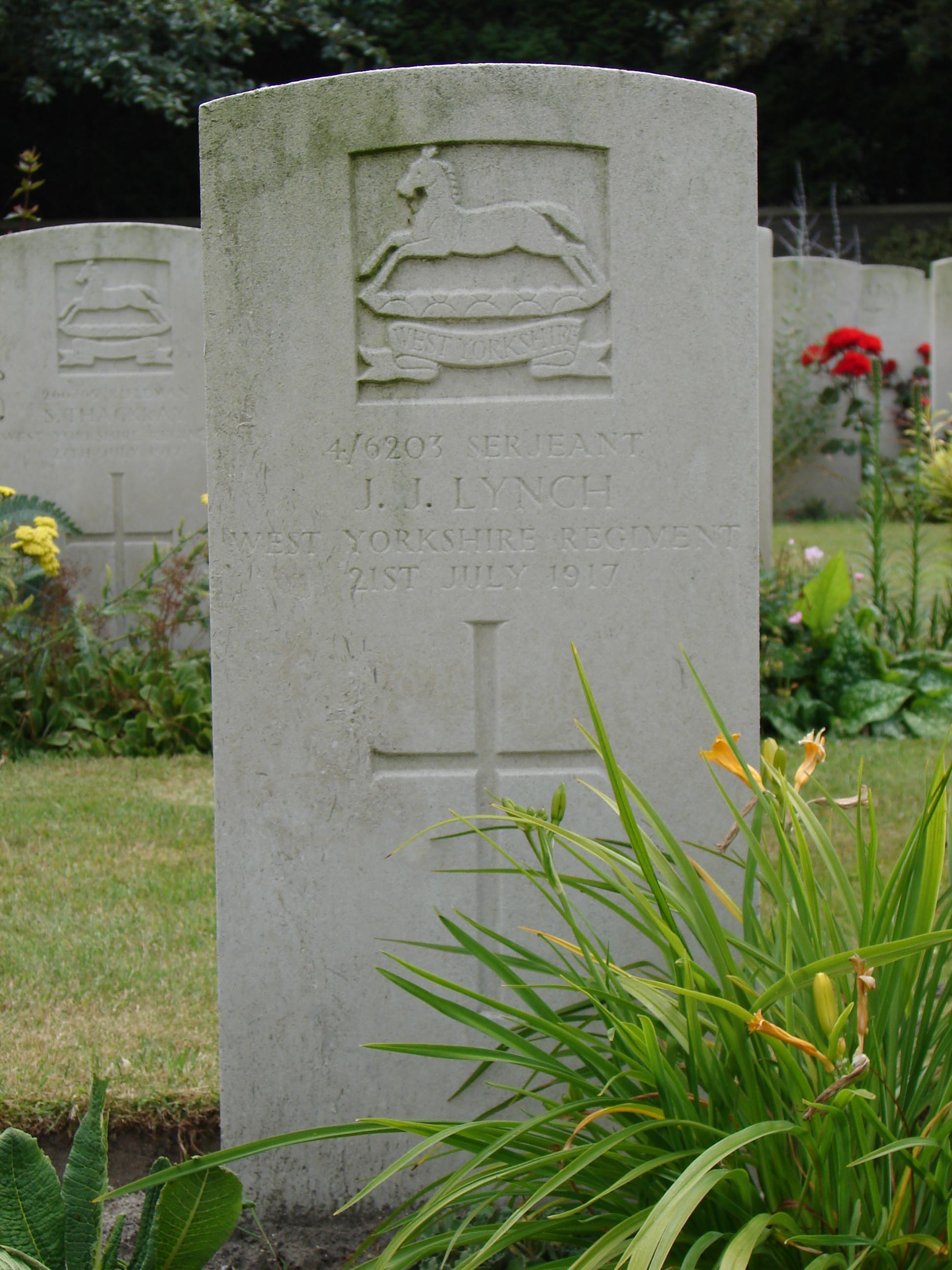
John is buried in Belgium at Ramscappelle Road Military Cemetery. Nieuwpoort. His CWGC headstone does contain an error though, his name recorded as J. J. Lynch.
At around the time she learned of her husband’s death Alice received news that her brother John, who had been missing since the 1 July 1916, the first day of the Battle of the Somme, was finally confirmed as killed on that date.7 She also had a brother, Arthur, serving in France, and another brother, Fred, held as a prisoner in Germany since the early days of the war.
John’s brother, Joseph, also served in the West Yorkshire Regiment and, as mentioned earlier, he survived the war. Another family member, their cousin William Lynch, would die later in 1917.
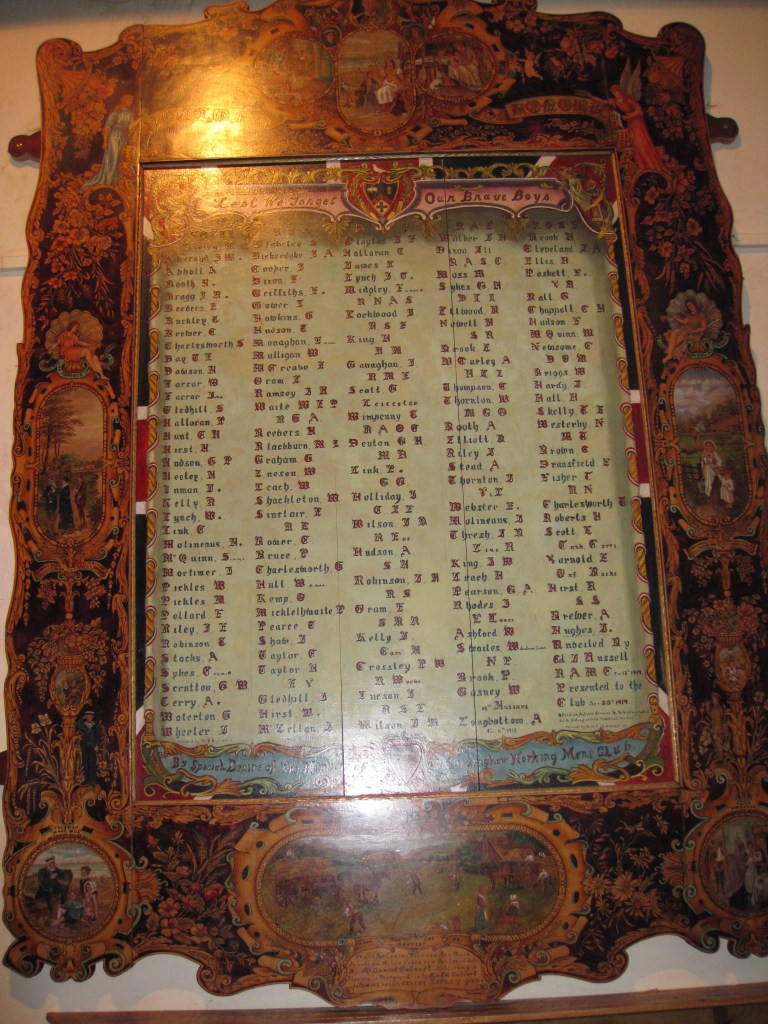
John was awarded the Victory Medal and British War Medal. In addition to St Mary’s, he is also remembered on the Batley War Memorial and the Carlinghow Working Men’s Club Memorial.
There is a footnote to John Thomas Lynch’s biography. His son Edward served in the Second World War and died in March 1944. His biography can be read here.
Postscript:
I may not be able to thank you personally because of your contact detail confidentiality, but I do want to say how much I appreciate the donations already received to keep this website going. They really and truly do help. Thank you.
The website has always been free to use, and I want to continue this policy in the future. However, it does cost me money to operate – from undertaking the research to website hosting costs. In the current difficult economic climate I do have to regularly consider if I can afford to continue running it as a free resource.
If you have enjoyed reading the various pieces, and would like to make a donation towards keeping the website up and running in its current open access format, it would be very much appreciated.
Please click 👉🏻here👈🏻 to be taken to the PayPal donation link. By making a donation you will be helping to keep the website online and freely available for all.
Thank you.
Footnotes:
1. This was the usual spelling of Sergeant in this period. It is the rank spelling used on his CWGC headstone.
2. This is year is a calculation based on newspaper reports at the time of his death which stated he had been in the Forces 12 years previously.
3. Batley News, 26 September 1914.
4. The French spelling of Nieuwpoort.
5. 1/5th West Yorkshire Regiment Unit War Diary, The National Archives (TNA), Ref: WO95/2794/1.
6. His death occurred before the German mustard gas shelling of the Nieuport sector during the night of 21st/22nd July 1917.
7. When putting his son’s name forward for inclusion on Batley War Memorial John William Dolan said they had received official notification of his death on 9 February 1917. However his death was reported in the Batley Reporter and Guardian of that date, and it said the family had already received official notification – which indicates an earlier official notification date than that given by John William.
8. He was associated with Birstall St Patrick’s.
Sources:
• 1891 to 1921 Censuses (England & Wales).
• 1939 Register.
• Batley Cemetery Burial Registers.
• Batley St Mary of the Angels Parish Registers.
• Commonwealth War Graves Commission.
• General Register Office Indexes.
• Medal Award Rolls.
• Medal Index Cards.
• National Library of Scotland Maps.
• Newspapers – various editions of the Batley News and the Batley Reporter and Guardian.
• Pension Index and Ledgers
• Soldiers Died in the Great War.
• Soldiers’ Effects Registers.
• Soldiers Wills.
• The Long, Long Trail – The British Army in the Great War 1914-1918: https://www.longlongtrail.co.uk/


 Past To Present Genealogy