
The 1921 census occupation classifications described the work of a mason’s labourer as follows:
573 – MASON’S LABOURER
Mason’s assistant, mason’s labourer, Mason’s tender; mortar boy, mortar carrier, shed labourer, stone rubber; assists mason to lift and dress stone; makes and carries mortar; does various kinds of unskilled work; looks after tools; sometimes specifically designated, e.g. monumental mason’s labourer….Rubble dresser; prepares, i.e., breaks-up with hammer or picks-out suitable pieces of “rubble,” i.e., pieces of undressed stone used for filling in; usually done by mason’s labourer (q.v.)….
Sawyer’s rubbing bed hand; stone rubber; a mason’s labourer (q.v.) who rubs surface of sawn stone with a piece of harder stone, sand, and water to give it a smooth surface…1
There was also a supplementary description as follows:
581. – CONTRACTORS’ LABOURERS; NAVVIES.
….Pavior’s labourer; street mason’s labourer; assists pavior (579) (q.v.) by mixing cement, moving stones, etc.2
Both these Occupational Classification Code Numbers (573 and 581) came under Order XVII – Builders, Bricklayers Stone and Slate Workers, Contractors. And, within that, under Sub-Order 1 – Builders, Bricklayers, Stone and Slate Workers; Contractors.
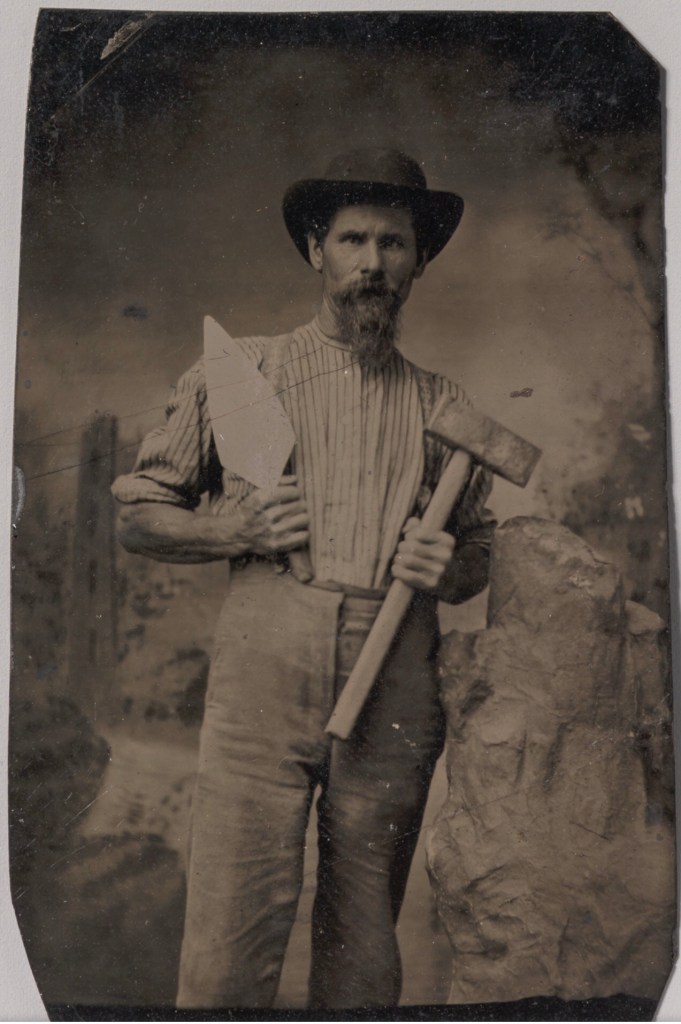
In 1911 there were approximately 18 mason’s labourers in Batley, and a significant proportion of these were St Mary’s parishioners.3 This search does not include those described in broader terms, such as general labourers, stone masons, mason’s foremen etc.
The job entailed general risks of accidents. These included objects such as heavy stones or even chimneys falling on them; and falls from ladders, scaffolding, buildings, or through roofs etc. These could result in fractures, head injuries or even death. Then there were the more bizarre accidents. One fatality, for example, occurred when a mason’s labourer involved in work erecting engine sheds at Mirfield Station was knocked over by a train.4
Following on from accidents, there would be the risk of loss of earnings, during possibly lengthy periods of recovery. Newspapers are littered with examples of mason’s labourers taking employers reluctant to pay out to court for loss of earnings under the Workmen’s Compensation Act, or for neglect which had caused the accident in the first place.
There was also some unionisation to fight for better rights. For example, the Batley Operative Stone Masons’ Labourers’ Society whose members went on strike when they failed to obtain a 2s per week wage increase, to bring their weekly wages up to 26s.5
Footnotes:
1. A Dictionary of Occupational Terms: Ministry of Labour. Based on the Classification of Occupations Used in the Census of POPULATION, 1921. His Majesty’s Stationery Office, 1927.
2. Ibid.
3. 1911 Census search, Batley, masons labourer via Findmypast – 20 February 2023.
4. Batley Reporter and Guardian, 20 December 1884
5. Batley Reporter and Guardian, 6 May 1876


 Past To Present Genealogy