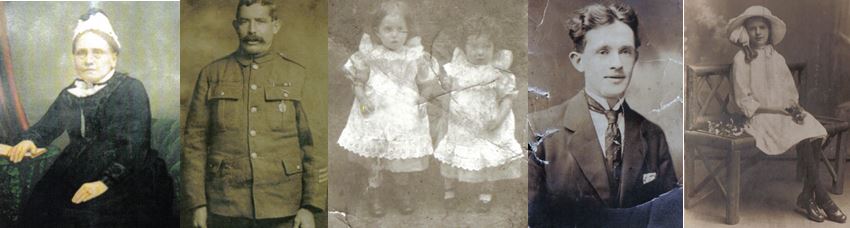
Contentious revisions to funeral arrangements were on the agenda at the Batley Town Council meeting of Friday 8 April 1927. This followed recommendations by the Park and Cemetery Committee for changes to weekend interment hours at Batley Cemetery. These changes would allow the three grave-diggers employed at the cemetery the opportunity to have part of their Saturday afternoons free for leisure pursuits, such as attending sporting fixtures. One of the grave-diggers who stood to benefit was St Mary’s parishioner, Charlestown County Mayo-born Bernard Neafsey.

It was a recommendation which did not meet with universal Council approval, being perceived as causing a particular issue for Batley’s Catholics. The main concern centred around Saturday afternoon funerals, with Sunday burials being less common (in fact some priests, for example Dean McMenamin at the Catholic Batley Carr parish of St Joseph’s, opposed Sunday funerals).
The current Cemetery provisions allowed for afternoon burials between 2 p.m. and 4 p.m. on Saturdays and Sundays. The proposal aimed to reduce this weekend afternoon window to between 12 noon and 2 p.m., thus allowing grave-diggers at least part of their afternoon free. As a sweetener it was proposed the additional fees payable for weekend funerals be removed, with the exception of the 10s. additional charge for burials after noon on Sunday.
So why was this such a divisive suggestion in relation to grave-diggers, especially when it was customary for many other workers to work a 5½ day a week? In fact, the Council had recently approved the recommendation for the town’s 20-30 postmen to finish work at Saturday lunchtime.
One reason was precisely because in this period it was still the norm for the working week to run from Monday morning to a Saturday lunchtime. Funerals later on a Saturday afternoon meant people attending them did not have to take any time off work to pay respects to their deceased relatives and friends. This also benefitted employers.
It was felt the proposed changes were a retrograde step, and that whilst grave-diggers were entitled to consideration, the general public were entitled to equal consideration. The timing of someone’s death could not be arranged around a grave-digger’s work timetable. It was therefore argued a Saturday afternoon funeral was a public service which should be maintained. In any case, Saturday and Sunday afternoon interments did not take place every week, so as it stood the grave-diggers services were not called on every weekend afternoon.
Catholic funerals would be particularly affected by the change as, for many years, it had been customary for this religion to schedule their Saturday afternoon funerals for 3.30 p.m., giving friends who lived a distance away time to travel to attend them.
Alderman Priestley, supporting the changes and whose Council remit covered cemeteries, countered that Fr. McBride, parish priest at St Mary’s Batley, had been approached with regard to the proposals and he would be prepared to alter the times of interments he conducted to fit in with the Council. The Alderman also pointed out that grave-diggers in cities and large towns like Bradford, Leeds, Huddersfield, Wakefield and Halifax had no Saturday afternoon funerals, and none on Sundays.
But Alderman Priestley failed to convince his fellow-Councillors, with 15 voting against the change, and only 9 being in favour. The matter was referred back to the Park and Cemetery Committee for further consideration.
On 6 May Alderman Priestley came back to Batley Town Council with revised compromise proposals for the Saturday half-holiday for grave-diggers. The amendment was:
That save in any case where the Registrar is satisfied that the circumstances are exceptional, the time for Saturday and Sunday funerals will be from 12 noon to 2 p.m., and that the additional charge for morning funerals be dispensed with, but that a charge of 10s. for interments on the Sabbath be continued.
It meant the new proposal now included some wiggle room with the Registrar having the discretion to extend the time window.
Alderman Priestley said the Park and Cemetery Committee’s original objective was to bring the Cemetery employees into line with other workers in regard of holidays, but they were providing for funerals up to 2 p.m. on Saturdays to meet the opposition part way.
There was one dissenting voice this time, with Alderman Ramsden not happy that the Registrar would have the sole authority to define the circumstances of families in distress. Neither did he feel 2 p.m. on Saturday was late enough. He suggested cemetery employees might work alternate Saturdays. However the Committee’s revised compromise recommendation was approved.
Bernard Neafsey did not benefit for long from the changes. At the beginning of 1930 he was suffering from lumbago, being unable to work for 10 weeks. During this period he became increasingly worried about claiming a future pension as he was unable to prove his age – a common issue for Irish-born people with civil registration of births not being introduced there until 1864. Consumed by this anxiety, he died under tragic circumstances on 17 January 1930, with a recorded age 65. Given the debate around weekend burials, his interment took place two day’s later – on Sunday 19 January 1930.
Postscript:
I may not be able to thank you personally because of your contact detail confidentiality, but I do want to say how much I appreciate the donations already received to keep this website going. They really and truly do help. Thank you.
The website has always been free to use, and I want to continue this policy in the future. However, it does cost me money to operate – from undertaking the research to website hosting costs. In the current difficult economic climate I do have to regularly consider if I can afford to continue running it as a free resource.
If you have enjoyed reading the various pieces, and would like to make a donation towards keeping the website up and running in its current open access format, it would be very much appreciated.

Please click 👉🏻here👈🏻 to be taken to the PayPal donation link. By making a donation you will be helping to keep the website online and freely available for all.
Thank you.
As a professionally qualified genealogist, if you would like me to undertake any family, local or house history research for you do please get in touch.
More information can be found on my research services page.


 Past To Present Genealogy