In this post I will write about a former St Mary’s parishioner who few in the parish will know about today. However, for many years he played a significant religious role, one which touched the lives of many people from countries across the world.
Patrick Hunt was born in Birstall on 3 January 1878, the tenth of 11 children born to Patrick Hunt and Mary Kilkenny.1 Though they married locally in 1856, the couple both came from Ireland. Later census record Mary, who was a Gaelic speaker,2 as being from County Mayo.3
Initially, the Hunt family lived in Birstall. But this was in the period before the formation of the separate parish of Birstall St. Patrick’s. It meant Batley St. Mary’s was the family place of worship, and the baptism location of all the couple’s children.
Patrick (Snr), who worked in various manual jobs including as a stone quarryman, coal miner, and labourer, died on 18 December 1885.4 It seems his death precipitated the family move to the Cross Bank area of Batley. The Hunts were recorded at Cross Bank Road in the 1891 census. However, young Patrick was not in the family home. He was living almost 250 miles away, in Glastonbury.
Five years earlier, the French Order of Missionaries of the Sacred Heart founded a missionary college in the spiritual and mystical town, with its associations with Joseph of Arimithea, King Arthur and the Holy Grail. The college did not last for long, with a decision to relocate the school to Ireland at the turn of the century. But in 1891, 13-year-old Patrick Hunt is recorded as one of the school’s ecclesiastical scholars. After receiving his initial education at Batley St Mary’s, he transferred to the Glastonbury college, age 12, to continue his schooling. Several other boys from Batley and Birstall were also being taught there in the 1891 census entry.
On 13 February 1895 Patrick embarked on an even longer journey. Giving his occupation as a millhand he, along with his three pieces of luggage, boarded the White Star Line ship Majestic at Liverpool, on a crossing to New York. His intended destination was Pennsylvania, and he anticipated this American stay would be a long-term one.
The 1900 US Federal census does not record Patrick in Pennsylvania though. On 14 July that year, Patrick was listed as a member of the Franciscan Mount St Sepulchre Monastery in Washington, Columbia, headed by its founder, German-born monk Fr. Godfrey Schilling.
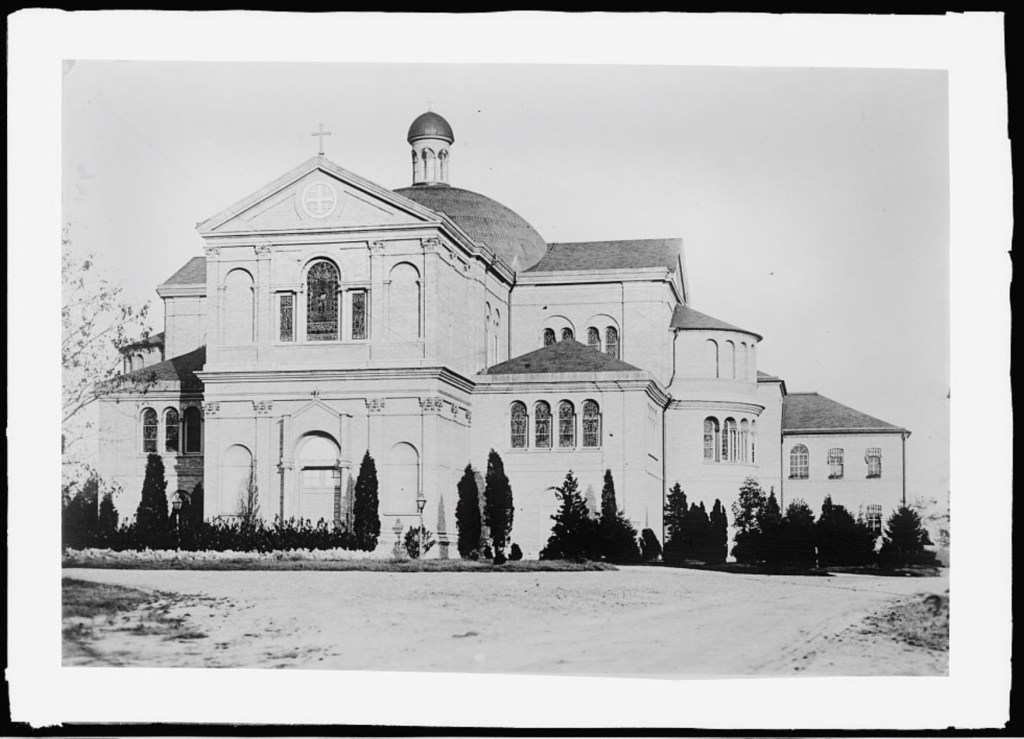
The monastery was part of the Franciscans plans to build a “Holy Land in America.” The cornerstone for the building was laid on 19 March 1898, and a year later it was complete. Patrick was therefore amongst the first students of this famous Washington Monastery, with the complex now being better known today as the Franciscan Monastery of the Holy Land in America. The monastery is designated a Commissariat of the Holy Land, and its functions include interesting the public in the holy places in Jerusalem, collecting funds for their support, and recruiting missionaries for work in the Holy Land.
The Franciscans have been associated with the Holy Land for more than 800 years. In 1342, over a century after their arrival there, Pope Clement VI decreed they would be the official custodians of the Holy Places in the name of the Catholic Church. Five years later, the Franciscans settled permanently in Bethlehem. The specific branch of Franciscans who perform this custodian role are known as the Custody of the Holy Land. The many Holy Land shrines they serve include the Church of the Holy Sepulchre and Gethsemane in Jerusalem, the Basilica of the Nativity in Bethlehem, and the Basilica of the Annunciation in Nazareth.
With their base in America being the Franciscan Monastery of the Holy Land in America, it was a natural next step for Patrick Hunt to go to the Holy Land proper.
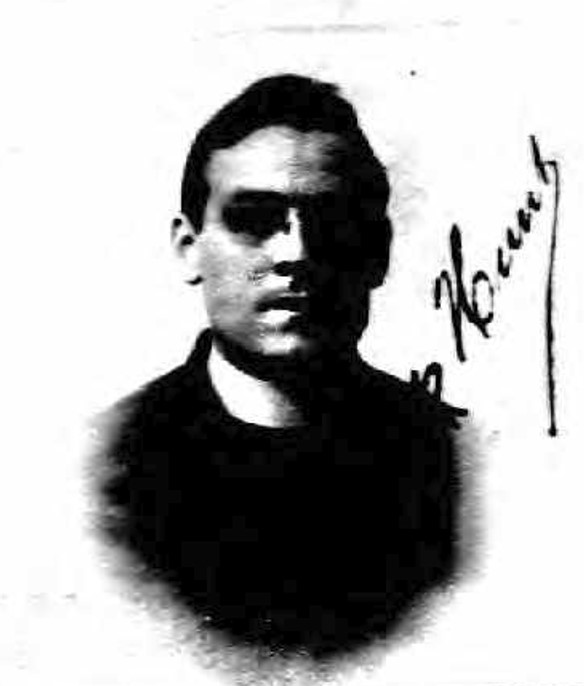
In October 1901, as he planned to go abroad for a while, he became an American citizen and applied for a passport. Giving his occupation as student, 23-year-old Patrick was described as standing 5’ 5” tall, light complexioned, with light brown eyes, dark brown hair, a wide forehead, straight nose, a medium small mouth, broad chin and jaws.5 On 26 December he arrived in Jerusalem6 which at this point, along with the broader region of Palestine, was under the jurisdiction of the Turkish Ottoman Empire.

Initially, he entered a period of training, known as the novitiate, with the Franciscans at Nazareth to see if he was suited to the monastic life. In 1903, on succesful completion of this intense period of study and prayer, he was received into the Franciscan Order of Friars Minor.7 Rather than serving as a Brother, he then went down the priesthood route. It meant transferring to St. Saviour’s monastery in Jerusalem, where he studied philosophy and theology.8 His ordination took place in Jerusalem on 19 September 1908, when he became one of the few American priests ordained in the Holy Land.9 He celebrated his first mass at the Shrine of the Nativity.10
As a mark of his transition from secular to religious life, Patrick Hunt also changed his name. Perhaps referencing his admiration for the founder of Washington’s Franciscan Monastery, he was now known as Fr. Godfrey Hunt. However he did not completely shed Patrick as a name, with some official documents still recording him as that, or Godfrey P Hunt.
In November 1910, after a stop-over in England, he returned to Washington to take up a new appointment as an Assistant Superior at the Franciscan Monastery in Washington.11
It was on 19 June 1915, whilst he was in the United States, that his mother died.12 Fr. Godfrey was unable to return home to England for the funeral, though this was down to the sea journey time rather than the war raging in Europe.
This was not the first family bereavement Fr. Godfrey had suffered since he left Batley. On 10 April 1904, his 37-year-old sister Ann died in Batley hospital after a horrific accident almost a month earlier. She had never worked, suffering lifelong learning impairment, and it was this condition which contributed to the accident. On 11 March her apron set alight when, unsupervised, she attempted to put coals on the fire. The flames were extinguished but the burns she received were not survivable. Her mother injured her hands in attempts to put the flames out, but she did recover.
When the United States entered the war on 6 April 1917, Fr. Godfrey stepped up to play his part, serving as a 1st Lieutenant Chaplain with the American Expeditionary Force (A.E.F).
On 4 August 1918 he set sail from Baltimore to Genoa on the S.S. Umbria.13 He was one of the party organised by New Orleans Dr. (Lt-Col.) Joseph A. Danna, in conjunction with the US National Army, tasked with establishing and staffing Base Hospital 102, in Vicenza. Situated in the north of Italy between Verona and Venice, it was the hospital unit operating closest to the Italian front.
Danna’s volunteers mainly came from New Orleans and other Louisiana cities. Amongst the nurses he recruited to work in the hospital were 10 nuns from the Daughters of Charity order. Besides the mix of civilian volunteers, it also had a complement of US Army doctors and nurses.
It was known as the Loyola Unit, after Loyola University Medical School where Danna worked. And the pastoral care provided to patients by Fr. Godfrey was integral to its running. His days and nights would be spent comforting and attending to the spiritual needs of ill or injured youths and men who passed through the hospital. Away from their families, frightened and in pain, Fr. Godfrey would play an important, calming influence at an emotionally and physically challenging period of their lives.
Right from the start, it was a perilous venture. The Germans were once again engaged in unrestricted U-boat warfare, and for most of the journey the Umbria had no military escort. They were reminded of the danger almost from the start when, only a day into the crossing, they picked up a lifeboat carrying over a dozen men from the torpedoed oil tanker Jennings.
102 Base Hospital began treating patients on 18 September 1918, and continued its work throughout seven harsh winter months, before it closed its doors to further patients on 15 March 1919. The patients were not only American. They included many Italians, and men from the other Allied countries. The working conditions were difficult, the staff coping with air-raids, a lack of fuel for heating and cooking, and scarce food supplies, whilst enduring frost-bitten hands and feet.
Operating as both a Base and evacuation hospital, it treated 3,000 cases, 1,154 involving surgery, including 304 major operations, yet only had 27 deaths (note other sources state 28, but either way it is impressive). This included its work whilst the flu pandemic raged, when it lost none of its 800 influenza cases.14
On 28 March 1919, Fr. Godfrey and his US Army Base Hospital 102 colleagues left Genoa for their return journey home.15
He was not in the United States for long. In December 1919 his preparations for a return to the Holy Land were well underway.16 Following the defeat of the German allied Ottoman Turks and the Mayor of Jerusalem’s surrender of the keys of the city to General Allenby in December 1917, the area fell under a term of British administration. It was yet another period of huge political turmoil and instability in the region.
Given the British mandate, as a first language English speaker Fr. Godfrey’s linguistic skills were prized. For in addition to speaking English, he also spoke Italian, French and Hebrew fluently, and had a basic knowledge of several other languages too.
His work for the remainder of his life was mainly based in the Holy Land. He acted as the Franciscan’s liaison officer negotiating with British authorities and Muslim and Jewish officials to ensure the safety of the Holy Places.17 It was a difficult task given the political instability and outbreaks of violence. In 1928, he became the first American to be elected to the Board of Councilors,18 which meant he held the title Discretus Terra Sancta.19 As a Counsellor of the Franciscan Custody of the Holy Places, he helped with making decisions about their care. He also had superintendent duties overseeing Franciscan schools in the region.20 And he acted as a guide to English-speaking priests and pilgrims visiting the shrines of the Holy Land.
Given the interest he retained in his birth parish, and having the Batley News sent out to him weekly, one noteworthy group of pilgrims he met in 1928 included Bishop Cowgill of Leeds, Fr. Hayes of Dewsbury’s St Paulinus and Dean McMenamin of St Joseph’s Batley Carr.21
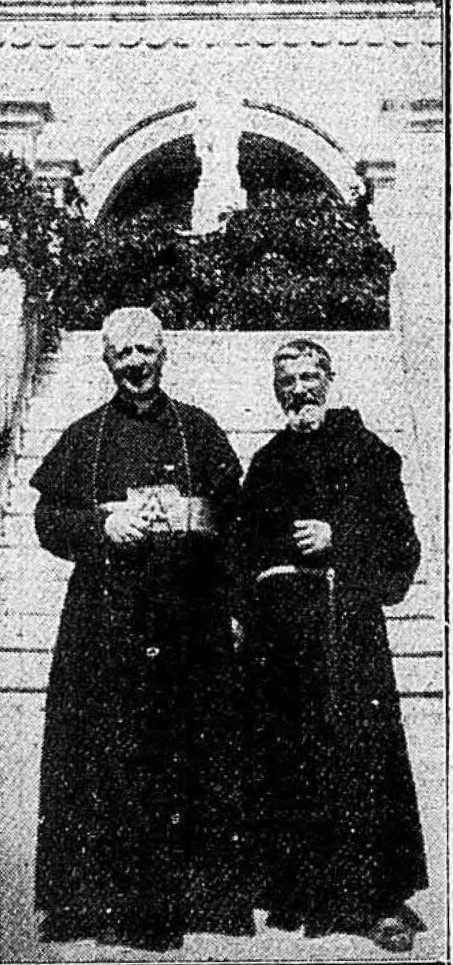
The Custody of the Holy Land was a job not without danger, balancing the delicate politics of the needs and wishes of various religions. At Easter 1930 Fr Godfrey was thrown to the floor and beaten up by a group of Copts, an Orthodox Sect, who attempted to enter the Basilica of the Holy Sepulchre in contravention of the arrangements made for Easter services.
He still had siblings living in Batley, and occasionally managed to return to England to visit them, often tagging visits as stop-overs in between transit to and from America and the Holy Land.
On one three-week visit in 1927, he delivered a well-received lecture at the Batley Catholic Young Men’s Working Club about the Holy Land. His talk conveyed his love and admiration for the region, with him stating Palestine had revolutionised the history of the world, with its connections to the three great religions of the earth – Christianity, Islam and Judaism.22
Besides being a great preacher and delightful conversationalist, he was also known in the parish for his beautiful voice, and it was always a pleasure to hear him sing mass.
He planned to visit his Batley family later in 1934, after a rest and recuperation visit to the United States. At this point his Batley resident siblings comprised of brother Martin, and sisters Kate (recently returned from America) and Mary Hunt, Bridget Cox and Nora Murphy.23 It was a reunion he never made.
There are conflicting reports about the origins of the long-standing health problem which led to his return to America. Some sources state it was caused when he was a passenger in a bus accident near Jerusalem.24 Others say that he fell from a stage whilst undertaking his school duties, fracturing two ribs and puncturing a lung.25 Another claims he was attacked during civil unrest in 1930.26
Whatever the issue, he was well enough to set off by sea from Jaffa on 3 June 1934. It was a long journey, with him arriving in New York on 27 June 1934.27 During the voyage he fell ill, and on his arrival he was immediately taken to St. Vincent’s Hospital where he underwent surgery. He died in hospital on 12 July 1934.
His body was returned to Washington. After a requiem service at the Franciscan Monastery, he was buried in its cemetery with full military honours, a recognition of his war service with the A.E.F.
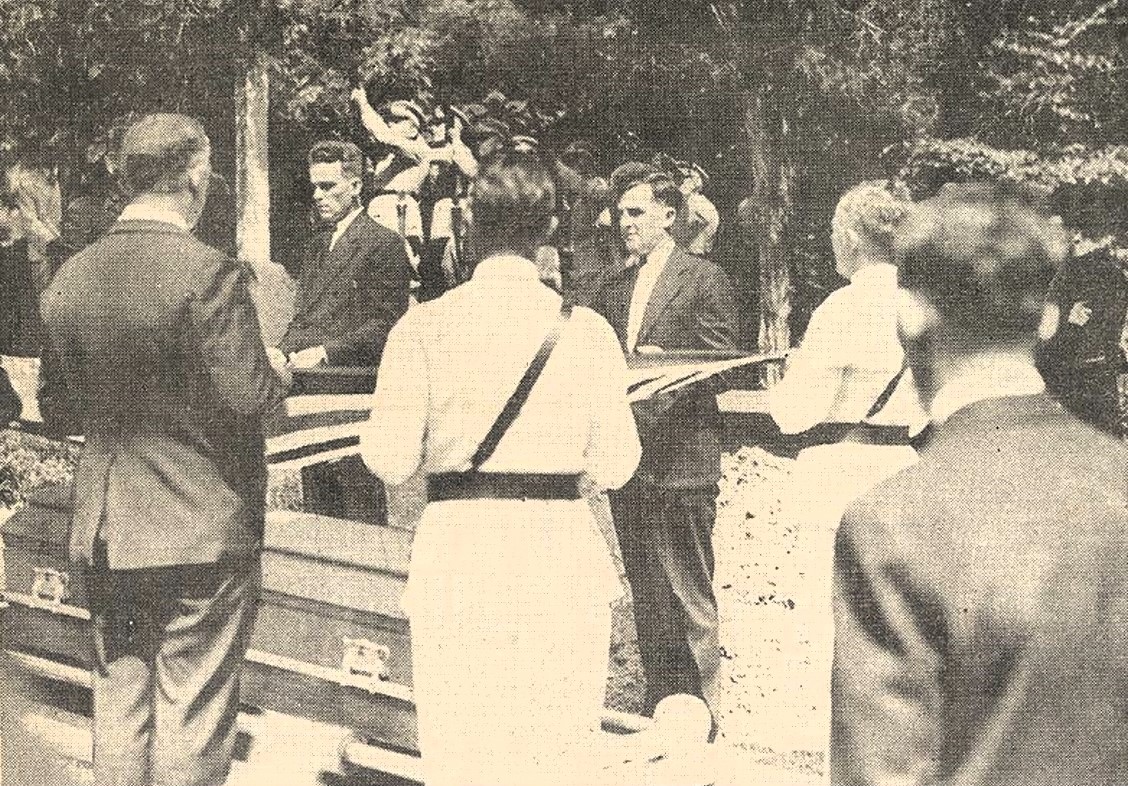
A Solemn Requiem Mass was also celebrated at Batley St. Mary’s, with relative Fr. Francis Hunt of Huddersfield St. Patrick’s leading the ceremony. It demonstrated his importance and the regard with which he was held in the parish almost 40 years after his departure from England.
Postscript:
I may not be able to thank you personally because of your contact detail confidentiality, but I do want to say how much I appreciate the donations already received to keep this website going. They really and truly do help. Thank you.
The website has always been free to use, and I want to continue this policy in the future. However, it does cost me money to operate – from undertaking the research to website hosting costs. In the current difficult economic climate I do have to regularly consider if I can afford to continue running it as a free resource.
If you have enjoyed reading the various pieces, and would like to make a donation towards keeping the website up and running in its current open access format, it would be very much appreciated.
Please click 👉🏻here👈🏻 to be taken to the PayPal donation link. By making a donation you will be helping to keep the website online and freely available for all.
Thank you.
Footnotes:
1. Their other children include Mary (1856), John (1859), James (1861), Catherine (1864), Ann (1866, also known as Nancy), Bridget (1868), Mary (1870), Honora (1873, also known as Nora). Ellen (1875), and Martin (1881).
2. The 1920 US Federal Census entry for Godfrey P Hunt states his mother was a Gaelic speaker.
3. 1911 Census entry for the Hunt family, Ref: RG14/27248/24.
4. Batley News, 26 December 1885.
5. US Passport Application, 29 October 1901,National Archives and Records Administration (NARA); Washington D.C.; NARA Series, Roll 587 01 Oct 1901-31 Oct 1901
6. US Consular Registration Certificate 11 April 1911, Record Group 59. The National Archives in Washington, D.C.
7. The Washington Evening Star, 13 July 1934.
8. Ibid.
9. Various newspapers including The Washington Evening Star, 13 July 1934 and The Catholic Transcript, Volume XXXVII, Number 7, 19 July 1934.
10. The Washington Evening Star, 13 July 1934.
11. The Catholic Transcript, Volume XXXVII, Number 7, 19 July 1934.
12. Batley News, 26 June 1915
13. U.S., Army Transport Service Arriving and Departing Passenger Lists, 1910-1939, The National Archives at College Park, Maryland, Records of the Office of the Quartermaster General, 1774-1985; Record Group Number: 92; Roll or Box Number: 609
14. The Literary Digest, V61, April to June 1919, Funk and Wagnalls etc, New York
15. U.S., Army Transport Service Arriving and Departing Passenger Lists, 1910-1939, The National Archives at College Park, Maryland, Records of the Office of the Quartermaster General, 1774-1985; Record Group Number: 92; Roll or Box Number: 62 and 63
16. US Passport Application, 4 December 1919, NARA, Washington D.C, NARA Series, Roll 1001 – Certificates: 145626-145999, 04 Dec 1919-05 Dec 1919
17. Leeds Mercury, 2 September 1929; The Washington Evening Star, 13 July 1934; Washington Times, 16 July 1934
18. The Washington Evening Star, 13 July 1934.
19. Washington Times,18 March 1931.
20. The Catholic Transcript, Volume XXXVII, Number 7, 19 July 1934.
21. Batley News, 7 September 1929.
22. Batley News, 1 October 1927.
23. Another sister, Ellen, lived in the United States.
24. Washington Evening Star, 13 July 1934.
25. The Catholic Transcript, Volume XXXVII, Number 7, 19 July 1934;
26. FindAGrave Obituary from Gazette and Daily, York, PA, 13 July 1934.
27. 27 June 1934 New York Passenger Arrival List, Excambion, The National Archives in Washington, DC; Washington, DC, USA; Passenger and Crew Lists of Vessels Arriving at New York, New York, 1897-1957; Microfilm Serial or NAID: T715; RG Title: Records of the Immigration and Naturalization Service, 1787-2004; RG: 85
Other Sources:
• American Women in WW1, Sister Chrysostom Moynahan: AEF chief nurse buried, https://americanwomeninwwi.wordpress.com/2017/11/11/sister-chrysostom-moynahan/
• Batley Cemetery Burial Registers.
• Censuses, both England/Wales and US.
• Custodia Terrae Sanctae: Custody of the Holy Land, https://www.custodia.org/en/
• Digital Exhibit: Daughters of Charity in the First World War https://docarchivesblog.org/2015/02/06/digital-exhibit-daughters-of-charity-in-the-first-world-war/
• Franciscan Monastery of of the Holy Land in America, https://myfranciscan.org/
• GRO Indexes.
• Newspapers, England and US- Various.
• Parish Registers.
• Passenger Lists, Arrivals and Departures, England and US.
• Passport Applications.
• Records of Daughters of Charity Service in World War I, RG 7-5-6, Treasures of the Catholic Research Resources Alliance (CRRA), https://blogs.shu.edu/crra/category/institution/daughters-of-charity/
• United States Army Transport Arriving and Departing Passenger Lists.
• United States Death Indexes.
• United States Veterans Administration Master Index.
• Wikimedia Commons.
• World War Centennial Commission – Other US in WW1 Italy, US Army Base Hospital 102, https://www.worldwar1centennial.org/index.php/332nd-in-ww1-articles/other-americans-in-italy-in-wwi.html


 Past To Present Genealogy