Here is this week’s round-up of pieces from the Batley News relating to the parish of St Mary’s – and it contained more bad news for many St Mary’s families. As usual I have put in bold the names of those connected to the parish who served with the military. And, as ever, the spelling and punctuation matches that of the newspaper.
The Death Notices included Agnes Rhodes, whose funeral was conducted by a St Mary’s priest according to the cemetery register:
SOOTHILL
RHODES. —On the 7th inst., aged 57 years, Agnes Rhodes, 11, France Street.
This week’s paper contained an extensive War Office casualty list. These included the following, identified as St Mary’s men:
KILLED.
Batley. —Corpl. T. CHAPPELL, KOYLI.WOUNDED.
Batley. —T. CAFFERTY, KOYLI.
Batley. —P. GAVAGHAN, KOYLI.
Batley. —P. LYONS, KOYLI.
Because no further details are given in the list it is possible there are others from the parish amongst the names. And this list was only the tip of the iceberg of local casualties, as is seen from the rest of the newspaper’s war coverage.
The family of John Lyons received notification their son was missing:
Private John Lyons, K.O.S.B., eldest son of Mr. and Mrs. James Lyons, of 97, Mount Pleasant, White Lee, is also reported “missing,” his parents having received intimation that there is no account of him since the engagement of July 1st. Private Lyons is 19 years of age, and as a youth was employed as a pony driver at Howley Park Colliery. He also attended St. Mary’s Roman Catholic Church, cross Bank. About June 1914, he enlisted in the Royal Marines and went to the Front immediately war started. He was in the battle of Antwerp, and in the retreat from that city was wounded in the leg. He was discharged as a result of the injury, but on becoming fit again he re-enlisted in the K.O.S.B. in August,1915, and was eventually sent out to the Dardanelles. From there he was drafted to Egypt and finally transferred to France. He was well-known in the locality, and it is hoped good news of him will be forthcoming.
The Brooks family had their hopes dashed about son John Brooks, initially posted as missing:
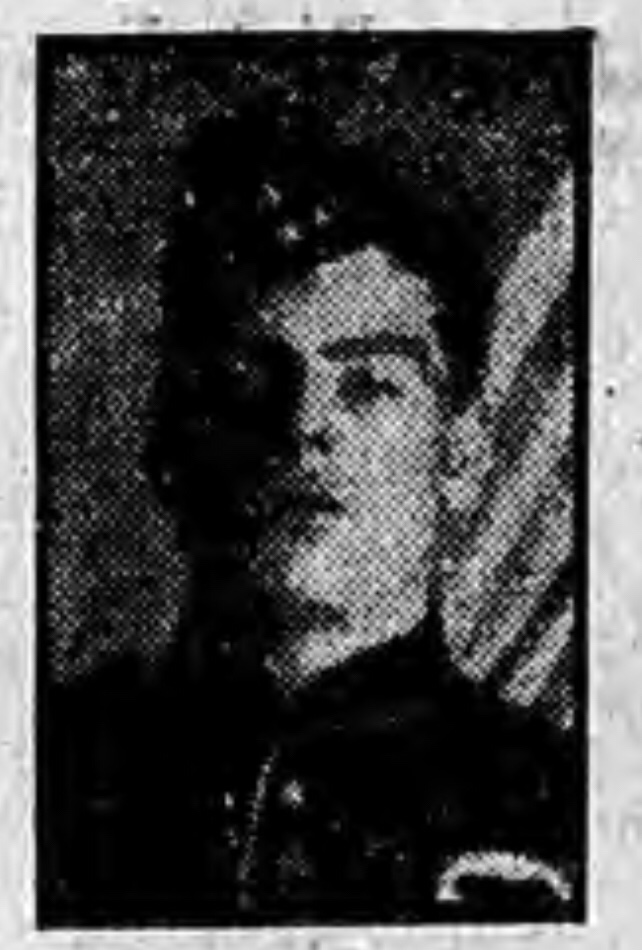
KILLED ON HIS THIRD BATTLEFIELD.
Batley Albion Footballer and His Three PalsNews is to hand of the death of the death of Private John Brooks, K.O.S.B., eldest son of Mr. and Mrs. Laurence Brooks, Cobden Street, Batley. Private Brooks was 21 years of age and single. He joined the Army in June, 1915, and last October was sent to the Dardanelles. From there he was drafted to Egypt, and was later transferred to France. Three weeks ago he was officially reported missing, but an official intimation that he was killed in action on July 1st has now been received.
Before the war Private Brooks was employed at Messrs. Wrigley and Parker’s Valley Mills as a piecer. He attended St. Mary’s Roman Catholic Church, and was a member of the Church Boys’ Brigade. He was also associated with Batley Albion Association Football Club.
Private Brooks was one of four pals in the same regiment. A few weeks ago Private James Edward Brook, of Beck Lane, Carlinghow, was reported killed, and this was followed by the news that Private Percy Whitley, of Clarence Street, Batley, was missing. The third pal, Private Wm. Balmforth, of Peel Street, is in hospital wounded, and now the death of Private John Brooks has to be recorded.
Herbert Booth’s family also received the dreaded news:
“ONE OF THE BIGGEST SCRAPS EVER KNOWN.”
Carlinghow Soldier’s Last Message.
“I Have Not the Slightest Wish to Withdraw.”
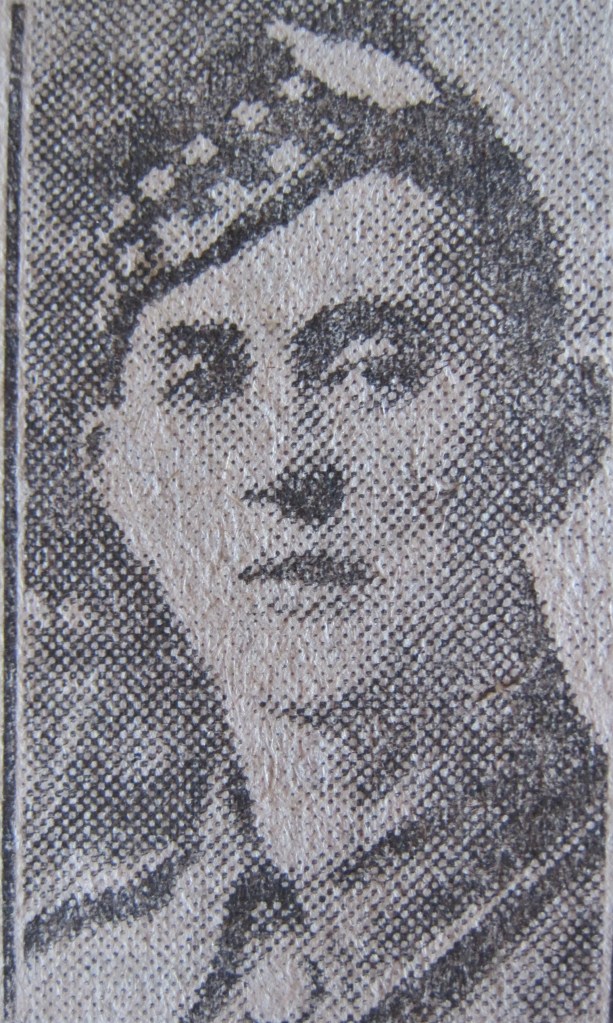
Killed in the K.O.Y.L.I.’s Magnificent Advance.Lance-Corpl. Herbert Booth, K.O.Y.L.I., a highly respected Carlinghow man, has given his life for King and Country. His wife resides in Beck Lane, Carlinghow. He was son of the late John William Booth, mason, Beck Lane, and of Mrs Hudson, 13, Carlinghow Hill, and grandson of the late Mr. James Booth, contractor and builder, 5, Beck Lane. Deceased, whose age was 31, enlisted just after the outbreak of war, and had been in France about 11 months. He took part in the Battle of Loos and other big engagements. Before the war he worked for the Yorkshire (Woollen District) Electric Tramways, Ltd., at Savile Town, and prior to that for Wildsmith, Carter and Co., shoddy manufacturers, Carlinghow. He was a member of Carlinghow Working Men’s Club, and his name is on the roll of honour both at Carlinghow St. John’s Church and Carlinghow Council School.
The following letter has been received by his wife from Lieut. Ibbotson:—“I have received your inquiry about your husband, Lce-Corpl. Herbert Booth, and am extremely distressed to have to tell you that the news I have to give you is of the very worst, and that your husband was killed in action on the 1st of July. He took part in the magnificent advance made by this battalion. I am sorry I did not know your husband personally. I have only just come to this Company to command it from the transport, which I looked after during the attack. None of the officers in “A” company who took part in the attack are here now, they were all either killed or wounded. Anything I can say in a letter to you cannot possibly help you, I am afraid, to bear this terrible blow, but I can honestly say that you have my deepest and absolute sincere sympathy.”
Writing to his brother at 3, Crow Nest, St. James Street, Burnley, before going into the “big advance,” deceased said, “Well, old boy I do not know when I shall be able to write to you another letter after this. In fact, I will tell you the truth, it is like the song, “It may be for years, or it may be for ever”; but never mind lad, whatever happens to me you can depend on me meeting it with a brave heart. We may be going into action any moment, and I will tell you this, kid, it is going to be one of the biggest scraps that has ever been known, and I have not the slightest wish to withdraw. If the worst happens, it is only death, and that comes to everybody at some time or another. I understand by your letter that you have been rejected. I know that you would like to have a smack at the Huns, but never mind, you have the satisfaction of knowing that you offered your services to your King, and that is what a lot of single young men have not had the pluck to do. If things turn out right, and I have luck enough go come through this job safely, I shall be able to tell you as much as anyone here can. This is my tenth month out here, and I have not been away from the battle area one month out of the ten. Perhaps by the time you get this you may have read all about this affair in your papers. If I have the good luck to come out of this alive I will drop you a field card or a line of some sort at the earliest possible convenience, and let you know how I have gone on.”

The Death Notices contained one for Herbert Booth:
BOOTH. —On July 1st, 1916, killed in action in France, Lance-Corpl. Herbert Booth, K.O.Y.L.I., of 5, Beck Lane, Carlinghow.
His King and country called him,
The call was not in vain;
And on England’s Roll of Honour,
You will find our hero’s name.From his dear Brother and Sister-in-law, James and Cissie.
3, Crow Nest, Burnley, Lancs.
As we reached the third anniversary of the start of the war. death anniversaries from earlier war years were now regularly appearing in the paper’s In Memoriam column. This week these included one from the wife of James Griffin.
GRIFFIN. —In loving memory of Pte. James Griffin, of Batley, of the 6th Battalion York and Lancaster Regiment. Killed in action at the Dardanelles, August 9th, 1915.
“Not forgotten.”
From his wife and little daughter. 3, Wall Street, Barnsley.
Jimmy Lyons still remained positive about the battle. He wrote as follows:
“WE ARE GIVING THEM SOME STICK.”
Another Line From Jimmy Lyons.Private Jimmy Lyons, the well-known Batley full-back, who is wounded in the shoulder and in hospital at Lincoln, in a letter to Mr. C. Wilkinson, hairdresser, Wellington Street, Batley, says:—
“I am in hospital in dear old England, and am doing well. I was hit in my shoulder in the big battle on July 24th. I cannot use my arm at all excepting my fingers, but I hope to go all right again. It feels grand to be away from the noise of the guns. We are giving them some stick!”
Finally for war news this week, there was an update from long-term prisoner of war Michael Manning :
A BATLEYITE A PRISONER OF WAR IN POLAND.
2,000 Captives Employed in Making a New Harbour.Seaman Michael W. Manning, Royal Naval Division, son of Mrs. Michael Manning, Providence Terrace, Bradford Road, Carlinghow, who has been a German prisoner since the fall of Antwerp, has recently been moved from Doeberitz to a town in Russian Poland. It is gathered that he has been moved with 2,000 other prisoners to Libau,1 a port now in German occupation, and the captives are being employed in making a harbour. His letters from there are stamped Friedrechsfeld, so presumably the Germans have re-named the town.
In May Seaman Manning wrote:—“I hope you are sending my parcels every week. Please send everything —bread, meat, sugar, tea, milk, and fish. I hope this beastly war will finish before long. Are you getting ready for my coming home? I hope to see everyone I know then.”
A later postcard, dated June, read: —“I have just finished a 2½ days’ railway journey, and after travelling that time it is a pleasure to rest and be able to stretch your limbs again. You will no doubt wonder why I had to leave the hospital. Well, you see, 2,000 of us prisoners were required to work, and I with the other five sanitates at Rohrbeck Hosptial had to come to the party to act as sanitates here. I am pleased to come with them. It is a splendid change, and we get to see the world. In years to come I and others will look back upon these times and thank the Germans for these trips.”
In Home Front news, Batley the Irish expressed discontent with apparent discriminatory treatment by the Council:
At a meeting of the Committee of the United Irish League Club on Tuesday a resolution was passed protesting against the constitution of the Army and Naval Pensions Committee by the Batley Council as very unfair, “the Irish people of the borough being denied the right of representation.” This was described as a shame.
Thomas Carney appeared in court:
Batley Court – Wednesday.
“You will have to pay 6s. and don’t do it again,” was the remark of the Mayor in the case of Thomas Carney, labourer, 25, Hanover Place, Batley, who was charged with being drunk on the highway. —Constable Cannon said that a few minutes after midnight on Saturday he found the man leaning against the wall in Healey Lane in a drunken condition and unable to walk without assistance,
A noisy party involving beer landed another parishioner in court:
Thirty-Two Empty Bottles.
Sequel to a Noisy Party in Spa Street.Participation in a drunken scene in Spa Street was the cause of the appearance in Batley Court on Wednesday of James McDonald (19), trammer, 16, Fleming Street, Batley. The young fellow was charged with drunken and riotous conduct, and replied, “I had some drink, but didn’t’ make a fuss.”
Police-constable Thornton said that at 1.30 on Tuesday morning he heard shouting at 11, Spa Street. The door was partly open, and when a request was made to close it McDonald came out and said “What has it got to do with you? Who pays the rent here?” He gave a lot of cheek and was taken into custody.
Sergt. Tomlinson, in corroboration, said there was a tremendous row in Spa Street. There had been a party at the house mentioned, where a soldier had come home, and was going back to Blythe, in Northumberland. There were 32 empty beer and stout bottles (pints) in the place, which the people admitted had been consumed that night. McDonald and two others said they had come from Dewsbury.
Accused: It was the first time I had ever tasted beer.
The Mayor: You admit being drunk?
Accused: I was not drunk.
There were 32 bottles of beer? —I did not touch any of them.
The Magistrates’ Clerk (Mr. J. H. Wilman): You never had any beer? —Not in that house.
George Hy. Gavaghan, a young fellow, of Fleming Street, said he went into the house in Spa Street at one o’clock. They were not drinking then, because there was nothing to sup. They were singing and enjoying themselves. Accused had nothing to drink after eight o’clock, when he had a glass of old beer.
Inspector Ripley: Was defendant sober? —Yes, perfectly.
There was no previous conviction, and accused was ordered to pay 6s.
The Mayor: We hope you will not be in this trouble again. It is a disgraceful thing to see 32 beer bottles in a house. There have been considerable complaints about that district. It is not good to know this is happening in war time. It is bad enough in peace time, but worse now.
Footnotes:
1. Now known as Liepāja, a port city in western Latvia.


 Past To Present Genealogy