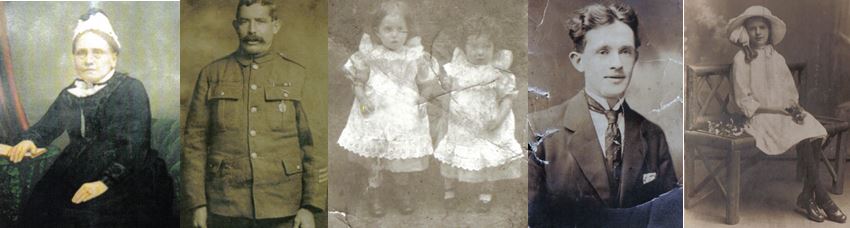
Name: Michael Howley
Rank: Private
Unit/Regiment: 9th (Service) Battalion, The King’s Own (Yorkshire Light Infantry), and the Labour Corps
Service Numbers: 16959 and 581612
Date of Death: 26 December 1919
Memorial: Batley War Memorial (not commemorated by the Commonwealth War Grave’s Commission)

Michael Howley was born in Dewsbury on 04 June 1880, and baptised at St. Paulinus R.C. Church. His parents, Michael Howley and Annie Gray married that same year, and their only other child – daughter Mary Ellen – was born in 1884.
Michael’s childhood was not easy, with his mother’s death on 27 February 1886, aged 26, when Michael was only five years old. His father, described sometimes as a general labourer and at others a bricklayer’s labourer or paviour, was not always a present and steadying influence in his life. Neither was his school attendance always regular – on one occasion in 1890 his father was fined for sending him to school for only 59 of 150 school attendance sessions.1
The 1891 census found widower Michael and his two children lodging at High Street, Dewsbury. Three years later Michael remarried, his wife being Dewsbury-born Margaret Ann Mullarkey. They went on to have seven children Margaret Annie (1895), John (1896, died 1897), Patrick Martin (1898), John Edward (1900), Kathleen (1904), Peter (1908), and Thomas (1910).
In 1901 the family were recorded at Middle Road, Dewsbury, by which time 20-year-old Michael was working in a coal mine as a hewer. We do have a brief physical description of him from around this time. In the summer of 1903 he was jailed for gaming and spent seven days in Wakefield prison, with his jail stating he stood at 5’ 4”, with brown hair. In terms of education, he could read and write.
He married Elizabeth Phillips on 15 July 1905 at the Catholic parish of St. Mary of the Angels, Batley. Born in Batley in 1884, and known as Lizzie, she was the daughter of Patrick and Catherine Phillips, with Catherine’s maiden name being Foley.
In 1911 the family lived at 36, New Street in Batley with Michael working as a hewer in a coal mine, and Lizzie as a rag sorter. They had four children at this point – Michael (born in 1905); Patrick (1907); John (1908); Annie (1909); Catherine (1911). Another son, Joseph, was born in 1913. Two more sons. were born during the war – James in January 1916, but who died in January 1918; and Henry in May 1918.
Michael enlisted as a Private at around the beginning of September 1914, and was posted to the 9th Battalion King’s Own Yorkshire Light Infantry, one of the battalions of the New Army created at the outbreak of war. They were part of what was more popularly known as Kitchener’s Army. For the first months of the war they were training in various locations across England including Berkhamsted in Hertfordshire, then Halton Park (Tring) in Buckinghamshire, then billeted in Maidenhead, Berkshire, after which they went back to Tring in April 1915, before moving to Witley in Surrey for final preparations for their move to France. This took place on 11 September 1915.
Fourteen days later they were in action at Loos, a terrible baptism of fire. On 20 September the inexperienced troops, who had been given no time to adapt to life on the front lines, began a series of punishing marches, including at night. They covered 50 miles from their billets at Zutkerque, to their jumping off trenches north east of Loos, pushing through roads heavily congested with troops and supplies, arriving in the early hours of 26 September.
Without any recovery time these novice troops then participated in what were described as hastily organised attacks with half understood orders. The 9th KOYLI, “who were faced by an enemy position which they had not seen before in daylight, much less reconnoitred” were initially held in reserve.2 There then followed total confusion when the 9th KOYLI independently launched a failed counter attack, with the origin of these orders never discovered. Casualties were heavy.
The Unit War Diary’s description of subsequent events is brief:
25-9-15, 7.15pm. Battalion left bivouac and marched through VERMELLES and on to the trenches running NE from LOOS reaching the trenches about 1am on the 26th. The Battalion deployed from the road running from VERMELLES to LOOS and advanced in double column of Companies for a distance of about 2½ miles being under heavy artillery fire during the advance.
TRENCHES NE of LOOS, 26-9-15, 1.30pm. Battalion took part in the attack on hill 70….Battalion lost 215 rank and file killed, wounded and missing. Battalion returned to the trenches after the attack.3
There is no record of Michael’s participation in this battle. But his arrival date in France points to him being in action here. Neither are there any specific indicators as to his involvement in the battalion’s subsequent movements, his service records not having survived and, to date, no newspaper snippets about him detailing them having been found. But amongst other major battles, the 9th KOYLI were in action during the Battle of the Somme, including that first day – 1 July 1916 – when their Unit War Diary for that day alone records that 22 of the 24 Officers of the Battalion were either killed or wounded, alongside 475 casualties in the other ranks, about 145 of whom were killed.4 In 1917 ther were involved in 3rd Ypres, better known as Passchendaele.
Three events for the Howley family back in England typify the problems being faced by many on the Home Front, up and down the country.
On 4 June 1917 Lizzie was before the Batley magistrates charged with being drunk and riotous whilst in charge of a child, aged 18 months. Lizzie and another St. Mary’s parishioner, Ann Woodhead, had spent the evening in Birstall where a relative was home on leave. They missed the last tram home to Batley and had to walk home along Bradford Road, to meet Lizzie’s brother at Stocks Lane. Amongst other witnesses, a night watchman at Dock Ings Mill saw them, and believing Lizzie to be drunk – at one point he said she fell – he became increasingly worried about the safety of the young child in her arms. Seeing a police constable he reported his concerns, and Lizzie was stopped. On being told she would be reported she replied “You ought to be in the front line trenches and all other West Riding Police.”5
In court, Lizzie denied being drunk, and accused the police constable of returning to her house and making “improper suggestions.” A neighbour, another parishioner Catherine May, told the court she heard Lizzie telling someone to “get out, you dirty dog.”6 This was denied by the P.C. Wade, and his denials were believed. Lizzie was fined 20s. along with a further 10s costs.
Then that December it was her 10-year-old son Patrick’s turn before the Batley magistrates for receiving a stolen rabbit, after encouraging a friend to steal a couple of them from a back yard on Zion Street.7
Michael, who was home on leave, accompanied his son to court in his uniform, and said his boy had not admitted the offence to him, even though he had questioned and thrashed him, adding:
There has been more trouble since I joined the Army than ever before. I can’t understand it. It isn’t giving me much encouragement after 26 months in France.8
This was a very common theme in this period – fathers away from home on service, resulting in a rise in juvenile petty crime and disorder. Lizzie though blamed it all on him getting into bad company at the picture palaces. However, Inspector Ripley informed the court that in the opinion of Patrick’s schoolmaster, he was above average intelligence, but his home surroundings were not all they should be and he should be under stricter discipline. He also added that he had two previous convictions for stealing.
After admitting the offence in court, Patrick was ordered to receive six strokes of the birch. Mr. Gladwin, the town’s probation officer, was instructed to supervise his future conduct.
Then, on 10 January 1918, James Howley died, less than three weeks before his 2nd birthday. Given his age, he was likely to be the young child Lizzie was carrying when stopped on Bradford Road the previous summer.
Michael Howley survived the war, being discharged on 13 November 1918, by which time he was serving with the Labour Corps. Formed in 1917, they replaced previous arrangements for providing the labouring work needed to support the military, both at home and overseas. On occasions they were also used as emergency infantry. By the Armistice the Labour Corps amounted to more than 10 per cent of the total size of the Army, with around 175,000 (just under half of the total) based in the U.K.9
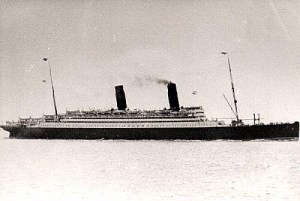
After the war, the Howley family initially remained in Batley, with Michael returning to coal mining. But on 3 December 1919 Michael, Lizzie and their seven children (Michael, Patrick, John, Annie, Catherine, Joseph and Henry) left New Street and set sail from Liverpool on the Cunard ship Carmania, bound for New York. Launched in 1905, she had been used as a troop ship in the war but had now returned to civilian service.
From New York, the family’s intention was to start a new life in the city of Terre Haute, Indiana, where relatives already lived. They had £160 (around £10,000 today) with which to set themselves up there.
The passenger manifest describes Michael as being 5’ 5” tall, with a fresh complexion, brown hair and eyes. Crucially, the ship’s surgeon stated he, and all the family, were in good health.
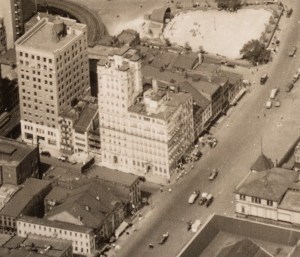
However, upon their 19 December arrival in the U.S., Michael and other members of the Howley family were admitted to hospital. And it was in Broad Street Hospital, Manhattan, that Michael died on 26 December 1919. The implication, given that other family members were affected, is it was some kind of infectious illness. The third wave of the flu pandemic had subsided that spring in the U.K., though it had not been totally eliminated and other countries were suffering a fourth wave.
As an aside, if any family member does have his US death certificate, it would be interesting to know what his cause of death was. Depending on what it says, it may be that Michael is eligible to be commemorated by the Commonwealth War Graves Commission. The fact his widow was awarded a war pension hints at perhaps some issue linked to his service.10
The Howley family’s American dream was over. Less than three months after Michael’s death they were back on board the Carmania, arriving in Liverpool on 18 March 1920. They returned to Batley where, in May, Lizzie gave birth to daughter Mary Ellen. Their address was now Hume Street.
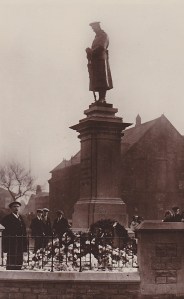
When names were being sought for Batley War Memorial, Michael’s name was submitted. Although he is not commemorated by the CWGC, and is not on the parish memorial, he is remembered here.
On 5 April 1926 Lizzie married Thomas Golden at St. Mary’s. They went on to have two daughters, Nora (1926) and Agnes (1928). Lizzie died in 1959, and is buried in Batley cemetery.
One footnote to this story is Michael and Lizzie’s sons Patrick and John did go to Canada in 1930 under the third class £10 assisted passage scheme negotiated between the British and Canadian governments the previous year. They intended farming in Smith Falls area of Ontario, but by the year-end Patrick was back in England.
Postscript:
I may not be able to thank you personally because of your contact detail confidentiality, but I do want to say how much I appreciate the donations already received to keep this website going. They really and truly do help. Thank you.

The website has always been free to use, and I want to continue this policy in the future. However, it does cost me money to operate – from undertaking the research to website hosting costs. In the current difficult economic climate I do have to regularly consider if I can afford to continue running it as a free resource.
If you have enjoyed reading the various pieces, and would like to make a donation towards keeping the website up and running in its current open access format, it would be very much appreciated.
Please click here be taken to the PayPal donation link. By making a donation you will be helping to keep the website online and freely available for all.
Thank you.
As a professionally qualified genealogist, if you would like me to undertake any family, local or house history research for you do please get in touch. More information can be found on my research services page.
Footnotes:
1. Batley Reporter and Guardian and Dewsbury Chronicle and West Riding Advertiser, 26 July 1890. Note this demonstrates the variation of the surname in the 19th century, with one recording it as Hooley and the other Howley.
2. Bond, Reginald C. History of the King’s Own Yorkshire Light Infantry in the Great War, 1914-1918. London: P. Lund, Humphries, 1929.
3. 9th KOYLI Unit War Diary, The National Archives (TNA) Ref: WO95/2162/1.
4. Ibid. Subsequent analysis of CWGC records show that 177 men from 9th KOYLI died on 1 July 1916 (includes one attached to another battalion and one from another battalion attached to the 9th KOYLI). This basic analysis does not account for those who died on a later day from wounds incurred on 1 July. Neither does it account for those 1 July deaths as a result of earlier received wounds. But it does give a rough guide to the scale of losses.
5. Batley News, 09 June 1917.
6. Ibid.
7. They are unnamed in the newspaper report, but cross-matching with the Batley Borough Court records held by the West Yorkshire Archive Service identifies them.
8. Batley News, 15 December 1917.
9. The Long, Long Trail website.
10. For some reason, she is recorded as Margaret E. on these, but there is no doubt it’s the correct family based on the other details there.
Other Sources (not directly referenced):
• Burial Registers (various).
• Censuses, England and Wales (various).
• GRO Birth, Marriage and Death Indexes.
• Newspapers (various).
• Medal Award Rolls and Index Cards.
• Parish Registers (various).
• Passenger Lists, Outgoing and Incoming, England, U.S., and Canada (various).
• Pension Records.
• Wakefield Prison Registers (various).


 Past To Present Genealogy